
PBSA Investment: A Guide to Purpose-Built Student Accommodation
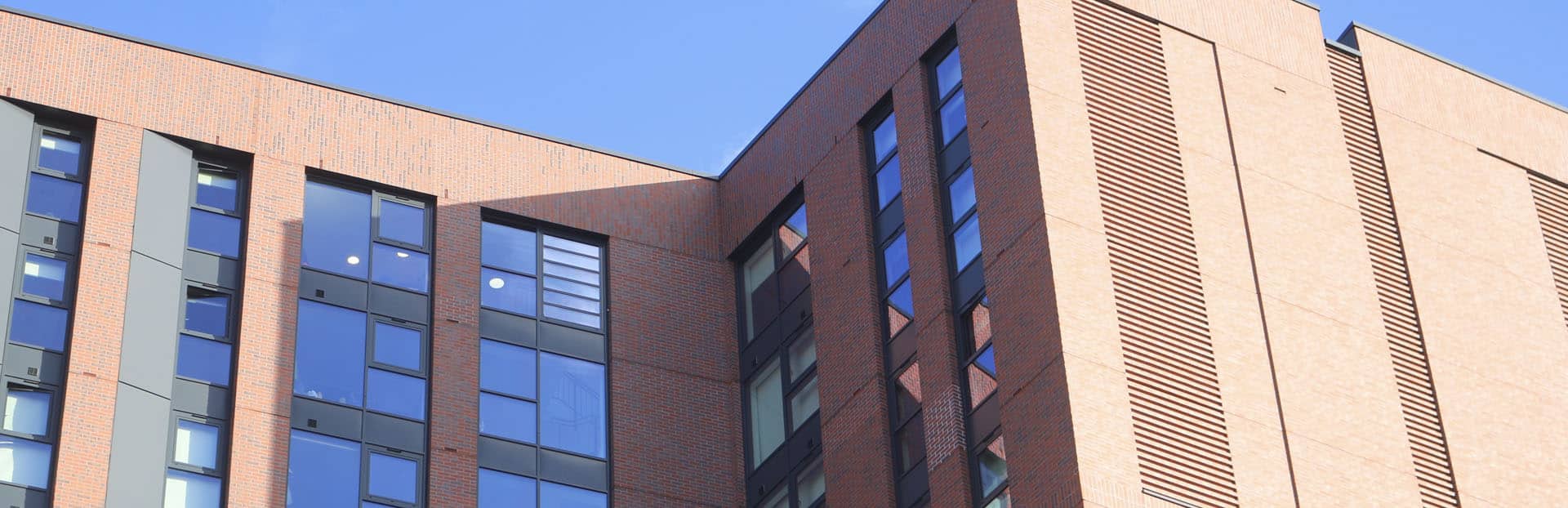
PBSA stands for purpose-built student accommodation: blocks of student flats and studios that were built to house students and are run as student housing, rather than ordinary houses converted for sharers.
This guide is about buying one room or one studio inside a privately run block as an individual investor, normally on a lease. An operator runs the building, and a management agreement between you and the operator decides what you're paid and when.
Article updated: October 2026
That hands-off setup is the appeal. It's also where the catches sit. The room is usually valued on its rent, a rental guarantee (if there is one) runs out, and the lease can limit who you're allowed to sell the room to.
What is PBSA?
In plain terms, PBSA means homes designed from day one for students, in blocks run as student housing. Universities own and run some of these blocks as halls. Others are built and run privately, and those private blocks are where individual investors can buy rooms.
Most blocks are laid out in one of two ways. Cluster flats have several bedrooms, each with its own shower room, sharing a kitchen and living space. Studios are self-contained, with a bed, a small kitchen and a bathroom in one unit. Many blocks add a reception desk, a gym, study rooms or a cinema room.
Rent is often charged per week for the academic year, with the bills and internet usually included. For a student leaving home for the first time, one bill that covers everything is a big part of the draw.
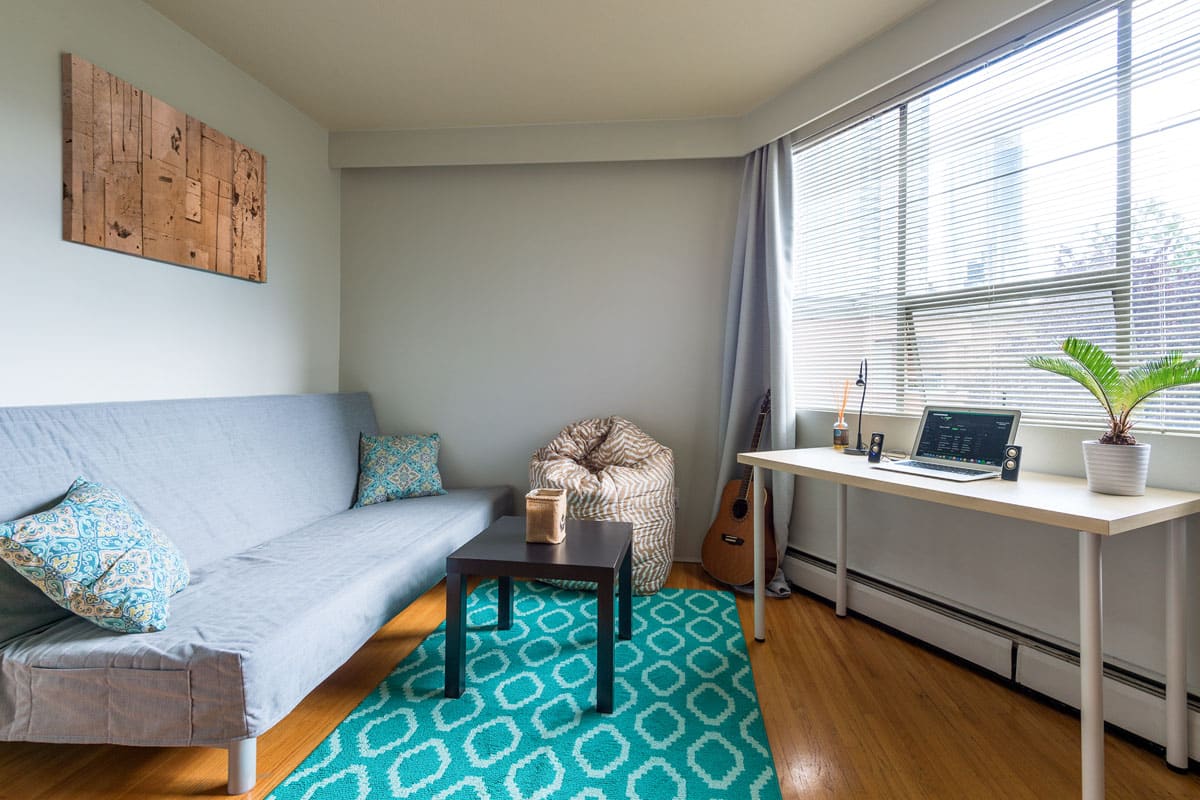
Besides a private PBSA block, students have two main choices. University halls are owned or run by the university, and some of them are purpose-built blocks too. Shared student houses, the classic student HMO, are ordinary houses let room by room to a group of students, with a landlord or letting agent dealing with them directly. A private PBSA block, by contrast, is a building owned by investors or a company, with a professional operator in the middle.
How Student Accommodation Investment Works: Buying a PBSA Room
On paper, buying a single PBSA room looks a lot like buying a flat. In practice, four parts of the deal work differently.
What you own
You normally own the room or studio on a lease, with the freeholder or developer owning the building. Any limits on who can live in the room or who can buy it from you, and what you pay towards the building, are set out in the lease. That makes it the most important document in the deal.
How the rent reaches you
The operator lets the room and collects the rent from students. What you're paid, and when, is set by the management agreement, along with the management fee and any service charge. A service charge can pay for things like cleaning, repairs, insurance, the reception and the utilities.
That's why the headline rent matters less than it first appears. Two rooms with the same rent can pay their owners very different amounts, depending on the fees and service charge.
Rental guarantees
New PBSA rooms are sometimes sold with a rental guarantee. It's a contract term: the developer or operator promises to pay you a set return for a set number of years. Whether the guarantee still pays when the room is empty depends on the contract.
A guarantee is only as strong as the company giving it, and it runs for a set period. If the room earns less on the open market than the guaranteed figure, your income can fall when the guarantee ends. And if rooms in the block are valued on their rent, a lower rent at the same yield means a lower value.
When you see a yield advertised, two questions help. Is it gross, before the fees and service charge, or net, what is actually paid to you? And is it projected, which is an estimate, or guaranteed, which is a promise in the contract for a set number of years?
These figures show whether a guarantee is close to what the room can earn on its own:
- the weekly rent, and how many weeks a year the room is let
- how full the block has been in past years
- the management fee and service charge, and how they have changed
- what other rooms in the same block have resold for
- who gives the guarantee, and for how long
If you buy off plan, there's one more step: the block has to be finished before it can take its first students.
How PBSA rooms are valued
PBSA rooms are usually bought and sold on their yield, which is the yearly rent as a percentage of the price. Buyers work backwards from the rent to the price they'll pay.
Here's how the arithmetic works. Say rooms in a block are trading at an 8% gross yield and a room lets for £500 a month, so £6,000 a year. At 8%, that room is worth £75,000. If rents rose to £750 a month and buyers still wanted 8%, the same room would be worth £112,500.
It works the other way too. If the rent stayed at £500 a month but buyers wanted 10% instead of 8%, the room would be worth £60,000. These are made-up numbers to show how the valuation works, not a forecast.
In my experience, in the right towns and the right parts of town, rents have risen over time, and because the rooms are valued on yield, that has helped hold their values up. If you want to check a quoted figure yourself, our guide on how to work out rental yield shows the sums.
I always start with gross. It's simple and it lets you compare one room with another quickly. In my experience, investors buying student lets look for a gross yield of 6% or more, with 8% or more at the top end. That's before costs, and with a managed room the costs are where rooms differ most, so the gross figure is the start of the sums, not the end.
The Advantages of Investing in PBSA
Investing in student accommodation through PBSA appeals for four main reasons.
An operator runs the building
The operator lets the rooms, collects the rent and runs the building, from cleaning to repairs. You pay for that through the fees.
Rents that include the bills
One weekly price covering the room, the bills and the internet is easy for a student to understand. Modern blocks with en-suite rooms, study space and security at the door can appeal to students who want their own space rather than a shared house.
Shared upkeep in a modern block
Many blocks are modern, and the upkeep of the building can be shared across the owners through the service charge.
Value tied to rent
I've always bought property for income and held it for the long term, rather than chasing a quick rise in price. A PBSA room's value is tied to its rent, so the income is what you are buying.

The Challenges and Risks of PBSA Investment
The same features that make a PBSA room simple to own also limit what you can do with it.
Student numbers
Investing in student accommodation in the UK depends on students coming to the town each year. On results day in August 2026, UCAS reported 262,820 UK 18-year-olds with a university or college place, up from 255,130 a year earlier. The number of international students who applied through UCAS and were accepted rose from 52,640 to 53,740, though UCAS says its data is only a partial view of undergraduate international admissions.
National numbers rising doesn't mean every town rises with them. Demand follows the individual university. Falling student numbers at a nearby university can reduce the number of students looking for rooms.
Supply in the town
PBSA has been built in large numbers. In September 2026, Property Week reported research from BONARD counting about 755,000 PBSA beds in the UK. The publicly disclosed pipeline stood at more than 176,714 beds at the end of June 2026, across 436 schemes. If all of it were delivered, the stock would grow by up to 23%. That pipeline was smaller than the 193,948 beds reported in 2025.
BONARD's chief intelligence officer named affordability and growing competition among the things investors now have to weigh.
What matters for one room is the town it sits in. If new blocks open nearby, your block competes with them for the same students, and newer blocks can draw students away from older ones.
A ceiling on rent
Students only have so much to spend. Rents in any town have a ceiling set by what its students can pay, however good the gym is, and a shared house nearby can be cheaper.
Management and fees
Often you don't choose the operator, and as one owner among many you can't easily change it. How well the block is run affects how many rooms are let and how the building is kept, and that can affect what you're paid, depending on the management agreement. Service charges and management fees can also rise, which can reduce what you're paid.
Selling the room
If the lease limits who can buy the room, the pool of buyers can be small: mostly other investors after the same kind of room. A small pool can mean a lower price or a longer wait.
A question I ask about any property: if my situation changed and I had to sell, could I do it inside six months? With a single PBSA room, the answer depends on the lease, the operator and how many buyers there are for that block. Our guide to selling an investment property covers the wider process.
Finance
Whether a lender will lend on a single PBSA room depends on the scheme, the lease and the lender. Where no lender will, the room is in the same position as other unmortgageable property: it has to be bought with cash, and a buyer who needs a mortgage may face the same problem when you come to sell.
How to Invest in PBSA
There are two main routes into PBSA for an individual, and they are very different kinds of student property investment.
Buying a room directly
The direct way to invest in student property is buying individual rooms or studios in a block, either new from a developer or from an existing owner. New rooms can come with a rental guarantee for the first few years. Our page of student accommodation for sale shows rooms being offered to buyers at the moment.
Listed companies and REITs
The indirect route is buying shares in companies that hold student accommodation investments, including some real estate investment trusts (REITs) listed on the stock market. You don't own a room. You own a slice of a business whose value moves with the stock market as well as with student housing. You can usually sell shares far faster than you can sell a room, but shareholders don't choose or manage individual buildings.
PBSA is one strategy among many, and it helps to see it next to the others. Our guide to property investment strategies sets them side by side.
Things to Consider Before Investing in Student Accommodation
This is the short list I work through when I look at a PBSA room. It's my experience, everyone's is different, and it isn't financial advice.
- Who built it and who runs it. I research the developer and the management company, and I go and see the site when I can. They drive the quality of the whole thing.
- Where it sits in the town. Location is the big one. I want the right part of town, close to the university and to what students need day to day.
- Whether the town is growing. I look at what the town's population has done historically. Has it grown or fallen, and how does it compare with the national average? The two tables below show this for 29 university towns.
- How the university ranks. I check where the university sits in the league tables. The Complete University Guide's 2027 league table, published in June 2026, ranks 130 UK universities.
Beyond my own list, two other things affect the numbers. The first is supply: what other student housing exists nearby, from other PBSA blocks to university halls and shared houses, and what's being built. The second is the alternatives: what the same money buys in the same town, such as a one-bedroom flat or a small house, and what each would leave you in net income. When you get to that stage, the rooms currently on the market are on our student lets for sale page.
The Best Places to Invest in Student Accommodation in the North
A town's population history is one of the checks I described above. It isn't a recommendation. The table shows how the population of 14 northern university towns changed between mid-2011 and mid-2025, from the ONS mid-year estimates published in July 2026, with England at the bottom for comparison.
Both tables cover university towns in the north and south of England only, so towns in the Midlands and the rest of the UK aren't included. The figures cover the whole council area, which can be much wider than the town itself: County Durham for Durham, Kirklees for Huddersfield.
| Town | Main university | Council area | Population mid-2011 | Population mid-2025 | Change |
|---|---|---|---|---|---|
| Durham | Durham University | County Durham | 512,994 | 539,146 | +5.1% |
| Huddersfield | University of Huddersfield | Kirklees | 422,970 | 445,832 | +5.4% |
| Hull | University of Hull | Kingston upon Hull, City of | 256,123 | 273,257 | +6.7% |
| Lancaster | Lancaster University | Lancaster | 137,823 | 145,237 | +5.4% |
| Leeds | University of Leeds and Leeds Beckett University | Leeds | 750,683 | 840,550 | +12.0% |
| Liverpool | University of Liverpool and Liverpool John Moores University | Liverpool | 465,656 | 507,915 | +9.1% |
| Manchester | University of Manchester and Manchester Metropolitan University | Manchester | 502,902 | 588,256 | +17.0% |
| Middlesbrough | Teesside University | Middlesbrough | 138,368 | 152,795 | +10.4% |
| Newcastle | Newcastle University and Northumbria University | Newcastle upon Tyne | 279,092 | 320,838 | +15.0% |
| Preston | University of Lancashire | Preston | 140,054 | 164,498 | +17.5% |
| Salford | University of Salford | Salford | 234,487 | 297,004 | +26.7% |
| Sheffield | University of Sheffield and Sheffield Hallam University | Sheffield | 551,756 | 579,517 | +5.0% |
| Sunderland | University of Sunderland | Sunderland | 275,330 | 287,070 | +4.3% |
| York | University of York and York St John University | York | 197,783 | 209,118 | +5.7% |
| England (comparison) | Not applicable | England | 53,107,169 | 58,834,812 | +10.8% |
Source: ONS mid-year population estimates via Nomis, all ages, from the mid-2025 release. Office for National Statistics licensed under the Open Government Licence v.3.0.
Five of the 14 northern towns grew faster than England over those 14 years: Salford, Preston, Manchester, Newcastle and Leeds. Salford's 26.7% was the biggest rise of any town on this page. The other nine grew more slowly than England, with Sunderland the lowest at 4.3%.
Salford and Manchester sit side by side, and both grew well ahead of England, as did Leeds. For the wider picture of each market, see our guides to Salford buy to let, buy to let in Manchester and buy to let in Leeds.
The Best Places to Invest in Student Accommodation in the South
The same check for 15 university towns in the south and London, again from the ONS mid-year estimates for mid-2011 and mid-2025. As in the north, each figure covers the whole council area: Bournemouth, Christchurch and Poole for Bournemouth, and Welwyn Hatfield for Hatfield. London's figure covers the whole London region.
| Town | Main university | Council area | Population mid-2011 | Population mid-2025 | Change |
|---|---|---|---|---|---|
| Bath | University of Bath and Bath Spa University | Bath and North East Somerset | 175,538 | 200,898 | +14.4% |
| Bournemouth | Bournemouth University | Bournemouth, Christchurch and Poole | 379,441 | 405,829 | +7.0% |
| Brighton | University of Brighton and University of Sussex | Brighton and Hove | 272,952 | 284,170 | +4.1% |
| Bristol | University of Bristol | Bristol, City of | 428,074 | 495,260 | +15.7% |
| Cambridge | University of Cambridge and Anglia Ruskin University | Cambridge | 122,725 | 149,872 | +22.1% |
| Canterbury | University of Kent and Canterbury Christ Church University | Canterbury | 150,600 | 162,612 | +8.0% |
| Colchester | University of Essex | Colchester | 173,614 | 201,163 | +15.9% |
| Exeter | University of Exeter | Exeter | 117,063 | 137,894 | +17.8% |
| Guildford | University of Surrey | Guildford | 137,580 | 152,148 | +10.6% |
| Hatfield | University of Hertfordshire | Welwyn Hatfield | 110,727 | 121,748 | +10.0% |
| London | Many universities | London | 8,204,407 | 9,122,909 | +11.2% |
| Oxford | University of Oxford and Oxford Brookes University | Oxford | 150,245 | 165,940 | +10.4% |
| Portsmouth | University of Portsmouth | Portsmouth | 205,433 | 211,475 | +2.9% |
| Reading | University of Reading | Reading | 155,339 | 183,762 | +18.3% |
| Southampton | University of Southampton and Southampton Solent University | Southampton | 235,870 | 259,230 | +9.9% |
| England (comparison) | Not applicable | England | 53,107,169 | 58,834,812 | +10.8% |
Source: ONS mid-year population estimates via Nomis, all ages, from the mid-2025 release. Office for National Statistics licensed under the Open Government Licence v.3.0.
Seven of the 15 grew faster than England: Cambridge, Reading, Exeter, Colchester, Bristol, Bath and London. Cambridge rose 22.1%, the second-biggest rise on this page after Salford. Guildford, Oxford, Hatfield and Southampton all grew a little less than England, each within one percentage point of England's 10.8%. Portsmouth grew the least, at 2.9%, the smallest rise of all 29 towns.
A growing population is one piece of the picture, not the whole of it. Cambridge and Reading both grew fast, and our guides to buy to let Cambridge and buy to let Reading cover prices and rents in each.
Frequently Asked Questions
What is PBSA in the UK?
PBSA means purpose-built student accommodation. In the UK it covers blocks of cluster flats and studios built for students, some run by universities and some privately, usually with bills included in the rent. For an individual investor, it normally means owning one room or studio in a private block on a lease, with an operator letting and managing it.
What decides whether PBSA is a good investment?
It comes down to the individual room, more than to student accommodation as an investment in general. The things that decide it are the town and its university, how much other student housing is nearby, the developer and the operator, the fees and service charge, and what the lease says about resale. If a room earns less on the open market than its guaranteed rent, its income can fall when the guarantee ends.
Can you get a mortgage on a PBSA room?
It depends on the scheme, the lease and who it allows to live in the room, and on each lender's own criteria. Where no lender will lend, the room is in the same position as other unmortgageable property: it has to be bought with cash, and a buyer who needs a mortgage may hit the same problem when you sell.
How are PBSA rooms valued?
Usually on their yield. Buyers take the yearly rent and work out the price that gives them the yield they want. Using made-up numbers, a room letting for £6,000 a year at an 8% yield is worth £75,000. If the rent rises and the yield stays the same, the value rises with it; if the rent falls, or buyers want a higher yield, the value falls.
What happens when a rental guarantee ends?
Your income then rests on what the room earns and on the terms of the agreement. If the room earns about the same as the guaranteed figure, little changes. If it earns less on the open market, your income can fall. And if rooms are valued on their rent, a lower rent at the same yield also means a lower value.
PBSA or a student HMO: what is the difference for an investor?
With PBSA you own a room in a block that someone else runs, you pay for that through fees, and any limits on resale are set out in the lease. With HMO student accommodation you own a whole house, let room by room to a group of students, and you or your agent run it. That means more work and more decisions, but you own the whole house, and the pool of buyers when you sell can be wider.
Ready to buy property?
Browse investment properties with prices and gross yields shown for each opportunity.
See the latest deals