
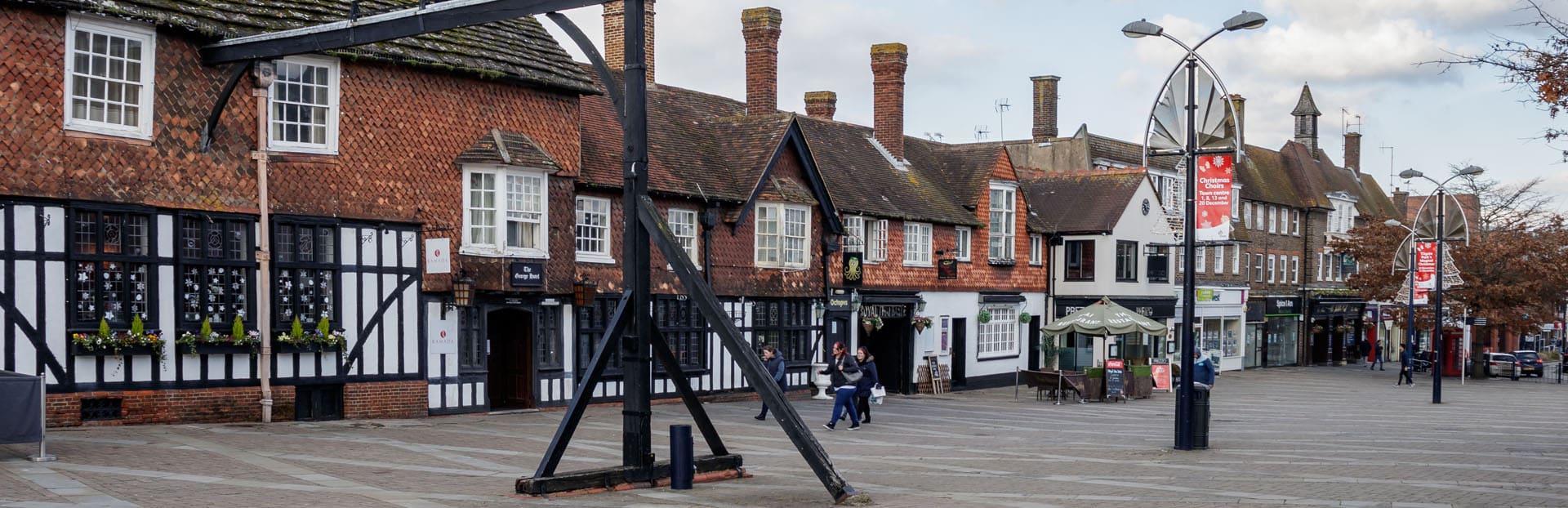
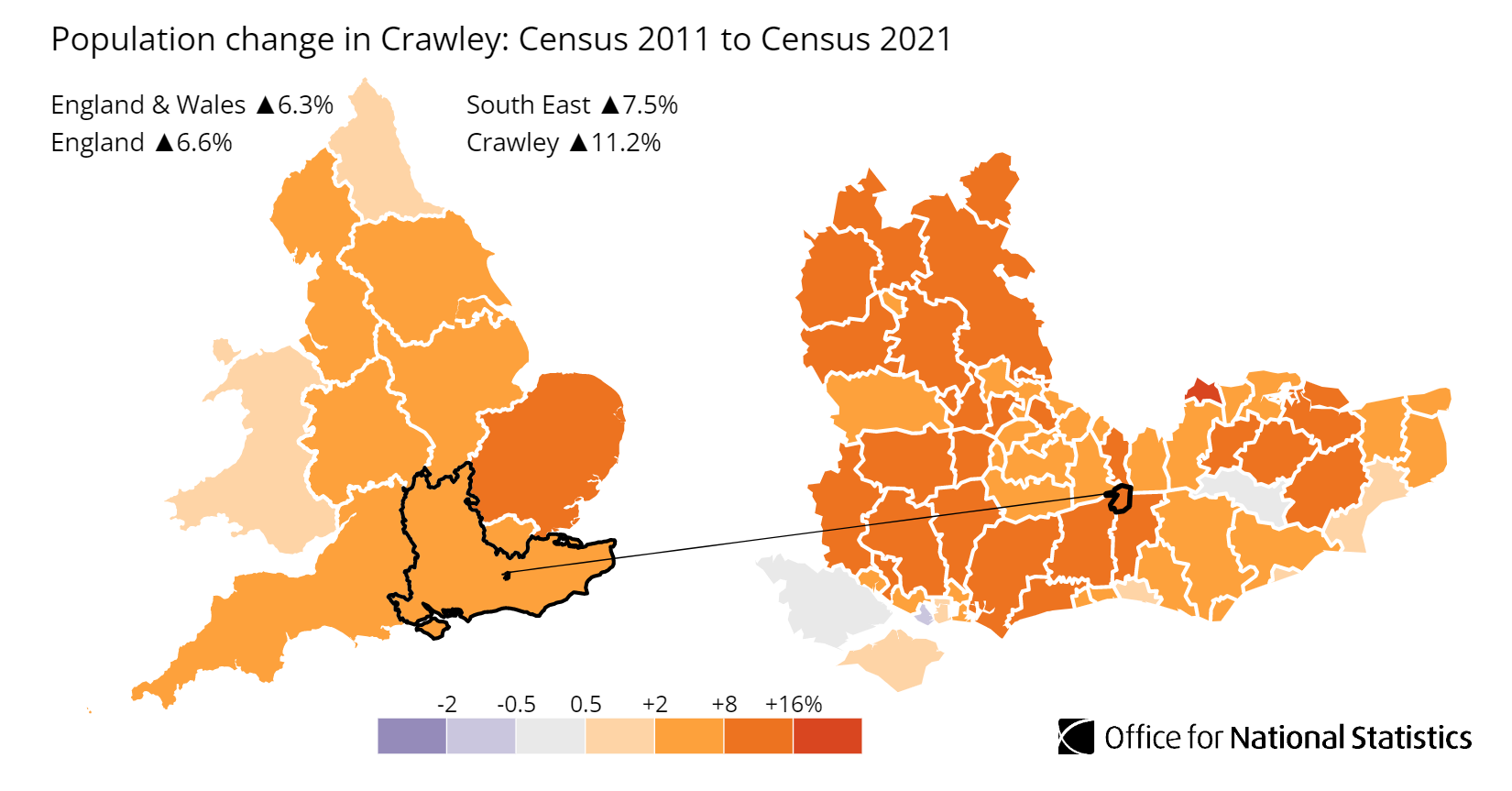
Crawley is a town in West Sussex, in the South East of England. Average sold prices in Crawley sit at £330,955 on the HM Land Registry House Price Index, 14.1% above the England average of £289,946 yet £47,560 below the wider South East average of £378,515. That is the shape of the Crawley market in one line: priced above the national average because of Gatwick and the London commute, but cheaper than most of the South East around it. The town grew its population 11.16% between the 2011 and 2021 censuses, from 106,597 to 118,493 residents, faster than the England and Wales average of 6.3%.
Crawley's premium to England is paid for by jobs rather than wages. The employment rate is 85.5%, well above the Great Britain figure of around 75.6%, on the back of Gatwick Airport, the Manor Royal business district and a fast train into central London. Median weekly earnings of £762.40 actually sit just under the South East regional figure of £815.20, so the local case for buy-to-let rests on the depth and reliability of tenant demand, not on top-end salaries. Across the three postcodes the asking price runs from £337,724 in RH11 to £480,665 in RH6, and the cheapest postcode is also the highest-yielding.
This guide covers the borough of Crawley (ONS code E07000226) in West Sussex, across postcodes RH6, RH10 and RH11. Crawley sits in the South East, around 28 miles south of central London and immediately south of Gatwick Airport. The wider Sussex buy-to-let region also takes in the coast at Brighton and the cathedral city of Chichester.
Article updated: July 2026
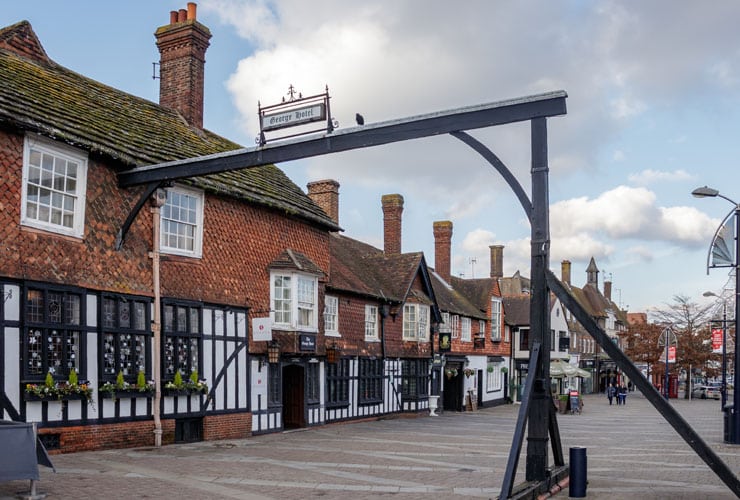
Why Invest in Crawley?
Crawley added 11,896 residents between the 2011 and 2021 censuses, an 11.16% rise that nearly doubled the 6.3% England and Wales average. For a town of 118,493 people that is fast growth, and it is the kind of growth that feeds a rental market: incomers needing somewhere to live before they buy. Crawley was built as a post-war new town, so its housing stock skews towards practical family homes rather than period terraces, and the layout is organised around defined neighbourhoods rather than one dense centre.
The employment rate of 85.5% is the standout local number, sitting well above the Great Britain rate of around 75.6%. The reason is the airport. Gatwick is the town's largest employer, and around it the Manor Royal business district carries engineering, logistics, pharmaceuticals and aviation supply firms. That concentration of jobs gives Crawley a working tenant base that is less dependent on any single sector than the airport headline might suggest, and it draws commuters who want airport access and a fast London train without paying London prices.
Median earnings tell the more cautious half of the story. At £762.40 a week, the typical Crawley wage is close to the Great Britain figure of £766.60 but a little under the South East regional median of £815.20. Tenants here are in steady work rather than on premium salaries, so the postcodes that work hardest for income are the more affordable ones, where rents line up with what local jobs actually pay. The sections below show that pattern clearly.
Crawley Economic Summary
- Population (Crawley): 118,493 (2021 Census). Growth of 11.16% from 2011.
- Median annual salary: £39,237 (local), £39,125 (Great Britain)
- Median weekly salary: £762.40 (local), £815.20 (South East), £766.60 (Great Britain)
- Employment rate: 85.5% (local)
- Key employers and sectors: Gatwick Airport, aviation and logistics, the Manor Royal business district, engineering and pharmaceuticals, retail and hospitality
Source: ONS Census 2021, Nomis Labour Market Profile (ASHE 2025)
Regeneration and Investment in Crawley
Crawley's town centre is in the middle of a £60 million infrastructure programme, with a £7.4 million station gateway scheme under construction and a wider masterplan reshaping six sites in the town centre east. The work is concentrated where it matters for renters: transport links, public space and the development land closest to the railway station and the High Street.
- Station Gateway Regeneration Scheme (Under construction, £7.4 million): A public realm transformation of the Martlets, Haslett Avenue West and Friary Way, with bus station improvements and new pedestrian and cycle routes, funded through the Towns Fund and the Crawley Growth Programme. A contractor was appointed in early 2026 for a 24-month build. Updates at UK Property Forums.
- Town Centre East Masterplan (Planning stage): A masterplan and investment strategy for six town centre sites, including the former Town Hall, County Buildings and the Boulevard car parks, mixing housing, commercial, cultural and public uses in line with the Crawley Local Plan 2023 to 2040. Updates at Architects' Journal.
- Crawley Growth Programme (Underway, £60 million): A borough-wide infrastructure programme delivered with West Sussex County Council, including more than £3.5 million in the Manor Royal business district for junction upgrades, walking and cycling routes, and bus improvements. Updates at Manor Royal.
Source: Office for National Statistics - Population for Crawley
Crawley Property Market Analysis
Average property prices in Crawley have risen 473.5% since January 1995, from £57,704 to £330,955. The sections below walk through that journey cycle by cycle, then break down current postcode-level data for sold prices, price per square foot, asking prices, growth, transaction volumes and selling times across RH6, RH10 and RH11.
When was the last house price crash in Crawley?
Crawley's sold prices are recorded by HM Land Registry at borough level, so the figures below cover the whole town. The Land Registry House Price Index tracks the average from January 1995 to the latest reading in March 2026, more than three decades of market cycles.
The 1995 to 2007 climb: Crawley started at £57,704 in January 1995. By December 2000 the average had reached £88,991, and the early-2000s boom carried it past £170,000 by the end of 2005. The market pushed on to a pre-crash peak of £200,604 in November 2007, more than three times the 1995 level in twelve years.
2008 to 2009, the financial crisis: Prices fell from the November 2007 peak of £200,604 to a trough of £155,372 in April 2009, a drop of 22.5% over seventeen months. That was a steeper fall than the England decline of 18.2% over the same crash, which makes sense for a commuter town: the South East had run up harder in the boom and had more to give back when mortgage lending tightened.
The 2010 to 2013 plateau: The recovery was slow. Prices bounced off the April 2009 trough but spent the next few years stuck in a narrow band, sitting at £170,273 by March 2011 and unable to break back above the old peak. Crawley, like much of the commuter belt, needed the London market to lead before it could move.
Recovery, 2014: Prices finally cleared the November 2007 peak in January 2014, when the average reached £202,097. It took just over six years to get back to where the market had been, after which the London ripple pushed Crawley up sharply through the mid-2010s.
2014 to 2019, the commuter-belt surge: This was Crawley's strongest run. Prices climbed from £202,097 in January 2014 to £260,147 by March 2016 and kept rising as buyers priced out of south London looked further down the line. By the end of the decade the average sat comfortably above £270,000.
2020 to 2022, the pandemic surge: The stamp duty holiday and the shift towards more space lifted Crawley again, with the average reaching £275,927 by March 2021 and climbing into the £320,000s through 2022 as commuter towns with fast London links saw renewed demand.
2023 to present: Higher mortgage rates cooled the market. Prices held broadly flat into 2024, then set an all-time high of £339,875 in November 2025 before easing back to £330,955 by the latest reading in March 2026, a gentle 2.6% step down from the peak. The current price is 65.0% above the November 2007 pre-crash peak.
Long-term growth summary:
- 5 years (March 2021 to March 2026): 19.9% growth (£275,927 to £330,955)
- 10 years (March 2016 to March 2026): 27.2% growth (£260,147 to £330,955)
- 15 years (March 2011 to March 2026): 94.4% growth (£170,273 to £330,955)
- 20 years (March 2006 to March 2026): 93.7% growth (£170,862 to £330,955)
- 30 years (January 1995 to March 2026): 473.5% growth (£57,704 to £330,955)
Crawley's 22.5% crash was deeper than the national average, the price the commuter belt pays for rising faster on the way up. The 30-year return of 473.5% reflects that same London pull working in the other direction. Someone who bought at the exact November 2007 peak would now be 65.0% ahead on the Land Registry average, having sat through a six-year wait to get back to par.
- All property types
- Detached
- Semi-detached
- Terraced
- Flats
Source: HM Land Registry House Price Index
| Year | All property types | Detached | Semi-detached | Terraced | Flats |
|---|---|---|---|---|---|
| 1995-01 | £57,704 | £120,485 | £69,662 | £54,507 | £43,742 |
| 1995-02 | £56,273 | £116,417 | £68,177 | £53,300 | £42,656 |
| 1995-03 | £55,086 | £113,596 | £66,736 | £52,266 | £41,729 |
| 1995-04 | £53,886 | £110,508 | £65,312 | £51,216 | £40,896 |
| 1995-05 | £53,374 | £109,356 | £64,761 | £50,699 | £40,569 |
| 1995-06 | £53,576 | £109,912 | £65,106 | £50,766 | £40,862 |
| 1995-07 | £52,433 | £107,978 | £63,771 | £49,675 | £39,757 |
| 1995-08 | £52,856 | £109,676 | £64,183 | £50,064 | £39,774 |
| 1995-09 | £52,346 | £108,881 | £63,541 | £49,635 | £39,144 |
| 1995-10 | £53,410 | £111,135 | £64,997 | £50,516 | £40,082 |
| 1995-11 | £52,258 | £108,657 | £63,664 | £49,336 | £39,412 |
| 1995-12 | £52,383 | £108,736 | £63,920 | £49,430 | £39,565 |
| 1996-01 | £51,570 | £107,747 | £62,907 | £48,645 | £38,665 |
| 1996-02 | £52,201 | £109,244 | £63,823 | £49,211 | £39,001 |
| 1996-03 | £53,174 | £111,763 | £65,174 | £50,093 | £39,427 |
| 1996-04 | £53,345 | £111,639 | £65,334 | £50,335 | £39,672 |
| 1996-05 | £53,925 | £112,313 | £65,886 | £51,100 | £40,030 |
| 1996-06 | £53,565 | £111,363 | £65,269 | £50,752 | £40,073 |
| 1996-07 | £54,068 | £112,798 | £65,960 | £51,181 | £40,275 |
| 1996-08 | £52,390 | £110,109 | £63,903 | £49,496 | £38,823 |
| 1996-09 | £52,391 | £110,930 | £63,844 | £49,473 | £38,491 |
| 1996-10 | £53,386 | £113,250 | £65,105 | £50,384 | £39,131 |
| 1996-11 | £55,031 | £116,411 | £67,152 | £51,949 | £40,442 |
| 1996-12 | £56,410 | £118,724 | £68,985 | £53,338 | £41,423 |
| 1997-01 | £55,220 | £116,189 | £67,457 | £52,301 | £40,426 |
| 1997-02 | £55,876 | £118,071 | £68,343 | £52,829 | £40,780 |
| 1997-03 | £55,382 | £117,121 | £67,532 | £52,403 | £40,408 |
| 1997-04 | £57,355 | £120,776 | £70,084 | £54,268 | £41,960 |
| 1997-05 | £59,030 | £123,915 | £72,192 | £55,966 | £43,041 |
| 1997-06 | £60,395 | £127,123 | £74,045 | £57,244 | £43,769 |
| 1997-07 | £62,148 | £131,327 | £76,108 | £58,986 | £44,692 |
| 1997-08 | £63,667 | £135,186 | £77,914 | £60,387 | £45,640 |
| 1997-09 | £65,113 | £138,508 | £79,647 | £61,750 | £46,616 |
| 1997-10 | £65,604 | £139,786 | £80,353 | £62,116 | £47,013 |
| 1997-11 | £65,753 | £140,044 | £80,602 | £62,227 | £47,160 |
| 1997-12 | £67,609 | £143,947 | £83,098 | £63,937 | £48,443 |
| 1998-01 | £66,988 | £143,085 | £82,234 | £63,330 | £47,925 |
| 1998-02 | £67,002 | £143,126 | £82,252 | £63,261 | £48,045 |
| 1998-03 | £66,479 | £142,117 | £81,582 | £62,786 | £47,598 |
| 1998-04 | £70,501 | £150,216 | £86,715 | £66,650 | £50,400 |
| 1998-05 | £72,037 | £153,085 | £88,556 | £68,261 | £51,367 |
| 1998-06 | £73,656 | £156,506 | £90,470 | £69,745 | £52,665 |
| 1998-07 | £73,184 | £155,952 | £89,838 | £69,286 | £52,239 |
| 1998-08 | £74,149 | £159,014 | £91,031 | £70,111 | £52,765 |
| 1998-09 | £74,622 | £160,502 | £91,553 | £70,559 | £52,987 |
| 1998-10 | £73,223 | £157,772 | £89,831 | £69,066 | £52,214 |
| 1998-11 | £72,748 | £156,735 | £89,451 | £68,463 | £52,036 |
| 1998-12 | £72,597 | £155,905 | £89,498 | £68,243 | £52,088 |
| 1999-01 | £74,181 | £159,131 | £91,567 | £69,778 | £53,128 |
| 1999-02 | £73,753 | £157,905 | £91,054 | £69,372 | £52,917 |
| 1999-03 | £74,350 | £159,349 | £91,702 | £69,891 | £53,426 |
| 1999-04 | £74,737 | £159,328 | £92,044 | £70,434 | £53,698 |
| 1999-05 | £77,354 | £164,678 | £95,259 | £73,018 | £55,424 |
| 1999-06 | £79,084 | £168,419 | £97,350 | £74,771 | £56,435 |
| 1999-07 | £81,432 | £174,287 | £100,218 | £76,946 | £57,947 |
| 1999-08 | £82,682 | £177,490 | £101,574 | £78,182 | £58,686 |
| 1999-09 | £83,284 | £179,538 | £102,215 | £78,586 | £59,270 |
| 1999-10 | £83,547 | £180,254 | £102,666 | £78,613 | £59,762 |
| 1999-11 | £84,430 | £181,887 | £103,835 | £79,303 | £60,699 |
| 1999-12 | £86,133 | £184,624 | £105,940 | £80,934 | £62,142 |
| 2000-01 | £88,692 | £190,870 | £109,230 | £83,335 | £63,677 |
| 2000-02 | £89,957 | £193,730 | £110,766 | £84,482 | £64,571 |
| 2000-03 | £90,943 | £196,137 | £112,242 | £85,443 | £64,899 |
| 2000-04 | £92,879 | £198,682 | £114,366 | £87,342 | £66,701 |
| 2000-05 | £95,875 | £205,085 | £118,188 | £90,185 | £68,734 |
| 2000-06 | £99,345 | £212,175 | £122,462 | £93,378 | £71,438 |
| 2000-07 | £100,155 | £216,137 | £123,874 | £93,947 | £71,564 |
| 2000-08 | £102,944 | £223,414 | £127,350 | £96,318 | £73,658 |
| 2000-09 | £103,728 | £227,183 | £128,246 | £96,752 | £74,266 |
| 2000-10 | £104,362 | £228,243 | £129,155 | £97,198 | £74,993 |
| 2000-11 | £103,589 | £226,486 | £128,201 | £96,413 | £74,571 |
| 2000-12 | £103,837 | £225,367 | £128,513 | £96,672 | £75,122 |
| 2001-01 | £104,736 | £226,824 | £129,222 | £97,598 | £75,962 |
| 2001-02 | £104,846 | £225,993 | £129,284 | £97,847 | £76,106 |
| 2001-03 | £105,700 | £228,247 | £130,480 | £98,718 | £76,406 |
| 2001-04 | £105,366 | £227,084 | £129,941 | £98,608 | £75,983 |
| 2001-05 | £104,992 | £225,790 | £129,420 | £98,388 | £75,639 |
| 2001-06 | £106,174 | £227,633 | £130,609 | £99,524 | £76,821 |
| 2001-07 | £109,030 | £234,389 | £134,238 | £102,080 | £78,867 |
| 2001-08 | £112,670 | £243,522 | £138,503 | £105,332 | £81,580 |
| 2001-09 | £113,975 | £247,661 | £139,914 | £106,435 | £82,511 |
| 2001-10 | £114,342 | £247,965 | £140,551 | £106,542 | £83,253 |
| 2001-11 | £116,095 | £251,463 | £143,073 | £107,887 | £84,933 |
| 2001-12 | £115,762 | £249,288 | £142,961 | £107,416 | £85,229 |
| 2002-01 | £113,736 | £245,263 | £140,469 | £105,363 | £83,979 |
| 2002-02 | £112,910 | £242,899 | £139,167 | £104,747 | £83,436 |
| 2002-03 | £114,077 | £245,354 | £140,661 | £105,949 | £84,034 |
| 2002-04 | £119,297 | £255,113 | £146,810 | £110,893 | £88,315 |
| 2002-05 | £123,365 | £262,687 | £152,068 | £114,685 | £91,460 |
| 2002-06 | £124,862 | £265,889 | £153,465 | £116,067 | £92,901 |
| 2002-07 | £127,911 | £273,265 | £157,244 | £119,035 | £94,620 |
| 2002-08 | £129,671 | £277,409 | £159,161 | £120,733 | £95,861 |
| 2002-09 | £133,281 | £285,656 | £164,061 | £124,037 | £98,159 |
| 2002-10 | £135,446 | £289,843 | £167,068 | £125,788 | £100,178 |
| 2002-11 | £137,139 | £293,879 | £169,260 | £127,109 | £101,742 |
| 2002-12 | £137,712 | £293,556 | £170,040 | £127,533 | £102,797 |
| 2003-01 | £137,008 | £291,566 | £168,625 | £127,091 | £102,374 |
| 2003-02 | £140,225 | £297,279 | £173,078 | £129,973 | £104,973 |
| 2003-03 | £142,229 | £302,416 | £175,390 | £131,766 | £106,456 |
| 2003-04 | £144,255 | £305,811 | £178,313 | £133,515 | £108,202 |
| 2003-05 | £144,219 | £305,421 | £178,042 | £133,766 | £107,853 |
| 2003-06 | £147,985 | £310,794 | £182,594 | £137,501 | £111,034 |
| 2003-07 | £153,916 | £322,236 | £189,935 | £143,226 | £115,334 |
| 2003-08 | £156,849 | £327,160 | £193,356 | £146,104 | £117,737 |
| 2003-09 | £156,522 | £326,947 | £192,972 | £146,078 | £116,765 |
| 2003-10 | £156,394 | £325,613 | £192,437 | £146,157 | £116,864 |
| 2003-11 | £155,006 | £322,041 | £190,759 | £144,826 | £116,083 |
| 2003-12 | £158,233 | £325,235 | £194,364 | £147,994 | £119,545 |
| 2004-01 | £157,815 | £324,269 | £193,774 | £147,476 | £119,579 |
| 2004-02 | £157,532 | £321,899 | £193,038 | £147,378 | £119,738 |
| 2004-03 | £157,987 | £323,497 | £193,389 | £147,780 | £119,915 |
| 2004-04 | £158,976 | £321,179 | £194,205 | £149,398 | £120,644 |
| 2004-05 | £160,878 | £321,669 | £196,057 | £151,610 | £122,392 |
| 2004-06 | £160,745 | £318,090 | £195,635 | £151,817 | £122,616 |
| 2004-07 | £160,722 | £317,576 | £195,737 | £151,832 | £122,561 |
| 2004-08 | £167,068 | £330,544 | £203,498 | £157,852 | £127,229 |
| 2004-09 | £172,875 | £343,171 | £210,668 | £163,294 | £131,406 |
| 2004-10 | £175,078 | £347,269 | £213,017 | £165,247 | £133,590 |
| 2004-11 | £170,435 | £337,542 | £206,992 | £160,828 | £130,481 |
| 2004-12 | £168,747 | £331,789 | £204,274 | £159,408 | £129,879 |
| 2005-01 | £170,367 | £334,909 | £205,921 | £161,093 | £131,064 |
| 2005-02 | £173,013 | £339,294 | £209,527 | £163,774 | £132,719 |
| 2005-03 | £170,502 | £334,424 | £206,759 | £161,592 | £130,267 |
| 2005-04 | £169,738 | £330,322 | £205,968 | £161,234 | £129,587 |
| 2005-05 | £171,463 | £332,912 | £207,413 | £163,026 | £131,244 |
| 2005-06 | £172,045 | £331,486 | £207,796 | £163,991 | £131,811 |
| 2005-07 | £170,813 | £329,410 | £206,108 | £162,864 | £130,836 |
| 2005-08 | £167,740 | £323,212 | £202,197 | £160,163 | £128,264 |
| 2005-09 | £167,768 | £324,785 | £202,097 | £160,077 | £128,186 |
| 2005-10 | £169,151 | £327,133 | £203,386 | £161,400 | £129,570 |
| 2005-11 | £170,084 | £328,204 | £204,486 | £162,377 | £130,331 |
| 2005-12 | £168,768 | £323,537 | £202,453 | £161,262 | £129,924 |
| 2006-01 | £167,853 | £322,371 | £201,412 | £160,468 | £128,881 |
| 2006-02 | £169,007 | £323,386 | £202,509 | £161,702 | £130,002 |
| 2006-03 | £170,862 | £328,267 | £205,121 | £163,470 | £130,821 |
| 2006-04 | £173,141 | £330,423 | £207,842 | £165,950 | £132,611 |
| 2006-05 | £172,543 | £328,906 | £207,307 | £165,407 | £132,088 |
| 2006-06 | £173,298 | £328,633 | £208,180 | £166,280 | £132,861 |
| 2006-07 | £174,573 | £331,656 | £209,591 | £167,637 | £133,528 |
| 2006-08 | £175,364 | £334,276 | £210,453 | £168,587 | £133,574 |
| 2006-09 | £179,165 | £343,126 | £215,163 | £172,258 | £135,944 |
| 2006-10 | £179,644 | £344,153 | £215,652 | £172,548 | £136,626 |
| 2006-11 | £182,458 | £349,482 | £219,248 | £175,171 | £138,788 |
| 2006-12 | £182,581 | £347,471 | £219,061 | £175,465 | £139,348 |
| 2007-01 | £185,160 | £352,460 | £222,108 | £178,061 | £141,121 |
| 2007-02 | £183,534 | £348,539 | £219,824 | £176,308 | £140,380 |
| 2007-03 | £183,602 | £349,989 | £219,946 | £176,420 | £139,995 |
| 2007-04 | £183,075 | £347,277 | £219,082 | £176,326 | £139,520 |
| 2007-05 | £189,240 | £357,212 | £226,114 | £182,734 | £144,139 |
| 2007-06 | £191,903 | £361,422 | £229,023 | £185,368 | £146,356 |
| 2007-07 | £196,163 | £371,114 | £234,207 | £189,349 | £149,428 |
| 2007-08 | £195,941 | £373,514 | £234,376 | £189,325 | £148,367 |
| 2007-09 | £199,960 | £382,528 | £239,297 | £193,145 | £151,198 |
| 2007-10 | £198,332 | £379,843 | £236,898 | £191,407 | £150,281 |
| 2007-11 | £200,604 | £383,706 | £239,504 | £193,355 | £152,409 |
| 2007-12 | £195,169 | £372,629 | £232,920 | £188,057 | £148,505 |
| 2008-01 | £198,199 | £378,980 | £236,542 | £190,883 | £150,819 |
| 2008-02 | £195,198 | £374,205 | £232,900 | £187,667 | £148,778 |
| 2008-03 | £198,117 | £382,005 | £237,018 | £190,599 | £150,324 |
| 2008-04 | £193,775 | £374,562 | £232,034 | £186,590 | £146,652 |
| 2008-05 | £196,721 | £379,013 | £235,715 | £189,910 | £148,521 |
| 2008-06 | £193,414 | £371,099 | £231,375 | £187,027 | £146,063 |
| 2008-07 | £192,433 | £368,212 | £230,672 | £186,326 | £145,058 |
| 2008-08 | £183,038 | £351,082 | £219,396 | £177,267 | £137,820 |
| 2008-09 | £178,250 | £345,105 | £213,514 | £172,266 | £134,169 |
| 2008-10 | £173,096 | £336,166 | £207,286 | £166,987 | £130,458 |
| 2008-11 | £172,227 | £334,362 | £206,294 | £166,083 | £129,868 |
| 2008-12 | £168,593 | £325,255 | £202,067 | £162,987 | £126,971 |
| 2009-01 | £164,564 | £318,019 | £196,656 | £158,802 | £124,354 |
| 2009-02 | £157,931 | £305,570 | £188,403 | £152,026 | £119,776 |
| 2009-03 | £156,763 | £303,066 | £186,404 | £150,243 | £119,813 |
| 2009-04 | £155,372 | £298,831 | £185,065 | £149,102 | £118,645 |
| 2009-05 | £158,790 | £304,556 | £189,402 | £152,748 | £120,878 |
| 2009-06 | £160,774 | £308,701 | £192,281 | £155,152 | £121,595 |
| 2009-07 | £164,513 | £316,867 | £197,106 | £159,233 | £123,629 |
| 2009-08 | £166,196 | £322,030 | £199,366 | £161,267 | £124,084 |
| 2009-09 | £169,400 | £329,155 | £203,448 | £164,590 | £126,020 |
| 2009-10 | £172,792 | £336,285 | £207,940 | £168,135 | £128,043 |
| 2009-11 | £173,724 | £338,288 | £209,130 | £169,409 | £128,297 |
| 2009-12 | £176,207 | £341,197 | £212,568 | £172,372 | £129,672 |
| 2010-01 | £177,460 | £346,874 | £214,375 | £173,985 | £129,631 |
| 2010-02 | £179,967 | £352,829 | £218,152 | £176,404 | £131,196 |
| 2010-03 | £180,801 | £357,893 | £218,769 | £176,868 | £132,114 |
| 2010-04 | £181,303 | £356,662 | £219,351 | £177,262 | £133,044 |
| 2010-05 | £179,853 | £353,065 | £217,228 | £176,080 | £132,068 |
| 2010-06 | £180,260 | £353,348 | £218,278 | £177,018 | £131,568 |
| 2010-07 | £180,130 | £354,653 | £218,262 | £177,248 | £130,697 |
| 2010-08 | £183,831 | £364,636 | £223,436 | £180,687 | £132,698 |
| 2010-09 | £182,722 | £364,610 | £222,009 | £179,375 | £131,747 |
| 2010-10 | £179,164 | £357,988 | £217,637 | £175,382 | £129,657 |
| 2010-11 | £175,135 | £350,103 | £212,462 | £171,158 | £127,167 |
| 2010-12 | £172,975 | £344,859 | £209,927 | £168,867 | £125,935 |
| 2011-01 | £172,888 | £344,982 | £209,480 | £168,729 | £126,057 |
| 2011-02 | £171,492 | £342,166 | £207,215 | £167,193 | £125,579 |
| 2011-03 | £170,273 | £341,447 | £205,518 | £165,849 | £124,638 |
| 2011-04 | £174,416 | £349,054 | £210,251 | £169,745 | £128,125 |
| 2011-05 | £178,010 | £354,622 | £214,456 | £173,209 | £131,234 |
| 2011-06 | £179,475 | £355,214 | £216,507 | £174,822 | £132,455 |
| 2011-07 | £177,914 | £351,748 | £214,802 | £173,412 | £131,161 |
| 2011-08 | £177,297 | £352,267 | £214,924 | £173,305 | £129,298 |
| 2011-09 | £176,197 | £352,333 | £213,767 | £172,193 | £127,961 |
| 2011-10 | £174,129 | £349,756 | £212,070 | £170,111 | £125,804 |
| 2011-11 | £176,870 | £354,644 | £215,131 | £172,396 | £128,531 |
| 2011-12 | £177,580 | £354,512 | £216,230 | £173,083 | £129,278 |
| 2012-01 | £177,092 | £352,706 | £215,795 | £173,021 | £128,528 |
| 2012-02 | £175,558 | £349,276 | £214,152 | £171,999 | £126,874 |
| 2012-03 | £175,896 | £348,474 | £214,564 | £172,856 | £126,905 |
| 2012-04 | £180,958 | £357,990 | £220,286 | £177,829 | £130,912 |
| 2012-05 | £179,114 | £354,295 | £218,034 | £176,008 | £129,607 |
| 2012-06 | £180,484 | £357,056 | £219,331 | £177,588 | £130,433 |
| 2012-07 | £177,589 | £350,958 | £215,880 | £175,060 | £127,957 |
| 2012-08 | £180,566 | £356,088 | £219,558 | £178,445 | £129,648 |
| 2012-09 | £179,576 | £355,968 | £218,435 | £177,213 | £128,750 |
| 2012-10 | £180,523 | £357,507 | £219,549 | £177,990 | £129,758 |
| 2012-11 | £180,859 | £358,877 | £219,938 | £178,281 | £129,873 |
| 2012-12 | £183,994 | £364,661 | £223,765 | £181,392 | £132,207 |
| 2013-01 | £185,308 | £368,507 | £226,210 | £182,873 | £132,165 |
| 2013-02 | £181,400 | £361,315 | £221,811 | £179,059 | £128,989 |
| 2013-03 | £178,411 | £356,869 | £218,754 | £176,056 | £126,303 |
| 2013-04 | £178,980 | £357,644 | £219,178 | £176,750 | £126,712 |
| 2013-05 | £187,947 | £374,595 | £230,279 | £185,667 | £133,132 |
| 2013-06 | £193,476 | £383,467 | £236,987 | £191,673 | £136,708 |
| 2013-07 | £194,810 | £385,946 | £238,336 | £193,098 | £137,666 |
| 2013-08 | £192,872 | £382,602 | £236,007 | £191,292 | £135,969 |
| 2013-09 | £193,765 | £386,283 | £237,124 | £191,931 | £136,532 |
| 2013-10 | £195,081 | £390,567 | £239,164 | £193,003 | £137,232 |
| 2013-11 | £196,917 | £394,752 | £241,719 | £194,708 | £138,430 |
| 2013-12 | £200,545 | £400,210 | £246,503 | £198,253 | £141,313 |
| 2014-01 | £202,097 | £402,311 | £248,304 | £199,708 | £142,823 |
| 2014-02 | £203,312 | £404,468 | £249,760 | £200,897 | £143,851 |
| 2014-03 | £202,070 | £402,238 | £248,558 | £199,661 | £142,822 |
| 2014-04 | £206,296 | £409,140 | £253,785 | £204,203 | £145,638 |
| 2014-05 | £209,442 | £413,892 | £257,721 | £207,600 | £147,773 |
| 2014-06 | £212,466 | £419,789 | £261,426 | £210,724 | £149,776 |
| 2014-07 | £215,192 | £425,776 | £264,975 | £213,530 | £151,407 |
| 2014-08 | £217,669 | £432,051 | £268,038 | £216,033 | £152,845 |
| 2014-09 | £223,391 | £443,924 | £274,580 | £221,744 | £156,912 |
| 2014-10 | £225,222 | £447,557 | £276,800 | £223,383 | £158,417 |
| 2014-11 | £227,526 | £452,725 | £279,640 | £225,357 | £160,292 |
| 2014-12 | £226,316 | £450,860 | £278,310 | £223,923 | £159,562 |
| 2015-01 | £227,699 | £454,263 | £280,572 | £224,936 | £160,643 |
| 2015-02 | £229,658 | £456,887 | £282,719 | £226,850 | £162,312 |
| 2015-03 | £231,832 | £462,171 | £286,087 | £228,669 | £163,855 |
| 2015-04 | £232,771 | £464,167 | £286,959 | £229,919 | £164,177 |
| 2015-05 | £234,129 | £467,090 | £289,121 | £231,196 | £165,008 |
| 2015-06 | £236,343 | £470,586 | £291,743 | £234,091 | £165,806 |
| 2015-07 | £240,471 | £478,164 | £297,120 | £238,227 | £168,629 |
| 2015-08 | £243,947 | £486,084 | £301,486 | £241,937 | £170,544 |
| 2015-09 | £246,921 | £494,162 | £304,894 | £244,538 | £172,869 |
| 2015-10 | £250,370 | £502,854 | £309,235 | £248,041 | £174,884 |
| 2015-11 | £249,717 | £502,176 | £308,654 | £247,312 | £174,366 |
| 2015-12 | £251,811 | £505,530 | £311,792 | £249,507 | £175,588 |
| 2016-01 | £252,460 | £506,256 | £313,156 | £249,884 | £176,266 |
| 2016-02 | £256,150 | £513,518 | £317,888 | £253,497 | £178,858 |
| 2016-03 | £260,147 | £523,097 | £322,403 | £257,032 | £182,144 |
| 2016-04 | £262,969 | £526,739 | £325,680 | £260,238 | £183,942 |
| 2016-05 | £259,716 | £517,188 | £321,252 | £256,965 | £182,325 |
| 2016-06 | £261,479 | £517,345 | £323,240 | £259,237 | £183,416 |
| 2016-07 | £262,204 | £519,634 | £323,829 | £259,717 | £184,228 |
| 2016-08 | £268,851 | £535,149 | £331,886 | £266,328 | £188,577 |
| 2016-09 | £267,921 | £535,103 | £331,466 | £264,974 | £187,968 |
| 2016-10 | £268,871 | £539,014 | £332,865 | £265,253 | £189,141 |
| 2016-11 | £270,852 | £545,312 | £335,848 | £266,601 | £190,809 |
| 2016-12 | £271,499 | £546,997 | £336,409 | £266,905 | £191,741 |
| 2017-01 | £271,230 | £547,241 | £336,396 | £266,539 | £191,458 |
| 2017-02 | £268,960 | £540,682 | £333,081 | £263,987 | £190,788 |
| 2017-03 | £269,739 | £542,069 | £334,379 | £264,525 | £191,567 |
| 2017-04 | £270,279 | £541,232 | £334,520 | £265,071 | £192,451 |
| 2017-05 | £270,569 | £540,206 | £335,539 | £265,361 | £192,690 |
| 2017-06 | £271,882 | £539,603 | £336,670 | £267,056 | £193,861 |
| 2017-07 | £277,397 | £549,678 | £343,832 | £272,298 | £198,043 |
| 2017-08 | £280,876 | £556,426 | £347,500 | £276,614 | £199,669 |
| 2017-09 | £280,693 | £558,614 | £347,441 | £276,431 | £199,037 |
| 2017-10 | £275,641 | £549,819 | £341,404 | £271,788 | £194,746 |
| 2017-11 | £279,484 | £559,299 | £346,954 | £275,098 | £197,451 |
| 2017-12 | £278,718 | £556,251 | £346,266 | £274,682 | £196,661 |
| 2018-01 | £278,603 | £556,296 | £346,228 | £274,413 | £196,689 |
| 2018-02 | £275,311 | £550,570 | £342,525 | £271,114 | £194,153 |
| 2018-03 | £277,430 | £557,075 | £345,584 | £273,036 | £195,389 |
| 2018-04 | £281,514 | £565,110 | £351,193 | £277,762 | £197,331 |
| 2018-05 | £281,798 | £565,818 | £351,788 | £278,658 | £196,762 |
| 2018-06 | £282,743 | £567,328 | £353,660 | £279,612 | £197,169 |
| 2018-07 | £282,777 | £568,370 | £353,566 | £279,661 | £197,083 |
| 2018-08 | £282,193 | £566,907 | £352,800 | £279,159 | £196,659 |
| 2018-09 | £278,424 | £560,567 | £348,018 | £275,564 | £193,732 |
| 2018-10 | £276,477 | £556,837 | £345,859 | £273,309 | £192,574 |
| 2018-11 | £275,885 | £557,709 | £345,399 | £272,720 | £191,731 |
| 2018-12 | £276,379 | £557,606 | £346,027 | £273,063 | £192,392 |
| 2019-01 | £275,940 | £558,194 | £345,806 | £272,554 | £191,803 |
| 2019-02 | £275,020 | £555,845 | £345,049 | £270,928 | £191,899 |
| 2019-03 | £277,031 | £560,869 | £348,332 | £272,992 | £192,810 |
| 2019-04 | £277,163 | £559,252 | £348,638 | £273,613 | £192,669 |
| 2019-05 | £278,459 | £560,618 | £350,218 | £275,948 | £192,653 |
| 2019-06 | £279,189 | £560,919 | £350,730 | £277,089 | £193,095 |
| 2019-07 | £279,949 | £562,588 | £351,456 | £277,673 | £193,880 |
| 2019-08 | £277,618 | £558,101 | £348,591 | £275,561 | £191,977 |
| 2019-09 | £275,179 | £552,838 | £344,964 | £273,448 | £190,255 |
| 2019-10 | £274,634 | £551,217 | £345,063 | £272,999 | £189,556 |
| 2019-11 | £276,233 | £555,413 | £347,351 | £274,418 | £190,535 |
| 2019-12 | £280,792 | £565,301 | £353,350 | £279,015 | £193,344 |
| 2020-01 | £279,407 | £563,976 | £351,885 | £277,614 | £192,008 |
| 2020-02 | £278,456 | £562,600 | £350,961 | £276,629 | £191,263 |
| 2020-03 | £276,367 | £559,201 | £349,080 | £274,040 | £189,919 |
| 2020-04 | £276,138 | £560,243 | £348,824 | £274,385 | £188,982 |
| 2020-05 | £279,444 | £567,340 | £353,562 | £277,254 | £191,327 |
| 2020-06 | £276,790 | £562,195 | £350,340 | £275,426 | £188,668 |
| 2020-07 | £275,393 | £557,317 | £348,215 | £274,030 | £188,193 |
| 2020-08 | £275,845 | £559,095 | £348,885 | £275,401 | £187,480 |
| 2020-09 | £281,920 | £573,292 | £356,824 | £281,383 | £191,282 |
| 2020-10 | £287,994 | £587,954 | £364,508 | £287,992 | £194,543 |
| 2020-11 | £288,108 | £588,481 | £363,522 | £288,575 | £194,631 |
| 2020-12 | £284,681 | £581,325 | £358,493 | £285,839 | £192,010 |
| 2021-01 | £279,773 | £566,002 | £350,743 | £281,134 | £190,012 |
| 2021-02 | £278,532 | £556,840 | £347,636 | £279,814 | £191,053 |
| 2021-03 | £275,927 | £544,488 | £342,546 | £276,990 | £191,540 |
| 2021-04 | £278,611 | £549,106 | £345,628 | £279,253 | £194,203 |
| 2021-05 | £279,601 | £552,604 | £347,029 | £280,146 | £194,618 |
| 2021-06 | £283,875 | £560,501 | £350,920 | £285,424 | £197,138 |
| 2021-07 | £285,979 | £565,342 | £354,772 | £287,062 | £198,474 |
| 2021-08 | £289,408 | £574,118 | £360,090 | £290,849 | £199,526 |
| 2021-09 | £292,786 | £582,545 | £365,748 | £293,957 | £201,164 |
| 2021-10 | £299,890 | £603,538 | £374,682 | £301,544 | £204,084 |
| 2021-11 | £301,186 | £607,955 | £376,652 | £302,552 | £204,811 |
| 2021-12 | £304,565 | £619,058 | £381,702 | £305,971 | £205,839 |
| 2022-01 | £302,161 | £611,252 | £378,961 | £304,323 | £203,719 |
| 2022-02 | £302,844 | £611,597 | £379,733 | £305,121 | £204,589 |
| 2022-03 | £302,756 | £611,567 | £380,677 | £304,803 | £204,307 |
| 2022-04 | £303,822 | £612,875 | £381,325 | £306,337 | £204,885 |
| 2022-05 | £307,236 | £619,227 | £385,884 | £310,387 | £206,046 |
| 2022-06 | £306,886 | £616,978 | £384,771 | £310,550 | £205,760 |
| 2022-07 | £308,755 | £619,913 | £387,595 | £312,817 | £206,262 |
| 2022-08 | £311,160 | £623,922 | £390,316 | £315,958 | £207,029 |
| 2022-09 | £321,166 | £644,434 | £403,456 | £326,378 | £212,707 |
| 2022-10 | £326,174 | £655,938 | £409,603 | £331,306 | £215,986 |
| 2022-11 | £326,573 | £657,880 | £410,272 | £331,465 | £216,255 |
| 2022-12 | £320,839 | £645,440 | £402,816 | £325,678 | £212,820 |
| 2023-01 | £320,155 | £645,014 | £403,205 | £324,502 | £212,161 |
| 2023-02 | £319,549 | £645,926 | £402,615 | £323,074 | £212,104 |
| 2023-03 | £321,159 | £652,708 | £405,882 | £323,343 | £213,248 |
| 2023-04 | £320,843 | £652,557 | £405,546 | £322,605 | £213,350 |
| 2023-05 | £318,978 | £647,428 | £403,377 | £320,537 | £212,387 |
| 2023-06 | £316,090 | £639,594 | £399,306 | £318,645 | £209,891 |
| 2023-07 | £311,959 | £628,964 | £394,050 | £315,301 | £206,667 |
| 2023-08 | £315,440 | £635,120 | £398,449 | £320,056 | £207,926 |
| 2023-09 | £316,634 | £637,898 | £400,002 | £321,531 | £208,411 |
| 2023-10 | £318,192 | £639,659 | £401,200 | £322,922 | £210,026 |
| 2023-11 | £316,113 | £636,786 | £398,876 | £319,904 | £209,243 |
| 2023-12 | £315,574 | £634,800 | £398,391 | £318,783 | £209,463 |
| 2024-01 | £312,385 | £629,831 | £394,496 | £315,700 | £207,001 |
| 2024-02 | £307,996 | £618,346 | £388,745 | £311,733 | £204,125 |
| 2024-03 | £308,633 | £617,785 | £388,797 | £312,450 | £205,246 |
| 2024-04 | £307,635 | £613,664 | £387,287 | £311,326 | £205,238 |
| 2024-05 | £314,624 | £625,992 | £395,686 | £318,304 | £210,512 |
| 2024-06 | £308,156 | £611,973 | £387,180 | £312,292 | £205,904 |
| 2024-07 | £310,964 | £617,169 | £391,007 | £315,858 | £206,807 |
| 2024-08 | £310,698 | £617,427 | £390,567 | £316,401 | £205,511 |
| 2024-09 | £317,311 | £633,897 | £399,916 | £322,964 | £208,996 |
| 2024-10 | £316,729 | £634,184 | £398,323 | £322,042 | £209,155 |
| 2024-11 | £313,940 | £629,611 | £395,700 | £318,903 | £207,095 |
| 2024-12 | £315,241 | £632,563 | £397,225 | £320,454 | £207,660 |
| 2025-01 | £322,627 | £648,844 | £407,804 | £328,226 | £211,342 |
| 2025-02 | £327,857 | £660,144 | £413,870 | £333,796 | £214,550 |
| 2025-03 | £331,934 | £661,939 | £417,317 | £338,186 | £218,762 |
| 2025-04 | £330,520 | £664,681 | £416,512 | £336,029 | £217,273 |
| 2025-05 | £328,380 | £662,355 | £414,528 | £334,026 | £215,052 |
| 2025-06 | £322,363 | £657,073 | £409,033 | £327,940 | £208,993 |
| 2025-07 | £325,020 | £657,260 | £411,950 | £331,820 | £210,515 |
| 2025-08 | £327,247 | £661,130 | £415,835 | £334,315 | £211,398 |
| 2025-09 | £334,416 | £676,178 | £425,757 | £342,250 | £214,955 |
| 2025-10 | £337,706 | £682,010 | £430,862 | £345,764 | £216,682 |
| 2025-11 | £339,875 | £685,106 | £433,157 | £348,420 | £218,021 |
| 2025-12 | £336,084 | £674,668 | £428,361 | £344,832 | £215,730 |
| 2026-01 | £332,496 | £666,108 | £423,874 | £341,805 | £212,936 |
| 2026-02 | £333,399 | £668,927 | £426,317 | £342,497 | £212,996 |
| 2026-03 | £330,955 | £665,333 | £424,094 | £340,345 | £210,260 |
- All property types
- Detached
- Semi-detached
- Terraced
- Flats
Source: HM Land Registry House Price Index
| Year | All property types | Detached | Semi-detached | Terraced | Flats |
|---|---|---|---|---|---|
| 1996-01 | -10.6% | -10.6% | -9.7% | -10.8% | -11.6% |
| 1996-02 | -7.2% | -6.2% | -6.4% | -7.7% | -8.6% |
| 1996-03 | -3.5% | -1.6% | -2.3% | -4.2% | -5.5% |
| 1996-04 | -1.0% | +1.0% | 0.0% | -1.7% | -3.0% |
| 1996-05 | +1.0% | +2.7% | +1.7% | +0.8% | -1.3% |
| 1996-06 | 0.0% | +1.3% | +0.2% | 0.0% | -1.9% |
| 1996-07 | +3.1% | +4.5% | +3.4% | +3.0% | +1.3% |
| 1996-08 | -0.9% | +0.4% | -0.4% | -1.1% | -2.4% |
| 1996-09 | +0.1% | +1.9% | +0.5% | -0.3% | -1.7% |
| 1996-10 | 0.0% | +1.9% | +0.2% | -0.3% | -2.4% |
| 1996-11 | +5.3% | +7.1% | +5.5% | +5.3% | +2.6% |
| 1996-12 | +7.7% | +9.2% | +7.9% | +7.9% | +4.7% |
| 1997-01 | +7.1% | +7.8% | +7.2% | +7.5% | +4.6% |
| 1997-02 | +7.0% | +8.1% | +7.1% | +7.4% | +4.6% |
| 1997-03 | +4.2% | +4.8% | +3.6% | +4.6% | +2.5% |
| 1997-04 | +7.5% | +8.2% | +7.3% | +7.8% | +5.8% |
| 1997-05 | +9.5% | +10.3% | +9.6% | +9.5% | +7.5% |
| 1997-06 | +12.8% | +14.2% | +13.4% | +12.8% | +9.2% |
| 1997-07 | +14.9% | +16.4% | +15.4% | +15.2% | +11.0% |
| 1997-08 | +21.5% | +22.8% | +21.9% | +22.0% | +17.6% |
| 1997-09 | +24.3% | +24.9% | +24.8% | +24.8% | +21.1% |
| 1997-10 | +22.9% | +23.4% | +23.4% | +23.3% | +20.1% |
| 1997-11 | +19.5% | +20.3% | +20.0% | +19.8% | +16.6% |
| 1997-12 | +19.9% | +21.2% | +20.5% | +19.9% | +16.9% |
| 1998-01 | +21.3% | +23.1% | +21.9% | +21.1% | +18.5% |
| 1998-02 | +19.9% | +21.2% | +20.4% | +19.7% | +17.8% |
| 1998-03 | +20.0% | +21.3% | +20.8% | +19.8% | +17.8% |
| 1998-04 | +22.9% | +24.4% | +23.7% | +22.8% | +20.1% |
| 1998-05 | +22.0% | +23.5% | +22.7% | +22.0% | +19.3% |
| 1998-06 | +22.0% | +23.1% | +22.2% | +21.8% | +20.3% |
| 1998-07 | +17.8% | +18.8% | +18.0% | +17.5% | +16.9% |
| 1998-08 | +16.5% | +17.6% | +16.8% | +16.1% | +15.6% |
| 1998-09 | +14.6% | +15.9% | +14.9% | +14.3% | +13.7% |
| 1998-10 | +11.6% | +12.9% | +11.8% | +11.2% | +11.1% |
| 1998-11 | +10.6% | +11.9% | +11.0% | +10.0% | +10.3% |
| 1998-12 | +7.4% | +8.3% | +7.7% | +6.7% | +7.5% |
| 1999-01 | +10.7% | +11.2% | +11.3% | +10.2% | +10.9% |
| 1999-02 | +10.1% | +10.3% | +10.7% | +9.7% | +10.1% |
| 1999-03 | +11.8% | +12.1% | +12.4% | +11.3% | +12.2% |
| 1999-04 | +6.0% | +6.1% | +6.1% | +5.7% | +6.5% |
| 1999-05 | +7.4% | +7.6% | +7.6% | +7.0% | +7.9% |
| 1999-06 | +7.4% | +7.6% | +7.6% | +7.2% | +7.2% |
| 1999-07 | +11.3% | +11.8% | +11.6% | +11.1% | +10.9% |
| 1999-08 | +11.5% | +11.6% | +11.6% | +11.5% | +11.2% |
| 1999-09 | +11.6% | +11.9% | +11.6% | +11.4% | +11.9% |
| 1999-10 | +14.1% | +14.2% | +14.3% | +13.8% | +14.5% |
| 1999-11 | +16.1% | +16.0% | +16.1% | +15.8% | +16.6% |
| 1999-12 | +18.6% | +18.4% | +18.4% | +18.6% | +19.3% |
| 2000-01 | +19.6% | +19.9% | +19.3% | +19.4% | +19.9% |
| 2000-02 | +22.0% | +22.7% | +21.6% | +21.8% | +22.0% |
| 2000-03 | +22.3% | +23.1% | +22.4% | +22.3% | +21.5% |
| 2000-04 | +24.3% | +24.7% | +24.3% | +24.0% | +24.2% |
| 2000-05 | +23.9% | +24.5% | +24.1% | +23.5% | +24.0% |
| 2000-06 | +25.6% | +26.0% | +25.8% | +24.9% | +26.6% |
| 2000-07 | +23.0% | +24.0% | +23.6% | +22.1% | +23.5% |
| 2000-08 | +24.5% | +25.9% | +25.4% | +23.2% | +25.5% |
| 2000-09 | +24.5% | +26.5% | +25.5% | +23.1% | +25.3% |
| 2000-10 | +24.9% | +26.6% | +25.8% | +23.6% | +25.5% |
| 2000-11 | +22.7% | +24.5% | +23.5% | +21.6% | +22.9% |
| 2000-12 | +20.6% | +22.1% | +21.3% | +19.4% | +20.9% |
| 2001-01 | +18.1% | +18.8% | +18.3% | +17.1% | +19.3% |
| 2001-02 | +16.6% | +16.7% | +16.7% | +15.8% | +17.9% |
| 2001-03 | +16.2% | +16.4% | +16.2% | +15.5% | +17.7% |
| 2001-04 | +13.4% | +14.3% | +13.6% | +12.9% | +13.9% |
| 2001-05 | +9.5% | +10.1% | +9.5% | +9.1% | +10.0% |
| 2001-06 | +6.9% | +7.3% | +6.7% | +6.6% | +7.5% |
| 2001-07 | +8.9% | +8.4% | +8.4% | +8.7% | +10.2% |
| 2001-08 | +9.4% | +9.0% | +8.8% | +9.4% | +10.8% |
| 2001-09 | +9.9% | +9.0% | +9.1% | +10.0% | +11.1% |
| 2001-10 | +9.6% | +8.6% | +8.8% | +9.6% | +11.0% |
| 2001-11 | +12.1% | +11.0% | +11.6% | +11.9% | +13.9% |
| 2001-12 | +11.5% | +10.6% | +11.2% | +11.1% | +13.5% |
| 2002-01 | +8.6% | +8.1% | +8.7% | +8.0% | +10.6% |
| 2002-02 | +7.7% | +7.5% | +7.6% | +7.1% | +9.6% |
| 2002-03 | +7.9% | +7.5% | +7.8% | +7.3% | +10.0% |
| 2002-04 | +13.2% | +12.3% | +13.0% | +12.5% | +16.2% |
| 2002-05 | +17.5% | +16.3% | +17.5% | +16.6% | +20.9% |
| 2002-06 | +17.6% | +16.8% | +17.5% | +16.6% | +20.9% |
| 2002-07 | +17.3% | +16.6% | +17.1% | +16.6% | +20.0% |
| 2002-08 | +15.1% | +13.9% | +14.9% | +14.6% | +17.5% |
| 2002-09 | +16.9% | +15.3% | +17.3% | +16.5% | +19.0% |
| 2002-10 | +18.5% | +16.9% | +18.9% | +18.1% | +20.3% |
| 2002-11 | +18.1% | +16.9% | +18.3% | +17.8% | +19.8% |
| 2002-12 | +19.0% | +17.8% | +18.9% | +18.7% | +20.6% |
| 2003-01 | +20.5% | +18.9% | +20.0% | +20.6% | +21.9% |
| 2003-02 | +24.2% | +22.4% | +24.4% | +24.1% | +25.8% |
| 2003-03 | +24.7% | +23.3% | +24.7% | +24.4% | +26.7% |
| 2003-04 | +20.9% | +19.9% | +21.5% | +20.4% | +22.5% |
| 2003-05 | +16.9% | +16.3% | +17.1% | +16.6% | +17.9% |
| 2003-06 | +18.5% | +16.9% | +19.0% | +18.5% | +19.5% |
| 2003-07 | +20.3% | +17.9% | +20.8% | +20.3% | +21.9% |
| 2003-08 | +21.0% | +17.9% | +21.5% | +21.0% | +22.8% |
| 2003-09 | +17.4% | +14.5% | +17.6% | +17.8% | +19.0% |
| 2003-10 | +15.5% | +12.3% | +15.2% | +16.2% | +16.7% |
| 2003-11 | +13.0% | +9.6% | +12.7% | +13.9% | +14.1% |
| 2003-12 | +14.9% | +10.8% | +14.3% | +16.0% | +16.3% |
| 2004-01 | +15.2% | +11.2% | +14.9% | +16.0% | +16.8% |
| 2004-02 | +12.3% | +8.3% | +11.5% | +13.4% | +14.1% |
| 2004-03 | +11.1% | +7.0% | +10.3% | +12.2% | +12.6% |
| 2004-04 | +10.2% | +5.0% | +8.9% | +11.9% | +11.5% |
| 2004-05 | +11.6% | +5.3% | +10.1% | +13.3% | +13.5% |
| 2004-06 | +8.6% | +2.3% | +7.1% | +10.4% | +10.4% |
| 2004-07 | +4.4% | -1.4% | +3.1% | +6.0% | +6.3% |
| 2004-08 | +6.5% | +1.0% | +5.2% | +8.0% | +8.1% |
| 2004-09 | +10.4% | +5.0% | +9.2% | +11.8% | +12.5% |
| 2004-10 | +11.9% | +6.7% | +10.7% | +13.1% | +14.3% |
| 2004-11 | +10.0% | +4.8% | +8.5% | +11.0% | +12.4% |
| 2004-12 | +6.6% | +2.0% | +5.1% | +7.7% | +8.6% |
| 2005-01 | +8.0% | +3.3% | +6.3% | +9.2% | +9.6% |
| 2005-02 | +9.8% | +5.4% | +8.5% | +11.1% | +10.8% |
| 2005-03 | +7.9% | +3.4% | +6.9% | +9.3% | +8.6% |
| 2005-04 | +6.8% | +2.8% | +6.1% | +7.9% | +7.4% |
| 2005-05 | +6.6% | +3.5% | +5.8% | +7.5% | +7.2% |
| 2005-06 | +7.0% | +4.2% | +6.2% | +8.0% | +7.5% |
| 2005-07 | +6.3% | +3.7% | +5.3% | +7.3% | +6.8% |
| 2005-08 | +0.4% | -2.2% | -0.6% | +1.5% | +0.8% |
| 2005-09 | -3.0% | -5.4% | -4.1% | -2.0% | -2.5% |
| 2005-10 | -3.4% | -5.8% | -4.5% | -2.3% | -3.0% |
| 2005-11 | -0.2% | -2.8% | -1.2% | +1.0% | -0.1% |
| 2005-12 | 0.0% | -2.5% | -0.9% | +1.2% | 0.0% |
| 2006-01 | -1.5% | -3.7% | -2.2% | -0.4% | -1.7% |
| 2006-02 | -2.3% | -4.7% | -3.3% | -1.3% | -2.0% |
| 2006-03 | +0.2% | -1.8% | -0.8% | +1.2% | +0.4% |
| 2006-04 | +2.0% | 0.0% | +0.9% | +2.9% | +2.3% |
| 2006-05 | +0.6% | -1.2% | -0.1% | +1.5% | +0.6% |
| 2006-06 | +0.7% | -0.9% | +0.2% | +1.4% | +0.8% |
| 2006-07 | +2.2% | +0.7% | +1.7% | +2.9% | +2.1% |
| 2006-08 | +4.5% | +3.4% | +4.1% | +5.3% | +4.1% |
| 2006-09 | +6.8% | +5.6% | +6.5% | +7.6% | +6.1% |
| 2006-10 | +6.2% | +5.2% | +6.0% | +6.9% | +5.4% |
| 2006-11 | +7.3% | +6.5% | +7.2% | +7.9% | +6.5% |
| 2006-12 | +8.2% | +7.4% | +8.2% | +8.8% | +7.3% |
| 2007-01 | +10.3% | +9.3% | +10.3% | +11.0% | +9.5% |
| 2007-02 | +8.6% | +7.8% | +8.6% | +9.0% | +8.0% |
| 2007-03 | +7.5% | +6.6% | +7.2% | +7.9% | +7.0% |
| 2007-04 | +5.7% | +5.1% | +5.4% | +6.3% | +5.2% |
| 2007-05 | +9.7% | +8.6% | +9.1% | +10.5% | +9.1% |
| 2007-06 | +10.7% | +10.0% | +10.0% | +11.5% | +10.2% |
| 2007-07 | +12.4% | +11.9% | +11.7% | +13.0% | +11.9% |
| 2007-08 | +11.7% | +11.7% | +11.4% | +12.3% | +11.1% |
| 2007-09 | +11.6% | +11.5% | +11.2% | +12.1% | +11.2% |
| 2007-10 | +10.4% | +10.4% | +9.9% | +10.9% | +10.0% |
| 2007-11 | +9.9% | +9.8% | +9.2% | +10.4% | +9.8% |
| 2007-12 | +6.9% | +7.2% | +6.3% | +7.2% | +6.6% |
| 2008-01 | +7.0% | +7.5% | +6.5% | +7.2% | +6.9% |
| 2008-02 | +6.4% | +7.4% | +5.9% | +6.4% | +6.0% |
| 2008-03 | +7.9% | +9.1% | +7.8% | +8.0% | +7.4% |
| 2008-04 | +5.8% | +7.9% | +5.9% | +5.8% | +5.1% |
| 2008-05 | +4.0% | +6.1% | +4.2% | +3.9% | +3.0% |
| 2008-06 | +0.8% | +2.7% | +1.0% | +0.9% | -0.2% |
| 2008-07 | -1.9% | -0.8% | -1.5% | -1.6% | -2.9% |
| 2008-08 | -6.6% | -6.0% | -6.4% | -6.4% | -7.1% |
| 2008-09 | -10.9% | -9.8% | -10.8% | -10.8% | -11.3% |
| 2008-10 | -12.7% | -11.5% | -12.5% | -12.8% | -13.2% |
| 2008-11 | -14.1% | -12.9% | -13.9% | -14.1% | -14.8% |
| 2008-12 | -13.6% | -12.7% | -13.2% | -13.3% | -14.5% |
| 2009-01 | -17.0% | -16.1% | -16.9% | -16.8% | -17.5% |
| 2009-02 | -19.1% | -18.3% | -19.1% | -19.0% | -19.5% |
| 2009-03 | -20.9% | -20.7% | -21.4% | -21.2% | -20.3% |
| 2009-04 | -19.8% | -20.2% | -20.2% | -20.1% | -19.1% |
| 2009-05 | -19.3% | -19.6% | -19.6% | -19.6% | -18.6% |
| 2009-06 | -16.9% | -16.8% | -16.9% | -17.0% | -16.8% |
| 2009-07 | -14.5% | -13.9% | -14.6% | -14.5% | -14.8% |
| 2009-08 | -9.2% | -8.3% | -9.1% | -9.0% | -10.0% |
| 2009-09 | -5.0% | -4.6% | -4.7% | -4.5% | -6.1% |
| 2009-10 | -0.2% | 0.0% | +0.3% | +0.7% | -1.9% |
| 2009-11 | +0.9% | +1.2% | +1.4% | +2.0% | -1.2% |
| 2009-12 | +4.5% | +4.9% | +5.2% | +5.8% | +2.1% |
| 2010-01 | +7.8% | +9.1% | +9.0% | +9.6% | +4.2% |
| 2010-02 | +14.0% | +15.5% | +15.8% | +16.0% | +9.5% |
| 2010-03 | +15.3% | +18.1% | +17.4% | +17.7% | +10.3% |
| 2010-04 | +16.7% | +19.4% | +18.5% | +18.9% | +12.1% |
| 2010-05 | +13.3% | +15.9% | +14.7% | +15.3% | +9.3% |
| 2010-06 | +12.1% | +14.5% | +13.5% | +14.1% | +8.2% |
| 2010-07 | +9.5% | +11.9% | +10.7% | +11.3% | +5.7% |
| 2010-08 | +10.6% | +13.2% | +12.1% | +12.0% | +6.9% |
| 2010-09 | +7.9% | +10.8% | +9.1% | +9.0% | +4.5% |
| 2010-10 | +3.7% | +6.5% | +4.7% | +4.3% | +1.3% |
| 2010-11 | +0.8% | +3.5% | +1.6% | +1.0% | -0.9% |
| 2010-12 | -1.8% | +1.1% | -1.2% | -2.0% | -2.9% |
| 2011-01 | -2.6% | -0.5% | -2.3% | -3.0% | -2.8% |
| 2011-02 | -4.7% | -3.0% | -5.0% | -5.2% | -4.3% |
| 2011-03 | -5.8% | -4.6% | -6.1% | -6.2% | -5.7% |
| 2011-04 | -3.8% | -2.1% | -4.1% | -4.2% | -3.7% |
| 2011-05 | -1.0% | +0.4% | -1.3% | -1.6% | -0.6% |
| 2011-06 | -0.4% | +0.5% | -0.8% | -1.2% | +0.7% |
| 2011-07 | -1.2% | -0.8% | -1.6% | -2.2% | +0.4% |
| 2011-08 | -3.6% | -3.4% | -3.8% | -4.1% | -2.6% |
| 2011-09 | -3.6% | -3.4% | -3.7% | -4.0% | -2.9% |
| 2011-10 | -2.8% | -2.3% | -2.6% | -3.0% | -3.0% |
| 2011-11 | +1.0% | +1.3% | +1.3% | +0.7% | +1.1% |
| 2011-12 | +2.7% | +2.8% | +3.0% | +2.5% | +2.7% |
| 2012-01 | +2.4% | +2.2% | +3.0% | +2.5% | +2.0% |
| 2012-02 | +2.4% | +2.1% | +3.3% | +2.9% | +1.0% |
| 2012-03 | +3.3% | +2.1% | +4.4% | +4.2% | +1.8% |
| 2012-04 | +3.8% | +2.6% | +4.8% | +4.8% | +2.2% |
| 2012-05 | +0.6% | -0.1% | +1.7% | +1.6% | -1.2% |
| 2012-06 | +0.6% | +0.5% | +1.3% | +1.6% | -1.5% |
| 2012-07 | -0.2% | -0.2% | +0.5% | +1.0% | -2.4% |
| 2012-08 | +1.8% | +1.1% | +2.2% | +3.0% | +0.3% |
| 2012-09 | +1.9% | +1.0% | +2.2% | +2.9% | +0.6% |
| 2012-10 | +3.7% | +2.2% | +3.5% | +4.6% | +3.1% |
| 2012-11 | +2.3% | +1.2% | +2.2% | +3.4% | +1.0% |
| 2012-12 | +3.6% | +2.9% | +3.5% | +4.8% | +2.3% |
| 2013-01 | +4.6% | +4.5% | +4.8% | +5.7% | +2.8% |
| 2013-02 | +3.3% | +3.4% | +3.6% | +4.1% | +1.7% |
| 2013-03 | +1.4% | +2.4% | +2.0% | +1.9% | -0.5% |
| 2013-04 | -1.1% | -0.1% | -0.5% | -0.6% | -3.2% |
| 2013-05 | +4.9% | +5.7% | +5.6% | +5.5% | +2.7% |
| 2013-06 | +7.2% | +7.4% | +8.0% | +7.9% | +4.8% |
| 2013-07 | +9.7% | +10.0% | +10.4% | +10.3% | +7.6% |
| 2013-08 | +6.8% | +7.4% | +7.5% | +7.2% | +4.9% |
| 2013-09 | +7.9% | +8.5% | +8.6% | +8.3% | +6.0% |
| 2013-10 | +8.1% | +9.2% | +8.9% | +8.4% | +5.8% |
| 2013-11 | +8.9% | +10.0% | +9.9% | +9.2% | +6.6% |
| 2013-12 | +9.0% | +9.7% | +10.2% | +9.3% | +6.9% |
| 2014-01 | +9.1% | +9.2% | +9.8% | +9.2% | +8.1% |
| 2014-02 | +12.1% | +11.9% | +12.6% | +12.2% | +11.5% |
| 2014-03 | +13.3% | +12.7% | +13.6% | +13.4% | +13.1% |
| 2014-04 | +15.3% | +14.4% | +15.8% | +15.5% | +14.9% |
| 2014-05 | +11.4% | +10.5% | +11.9% | +11.8% | +11.0% |
| 2014-06 | +9.8% | +9.5% | +10.3% | +9.9% | +9.6% |
| 2014-07 | +10.5% | +10.3% | +11.2% | +10.6% | +10.0% |
| 2014-08 | +12.9% | +12.9% | +13.6% | +12.9% | +12.4% |
| 2014-09 | +15.3% | +14.9% | +15.8% | +15.5% | +14.9% |
| 2014-10 | +15.5% | +14.6% | +15.7% | +15.7% | +15.4% |
| 2014-11 | +15.5% | +14.7% | +15.7% | +15.7% | +15.8% |
| 2014-12 | +12.9% | +12.7% | +12.9% | +12.9% | +12.9% |
| 2015-01 | +12.7% | +12.9% | +13.0% | +12.6% | +12.5% |
| 2015-02 | +13.0% | +13.0% | +13.2% | +12.9% | +12.8% |
| 2015-03 | +14.7% | +14.9% | +15.1% | +14.5% | +14.7% |
| 2015-04 | +12.8% | +13.4% | +13.1% | +12.6% | +12.7% |
| 2015-05 | +11.8% | +12.9% | +12.2% | +11.4% | +11.7% |
| 2015-06 | +11.2% | +12.1% | +11.6% | +11.1% | +10.7% |
| 2015-07 | +11.7% | +12.3% | +12.1% | +11.6% | +11.4% |
| 2015-08 | +12.1% | +12.5% | +12.5% | +12.0% | +11.6% |
| 2015-09 | +10.5% | +11.3% | +11.0% | +10.3% | +10.2% |
| 2015-10 | +11.2% | +12.4% | +11.7% | +11.0% | +10.4% |
| 2015-11 | +9.8% | +10.9% | +10.4% | +9.7% | +8.8% |
| 2015-12 | +11.3% | +12.1% | +12.0% | +11.4% | +10.0% |
| 2016-01 | +10.9% | +11.4% | +11.6% | +11.1% | +9.7% |
| 2016-02 | +11.5% | +12.4% | +12.4% | +11.7% | +10.2% |
| 2016-03 | +12.2% | +13.2% | +12.7% | +12.4% | +11.2% |
| 2016-04 | +13.0% | +13.5% | +13.5% | +13.2% | +12.0% |
| 2016-05 | +10.9% | +10.7% | +11.1% | +11.1% | +10.5% |
| 2016-06 | +10.6% | +9.9% | +10.8% | +10.7% | +10.6% |
| 2016-07 | +9.0% | +8.7% | +9.0% | +9.0% | +9.3% |
| 2016-08 | +10.2% | +10.1% | +10.1% | +10.1% | +10.6% |
| 2016-09 | +8.5% | +8.3% | +8.7% | +8.4% | +8.7% |
| 2016-10 | +7.4% | +7.2% | +7.6% | +6.9% | +8.2% |
| 2016-11 | +8.5% | +8.6% | +8.8% | +7.8% | +9.4% |
| 2016-12 | +7.8% | +8.2% | +7.9% | +7.0% | +9.2% |
| 2017-01 | +7.4% | +8.1% | +7.4% | +6.7% | +8.6% |
| 2017-02 | +5.0% | +5.3% | +4.8% | +4.1% | +6.7% |
| 2017-03 | +3.7% | +3.6% | +3.7% | +2.9% | +5.2% |
| 2017-04 | +2.8% | +2.8% | +2.7% | +1.9% | +4.6% |
| 2017-05 | +4.2% | +4.5% | +4.4% | +3.3% | +5.7% |
| 2017-06 | +4.0% | +4.3% | +4.2% | +3.0% | +5.7% |
| 2017-07 | +5.8% | +5.8% | +6.2% | +4.8% | +7.5% |
| 2017-08 | +4.5% | +4.0% | +4.7% | +3.9% | +5.9% |
| 2017-09 | +4.8% | +4.4% | +4.8% | +4.3% | +5.9% |
| 2017-10 | +2.5% | +2.0% | +2.6% | +2.5% | +3.0% |
| 2017-11 | +3.2% | +2.6% | +3.3% | +3.2% | +3.5% |
| 2017-12 | +2.7% | +1.7% | +2.9% | +2.9% | +2.6% |
| 2018-01 | +2.7% | +1.7% | +2.9% | +3.0% | +2.7% |
| 2018-02 | +2.4% | +1.8% | +2.8% | +2.7% | +1.8% |
| 2018-03 | +2.9% | +2.8% | +3.4% | +3.2% | +2.0% |
| 2018-04 | +4.2% | +4.4% | +5.0% | +4.8% | +2.5% |
| 2018-05 | +4.2% | +4.7% | +4.8% | +5.0% | +2.1% |
| 2018-06 | +4.0% | +5.1% | +5.0% | +4.7% | +1.7% |
| 2018-07 | +1.9% | +3.4% | +2.8% | +2.7% | -0.5% |
| 2018-08 | +0.5% | +1.9% | +1.5% | +0.9% | -1.5% |
| 2018-09 | -0.8% | +0.3% | +0.2% | -0.3% | -2.7% |
| 2018-10 | +0.3% | +1.3% | +1.3% | +0.6% | -1.1% |
| 2018-11 | -1.3% | -0.3% | -0.4% | -0.9% | -2.9% |
| 2018-12 | -0.8% | +0.2% | -0.1% | -0.6% | -2.2% |
| 2019-01 | -1.0% | +0.3% | -0.1% | -0.7% | -2.5% |
| 2019-02 | -0.1% | +1.0% | +0.7% | -0.1% | -1.2% |
| 2019-03 | -0.1% | +0.7% | +0.8% | 0.0% | -1.3% |
| 2019-04 | -1.5% | -1.0% | -0.7% | -1.5% | -2.4% |
| 2019-05 | -1.2% | -0.9% | -0.4% | -1.0% | -2.1% |
| 2019-06 | -1.3% | -1.1% | -0.8% | -0.9% | -2.1% |
| 2019-07 | -1.0% | -1.0% | -0.6% | -0.7% | -1.6% |
| 2019-08 | -1.6% | -1.6% | -1.2% | -1.3% | -2.4% |
| 2019-09 | -1.2% | -1.4% | -0.9% | -0.8% | -1.8% |
| 2019-10 | -0.7% | -1.0% | -0.2% | -0.1% | -1.6% |
| 2019-11 | +0.1% | -0.4% | +0.6% | +0.6% | -0.6% |
| 2019-12 | +1.6% | +1.4% | +2.1% | +2.2% | +0.5% |
| 2020-01 | +1.3% | +1.0% | +1.8% | +1.9% | +0.1% |
| 2020-02 | +1.2% | +1.2% | +1.7% | +2.1% | -0.3% |
| 2020-03 | -0.2% | -0.3% | +0.2% | +0.4% | -1.5% |
| 2020-04 | -0.4% | +0.2% | +0.1% | +0.3% | -1.9% |
| 2020-05 | +0.4% | +1.2% | +1.0% | +0.5% | -0.7% |
| 2020-06 | -0.9% | +0.2% | -0.1% | -0.6% | -2.3% |
| 2020-07 | -1.6% | -0.9% | -0.9% | -1.3% | -2.9% |
| 2020-08 | -0.6% | +0.2% | +0.1% | -0.1% | -2.3% |
| 2020-09 | +2.5% | +3.7% | +3.4% | +2.9% | +0.5% |
| 2020-10 | +4.9% | +6.7% | +5.6% | +5.5% | +2.6% |
| 2020-11 | +4.3% | +6.0% | +4.7% | +5.2% | +2.1% |
| 2020-12 | +1.4% | +2.8% | +1.5% | +2.4% | -0.7% |
| 2021-01 | +0.1% | +0.4% | -0.3% | +1.3% | -1.0% |
| 2021-02 | 0.0% | -1.0% | -0.9% | +1.2% | -0.1% |
| 2021-03 | -0.2% | -2.6% | -1.9% | +1.1% | +0.9% |
| 2021-04 | +0.9% | -2.0% | -0.9% | +1.8% | +2.8% |
| 2021-05 | +0.1% | -2.6% | -1.8% | +1.0% | +1.7% |
| 2021-06 | +2.6% | -0.3% | +0.2% | +3.6% | +4.5% |
| 2021-07 | +3.8% | +1.4% | +1.9% | +4.8% | +5.5% |
| 2021-08 | +4.9% | +2.7% | +3.2% | +5.6% | +6.4% |
| 2021-09 | +3.9% | +1.6% | +2.5% | +4.5% | +5.2% |
| 2021-10 | +4.1% | +2.7% | +2.8% | +4.7% | +4.9% |
| 2021-11 | +4.5% | +3.3% | +3.6% | +4.8% | +5.2% |
| 2021-12 | +7.0% | +6.5% | +6.5% | +7.0% | +7.2% |
| 2022-01 | +8.0% | +8.0% | +8.0% | +8.2% | +7.2% |
| 2022-02 | +8.7% | +9.8% | +9.2% | +9.0% | +7.1% |
| 2022-03 | +9.7% | +12.3% | +11.1% | +10.0% | +6.7% |
| 2022-04 | +9.0% | +11.6% | +10.3% | +9.7% | +5.5% |
| 2022-05 | +9.9% | +12.1% | +11.2% | +10.8% | +5.9% |
| 2022-06 | +8.1% | +10.1% | +9.6% | +8.8% | +4.4% |
| 2022-07 | +8.0% | +9.7% | +9.3% | +9.0% | +3.9% |
| 2022-08 | +7.5% | +8.7% | +8.4% | +8.6% | +3.8% |
| 2022-09 | +9.7% | +10.6% | +10.3% | +11.0% | +5.7% |
| 2022-10 | +8.8% | +8.7% | +9.3% | +9.9% | +5.8% |
| 2022-11 | +8.4% | +8.2% | +8.9% | +9.6% | +5.6% |
| 2022-12 | +5.3% | +4.3% | +5.5% | +6.4% | +3.4% |
| 2023-01 | +6.0% | +5.5% | +6.4% | +6.6% | +4.1% |
| 2023-02 | +5.5% | +5.6% | +6.0% | +5.9% | +3.7% |
| 2023-03 | +6.1% | +6.7% | +6.6% | +6.1% | +4.4% |
| 2023-04 | +5.6% | +6.5% | +6.4% | +5.3% | +4.1% |
| 2023-05 | +3.8% | +4.6% | +4.5% | +3.3% | +3.1% |
| 2023-06 | +3.0% | +3.7% | +3.8% | +2.6% | +2.0% |
| 2023-07 | +1.0% | +1.5% | +1.7% | +0.8% | +0.2% |
| 2023-08 | +1.4% | +1.8% | +2.1% | +1.3% | +0.4% |
| 2023-09 | -1.4% | -1.0% | -0.9% | -1.5% | -2.0% |
| 2023-10 | -2.4% | -2.5% | -2.1% | -2.5% | -2.8% |
| 2023-11 | -3.2% | -3.2% | -2.8% | -3.5% | -3.2% |
| 2023-12 | -1.6% | -1.6% | -1.1% | -2.1% | -1.6% |
| 2024-01 | -2.4% | -2.4% | -2.2% | -2.7% | -2.4% |
| 2024-02 | -3.6% | -4.3% | -3.4% | -3.5% | -3.8% |
| 2024-03 | -3.9% | -5.4% | -4.2% | -3.4% | -3.8% |
| 2024-04 | -4.1% | -6.0% | -4.5% | -3.5% | -3.8% |
| 2024-05 | -1.4% | -3.3% | -1.9% | -0.7% | -0.9% |
| 2024-06 | -2.5% | -4.3% | -3.0% | -2.0% | -1.9% |
| 2024-07 | -0.3% | -1.9% | -0.8% | +0.2% | +0.1% |
| 2024-08 | -1.5% | -2.8% | -2.0% | -1.1% | -1.2% |
| 2024-09 | +0.2% | -0.6% | 0.0% | +0.4% | +0.3% |
| 2024-10 | -0.5% | -0.9% | -0.7% | -0.3% | -0.4% |
| 2024-11 | -0.7% | -1.1% | -0.8% | -0.3% | -1.0% |
| 2024-12 | -0.1% | -0.4% | -0.3% | +0.5% | -0.9% |
| 2025-01 | +3.3% | +3.0% | +3.4% | +4.0% | +2.1% |
| 2025-02 | +6.4% | +6.8% | +6.5% | +7.1% | +5.1% |
| 2025-03 | +7.5% | +7.1% | +7.3% | +8.2% | +6.6% |
| 2025-04 | +7.4% | +8.3% | +7.5% | +7.9% | +5.9% |
| 2025-05 | +4.4% | +5.8% | +4.8% | +4.9% | +2.2% |
| 2025-06 | +4.6% | +7.4% | +5.6% | +5.0% | +1.5% |
| 2025-07 | +4.5% | +6.5% | +5.4% | +5.1% | +1.8% |
| 2025-08 | +5.3% | +7.1% | +6.5% | +5.7% | +2.9% |
| 2025-09 | +5.4% | +6.7% | +6.5% | +6.0% | +2.9% |
| 2025-10 | +6.6% | +7.5% | +8.2% | +7.4% | +3.6% |
| 2025-11 | +8.3% | +8.8% | +9.5% | +9.3% | +5.3% |
| 2025-12 | +6.6% | +6.7% | +7.8% | +7.6% | +3.9% |
| 2026-01 | +3.1% | +2.7% | +3.9% | +4.1% | +0.8% |
| 2026-02 | +1.7% | +1.3% | +3.0% | +2.6% | -0.7% |
| 2026-03 | -0.3% | +0.5% | +1.6% | +0.6% | -3.9% |
Sold House Prices in Crawley
The average sold price across all property types in Crawley is £330,955, which is 14.1% above the England average of £289,946 as of March 2026. Unlike most of the towns in our location guides, Crawley sells at a premium to England rather than a discount, and that premium is heaviest at the top of the market. Detached homes carry the biggest gap over the national figure, while flats track much closer to England, which tells you the commuter premium is paid mostly for space and gardens rather than for apartments.
| Property Type | Crawley Average | England Average | Difference |
|---|---|---|---|
| Detached houses | £665,333 | £470,492 | +41.4% |
| Semi-detached houses | £424,094 | £288,185 | +47.2% |
| Terraced houses | £340,345 | £243,788 | +39.6% |
| Flats and maisonettes | £210,260 | £214,563 | -2.0% |
| All property types | £330,955 | £289,946 | +14.1% |
Detached houses at £665,333 sell 41.4% above England's £470,492. These are the larger family homes on the edges of the town and out towards the rural fringe, the stock that draws London buyers wanting a garden within an hour of the city. Annual growth of 0.5% points to a market that has levelled off after its strong run rather than one still climbing.
Semi-detached houses at £424,094 carry the widest premium of all at 47.2% above England's £288,185. The new-town layout produced a lot of solid semi-detached housing, and this is the bracket where Crawley's commuter demand bites hardest. With 1.6% annual growth, semis are the firmest performer of the four types, and they sit at the centre of the family-let market.
Terraced houses at £340,345 are 39.6% above England's £243,788 and post 0.6% annual growth. Terraces are most common in RH11 (Crawley West, Broadfield), where the cheaper end of the town's housing concentrates, and they are the workhorse stock for standard buy-to-let here: large enough for families, priced below the detached and semi-detached brackets.
Flats and maisonettes at £210,260 are the one type that sits below England, by 2.0%, and the only type showing a fall over the year at -3.9%. Crawley is not a flat-heavy town, and without the institutional city-centre apartment market that lifts flat values in Brighton or central London, prices here reflect local demand alone. For an investor, that makes flats the lowest entry point by type and the part of the market closest to the national average.
Price Per Square Foot in Crawley
Just £58 per square foot separates Crawley's cheapest postcode from its dearest, with RH11 at £395 and RH6 at £453. Measuring by the square foot takes property size out of the comparison and shows what each location actually commands for its space. RH6 (Gatwick, Horley) tops the table, which fits its position closest to the airport and the Surrey border, where larger detached stock dominates.
| Rank | Area | Price Per Sq Ft |
|---|---|---|
| 1 | RH11 (Crawley West, Broadfield) | £395 |
| 2 | RH10 (Crawley East, Three Bridges) | £425 |
| 3 | RH6 (Gatwick, Horley) | £453 |
RH11 at £395 per square foot is the cheapest space in Crawley. This is the western side of the town, taking in Broadfield, Bewbush and Gossops Green, where the more affordable new-town housing sits. Based on 769 transactions analysed, RH11's per-square-foot rate is 13% below RH6's, and it lines up with RH11 carrying both the lowest asking price and the highest yield in the town.
RH6 at £453 per square foot is the most expensive. The postcode covers Gatwick and Horley, just over the boundary into Surrey, where the housing leans towards larger detached homes on bigger plots. Across 625 transactions analysed, RH6 holds a consistent premium, and that higher cost per square foot is the clearest signal of why its yield is the lowest of the three.
For Sale Asking Prices in Crawley
RH11 at £337,724 and RH6 at £480,665 sit 42.3% apart across Crawley's three postcodes. The hierarchy follows the sold-price and per-square-foot order: cheapest in the west, most expensive nearest the airport. The mean asking price across the three postcodes is £407,518.
| Rank | Area | Asking Price |
|---|---|---|
| 1 | RH11 (Crawley West, Broadfield) | £337,724 |
| 2 | RH10 (Crawley East, Three Bridges) | £404,166 |
| 3 | RH6 (Gatwick, Horley) | £480,665 |
RH11 at £337,724 is the entry point into Crawley and the only postcode below the town's mean asking price. The £66,442 step up to RH10 buys a move from the west of the town to the east, around Three Bridges, Pound Hill and the railway station. For an investor working to a budget, RH11 puts the most property within reach and carries the lowest barrier to entry.
RH6 at £480,665 is the premium end. Covering Gatwick and Horley, it sits partly across the Surrey boundary and draws on a different buyer pool, with airport-side convenience and larger homes pushing the asking price 42.3% above RH11. As the rental sections show, that premium does more for the price tag than for the income return.
House Price Growth in Crawley
RH11 (Crawley West, Broadfield) leads on growth in every timeframe, with 10.1% over five years against 6.3% in RH6 and 4.4% in RH10. All three postcodes are positive over five years, but the recent picture is softer: each is slightly down over the past year, in line with a national market that cooled through the rate-rise period.
| Area | 1 Year | 3 Years | 5 Years |
|---|---|---|---|
| RH11 (Crawley West, Broadfield) | -1.3% | 0.4% | 10.1% |
| RH6 (Gatwick, Horley) | -0.7% | -1.9% | 6.3% |
| RH10 (Crawley East, Three Bridges) | -1.8% | -3.5% | 4.4% |
RH11 at 10.1% over five years has clearly outgrown the rest of the town, and it is the only postcode still positive over three years at 0.4%. The cheaper western side of Crawley has risen most over five years, and affordable stock in a commuter town tends to hold demand better when budgets tighten. Its -1.3% over the past year is the mildest part of a broadly flat recent market.
RH10 at 4.4% over five years has been the slowest grower and the weakest over three years at -3.5%. The eastern postcode around Three Bridges runs at higher prices than RH11 without the same recent momentum, so its medium-term record sits behind the west of the town. RH6 lands in the middle, up 6.3% over five years but down 1.9% over three, a premium postcode that ran up earlier in the cycle and has since drifted.
Monthly Property Sales in Crawley
Crawley sees 125 sales a month across its three postcodes, with RH10 the busiest at 48 and RH6 the quietest at 37. Turnover sits in a tight band, from 10% in RH10 to 14% in RH11, so the share of advertised homes selling each month is fairly even even though the headline volumes differ.
| Area | Sales Per Month | Turnover | Asking Price |
|---|---|---|---|
| RH10 (Crawley East, Three Bridges) | 48 | 10% | £404,166 |
| RH11 (Crawley West, Broadfield) | 40 | 14% | £337,724 |
| RH6 (Gatwick, Horley) | 37 | 12% | £480,665 |
RH11's 14% turnover is the highest in Crawley, ahead of RH6 at 12% and RH10 at 10%. The cheaper western postcode pairs solid monthly volume with the highest sales relative to the homes advertised. RH10 records the most sales at 48 a month but the lowest turnover, so those deals are a smaller slice of what is on the market there.
How Long Properties Take to Sell in Crawley
RH11 (Crawley West, Broadfield) clears in about 179 days against 304 days in both RH10 and RH6, the difference between a seller's market and a balanced one. The days-on-market figure is how long a typical home is listed before it sells; the months of unsold stock counts how much for-sale supply is queued up at the current rate of sales.
| Area | Avg Days to Sell | Months of Unsold Stock | Market |
|---|---|---|---|
| RH11 (Crawley West, Broadfield) | 179 | 5.9 | Seller's market |
| RH10 (Crawley East, Three Bridges) | 304 | 10.0 | Balanced market |
| RH6 (Gatwick, Horley) | 304 | 10.0 | Balanced market |
How quickly you can sell rarely makes it into a yield calculation, but in Crawley it splits the town in two. RH11's 5.9 months of unsold stock means a home there moves in roughly half the time of one in RH10 or RH6, both carrying ten months of supply. The same postcode that is cheapest to buy and highest-yielding is also the fastest to exit, so the income case and the liquidity case point the same way in the west of the town.
What Type of Property Can You Buy in Crawley?
Detached and semi-detached houses make up more than half the stock in every Crawley postcode, peaking at 73.1% in RH6, while terraced homes and flats concentrate in RH11. The housing mix shapes which strategy fits where. The shares quoted here and in the table are the housing-type breakdown a commercial property-data provider reports for each postcode, which it describes as Census-based. The Census release and the areas behind each figure are not specified in the data we hold, so read the percentages as the provider's reported figures rather than verified proportions of all the homes in the postcode.
| Area | Detached | Semi-detached | Terraced | Flats |
|---|---|---|---|---|
| RH6 (Gatwick, Horley) | 49.9% | 23.2% | 15.6% | 8.7% |
| RH10 (Crawley East, Three Bridges) | 38.1% | 23.4% | 13.7% | 21.3% |
| RH11 (Crawley West, Broadfield) | 29.1% | 23.1% | 25.0% | 18.7% |
RH11 holds the largest share of terraced houses at 25.0% and a high flat share at 18.7%. That smaller-unit stock is the natural buy-to-let pool, and it lines up with RH11 carrying the lowest asking price and the highest yield in the town. Terraces here suit standard family lets, while the flats work for single tenants and couples on local wages.
RH6 is the most detached-heavy postcode at 49.9%, with detached and semi-detached houses together making up 73.1% of its stock. That weighting towards larger family homes matches its premium prices and its position as the lowest-yielding of the three. RH10 sits between the two, carrying the highest purpose-built flat share thanks to the apartment blocks around the town centre and Three Bridges.
Flats cover both purpose-built blocks and converted units, and a small share of mobile and temporary dwellings is left out, so the rows may not add up to exactly 100%.
Crawley Rental Market Analysis
Monthly rents in Crawley run from £1,411 in RH11 to £1,570 in RH6, with gross rental yields from 3.9% to 5.0% across the three postcodes. For investors asking is buy-to-let worth it in Crawley, the sections below break down rents, yields and tenant affordability postcode by postcode. If you are looking at how do I build a property portfolio in the South East, Crawley's 85.5% employment rate and airport-anchored job base give it a deeper, steadier tenant pool than the headline wage figure alone would suggest. Browse current buy-to-let property for sale across the region.
Average Rent & Gross Rental Yields in Crawley
Gross rental yields in Crawley range from 3.9% in RH6 to 5.0% in RH11. The cheapest postcode delivers the best yield and the most expensive delivers the lowest, the familiar pattern where a higher price tag does more for the seller than for the landlord. RH6 charges the highest monthly rent at £1,570 but lands last on yield because its £480,665 asking price is 42.3% above RH11's.
| Area | Average Monthly Rent | Asking Price | Gross Yield |
|---|---|---|---|
| RH11 (Crawley West, Broadfield) | £1,411 | £337,724 | 5.0% |
| RH10 (Crawley East, Three Bridges) | £1,495 | £404,166 | 4.4% |
| RH6 (Gatwick, Horley) | £1,570 | £480,665 | 3.9% |
RH11 at 5.0% pairs the lowest asking price with the lowest rent (£1,411) and still produces the best return in the town. A 30% deposit of £101,317 gets an investor into the highest-yielding postcode, and the western side of Crawley is where the income case is strongest.
The tenant base in RH11 is broad. Broadfield, Bewbush and Gossops Green hold a lot of the town's more affordable family housing, drawing working households on local wages, while the flat stock around the area suits single tenants and couples. That spread helps keep void risk down across different tenant types.
RH6 at 3.9% sits at the bottom of the yield table. Its £1,570 rent is the highest in Crawley, but the £480,665 price means the income return is still the most compressed. Around Gatwick and Horley the premium price buys airport-side convenience and larger homes rather than a stronger yield.
Is Crawley Rent High?
Monthly rents in Crawley take between 43.2% and 48.0% of the local median gross monthly salary. The commonly cited affordability line is 30% of gross income, and all three Crawley postcodes sit well above it. That reflects a town where rents have followed prices up on the back of London demand, while local wages have stayed closer to the national average, so renting takes a larger bite here than in many of the towns in our guides.
The median gross weekly salary in Crawley is £762.40, and the median annual salary is £39,237, about £3,270 a month. That is just below the Great Britain median of £766.60 a week and below the South East regional median of £815.20. Data from the Nomis Labour Market Profile (ASHE 2025).
| Rank | Area | Rent as % of Income |
|---|---|---|
| 1 | RH6 (Gatwick, Horley) | 48.0% |
| 2 | RH10 (Crawley East, Three Bridges) | 45.7% |
| 3 | RH11 (Crawley West, Broadfield) | 43.2% |
RH11 at 43.2% is the most affordable of the three for tenants, which is consistent with it holding the lowest rents and the lowest asking price. Even so, a rent that takes more than four-tenths of the median wage is stretched, and it is part of why many Crawley tenancies lean on dual-income households rather than single earners.
RH6 at 48.0% is the least affordable, with the highest rent in the town set against the same local wage base. Tenants paying that level around Gatwick and Horley are typically two-income households or commuters with London-weighted salaries rather than people on the local median. For a landlord, that points to a more selective tenant pool at the top end of the market.
How Big Is Crawley's Private Rented Sector?
The private rented sector is deepest in RH10 at 26.8% of households and RH11 at 23.3%, and shallowest in RH6 at 16.8%. The share of homes already rented privately is a read on how large and how established the local tenant pool is. The table below shows household tenure by postcode.
| Area | Owned Outright | Owned with Mortgage | Private Rented | Social Rented |
|---|---|---|---|---|
| RH10 (Crawley East, Three Bridges) | 32.2% | 31.2% | 26.8% | 8.9% |
| RH11 (Crawley West, Broadfield) | 29.0% | 30.6% | 23.3% | 15.7% |
| RH6 (Gatwick, Horley) | 37.6% | 38.3% | 16.8% | 6.2% |
RH10 has the largest private rented sector in Crawley, with more than a quarter of homes already let privately. A deep rented sector points to an active local lettings market and a wide pool of existing tenants, which is a different signal from yield: RH10 pairs that 26.8% rented share with a middle-ranking 4.4% yield. RH11 sits close behind at 23.3% while also carrying the highest social-rented share at 15.7%, a reminder that the western postcode holds much of the town's more affordable housing.
RH6 has the smallest rented sector at 16.8%, alongside the highest owner-occupation, with outright and mortgaged ownership together making up nearly 76% of households. Around Gatwick and Horley the market leans towards settled owner-occupiers rather than renters, which fits its premium prices and its position as the lowest-yielding postcode. On the rental-demand side, only RH10 has enough homes advertised to read the market with confidence, and there lets are moving quickly, taking around 32 days on average, which points to firm tenant demand in the east of the town.
Local Housing Allowance Rates in Crawley
All three Crawley postcodes fall within the Crawley and Reigate Broad Rental Market Area, where Local Housing Allowance runs from £109.62 a week for a shared room to £402.74 a week for a four-bedroom home. Local Housing Allowance is the most a tenant on housing support can claim towards rent, so the benefit meets rent up to that level and the tenant funds anything beyond it. The rates below apply right across Crawley. To check the current rate for a specific address, you can use the government's official Local Housing Allowance calculator.
| Property Size | Weekly LHA Rate | Monthly Equivalent |
|---|---|---|
| Shared accommodation | £109.62 | £475 |
| 1 bedroom | £197.92 | £857 |
| 2 bedrooms | £253.15 | £1,097 |
| 3 bedrooms | £314.14 | £1,361 |
| 4 bedrooms | £402.74 | £1,745 |
The two-bedroom LHA rate of £253.15 a week works out at roughly £1,097 a month, which sits below the £1,411 to £1,570 open-market rents recorded across Crawley's postcodes. A benefit-backed tenancy at the LHA rate therefore comes in under the town's market rents, and the stock that fits within these rates is concentrated in RH11, where both asking prices and rents are lowest. The rates are identical in every Crawley postcode because they are set across the whole Crawley and Reigate market area.
Buy-to-Let Considerations
Are House Prices High in Crawley? Price-to-Earnings Ratios
Buying in Crawley takes between 8.6 and 12.3 times the median local salary. This is based on the Nomis Labour Market Profile for Crawley showing the median gross annual income for Crawley residents is £39,237.
The national benchmark for price-to-earnings is 7.4x (England's average sold price of £289,946 divided by the Great Britain median annual salary of £39,125). Every Crawley postcode sits above that benchmark, which is what you would expect from a town where commuter demand has pushed prices ahead of local wages.
| Rank | Area | Price-to-Earnings Ratio |
|---|---|---|
| 1 | RH11 (Crawley West, Broadfield) | 8.6x |
| 2 | RH10 (Crawley East, Three Bridges) | 10.3x |
| 3 | RH6 (Gatwick, Horley) | 12.3x |
RH11 at 8.6x is the most affordable entry relative to local earnings, though still above the 7.4x national benchmark. The western postcode is where local wages and house prices come closest to lining up, which is part of why it carries the best yield and the most active resale market in the town.
RH6 at 12.3x sits furthest above the benchmark. At more than twelve times the local median wage, the Gatwick and Horley market is firmly commuter-priced, and buyers here are typically dual-income households or those bringing London-weighted incomes. For an investor, that elevated ratio compresses the yield and stretches the payback period.
Deposit Requirements in Crawley
A 30% deposit on a buy-to-let property in Crawley runs from £101,317 in RH11 to £144,200 in RH6. The gap between the cheapest and dearest deposit is £42,883. For investors comparing Crawley with the rest of the South East, these deposits sit below coastal Brighton and well below cathedral-city Chichester, but above the cheaper northern markets where the same money would stretch much further.
Beyond the deposit, the stamp duty calculator buy to let and the costs of buy to let add to the total capital required.
| Rank | Area | 30% Deposit Required |
|---|---|---|
| 1 | RH11 (Crawley West, Broadfield) | £101,317 |
| 2 | RH10 (Crawley East, Three Bridges) | £121,250 |
| 3 | RH6 (Gatwick, Horley) | £144,200 |
RH11 is the cheapest way into Crawley at a £101,317 deposit. It is also the postcode that earns its keep best: top yield at 5.0%, strongest five-year growth at 10.1%, fastest sale at 179 days. The case for the western side of the town is unusually consistent, because it is cheapest to buy, quickest to exit and highest-yielding all at once.
Stepping up to RH6 costs roughly £42,900 more on the deposit, and that money changes what you are buying rather than just buying more of it. Around Gatwick and Horley you are paying for airport-side location and larger detached homes, but the yield drops to 3.9% and the resale market is slower. The extra deposit goes into the property's price and the postcode's profile, not into the income return.
What the Crawley Data Tells Buy-to-Let Investors
In Crawley the cheapest way in is also the best on every income and liquidity measure. RH11 (Crawley West, Broadfield) has the top yield at 5.0%, the lowest asking price for buying an investment property at £337,724, the strongest five-year growth at 10.1% and the fastest sale at 179 days. A 30% deposit there is £101,317, the lowest in the town, for a home renting at £1,411 a month.
RH10 (Crawley East, Three Bridges) is the busiest market by volume and carries the largest private rented sector at 26.8%, so it has the deepest established tenant pool, but its 4.4% yield and softer growth put it behind the west of the town on the numbers. RH6 (Gatwick, Horley) is the premium postcode: the highest rent at £1,570 a month, but a 3.9% yield, a 12.3 times price-to-earnings ratio and the slowest resale, so the premium price does more for the asking figure than for the return. Buyers who want to come in below the open-market price often work the off-market properties route.
Crawley as a whole reads as a commuter-belt market: sold prices 14.1% above England, an 85.5% employment rate anchored by Gatwick, and rents that take more than 40% of the median local wage. That makes it a town where the income case lives in the cheaper postcodes and the capital case rests on the London pull. With strong jobs but only average wages, the affordable western end is where the rental fundamentals stack up most cleanly.
How Crawley Compares
Crawley's mean asking price of £407,518 sits in the middle of these South East locations, above the coastal towns of Eastbourne and Hastings but below Brighton and Chichester, while its 5.0% top yield lands mid-table, behind Brighton and Eastbourne but ahead of Hastings and Chichester. The comparison below places Crawley alongside four nearby South East locations, each with a different investor profile. The mean asking price and mean monthly rent are simple averages across all postcodes with data; the top gross yield is the single highest postcode yield in each location.
| Location | Mean Asking Price | Mean Monthly Rent | Mean Gross Yield | Top Yield (postcode) |
|---|---|---|---|---|
| Eastbourne | £331,156 | £1,349 | 4.9% | 5.8% (BN24) |
| Hastings | £375,731 | £1,155 | 3.7% | 4.7% (TN38) |
| Crawley | £407,518 | £1,492 | 4.4% | 5.0% (RH11) |
| Brighton | £438,933 | £1,792 | 4.9% | 6.0% (BN2) |
| Chichester | £543,257 | £1,496 | 3.3% | 4.3% (PO19) |
Crawley sits third of the five on price at £407,518, above both coastal towns and below the two pricier markets, while its 5.0% top yield falls in the middle of the group. Brighton at 6.0% leads on top-line yield, helped by a deep student and young-professional rental market on the coast, while Chichester at £543,257 is the most expensive and lowest-yielding at 4.3%, the cathedral-city premium at work.
For investors weighing the South East, Crawley offers the commuter-and-airport angle: a working tenant base, a fast London train, and a mid-range asking price on a mid-table yield. Coastal markets like Brighton and Eastbourne bring different tenant demand and a different price-growth pattern. For a data-driven comparison across all UK locations, see our best buy-to-let areas guide.
Frequently Asked Questions
What are buy-to-let prices, yields and growth in Crawley?
Gatwick and the Manor Royal business district provide employment context for Crawley's 85.5% employment rate. Median weekly pay is £762.40, while sold prices run 14.1% above the England average and postcode gross yields range from 3.9% to 5.0%.
RH11 (Crawley West, Broadfield) records the lowest asking price, the highest gross yield, the strongest five-year growth and the shortest average selling time of the three postcodes in this dataset.
What are the best areas in Crawley for property investment?
The three postcodes split fairly cleanly. RH11 (Crawley West, Broadfield) is the cheapest at £337,724 and the highest-yielding at 5.0%. It has also grown most over five years, at 10.1%, and sells fastest at 179 days, so it leans towards income and liquidity. RH10 (Crawley East, Three Bridges) is the busiest market with the largest private rented sector at 26.8%, so it has the deepest existing tenant pool, on a middle-ranking 4.4% yield.
RH6 (Gatwick, Horley) is the premium end at £480,665 and the lowest yield at 3.9%. So if income matters most, RH11 leads on yield, price and exit speed; if you want the deepest established lettings market, RH10 has the edge.
What are average house prices in Crawley?
On the Land Registry index the average sold price across Crawley is £330,955, about 14.1% above the England average of £289,946 as of March 2026, though still below the wider South East average of £378,515. Asking prices by postcode run from £337,724 in RH11 (Crawley West, Broadfield) up to £480,665 in RH6 (Gatwick, Horley), with a town-wide mean of £407,518. By type, detached homes average £665,333, semi-detached £424,094, terraced £340,345 and flats £210,260.
Through a buy-to-let lens, RH11 is the cheapest entry and the highest-yielding at 5.0%, while RH6 is the dearest and lowest-yielding.
Why are Crawley house prices above the England average?
It comes down to location rather than local wages. Crawley sits about 28 miles from central London with a fast train, and it wraps around Gatwick Airport, so it draws commuters and airport workers who would pay more in London or in the smarter parts of Surrey. That demand pulls prices up: the town sells at 14.1% above England, with the premium heaviest on detached and semi-detached family homes that suit commuting households.
The premium is to England, though, not to the South East. Against the regional average of £378,515, Crawley is actually cheaper, which is part of why it keeps attracting buyers priced out of the towns nearer London.
What type of property is most common in Crawley?
Detached and semi-detached houses, a legacy of Crawley being built as a planned new town with a lot of standard family housing. Detached homes alone run from 29.1% of the stock in RH11 up to 49.9% in RH6. The smaller homes that usually suit buy-to-let, terraces and flats, are most concentrated in RH11, where terraces make up 25.0% of stock and flats another 18.7%. RH6 sits at the other end, weighted towards larger detached houses with the fewest terraces.
What are the Local Housing Allowance rates in Crawley?
All three Crawley postcodes fall in the Crawley and Reigate Broad Rental Market Area, so they share one set of rates. As of June 2026, Local Housing Allowance runs at £109.62 a week for a shared room, £197.92 for a one-bed, £253.15 for two beds, £314.14 for three and £402.74 for four. That figure is the most a tenant on housing support can claim towards rent, so it caps the support itself, while the rent a tenant actually pays can run higher with a top-up from their own income. The two-bed rate of about £1,097 a month sits below the town's open-market rents.
Can I find buy-to-let property under £350,000 in Crawley?
On average, mainly in RH11 (Crawley West, Broadfield), the cheapest postcode at £337,724. RH10 and RH6 both average above £400,000, so the way below £350,000 elsewhere is by property type rather than postcode. Flats across Crawley average £210,260 on the Land Registry index and terraced houses £340,345, so the smaller-unit stock, especially in RH11, is where the sub-£350,000 entry points sit. For options below open-market prices, it is worth looking at below market value property.
How do I buy an investment property in Crawley?
Decide first whether you are buying for income or for the London-commuter capital story, because that points you at a different postcode. RH11 (Crawley West, Broadfield) is the cheapest entry at £337,724 and the highest-yielding at 5.0%, and it is also the fastest to sell. RH6 (Gatwick, Horley) is the premium end with the lowest yield, where the case rests more on the airport-side location. At 30% down you need between £101,317 and £144,200 depending on the postcode.
Beyond what is listed openly, experienced investors often buy below asking through off market properties channels. To see what is available now, browse investment properties or buy-to-let homes for sale.
Ready to buy property?
Browse investment properties with prices and gross yields shown for each opportunity.
See the latest deals