
Where to Buy Property Investments in Durham: Yields of 5.5%
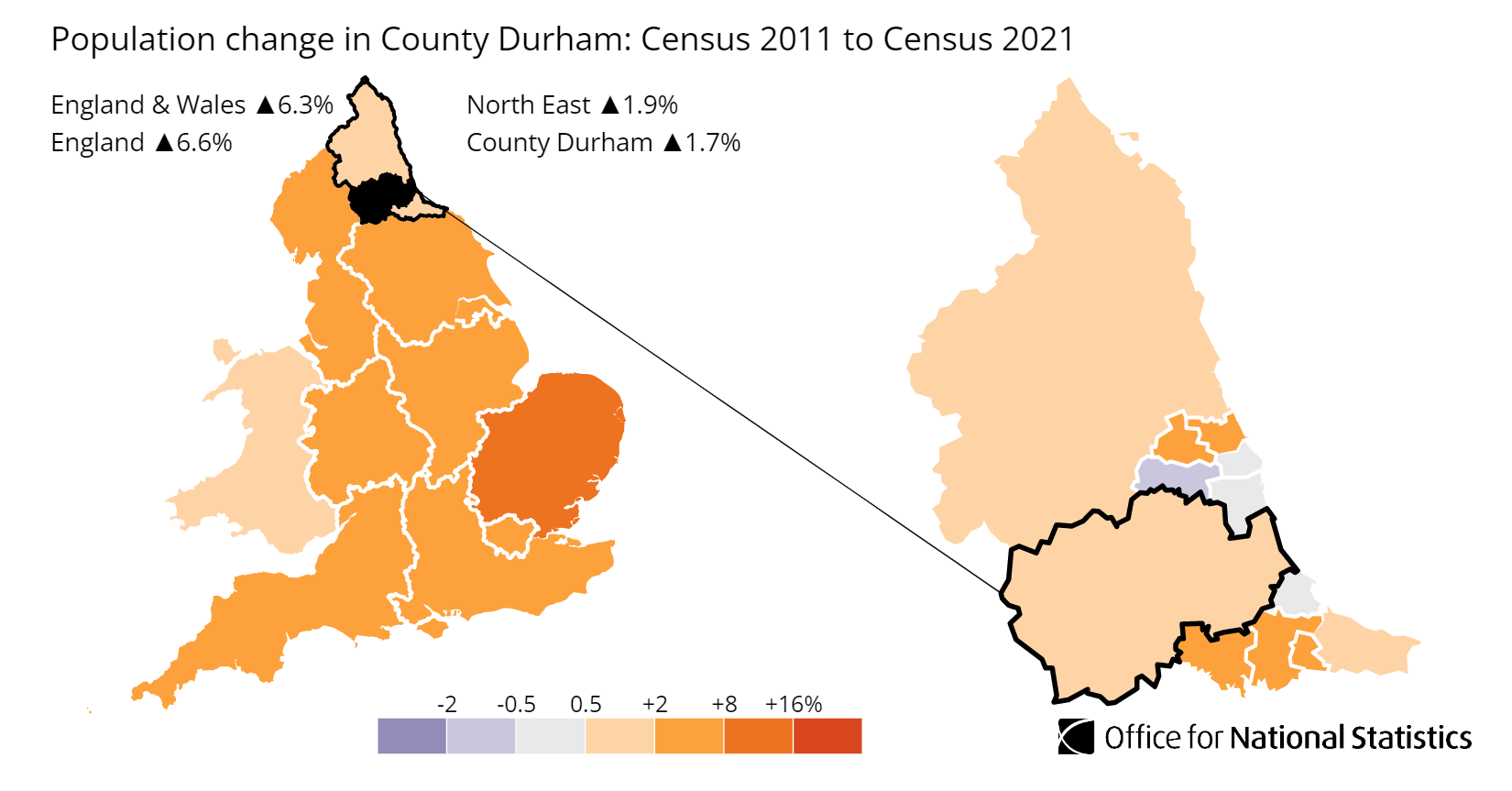
Durham's gross rental yields range from 4.2% to 5.5% across all 7 postcodes, with DH8 (Consett, Shotley Bridge) delivering the highest returns. Average sold prices sit 52.4% below the England average, and the county's population grew 1.7% to 522,068 between the 2011 and 2021 censuses.
County Durham's average sold price of £139,594 makes it one of the most affordable areas in England for buy-to-let investors. That is 16.2% below the North East regional average and creates entry points that most English cities cannot match. Asking prices start from £141,660 in DH9 (Stanley, Dipton), and rental data is available for all 7 of the county's postcodes.
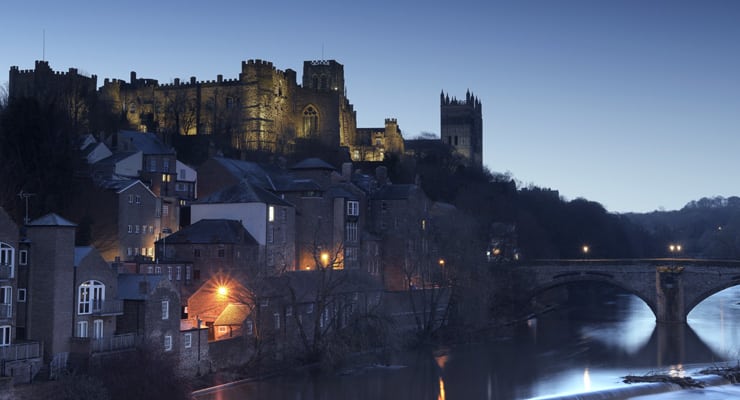
This guide covers 7 Durham postcodes from DH1 to DH9 under the County Durham unitary authority (ONS code E14001173). County Durham stretches from the former mining towns of Stanley and Consett in the north to Coxhoe and Bowburn in the south, with the cathedral city at its centre. Investors comparing options in the region may also consider Newcastle, Sunderland, or Middlesbrough. Browse all our North East location guides.
Article updated: February 2026
Durham Buy-to-Let Market Overview 2026
County Durham offers some of the lowest entry prices in England, backed by Durham University's student population and a long-term council-led regeneration programme.
- Average sold price: £139,594 (52.4% below England's £293,131)
- Asking price range: £141,660 (DH9) to £299,213 (DH1)
- Rental yields: 4.2% (DH3) to 5.5% (DH8) across all 7 postcodes
- Rental income: Monthly rents from £631 (DH9) to £1,209 (DH1)
- Price per sq ft: Sold prices from £114/sq ft (DH9) to £230/sq ft (DH1)
- Market activity: Sales ranging from 22 per month (DH2) to 44 per month (DH6 and DH8)
- Deposit requirements: 30% deposits range from £42,498 (DH9) to £89,764 (DH1)
- Affordability ratios: Property prices from 4.2 to 8.9 times Durham's median annual salary of £33,436
Contents

-
by Robert Jones, Founder of Property Investments UK
With two decades in UK property, Rob has been investing in buy-to-let since 2005, and uses property data to develop tools for property market analysis.
Property Data Sources
Our location guide relies on diverse, authoritative datasets including:
- HM Land Registry UK House Price Index
- Ministry of Housing, Communities and Local Government
- Ordnance Survey Data Hub
- Propertydata.co.uk
We update our property data quarterly to ensure accuracy. Last update: February 2026. All data is presented as provided by our sources without adjustments or amendments.
Why Invest in Durham?
County Durham's investment case starts with price. Average sold prices of £139,594 sit 52.4% below the England average. That is not a rounding error. An investor buying here gets more than double the property per pound compared to the national market.
The question is whether the rental demand exists to support those prices. It does. Durham University is a Russell Group institution with 21,588 students across 17 colleges. The student population concentrates heavily in DH1, creating reliable term-time rental demand in the city centre and surrounding areas.
Between the 2011 and 2021 censuses, County Durham's population grew from 513,242 to 522,068, a rise of 1.7%. That is modest, but County Durham is a large unitary authority covering former mining towns, market towns, and rural areas. Population growth here reflects retention rather than speculative inward migration.
Earnings sit below both the regional and national averages. The median annual salary is £33,436, compared to £34,835 across the North East and £39,125 for Great Britain. Lower local wages combined with very affordable house prices create a market where rental yields hold up well. Six of seven postcodes deliver yields above 4.8%.
What has changed since the pit closures is the employment base. The NHS, Durham County Council, and the university are the largest employers. Hitachi Rail's Newton Aycliffe factory builds Intercity Express trains. Amazon operates a large fulfilment centre at Bowburn. These are not glamorous employers, but they provide stable, long-term jobs that keep tenants paying rent.
Durham Economic Summary
- Population: 522,068 (2021 Census). Growth of 1.7% from 2011.
- Median annual salary: £33,436 (County Durham), £34,835 (North East), £39,125 (Great Britain)
- Employment rate: 72.4% (County Durham)
- Unemployment rate: 4.2% (County Durham)
- Key employment sectors: Healthcare (NHS), education, public administration, advanced manufacturing (Hitachi Rail), logistics (Amazon)
Source: ONS Census 2021, Nomis Labour Market Profile (ASHE 2025)
County Durham's employment rate of 72.4% is below the Great Britain average. The unemployment rate of 4.2% is close to the national figure of 4.3%. For buy-to-let investors, the important signal is stability. The days of single-industry dependence are gone. When one employer restructures, others absorb the workforce. That resilience matters more for long-term rental demand than headline employment numbers.
Regeneration and Investment in Durham
County Durham's regeneration is led by the council and central government rather than private developers chasing speculative returns. The investment is going into town centres that lost their economic base decades ago and into building Durham City's knowledge economy.
- Durham Innovation District (underway, £55m+ confirmed): A major employment-led programme combining the Milburngate mixed-use site, Aykley Heads business park, and Durham University facilities into a single innovation district targeting 4,000 new jobs. For investors, a city-centre employment hub of that scale will drive demand for rental housing from young professionals in DH1. Updates at Durham County Council.
- Pride in Place Programme (approved, up to £60m over 10 years): Central government funding for high street regeneration and community infrastructure in Peterlee East, Stanley South, and Crook. Up to £20m per area over a decade. Sustained public investment into town centres in DH9, DH7, and the wider county typically lifts local amenity and supports rental values in surrounding streets. Updates at Durham County Council.
- Horden Numbered Streets Regeneration (planning approved, £10.7m): Council-led demolition of derelict terraced housing and replacement with 105 new affordable homes, funded by Durham County Council (£6.2m) and the North East Combined Authority Brownfield Housing Fund (£4.5m). Wholesale clearance and rebuild of a run-down area signals long-term commitment to East Durham. Updates at Durham County Council.
County Durham Property Market Analysis
When Was the Last House Price Crash in Durham?
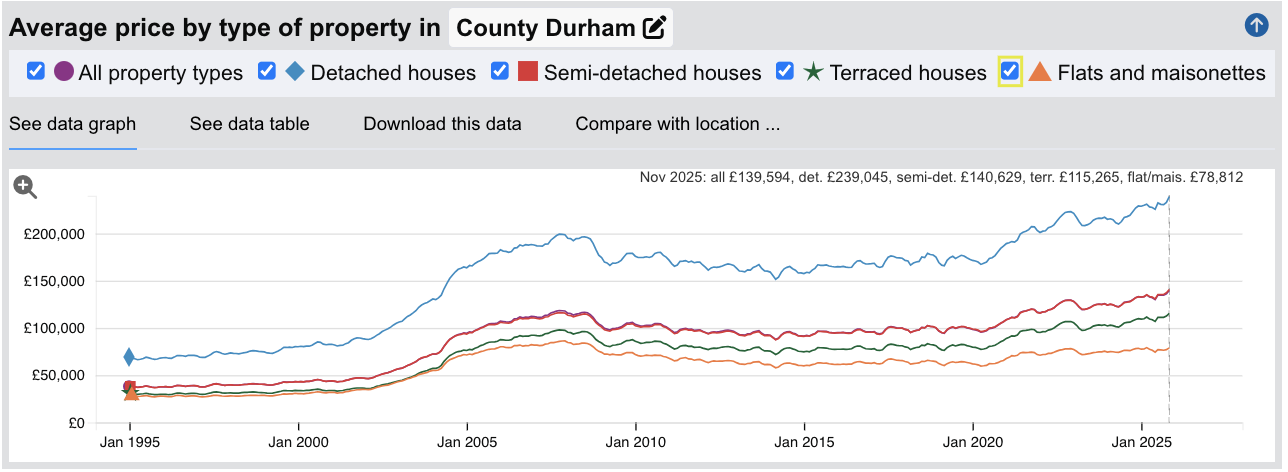
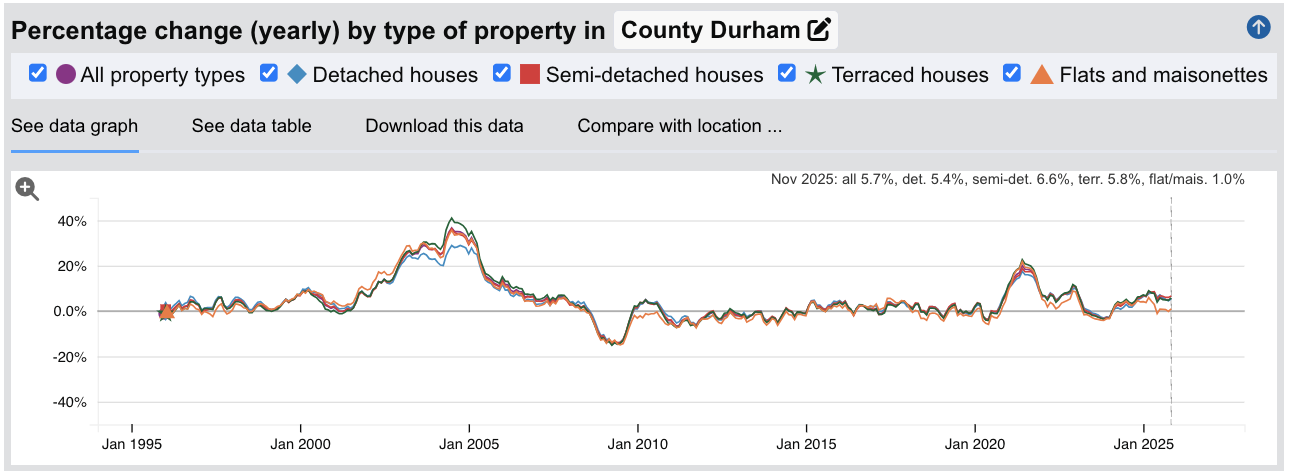
County Durham's full house price history from the HM Land Registry House Price Index runs from January 1995 to November 2025. The data shows one major crash, a painfully slow recovery, and a sharp pandemic-era surge.
- 1995-2000 (Stagnation): County Durham began 1995 at £38,128. By January 2000, prices had crept to just £42,999. Five years of near-flat growth while southern England boomed. Durham's former mining towns had not yet found their post-industrial footing.
- 2000-2007 (The boom): Prices nearly tripled from £42,999 in January 2000 to a peak of £118,371 in October 2007. Cheap credit and a national housing boom lifted prices far beyond what local wages could support. At £118,371, the average County Durham home cost 3.5 times the local median income at the time. That was historically stretched for an area with these earnings.
- 2007-2009 (The financial crisis): From the peak of £118,371 in October 2007 to a low of £99,036 by April 2009, County Durham lost 16.3% of its value in 18 months. The worst annual change reading was -14.8% in April 2009. All property types fell: detached -12.2%, semi-detached -12.9%, terraced -13.5%, flats -12.3% (March 2009 readings). County Durham's decline of 16.3% was slightly better than the North East region (-19.7%) and England (-18.2%).
- 2009-2013 (Extended trough): This is where Durham's story diverges from southern England. Prices bounced briefly to £103,709 by January 2010, then drifted down again. The trough came in April 2013 at £92,292, well below the 2009 low. County Durham experienced a double dip that cities like London and Bristol did not. The total peak-to-trough decline from October 2007 to April 2013 was 22.0%.
- 2014-2019 (Slow, painful recovery): Growth returned but at a crawl. By November 2015, prices were still only £94,939. By December 2019, the average stood at £99,499. That is still 15.9% below the October 2007 pre-crash peak. County Durham had not recovered after 12 years. While London and the South East passed their pre-crash peaks by 2013-2014, Durham was stuck.
- 2020-2022 (Pandemic surge): The stamp duty holiday and remote working shift finally broke the deadlock. Prices jumped from £98,291 in January 2020 to £129,312 by November 2022. That is 31.6% growth in under three years. Durham's extreme affordability made it a beneficiary of investors and owner-occupiers seeking value.
- 2023 (Rate shock): Interest rate rises cooled the market. Prices dipped from £129,312 in November 2022 to £124,857 by November 2023. A decline of 3.4%. Brief and mild compared to the 2008 crash.
- 2024-2025 (Recovery): Prices stabilised and began rising again. By November 2025, the average reached £139,594 with annual growth of 5.7%. County Durham finally sits 17.9% above its October 2007 pre-crash peak. It took 14 years to recover. That is the longest recovery period of any location we have covered.
Long-Term Property Value Growth in County Durham
- 5 years (2020-2025): +33.1% (£104,916 to £139,594)
- 10 years (2015-2025): +47.0% (£94,939 to £139,594)
- 15 years (2010-2025): +36.5% (£102,283 to £139,594)
- 20 years (2005-2025): +33.5% (£104,578 to £139,594)
- 30 years (1995-2025): +276.1% (£37,119 to £139,594)
The 2008 crash is the reference point for Durham investors assessing downside risk. A 22.0% decline took 14 years to recover. That is a sobering number. But the recovery did come, and the market conditions are different now. County Durham is no longer a single-industry economy. The university, the NHS, and advanced manufacturing provide a broader employment base than existed in 2007. Property prices are still among the lowest in England, which limits downside in absolute terms even if percentage declines recur.
Source: HM Land Registry House Price Index for County Durham

Thinking of Buying?
We have off-market investment properties averaging 8%+ annual yield.
View Property DealsSold House Prices in Durham
The latest sold house price index from the Land Registry shows County Durham prices sitting far below the national average. The headline figure of £139,594 is 52.4% below England's £293,131 and 16.2% below the North East's £166,568. Every property type trades at a significant discount, but flats show the widest gap.
Flats in County Durham average £78,812. That is 64.4% below the England average of £221,565. No other property type comes close to that gap. It reflects the dominance of ex-council and converted stock across the county's towns. There is no premium city-centre apartment market inflating flat prices here the way it does in Newcastle or Leeds.
| Property Type | County Durham Average | England Average | Difference |
|---|---|---|---|
| Detached houses | £239,045 | £474,400 | -49.6% |
| Semi-detached houses | £140,629 | £290,004 | -51.5% |
| Terraced houses | £115,265 | £245,002 | -53.0% |
| Flats and maisonettes | £78,812 | £221,565 | -64.4% |
| All property types | £139,594 | £293,131 | -52.4% |
Detached houses sit 49.6% below England at £239,045. These are concentrated in DH1 near the city, in the more rural fringes of DH7 and DH8, and in the established residential areas of Chester-le-Street (DH2 and DH3). For an investor, detached stock at sub-£240k in England is increasingly rare outside the North East.
Semi-detached houses show a 51.5% discount at £140,629. Semis are the core housing stock across County Durham's towns. They dominate the mid-market in DH6, DH7, DH8, and DH9. Owner-occupier demand keeps this segment relatively liquid, which matters for exit strategy planning.
Terraced houses average £115,265, a 53.0% discount to England. The Victorian and Edwardian terraces in Durham's former mining towns are the backbone of the county's rental stock. DH9 (Stanley) and DH6 (Coxhoe, Bowburn) offer some of the lowest entry points. These are the properties most commonly let to working tenants and housing benefit recipients.
Flats represent the deepest discount at 64.4% below the national market. For investors, £78,812 for a flat is an entry price that generates meaningful yields even from modest rents. But flat stock in County Durham is overwhelmingly ex-council or purpose-built social housing. Lease terms, service charges, and management quality vary widely. Due diligence on individual blocks matters more here than in any other property type.
Property Data Sources
Our location guide relies on diverse, authoritative datasets including:
- HM Land Registry UK House Price Index
- Ministry of Housing, Communities and Local Government
- Ordnance Survey Data Hub
- Propertydata.co.uk
We update our property data quarterly to ensure accuracy. Last update: February 2026. All data is presented as provided by our sources without adjustments or amendments.
Price Per Square Foot in Durham
Average asking prices can mislead. A postcode might look expensive simply because it has larger properties. Price per square foot strips out that size bias and shows what you are actually paying for space.
Durham's price per square foot ranges from £114 in DH9 (Stanley) to £230 in DH1 (City Centre), a spread of almost exactly 2x across seven postcodes. That gap reflects the difference between a former mining town and a university city. DH1 is where Durham University drives demand. DH9 is where affordability drives everything.
| Rank | Area | Price Per Sq Ft |
|---|---|---|
| 1 | DH9 (Stanley, Dipton) | £114 |
| 2 | DH6 (Coxhoe, Bowburn) | £146 |
| 3 | DH7 (Brandon, Langley Park) | £156 |
| 4 | DH8 (Consett, Shotley Bridge) | £158 |
| 5 | DH2 (Chester-le-Street, Ouston) | £177 |
| 6 | DH3 (Birtley, Great Lumley) | £190 |
| 7 | DH1 (City Centre, Gilesgate) | £230 |
DH9 at £114 per square foot is the cheapest space in County Durham and among the cheapest anywhere in England. Stanley's housing stock is predominantly terraced and ex-council. Low per-foot costs combined with 5.3% gross yield and 13.6% one-year growth make DH9 the postcode that jumps off the page for value investors. The risk is that Stanley's market is thin in places. Read the sales volume data alongside this.
DH7 and DH8 cluster together at £156 and £158 per square foot. Brandon and Consett are mid-market towns where family houses trade at roughly 30% less per square foot than Chester-le-Street. DH8 stands out because it delivers the county's highest gross yield (5.5%) from this mid-range price band. Yield per pound of space is strong here.
DH1 at £230 per square foot is the clear premium. The university and cathedral city effect is visible. DH1 is the only postcode trading above £200 per square foot, and the only one where asking prices exceed £299,000. Student lets and professional rentals near the city centre command per-room premiums that justify the higher space cost.
Figures reflect averages across all property types and ages. Individual values depend on condition, location within the postcode, and building age.
For Sale Asking Prices in Durham
Asking prices are not sold prices. They reflect what sellers and agents think the market will pay. In a rising market, asking prices run ahead of what actually transacts. In a cooling market, they sit above it.
Durham's asking prices range from £141,660 in DH9 to £299,213 in DH1. Strip out the DH1 university city premium and the remaining six postcodes sit between £141,660 and £208,696. That is a tight band for a county-wide guide and reflects how uniformly affordable County Durham remains outside the cathedral city.
| Rank | Area | Average Asking Price |
|---|---|---|
| 1 | DH9 (Stanley, Dipton) | £141,660 |
| 2 | DH2 (Chester-le-Street, Ouston) | £158,286 |
| 3 | DH6 (Coxhoe, Bowburn) | £159,955 |
| 4 | DH7 (Brandon, Langley Park) | £166,790 |
| 5 | DH8 (Consett, Shotley Bridge) | £180,570 |
| 6 | DH3 (Birtley, Great Lumley) | £208,696 |
| 7 | DH1 (City Centre, Gilesgate) | £299,213 |
Five postcodes cluster between £141,660 and £180,570. DH9, DH2, DH6, DH7, and DH8 all sit within £39,000 of each other. For investors, that means the entry price across these five areas is broadly similar. The decision comes down to yield, tenant profile, and growth trajectory rather than affordability.
DH3 at £208,696 sits in its own tier. Birtley and Great Lumley benefit from proximity to the A1(M) and Tyne and Wear, which pulls commuter demand from Sunderland and Newcastle. That demand keeps asking prices around £50,000 above the towns further west.
DH1 at £299,213 is in a different market. The university, the cathedral, and the city centre amenity all push prices to more than double the DH9 entry point. DH1 is the only postcode where an investor needs a deposit above £63,000. The premium reflects tenant quality and demand certainty from the student and professional markets.
The mean asking price across all seven Durham postcodes is £187,881. That figure appears in the comparison section later, where Durham is measured against Newcastle, Sunderland, and Middlesbrough.

House Price Growth in Durham
Growth data shows where prices have moved over 1, 3, and 5 years. For buy-to-let investors, the five-year figure matters most. It captures a full market cycle and filters out short-term noise. One-year growth can swing on a handful of transactions. Five years tells you whether an area is genuinely appreciating.
DH9 (Stanley) leads Durham's growth table at 24.5% over five years, followed by DH8 (Consett) at 18.6%. The two cheapest postcodes by price per square foot delivered the strongest growth. An investor who bought a £114,000 property in DH9 five years ago would be sitting on a property now asking £141,660. That is £27,700 in equity growth from one of the lowest entry points in England.
| Area | 1 Year | 3 Years | 5 Years |
|---|---|---|---|
| DH9 (Stanley, Dipton) | 13.6% | 14.2% | 24.5% |
| DH8 (Consett, Shotley Bridge) | -2.0% | 14.1% | 18.6% |
| DH6 (Coxhoe, Bowburn) | 3.7% | -1.2% | 15.5% |
| DH2 (Chester-le-Street, Ouston) | -2.5% | -3.4% | 13.0% |
| DH7 (Brandon, Langley Park) | -0.8% | 7.6% | 11.1% |
| DH1 (City Centre, Gilesgate) | 0.0% | 2.2% | 2.3% |
| DH3 (Birtley, Great Lumley) | -1.6% | 7.2% | -1.0% |
DH9 is the standout at every timeframe. One-year growth of 13.6% is the strongest in the county by a wide margin. Three-year growth of 14.2% and five-year growth of 24.5% confirm this is not a one-off spike. Stanley has been re-pricing upwards from a very low base. At £141,660, there is still headroom relative to the county average of £187,881.
Four postcodes show negative one-year growth. DH2 (-2.5%), DH8 (-2.0%), DH3 (-1.6%), and DH7 (-0.8%) all dipped over the past 12 months. That cooling follows the post-pandemic surge and interest rate rises in 2023. The five-year figures for these postcodes remain positive (except DH3 at -1.0%), which suggests a correction rather than a structural decline.
DH1 at 2.3% five-year growth is surprisingly flat for a university city. DH1 is the most expensive postcode in the county and its asking prices of £299,213 are already stretched relative to local wages. The growth ceiling may be lower here because owner-occupier and investor demand is price-sensitive. The university drives rental demand, not capital growth.
DH3 at -1.0% is the only postcode in negative territory over five years. Birtley and Great Lumley saw prices rise during the pandemic then fall back. At £208,696, DH3 is the second most expensive postcode. It may have overshot its fundamentals during the stamp duty holiday.
Monthly Property Sales in Durham
How quickly can you sell if you need to? Transaction volumes reveal which areas have the deepest buyer pools. High volume and high turnover mean a liquid market. Low volume means you may wait.
Durham's monthly sales range from 22 in DH2 to 44 in both DH6 and DH8, with a combined total of 245 transactions per month across all seven postcodes. Turnover rates vary dramatically, from 27% in DH7 to 61% in DH3. High turnover means properties change hands faster relative to the available stock.
| Area | Sales Per Month | Turnover | Asking Price |
|---|---|---|---|
| DH6 (Coxhoe, Bowburn) | 44 | 60% | £159,955 |
| DH8 (Consett, Shotley Bridge) | 44 | 60% | £180,570 |
| DH9 (Stanley, Dipton) | 41 | 38% | £141,660 |
| DH7 (Brandon, Langley Park) | 33 | 27% | £166,790 |
| DH1 (City Centre, Gilesgate) | 31 | 29% | £299,213 |
| DH3 (Birtley, Great Lumley) | 30 | 61% | £208,696 |
| DH2 (Chester-le-Street, Ouston) | 22 | 44% | £158,286 |
DH6 and DH8 lead with 44 sales per month each, paired with 60% turnover. Both are active markets where properties move. DH6 covers the A177 corridor south of Durham city, including Bowburn near the Amazon fulfilment centre. DH8 covers Consett and Shotley Bridge, where the regeneration of the former steelworks site has been ongoing for years. For exit strategy planning, these are the two postcodes with the deepest buyer pools.
DH7 at 27% turnover despite 33 monthly sales looks unusual. Brandon and Langley Park have a large stock of rental properties held long-term by landlords. Low turnover here means the investor base is established and holding. That is a signal of confidence from people who know the area well.
DH1 at 31 sales per month with 29% turnover reflects a tight market. Durham city centre has limited stock relative to demand. Properties sell, but the volume is constrained by the small geographic footprint. Student let properties in particular tend to be held indefinitely once purchased.
Property Data Sources
Our location guide relies on diverse, authoritative datasets including:
- HM Land Registry UK House Price Index
- Ministry of Housing, Communities and Local Government
- Ordnance Survey Data Hub
- Propertydata.co.uk
We update our property data quarterly to ensure accuracy. Last update: February 2026. All data is presented as provided by our sources without adjustments or amendments.
Durham Rental Market Analysis
For investors weighing up whether rental property is a worthwhile investment in County Durham, the data below breaks down average monthly rents and gross rental yields across the county's postcodes.
Rental data is available for all 7 postcodes. Monthly rents range from £631 in DH9 to £1,209 in DH1 and gross yields range from 4.2% to 5.5%. If you are looking to build a property portfolio in the North East, County Durham's combination of low entry prices and consistent yields across every postcode makes it a strong contender.
Average Rent & Gross Rental Yields in Durham
Gross rental yield is calculated from the average asking price and average monthly rent for each postcode. It does not account for void periods, maintenance, management fees, or mortgage costs. It is a starting point for comparison, not a profit forecast.
DH8 delivers Durham's highest gross yield at 5.5%, where monthly rents of £822 meet asking prices of £180,570. At the other end, DH3 at 4.2% reflects the highest asking prices outside DH1 absorbing moderate rents. The yield spread across County Durham is 1.3 percentage points. Tighter than many cities, which tells you this market is fairly uniformly priced relative to rents.
| Area | Avg Monthly Rent | Avg Asking Price | Gross Yield |
|---|---|---|---|
| DH8 (Consett, Shotley Bridge) | £822 | £180,570 | 5.5% |
| DH9 (Stanley, Dipton) | £631 | £141,660 | 5.3% |
| DH7 (Brandon, Langley Park) | £710 | £166,790 | 5.1% |
| DH2 (Chester-le-Street, Ouston) | £656 | £158,286 | 5.0% |
| DH6 (Coxhoe, Bowburn) | £652 | £159,955 | 4.9% |
| DH1 (City Centre, Gilesgate) | £1,209 | £299,213 | 4.8% |
| DH3 (Birtley, Great Lumley) | £738 | £208,696 | 4.2% |
Five postcodes sit between 4.9% and 5.5% gross yield. DH8, DH9, DH7, DH2, and DH6 form a tight cluster where yields are broadly similar. The differences come down to tenant profile and growth potential rather than income generation. DH8 edges it on yield, DH9 edges it on growth. For most investors, the choice between these five is about location preference rather than a significant yield advantage.
DH1 at 4.8% is a puzzle at first glance. It has the county's highest rents at £1,209 per month, nearly double the county average. But asking prices of £299,213 absorb that premium. The yield ends up mid-table. For DH1, the headline single-let figures understate what experienced landlords achieve. Student HMOs near the university generate per-room income that pushes effective yields well above 4.8%.
DH3 at 4.2% delivers the lowest yield in the county. Birtley and Great Lumley sit close to the Tyne and Wear border, which pulls asking prices higher through commuter demand. But rents at £738 do not keep pace. This is the one postcode where the price-rent balance tilts against income-focused investors.
Is Durham Rent High?
Rent affordability matters from both sides. For tenants, it determines whether they can sustain payments long-term. For landlords, areas where rent consumes a lower share of income tend to produce more reliable tenants and fewer arrears.
The median gross weekly salary in County Durham is £643.00, which equates to £2,786 per month or £33,436 per year. This is below the North East regional median of £669.90 per week and the Great Britain median of £752.40 per week. Data from the Nomis Labour Market Profile (ASHE 2025).
Across all seven Durham postcodes, rent ranges from 22.6% to 43.4% of the local median gross monthly salary. The general benchmark is that rent becomes stretched above 30% of gross income. Only one of the seven postcodes sits above that level, which is a strong signal for investor confidence in rent sustainability.
| Rank | Area | Rent as % of Income |
|---|---|---|
| 1 | DH1 (City Centre, Gilesgate) | 43.4% |
| 2 | DH8 (Consett, Shotley Bridge) | 29.5% |
| 3 | DH3 (Birtley, Great Lumley) | 26.5% |
| 4 | DH7 (Brandon, Langley Park) | 25.5% |
| 5 | DH2 (Chester-le-Street, Ouston) | 23.5% |
| 6 | DH6 (Coxhoe, Bowburn) | 23.4% |
| 7 | DH9 (Stanley, Dipton) | 22.6% |
DH1 at 43.4% looks stretched on paper. But Durham city centre rents are driven by the student and professional market, not by County Durham's median wage earner. University staff, postgraduates, and young professionals working in the city earn above the county median. The 43.4% figure overstates the pressure on actual DH1 tenants.
Six of seven postcodes sit below 30%, and five sit below 27%. That is unusually affordable for a county with yields above 4%. Low rent-to-income ratios mean tenants can absorb modest rent increases without financial stress. For landlords, that translates to lower arrears risk, longer tenancies, and less void. DH9 at 22.6% is the most affordable, consistent with its position as the cheapest postcode by every price measure.
Thinking of Buying?
We have off-market investment properties averaging 8%+ annual yield.
View Property DealsBuy-to-Let Considerations
Are Durham House Prices High? Price-to-Earnings Ratios
The price-to-earnings ratio compares a postcode's average asking price to the local median annual salary. Lower ratios mean more affordable entry points relative to local wages. The national benchmark is 7.5x, calculated from England's average sold price of £293,131 against Great Britain's median annual salary of £39,125.
Purchasing a property in County Durham requires between 4.2 and 8.9 times the median annual salary. This is based on the Nomis Labour Market Profile for County Durham showing the median gross annual income for County Durham residents is £33,436.
Six of Durham's seven postcodes sit below the national benchmark of 7.5x. Only DH1 at 8.9x exceeds it, and that reflects the university city premium rather than the county-wide market. The lowest ratio is 4.2x in DH9. At that level, property costs four years of the local median salary. That kind of affordability is virtually extinct in southern England.
| Rank | Area | Price-to-Earnings Ratio |
|---|---|---|
| 1 | DH9 (Stanley, Dipton) | 4.2x |
| 2 | DH2 (Chester-le-Street, Ouston) | 4.7x |
| 3 | DH6 (Coxhoe, Bowburn) | 4.8x |
| 4 | DH7 (Brandon, Langley Park) | 5.0x |
| 5 | DH8 (Consett, Shotley Bridge) | 5.4x |
| 6 | DH3 (Birtley, Great Lumley) | 6.2x |
| 7 | DH1 (City Centre, Gilesgate) | 8.9x |
The five cheapest postcodes all sit below 5.5x, which is remarkable by national standards. DH9, DH2, DH6, DH7, and DH8 are priced at levels that make mortgage serviceability straightforward for most investors. These same postcodes deliver yields between 4.9% and 5.5%. Affordable entry prices and strong rental returns in the same areas is exactly the combination that income-focused investors look for.
DH1 at 8.9x is the only postcode above the national benchmark. The university and cathedral city command a premium that pushes DH1 beyond the affordability profile of the rest of the county. For investors, DH1 offers different dynamics: higher rents, higher deposits, and a tenant base that is not tied to local wages.
Deposit Requirements in Durham
Most buy-to-let mortgage lenders require a minimum 25% deposit. The table below uses a more conservative 30% to reflect the rates and products available at higher loan-to-value ratios. A 30% deposit typically unlocks better interest rates, which matters for cash flow in a yield-driven market.
Durham's entry costs range from £42,498 in DH9 to £89,764 in DH1. Six of seven postcodes require deposits under £63,000. That is the kind of capital accessibility that makes County Durham attractive to first-time investors who might be priced out of Newcastle or Leeds.
| Rank | Area | 30% Deposit Required |
|---|---|---|
| 1 | DH9 (Stanley, Dipton) | £42,498 |
| 2 | DH2 (Chester-le-Street, Ouston) | £47,486 |
| 3 | DH6 (Coxhoe, Bowburn) | £47,987 |
| 4 | DH7 (Brandon, Langley Park) | £50,037 |
| 5 | DH8 (Consett, Shotley Bridge) | £54,171 |
| 6 | DH3 (Birtley, Great Lumley) | £62,609 |
| 7 | DH1 (City Centre, Gilesgate) | £89,764 |
DH9 at £42,498 is the lowest deposit in the table and delivers the strongest five-year growth (24.5%) alongside a 5.3% yield. For capital-constrained investors, there is no cheaper entry point in County Durham that also delivers above-5% returns. The next tier of DH2, DH6, and DH7 (£47,486 to £50,037) offers similar yields at marginally higher capital outlay.
A clear gap separates the sub-£55,000 tier from DH3 and DH1. DH3 at £62,609 and DH1 at £89,764 sit in a different capital bracket. DH1 is the only postcode where a 30% deposit exceeds £63,000. For investors targeting the university city, that premium buys access to Durham's strongest rental demand and the county's highest absolute rents.
Deposit is only part of the upfront cost. Budget for stamp duty (use our stamp duty calculator for an accurate figure), legal fees, and survey costs. For a full breakdown, see our guide to buy-to-let costs.
What the Durham Data Tells Buy-to-Let Investors
The postcode-level data across this guide points to two distinct investment profiles depending on whether you are optimising for income, growth, or both. For investors browsing investment property in the North East, County Durham's numbers are worth a close look.
For yield, the numbers favour DH8 (5.5%), DH9 (5.3%), and DH7 (5.1%). All three sit below 5.4x price-to-earnings with 30% deposits between £42,498 and £54,171. DH8 stands out for combining the county's highest yield with 18.6% five-year growth and strong liquidity at 44 sales per month. DH9 edges it on affordability and growth. DH7 offers the lowest turnover, suggesting an established landlord base that knows the area works.
For growth, DH9 (24.5%) and DH8 (18.6%) lead the field. These are the same postcodes that top the yield table. That convergence of yield and growth in the same areas is the strongest signal in the data. In most counties, cheap postcodes deliver yield but not growth, or growth but not yield. DH9 and DH8 deliver both.
DH1 suits a different investor. Asking prices of £299,213 and a deposit of £89,764 put it in a different capital bracket. The yield at 4.8% is mid-table. The five-year growth at 2.3% is the second weakest. But DH1 offers what the other postcodes cannot: a Russell Group university, consistent student demand, and the option to run HMO lets at per-room rates well above the headline single-let figures. DH3 at 4.2% yield and negative five-year growth is the one postcode the data does not favour for buy-to-let at current prices.
How Durham Buy-to-Let Compares to Nearby Areas
At £187,881 mean asking price, Durham sits between Sunderland (£164,426) and Newcastle (£254,411) in the North East pecking order. The table below compares Durham against three nearby areas using the same methodology: mean asking price across all postcodes, mean monthly rent across postcodes with data, and top single-postcode gross yield.
| Location | Mean Asking Price | Mean Monthly Rent | Top Gross Yield |
|---|---|---|---|
| Sunderland | £164,426 | £691 | 9.7% |
| Middlesbrough | £187,133 | £717 | 8.3% |
| Durham | £187,881 | £774 | 5.5% |
| Newcastle | £254,411 | £1,166 | 9.7% |
Durham's mean asking price of £187,881 sits between Sunderland and Newcastle, almost identical to Middlesbrough. But Durham's top yield of 5.5% is lower than all three comparison locations. Newcastle and Sunderland both hit 9.7% in their top postcodes, and Middlesbrough reaches 8.3%.
The yield gap deserves context. Those higher headline yields in Newcastle, Sunderland, and Middlesbrough come from specific postcodes with very high rental demand relative to asking prices. Durham's yield range of 4.2% to 5.5% is narrower and more consistent. Every single postcode in the county delivers above 4%. The consistency may appeal to investors who prefer predictable returns over chasing the top number.
Durham's advantage is its university. None of the other three comparison locations have a Russell Group university. Durham University creates a tenant base that is funded externally (student loans, parental support), insulated from local economic cycles, and replenished every September. For investors who value demand certainty over headline yield, that institutional anchor is worth the yield trade-off.
Frequently Asked Questions
What are the best areas in Durham for buy-to-let?
It depends on what you are buying for. DH8 covers Consett and Shotley Bridge in the north-west of the county. These are former steel and mining towns that have reinvented themselves as affordable commuter areas with good road links to Newcastle via the A694. DH8 delivers the county's highest yield at 5.5% and 18.6% five-year growth. DH9 covers Stanley and Dipton, similar former mining communities with the county's lowest asking prices and strongest growth at 24.5%. Both areas attract working tenants rather than students. DH1 is Durham City itself, where the university drives rental demand and landlords can run HMOs at per-room rates above the headline figures. Each area suits a different strategy, and the postcode tables above break down the numbers for all seven.
Why is Durham property so cheap?
County Durham's low prices reflect its economic history. The coalfield closures of the 1980s and 1990s removed the primary employer from dozens of towns across the county, and the housing stock built for mining families remained long after the jobs went. Much of the county's terraced housing dates from that era. Distance from major employment centres is a factor too. Durham City is well connected, but outlying towns like Stanley, Consett, and Peterlee sit further from the economic pull of Newcastle and Teesside. Lower local wages (median £33,436 vs £39,125 nationally) cap what buyers and tenants can afford. For investors, the result is entry prices that are 52.4% below the England average. The key question is whether rents hold up relative to those prices. The yield data across this guide shows that they do.
Is student accommodation a good investment in Durham?
Durham University has 21,588 students across 17 colleges. The collegiate system means many first-years live in college accommodation, but second and third-year students typically rent in the private sector. DH1 postcodes near the city centre, Gilesgate, and Viaduct are the core student letting areas. Headline single-let yields of 4.8% in DH1 understate what HMO landlords achieve per room. Seasonal void risk exists during summer, though Durham's growing postgraduate population reduces this. For a broader view of the sector, see our guide to purpose-built student accommodation.
Are there property investment companies operating in Durham?
Several firms market buy-to-let properties in County Durham, particularly targeting the student market in DH1 and refurbished terraces in the former mining towns. Be cautious with any company offering guaranteed yields or sourcing fees above 2-3% of purchase price. The data in this guide covers the open market. Any property sold through an investment company could be benchmarked against these figures but it does not guarantee a market value as these are average values.
Can I find buy-to-let property in Durham under £100,000?
The average asking prices in this guide range from £141,660 (DH9) to £299,213 (DH1), but these are postcode averages across all property types. Individual terraced houses in DH9 (Stanley) and DH6 (Coxhoe) do list below £100,000, and flats across several postcodes regularly appear at sub-£80,000. County Durham's average flat price of £78,812 from the Land Registry confirms that sub-£100,000 stock exists in volume. At that price point, a 30% deposit is under £30,000. Due diligence on actual tenant demand, property condition, and the specific street matters at the lower end of the market.