
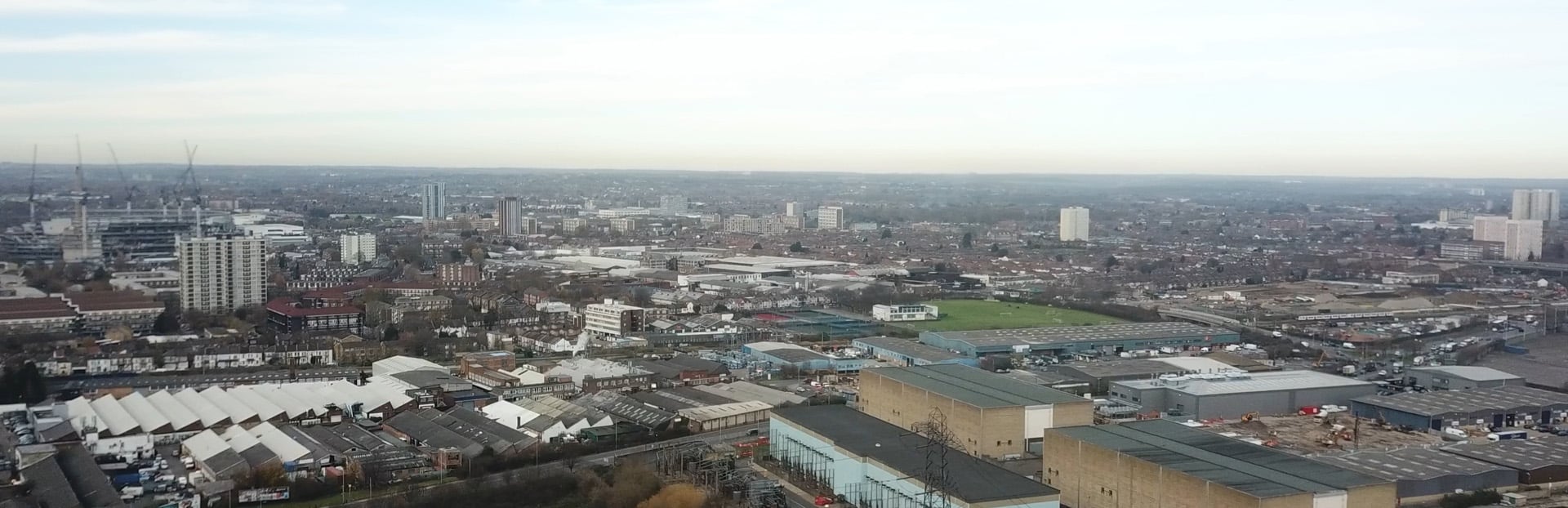
Tottenham is a district of north London, in the London Borough of Haringey. Average sold prices across Haringey sit at £646,557 on the HM Land Registry House Price Index, 19.2% above the London regional average of £542,378 and 123.0% above England's £289,946. That headline masks a borough that splits sharply from west to east. Tottenham sits at the cheaper, higher-yielding end of Haringey, where N17 carries a £433,256 asking price against Muswell Hill's £768,418 in N10. For an income investor the arithmetic is the reverse of the usual London pattern: the cheapest Tottenham postcode, N17, delivers the highest gross yield at 6.1%, while the dearest, N10, sits at 3.3%.
The rental side is where Tottenham's data is loudest. Every one of its five postcodes reads as a landlord's market on the lettings measure, with homes finding a tenant in 27 to 57 days, and N17 clears fastest of all at 27 days. Median gross earnings across Haringey are £43,995 a year, drawn from weekly pay of £846.10, below the London median of £892.60 a week but above the Great Britain figure of £752.40. Private renting is the majority or near-majority tenure across the eastern postcodes, so the question for a Tottenham landlord is rarely whether a property will let, and more what return the asking price allows.
This guide covers the Tottenham area of the London Borough of Haringey (ONS code E09000014) across postcodes N8, N10, N15, N17 and N22. Tottenham sits in north London, roughly seven miles north of the City, with Tottenham Hale on the Victoria line and the West Anglia main line into Liverpool Street. The wider Haringey buy-to-let market also takes in Crouch End and Highgate to the west.
Article updated: July 2026

Why Invest in Tottenham?
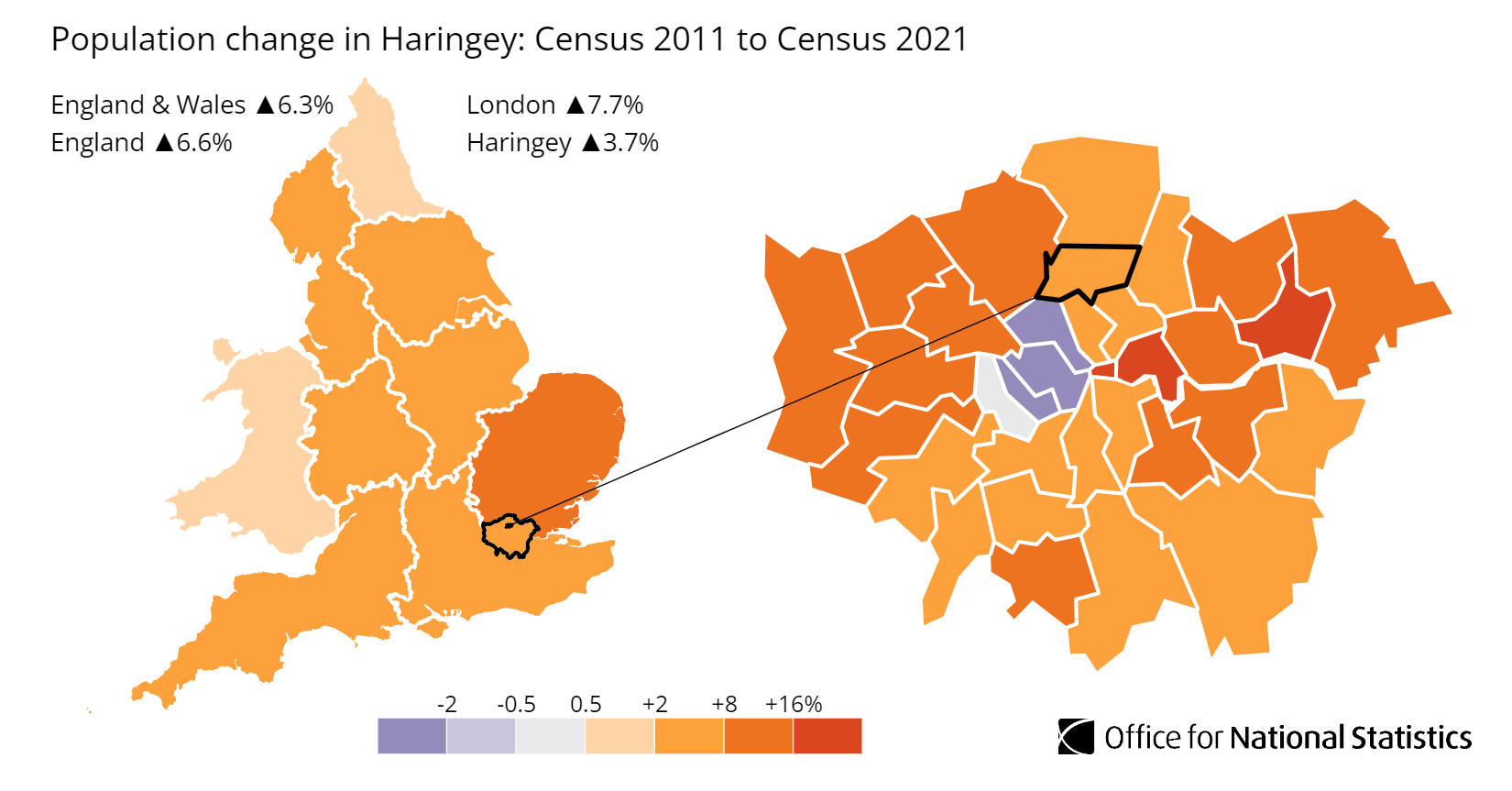
Haringey, the local authority Tottenham sits within, grew its population 3.65% between the 2011 and 2021 censuses, from 254,926 to 264,238 residents, slower than the England and Wales average of 6.3%. The headcount understates how much is moving on the ground. Tottenham, in the east of the borough, sits at the centre of one of London's largest live regeneration programmes, from the ground around the Tottenham Hotspur Stadium to the transport hub at Tottenham Hale. It is a younger, more mobile and more heavily renting part of Haringey than the settled west around Muswell Hill and Crouch End.
The median gross annual salary for Haringey residents is £43,995, drawn from weekly earnings of £846.10. That runs below the London regional median of £892.60 a week but above the Great Britain median of £752.40. The employment rate of 71.5% sits under the Great Britain figure of 75.6%, and the unemployment rate of 7.1% is higher than the national picture. Those readings describe the young, transient population that fills a deep private rented sector rather than a shortage of demand.
Rental demand is the single strongest signal in Tottenham's numbers. All five postcodes carry live rental listings, and every one reads as a landlord's market on the lettings side, letting in 27 to 57 days. In N17 and N15, where private renting is 34.8% and 40.8% of households, an incoming landlord is buying into an established, majority-renting market rather than testing one.
Tottenham Economic Summary
- Population (Haringey): 264,238 (2021 Census). Growth of 3.65% from 2011.
- Median annual salary: £43,995 (local), £892.60 per week (London), £752.40 per week (Great Britain)
- Employment rate: 71.5% (local), 75.6% (Great Britain)
- Unemployment rate: 7.1% (local)
- Key features: Deep private rented sector, fast-letting market, major regeneration around Tottenham Hale and the stadium, sharp east-west price divide across Haringey
Source: ONS Census 2021, Nomis Labour Market Profile for Haringey (ASHE 2025)
Regeneration and Investment in Tottenham
Tottenham anchors more than £2.5 billion of regeneration along Haringey's eastern corridor, with over 3,600 new homes planned across High Road West and Tottenham Hale. The investment lands squarely on the cheaper, higher-yielding N17, N15 and N22 postcodes, where new housing, added transport capacity and new jobs are arriving together rather than one at a time.
- High Road West, Tottenham (Under construction, £2 billion programme): A regeneration programme next to the Tottenham Hotspur Stadium in N17, delivered by Lendlease with The Crown Estate, covering 2,600 new homes with 40% affordable and at least 500 council homes at council rents. Phase A, 61 homes at the Love Lane Estate, was approved in February 2026. The scheme sits in the postcode carrying Tottenham's highest gross yield. Updates at Haringey Council.
- Tottenham Hale (In delivery, £600m+): A mixed-use scheme built around the Tottenham Hale Victoria line and rail interchange in N17, comprising 1,032 new homes across seven buildings. Related Argent is delivering the Ferry Island scheme through 2026, and the nearby Ashley Road Depot adds a further 275 council homes. The interchange puts the West End roughly 20 minutes away by tube. Updates at Haringey Council.
- Tottenham Hotspur Stadium (Completed, £1 billion): The 62,850-seat stadium opened in 2019 on the High Road and has become the spine of the wider eastern regeneration, drawing year-round events and hospitality footfall to N17. Its presence is the reason the High Road West programme was assembled around it rather than on a greenfield edge.
Source: Office for National Statistics - Population for Haringey
Tottenham Property Market Analysis
Average property prices in Haringey have risen 688.5% since January 1995, from £81,997 to £646,557. The sections below trace that journey cycle by cycle, then drill into current postcode-level data for sold prices, price per square foot, asking prices, growth trends, and monthly transaction volumes.
When was the last house price crash in Tottenham?
Tottenham sits within the London Borough of Haringey, so all sold property prices from HM Land Registry are recorded at that level. Haringey takes in Tottenham and Wood Green in the east alongside Crouch End, Hornsey, Muswell Hill and Highgate to the west. The Land Registry House Price Index tracks average prices from January 1995 to March 2026, covering 31 years of market cycles.
The 1995 to 2007 boom: Haringey started at £81,997 in January 1995. By December 2000 the average had reached £160,965, a 96.3% rise in six years as London's inner suburbs re-rated. Growth ran hard through the early 2000s, reaching £262,899 by December 2005. The market peaked at £351,634 in October 2007.
2008 to 2009, the financial crisis: Prices fell from the October 2007 peak of £351,634 to a trough of £280,048 in February 2009, a decline of 20.4% over 16 months. Haringey's fall was steeper than the England average, in line with the sharper swings that inner-London markets tend to show when credit tightens.
The 2010 to 2013 recovery: Prices bounced off the February 2009 trough quickly. By December 2010 the average stood at £342,274, and it first surpassed the October 2007 pre-crash peak of £351,634 in April 2011 at £352,594. Recovery took just over three years, far quicker than most of the country, as London led the national rebound.
2013 to 2016, the London surge: This was Haringey's defining run. Prices climbed from £419,255 in December 2013 to £548,595 by March 2016, a 30.8% gain in a little over two years, as buyers priced out of central London pushed north and Tottenham's regeneration story began to build. Growth then cooled as stamp duty changes and affordability limits took the heat out of the top end.
2017 to 2019, the plateau: Prices held broadly flat through the late 2010s, sitting at £599,068 by December 2019 after several years grinding sideways. Haringey had re-rated so far so fast that the market needed a period to consolidate.
2020 to 2022, the pandemic: The race for space favoured houses with gardens over flats, and Haringey's flat-heavy stock meant it lagged the frenzy seen in outer commuter towns. Prices still moved up from £578,332 in June 2020 to £634,678 by December 2022.
2023 onwards, the rate shock and record high: Higher mortgage rates cooled the market, but Haringey ground on to an all-time high of £653,146 in October 2025 before easing to £646,557 by the latest reading in March 2026. That is 1.0% off the record, a mild cooling rather than a correction, and the current price sits 83.9% above the October 2007 pre-crash peak.
Long-term growth summary:
- 5 years (March 2021 to March 2026): 9.4% growth (£590,899 to £646,557)
- 10 years (March 2016 to March 2026): 17.9% growth (£548,595 to £646,557)
- 15 years (December 2010 to March 2026): 88.9% growth (£342,274 to £646,557)
- 20 years (December 2005 to March 2026): 145.9% growth (£262,899 to £646,557)
- 30 years (January 1995 to March 2026): 688.5% growth (£81,997 to £646,557)
Haringey's 20.4% crash was deeper than the national fall, but the recovery was faster, back above the pre-crash peak in just over three years against England's longer wait. The 30-year return of 688.5% is the headline for a long-hold investor, an area that has almost eight-folded over three decades. An investor who bought at the exact peak in October 2007 would now be sitting on gains of 83.9% on the Land Registry average, though the flatter five-year reading of 9.4% shows how much of that growth landed in the 2013 to 2016 surge rather than recently.
- All property types
- Detached
- Semi-detached
- Terraced
- Flats
Source: HM Land Registry House Price Index
| Year | All property types | Detached | Semi-detached | Terraced | Flats |
|---|---|---|---|---|---|
| 1995-01 | £81,997 | £292,954 | £140,768 | £88,386 | £68,696 |
| 1995-02 | £84,806 | £298,506 | £145,245 | £92,006 | £70,497 |
| 1995-03 | £84,398 | £295,951 | £144,318 | £91,541 | £70,227 |
| 1995-04 | £85,499 | £296,989 | £145,808 | £92,786 | £71,177 |
| 1995-05 | £85,314 | £297,092 | £145,746 | £92,300 | £71,302 |
| 1995-06 | £85,940 | £297,841 | £146,731 | £92,757 | £72,111 |
| 1995-07 | £86,789 | £302,136 | £148,620 | £93,854 | £72,546 |
| 1995-08 | £87,296 | £304,695 | £149,631 | £94,546 | £72,777 |
| 1995-09 | £88,290 | £310,772 | £151,861 | £95,748 | £73,358 |
| 1995-10 | £87,913 | £311,596 | £151,637 | £94,922 | £73,434 |
| 1995-11 | £87,201 | £307,529 | £150,191 | £93,688 | £73,423 |
| 1995-12 | £87,414 | £307,654 | £150,416 | £93,786 | £73,777 |
| 1996-01 | £87,790 | £306,690 | £150,658 | £94,378 | £73,963 |
| 1996-02 | £89,290 | £311,288 | £153,539 | £96,177 | £74,992 |
| 1996-03 | £89,027 | £315,817 | £153,779 | £95,818 | £74,688 |
| 1996-04 | £89,890 | £318,208 | £155,116 | £96,329 | £75,909 |
| 1996-05 | £90,436 | £321,124 | £155,553 | £97,054 | £76,245 |
| 1996-06 | £91,029 | £319,950 | £155,927 | £97,760 | £76,785 |
| 1996-07 | £90,995 | £322,876 | £156,616 | £98,168 | £76,135 |
| 1996-08 | £90,452 | £326,803 | £156,672 | £97,582 | £75,484 |
| 1996-09 | £89,996 | £323,285 | £156,165 | £97,133 | £75,063 |
| 1996-10 | £91,543 | £330,243 | £158,995 | £98,760 | £76,360 |
| 1996-11 | £93,518 | £335,096 | £162,131 | £100,796 | £78,179 |
| 1996-12 | £95,939 | £344,617 | £166,573 | £103,321 | £80,257 |
| 1997-01 | £97,242 | £346,726 | £168,764 | £104,862 | £81,250 |
| 1997-02 | £97,386 | £347,324 | £169,140 | £104,933 | £81,409 |
| 1997-03 | £97,828 | £349,938 | £169,797 | £105,605 | £81,548 |
| 1997-04 | £97,662 | £351,188 | £169,995 | £105,454 | £81,328 |
| 1997-05 | £99,934 | £360,292 | £174,816 | £108,175 | £82,915 |
| 1997-06 | £100,539 | £366,072 | £176,775 | £108,979 | £83,183 |
| 1997-07 | £104,069 | £379,541 | £183,132 | £112,959 | £85,956 |
| 1997-08 | £103,160 | £377,856 | £181,637 | £111,952 | £85,199 |
| 1997-09 | £106,798 | £391,918 | £188,346 | £115,809 | £88,247 |
| 1997-10 | £107,642 | £395,776 | £190,005 | £116,533 | £89,079 |
| 1997-11 | £109,472 | £404,116 | £193,518 | £118,549 | £90,526 |
| 1997-12 | £109,129 | £401,128 | £192,646 | £118,049 | £90,388 |
| 1998-01 | £108,585 | £401,265 | £191,864 | £117,734 | £89,677 |
| 1998-02 | £109,263 | £399,085 | £192,314 | £118,304 | £90,430 |
| 1998-03 | £111,551 | £406,356 | £196,464 | £120,864 | £92,217 |
| 1998-04 | £113,267 | £411,663 | £199,898 | £122,709 | £93,626 |
| 1998-05 | £116,462 | £424,283 | £205,723 | £126,430 | £96,053 |
| 1998-06 | £117,495 | £427,728 | £207,062 | £127,417 | £97,043 |
| 1998-07 | £118,422 | £431,484 | £208,869 | £128,503 | £97,735 |
| 1998-08 | £119,872 | £442,440 | £212,186 | £130,059 | £98,851 |
| 1998-09 | £118,967 | £443,682 | £211,554 | £129,377 | £97,783 |
| 1998-10 | £119,143 | £441,807 | £211,010 | £128,948 | £98,460 |
| 1998-11 | £117,079 | £432,557 | £207,087 | £126,153 | £97,199 |
| 1998-12 | £115,403 | £423,301 | £203,534 | £123,920 | £96,187 |
| 1999-01 | £115,570 | £427,197 | £204,345 | £124,277 | £96,134 |
| 1999-02 | £116,840 | £432,926 | £207,027 | £125,956 | £96,923 |
| 1999-03 | £118,199 | £437,658 | £209,281 | £127,354 | £98,086 |
| 1999-04 | £119,856 | £440,656 | £211,761 | £129,524 | £99,248 |
| 1999-05 | £122,549 | £445,473 | £215,542 | £132,446 | £101,556 |
| 1999-06 | £126,454 | £460,623 | £222,781 | £137,080 | £104,489 |
| 1999-07 | £131,934 | £485,126 | £233,212 | £143,130 | £108,873 |
| 1999-08 | £136,614 | £506,619 | £242,555 | £148,538 | £112,430 |
| 1999-09 | £141,956 | £530,012 | £252,657 | £153,990 | £117,007 |
| 1999-10 | £140,714 | £523,225 | £249,730 | £151,872 | £116,550 |
| 1999-11 | £138,392 | £513,911 | £245,248 | £149,161 | £114,788 |
| 1999-12 | £139,768 | £511,464 | £245,714 | £150,534 | £116,162 |
| 2000-01 | £143,978 | £530,762 | £254,740 | £155,332 | £119,368 |
| 2000-02 | £146,631 | £537,745 | £259,042 | £158,210 | £121,638 |
| 2000-03 | £148,687 | £549,847 | £264,569 | £160,901 | £122,916 |
| 2000-04 | £152,297 | £558,948 | £269,701 | £164,484 | £126,250 |
| 2000-05 | £154,310 | £566,759 | £273,589 | £166,265 | £128,158 |
| 2000-06 | £159,732 | £583,738 | £282,450 | £171,396 | £133,225 |
| 2000-07 | £162,342 | £599,998 | £288,554 | £174,157 | £135,263 |
| 2000-08 | £166,832 | £620,699 | £296,953 | £178,086 | £139,551 |
| 2000-09 | £164,628 | £618,645 | £293,406 | £175,259 | £137,958 |
| 2000-10 | £160,859 | £603,273 | £286,321 | £170,760 | £135,171 |
| 2000-11 | £161,819 | £609,380 | £287,886 | £171,629 | £136,073 |
| 2000-12 | £160,965 | £602,060 | £286,066 | £170,340 | £135,681 |
| 2001-01 | £165,962 | £615,285 | £293,857 | £175,905 | £139,829 |
| 2001-02 | £166,388 | £614,005 | £294,769 | £176,676 | £140,004 |
| 2001-03 | £168,746 | £623,621 | £299,280 | £179,770 | £141,550 |
| 2001-04 | £169,479 | £629,908 | £300,076 | £180,327 | £142,346 |
| 2001-05 | £174,098 | £644,619 | £307,012 | £185,224 | £146,345 |
| 2001-06 | £179,047 | £655,864 | £313,902 | £189,955 | £151,095 |
| 2001-07 | £180,991 | £661,814 | £317,687 | £192,144 | £152,620 |
| 2001-08 | £183,660 | £670,240 | £321,879 | £194,880 | £154,991 |
| 2001-09 | £182,572 | £674,355 | £320,602 | £193,656 | £154,025 |
| 2001-10 | £186,367 | £688,343 | £327,365 | £197,283 | £157,521 |
| 2001-11 | £183,711 | £676,590 | £322,893 | £193,909 | £155,707 |
| 2001-12 | £188,798 | £687,152 | £330,561 | £198,272 | £160,957 |
| 2002-01 | £186,372 | £673,713 | £325,427 | £195,022 | £159,526 |
| 2002-02 | £187,775 | £674,209 | £326,792 | £196,569 | £160,777 |
| 2002-03 | £190,341 | £683,985 | £331,827 | £199,611 | £162,645 |
| 2002-04 | £195,392 | £696,605 | £338,890 | £204,483 | £167,465 |
| 2002-05 | £203,526 | £724,100 | £352,778 | £212,626 | £174,752 |
| 2002-06 | £208,285 | £728,551 | £358,086 | £217,552 | £179,187 |
| 2002-07 | £217,660 | £763,442 | £374,684 | £227,914 | £186,754 |
| 2002-08 | £223,143 | £782,597 | £383,557 | £233,659 | £191,498 |
| 2002-09 | £224,132 | £794,749 | £387,035 | £234,797 | £192,069 |
| 2002-10 | £226,198 | £798,961 | £390,700 | £236,542 | £194,180 |
| 2002-11 | £228,144 | £807,785 | £393,493 | £237,953 | £196,377 |
| 2002-12 | £234,491 | £824,719 | £404,148 | £243,702 | £202,592 |
| 2003-01 | £233,804 | £818,713 | £400,663 | £243,230 | £202,010 |
| 2003-02 | £234,030 | £810,233 | £400,811 | £243,199 | £202,504 |
| 2003-03 | £232,827 | £800,455 | £397,119 | £242,408 | £201,262 |
| 2003-04 | £232,180 | £788,756 | £396,029 | £241,215 | £201,180 |
| 2003-05 | £234,289 | £789,346 | £398,834 | £244,587 | £202,180 |
| 2003-06 | £235,296 | £797,756 | £400,598 | £245,409 | £203,192 |
| 2003-07 | £240,584 | £819,234 | £410,972 | £251,661 | £207,047 |
| 2003-08 | £240,165 | £823,005 | £410,841 | £251,451 | £206,424 |
| 2003-09 | £239,305 | £817,168 | £410,226 | £251,815 | £204,645 |
| 2003-10 | £238,045 | £810,078 | £406,317 | £250,659 | £203,589 |
| 2003-11 | £240,661 | £815,109 | £410,561 | £253,074 | £206,136 |
| 2003-12 | £240,517 | £809,574 | £408,749 | £252,367 | £206,606 |
| 2004-01 | £241,547 | £813,875 | £411,332 | £253,751 | £207,184 |
| 2004-02 | £243,170 | £822,328 | £414,014 | £256,022 | £208,108 |
| 2004-03 | £246,696 | £830,190 | £419,654 | £260,073 | £210,796 |
| 2004-04 | £249,685 | £834,600 | £423,930 | £263,644 | £213,177 |
| 2004-05 | £249,326 | £817,882 | £421,188 | £263,451 | £212,960 |
| 2004-06 | £250,975 | £818,424 | £423,174 | £265,369 | £214,335 |
| 2004-07 | £255,655 | £835,397 | £432,175 | £271,005 | £217,857 |
| 2004-08 | £260,678 | £861,791 | £441,784 | £276,656 | £221,832 |
| 2004-09 | £265,165 | £884,367 | £451,013 | £282,202 | £225,054 |
| 2004-10 | £261,867 | £867,923 | £442,712 | £278,102 | £222,786 |
| 2004-11 | £262,340 | £862,325 | £442,076 | £278,670 | £223,268 |
| 2004-12 | £260,260 | £844,464 | £435,427 | £276,267 | £221,854 |
| 2005-01 | £263,569 | £858,346 | £440,947 | £280,162 | £224,438 |
| 2005-02 | £262,245 | £861,691 | £440,159 | £279,432 | £222,788 |
| 2005-03 | £263,113 | £868,263 | £443,453 | £281,201 | £222,899 |
| 2005-04 | £259,888 | £852,171 | £438,831 | £278,608 | £219,638 |
| 2005-05 | £262,157 | £849,452 | £440,863 | £281,233 | £221,602 |
| 2005-06 | £263,313 | £853,130 | £442,202 | £282,972 | £222,323 |
| 2005-07 | £266,859 | £867,141 | £448,338 | £287,103 | £225,104 |
| 2005-08 | £270,158 | £883,721 | £454,095 | £291,276 | £227,475 |
| 2005-09 | £268,392 | £881,946 | £451,528 | £290,093 | £225,523 |
| 2005-10 | £266,084 | £872,001 | £446,072 | £287,736 | £223,610 |
| 2005-11 | £261,935 | £851,165 | £438,756 | £283,679 | £219,930 |
| 2005-12 | £262,899 | £846,041 | £438,132 | £284,129 | £221,268 |
| 2006-01 | £269,341 | £868,415 | £449,889 | £291,419 | £226,428 |
| 2006-02 | £269,845 | £871,633 | £450,806 | £291,748 | £226,993 |
| 2006-03 | £274,442 | £890,621 | £460,766 | £297,767 | £230,076 |
| 2006-04 | £272,161 | £881,358 | £456,635 | £295,454 | £228,099 |
| 2006-05 | £274,732 | £895,154 | £461,464 | £298,318 | £230,131 |
| 2006-06 | £281,614 | £919,267 | £472,936 | £305,842 | £235,856 |
| 2006-07 | £288,294 | £943,040 | £485,519 | £313,890 | £240,855 |
| 2006-08 | £295,444 | £963,119 | £497,854 | £322,683 | £246,211 |
| 2006-09 | £296,109 | £970,037 | £500,358 | £323,271 | £246,718 |
| 2006-10 | £295,221 | £967,987 | £497,643 | £321,656 | £246,452 |
| 2006-11 | £292,724 | £959,191 | £494,004 | £318,702 | £244,475 |
| 2006-12 | £294,143 | £963,848 | £495,519 | £320,386 | £245,636 |
| 2007-01 | £299,089 | £981,431 | £504,782 | £326,328 | £249,351 |
| 2007-02 | £306,417 | £1,007,364 | £516,271 | £333,439 | £255,940 |
| 2007-03 | £306,884 | £1,006,752 | £517,497 | £334,496 | £255,993 |
| 2007-04 | £313,078 | £1,025,832 | £527,267 | £341,679 | £260,987 |
| 2007-05 | £319,739 | £1,044,134 | £537,972 | £349,585 | £266,261 |
| 2007-06 | £330,629 | £1,078,326 | £555,898 | £361,488 | £275,367 |
| 2007-07 | £335,618 | £1,101,545 | £566,188 | £367,034 | £279,304 |
| 2007-08 | £339,832 | £1,123,018 | £575,643 | £373,098 | £281,849 |
| 2007-09 | £350,698 | £1,166,898 | £595,919 | £385,028 | £290,684 |
| 2007-10 | £351,634 | £1,167,234 | £595,048 | £385,235 | £292,059 |
| 2007-11 | £348,090 | £1,160,328 | £588,693 | £380,065 | £289,768 |
| 2007-12 | £338,775 | £1,121,364 | £570,765 | £369,591 | £282,366 |
| 2008-01 | £337,484 | £1,123,802 | £569,414 | £368,097 | £281,232 |
| 2008-02 | £339,112 | £1,125,943 | £572,574 | £370,808 | £282,130 |
| 2008-03 | £335,651 | £1,117,581 | £568,843 | £368,124 | £278,571 |
| 2008-04 | £337,531 | £1,116,583 | £573,326 | £371,833 | £279,306 |
| 2008-05 | £342,885 | £1,142,423 | £583,909 | £377,960 | £283,492 |
| 2008-06 | £341,762 | £1,149,195 | £582,622 | £376,594 | £282,525 |
| 2008-07 | £336,418 | £1,141,291 | £576,091 | £370,292 | £278,106 |
| 2008-08 | £317,123 | £1,080,938 | £542,949 | £348,882 | £262,211 |
| 2008-09 | £309,576 | £1,052,627 | £529,504 | £339,657 | £256,464 |
| 2008-10 | £305,667 | £1,030,843 | £520,282 | £334,260 | £253,957 |
| 2008-11 | £310,127 | £1,046,239 | £528,610 | £338,747 | £257,812 |
| 2008-12 | £299,889 | £1,013,715 | £511,091 | £328,589 | £248,792 |
| 2009-01 | £288,285 | £987,338 | £492,040 | £315,728 | £239,117 |
| 2009-02 | £280,048 | £949,325 | £477,171 | £306,226 | £232,598 |
| 2009-03 | £283,337 | £954,674 | £482,408 | £308,516 | £236,013 |
| 2009-04 | £281,453 | £939,418 | £478,753 | £306,480 | £234,514 |
| 2009-05 | £281,960 | £940,670 | £479,799 | £307,750 | £234,498 |
| 2009-06 | £289,625 | £966,997 | £493,839 | £317,287 | £240,098 |
| 2009-07 | £299,000 | £999,944 | £512,532 | £329,514 | £246,508 |
| 2009-08 | £302,343 | £1,015,832 | £520,430 | £334,414 | £248,368 |
| 2009-09 | £310,903 | £1,047,861 | £537,032 | £344,715 | £254,760 |
| 2009-10 | £317,434 | £1,075,685 | £549,195 | £352,383 | £259,772 |
| 2009-11 | £318,196 | £1,079,582 | £549,444 | £354,053 | £259,991 |
| 2009-12 | £310,044 | £1,050,742 | £535,146 | £345,846 | £252,853 |
| 2010-01 | £317,164 | £1,073,506 | £548,933 | £355,001 | £257,868 |
| 2010-02 | £323,956 | £1,099,569 | £564,946 | £363,734 | £262,452 |
| 2010-03 | £330,838 | £1,130,242 | £578,970 | £370,519 | £268,319 |
| 2010-04 | £327,574 | £1,119,436 | £573,626 | £366,146 | £266,023 |
| 2010-05 | £334,163 | £1,141,513 | £582,864 | £372,012 | £272,329 |
| 2010-06 | £341,510 | £1,166,239 | £596,399 | £381,459 | £277,593 |
| 2010-07 | £346,987 | £1,200,718 | £608,127 | £388,389 | £281,348 |
| 2010-08 | £346,311 | £1,200,940 | £610,701 | £388,878 | £279,857 |
| 2010-09 | £350,454 | £1,226,036 | £620,445 | £394,029 | £282,691 |
| 2010-10 | £345,700 | £1,203,347 | £612,509 | £388,424 | £279,004 |
| 2010-11 | £349,252 | £1,221,217 | £618,167 | £391,153 | £282,540 |
| 2010-12 | £342,274 | £1,194,355 | £606,675 | £382,843 | £277,112 |
| 2011-01 | £339,672 | £1,195,956 | £602,736 | £380,327 | £274,674 |
| 2011-02 | £345,565 | £1,227,047 | £614,447 | £387,081 | £279,280 |
| 2011-03 | £344,712 | £1,239,196 | £613,749 | £386,081 | £278,496 |
| 2011-04 | £352,594 | £1,259,887 | £626,675 | £394,454 | £285,265 |
| 2011-05 | £343,784 | £1,206,616 | £606,633 | £384,281 | £278,786 |
| 2011-06 | £347,725 | £1,194,841 | £610,336 | £388,766 | £282,329 |
| 2011-07 | £356,770 | £1,217,022 | £625,113 | £398,744 | £289,891 |
| 2011-08 | £367,617 | £1,269,700 | £650,019 | £412,854 | £296,983 |
| 2011-09 | £370,559 | £1,299,023 | £659,376 | £417,190 | £298,321 |
| 2011-10 | £355,761 | £1,257,295 | £636,290 | £401,263 | £285,674 |
| 2011-11 | £344,998 | £1,220,680 | £615,976 | £388,046 | £277,745 |
| 2011-12 | £341,053 | £1,195,171 | £606,819 | £382,494 | £275,465 |
| 2012-01 | £343,415 | £1,197,788 | £611,453 | £385,875 | £276,940 |
| 2012-02 | £347,356 | £1,218,211 | £620,587 | £392,577 | £278,756 |
| 2012-03 | £350,320 | £1,225,021 | £624,983 | £397,405 | £280,264 |
| 2012-04 | £356,022 | £1,244,165 | £632,674 | £403,193 | £285,249 |
| 2012-05 | £362,620 | £1,251,019 | £641,256 | £409,215 | £291,398 |
| 2012-06 | £367,752 | £1,267,621 | £650,111 | £415,641 | £295,253 |
| 2012-07 | £368,782 | £1,273,313 | £652,943 | £418,332 | £295,338 |
| 2012-08 | £374,012 | £1,295,823 | £664,843 | £426,277 | £298,487 |
| 2012-09 | £378,627 | £1,316,368 | £673,663 | £432,178 | £301,836 |
| 2012-10 | £380,135 | £1,318,681 | £675,770 | £433,645 | £303,191 |
| 2012-11 | £376,486 | £1,305,450 | £668,219 | £429,266 | £300,426 |
| 2012-12 | £375,767 | £1,305,476 | £668,638 | £428,422 | £299,776 |
| 2013-01 | £378,071 | £1,323,701 | £676,531 | £431,521 | £301,189 |
| 2013-02 | £382,534 | £1,345,852 | £685,072 | £436,529 | £304,732 |
| 2013-03 | £387,959 | £1,368,806 | £694,437 | £441,657 | £309,535 |
| 2013-04 | £387,032 | £1,365,392 | £689,559 | £440,265 | £309,079 |
| 2013-05 | £389,387 | £1,376,877 | £694,011 | £442,091 | £311,307 |
| 2013-06 | £377,528 | £1,336,409 | £672,976 | £429,987 | £301,195 |
| 2013-07 | £391,447 | £1,379,045 | £698,361 | £446,525 | £312,027 |
| 2013-08 | £402,948 | £1,417,330 | £719,408 | £461,233 | £320,477 |
| 2013-09 | £427,836 | £1,511,484 | £764,106 | £489,166 | £340,452 |
| 2013-10 | £429,075 | £1,513,241 | £765,678 | £490,183 | £341,667 |
| 2013-11 | £428,023 | £1,501,778 | £761,314 | £487,658 | £341,594 |
| 2013-12 | £419,255 | £1,450,700 | £742,832 | £477,598 | £334,927 |
| 2014-01 | £432,779 | £1,500,705 | £766,875 | £493,323 | £345,555 |
| 2014-02 | £430,195 | £1,496,208 | £762,643 | £491,332 | £343,018 |
| 2014-03 | £434,982 | £1,520,036 | £772,140 | £496,681 | £346,760 |
| 2014-04 | £432,570 | £1,513,373 | £767,615 | £494,962 | £344,396 |
| 2014-05 | £451,804 | £1,575,019 | £800,206 | £517,142 | £359,722 |
| 2014-06 | £469,095 | £1,630,951 | £829,772 | £537,727 | £373,213 |
| 2014-07 | £480,789 | £1,666,960 | £849,884 | £551,709 | £382,320 |
| 2014-08 | £490,663 | £1,704,681 | £868,223 | £564,373 | £389,555 |
| 2014-09 | £500,037 | £1,738,550 | £886,508 | £575,913 | £396,608 |
| 2014-10 | £505,499 | £1,759,720 | £896,037 | £580,917 | £401,479 |
| 2014-11 | £498,978 | £1,733,346 | £885,398 | £572,485 | £396,685 |
| 2014-12 | £493,687 | £1,711,296 | £874,671 | £565,600 | £392,894 |
| 2015-01 | £490,065 | £1,699,311 | £869,611 | £562,115 | £389,677 |
| 2015-02 | £486,583 | £1,701,327 | £863,169 | £557,133 | £387,289 |
| 2015-03 | £482,593 | £1,690,942 | £854,769 | £551,745 | £384,535 |
| 2015-04 | £488,514 | £1,710,412 | £864,267 | £559,062 | £389,054 |
| 2015-05 | £496,470 | £1,721,987 | £876,372 | £568,499 | £395,411 |
| 2015-06 | £504,081 | £1,749,317 | £893,159 | £579,887 | £400,137 |
| 2015-07 | £509,107 | £1,763,097 | £901,757 | £585,715 | £404,140 |
| 2015-08 | £525,236 | £1,817,559 | £930,467 | £605,991 | £416,176 |
| 2015-09 | £546,025 | £1,898,571 | £966,924 | £628,835 | £433,118 |
| 2015-10 | £553,020 | £1,917,952 | £979,319 | £637,144 | £438,582 |
| 2015-11 | £560,440 | £1,948,611 | £994,513 | £645,272 | £444,545 |
| 2015-12 | £557,145 | £1,934,060 | £989,030 | £641,677 | £441,846 |
| 2016-01 | £558,253 | £1,940,916 | £994,086 | £642,789 | £442,659 |
| 2016-02 | £550,531 | £1,924,817 | £982,752 | £634,372 | £436,170 |
| 2016-03 | £548,595 | £1,921,551 | £979,169 | £632,008 | £434,682 |
| 2016-04 | £550,234 | £1,925,311 | £977,561 | £633,601 | £436,302 |
| 2016-05 | £564,148 | £1,938,756 | £993,578 | £648,075 | £448,573 |
| 2016-06 | £570,608 | £1,946,471 | £1,000,257 | £655,016 | £454,192 |
| 2016-07 | £581,881 | £1,980,849 | £1,020,348 | £668,021 | £463,147 |
| 2016-08 | £571,325 | £1,953,696 | £1,003,819 | £655,732 | £454,690 |
| 2016-09 | £581,860 | £1,985,014 | £1,024,559 | £667,256 | £463,267 |
| 2016-10 | £578,035 | £1,969,787 | £1,017,102 | £660,522 | £461,320 |
| 2016-11 | £575,398 | £1,970,613 | £1,012,798 | £655,812 | £459,915 |
| 2016-12 | £575,143 | £1,973,888 | £1,010,839 | £653,830 | £460,514 |
| 2017-01 | £592,338 | £2,028,925 | £1,040,250 | £673,242 | £474,399 |
| 2017-02 | £609,648 | £2,080,121 | £1,066,340 | £691,211 | £489,171 |
| 2017-03 | £600,804 | £2,053,403 | £1,050,502 | £679,615 | £482,708 |
| 2017-04 | £586,221 | £2,020,503 | £1,023,438 | £661,099 | £471,791 |
| 2017-05 | £589,145 | £2,023,727 | £1,028,223 | £663,403 | £474,615 |
| 2017-06 | £601,783 | £2,055,038 | £1,046,775 | £677,811 | £484,938 |
| 2017-07 | £610,990 | £2,068,010 | £1,061,925 | £688,907 | £492,199 |
| 2017-08 | £611,206 | £2,086,152 | £1,065,197 | £692,038 | £490,949 |
| 2017-09 | £609,942 | £2,096,207 | £1,067,120 | £691,720 | £489,219 |
| 2017-10 | £599,849 | £2,083,437 | £1,054,248 | £681,558 | £480,272 |
| 2017-11 | £585,461 | £2,018,798 | £1,029,188 | £665,229 | £468,822 |
| 2017-12 | £590,796 | £2,036,755 | £1,037,228 | £672,997 | £472,450 |
| 2018-01 | £589,551 | £2,016,464 | £1,034,544 | £671,352 | £471,662 |
| 2018-02 | £599,889 | £2,063,230 | £1,055,484 | £684,258 | £479,275 |
| 2018-03 | £590,459 | £2,013,761 | £1,042,172 | £673,777 | £471,558 |
| 2018-04 | £597,018 | £2,035,814 | £1,055,492 | £684,452 | £475,336 |
| 2018-05 | £591,598 | £2,013,231 | £1,049,730 | £679,849 | £470,157 |
| 2018-06 | £588,381 | £2,018,814 | £1,047,512 | £676,070 | £467,379 |
| 2018-07 | £597,600 | £2,072,794 | £1,066,008 | £687,135 | £474,290 |
| 2018-08 | £597,106 | £2,082,149 | £1,064,511 | £686,931 | £473,718 |
| 2018-09 | £602,531 | £2,102,892 | £1,076,773 | £693,583 | £477,708 |
| 2018-10 | £588,441 | £2,046,728 | £1,050,909 | £676,328 | £467,045 |
| 2018-11 | £585,803 | £2,046,599 | £1,049,570 | £673,734 | £464,555 |
| 2018-12 | £585,590 | £2,042,796 | £1,044,722 | £673,731 | £464,519 |
| 2019-01 | £586,350 | £2,046,508 | £1,048,051 | £674,470 | £465,078 |
| 2019-02 | £585,728 | £2,046,223 | £1,045,911 | £673,478 | £464,772 |
| 2019-03 | £576,906 | £2,020,526 | £1,033,152 | £665,402 | £456,809 |
| 2019-04 | £569,318 | £1,994,810 | £1,019,412 | £658,803 | £450,012 |
| 2019-05 | £582,283 | £2,029,734 | £1,043,194 | £675,425 | £459,709 |
| 2019-06 | £580,445 | £2,019,023 | £1,039,548 | £673,867 | £458,087 |
| 2019-07 | £591,655 | £2,045,690 | £1,059,109 | £687,073 | £466,959 |
| 2019-08 | £586,120 | £2,042,385 | £1,051,533 | £683,827 | £461,268 |
| 2019-09 | £596,558 | £2,091,818 | £1,070,311 | £696,330 | £469,283 |
| 2019-10 | £593,643 | £2,098,790 | £1,071,005 | £693,423 | £466,491 |
| 2019-11 | £596,515 | £2,100,650 | £1,077,493 | £694,089 | £469,715 |
| 2019-12 | £599,068 | £2,099,362 | £1,083,355 | £697,531 | £471,569 |
| 2020-01 | £594,571 | £2,074,846 | £1,074,663 | £693,572 | £467,641 |
| 2020-02 | £581,107 | £2,035,167 | £1,053,762 | £681,376 | £455,455 |
| 2020-03 | £583,071 | £2,053,698 | £1,062,196 | £685,785 | £455,916 |
| 2020-04 | £583,606 | £2,085,596 | £1,068,411 | £688,169 | £455,175 |
| 2020-05 | £582,841 | £2,085,418 | £1,067,625 | £684,184 | £455,845 |
| 2020-06 | £578,332 | £2,049,988 | £1,059,833 | £678,829 | £452,444 |
| 2020-07 | £580,641 | £2,029,701 | £1,060,005 | £681,573 | £454,589 |
| 2020-08 | £608,733 | £2,126,762 | £1,116,316 | £719,558 | £474,258 |
| 2020-09 | £613,546 | £2,164,200 | £1,130,935 | £728,332 | £476,330 |
| 2020-10 | £630,271 | £2,228,518 | £1,164,400 | £750,294 | £488,283 |
| 2020-11 | £623,896 | £2,199,428 | £1,148,837 | £742,424 | £483,667 |
| 2020-12 | £626,804 | £2,205,973 | £1,151,955 | £747,560 | £485,349 |
| 2021-01 | £622,431 | £2,178,786 | £1,138,727 | £739,771 | £483,345 |
| 2021-02 | £604,871 | £2,097,643 | £1,099,160 | £717,331 | £470,805 |
| 2021-03 | £590,899 | £2,021,610 | £1,063,144 | £696,953 | £462,167 |
| 2021-04 | £577,345 | £1,964,676 | £1,035,922 | £681,363 | £451,585 |
| 2021-05 | £577,827 | £1,966,310 | £1,037,645 | £681,692 | £452,030 |
| 2021-06 | £581,487 | £1,974,199 | £1,042,046 | £689,503 | £453,412 |
| 2021-07 | £577,460 | £1,996,816 | £1,045,435 | £680,388 | £451,596 |
| 2021-08 | £591,247 | £2,108,472 | £1,085,166 | £697,999 | £460,656 |
| 2021-09 | £592,856 | £2,151,664 | £1,099,207 | £698,711 | £461,681 |
| 2021-10 | £601,925 | £2,207,606 | £1,118,482 | £714,215 | £466,215 |
| 2021-11 | £594,410 | £2,171,491 | £1,103,038 | £705,745 | £460,305 |
| 2021-12 | £589,668 | £2,176,011 | £1,099,536 | £701,077 | £455,812 |
| 2022-01 | £602,824 | £2,213,811 | £1,125,231 | £719,924 | £464,510 |
| 2022-02 | £609,087 | £2,218,628 | £1,133,290 | £727,179 | £469,720 |
| 2022-03 | £610,249 | £2,227,341 | £1,136,627 | £729,261 | £470,222 |
| 2022-04 | £601,287 | £2,189,944 | £1,116,154 | £719,785 | £462,990 |
| 2022-05 | £606,348 | £2,221,859 | £1,130,145 | £729,180 | £465,066 |
| 2022-06 | £610,492 | £2,220,726 | £1,134,655 | £734,647 | £468,304 |
| 2022-07 | £618,089 | £2,242,339 | £1,154,390 | £745,328 | £473,215 |
| 2022-08 | £620,872 | £2,244,744 | £1,161,021 | £751,043 | £474,291 |
| 2022-09 | £631,343 | £2,305,545 | £1,188,361 | £766,897 | £480,349 |
| 2022-10 | £631,115 | £2,306,410 | £1,183,875 | £768,376 | £479,599 |
| 2022-11 | £637,658 | £2,339,893 | £1,194,088 | £777,552 | £484,082 |
| 2022-12 | £634,678 | £2,312,883 | £1,183,240 | £773,316 | £482,450 |
| 2023-01 | £638,313 | £2,332,693 | £1,195,237 | £776,285 | £485,546 |
| 2023-02 | £624,634 | £2,273,949 | £1,170,389 | £756,697 | £476,507 |
| 2023-03 | £622,261 | £2,281,305 | £1,171,028 | £750,674 | £475,803 |
| 2023-04 | £612,980 | £2,258,974 | £1,153,349 | £737,859 | £469,397 |
| 2023-05 | £618,443 | £2,258,411 | £1,162,882 | £743,506 | £474,214 |
| 2023-06 | £631,988 | £2,316,744 | £1,189,036 | £762,006 | £483,452 |
| 2023-07 | £633,932 | £2,330,345 | £1,194,868 | £767,092 | £483,493 |
| 2023-08 | £633,581 | £2,369,518 | £1,198,617 | £769,896 | £481,176 |
| 2023-09 | £629,153 | £2,340,043 | £1,190,323 | £765,924 | £477,240 |
| 2023-10 | £623,040 | £2,299,125 | £1,175,503 | £756,215 | £473,968 |
| 2023-11 | £621,294 | £2,289,851 | £1,171,427 | £752,250 | £473,565 |
| 2023-12 | £608,645 | £2,230,835 | £1,142,829 | £735,534 | £464,924 |
| 2024-01 | £623,397 | £2,276,749 | £1,170,012 | £754,429 | £475,776 |
| 2024-02 | £614,948 | £2,226,581 | £1,153,229 | £744,587 | £469,330 |
| 2024-03 | £609,197 | £2,214,715 | £1,145,338 | £735,836 | £465,486 |
| 2024-04 | £590,376 | £2,148,296 | £1,112,022 | £712,336 | £451,331 |
| 2024-05 | £592,461 | £2,149,661 | £1,112,905 | £713,894 | £453,543 |
| 2024-06 | £594,566 | £2,141,129 | £1,112,810 | £718,474 | £454,575 |
| 2024-07 | £608,821 | £2,191,501 | £1,139,461 | £739,303 | £463,910 |
| 2024-08 | £613,870 | £2,210,789 | £1,149,592 | £749,010 | £466,145 |
| 2024-09 | £632,018 | £2,299,330 | £1,192,958 | £773,481 | £478,282 |
| 2024-10 | £631,653 | £2,295,931 | £1,188,568 | £771,794 | £478,731 |
| 2024-11 | £639,146 | £2,328,201 | £1,204,368 | £780,379 | £484,536 |
| 2024-12 | £627,982 | £2,282,014 | £1,177,655 | £766,636 | £476,426 |
| 2025-01 | £639,114 | £2,323,781 | £1,200,304 | £782,109 | £483,963 |
| 2025-02 | £638,319 | £2,311,274 | £1,194,289 | £782,961 | £482,828 |
| 2025-03 | £644,445 | £2,275,477 | £1,189,345 | £790,636 | £488,429 |
| 2025-04 | £624,713 | £2,236,861 | £1,167,229 | £766,069 | £472,869 |
| 2025-05 | £618,244 | £2,236,509 | £1,163,620 | £758,382 | £467,394 |
| 2025-06 | £616,571 | £2,283,927 | £1,180,346 | £760,181 | £463,470 |
| 2025-07 | £629,973 | £2,289,477 | £1,193,897 | £780,287 | £472,924 |
| 2025-08 | £647,090 | £2,322,594 | £1,227,669 | £806,911 | £483,869 |
| 2025-09 | £652,686 | £2,354,044 | £1,244,677 | £816,151 | £486,881 |
| 2025-10 | £653,146 | £2,388,477 | £1,252,057 | £817,888 | £486,306 |
| 2025-11 | £634,440 | £2,344,475 | £1,217,571 | £794,103 | £472,286 |
| 2025-12 | £631,236 | £2,329,286 | £1,207,890 | £789,178 | £470,397 |
| 2026-01 | £635,487 | £2,370,219 | £1,222,524 | £795,908 | £472,626 |
| 2026-02 | £641,281 | £2,396,226 | £1,236,283 | £802,426 | £477,007 |
| 2026-03 | £646,557 | £2,405,458 | £1,245,037 | £811,739 | £479,932 |
- All property types
- Detached
- Semi-detached
- Terraced
- Flats
Source: HM Land Registry House Price Index
| Year | All property types | Detached | Semi-detached | Terraced | Flats |
|---|---|---|---|---|---|
| 1996-01 | +7.1% | +4.7% | +7.0% | +6.8% | +7.7% |
| 1996-02 | +5.3% | +4.3% | +5.7% | +4.5% | +6.4% |
| 1996-03 | +5.5% | +6.7% | +6.6% | +4.7% | +6.4% |
| 1996-04 | +5.1% | +7.1% | +6.4% | +3.8% | +6.6% |
| 1996-05 | +6.0% | +8.1% | +6.7% | +5.2% | +6.9% |
| 1996-06 | +5.9% | +7.4% | +6.3% | +5.4% | +6.5% |
| 1996-07 | +4.8% | +6.9% | +5.4% | +4.6% | +4.9% |
| 1996-08 | +3.6% | +7.3% | +4.7% | +3.2% | +3.7% |
| 1996-09 | +1.9% | +4.0% | +2.8% | +1.4% | +2.3% |
| 1996-10 | +4.1% | +6.0% | +4.9% | +4.0% | +4.0% |
| 1996-11 | +7.2% | +9.0% | +7.9% | +7.6% | +6.5% |
| 1996-12 | +9.8% | +12.0% | +10.7% | +10.2% | +8.8% |
| 1997-01 | +10.8% | +13.1% | +12.0% | +11.1% | +9.9% |
| 1997-02 | +9.1% | +11.6% | +10.2% | +9.1% | +8.6% |
| 1997-03 | +9.9% | +10.8% | +10.4% | +10.2% | +9.2% |
| 1997-04 | +8.6% | +10.4% | +9.6% | +9.5% | +7.1% |
| 1997-05 | +10.5% | +12.2% | +12.4% | +11.5% | +8.7% |
| 1997-06 | +10.4% | +14.4% | +13.4% | +11.5% | +8.3% |
| 1997-07 | +14.4% | +17.5% | +16.9% | +15.1% | +12.9% |
| 1997-08 | +14.0% | +15.6% | +15.9% | +14.7% | +12.9% |
| 1997-09 | +18.7% | +21.2% | +20.6% | +19.2% | +17.6% |
| 1997-10 | +17.6% | +19.8% | +19.5% | +18.0% | +16.7% |
| 1997-11 | +17.1% | +20.6% | +19.4% | +17.6% | +15.8% |
| 1997-12 | +13.7% | +16.4% | +15.7% | +14.3% | +12.6% |
| 1998-01 | +11.7% | +15.7% | +13.7% | +12.3% | +10.4% |
| 1998-02 | +12.2% | +14.9% | +13.7% | +12.7% | +11.1% |
| 1998-03 | +14.0% | +16.1% | +15.7% | +14.4% | +13.1% |
| 1998-04 | +16.0% | +17.2% | +17.6% | +16.4% | +15.1% |
| 1998-05 | +16.5% | +17.8% | +17.7% | +16.9% | +15.8% |
| 1998-06 | +16.9% | +16.8% | +17.1% | +16.9% | +16.7% |
| 1998-07 | +13.8% | +13.7% | +14.1% | +13.8% | +13.7% |
| 1998-08 | +16.2% | +17.1% | +16.8% | +16.2% | +16.0% |
| 1998-09 | +11.4% | +13.2% | +12.3% | +11.7% | +10.8% |
| 1998-10 | +10.7% | +11.6% | +11.1% | +10.7% | +10.5% |
| 1998-11 | +6.9% | +7.0% | +7.0% | +6.4% | +7.4% |
| 1998-12 | +5.7% | +5.5% | +5.7% | +5.0% | +6.4% |
| 1999-01 | +6.4% | +6.5% | +6.5% | +5.6% | +7.2% |
| 1999-02 | +6.9% | +8.5% | +7.7% | +6.5% | +7.2% |
| 1999-03 | +6.0% | +7.7% | +6.5% | +5.4% | +6.4% |
| 1999-04 | +5.8% | +7.0% | +5.9% | +5.6% | +6.0% |
| 1999-05 | +5.2% | +5.0% | +4.8% | +4.8% | +5.7% |
| 1999-06 | +7.6% | +7.7% | +7.6% | +7.6% | +7.7% |
| 1999-07 | +11.4% | +12.4% | +11.7% | +11.4% | +11.4% |
| 1999-08 | +14.0% | +14.5% | +14.3% | +14.2% | +13.7% |
| 1999-09 | +19.3% | +19.5% | +19.4% | +19.0% | +19.7% |
| 1999-10 | +18.1% | +18.4% | +18.3% | +17.8% | +18.4% |
| 1999-11 | +18.2% | +18.8% | +18.4% | +18.2% | +18.1% |
| 1999-12 | +21.1% | +20.8% | +20.7% | +21.5% | +20.8% |
| 2000-01 | +24.6% | +24.2% | +24.7% | +25.0% | +24.2% |
| 2000-02 | +25.5% | +24.2% | +25.1% | +25.6% | +25.5% |
| 2000-03 | +25.8% | +25.6% | +26.4% | +26.3% | +25.3% |
| 2000-04 | +27.1% | +26.8% | +27.4% | +27.0% | +27.2% |
| 2000-05 | +25.9% | +27.2% | +26.9% | +25.5% | +26.2% |
| 2000-06 | +26.3% | +26.7% | +26.8% | +25.0% | +27.5% |
| 2000-07 | +23.0% | +23.7% | +23.7% | +21.7% | +24.2% |
| 2000-08 | +22.1% | +22.5% | +22.4% | +19.9% | +24.1% |
| 2000-09 | +16.0% | +16.7% | +16.1% | +13.8% | +17.9% |
| 2000-10 | +14.3% | +15.3% | +14.7% | +12.4% | +16.0% |
| 2000-11 | +16.9% | +18.6% | +17.4% | +15.1% | +18.5% |
| 2000-12 | +15.2% | +17.7% | +16.4% | +13.2% | +16.8% |
| 2001-01 | +15.3% | +15.9% | +15.4% | +13.2% | +17.1% |
| 2001-02 | +13.5% | +14.2% | +13.8% | +11.7% | +15.1% |
| 2001-03 | +13.5% | +13.4% | +13.1% | +11.7% | +15.2% |
| 2001-04 | +11.3% | +12.7% | +11.3% | +9.6% | +12.7% |
| 2001-05 | +12.8% | +13.7% | +12.2% | +11.4% | +14.2% |
| 2001-06 | +12.1% | +12.4% | +11.1% | +10.8% | +13.4% |
| 2001-07 | +11.5% | +10.3% | +10.1% | +10.3% | +12.8% |
| 2001-08 | +10.1% | +8.0% | +8.4% | +9.4% | +11.1% |
| 2001-09 | +10.9% | +9.0% | +9.3% | +10.5% | +11.6% |
| 2001-10 | +15.9% | +14.1% | +14.3% | +15.5% | +16.5% |
| 2001-11 | +13.5% | +11.0% | +12.2% | +13.0% | +14.4% |
| 2001-12 | +17.3% | +14.1% | +15.6% | +16.4% | +18.6% |
| 2002-01 | +12.3% | +9.5% | +10.7% | +10.9% | +14.1% |
| 2002-02 | +12.9% | +9.8% | +10.9% | +11.3% | +14.8% |
| 2002-03 | +12.8% | +9.7% | +10.9% | +11.0% | +14.9% |
| 2002-04 | +15.3% | +10.6% | +12.9% | +13.4% | +17.6% |
| 2002-05 | +16.9% | +12.3% | +14.9% | +14.8% | +19.4% |
| 2002-06 | +16.3% | +11.1% | +14.1% | +14.5% | +18.6% |
| 2002-07 | +20.3% | +15.4% | +17.9% | +18.6% | +22.4% |
| 2002-08 | +21.5% | +16.8% | +19.2% | +19.9% | +23.6% |
| 2002-09 | +22.8% | +17.9% | +20.7% | +21.2% | +24.7% |
| 2002-10 | +21.4% | +16.1% | +19.3% | +19.9% | +23.3% |
| 2002-11 | +24.2% | +19.4% | +21.9% | +22.7% | +26.1% |
| 2002-12 | +24.2% | +20.0% | +22.3% | +22.9% | +25.9% |
| 2003-01 | +25.4% | +21.5% | +23.1% | +24.7% | +26.6% |
| 2003-02 | +24.6% | +20.2% | +22.7% | +23.7% | +26.0% |
| 2003-03 | +22.3% | +17.0% | +19.7% | +21.4% | +23.7% |
| 2003-04 | +18.8% | +13.2% | +16.9% | +18.0% | +20.1% |
| 2003-05 | +15.1% | +9.0% | +13.1% | +15.0% | +15.7% |
| 2003-06 | +13.0% | +9.5% | +11.9% | +12.8% | +13.4% |
| 2003-07 | +10.5% | +7.3% | +9.7% | +10.4% | +10.9% |
| 2003-08 | +7.6% | +5.2% | +7.1% | +7.6% | +7.8% |
| 2003-09 | +6.8% | +2.8% | +6.0% | +7.2% | +6.5% |
| 2003-10 | +5.2% | +1.4% | +4.0% | +6.0% | +4.8% |
| 2003-11 | +5.5% | +0.9% | +4.3% | +6.4% | +5.0% |
| 2003-12 | +2.6% | -1.8% | +1.1% | +3.6% | +2.0% |
| 2004-01 | +3.3% | -0.6% | +2.7% | +4.3% | +2.6% |
| 2004-02 | +3.9% | +1.5% | +3.3% | +5.3% | +2.8% |
| 2004-03 | +6.0% | +3.7% | +5.7% | +7.3% | +4.7% |
| 2004-04 | +7.5% | +5.8% | +7.0% | +9.3% | +6.0% |
| 2004-05 | +6.4% | +3.6% | +5.6% | +7.7% | +5.3% |
| 2004-06 | +6.7% | +2.6% | +5.6% | +8.1% | +5.5% |
| 2004-07 | +6.3% | +2.0% | +5.2% | +7.7% | +5.2% |
| 2004-08 | +8.5% | +4.7% | +7.5% | +10.0% | +7.5% |
| 2004-09 | +10.8% | +8.2% | +9.9% | +12.1% | +10.0% |
| 2004-10 | +10.0% | +7.1% | +9.0% | +10.9% | +9.4% |
| 2004-11 | +9.0% | +5.8% | +7.7% | +10.1% | +8.3% |
| 2004-12 | +8.2% | +4.3% | +6.5% | +9.5% | +7.4% |
| 2005-01 | +9.1% | +5.5% | +7.2% | +10.4% | +8.3% |
| 2005-02 | +7.8% | +4.8% | +6.3% | +9.1% | +7.1% |
| 2005-03 | +6.7% | +4.6% | +5.7% | +8.1% | +5.7% |
| 2005-04 | +4.1% | +2.1% | +3.5% | +5.7% | +3.0% |
| 2005-05 | +5.1% | +3.9% | +4.7% | +6.7% | +4.1% |
| 2005-06 | +4.9% | +4.2% | +4.5% | +6.6% | +3.7% |
| 2005-07 | +4.4% | +3.8% | +3.7% | +5.9% | +3.3% |
| 2005-08 | +3.6% | +2.5% | +2.8% | +5.3% | +2.5% |
| 2005-09 | +1.2% | -0.3% | +0.1% | +2.8% | +0.2% |
| 2005-10 | +1.6% | +0.5% | +0.8% | +3.5% | +0.4% |
| 2005-11 | -0.2% | -1.3% | -0.8% | +1.8% | -1.5% |
| 2005-12 | +1.0% | +0.2% | +0.6% | +2.8% | -0.3% |
| 2006-01 | +2.2% | +1.2% | +2.0% | +4.0% | +0.9% |
| 2006-02 | +2.9% | +1.2% | +2.4% | +4.4% | +1.9% |
| 2006-03 | +4.3% | +2.6% | +3.9% | +5.9% | +3.2% |
| 2006-04 | +4.7% | +3.4% | +4.1% | +6.0% | +3.9% |
| 2006-05 | +4.8% | +5.4% | +4.7% | +6.1% | +3.8% |
| 2006-06 | +7.0% | +7.8% | +7.0% | +8.1% | +6.1% |
| 2006-07 | +8.0% | +8.8% | +8.3% | +9.3% | +7.0% |
| 2006-08 | +9.4% | +9.0% | +9.6% | +10.8% | +8.2% |
| 2006-09 | +10.3% | +10.0% | +10.8% | +11.4% | +9.4% |
| 2006-10 | +11.0% | +11.0% | +11.6% | +11.8% | +10.2% |
| 2006-11 | +11.8% | +12.7% | +12.6% | +12.3% | +11.2% |
| 2006-12 | +11.9% | +13.9% | +13.1% | +12.8% | +11.0% |
| 2007-01 | +11.0% | +13.0% | +12.2% | +12.0% | +10.1% |
| 2007-02 | +13.6% | +15.6% | +14.5% | +14.3% | +12.8% |
| 2007-03 | +11.8% | +13.0% | +12.3% | +12.3% | +11.3% |
| 2007-04 | +15.0% | +16.4% | +15.5% | +15.6% | +14.4% |
| 2007-05 | +16.4% | +16.6% | +16.6% | +17.2% | +15.7% |
| 2007-06 | +17.4% | +17.3% | +17.5% | +18.2% | +16.8% |
| 2007-07 | +16.4% | +16.8% | +16.6% | +16.9% | +16.0% |
| 2007-08 | +15.0% | +16.6% | +15.6% | +15.6% | +14.5% |
| 2007-09 | +18.4% | +20.3% | +19.1% | +19.1% | +17.8% |
| 2007-10 | +19.1% | +20.6% | +19.6% | +19.8% | +18.5% |
| 2007-11 | +18.9% | +21.0% | +19.2% | +19.3% | +18.5% |
| 2007-12 | +15.2% | +16.3% | +15.2% | +15.4% | +15.0% |
| 2008-01 | +12.8% | +14.5% | +12.8% | +12.8% | +12.8% |
| 2008-02 | +10.7% | +11.8% | +10.9% | +11.2% | +10.2% |
| 2008-03 | +9.4% | +11.0% | +9.9% | +10.1% | +8.8% |
| 2008-04 | +7.8% | +8.8% | +8.7% | +8.8% | +7.0% |
| 2008-05 | +7.2% | +9.4% | +8.5% | +8.1% | +6.5% |
| 2008-06 | +3.4% | +6.6% | +4.8% | +4.2% | +2.6% |
| 2008-07 | +0.2% | +3.6% | +1.7% | +0.9% | -0.4% |
| 2008-08 | -6.7% | -3.7% | -5.7% | -6.5% | -7.0% |
| 2008-09 | -11.7% | -9.8% | -11.1% | -11.8% | -11.8% |
| 2008-10 | -13.1% | -11.7% | -12.6% | -13.2% | -13.0% |
| 2008-11 | -10.9% | -9.8% | -10.2% | -10.9% | -11.0% |
| 2008-12 | -11.5% | -9.6% | -10.5% | -11.1% | -11.9% |
| 2009-01 | -14.6% | -12.1% | -13.6% | -14.2% | -15.0% |
| 2009-02 | -17.4% | -15.7% | -16.7% | -17.4% | -17.6% |
| 2009-03 | -15.6% | -14.6% | -15.2% | -16.2% | -15.3% |
| 2009-04 | -16.6% | -15.9% | -16.5% | -17.6% | -16.0% |
| 2009-05 | -17.8% | -17.7% | -17.8% | -18.6% | -17.3% |
| 2009-06 | -15.3% | -15.9% | -15.2% | -15.7% | -15.0% |
| 2009-07 | -11.1% | -12.4% | -11.0% | -11.0% | -11.4% |
| 2009-08 | -4.7% | -6.0% | -4.1% | -4.1% | -5.3% |
| 2009-09 | +0.4% | -0.5% | +1.4% | +1.5% | -0.7% |
| 2009-10 | +3.8% | +4.3% | +5.6% | +5.4% | +2.3% |
| 2009-11 | +2.6% | +3.2% | +3.9% | +4.5% | +0.8% |
| 2009-12 | +3.4% | +3.7% | +4.7% | +5.3% | +1.6% |
| 2010-01 | +10.0% | +8.7% | +11.6% | +12.4% | +7.8% |
| 2010-02 | +15.7% | +15.8% | +18.4% | +18.8% | +12.8% |
| 2010-03 | +16.8% | +18.4% | +20.0% | +20.1% | +13.7% |
| 2010-04 | +16.4% | +19.2% | +19.8% | +19.5% | +13.4% |
| 2010-05 | +18.5% | +21.4% | +21.5% | +20.9% | +16.1% |
| 2010-06 | +17.9% | +20.6% | +20.8% | +20.2% | +15.6% |
| 2010-07 | +16.0% | +20.1% | +18.7% | +17.9% | +14.1% |
| 2010-08 | +14.5% | +18.2% | +17.3% | +16.3% | +12.7% |
| 2010-09 | +12.7% | +17.0% | +15.5% | +14.3% | +11.0% |
| 2010-10 | +8.9% | +11.9% | +11.5% | +10.2% | +7.4% |
| 2010-11 | +9.8% | +13.1% | +12.5% | +10.5% | +8.7% |
| 2010-12 | +10.4% | +13.7% | +13.4% | +10.7% | +9.6% |
| 2011-01 | +7.1% | +11.4% | +9.8% | +7.1% | +6.5% |
| 2011-02 | +6.7% | +11.6% | +8.8% | +6.4% | +6.4% |
| 2011-03 | +4.2% | +9.6% | +6.0% | +4.2% | +3.8% |
| 2011-04 | +7.6% | +12.5% | +9.2% | +7.7% | +7.2% |
| 2011-05 | +2.9% | +5.7% | +4.1% | +3.3% | +2.4% |
| 2011-06 | +1.8% | +2.5% | +2.3% | +1.9% | +1.7% |
| 2011-07 | +2.8% | +1.4% | +2.8% | +2.7% | +3.0% |
| 2011-08 | +6.2% | +5.7% | +6.4% | +6.2% | +6.1% |
| 2011-09 | +5.7% | +6.0% | +6.3% | +5.9% | +5.5% |
| 2011-10 | +2.9% | +4.5% | +3.9% | +3.3% | +2.4% |
| 2011-11 | -1.2% | 0.0% | -0.4% | -0.8% | -1.7% |
| 2011-12 | -0.4% | +0.1% | 0.0% | -0.1% | -0.6% |
| 2012-01 | +1.1% | +0.2% | +1.4% | +1.5% | +0.8% |
| 2012-02 | +0.5% | -0.7% | +1.0% | +1.4% | -0.2% |
| 2012-03 | +1.6% | -1.1% | +1.8% | +2.9% | +0.6% |
| 2012-04 | +1.0% | -1.2% | +1.0% | +2.2% | 0.0% |
| 2012-05 | +5.5% | +3.7% | +5.7% | +6.5% | +4.5% |
| 2012-06 | +5.8% | +6.1% | +6.5% | +6.9% | +4.6% |
| 2012-07 | +3.4% | +4.6% | +4.5% | +4.9% | +1.9% |
| 2012-08 | +1.7% | +2.1% | +2.3% | +3.3% | +0.5% |
| 2012-09 | +2.2% | +1.3% | +2.2% | +3.6% | +1.2% |
| 2012-10 | +6.9% | +4.9% | +6.2% | +8.1% | +6.1% |
| 2012-11 | +9.1% | +6.9% | +8.5% | +10.6% | +8.2% |
| 2012-12 | +10.2% | +9.2% | +10.2% | +12.0% | +8.8% |
| 2013-01 | +10.1% | +10.5% | +10.6% | +11.8% | +8.8% |
| 2013-02 | +10.1% | +10.5% | +10.4% | +11.2% | +9.3% |
| 2013-03 | +10.7% | +11.7% | +11.1% | +11.1% | +10.4% |
| 2013-04 | +8.7% | +9.7% | +9.0% | +9.2% | +8.4% |
| 2013-05 | +7.4% | +10.1% | +8.2% | +8.0% | +6.8% |
| 2013-06 | +2.7% | +5.4% | +3.5% | +3.5% | +2.0% |
| 2013-07 | +6.1% | +8.3% | +7.0% | +6.7% | +5.7% |
| 2013-08 | +7.7% | +9.4% | +8.2% | +8.2% | +7.4% |
| 2013-09 | +13.0% | +14.8% | +13.4% | +13.2% | +12.8% |
| 2013-10 | +12.9% | +14.8% | +13.3% | +13.0% | +12.7% |
| 2013-11 | +13.7% | +15.0% | +13.9% | +13.6% | +13.7% |
| 2013-12 | +11.6% | +11.1% | +11.1% | +11.5% | +11.7% |
| 2014-01 | +14.5% | +13.4% | +13.4% | +14.3% | +14.7% |
| 2014-02 | +12.5% | +11.2% | +11.3% | +12.6% | +12.6% |
| 2014-03 | +12.1% | +11.0% | +11.2% | +12.5% | +12.0% |
| 2014-04 | +11.8% | +10.8% | +11.3% | +12.4% | +11.4% |
| 2014-05 | +16.0% | +14.4% | +15.3% | +17.0% | +15.6% |
| 2014-06 | +24.3% | +22.0% | +23.3% | +25.1% | +23.9% |
| 2014-07 | +22.8% | +20.9% | +21.7% | +23.6% | +22.5% |
| 2014-08 | +21.8% | +20.3% | +20.7% | +22.4% | +21.6% |
| 2014-09 | +16.9% | +15.0% | +16.0% | +17.7% | +16.5% |
| 2014-10 | +17.8% | +16.3% | +17.0% | +18.5% | +17.5% |
| 2014-11 | +16.6% | +15.4% | +16.3% | +17.4% | +16.1% |
| 2014-12 | +17.8% | +18.0% | +17.7% | +18.4% | +17.3% |
| 2015-01 | +13.2% | +13.2% | +13.4% | +13.9% | +12.8% |
| 2015-02 | +13.1% | +13.7% | +13.2% | +13.4% | +12.9% |
| 2015-03 | +10.9% | +11.2% | +10.7% | +11.1% | +10.9% |
| 2015-04 | +12.9% | +13.0% | +12.6% | +13.0% | +13.0% |
| 2015-05 | +9.9% | +9.3% | +9.5% | +9.9% | +9.9% |
| 2015-06 | +7.5% | +7.3% | +7.6% | +7.8% | +7.2% |
| 2015-07 | +5.9% | +5.8% | +6.1% | +6.2% | +5.7% |
| 2015-08 | +7.0% | +6.6% | +7.2% | +7.4% | +6.8% |
| 2015-09 | +9.2% | +9.2% | +9.1% | +9.2% | +9.2% |
| 2015-10 | +9.4% | +9.0% | +9.3% | +9.7% | +9.2% |
| 2015-11 | +12.3% | +12.4% | +12.3% | +12.7% | +12.1% |
| 2015-12 | +12.9% | +13.0% | +13.1% | +13.5% | +12.5% |
| 2016-01 | +13.9% | +14.2% | +14.3% | +14.4% | +13.6% |
| 2016-02 | +13.1% | +13.1% | +13.9% | +13.9% | +12.6% |
| 2016-03 | +13.7% | +13.6% | +14.6% | +14.5% | +13.0% |
| 2016-04 | +12.6% | +12.6% | +13.1% | +13.3% | +12.1% |
| 2016-05 | +13.6% | +12.6% | +13.4% | +14.0% | +13.4% |
| 2016-06 | +13.2% | +11.3% | +12.0% | +13.0% | +13.5% |
| 2016-07 | +14.3% | +12.4% | +13.2% | +14.1% | +14.6% |
| 2016-08 | +8.8% | +7.5% | +7.9% | +8.2% | +9.3% |
| 2016-09 | +6.6% | +4.6% | +6.0% | +6.1% | +7.0% |
| 2016-10 | +4.5% | +2.7% | +3.9% | +3.7% | +5.2% |
| 2016-11 | +2.7% | +1.1% | +1.8% | +1.6% | +3.5% |
| 2016-12 | +3.2% | +2.1% | +2.2% | +1.9% | +4.2% |
| 2017-01 | +6.1% | +4.5% | +4.6% | +4.7% | +7.2% |
| 2017-02 | +10.7% | +8.1% | +8.5% | +9.0% | +12.2% |
| 2017-03 | +9.5% | +6.9% | +7.3% | +7.5% | +11.0% |
| 2017-04 | +6.5% | +4.9% | +4.7% | +4.3% | +8.1% |
| 2017-05 | +4.4% | +4.4% | +3.5% | +2.4% | +5.8% |
| 2017-06 | +5.5% | +5.6% | +4.7% | +3.5% | +6.8% |
| 2017-07 | +5.0% | +4.4% | +4.1% | +3.1% | +6.3% |
| 2017-08 | +7.0% | +6.8% | +6.1% | +5.5% | +8.0% |
| 2017-09 | +4.8% | +5.6% | +4.2% | +3.7% | +5.6% |
| 2017-10 | +3.8% | +5.8% | +3.7% | +3.2% | +4.1% |
| 2017-11 | +1.7% | +2.4% | +1.6% | +1.4% | +1.9% |
| 2017-12 | +2.7% | +3.2% | +2.6% | +2.9% | +2.6% |
| 2018-01 | -0.5% | -0.6% | -0.5% | -0.3% | -0.6% |
| 2018-02 | -1.6% | -0.8% | -1.0% | -1.0% | -2.0% |
| 2018-03 | -1.7% | -1.9% | -0.8% | -0.9% | -2.3% |
| 2018-04 | +1.8% | +0.8% | +3.1% | +3.5% | +0.8% |
| 2018-05 | +0.4% | -0.5% | +2.1% | +2.5% | -0.9% |
| 2018-06 | -2.2% | -1.8% | +0.1% | -0.3% | -3.6% |
| 2018-07 | -2.2% | +0.2% | +0.4% | -0.3% | -3.6% |
| 2018-08 | -2.3% | -0.2% | -0.1% | -0.7% | -3.5% |
| 2018-09 | -1.2% | +0.3% | +0.9% | +0.3% | -2.4% |
| 2018-10 | -1.9% | -1.8% | -0.3% | -0.8% | -2.8% |
| 2018-11 | +0.1% | +1.4% | +2.0% | +1.3% | -0.9% |
| 2018-12 | -0.9% | +0.3% | +0.7% | +0.1% | -1.7% |
| 2019-01 | -0.5% | +1.5% | +1.3% | +0.5% | -1.4% |
| 2019-02 | -2.4% | -0.8% | -0.9% | -1.6% | -3.0% |
| 2019-03 | -2.3% | +0.3% | -0.9% | -1.2% | -3.1% |
| 2019-04 | -4.6% | -2.0% | -3.4% | -3.7% | -5.3% |
| 2019-05 | -1.6% | +0.8% | -0.6% | -0.7% | -2.2% |
| 2019-06 | -1.3% | 0.0% | -0.8% | -0.3% | -2.0% |
| 2019-07 | -1.0% | -1.3% | -0.6% | 0.0% | -1.5% |
| 2019-08 | -1.8% | -1.9% | -1.2% | -0.5% | -2.6% |
| 2019-09 | -1.0% | -0.5% | -0.6% | +0.4% | -1.8% |
| 2019-10 | +0.9% | +2.5% | +1.9% | +2.5% | -0.1% |
| 2019-11 | +1.8% | +2.6% | +2.7% | +3.0% | +1.1% |
| 2019-12 | +2.3% | +2.8% | +3.7% | +3.5% | +1.5% |
| 2020-01 | +1.4% | +1.4% | +2.5% | +2.8% | +0.6% |
| 2020-02 | -0.8% | -0.5% | +0.8% | +1.2% | -2.0% |
| 2020-03 | +1.1% | +1.6% | +2.8% | +3.1% | -0.2% |
| 2020-04 | +2.5% | +4.6% | +4.8% | +4.5% | +1.1% |
| 2020-05 | +0.1% | +2.7% | +2.3% | +1.3% | -0.8% |
| 2020-06 | -0.4% | +1.5% | +2.0% | +0.7% | -1.2% |
| 2020-07 | -1.9% | -0.8% | +0.1% | -0.8% | -2.6% |
| 2020-08 | +3.9% | +4.1% | +6.2% | +5.2% | +2.8% |
| 2020-09 | +2.8% | +3.5% | +5.7% | +4.6% | +1.5% |
| 2020-10 | +6.2% | +6.2% | +8.7% | +8.2% | +4.7% |
| 2020-11 | +4.6% | +4.7% | +6.6% | +7.0% | +3.0% |
| 2020-12 | +4.6% | +5.1% | +6.3% | +7.2% | +2.9% |
| 2021-01 | +4.7% | +5.0% | +6.0% | +6.7% | +3.4% |
| 2021-02 | +4.1% | +3.1% | +4.3% | +5.3% | +3.4% |
| 2021-03 | +1.3% | -1.6% | +0.1% | +1.6% | +1.4% |
| 2021-04 | -1.1% | -5.8% | -3.0% | -1.0% | -0.8% |
| 2021-05 | -0.9% | -5.7% | -2.8% | -0.4% | -0.8% |
| 2021-06 | +0.5% | -3.7% | -1.7% | +1.6% | +0.2% |
| 2021-07 | -0.5% | -1.6% | -1.4% | -0.2% | -0.7% |
| 2021-08 | -2.9% | -0.9% | -2.8% | -3.0% | -2.9% |
| 2021-09 | -3.4% | -0.6% | -2.8% | -4.1% | -3.1% |
| 2021-10 | -4.5% | -0.9% | -3.9% | -4.8% | -4.5% |
| 2021-11 | -4.7% | -1.3% | -4.0% | -4.9% | -4.8% |
| 2021-12 | -5.9% | -1.4% | -4.6% | -6.2% | -6.1% |
| 2022-01 | -3.2% | +1.6% | -1.2% | -2.7% | -3.9% |
| 2022-02 | +0.7% | +5.8% | +3.1% | +1.4% | -0.2% |
| 2022-03 | +3.3% | +10.2% | +6.9% | +4.6% | +1.7% |
| 2022-04 | +4.1% | +11.5% | +7.7% | +5.6% | +2.5% |
| 2022-05 | +4.9% | +13.0% | +8.9% | +7.0% | +2.9% |
| 2022-06 | +5.0% | +12.5% | +8.9% | +6.5% | +3.3% |
| 2022-07 | +7.0% | +12.3% | +10.4% | +9.5% | +4.8% |
| 2022-08 | +5.0% | +6.5% | +7.0% | +7.6% | +3.0% |
| 2022-09 | +6.5% | +7.2% | +8.1% | +9.8% | +4.0% |
| 2022-10 | +4.8% | +4.5% | +5.8% | +7.6% | +2.9% |
| 2022-11 | +7.3% | +7.8% | +8.3% | +10.2% | +5.2% |
| 2022-12 | +7.6% | +6.3% | +7.6% | +10.3% | +5.8% |
| 2023-01 | +5.9% | +5.4% | +6.2% | +7.8% | +4.5% |
| 2023-02 | +2.6% | +2.5% | +3.3% | +4.1% | +1.4% |
| 2023-03 | +2.0% | +2.4% | +3.0% | +2.9% | +1.2% |
| 2023-04 | +1.9% | +3.2% | +3.3% | +2.5% | +1.4% |
| 2023-05 | +2.0% | +1.6% | +2.9% | +2.0% | +2.0% |
| 2023-06 | +3.5% | +4.3% | +4.8% | +3.7% | +3.2% |
| 2023-07 | +2.6% | +3.9% | +3.5% | +2.9% | +2.2% |
| 2023-08 | +2.0% | +5.6% | +3.2% | +2.5% | +1.5% |
| 2023-09 | -0.3% | +1.5% | +0.2% | -0.1% | -0.6% |
| 2023-10 | -1.3% | -0.3% | -0.7% | -1.6% | -1.2% |
| 2023-11 | -2.6% | -2.1% | -1.9% | -3.3% | -2.2% |
| 2023-12 | -4.1% | -3.5% | -3.4% | -4.9% | -3.6% |
| 2024-01 | -2.3% | -2.4% | -2.1% | -2.8% | -2.0% |
| 2024-02 | -1.6% | -2.1% | -1.5% | -1.6% | -1.5% |
| 2024-03 | -2.1% | -2.9% | -2.2% | -2.0% | -2.2% |
| 2024-04 | -3.7% | -4.9% | -3.6% | -3.5% | -3.8% |
| 2024-05 | -4.2% | -4.8% | -4.3% | -4.0% | -4.4% |
| 2024-06 | -5.9% | -7.6% | -6.4% | -5.7% | -6.0% |
| 2024-07 | -4.0% | -6.0% | -4.6% | -3.6% | -4.1% |
| 2024-08 | -3.1% | -6.7% | -4.1% | -2.7% | -3.1% |
| 2024-09 | +0.5% | -1.7% | +0.2% | +1.0% | +0.2% |
| 2024-10 | +1.4% | -0.1% | +1.1% | +2.1% | +1.0% |
| 2024-11 | +2.9% | +1.7% | +2.8% | +3.7% | +2.3% |
| 2024-12 | +3.2% | +2.3% | +3.0% | +4.2% | +2.5% |
| 2025-01 | +2.5% | +2.1% | +2.6% | +3.7% | +1.7% |
| 2025-02 | +3.8% | +3.8% | +3.6% | +5.2% | +2.9% |
| 2025-03 | +5.8% | +2.7% | +3.8% | +7.4% | +4.9% |
| 2025-04 | +5.8% | +4.1% | +5.0% | +7.5% | +4.8% |
| 2025-05 | +4.4% | +4.1% | +4.6% | +6.2% | +3.1% |
| 2025-06 | +3.7% | +6.7% | +6.1% | +5.8% | +2.0% |
| 2025-07 | +3.5% | +4.5% | +4.8% | +5.6% | +2.0% |
| 2025-08 | +5.4% | +5.1% | +6.8% | +7.7% | +3.8% |
| 2025-09 | +3.3% | +2.4% | +4.3% | +5.5% | +1.8% |
| 2025-10 | +3.4% | +4.0% | +5.3% | +6.0% | +1.6% |
| 2025-11 | -0.7% | +0.7% | +1.1% | +1.8% | -2.5% |
| 2025-12 | +0.5% | +2.1% | +2.6% | +2.9% | -1.3% |
| 2026-01 | -0.6% | +2.0% | +1.9% | +1.8% | -2.3% |
| 2026-02 | +0.5% | +3.7% | +3.5% | +2.5% | -1.2% |
| 2026-03 | +0.3% | +5.7% | +4.7% | +2.7% | -1.7% |
Sold House Prices in Haringey
The average sold price across all property types in Haringey is £646,557, which is 123.0% above the England average of £289,946 as of March 2026. That premium is the defining feature of the wider borough, and it widens sharply with the size of the home. Detached houses, a rare category in inner London, carry the largest premium, while flats, which make up most of Tottenham's stock, sit closest to the England figure. The gap points to where a Tottenham buy-to-let purchase actually happens: in the flat and terraced market, not the detached one.
| Property Type | Haringey Average | England Average | Difference |
|---|---|---|---|
| Detached houses | £2,405,458 | £470,492 | +411.3% |
| Semi-detached houses | £1,245,037 | £288,185 | +332.0% |
| Terraced houses | £811,739 | £243,788 | +233.0% |
| Flats and maisonettes | £479,932 | £214,563 | +123.7% |
| All property types | £646,557 | £289,946 | +123.0% |
Detached houses at £2,405,458 sit 411.3% above England's £470,492, but the figure carries a warning. Detached homes barely exist in Tottenham and the west of Haringey holds nearly all of them, so this average is drawn from a handful of prime sales around Highgate and Muswell Hill rather than anything a Tottenham investor would buy. Annual growth of 5.7% is the strongest of any type, on the thinnest volume.
Semi-detached houses at £1,245,037 carry a 332.0% premium over England's £288,185. These are the larger family homes concentrated in the western postcodes and the better streets of N8, well outside the reach of a standard buy-to-let budget. Annual growth of 4.7% keeps them among the borough's stronger performers.
Terraced houses at £811,739 are 233.0% above England's £243,788. This is the top of the realistic Tottenham buy-to-let range, the Victorian terraced stock of N15, N17 and N22 that suits family lets and, subject to licensing, shared houses. Annual growth of 2.7% is steadier than the house categories above it.
Flats and maisonettes at £479,932 carry the smallest premium at 123.7% above England's £214,563, and this is the heart of Tottenham's rental market. The borough is flat-dominated, and the eastern postcodes are where the conversion and purpose-built stock concentrates. Annual change of -1.7% marks flats out as the one type easing, a common London pattern where houses hold value better than apartments.
Price Per Square Foot in Tottenham
£216 per square foot separates Tottenham's cheapest postcode from its dearest, with N17 at £556 and N8 at £772. Measuring by the square foot takes property size out of the comparison and shows what each location itself commands. N8 (Crouch End, Hornsey) and N10 (Muswell Hill) top the table, the western half of the coverage where period stock carries a premium; N17 sits at the bottom, the cheapest space in Tottenham and, not by coincidence, the highest-yielding postcode.
| Rank | Area | Price Per Sq Ft |
|---|---|---|
| 1 | N17 (Tottenham) | £556 |
| 2 | N15 (South Tottenham, Seven Sisters) | £640 |
| 3 | N22 (Wood Green) | £643 |
| 4 | N10 (Muswell Hill) | £771 |
| 5 | N8 (Crouch End, Hornsey) | £772 |
N17 at £556 per square foot is the cheapest bricks-and-mortar value in Tottenham. This covers Tottenham proper, from the High Road and the stadium ground to Northumberland Park, where the regeneration is concentrated and asking prices are lowest. The gap to N8 at £772 is £216 a square foot, close to two-fifths more space for the same money at the eastern end.
N8 at £772 per square foot tops the table, a shade above Muswell Hill's £771. Crouch End sits on the western side of the coverage, closer in character to settled Hornsey than to Tottenham, and buyers there are paying for a period, owner-occupier district rather than a rental one. The yield data below confirms that split.
For Sale Asking Prices in Tottenham
N17 at £433,256 and N10 at £768,418 sit 77.4% apart, the widest asking price gap across Tottenham's five postcodes. That hierarchy tracks the east-west divide of the borough, with the cheaper stock in Tottenham proper and the premium in Muswell Hill. The mean asking price across the five postcodes is £563,329.
| Rank | Area | Asking Price |
|---|---|---|
| 1 | N17 (Tottenham) | £433,256 |
| 2 | N15 (South Tottenham, Seven Sisters) | £473,888 |
| 3 | N22 (Wood Green) | £554,264 |
| 4 | N8 (Crouch End, Hornsey) | £586,820 |
| 5 | N10 (Muswell Hill) | £768,418 |
N17 at £433,256 is the cheapest way into Tottenham and the only postcode below the £563,329 five-postcode mean by a wide margin. The step up to N15 is £40,632, keeping the two Tottenham-proper postcodes clustered at the affordable end. For an investor with a fixed budget, N17 offers the most property for the money and lands in the middle of the regeneration corridor.
N10 at £768,418 is the outlier. Muswell Hill costs 77.4% more than N17 and reads as owner-occupier territory rather than a rental market, a district of period family houses where buy-to-let numbers do not stack up. The postcodes in between, N15, N22 and N8, form the workable middle of the Tottenham market.
House Price Growth in Tottenham
N8 posts the strongest five-year growth in Tottenham at 13.6%, just ahead of N22 at 11.0%, while N10 is negative across all three timeframes. The spread is wide. Crouch End and Wood Green have carried the momentum, and N22's 13.0% one-year figure is the sharpest recent move, while Muswell Hill and, to a lesser extent, Tottenham proper have given ground over the medium term.
| Area | 1 Year | 3 Years | 5 Years |
|---|---|---|---|
| N8 (Crouch End, Hornsey) | 5.8% | 9.7% | 13.6% |
| N22 (Wood Green) | 13.0% | 6.4% | 11.0% |
| N17 (Tottenham) | -1.1% | -5.8% | 1.8% |
| N15 (South Tottenham, Seven Sisters) | 1.0% | -2.7% | -0.4% |
| N10 (Muswell Hill) | -7.1% | -10.0% | -7.5% |
N8 at 13.6% five-year growth tops the table, with the highest three-year figure too at 9.7%. Crouch End's period stock has held its value through the London slowdown better than the eastern postcodes. N22 (Wood Green) is close behind at 11.0% over five years and posts the strongest one-year move at 13.0%, as its own regeneration around the Haringey Heartlands opportunity area draws buyers into a postcode overlooked a decade ago.
N17 (Tottenham) shows a 1.8% five-year return sitting on a softer -5.8% over three years, the pattern of a postcode that ran hard in the mid-2010s and has been consolidating since. N10 (Muswell Hill) is negative across all three timeframes, the one part of the coverage where prices have drifted down from a high base.
Monthly Property Sales in Tottenham
Sales volumes across Tottenham run from 16 to 33 transactions a month per postcode, with N8 the busiest and N10 the quietest. The wider east London flat market keeps turnover moderate rather than brisk, ranging from 7% in N22 and N10 up to 14% in N15.
| Area | Sales Per Month | Turnover | Asking Price |
|---|---|---|---|
| N8 (Crouch End, Hornsey) | 33 | 12% | £586,820 |
| N17 (Tottenham) | 26 | 8% | £433,256 |
| N15 (South Tottenham, Seven Sisters) | 18 | 14% | £473,888 |
| N22 (Wood Green) | 18 | 7% | £554,264 |
| N10 (Muswell Hill) | 16 | 7% | £768,418 |
N15 records the highest turnover at 14%, well ahead of N22 and N10 at 7%. South Tottenham and Seven Sisters combine steady demand with a deep pool of flats and terraces at the affordable end, so homes change hands more often. For a landlord, a higher turnover rate points to an easier exit when the time comes to sell.
N8 sees the most transactions at 33 a month despite a 12% turnover rate, because Crouch End holds a larger, pricier housing stock, so a similar count of monthly sales is a smaller share of the whole. N22 and N10 share the lowest turnover at 7%, where Wood Green's newer flats and Muswell Hill's period houses both tend to sit longer before selling.
How Long Properties Take to Sell in Tottenham
Selling speed splits Tottenham in two: N15 (South Tottenham, Seven Sisters) clears fastest at about 234 days, while N10 (Muswell Hill) is slowest at roughly 507 days. Days on market is the typical number of days a home is up for sale before it sells; the months of unsold stock shows how much for-sale supply is sitting there at the current rate of sales.
| Area | Avg Days to Sell | Months of Unsold Stock | Market |
|---|---|---|---|
| N15 (South Tottenham, Seven Sisters) | 234 | 7.7 | Balanced market |
| N8 (Crouch End, Hornsey) | 277 | 9.1 | Balanced market |
| N17 (Tottenham) | 380 | 12.5 | Buyer's market |
| N22 (Wood Green) | 435 | 14.3 | Buyer's market |
| N10 (Muswell Hill) | 507 | 16.7 | Buyer's market |
Here is the tension a headline yield never shows. N17 carries the top gross yield at 6.1%, but its sales market is the slower side of Tottenham at 380 days and 12.5 months of unsold stock, so the income comes with a longer wait if you ever need to sell the asset. N15 lets the fastest exit at 7.7 months of stock while still yielding 4.7%, so the two Tottenham-proper postcodes trade a chunk of yield for a materially quicker sale.
What Type of Property Can You Buy in Tottenham?
Flats are the largest single category in most of Tottenham, from 44.9% of stock in N10 up to 69.8% in N8, and only N10 (Muswell Hill) leans towards houses. The mix shapes which strategies fit each postcode. The figures below are drawn from 2021 Census records for each postcode.
| Area | Detached | Semi-detached | Terraced | Flats |
|---|---|---|---|---|
| N8 (Crouch End, Hornsey) | 3.9% | 8.7% | 17.5% | 69.8% |
| N10 (Muswell Hill) | 3.9% | 24.3% | 26.8% | 44.9% |
| N15 (South Tottenham, Seven Sisters) | 2.9% | 5.4% | 22.9% | 68.6% |
| N17 (Tottenham) | 5.2% | 10.8% | 28.7% | 55.0% |
| N22 (Wood Green) | 5.6% | 15.6% | 29.5% | 49.2% |
N8 and N15 are the most flat-heavy postcodes at 69.8% and 68.6%, the converted and purpose-built apartment stock that forms the core of a Tottenham single-let strategy. N17 mixes a majority of flats at 55.0% with the highest terraced share at 28.7%, giving it both the smaller units that suit single lets and the Victorian terraces that, subject to licensing, can work as shared houses.
N10 is the one house-leaning postcode, with flats at 44.9% and the joint-highest terraced and semi-detached shares. Muswell Hill's stock is weighted towards family houses rather than the smaller rental units, which fits its premium prices and its position as the lowest-yielding postcode in the coverage.
The flats figure combines purpose-built blocks and conversions, and a small share of non-standard dwellings is excluded, so rows may not total 100%.
Tottenham Rental Market Analysis
Monthly rents in Tottenham range from £1,851 in N15 to £2,205 in N17, with gross rental yields from 3.3% to 6.1% across the five postcodes. For investors asking is buy to let worth it in Tottenham, the sections below break down rents, yields, and tenant affordability postcode by postcode. If you are working out how to build a property portfolio in London, Tottenham pairs some of the capital's faster-letting postcodes with yields above the inner-London norm. Browse current buy-to-let investments for sale across the region.
Average Rent & Gross Rental Yields in Tottenham
Gross rental yields in Tottenham range from 3.3% in N10 to 6.1% in N17. The cheapest postcode delivers the highest yield and the most expensive delivers the lowest. N17 charges £2,205 a month, the highest rent in the coverage, against the lowest asking price at £433,256, which is why its yield clears the rest by a wide margin.
| Area | Average Monthly Rent | Asking Price | Gross Yield |
|---|---|---|---|
| N17 (Tottenham) | £2,205 | £433,256 | 6.1% |
| N15 (South Tottenham, Seven Sisters) | £1,851 | £473,888 | 4.7% |
| N8 (Crouch End, Hornsey) | £2,103 | £586,820 | 4.3% |
| N22 (Wood Green) | £1,973 | £554,264 | 4.3% |
| N10 (Muswell Hill) | £2,137 | £768,418 | 3.3% |
N17 at 6.1% combines the lowest asking price with the highest rent, an unusual pairing that puts it well clear of the rest. A 30% deposit of £129,977 gets an investor into the top-yielding postcode, which is also the one carrying the deepest regeneration pipeline.
The tenant profile in N17 is mixed, from stadium-district workers to households priced out of the more expensive parts of north London. That breadth spreads void risk across tenant types, and it lets the fastest of any Tottenham postcode at 27 days.
N10 at 3.3% sits at the bottom of the yield table. The £2,137 monthly rent is healthy, but the £768,418 asking price in Muswell Hill compresses the return to a level where the postcode reads as a capital asset rather than an income one.
Is Tottenham Rent High?
Monthly rents in Tottenham consume between 50.5% and 60.1% of the local median gross monthly salary. The widely cited threshold for rent affordability is 30% of gross income, and every Tottenham postcode sits well above it. That gap reflects London-wide unaffordability rather than anything specific to Tottenham, and in practice most tenants here share a home or pool two incomes rather than rent a whole property on one median salary.
The median gross weekly salary in Haringey is £846.10, which equates to £3,666 per month or £43,995 per year. This is below the London regional median of £892.60 per week but above the Great Britain median of £752.40 per week. Data from the Nomis Labour Market Profile for Haringey (ASHE 2025).
| Rank | Area | Rent as % of Income |
|---|---|---|
| 1 | N17 (Tottenham) | 60.1% |
| 2 | N10 (Muswell Hill) | 58.3% |
| 3 | N8 (Crouch End, Hornsey) | 57.4% |
| 4 | N22 (Wood Green) | 53.8% |
| 5 | N15 (South Tottenham, Seven Sisters) | 50.5% |
N15 at 50.5% is the least stretched relative to income, the lowest rent in the coverage against the same median salary. For a landlord that matters, because rents that take a smaller share of income correlate with fewer arrears and longer tenancies once the household is sharing or dual-earning.
N17 at 60.1% is the highest ratio, driven by the £2,205 rent that also produces the top yield. The single-median-salary comparison flatters no London postcode; in Tottenham the ratio is really a signal that the market runs on shared and joint-income tenancies rather than on one earner renting a whole flat.
How Big Is Tottenham's Private Rented Sector?
The private rented sector is deepest in N15 and N17, where it accounts for 40.8% and 34.8% of households, and shallowest in N10 at 25.5%. The share of homes already rented privately is a guide to the size of the established tenant pool and the local lettings market. The table below shows household tenure by postcode.
| Area | Owned Outright | Owned with Mortgage | Private Rented | Social Rented |
|---|---|---|---|---|
| N15 (South Tottenham, Seven Sisters) | 13.3% | 18.3% | 40.8% | 25.2% |
| N17 (Tottenham) | 12.7% | 15.8% | 34.8% | 34.1% |
| N22 (Wood Green) | 22.9% | 23.2% | 32.7% | 19.7% |
| N8 (Crouch End, Hornsey) | 24.3% | 22.7% | 32.1% | 19.4% |
| N10 (Muswell Hill) | 29.0% | 29.9% | 25.5% | 14.7% |
N15 has the largest private rented sector in Tottenham at 40.8% of households, with N17 close behind at 34.8%. Private renting is the single largest tenure in South Tottenham, which points to an active, tested lettings market and a wide pool of existing tenants, a different signal from yield. N17 pairs its deep rented sector with the highest gross yield at 6.1% and also the highest social-rented share at 34.1%, a reminder that Tottenham proper is a mixed-tenure market rather than a homogeneous one.
Every one of the five postcodes carries live rental listings and reads as a landlord's market on the lettings measure. N17 is the tightest, with roughly 147 homes on the rental market letting in about 27 days on average, and N10 the loosest of the five at around 57 days. Across the coverage, the balance sits firmly with landlords rather than tenants.
Local Housing Allowance Rates in Tottenham
All five Tottenham postcodes fall within the Outer North London Broad Rental Market Area, where Local Housing Allowance runs from £136.93 a week for a shared room to £506.30 a week for a four-bedroom home. Local Housing Allowance sets the maximum housing support a tenant on benefits can receive, so it fixes what the benefit will meet; market rents can sit above or below it. The rates below apply across the whole of Tottenham. To check the current rate for a specific address, you can use the government's official Local Housing Allowance calculator.
| Property Size | Weekly LHA Rate | Monthly Equivalent |
|---|---|---|
| Shared accommodation | £136.93 | £593 |
| 1 bedroom | £264.66 | £1,147 |
| 2 bedrooms | £322.19 | £1,396 |
| 3 bedrooms | £390.08 | £1,690 |
| 4 bedrooms | £506.30 | £2,194 |
The two-bedroom LHA rate of £322.19 a week works out at about £1,396 a month, below the £1,851 to £2,205 market rents recorded across Tottenham's postcodes. A benefit-backed tenancy at the LHA rate therefore sits under Tottenham's open-market rents, but the gap is narrower than in most of England because the Outer North London rates are among the higher LHA bands in the country. The rates are identical in every Tottenham postcode because they are set across the whole Outer North London market area.
Buy-to-Let Considerations
Are House Prices High in Tottenham? Price-to-Earnings Ratios
Purchasing a property in Tottenham requires between 9.8 and 17.5 times the median annual salary. This is based on the Nomis Labour Market Profile for Haringey showing the median gross annual income for local residents is £43,995.
As a yardstick, England's average sold price of £289,946 works out at 7.4 times the Great Britain median annual salary of £39,125. Every Tottenham postcode clears that ratio comfortably, which is the norm for London, where prices have outrun local incomes for two decades.
| Rank | Area | Price-to-Earnings Ratio |
|---|---|---|
| 1 | N17 (Tottenham) | 9.8x |
| 2 | N15 (South Tottenham, Seven Sisters) | 10.8x |
| 3 | N22 (Wood Green) | 12.6x |
| 4 | N8 (Crouch End, Hornsey) | 13.3x |
| 5 | N10 (Muswell Hill) | 17.5x |
N17 at 9.8x is the most affordable entry in Tottenham relative to local earnings, though still well above the 7.4x national benchmark. At under ten times local income it is the closest any Tottenham postcode comes to the national picture, and it lines up with the lowest asking price and the highest yield.
N10 at 17.5x sits firmly in premium territory. At more than seventeen times the local median salary, Muswell Hill is bought with equity, dual incomes or money moving in from more expensive districts, not on a standard mortgage against a local wage. For an investor, the elevated ratio compresses the yield and stretches the payback period.
Deposit Requirements in Tottenham
A 30% deposit on a buy-to-let property in Tottenham ranges from £129,977 in N17 to £230,526 in N10. The gap between the cheapest and most expensive deposit is £100,549. That is close to the entire deposit again for a second N17 purchase. These are London deposits, well above most of the North and Midlands, which is the trade-off for the borough's faster-letting rental market.
Beyond the deposit, the stamp duty calculation and other buy-to-let running costs affect the total capital required.
| Rank | Area | 30% Deposit Required |
|---|---|---|
| 1 | N17 (Tottenham) | £129,977 |
| 2 | N15 (South Tottenham, Seven Sisters) | £142,166 |
| 3 | N22 (Wood Green) | £166,279 |
| 4 | N8 (Crouch End, Hornsey) | £176,046 |
| 5 | N10 (Muswell Hill) | £230,526 |
N17 is the cheapest way into Tottenham at a £129,977 deposit, and it buys the top yield and the deepest regeneration pipeline in the coverage. Stepping up to N15 costs about £12,000 more and buys the fastest-selling market of the five, a useful trade if exit liquidity matters to you.
At the top end, N10 needs a £230,526 deposit, £54,480 more than N8 next door, and the extra outlay buys the lowest yield in Tottenham. Muswell Hill is priced for owner-occupiers; the rental maths works far harder at the eastern end of the coverage.
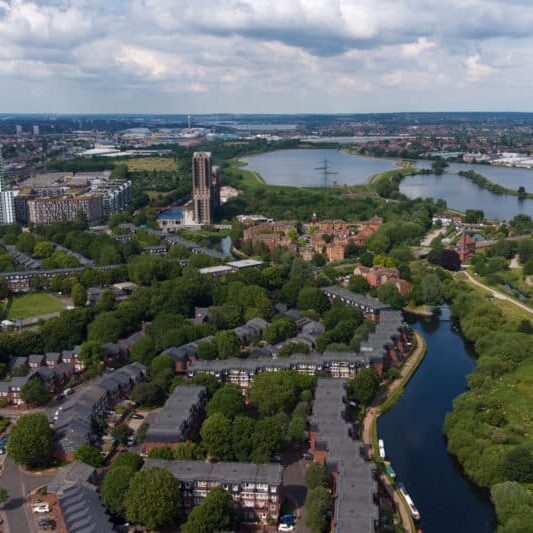
What the Tottenham Data Tells Buy-to-Let Investors
In Tottenham the cheapest way in is also the highest-yielding postcode. N17 has the top yield at 6.1%, the lowest asking price for buying an investment property in Tottenham at £433,256, and the lowest multiple of local earnings at 9.8 times income. A 30% deposit there is £129,977, the smallest in the coverage, for a home renting at £2,205 a month, and it sits in the middle of a £2 billion regeneration corridor.
N8 (Crouch End) and N22 (Wood Green) are the two postcodes positive across every window, and both carry a 4.3% yield. N8 leads on five-year growth at 13.6% and holds the strongest three-year figure at 9.7%, while N22 posts the sharpest one-year move at 13.0% on the back of the Haringey Heartlands programme. Neither reaches N17's yield, but between them they hold the price momentum in the coverage.
At the other end, N10 (Muswell Hill) carries the highest asking price at £768,418, the lowest yield at 3.3% and a 17.5 times price-to-earnings ratio, so the premium price does far more for the capital value than for the income. Buyers who want to come in below asking often look through off-market property in Tottenham channels, where the value in a market this expensive tends to sit.
Tottenham has no single borough-wide selective licensing scheme covering every private let, though Haringey runs selective licensing in named wards alongside additional HMO licensing, so any single let, HMO or shared-house plan needs a check against the council's current designations on its property licensing pages. With a deep private rented sector, a fast-letting market and a heavy regeneration pipeline, Tottenham reads as the higher-yielding, faster-churning eastern half of a borough whose western postcodes run on capital value instead.
How Tottenham Compares
Tottenham's mean asking price of £563,329 is the third-lowest of five north London locations compared here, while its top yield of 6.1% is second only to Waltham Forest and Enfield. The comparison below places Tottenham alongside four neighbouring markets, each with a different investor profile. The mean asking price and mean monthly rent are simple averages across all postcodes with data. Top gross yield is the single highest postcode yield in each location.
| Location | Mean Asking Price | Mean Monthly Rent | Mean Gross Yield | Top Yield (postcode) |
|---|---|---|---|---|
| Waltham Forest | £518,892 | £1,997 | 4.6% | 6.3% (E15) |
| Enfield | £539,526 | £1,906 | 4.2% | 6.4% (EN3) |
| Tottenham | £563,329 | £2,054 | 4.4% | 6.1% (N17) |
| Haringey | £608,827 | £2,145 | 4.2% | 6.1% (N17) |
| Hackney | £653,333 | £2,617 | 4.8% | 5.7% (E1) |
Tottenham sits in the middle of this north London group on price at a £563,329 mean asking price, cheaper than the wider Haringey and Hackney figures but above Waltham Forest and Enfield. Its 6.1% top yield matches the borough-wide Haringey figure, since N17 is the postcode driving both, and it lands just below Enfield's 6.4% and Waltham Forest's 6.3%.
For investors prioritising yield on a slightly lower asking price, Enfield and Waltham Forest edge ahead at the top of the table. Hackney at 5.7% is the most expensive and lowest-yielding of the group, a more established inner-London market where the capital growth case has historically led the income one. Tottenham's own draw is the pairing of a top yield above 6% with the fastest lettings market of the group, N17 letting in 27 days. For a data-driven comparison across all UK locations, see our highest-yielding areas guide.
Frequently Asked Questions
Is Tottenham a good place to live for buy-to-let tenants?
Tenants take to it for the transport and the price, more than for a settled village feel. Tottenham Hale puts the West End roughly 20 minutes away on the Victoria line, and Seven Sisters and Bruce Grove add more routes in, so a renter working in central London can live here for less than in the boroughs further in. Rents run from about £1,851 a month in N15 up to £2,205 in N17.
The tenant base is young and mobile, which is exactly why the private rented sector is so deep, 40.8% of households in N15 and 34.8% in N17. Homes let in 27 to 57 days across the five postcodes, so a well-priced flat rarely sits empty for long.
What are the best areas in Tottenham for property investment?
It comes down to what the money is doing. For income, N17 (Tottenham) is the cheapest way in at £433,256, carries the highest yield at 6.1%, and lets the fastest at 27 days. For price momentum, N22 (Wood Green) has moved most, up 13.0% over a year and 11.0% over five, with the Haringey Heartlands programme behind it.
At the top end, N10 (Muswell Hill) is the premium spot at £768,418 with the lowest yield at 3.3%, while N8 (Crouch End) pairs a 4.3% yield with the strongest three-year and five-year growth in the coverage. So if income matters most, N17 leads on yield and price; if recent price momentum is the priority, N22 has carried it.
How does Tottenham compare to Hackney for buy-to-let?
They pull in opposite directions on price and yield. Tottenham is the cheaper, higher-yielding option: a mean asking price of £563,329 against Hackney's £653,333, and a top yield of 6.1% against Hackney's 5.7%. Hackney rents are higher across the board, £2,617 a month on average against Tottenham's £2,054, but the higher asking price pulls the yield down.
Hackney is the more established inner-London market, where the capital growth case has historically led the income one. Tottenham trades some of that track record for a higher yield and a faster lettings market, with the regeneration around the stadium and Tottenham Hale still to fully feed through.
Is there demand for student accommodation in Tottenham?
Less than in a classic student city, but there is a real market tied to the universities nearby. Middlesex University in Hendon and the various central London campuses are within a manageable commute, and the lower rents at the eastern end, N17 and N15, make Tottenham a spillover option for sharers who cannot afford Islington or Camden. Shared student lets come with summer voids and more hands-on management than a standard tenancy, so factor that in. For the purpose-built end of the market, see our guide to purpose-built student accommodation.
On the HMO side, a sample of current N17 room adverts puts a double with a shared bathroom at around £185 a week, with most between £162 and £230 (the middle 80% of 53 adverts). That was the only room type with enough live adverts for a reliable figure, so ensuite and single-room rents in Tottenham are harder to pin down. Haringey also runs additional and selective licensing in named wards, so check the council's designations before planning a shared house. For how the numbers work on a shared house, see our HMO investment guide.
Can I find buy-to-let property under £450,000 in Tottenham?
Yes, mainly in N17. Tottenham proper is the only postcode with an average asking price below that line at £433,256, and it happens to be the highest-yielding one. The way in below the postcode average is by property type: N17 and N15 both hold a large share of flats, 55.0% and 68.6% of stock, and it is the flat and smaller-terrace market where sub-£450,000 buy-to-let purchases actually happen. If a tight budget is the constraint, N17 flats are the place to look, or explore below market value properties.
When will the Tottenham regeneration affect property prices?
Parts of it already have; the rest is a multi-year story. The stadium has been open since 2019 and Tottenham Hale is delivering homes through 2026, both of which have already lifted the eastern corridor. High Road West, the 2,600-home programme next to the stadium, only approved its first phase in February 2026, so its main effect on prices is a late-2020s and 2030s question rather than a near-term one.
The value of a scheme actually being built, as the stadium and Tottenham Hale have been, is that it gives the wider pipeline credibility. But anyone pricing in the full High Road West build today is looking at a wait of several years before it shows up in the data.
What are average house prices in Tottenham?
Borough-wide, Haringey's Land Registry average sits at £646,557 as of March 2026, about 123.0% above the England average of £289,946 and 19.2% above the London regional figure. Asking prices by postcode run from £433,256 in N17 (Tottenham) up to £768,418 in N10 (Muswell Hill), with a five-postcode mean of £563,329. By type across the borough, flats average £479,932, terraced houses £811,739, and the larger house categories run well into seven figures on thin volume.
Through a buy-to-let lens, N17 is the cheapest entry and the highest-yielding at 6.1%, while N10 is the dearest and lowest-yielding at 3.3%.
What are the Local Housing Allowance rates in Tottenham?
All five Tottenham postcodes fall in the Outer North London Broad Rental Market Area, so they share one set of rates. As of June 2026, Local Housing Allowance runs at £136.93 a week for a shared room, £264.66 for a one-bed, £322.19 for two beds, £390.08 for three and £506.30 for four. That figure is the most a tenant on housing support can claim towards rent, so it is a reference point for the benefit-supported end of local demand, not a limit on the rent, and the Outer North London rates sit among the higher bands nationally.
What type of property is most common in Tottenham?
Flats, by a clear margin, in every postcode except Muswell Hill. They run from 44.9% of the stock in N10 up to 69.8% in N8 (Crouch End). Terraced houses are the next largest category and concentrate in N22 and N17, at 29.5% and 28.7%. Detached and semi-detached houses barely register in Tottenham proper, which is why the borough's house averages sit so high on such thin volume.
How do I buy an investment property in Tottenham?
Start by deciding whether income or price momentum matters more, because they point at different postcodes. N17 (Tottenham) is the cheapest entry at £433,256 and the highest-yielding at 6.1%. N22 (Wood Green) has carried the strongest recent price growth at 13.0% over a year. Budget for a 30% deposit, which runs from £129,977 in N17 to £230,526 in N10.
Beyond what is listed openly, plenty of experienced investors buy below asking through off market property and BMV property. To see what is available now, browse investment properties or buy-to-let homes for sale.
Ready to buy property?
Browse investment properties with prices and gross yields shown for each opportunity.
Get property alerts