
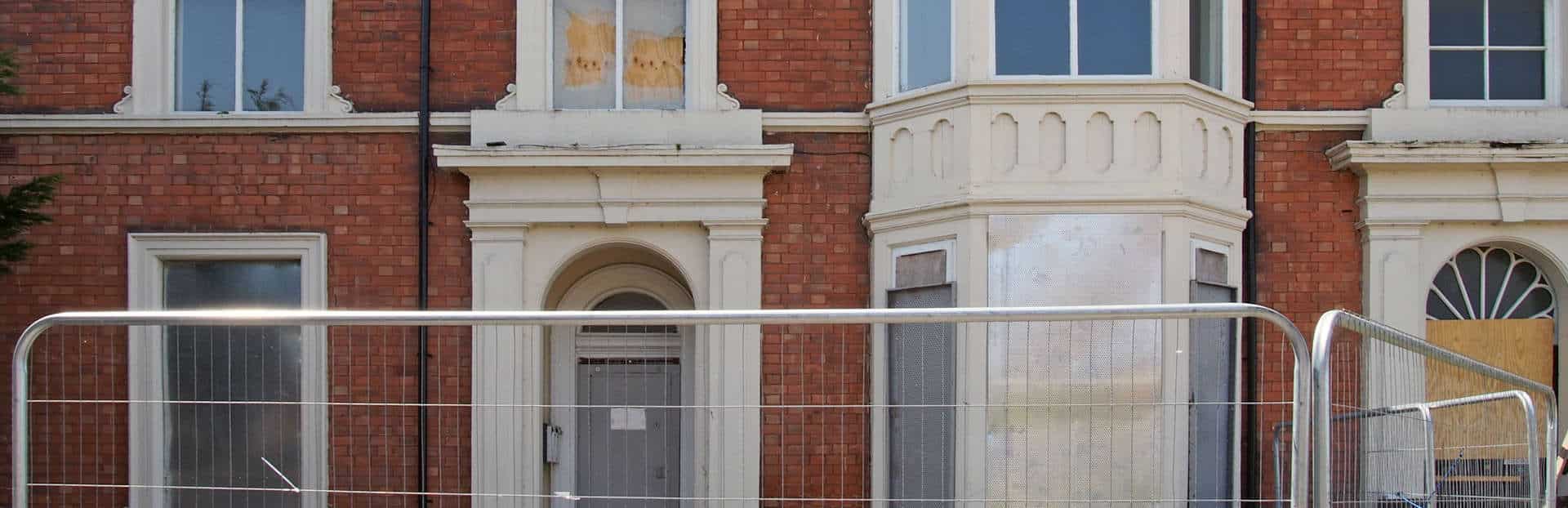
What Makes a Property Unmortgageable?
An unmortgageable property is one that mainstream lenders will not lend against on their standard terms. A mortgageable property is the opposite: one a typical lender will accept as security for an ordinary mortgage without special conditions. "Non-mortgageable property" means the same thing. It is a lender's decision, not a legal category: the same terraced house can be declined by one bank, offered at a lower loan to value by a building society, and accepted outright by a specialist lender.
For a buyer it matters for three reasons. Where no lender will lend, you fund the purchase with cash or specialist finance, so the pool of people who can buy it is small. That small pool is a large part of why the price is lower. And whatever made it unmortgageable is what you have to fix, or live with, before the full market of mortgage buyers opens up again when you sell or refinance.
Article updated: August 2026
Nearly every bargain I have looked at in twenty years of buying and refurbishing in the north-west had at least one of these attached to it. Knowing which reason, what the cure costs, and whether the cure is even possible is most of the job.
What "unmortgageable" actually means
Lenders decide case by case, on the back of two reports: the valuer's, on condition, construction, value and resale, and the conveyancer's, on the title. The lender applies its own policy to both; mortgageability, the word brokers use, just means how a lender's policy applies to one particular property. There are three broad outcomes, and only one is a flat no.
| What the lender does | What it means for a buyer | Typical trigger |
|---|---|---|
| Declines to lend | Cash or a specialist lender only. The buyer pool is smallest and the discount is usually largest. | Usually a decline: no working kitchen or bathroom, serious structural movement, an unrepaired designated defective house, an unregistered title |
| Lends with conditions or a retention | The mortgage is offered but part of the money is held back until named works are done, or the offer depends on a report, a guarantee or an indemnity policy. | Japanese knotweed with a management plan, damp and timber defects, missing building regulations sign-off |
| Lends at a lower loan to value, a lower valuation, or a higher rate | A bigger deposit, dearer borrowing, or both; a down-valuation has the same effect, the buyer finds the difference. The buyer pool shrinks but does not vanish. | Non-standard construction, flats above shops, ex-local-authority blocks, a lease that is short but not yet critical |
A retention means the lender completes on a reduced advance and holds the rest back until the named works are evidenced; the buyer funds the shortfall and the works. An indemnity policy is a one-off premium, paid at completion, that covers the lender against a named defect in the title or paperwork; it does not cure the defect, and which lenders accept one is their own policy.
Most of the reasons below lead to the second or third outcome rather than a flat refusal. Some can be fixed with money and time. Others remain, but a lender may still accept them with conditions, a bigger deposit or a higher rate. A few leave no ordinary mortgage option; they keep the buyer pool small, so the price is usually lower. Which outcome you get depends on the lender: one lender's automatic decline is another's retention, and a third may lend at a lower loan to value, which means a bigger deposit. Conveyancers check each lender's rules in the UK Finance Mortgage Lenders' Handbook.
Condition and structure
These are the problems a valuer can see on a visit. They are usually the ones a buyer can fix, which is why they are common in renovation projects.
Uninhabitable property: what makes a house habitable for a mortgage
Habitable, for a mortgage valuer, generally means a house someone could move into: a working kitchen and bathroom, heating and running water, a weatherproof roof and windows, and doors that lock. That is lender-market practice rather than a written rule, and each lender draws its own line. Lenders differ on a house with no kitchen: some decline until it is habitable, others lend but hold money back. In practice the purchase is usually cash or specialist finance, with a mortgage arranged after the works. Once habitable, the property goes back into the normal mortgage market. That is how the buy refurbish refinance model works.
Structural movement and subsidence
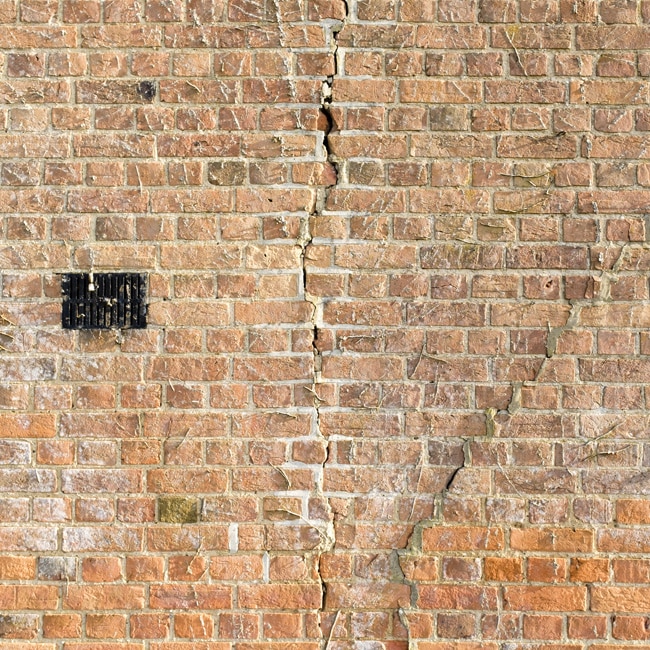
Cracking, movement and historic subsidence are the classic structural reasons. A valuer who sees significant cracking will usually ask for a structural engineer's report, and the lender may decline, impose a retention, or lend only once repairs or underpinning are done and certified. A house underpinned years ago is normally mortgageable with the paperwork; the problem is the house without it. In coal-mining areas there are two extra checks. One is a Mining Remediation Authority report. The other is the floor: government guidance on sulfate damage records that colliery spoil, including red ash, was used as hardcore under concrete floors in hundreds of thousands of homes built between 1945 and 1970. Where sulfate in that hardcore attacks the concrete, the floor can heave and crack. A valuer who sees that damage will usually ask for a sulfate test, and lenders commonly want the floor replaced before they lend.
Severe damp, dry rot and wet rot
Damp on its own rarely makes a house unmortgageable. Damp that has got into the timbers and turned into dry rot or wet rot is a structural defect. Lenders usually want a specialist timber and damp report on it. They often lend with a retention until the treatment is done and guaranteed. Treatment is a well-understood job with known costs, as long as the survey has found all of the rot.
Japanese knotweed
The RICS professional standard Japanese knotweed and residential property took effect on 23 March 2022. It says "The so-called '7m rule' focused more on what has been demonstrated to be an overstated risk of Japanese knotweed to buildings, rather than its sometimes-serious impact on amenity." In its place valuers have four Management Categories. Categories A and B say Action. They apply where the plant is causing visible damage or stops you using the garden, paths or drive. For those two categories, the standard anticipates most lenders will require a specialist inspection and a guaranteed management plan, subject to a retention. Category C is Manage, low impact, where "a mortgage retention ought not to be imposed". Category D is Report: the plant is on neighbouring land within 3 metres of the boundary. The cure is a treatment plan with an insurance-backed guarantee, which the standard says should be transferable to the next owner, and government guidance says "It usually takes at least 3 years to treat Japanese knotweed."
Construction type
A valuer is asked what the house is built from, and anything other than brick or stone walls with a slate or tile roof gets a closer look. This is where "lenders vary" matters most.
Non-standard construction
Timber frame, steel frame, cob, in-situ concrete, large-panel system blocks, thatched roofs and factory-built modular homes all count as non-standard somewhere. None is automatically unmortgageable; acceptance depends on the exact system, its condition and the lender, and each lender keeps its own list, often with conditions such as an engineer's report or a higher deposit. A house a high-street lender declines is often fine with a building society that knows the type, and the narrower the list of lenders that take a type, the bigger the discount tends to be. Park homes are different. Under government guidance, a park home is sold by assigning the pitch agreement. On that sale, the park owner can take up to 10% of the price as commission. So the buyer owns the home but rents the pitch it stands on, and a standard residential mortgage is not designed for that.
Concrete and prefab houses: the designated defective (PRC) types
This is the one non-standard group with a legal label. Under section 528 of the Housing Act 1985, the Secretary of State could designate a class of buildings as defective on two conditions. One condition was that "buildings in the proposed class are defective by reason of their design or construction". The other was that, because the defect had become generally known, "the value of some or all of the dwellings concerned has been substantially reduced". The designations were made in the mid-1980s for prefabricated reinforced concrete (PRC) houses. A 1992 Order lists the classes by name. Among them are Airey, Boot, Cornish Unit, Dorran, Orlit, Parkinson, Reema Hollow Panel, Tarran, Unity and Butterley, Wates, Wessex, Winget and Woolaway. Many lenders decline an unrepaired designated house; whether a repaired one is accepted depends on the lender's repair-certification requirements.
Cladding and external wall systems
After Grenfell, the EWS1 form was created to give lenders and valuers a standard confirmation that a block's external wall system had been assessed for safety. The RICS EWS FAQs describe it as a building owner's confirmation to lenders and valuers that the external wall system has been assessed for safety, valid for a whole block for five years. It is a cure the buyer does not control, because "The EWS1 process/ form is for building owners to undertake". A tighter RICS cladding valuation standard is due from 1 November 2026. It says an EWS1 should only be sought where there is a clear rationale, with different tests by building height. It also says the form "is intended for valuation and lending purposes only. It is not a fire safety certificate".
The other question is who pays for the remediation. Under the Building Safety Act 2022, the government's leaseholder protections guidance for England says qualifying leaseholders are protected from all cladding system remediation costs in buildings of 11 metres or five storeys and above, with non-cladding costs capped. The qualifying test starts with the lease. It must be a long lease of a single dwelling in such a building, with a service charge, granted before 14 February 2022. On that date, the flat must also have been the leaseholder's only or main home, or the leaseholder "did not own more than 3 dwellings in the United Kingdom in total". And "The protections which apply to the property based on its status on 14 February 2022 are automatically transferred to future buyers of the lease". So a flat that was a portfolio landlord's fourth property on that date may carry no protection. The conveyancer's job is to find out which kind of flat you are buying.
High-rise and deck-access blocks
Separate from cladding, some lenders set a maximum number of storeys, decline deck-access and balcony-access blocks, or lend on them only with a lift, a concierge or a minimum share of private ownership. Limits differ by lender and change; the buyer's question is how many lenders will take this block when you come to sell.
Legal and title
Nothing in this group shows up on a viewing. It is found in the title register, the lease and the local searches, by the conveyancer, not the valuer; some of it is curable with paperwork and some is permanent.
A short lease
Lenders set a minimum number of years that must be left on a lease, and the figures vary by lender; below a lender's floor the flat is unmortgageable with that lender. Government guidance on extending a lease says: "When there are 80 years or less remaining on your lease, the cost of extending it increases significantly." The cure is a lease extension. The leasehold toolkit records that since January 2025 "Leaseholders no longer need to own a leasehold property for two years before taking action". So a buyer can start an extension straight after completion. The price of a flat with a short lease plus the price of the extension is the real purchase price, and the premium rises steeply below 80 years.
Escalating or onerous ground rent
A ground rent that doubles every ten or fifteen years can put lenders off because of what it does to resale value. For most new leases this has been closed off. Under the Leasehold Reform (Ground Rent) Act 2022, "any ground rent demanded as part of a new regulated residential long lease where a premium is paid may not exceed more than one peppercorn per year". But "The peppercorn limit generally only applies to new residential leases that were granted after commencement of the Act, that is leases granted on or after 30 June 2022, or 1 April 2023 for leases of retirement homes". So an existing lease keeps its clause until it is varied. The cure is a deed of variation with the freeholder or a lease extension, and a statutory extension of a flat must already be granted at a peppercorn. The leasehold toolkit notes that a draft Bill in the current leasehold reform programme would "cap existing ground rents at £250 a year, changing to a peppercorn after 40 years"; that is a proposal, not law.
Flying freehold and creeping freehold
A flying freehold is where part of a freehold property sits over or under a neighbour's, with no ownership of what is beneath or above. A bedroom over a shared passageway is one example. A cellar running under next door is the creeping version. The rights to support, shelter and repair depend on what the titles say, and old titles often say nothing, so lenders typically accept a small one with an indemnity policy, while a large one can mean a decline. It cannot be cured by works, only by paperwork, and sometimes not at all.
Unregistered title, or no deeds
Property that has not changed hands for decades can still be unregistered, and occasionally the deeds have been lost. Lenders will not lend until ownership is proved; the purchase then triggers first registration, and missing deeds are the obstacle. You can check whether a property is registered, and buy the title register for £7, through the HM Land Registry search service for England and Wales.
Restrictive covenants and occupancy restrictions
A covenant in the title, or a planning condition, can limit who may live in a house: agricultural occupancy conditions, local-occupancy clauses in some national parks and holiday areas, age restrictions on retirement developments. Each shrinks the pool of people who can legally live there, and therefore buy there, and lenders tend to price that in, or decline. Getting a condition or covenant lifted takes time and is not guaranteed. Some covenants don't ban a change outright but need covenant consent first, which comes from whoever has the benefit of the covenant, such as the original developer, a past owner or the freeholder.
A defective lease or a missing management company
Some leases are drafted badly: no obligation on the freeholder to insure or repair the structure, no way to force other flat owners to pay their share, or a management company that has been struck off. Lenders want a lease that works, and a defective one is a reason to decline or to insist on a deed of variation or an indemnity policy first; converted houses with a long-gone developer are the usual case.
Missing planning permission or building regulations sign-off
Extensions, loft conversions and house-to-flat splits done without the right permissions are a title problem. On planning, government guidance says that if you do work that needs permission without getting it "you can be served an 'enforcement notice' ordering you to undo all the changes you have made". On building control, the building regulations guidance warns that "Without approval you will not have the certificates of compliance you may need when you want to sell your home". A lender typically asks for an indemnity policy, makes a retention, or declines; the cure is retrospective approval or regularisation where the work is compliant, and rebuilding where it is not.
Title splits and boundary anomalies
A house sold off a larger title, a garden never conveyed, a garage on someone else's land, a driveway with no right of way. Each is a question a lender needs answered before it lends, and most are cured with a deed, a transfer or an indemnity policy; the cost is in time and the goodwill of the neighbour who holds the missing piece.
Use and location
These reasons are about what is around the property and how it is used. Some are permanent; a buyer cannot cure them and has to decide whether the price reflects them.
Above or next to commercial premises
A flat over a shop, a house joined to a pub, a takeaway under a maisonette. Plenty of lenders will take a flat above a quiet retail unit and decline the same flat above a kebab shop or a launderette, because of smells, hours, fire and resale. Mixed-use property usually does not fit a standard residential mortgage at all; that is commercial or semi-commercial lending, outside this article.
Flood zones
A history of flooding, or a high-probability flood zone, matters to the lender mainly through insurance. If buildings cover is unobtainable or very expensive, the security is weaker. The decision often comes down to whether a mainstream insurer will quote. The government's long term flood risk service lets you check the long-term flood risk for an area in England, with separate services for Scotland, Wales and Northern Ireland.
Blight from infrastructure schemes
A new railway, road or runway on the doorstep can make a house unsellable at its normal value long before anything is built. The government's HS2 Need to Sell Scheme exists for exactly this. It covers owners who have "a 'compelling reason' to sell" but cannot sell "as a direct result of the announcement of the HS2 route". Those owners can ask the government to buy "for 100% of the unblighted open market value". Nothing about the house is wrong; the location is what has lost value, and a lender will take that into account.
Ex-local-authority estates and high concentrations of social housing
Some lenders restrict lending on ex-council houses or flats where most of the surrounding stock is still owned by the council or a housing association, particularly flats in larger blocks. The concern is resale and the size of the private market around the property, not the building; it is lender policy, it varies a great deal, and brokers know which lenders will take a given estate and block.
Value, size and market
The last group is properties that are fine as buildings and on paper, but do not fit what a standard mortgage is designed for.
Below a lender's minimum loan or property value
Most lenders have a smallest mortgage they will write and many a smallest property value they will lend against; limits differ by lender and change. Genuinely cheap houses in cheap areas are therefore often cash-only, not because anything is wrong with them but because few mainstream lenders will write a loan that small.
Below a minimum floor area, studios and micro-flats
Some lenders set a minimum internal floor area for flats; the number, where a lender has one, is its own policy. One figure gets quoted a lot here, and it is not a lender rule. The government's nationally described space standard gives 39 square metres as the minimum gross internal area for a one-bedroom, one-person new home. In its own words, the standard "is not a building regulation and remains solely within the planning system". It says nothing about existing flats and nothing about lending; converted HMOs and rooms let as "studios" with a shared kitchen are the stock this catches.
Sitting tenants and regulated tenancies
A property sold with a tenant in place is usually mortgageable with a buy-to-let lender if the tenancy is an ordinary assured tenancy, subject to the lender's policy. In England that now means an assured periodic tenancy under the Renters' Rights Act 2025. The government's implementation roadmap set that to start on 1 May 2026. A regulated tenancy is another matter. Government guidance on regulated tenancies explains that "Most residential lettings by non-resident private landlords which began before 15 January 1989 will be regulated tenancies under the Rent Act 1977". The same guidance says the landlord cannot evict without a court possession order. Either side can also apply for a fair rent to be registered, which then caps the rent. A house with a regulated tenant is valued well below its vacant-possession value (the price it would fetch empty). Lender acceptance of these houses varies a great deal. They sell to cash investors buying the right to the property once the tenancy ends.
What a buyer does about an unmortgageable property
The investor's read on everything above comes down to four questions, asked in order.
First, what exactly is the reason? Not "it needs work" but which of the reasons above, found and named: a building survey answers the condition questions, a specialist answers the specific ones, and the conveyancer answers everything in the title. At auction the legal pack does the conveyancer's job in advance: it usually holds the title register and plan, the lease, the searches including any mining report, and the special conditions of sale. At a traditional unconditional auction the contract binds when the hammer falls, so the pack is read before the bid, not after; conditional (modern method) auctions exchange later under the auction's own terms.
Second, can it be cured, and what does the cure cost? Works and paperwork cure most condition, construction and title reasons, and works are usually quicker than paperwork. Location and some title defects cannot be cured; those keep restricting the buyer pool, including when you sell.
Third, how is the purchase funded? Where no standard mortgage is available, cash or specialist finance; where a lender will lend with a retention or at a lower loan to value, the shortfall and the works money come from the buyer. The cure, the holding costs while it is done, and the six months many lenders want before a refinance, all come out of the buyer's pocket.
Fourth, what is the exit? The fix that makes the property mortgageable is the fix that reopens the market of ordinary buyers and lenders when you sell or refinance. In my experience the cure is usually cheaper than the discount, sometimes it is not, and most of the skill is in telling the two apart before you commit.
This is the thinking behind most below market value properties and most properties to renovate that investors buy. The discount exists because the usual buyers cannot get a mortgage on the day. The investor's margin is what remains after paying to make the property mortgageable. The wider market of buy to let property for sale and ready-to-let investment property sits at the other end of the same scale. That stock is already mortgageable and priced accordingly. The comparison between the two shows whether a given cure pays for itself.
Recently bought: the six-month rule
Many lenders will not lend where the seller has owned the property for less than six months, and a buyer who refinances a cash purchase within six months meets the same policy from the other side. It is a lender rule, not a rule of law, and some lenders apply exceptions; where it applies, the works and the ownership period have to be complete before the new valuation and mortgage can be arranged.
If you own one: what sellers face
If you need to sell an unmortgageable house, you face the same facts from the other side. The buyer pool is smaller, made up of cash buyers, investors and buyers on specialist terms, and the price reflects that. The choice is between curing the problem first and selling into the full market, or selling as it stands at the discount. Several of the paperwork cures, a lease-extension notice, a first registration, a regularisation application, a knotweed management plan, can be started by an owner before marketing and evidenced to the buyer. Taking independent valuation and legal advice before accepting an offer is normal practice for this kind of sale.
Frequently Asked Questions
What makes a house unmortgageable?
A mainstream lender deciding it will not lend against that house on its standard terms. The usual triggers are condition (no kitchen or bathroom, movement, rot), construction (non-standard or defective types, cladding), title (short leases, unregistered titles, occupancy restrictions), location (commercial neighbours, flood, blight) and value (below a lender's minimums).
What makes a house habitable for a mortgage?
In lender practice, a working kitchen and bathroom, heating and running water, a weatherproof roof and windows, and a secure front door. It is a valuer's judgement against each lender's policy, not a written standard. A house missing one is treated as uninhabitable; lenders split between declining and lending with a retention.
Why would a property not be mortgageable?
Because the lender's valuer or conveyancer has found something that weakens the property as security: hard to resell, may fall in value, needing expensive work, or ownership that cannot be proved. The lender's policy decides, so the same property can be declined by one lender and accepted by another.
What does a house need to be mortgageable?
In broad terms, it must be a habitable building of a construction type the lender accepts, with a registered title the lender can take a charge over. If it is leasehold, the lease must be long enough for the lender's policy. It must also have no title problems the conveyancer cannot insure around, and a value above the lender's minimum. The specifics vary by lender.
Can you get a mortgage on an uninhabitable house?
Not usually a standard residential mortgage. A house with no working kitchen or bathroom is generally declined until habitable, though some lenders lend with a retention for the missing items. Buyers use cash or specialist finance, do the works, then move to an ordinary mortgage, often after six months of ownership.
Is a property with Japanese knotweed unmortgageable?
Not automatically. The RICS 2022 knotweed standard set four Management Categories. Where the plant causes damage or affects the garden, the standard anticipates most lenders will require a specialist inspection and a completed, guaranteed management plan, subject to a retention. Each lender still sets its own policy. Government guidance says treatment "usually takes at least 3 years".
When does a short lease make a flat unmortgageable?
When it falls below a lender's minimum unexpired term, which varies by lender. The usual line is 80 years: government guidance on extending a lease says "When there are 80 years or less remaining on your lease, the cost of extending it increases significantly". Below that, fewer lenders remain and the premium rises.
Can you buy an unmortgageable property?
They are bought regularly, mostly at auction. Where no standard mortgage is available the buyer uses cash or specialist finance; where a lender offers a retention or a lower loan to value, the buyer funds the shortfall and the works. The usual plan is to cure it, then sell or refinance.
Can an unmortgageable property become mortgageable again?
Most can. Works cure the condition reasons. A lease extension, deed of variation, first registration, retrospective consents or indemnity policy cure most title reasons. A guaranteed management plan addresses knotweed for lending purposes. A recognised repair cures a designated defective house for lenders that accept it. Location, permanent occupancy restrictions and some flying freeholds cannot be cured.
What stops you getting a mortgage on a property, rather than on you?
Everything on this page. A lender assesses two things: the borrower (income, credit, deposit) and the security (the property). A perfect borrower is declined if the property fails the valuation or the legal checks, and a mortgageable property does not help a borrower who fails the affordability test.
Ready to buy property?
Browse investment properties with prices and gross yields shown for each opportunity.
See the latest deals