
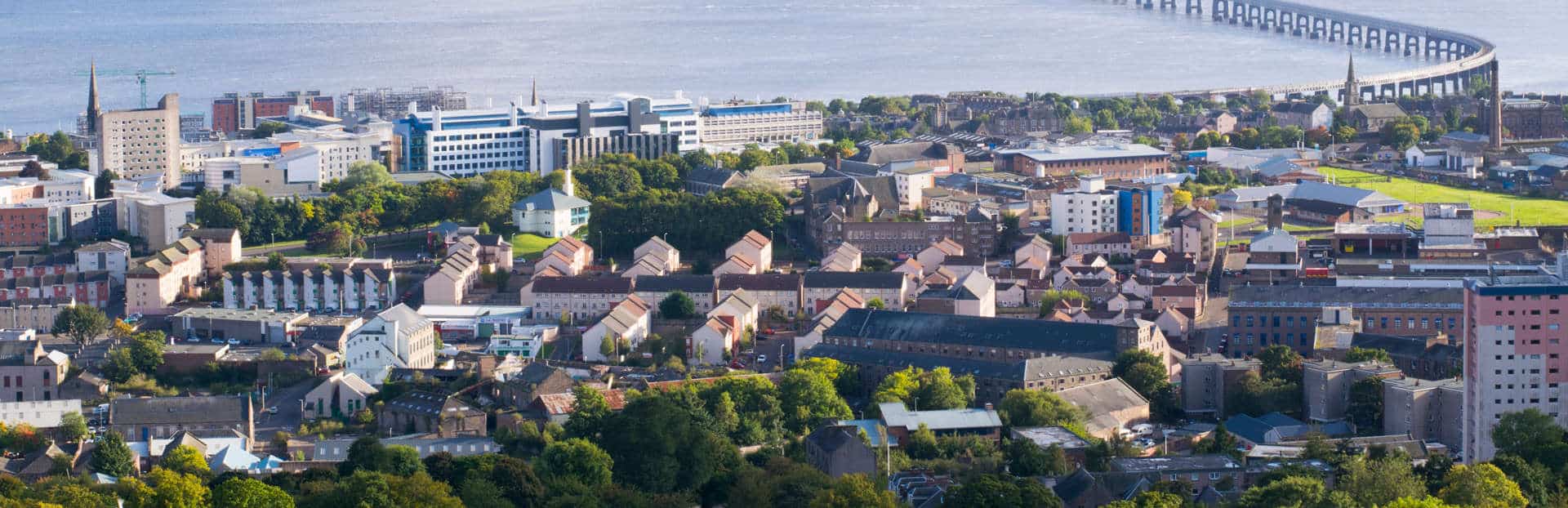
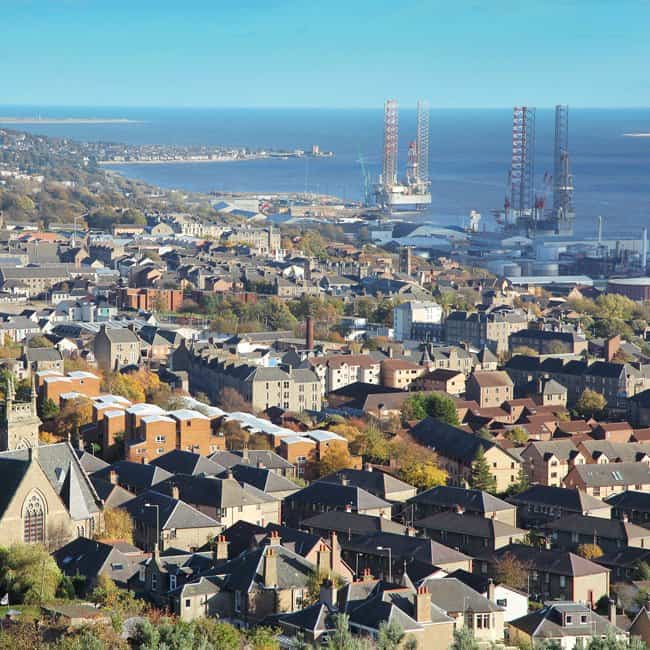
Dundee is one of Scotland's four cities, on the east coast. The average sold price across the City of Dundee is £134,392 on the UK House Price Index, 28.0% below the Scotland average of £186,582, and every individual property type sells for less than the national figure. A detached house in Dundee sells for £289,206, which is 14.6% under Scotland's £338,748, and the gap widens as you come down the ladder: semi-detached homes run 17.2% below the national average, terraced 20.7%, and flats 28.5%. Dundee is the cheapest of Scotland's four cities by headline sold price, and a flat at £93,307 is among the lowest-priced city stock anywhere in the country.
For an investor, that low base is the starting point. The cheapest way in is DD1 (City Centre) at an average asking price of £165,792, the lowest of the five Dundee postcodes, and it pairs that with the highest gross yield in the city at 7.2%. The most expensive postcode, DD5 (Broughty Ferry, Monifieth), asks £265,965 and returns 5.4%. Across the Dundee City council area the population reached 148,697 at the 2022 census, up 1.0% on 2011, and the median local salary of £34,860 sits below both the Scotland and Great Britain figures.
This guide covers the Dundee City council area (ONS code S12000042) across five postcodes from DD1 to DD5, on the north bank of the Firth of Tay on Scotland's east coast. Buying here works differently from England: purchase tax is Land and Buildings Transaction Tax rather than stamp duty, and the legal process runs on the Home Report and the conclusion of missives. Investors weighing up Scotland may also look at Aberdeen buy-to-let for a lower-price, higher-yield alternative.
Article updated: July 2026
Why Invest in Dundee?
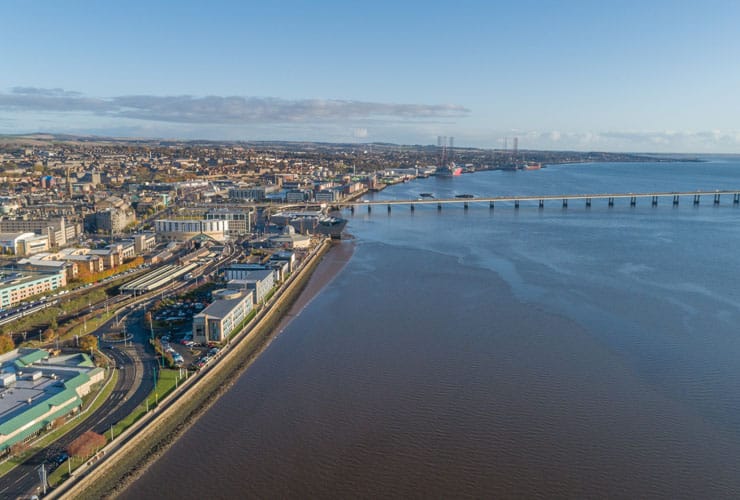
The Dundee City council area grew its population 1.0% between the 2011 and 2022 censuses, from 147,200 to 148,697 residents. That is modest growth next to Edinburgh or Glasgow, but Dundee is a compact city of five postcodes where rental demand is concentrated rather than spread thin. Historically a jute, jam and journalism town, Dundee has rebuilt its economy around life sciences, digital industries and higher education, and that shift changes the tenant profile: the jobs now sit in biotech labs, games studios and hospital wards rather than factories.
The median gross annual salary across Dundee is £34,860, which is 12.6% below the Scotland median of £39,905 and 10.9% below the Great Britain median of £39,125. The local employment rate of 71.0% runs below the Great Britain figure of 75.6%, and unemployment at 6.7% sits above the national rate, numbers that reflect a city still working through its economic transition. The University of Dundee and Abertay University together hold roughly 20,000 students, and Ninewells Hospital, one of the largest teaching hospitals in Europe, anchors NHS Tayside and employs thousands directly. Lower wages against low house prices are what push gross yields to 7.2% in DD1.
Dundee Economic Summary
- Population (Dundee City): 148,697 (Scotland's Census 2022). Growth of 1.0% from 2011.
- Median annual salary: £34,860 (local), £39,905 (Scotland), £39,125 (Great Britain)
- Employment rate: 71.0% (local), 75.6% (Great Britain)
- Key employment sectors: Life sciences, healthcare, higher education, digital and creative industries, tourism
Source: National Records of Scotland Census 2022, Nomis Labour Market Profile (ASHE 2025)
Regeneration and Investment in Dundee
Dundee's regeneration leans on the £1 billion Waterfront programme that runs 8km along the River Tay and has already delivered the V&A Dundee museum. The schemes below are the three with confirmed funding or planning and the clearest bearing on the city's economy and where new activity lands.
- Dundee Waterfront (underway, around £1 billion): One of the larger urban regeneration programmes in the UK, reshaping 8km of the River Tay across distinct zones including City Quay, Riverside, Seabraes and the Dundee Port. The transformation already includes the V&A Dundee design museum on the central waterfront, with further office, leisure and residential development continuing across the zones. Updates at Dundee City Council.
- Tay Cities Region Deal (underway): A regional growth deal signed in December 2020 bringing together the UK Government, Scottish Government and the four council areas of Angus, Dundee, Fife, and Perth & Kinross. The programme funds projects across biomedical innovation, digital connectivity, culture and skills, with Dundee at its centre. Updates at Tay Cities Region Deal.
- Eden Project Dundee (planning approved): A green tourism attraction on the former gasworks site at East Dock Street, granted planning permission by Dundee City Council on 17 June 2024. The scheme will convert the existing gasholder and build a new pedestrian bridge, and the council expects it to deliver hundreds of jobs and tens of millions of pounds for the local economy. Updates at Eden Project.
Dundee Property Market Analysis
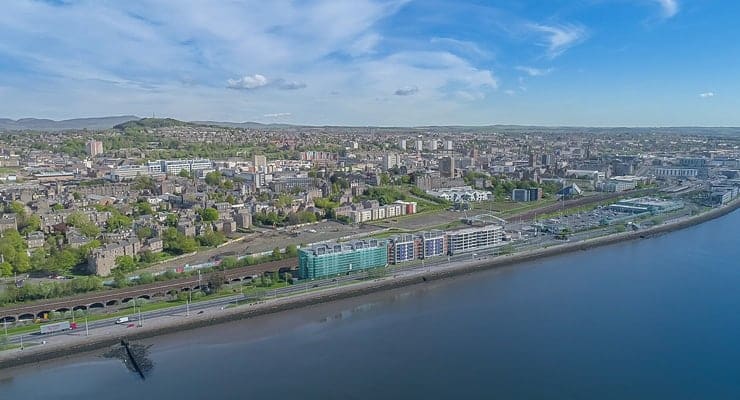
Average property prices across the City of Dundee have risen 124.0% since January 2004, from £59,992 to £134,392. Because Registers of Scotland only began publishing the UK House Price Index for Scottish council areas in January 2004, Dundee's price history starts there rather than at the 1995 point an English city would have. Everything below the cycle works at postcode level: sold prices by type, price per square foot, asking prices, growth windows and how often each postcode trades.
When was the last house price crash in Dundee?
Dundee is recorded as the City of Dundee council area in the UK House Price Index, and the monthly series starts in January 2004. That captures the tail of the 2000s boom, the financial crisis, a long and stop-start recovery and the pandemic surge, which is the full set of cycles a buyer needs to read the market.
The 2004 to 2007 boom: Dundee opened the series at £59,992 in January 2004 and nearly doubled in under four years, peaking at £115,878 in July 2007. Cheap credit and a rising Scottish market drove prices well beyond what local earnings could support, with the steepest annual readings landing in 2006.
2008 to 2009, the financial crisis: From the July 2007 peak of £115,878, prices fell to a trough of £99,755 in April 2009, a decline of 13.9% over twenty-one months. The worst year-on-year reading was -11.3% in February 2009. Dundee's low price base gave it less room to fall than higher-value Scottish markets, and the headline drop was milder than England's over the same stretch.
2010 to 2013, the false start and second dip: Prices bounced off the trough to £107,661 by January 2010, then drifted back down. By January 2013 the average had slipped to £100,330, barely above the 2009 low. Dundee spent four years going nowhere, a longer stall than the headline crash figure suggests and the hardest phase for anyone who had bought near the peak.
Recovery, 2013 to 2017: Growth returned gradually, and prices finally cleared the July 2007 peak in August 2017 at £117,486, just over ten years after the high. By comparison, much of the south of England had passed its pre-crash peak years earlier. Dundee's recovery was one of the slower ones in the UK.
2017 to 2019, flat: Prices barely moved. December 2017 sat at £113,601 and December 2019 at £116,486, with the annual reading actually negative at -1.5% by the end of 2019. Dundee entered the pandemic with little pricing momentum.
2020 to 2022, the pandemic surge: Scotland's LBTT holiday and a shift towards more space pushed prices from £117,578 in March 2020 to an all-time high of £144,112 in September 2022. That was a faster gain in two and a half years than Dundee managed in the entire decade from 2007 to 2017.
The 2023 correction: Higher mortgage rates cooled the market. By December 2022 the average had eased to £133,903, and the market spent 2023 broadly flat, recovering to £136,398 by the December.
2024 to present: Growth resumed slowly through 2024 and 2025, reaching £140,625 by December 2025 before the latest reading of £134,392 in March 2026, with annual change of 0.6%. That puts the current average 16.0% above the July 2007 pre-crash peak.
Long-term growth summary:
- 5 years (March 2021 to March 2026): 2.6% growth (£130,976 to £134,392)
- 10 years (March 2016 to March 2026): 22.6% growth (£109,645 to £134,392)
- 15 years (March 2011 to March 2026): 32.5% growth (£101,422 to £134,392)
- 20 years (March 2006 to March 2026): 49.9% growth (£89,665 to £134,392)
- Full series (January 2004 to March 2026): 124.0% growth (£59,992 to £134,392)
The ten-year recovery is the defining feature of Dundee's crash history. An investor who bought at the exact July 2007 top waited until August 2017 to break even, longer than most UK markets. The five-year figure of 2.6% also tells its own story: the pandemic surge to £144,112 in September 2022 has since unwound, so prices are roughly where they were three years ago. This is a market where the case rests more on yield and patience than on capital growth.
- All property types
- Detached
- Semi-detached
- Terraced
- Flats
Source: UK House Price Index for City of Dundee, January 2004 to March 2026.
- All property types
- Detached
- Semi-detached
- Terraced
- Flats
Sold House Prices in Dundee
The average sold price across all property types in the City of Dundee is £134,392, which is 28.0% below the Scotland average of £186,582 as of March 2026. Dundee trades below the national figure on every property type, and the gap widens as the type gets cheaper: houses sit closest to the Scotland average, while flats, the type that drives the city's yields, carry the deepest discount.
| Property Type | Dundee Average | Scotland Average | Difference |
|---|---|---|---|
| Detached houses | £289,206 | £338,748 | -14.6% |
| Semi-detached houses | £177,622 | £214,637 | -17.2% |
| Terraced houses | £139,115 | £175,465 | -20.7% |
| Flats and maisonettes | £93,307 | £130,560 | -28.5% |
| All property types | £134,392 | £186,582 | -28.0% |
Detached houses at £289,206 carry the smallest discount, 14.6% below Scotland's £338,748. These are the property types that draw owner-occupier competition, and in Dundee they cluster in DD5 (Broughty Ferry) and the western edge of DD2 around Ninewells, where family demand keeps values closest to the national average.
Semi-detached houses at £177,622 sit 17.2% below Scotland's £214,637. They are the inter-war and post-war family homes spread across the suburban postcodes, the middle of the Dundee market and the type that most balances a steady tenant with a more modest yield.
Terraced houses at £139,115 are 20.7% below Scotland's £175,465. The Victorian and Edwardian terraced stock in DD3, DD4 and parts of the city centre forms a large share of Dundee's rental market, the kind of property a yield-focused investor typically targets.
Flats and maisonettes at £93,307 carry the deepest discount, 28.5% below Scotland's £130,560, and this is the engine of Dundee's buy-to-let market. Tenement flats, ex-local-authority blocks and a smaller pool of newer city-centre stock make up the bulk of what changes hands in DD1 and DD4. At under £100,000 the maths on gross yield turns favourable, though the condition and management costs of older flats need to be weighed in.
Price Per Square Foot in Dundee
Dundee's price per square foot runs from £157 in DD3 (St Marys, Downfield) to £233 in DD5 (Broughty Ferry, Monifieth), a £76 spread across the five postcodes. Measuring by the square foot takes the size of a home out of the comparison, so a small flat and a large house can be judged on the same basis. In Dundee the figures bunch tightly except for Broughty Ferry, which is what you would expect of a small city with one clearly premium suburb.
| Rank | Area | Price Per Sq Ft |
|---|---|---|
| 1 | DD3 (St Marys, Downfield) | £157 |
| 2 | DD4 (Stobswell, Craigie) | £167 |
| 3 | DD1 (City Centre) | £183 |
| 4 | DD2 (Lochee, Menzieshill, Ninewells) | £188 |
| 5 | DD5 (Broughty Ferry, Monifieth) | £233 |
DD3 (St Marys, Downfield) at £157 per square foot is the cheapest built space in Dundee, the northern residential belt of ex-council housing and 1960s and 1970s stock. The low per-foot rate does not translate into a high yield: DD3 sits at the bottom of the yield table at 3.7%, so the cheap space buys size rather than income.
DD5 (Broughty Ferry, Monifieth) at £233 tops the table, 48% above DD3. Broughty Ferry is Dundee's coastal suburb of period stone villas and larger family homes, and it commands a clear per-foot premium consistent with its £265,965 asking price. When a buyer pays this much per foot in Dundee they are paying for the address and the larger format rather than the rental return.
Figures reflect averages across all property types and ages. Individual values depend on condition, location within the postcode, and building age.
For Sale Asking Prices in Dundee
Asking prices in Dundee run from £165,792 in DD1 (City Centre) to £265,965 in DD5 (Broughty Ferry, Monifieth), a gap of 60.4% across the five postcodes. The mean asking price across them is £205,224. These are average asking prices across all property types listed in each postcode, and the table ranks them from the cheapest entry to the most expensive.
| Rank | Area | Asking Price |
|---|---|---|
| 1 | DD1 (City Centre) | £165,792 |
| 2 | DD4 (Stobswell, Craigie) | £170,984 |
| 3 | DD2 (Lochee, Menzieshill, Ninewells) | £203,980 |
| 4 | DD3 (St Marys, Downfield) | £219,397 |
| 5 | DD5 (Broughty Ferry, Monifieth) | £265,965 |
DD1 (City Centre) and DD4 (Stobswell, Craigie) sit within £5,200 of each other at the bottom of the table, both inner-city postcodes with strong rental demand. The choice between them comes down to tenant profile and strategy rather than affordability: DD1 returns 7.2% on city-centre flats with a slow, tightly held market, while DD4 returns 5.2% with deeper transaction volume and stronger recent growth.
DD3 (St Marys, Downfield) at £219,397 asks more than the two inner-city postcodes despite the lowest price per square foot in the city, because the stock there is larger and more family-sized. DD5 (Broughty Ferry, Monifieth) at £265,965 is the clear top of the market, where coastal villas pull the average well clear of the rest. Investors looking for below-asking opportunities may also find repossessed properties in the Dundee market.
House Price Growth in Dundee
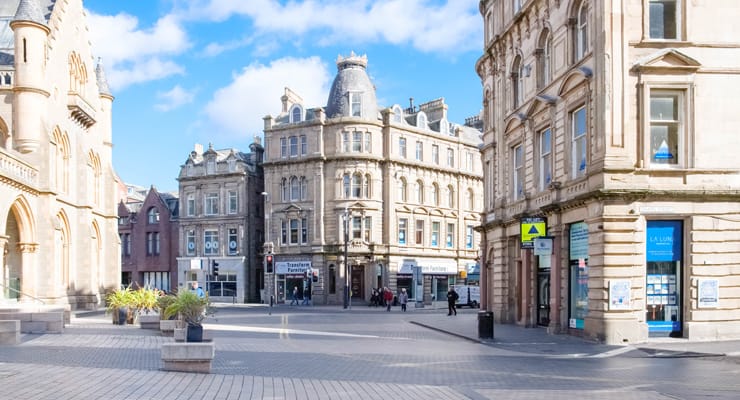
DD4 (Stobswell, Craigie) leads Dundee on three-year growth at 15.9%, and four of the five postcodes are positive across all three windows. The table shows growth over one, three and five years for every postcode, sorted by the five-year figure. DD1, DD2, DD4 and DD5 have all grown over every window; DD3 (St Marys, Downfield) is the only postcode in negative territory over one and three years.
| Area | 1 Year | 3 Years | 5 Years |
|---|---|---|---|
| DD2 (Lochee, Menzieshill, Ninewells) | 8.4% | 11.0% | 11.3% |
| DD4 (Stobswell, Craigie) | 7.2% | 15.9% | 11.0% |
| DD5 (Broughty Ferry, Monifieth) | 3.2% | 1.0% | 9.7% |
| DD1 (City Centre) | 2.7% | 4.9% | 8.7% |
| DD3 (St Marys, Downfield) | -4.4% | -4.3% | 0.7% |
DD4 (Stobswell, Craigie) is the most consistent grower of the group, positive across one, three and five years at 7.2%, 15.9% and 11.0%. DD4 also carries the highest transaction volume in the city at 42 sales a month, which suggests the growth is backed by genuine depth rather than a handful of outlier sales.
DD2 (Lochee, Menzieshill, Ninewells) tops the five-year column at 11.3% and is accelerating, with 8.4% over the last year. New housing near Ninewells Hospital may be driving recent demand in a postcode that covers a wide area from traditionally affordable Lochee to the hospital campus.
DD3 (St Marys, Downfield) at 0.7% over five years and negative over one and three years is the weakest postcode, the only one to have effectively stalled. It pairs that with the lowest yield in the city at 3.7%, so DD3 is the one Dundee postcode where neither the income nor the growth case is currently strong.
Monthly Property Sales in Dundee
Dundee's busiest postcodes turn over 39 to 45 sales a month, with DD3 (St Marys, Downfield) the most active at 45, while DD4 (Stobswell, Craigie) shows the highest turnover at 83%. Sales per month tell you how deep each postcode's market is, and turnover tells you how much of the existing housing stock changes hands in a year. In Dundee the suburban postcodes carry the volume, and the small city-centre market stands apart from the rest.
| Area | Sales Per Month | Turnover | Asking Price |
|---|---|---|---|
| DD3 (St Marys, Downfield) | 45 | 59% | £219,397 |
| DD4 (Stobswell, Craigie) | 42 | 83% | £170,984 |
| DD2 (Lochee, Menzieshill, Ninewells) | 39 | 52% | £203,980 |
| DD5 (Broughty Ferry, Monifieth) | 39 | 79% | £265,965 |
| DD1 (City Centre) | 13 | 33% | £165,792 |
DD4 (Stobswell, Craigie) shows the highest turnover at 83% on 42 sales a month, so a large share of its stock changes hands each year. For a landlord concerned about getting back out, DD4 is the most liquid market in Dundee, and it pairs that with the strongest five-year growth and the second highest yield in the city.
DD1 (City Centre) at 13 sales a month and 33% turnover is a small, slow market, which is notable because DD1 also delivers the highest yield at 7.2%. The low volume suggests a large share of DD1's stock is held by existing landlords and rarely trades. For a buy-and-hold income investor the low turnover confirms that others are thinking the same way; for anyone who needs a quick exit, DD1 is the tightest market in the city.
DD3 (St Marys, Downfield) leads on raw volume at 45 sales a month, the deepest market in the city, though its 59% turnover sits in the middle of the pack. Together DD3, DD4 and DD2 account for the bulk of Dundee's monthly transactions, the postcodes where a landlord can buy and later sell without waiting on a thin market.
How Long Properties Take to Sell in Dundee
Dundee sells fast across the board: every measured postcode reads as a seller's market, with DD5 (Broughty Ferry, Monifieth) clearing quickest at around 43 days and DD1 (City Centre) the slowest at 105. The first column is roughly how long a typical Dundee home sits on the market before it sells; the second is how many months of supply would clear at the current sales pace. When both run low, sellers hold the upper hand, and that shapes how hard a buyer can negotiate going in and how quickly they can move a property on later.
| Area | Avg Days to Sell | Months of Unsold Stock | Market |
|---|---|---|---|
| DD5 (Broughty Ferry, Monifieth) | 43 | 1.4 | Seller's market |
| DD3 (St Marys, Downfield) | 48 | 1.6 | Seller's market |
| DD4 (Stobswell, Craigie) | 51 | 1.7 | Seller's market |
| DD2 (Lochee, Menzieshill, Ninewells) | 57 | 1.9 | Seller's market |
| DD1 (City Centre) | 105 | 3.4 | Seller's market |
DD5 (Broughty Ferry, Monifieth) clears in about 43 days with only 1.4 months of unsold stock, the tightest market in the city despite being the most expensive postcode. The suburban postcodes DD3, DD4 and DD2 sit close behind at 48 to 57 days, so the bulk of Dundee's stock moves inside two months.
The income a postcode throws off and the ease of selling it are two separate questions, and DD1 (City Centre) splits them. It pays the best yield in Dundee at 7.2%, but at 105 days to sell and 3.4 months of unsold stock it takes more than twice as long to clear as DD5, even while still reading as a seller's market. A landlord buying DD1 for the income is also accepting the slowest exit in the city.
Dundee Rental Market Analysis
Monthly rents in Dundee run from £684 in DD3 (St Marys, Downfield) to £1,206 in DD5 (Broughty Ferry, Monifieth), with gross yields from 3.7% to 7.2% across all five postcodes. For investors asking is buy to let worth it in Dundee, the sections below break down rents, yields and tenant affordability postcode by postcode. With two universities and Ninewells Hospital behind the tenant demand, and entry costs a fraction of Edinburgh's, building a property portfolio in Dundee tends to lean on yield rather than capital growth. Browse current buy-to-let investments for sale across Scotland.
Average Rent & Gross Rental Yields in Dundee
Gross rental yields in Dundee range from 3.7% in DD3 (St Marys, Downfield) to 7.2% in DD1 (City Centre). As across most cities, the cheapest postcode delivers the highest yield: DD1's £165,792 asking price meets a £990 rent to give the top return. DD5 (Broughty Ferry, Monifieth) charges the highest rent at £1,206 a month but yields 5.4%, because its £265,965 asking price more than absorbs the rent advantage.
| Area | Average Monthly Rent | Asking Price | Gross Yield |
|---|---|---|---|
| DD1 (City Centre) | £991 | £165,792 | 7.2% |
| DD5 (Broughty Ferry, Monifieth) | £1,206 | £265,965 | 5.4% |
| DD4 (Stobswell, Craigie) | £736 | £170,984 | 5.2% |
| DD2 (Lochee, Menzieshill, Ninewells) | £836 | £203,980 | 4.9% |
| DD3 (St Marys, Downfield) | £684 | £219,397 | 3.7% |
DD1 (City Centre) at 7.2% pairs the lowest asking price in the city with a £991 rent to give the top yield. The tenant base here draws on the University of Dundee, Abertay University and city-centre professional workers, and a 30% deposit of £49,738 buys into the highest-yielding postcode in Dundee.
DD5 (Broughty Ferry, Monifieth) at 5.4% is the second highest yield, and it does it on the strength of the highest rent in the city at £1,206 against the highest asking price. DD4 (Stobswell, Craigie) at 5.2% is close behind on a £736 rent and a £170,984 asking price. What sets DD4 apart is that the income arrives alongside the strongest five-year growth in the city and the highest turnover, so a landlord is not trading liquidity for yield.
DD3 (St Marys, Downfield) at 3.7% has the lowest rent at £684 and the lowest yield. The northern residential areas of St Marys and Downfield draw family tenants at lower rent levels, and although DD3 offers the cheapest space per square foot, the rental return is correspondingly thin.
Is Dundee Rent High?
Dundee rents take between 23.5% and 41.5% of the local median gross monthly salary, depending on the postcode. Lettings agents tend to treat 30% of gross income as the point where a rent starts to stretch a tenant. Three of Dundee's five postcodes fall comfortably under that line; the two above it are DD1, with its student and young-professional mix, and DD5, where the rents track the city's priciest suburb.
The median gross weekly salary in Dundee is £670.40, which works out at about £2,905 per month or £34,860 per year. That sits below both the Scotland median of £767.40 a week and the Great Britain median of £752.40. Data from the Nomis Labour Market Profile (ASHE 2025).
| Rank | Area | Rent as % of Income |
|---|---|---|
| 1 | DD5 (Broughty Ferry, Monifieth) | 41.5% |
| 2 | DD1 (City Centre) | 34.1% |
| 3 | DD2 (Lochee, Menzieshill, Ninewells) | 28.8% |
| 4 | DD4 (Stobswell, Craigie) | 25.3% |
| 5 | DD3 (St Marys, Downfield) | 23.5% |
DD3 (St Marys, Downfield) and DD4 (Stobswell, Craigie) at 23.5% and 25.3% are the most affordable for tenants, leaving room within tenant budgets that tends to mean fewer arrears and longer tenancies. For a landlord that affordability is a form of protection, and DD4 in particular pairs it with the city's second highest yield.
DD5 (Broughty Ferry, Monifieth) at 41.5% is the least affordable against the city median, but the figure flatters the picture: the £1,206 rents in Broughty Ferry are paid by professional and family households earning above the Dundee median rather than single earners on the citywide average. DD1 at 34.1% sits just above the benchmark, reflecting a student and young-professional tenant base whose real earnings differ from the city-wide figure used here.
Buy-to-Let Considerations
Are House Prices High in Dundee? Price-to-Earnings Ratios
Buying a property in Dundee takes between 4.2 and 6.8 times the local median annual salary, and every postcode sits below the UK benchmark. This is based on the Nomis Labour Market Profile for Dundee, which puts the median gross annual income for Dundee residents at £34,860.
The UK benchmark for price-to-earnings is 6.9x (the UK average sold price of £268,132 divided by the Great Britain median annual salary of £39,125). All five Dundee postcodes sit below that line, with DD5 at 6.8x the closest to it. In most English cities multiple postcodes exceed the benchmark; Dundee's low prices against modest local wages keep the whole city in affordable territory by national standards.
| Rank | Area | Price-to-Earnings Ratio |
|---|---|---|
| 1 | DD1 (City Centre) | 4.2x |
| 2 | DD4 (Stobswell, Craigie) | 4.4x |
| 3 | DD2 (Lochee, Menzieshill, Ninewells) | 5.2x |
| 4 | DD3 (St Marys, Downfield) | 5.6x |
| 5 | DD5 (Broughty Ferry, Monifieth) | 6.8x |
DD1 (City Centre) at 4.2x is the most affordable postcode against local wages and one of the lowest ratios in any of our location guides. A property costing little more than four times Dundee's median salary, in a postcode that also leads on yield, is the kind of ratio that usually comes with weaker fundamentals elsewhere in the country. DD4 (Stobswell, Craigie) at 4.4x sits just behind.
DD5 (Broughty Ferry, Monifieth) at 6.8x is the most stretched, just under the UK benchmark. Broughty Ferry's prices reflect lifestyle demand from buyers whose earnings sit above the local base, which is why the postcode prices higher than Dundee wages alone would support.
Deposit Requirements in Dundee
A 30% deposit on a buy-to-let in Dundee ranges from £49,738 in DD1 (City Centre) to £79,789 in DD5 (Broughty Ferry, Monifieth). The gap between the cheapest and most expensive deposit is £30,051, which in many English cities would not cover the step between the two cheapest postcodes. In Dundee it spans the whole market.
On top of the deposit, Scottish buyers pay Land and Buildings Transaction Tax rather than stamp duty, plus the Additional Dwelling Supplement on a second property, which both add to the running costs of buy-to-let. The tax detail is set out below the table.
| Rank | Area | 30% Deposit Required |
|---|---|---|
| 1 | DD1 (City Centre) | £49,738 |
| 2 | DD4 (Stobswell, Craigie) | £51,295 |
| 3 | DD2 (Lochee, Menzieshill, Ninewells) | £61,194 |
| 4 | DD3 (St Marys, Downfield) | £65,819 |
| 5 | DD5 (Broughty Ferry, Monifieth) | £79,789 |
DD1 (City Centre) is the cheapest way into Dundee at a £49,738 deposit, and it happens to be the highest-yielding postcode too, so the lowest up-front cost and the best income line up in the same place. DD4 (Stobswell, Craigie) is barely £1,600 more at £51,295 and buys into the most liquid, fastest-growing postcode in the city, so the two cheapest entries also happen to be the two strongest cases.
For investors who might be priced out of Edinburgh, where the cheapest 30% deposit starts above £61,000, Dundee offers access to a Scottish university city for under £52,000 at its two strongest postcodes. On the tax side, Land and Buildings Transaction Tax (Revenue Scotland's replacement for stamp duty since 2015) is charged in bands: nothing up to £145,000, 2% to £250,000, 5% to £325,000, 10% to £750,000 and 12% above that. A buy-to-let or second home also pays the Additional Dwelling Supplement on top. Estimate your bill with our Scotland LBTT calculator, then verify the current rates with Revenue Scotland before you budget, as the bands and the supplement change. Investors exploring low-capital strategies may also want our guide to investment property with no deposit.
What the Dundee Data Tells Buy-to-Let Investors
In Dundee the cheapest postcode is also the highest-yielding, and the income case is stronger than the growth one. DD1 (City Centre) has the top yield at 7.2%, the lowest asking price for an investment property in Dundee at £165,792, and the most affordable prices against local earnings at 4.2 times income. A 30% deposit there is £49,738, the lowest in the city, for a flat renting at £991 a month. The trade-off is liquidity: DD1 sees just 13 sales a month and takes around 105 days to sell, so it is a buy-and-hold market rather than a quick-turn one.
DD4 (Stobswell, Craigie) is the most balanced postcode in the city. It returns 5.2% on a £170,984 asking price, carries the strongest five-year growth at 11.0%, the highest turnover at 83%, and a deposit of £51,295 barely above DD1's. For an investor who wants income alongside the ability to sell when the time comes, the data points consistently at DD4.
At the top end, DD5 (Broughty Ferry, Monifieth) asks £265,965 and returns 5.4% on the highest rent in the city, but the price tag does more for the address and tenant quality than for the yield. DD3 (St Marys, Downfield) is the one postcode where the case is weak on both counts, with the lowest yield at 3.7% and effectively flat growth. Buyers chasing a below-asking entry into any of these areas often work through off-market property in Dundee rather than the open listings, and those looking at older stock in need of work may explore renovation properties across the city.
Dundee reads as a yield play within Scotland. Aberdeen and Glasgow offer higher top yields on lower prices, and Edinburgh offers capital-city stability at far higher entry costs, but Dundee sits in between: a compact university city with a real regeneration story, low deposits, and a 7.2% top yield that competes with much larger markets at a fraction of the capital outlay. The capital growth case is muted; the income case is the reason to look.
How Dundee Compares
Dundee's mean asking price of £205,224 is the third lowest of six Scottish cities compared here, and its 7.2% top yield sits behind only Aberdeen and Glasgow. The table places Dundee alongside five other Scottish locations, each with a different investor profile. The mean asking price and mean monthly rent are simple averages across all postcodes with data; the top gross yield is the single highest postcode yield in each location.
| Location | Mean Asking Price | Mean Monthly Rent | Mean Gross Yield | Top Yield (postcode) |
|---|---|---|---|---|
| Aberdeen | £165,622 | £782 | 5.7% | 9.3% (AB11) |
| Glasgow | £183,315 | £1,078 | 7.1% | 10.8% (G2) |
| Dundee | £205,224 | £891 | 5.2% | 7.2% (DD1) |
| Perth | £246,979 | £777 | 3.8% | 5.0% (PH1) |
| Edinburgh | £337,923 | £1,394 | 5.0% | 6.9% (EH11) |
Aberdeen and Glasgow both undercut Dundee on price and beat it on yield. Glasgow posts the group's highest top yield at 10.8% from its thin G2 city-centre market, while Aberdeen is the cheaper entry, topping out at 9.3%. Glasgow carries the deeper rental market, with mean rents of £1,078 spread across far more postcodes than Dundee can offer. For a buyer comparing on yield alone, both produce higher headline numbers at a lower capital cost.
Against the higher-priced markets the picture flips. Perth, the closest geographically at 22 miles west, costs more per home at £246,979 and yields just 5.0%, while Edinburgh commands a mean asking price 65% above Dundee's and a 6.9% top yield that Dundee edges. Dundee's differentiator is not the cheapest price or the highest yield in Scotland; it is the combination of a sub-£52,000 entry deposit at its two strongest postcodes, a £1 billion regeneration pipeline, and a university-city tenant base. For a data-driven comparison across the whole country, see our guide to the highest-yielding areas.
Frequently Asked Questions
What are the best areas in Dundee for buy-to-let?
It depends whether you want income or a balance of income and growth. For income, DD1 (City Centre) leads: it is the cheapest entry at £165,792 and the highest-yielding at 7.2%, drawing tenants from the two universities and city-centre employers. The trade-off is a slow market, with 13 sales a month and around 105 days to sell.
For a more rounded case, DD4 (Stobswell, Craigie) returns 5.2% with the strongest five-year growth at 11.0% and the highest turnover in the city at 83%, on a deposit barely above DD1's. DD2 (Lochee, Menzieshill, Ninewells) yields 4.9% and benefits from proximity to Ninewells Hospital. So if yield matters most, look at DD1; if you want income alongside liquidity and growth, DD4 is the steadier pick.
How does Dundee compare to Glasgow and Edinburgh for buy-to-let?
Glasgow undercuts Dundee on both price and yield: a mean asking price of £183,315 against Dundee's £205,224, and a top yield of 8.9% against 7.2%, with a far deeper rental market. For an income investor on a smaller budget, Glasgow gives more to work with.
Edinburgh runs the other way. Its mean asking price of £337,923 is 65% above Dundee, with mean rents of £1,394 and a 6.9% top yield. Edinburgh is the capital-city stability play; Dundee sits in between, cheaper to enter than Edinburgh and yielding more, but with a smaller, slower market than either of the bigger cities.
Is HMO property investment viable in Dundee?
Dundee's two universities hold a combined student population of roughly 20,000, which creates demand for shared housing, particularly in DD1 (City Centre) and parts of DD4 (Stobswell). Scotland runs its own HMO licensing regime, separate from England's selective licensing system, and Dundee City Council requires an HMO licence for any property occupied by three or more unrelated people.
The headline single-let yield of 7.2% in DD1 reflects whole-property averages. Letting by the room in DD1 typically lifts the per-property return, but the licensing requirement, higher management input and seasonal void risk over the university holidays all need to be factored in. Our guide to HMO property sets out how the numbers work on a shared house.
What drives student accommodation demand and operating risk in Dundee?
Dundee has roughly 20,000 university students across the University of Dundee and Abertay University, and that population generates consistent demand for private rented accommodation in DD1 and DD4. Purpose-built student accommodation has expanded in the city in recent years, adding competition to the traditional private rental market.
Investors considering student lets should factor in summer void periods, typically two to three months, and the shift towards all-inclusive rents. For a broader view of the sector, see our guide to student property investment.
How do property purchase taxes work in Dundee?
Scotland does not use stamp duty. The purchase tax is Land and Buildings Transaction Tax, run by Revenue Scotland, charged in bands: 0% up to £145,000, 2% to £250,000, 5% to £325,000, 10% to £750,000 and 12% above. A buy-to-let or any additional home also pays the Additional Dwelling Supplement on top of the banded tax.
The buying process differs too: sellers provide a Home Report up front, properties are often marketed at "offers over", and the deal becomes binding at the conclusion of missives through a solicitor rather than an English-style exchange. Always check the current rates and supplement with Revenue Scotland before budgeting.
What are average house prices in Dundee?
The average sold price across the City of Dundee is £134,392 on the UK House Price Index, 28.0% below the Scotland average of £186,582 as of March 2026. By type, detached homes average £289,206, semi-detached £177,622, terraced £139,115 and flats £93,307, so every type sells below the Scotland equivalent, with flats carrying the deepest discount at 28.5%. Asking prices by postcode run from £165,792 in DD1 (City Centre) up to £265,965 in DD5 (Broughty Ferry, Monifieth), with a city-wide mean of £205,224.
Through a buy-to-let lens, DD1 is the cheapest entry and the highest-yielding at 7.2%, while DD5 charges the highest rent but returns 5.4% on the city's top price.
What type of property is most common in Dundee for buy-to-let?
Flats and terraced houses are the workhorses of Dundee's rental market. Flats average £93,307 on the UK House Price Index, the cheapest type and 28.5% below the Scotland average, and terraced houses average £139,115. Both sit well below the detached figure of £289,206, and both concentrate in the higher-yielding inner-city postcodes such as DD1 (City Centre) and DD4 (Stobswell, Craigie), where tenement and ex-local-authority stock makes up much of what trades.
For a yield-focused buyer that mix matters: the cheaper flats and terraces are what put DD1 on a 7.2% gross yield, while the detached and semi-detached stock in DD5 (Broughty Ferry) and western DD2 draws owner-occupier competition that compresses the rental return.
Can I find buy-to-let property in Dundee under £100,000?
The asking prices in this guide are postcode averages across all property types, running from £165,792 in DD1 to £265,965 in DD5. But the UK House Price Index puts Dundee's average flat price at £93,307, which confirms that sub-£100,000 stock exists. Individual flats in DD1, DD3 and DD4 do list below £100,000, particularly ex-council flats and smaller one-bedroom units, where a 30% deposit comes in under £30,000.
At the lower end of the market, lease length, factoring charges (Scotland's equivalent of service charges) and building condition all need careful assessment. For a below-asking entry it is worth looking through below market value properties as well as the open listings.
How do I buy an investment property in Dundee?
Start by deciding whether you are buying for income or for a balance of income and growth, because that points you at a different postcode. DD1 (City Centre) is the cheapest entry at £165,792 and the highest-yielding at 7.2%, while DD4 (Stobswell, Craigie) pairs a 5.2% yield with the strongest growth and liquidity in the city. Budget for a 30% deposit, which runs from £49,738 in DD1 to £79,789 in DD5, plus Land and Buildings Transaction Tax and the Additional Dwelling Supplement on top.
Beyond what is listed openly, experienced investors often buy below asking through off-market property in Dundee. To see what is available now, browse investment property or buy-to-let investments for sale.
Ready to buy property?
Browse investment properties with prices and gross yields shown for each opportunity.
Get property alerts