

Selling a House Through Purple Bricks
Purplebricks, usually written Purple Bricks, sells your house for a fixed fee that starts at £999 including VAT, with nothing to pay upfront if you qualify for its Pay Later option. That fee buys the portal listing, photos, a floorplan, a for sale board and an agent's valuation. It does not buy someone to show buyers round, and it is not handed back automatically if the house does not sell.
What that means for a particular sale comes down to three things the contract fixes: what you pay, when you pay it, and what you get back if the house stays unsold. Every figure below comes from Purplebricks' own website, mainly its package page and its current service agreement.
Article updated: September 2026
Who are Purple Bricks, Exactly?
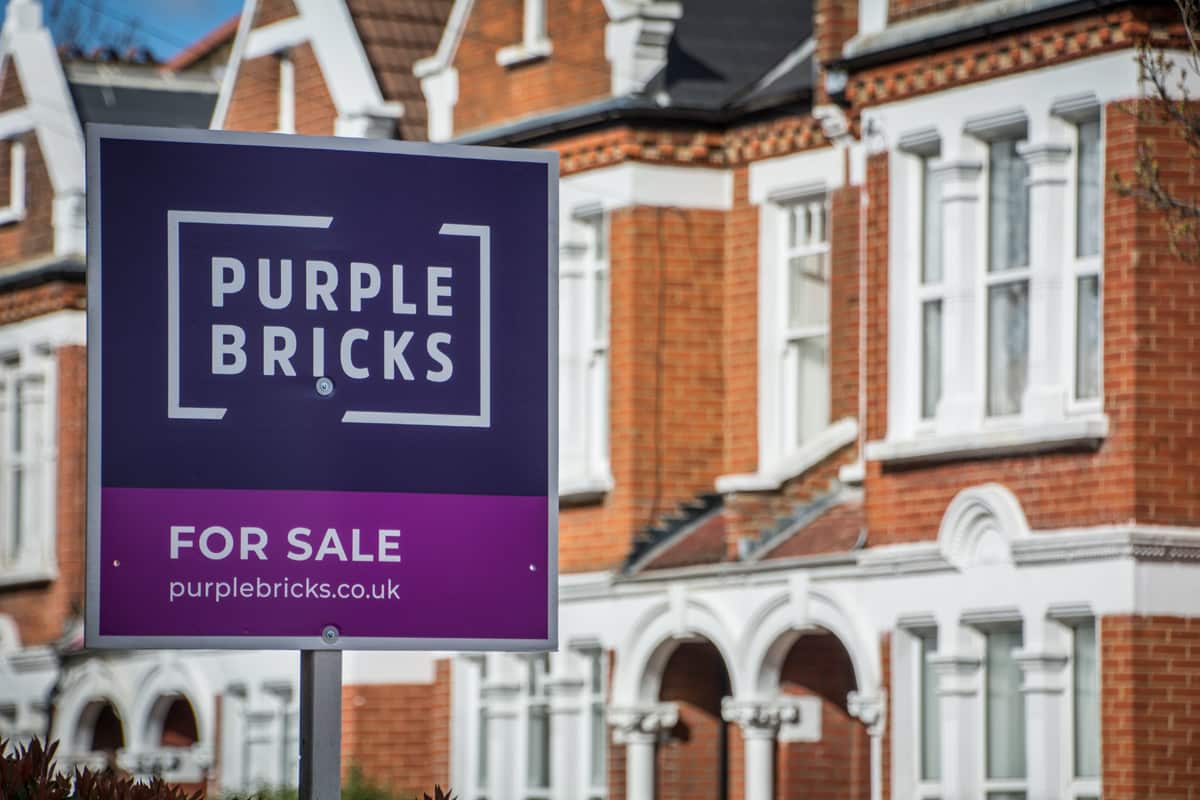
Purplebricks is an online estate agent. You book a valuation online, an agent values the house in person or by video, and from then on the sale runs through the Purplebricks platform and app, with agents reached through that platform.
The online marketing is mixed with real people doing the valuation, the advice and the sales progression. Purplebricks' service agreement calls the people you deal with "Purplebricks Agents". The package page splits that into three roles: a property expert who values the house, a sales consultant who supports viewings and offers, and a sales progressor who steps in once an offer is accepted.
Purplebricks acts for the seller. It is not a property sourcing company and it does not act for buyers, although buyers use the same platform to book viewings and make offers. It lists on the same portals as a traditional agent, and it runs a separate free auction-style route called Purple Pronto, which works on different terms from the standard fixed-fee service.
How are Purple Bricks and Estate Agents Different?
Three things separate Purplebricks from a commission-based high street agent: how the fee is worked out, who does the viewings, and who you deal with.
The fee. A traditional agent usually charges a percentage of the sale price, paid on completion. Purplebricks charges a fixed fee set by a price band. So a £180,000 house pays the same as a £200,000 house. Both pay £999. That fee is owed whether or not the house sells, subject to the refund conditions in the service agreement. I worked as a negotiator and valuer in an estate agency in 2006, and the incentive is simple to state: with a percentage fee the agent earns more when the price achieved is higher. With a fixed fee they do not. That is the basic difference in how the agent gets paid.
The viewings. Unless you buy Assisted Viewings, the agreement says you will normally be conducting viewings yourself. Assisted Viewings are done by a professional viewing representative, who may come from a third-party provider rather than being the agent who valued the house.
The people. The agreement says you are not allocated a dedicated individual agent unless Purplebricks expressly agrees otherwise, and that different agents may deal with you at different stages. The package page describes the sales progressor as a single point of contact once a sale is agreed, while the agreement says you will not necessarily deal with the same person throughout sales progression. Both statements come from Purplebricks. The agreement is the one you sign.
What does not change is where the house is advertised. Purplebricks lists on the same online property portals as a high street agent: Rightmove, Zoopla, OnTheMarket and its own site. So yes, Purple Bricks do advertise on Rightmove, and a buyer scrolling Rightmove sees a Purplebricks listing in the same feed as everyone else's.
How does Purplebricks work in practice? Taking the package page and the agreement together, the sequence for a seller runs like this:
- Book a free valuation. It can be in your home, by video, or an instant online estimate to start with.
- Instruct Purplebricks on its platform and choose Pay Now or Pay Later. The fee, the products you have picked and your payment option are confirmed at this point. Under Pay Later, the ten-month clock starts here, not when the advert goes live.
- Approve the advert. Purplebricks prepares it from the photos, floorplan and the information you give it. You are responsible for checking the description, photos and floorplan are accurate before it is published.
- Buyers book viewings and submit offers through the platform at any hour. You accept, reschedule or decline from the app, and Purplebricks passes on viewing feedback where buyers give it.
- Offers come to you. An agent may advise on an offer, but the decision to accept or reject stays with you.
- Once you accept an offer, sales progression starts. Under Pay Later you must use the conveyancer Purplebricks nominates, and your conveyancer pays the outstanding fee to Purplebricks out of the sale proceeds on completion.
The Advantages of Selling, using Purple Bricks
Set against a percentage fee, the fixed-fee model has some clear, checkable points in its favour. None of them says anything about the price you will get or how long the sale will take.
You know the fee before you start. The package page publishes three totals, each including VAT, and the band is set by the value of the house.
Nothing upfront if you qualify for Pay Later. The agreement lets you defer the whole fee, plus any Assisted Viewings or Home Report you add, for up to ten months from instruction. It states there is no interest or finance charge solely for using Pay Later during that period.
The basics are in the price. Professional photos and a floorplan, a for sale board, the portal listings, an agent's valuation, offer management and sales progression once an offer is accepted are all listed as part of the service. The package page also shows its featured and premium listing upgrades as included.
You can watch the marketing. The package page says the platform shows listing performance live, sends viewing requests and offers to your phone, chases buyer feedback and lets you message buyers directly.
There is a refund route if the house does not sell. The agreement includes a claim for a refund of the service fee for an unsold property. It comes with eight conditions and an administration charge, so it is a conditional claim rather than a no sale, no fee promise.
Purplebricks' own pages also carry savings and speed claims. Those are marketing figures produced by the seller of the service, not independent measurements.
Things to Consider when Selling through Purple Bricks
These are the terms in the service agreement that most change what a seller actually pays and does.
- The fee is owed whether or not the house sells. Clause 18 says the refund provisions apply only where you have met the conditions, and that no other Purplebricks selling service carries a money-back or refund guarantee merely because the property does not sell. Within the contract, the route back for an unsold house is the conditional refund claim in clause 17. The agreement does not take away statutory rights that cannot be excluded, and clause 13 says any refund, reduction or compensation agreed after a complaint is dealt with separately.
- Pay Later means using Purplebricks' conveyancer. Clause 7 says that by choosing Pay Later you agree to use the conveyancing service it nominates once a sale is agreed. If you then refuse, you pay an administration charge and the whole deferred fee becomes due. The agreement defines that charge as the figure quoted when you instructed or the charge that applies to the product or service, and £420 including VAT only if neither applies. Clause 7 also says that paying the deferred amount early, or on a payment event, does not release you from using the nominated conveyancer.
- The deferred fee can fall due before the ten months are up. The agreement's definitions list the payment events, and clause 8 makes the fee due when one happens. They cover the end of the deferred period, completion, withdrawing the house from the market, failing or refusing to use the nominated conveyancing, and a material breach. Withdrawing counts whether the house is with Purplebricks, or with The Agency UK or the Secure Sale partner after switching. Switching on its own is not a payment event. On any payment event, the full outstanding amount is taken from the card you registered, without notice. But clause 11 says Purplebricks will not also take from your card an amount your conveyancer has already paid it out of the sale proceeds.
- The ten months run from instruction, not from the day the advert goes live. A delay in preparing the advert does not extend it. You can take one marketing break of up to 14 weeks, which extends the marketing period but does not pause the payment clock.
- Pay Later is not available for every sale. Clause 6 says park homes, holiday homes, boats, land and leasehold properties with fewer than 80 years left on the lease are not eligible and can only use Pay Now. Separately, Purplebricks decides whether you personally qualify. It says Pay Later may not be available if you are bankrupt, insolvent, in an Individual Voluntary Arrangement or another formal insolvency arrangement, or otherwise ineligible under its criteria at the time you instruct.
- You are not promised one named agent. Clause 26 says a dedicated individual agent is not part of the service unless expressly agreed, and the same agent may not deal with you each time you get in touch.
- Viewings are yours to do unless you pay £499 for Assisted Viewings. That charge, and the cost of a Scottish Home Report, sit outside the clause 17 refund, so they are not repaid even if the service fee later is.
- The marketing period and the refund period do not match. The agreement defines the marketing period as ten calendar months from the property going on the market. The refund conditions require the property to have been on the market for at least twelve months. The agreement does not say how a seller bridges the two, which makes it one of the questions to ask before instructing.
- Switching does not clear the fee. The agreement includes options to switch marketing to The Agency UK or to change to a Secure Sale method. Neither switch is a payment event by itself, neither cancels the deferred amount, and withdrawing the house from the market after switching triggers payment.
- Late payment carries costs. Clause 12 allows interest at 4% above base rate on an overdue amount, referral to a debt recovery provider and recovery of reasonable costs. Clause 13 says making a complaint does not pause the date payment is due.
- Cancellation rights are statutory, and work already done is paid for. Clause 15 covers the case where you have a statutory cancellation period and ask Purplebricks to start during it. If you then cancel, where the law permits, you pay for products and services already supplied. You also pay an amount proportionate to the services performed up to that point.
Public customer reviews of Purplebricks are published on Trustpilot. Each one is a single person's account of their own dealings with the company, at whatever stage they reached and under whatever terms applied at the time. They sit alongside the contract terms above rather than replacing them: a review tells you how one person found the service, not what the current agreement will mean for your house.
What you Need to Know about Purple Bricks' Fees
On 22 September 2026 the package page showed three fixed fees, each stated as a total including VAT: £999 for a property valued up to and including £200,000, £1,299 for £200,001 to £300,000, and £1,599 for anything over £300,000. The page also displays the fee before VAT (£833 for the first band), but the total is the figure you pay for the package. One further charge is disclosed elsewhere on the site. On the same date, a footnote on Purplebricks' how it works page read "Prices include VAT. Separate £80 Anti-Money Laundering fee applies." The package page and the service agreement do not mention that fee, so between them they do not say who pays it, when it is paid or whether it is ever refunded. The agreement says the applicable fees are confirmed to you as part of the instruction process, which is where that one gets settled.
Three optional extras are priced on the same page: Assisted Viewings at £499, an EPC at £199, and a Home Report for properties in Scotland at a price that varies. Under Pay Later, the viewings and the Home Report can be deferred with the main fee; the EPC is not listed as part of the deferred amount.
The two ways to pay work like this. Pay Now settles the fee and any extras when you instruct. Pay Later defers the fee and any Assisted Viewings or Home Report for up to ten months from instruction, interest-free. The conditions are that you use the nominated conveyancer when a sale is agreed, and that the outstanding amount can be collected from your card on a payment event. You can make part payments at any time before then, and paying early does not release you from using the nominated conveyancer.
The service agreement sets out the refund claim for an unsold property in clause 17. All eight conditions have to be met:
- You have paid for the service in full, including any extras such as viewings or a Home Report.
- The property has been on the market for at least twelve calendar months.
- For the three months immediately before the claim, it has been advertised at or below the Purplebricks agent's valuation.
- You have not unreasonably refused, cancelled or prevented viewings.
- You have marketed exclusively with Purplebricks for the marketing period, with no other agent, no switch to The Agency UK and no change to Secure Sale, and you have handled viewings and offers through Purplebricks.
- You have not unreasonably refused an offer at or above the asking price.
- You have not unreasonably withdrawn from an agreed sale or refused Purplebricks' advice on the marketing or sale.
- At the time of the claim there is no agreed sale, no outstanding viewing and no offer still on the table.
The claim goes by email within 14 days of the refund first becoming due under condition 2. A customer service manager assesses it. If it is valid, the property has to come off the market before the refund is paid, and Purplebricks says it pays within 14 days of that being confirmed, after deducting the administration charge. The agreement defines that charge once: the figure quoted when you instructed or the charge that applies to the service, and £420 including VAT only if neither applies. Assisted Viewings and a Home Report are excluded from this refund and are not repaid under it. The refund has to be repaid in full if, within twelve months of it being paid, you sell the property or agree a sale, directly or indirectly, to certain buyers. That means anyone who, before the refund, was introduced to you or to the property through Purplebricks in any way, arranged or attended a viewing, or made an offer. The refund becomes repayable as soon as you agree that sale. Putting the property back on with Purplebricks afterwards counts as a new instruction at the full fee then applying.
The standard fixed-fee service is not the only Purplebricks product. Its selling page describes Purple Pronto as a free service for sellers in a hurry, using an auction-style approach with time-limited online offers, a set reserve, and a non-refundable reservation fee paid by the buyer. The page attaches speed and completion-rate claims to it, which are Purplebricks' own marketing figures. The service agreement covers the standard service and does not use the Purple Pronto name, so the terms of that route have to be read separately before choosing it.
On the buyer side, the service agreement is a contract between the seller and Purplebricks, and the fee it sets is the seller's. The one buyer charge named on the selling page is the reservation fee under Purple Pronto, and the page does not state the amount.
The package page compares its fee with a high street agent charging 1.3% plus VAT, which it describes as an average. The page does not say where that figure comes from or how it was worked out, so it stands as Purplebricks' own comparison rate rather than an independent measurement. The arithmetic is easy to redo with whatever rate a local agent actually quotes. Take a £250,000 sale. Every 1% of commission on it is £2,500 before VAT. Once VAT at 20% is added, that becomes £3,000. The Purplebricks fee to set against it is £1,299 in that band, which already includes VAT. Add £499 if you want the viewings done for you, plus any anti-money laundering fee that applies. What the sum does not capture is the price each route achieves, which neither the package page nor the agreement puts a figure on.
Questions to Ask if you are Considering Selling a House
The agreement settles the fee, the payment terms and the refund conditions. It leaves the following to the conversation with the agent, so these are the questions to put before instructing, with the answers kept in writing:
- Which agent will I deal with, and will the same person handle my sale from valuation to completion, or will it pass between people at each stage?
- What is your valuation for my house, and if I market above it, what does that do to the refund condition that needs three months at or below your valuation?
- Am I eligible for Pay Later, and what exactly becomes payable if I withdraw the house, if I use my own conveyancer, or if the ten months run out before completion? Does the £80 anti-money laundering fee apply to my sale, and when is it paid?
- The marketing period is ten months and the refund needs twelve months on the market. How does that work in practice, and is the extension automatic?
- If I buy Assisted Viewings, who conducts them, and how is viewing feedback passed back to me?
- Is Purple Pronto the same thing as the Secure Sale method in the agreement, and what does a buyer pay under it?
- Do you cover my postcode, and how many homes are you marketing near mine right now?
Other Ways to Sell your House
Besides Purplebricks and a high street agent, three other ways to sell your house are a private sale you advertise yourself, an auction or a house-buying service. Each costs a different amount, asks a different amount of work from you and gives you a different level of certainty.
Advertise the house yourself. A private sale takes the agent's fee out, so on that side you pay only what the advertising costs. The conveyancing, any EPC and the other costs of the sale still have to be paid whichever route you take. In return for the saving you handle every enquiry, viewing and negotiation, and there is no way of knowing in advance how long it takes for a buyer at your asking price to appear.
Sell at auction. If a buyer bids at or above the reserve and completes under the auction contract, the property sells on that basis. There is no guarantee bidding reaches the reserve, and the auction house sets its own entry and sale fees. Auctions attract some buyers looking for properties in need of renovation, alongside investor and owner-occupier buyers.
Sell to a house-buying service. A house-buying company may offer a quicker sale at a lower price than the open market. The terms, the fees and proof of funds are the things to see in writing before agreeing anything. In my experience some sellers put a certain sale, no chain and dealing with someone who did what they said ahead of getting the top price.
Purple Bricks will say that they are the best way to sell a house. Estate agents will say that they are the best way to sell a house. A fair comparison lines up the total fee, where the house is advertised, how much of the work stays with you, the likely timetable, and the contract terms, including what happens if the house does not sell.
Where a property is being sold to investors, it also helps to look at how specialist listings present an investment property, buy-to-let property for sale or below-market-value property for sale. That is the format an investor buyer expects to see.
Ready to buy property?
Browse investment properties with prices and gross yields shown for each opportunity.
See the latest deals