
Where to Buy Property Investments in Trafford: Yields of 6.5%
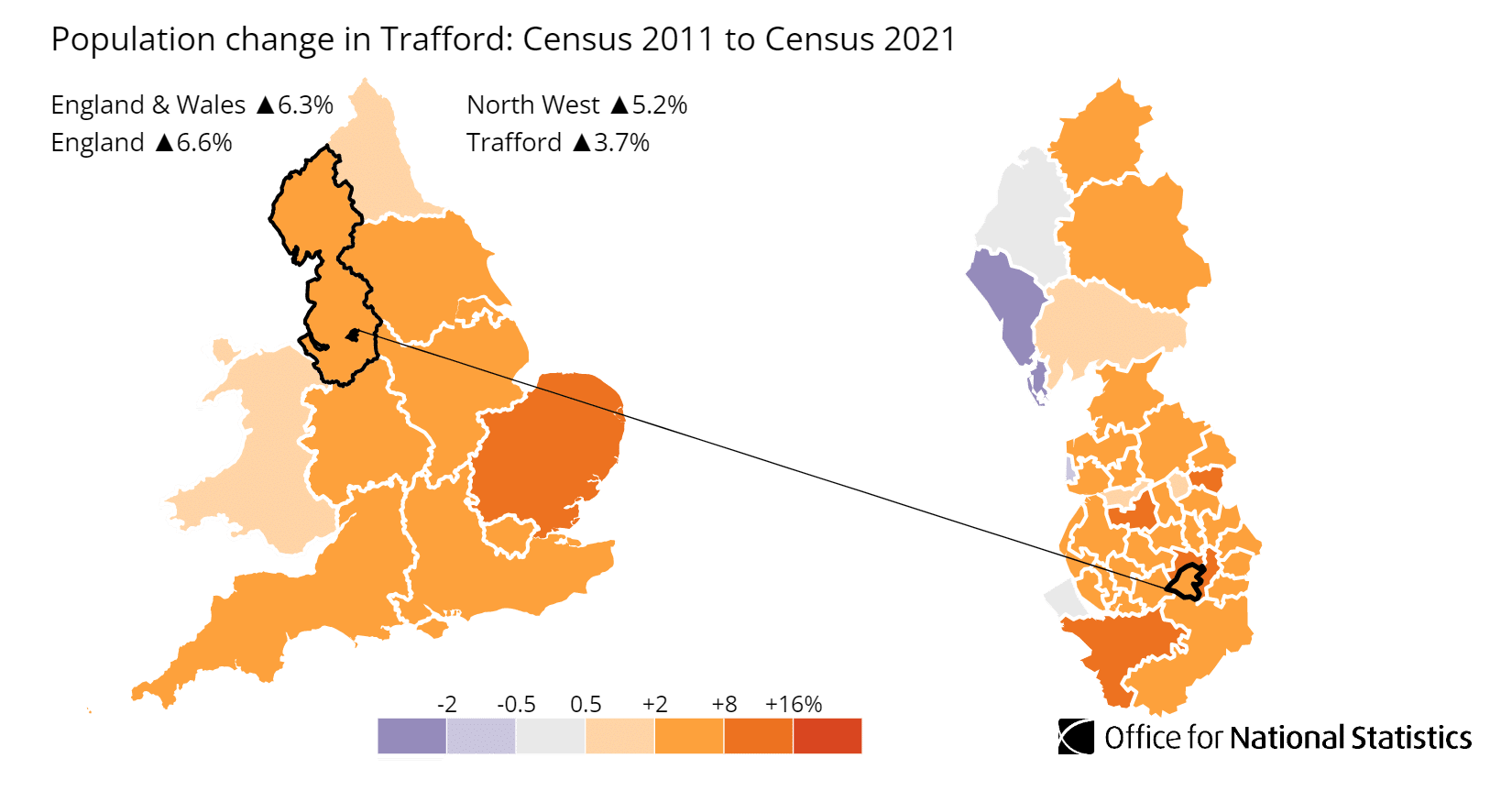
Trafford's top postcode delivers a 6.5% gross rental yield, with average asking prices starting from £214,382 in M17 (Trafford Park). Average sold prices across the borough sit at £377,036. That is 29.2% above the England average of £291,865 and 73.4% above the North West regional average of £217,428. The population grew 3.7% between the 2011 and 2021 censuses, from 226,578 to 235,052. For investors looking at investment property in Greater Manchester, Trafford offers a spread of price points and yields under one local authority.
Trafford is Greater Manchester's premium borough, but the headline figures mask a split market. The southern postcodes around Altrincham and Hale command asking prices above £550,000 with yields around 3.0%. The northern postcodes around Old Trafford and Stretford sit below £330,000 with yields between 4.3% and 6.5%. That spread gives investors two distinct entry points into the same local authority. This guide covers 10 postcode districts with data on sold prices, rental yields, growth, and deposits.
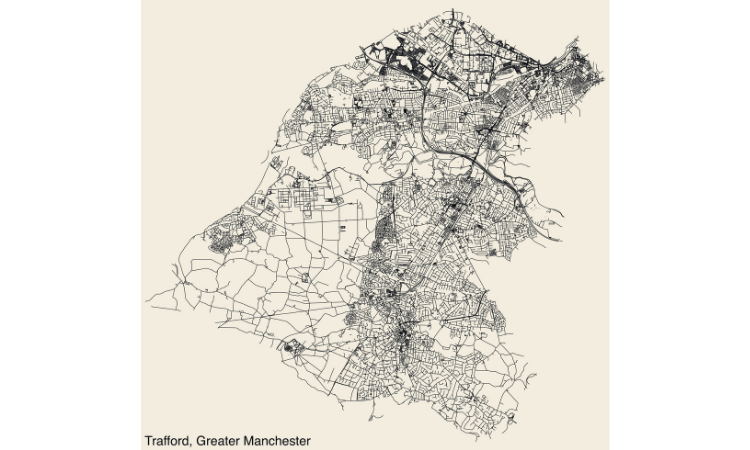
Trafford is a metropolitan borough in Greater Manchester (ONS code E08000009). It stretches from Old Trafford in the north to Lymm in the south, including Stretford, Sale, Urmston, Altrincham, Hale, and Partington. It borders Manchester to the east and Salford to the north. Our property investments UK guides cover all of these boroughs individually.
Article updated: February 2026
Trafford Buy-to-Let Market Overview 2026
Greater Manchester's highest-priced borough offers yields up to 6.5% in its most affordable postcodes, with entry prices from £214,382.
- Average sold price: £377,036 (29.2% above England's £291,865)
- Asking price range: £214,382 (M17, Trafford Park) to £636,887 (WA15, Hale, Timperley)
- Rental yields: 3.0% (WA14) to 6.5% (M17) across 9 postcodes with rental data
- Rental income: Monthly rents from £1,102 (M16) to £2,191 (WA15)
- Price per sq ft: House prices from £252/sq ft (M31) to £448/sq ft (WA15)
- Market activity: Sales ranging from 7 per month (M31) to 58 per month (M33)
- Deposit requirements: 30% deposits range from £64,315 (M17) to £191,066 (WA15)
- Affordability ratios: Property prices from 5.0 to 14.8 times Trafford's median annual salary of £42,973
Contents

-
by Robert Jones, Founder of Property Investments UK
With two decades in UK property, Rob has been investing in buy-to-let since 2005, and uses property data to develop tools for property market analysis.
Property Data Sources
Our location guide relies on diverse, authoritative datasets including:
- HM Land Registry UK House Price Index
- Ministry of Housing, Communities and Local Government
- Ordnance Survey Data Hub
- Propertydata.co.uk
We update our property data quarterly to ensure accuracy. Last update: February 2026. All data is presented as provided by our sources without adjustments or amendments.
Why Invest in Trafford?
Trafford recorded a population of 235,052 in the 2021 Census, a 3.7% increase from 226,578 in 2011. That growth sits slightly below the England average of 6.6%, but Trafford's appeal to tenants comes from its position rather than its growth rate. It sits between Manchester city centre and the Cheshire commuter belt, with Metrolink tram stops connecting Old Trafford, Stretford, Sale, and Altrincham to the city in under 20 minutes.
Median annual earnings in Trafford stand at £42,973, which is 14.8% above the North West regional median of £37,445 and 9.8% above the Great Britain median of £39,125. Those earnings support a rental market where monthly rents range from £1,102 to £2,191. The employment rate is 80.7% with unemployment at 4.3%. Trafford's tenant base includes young professionals commuting into Manchester, families drawn by the borough's schools, and corporate tenants in the southern premium postcodes.
Trafford Economic Summary
- Population: 235,052 (2021 Census). Growth of 3.7% from 2011.
- Median annual salary: £42,973 (local), £37,445 (North West), £39,125 (Great Britain)
- Employment rate: 80.7% (local)
- Unemployment rate: 4.3% (local)
- Key employment sectors: Professional services, healthcare, education, financial services, media
Source: ONS Census 2021, Nomis Labour Market Profile (ASHE 2025)
Regeneration and Investment in Trafford
Stretford is the focus of Trafford's largest investment programmes, with over £100 million committed across three overlapping schemes. The projects concentrate along the A56 corridor between Old Trafford and Sale, an area that also benefits from Metrolink connectivity.
- Stretford Civic Quarter (Masterplanning, multi-hundred million pounds): FEC has been selected to deliver 1,200 homes and a 250-bed hotel on the 120-acre former Kellogg's and GMP headquarters site, with 25% affordable housing. The planning application is expected in spring 2026. Updates at Place North West.
- Stretford Town Centre Regeneration (Under construction, £50 million): Bruntwood Works and Trafford Council are transforming Stretford Mall into an open-air high street and town square, backed by £17.6 million from the Future High Streets Fund. Phase 1 construction is underway. Updates at Place North West.
- Former B&Q Site Residential Development (Approved, £1.4 million affordable housing contribution): Liverpool-based Brickland has planning permission for 228 homes on the former B&Q store in Stretford, within the Civic Quarter boundary. Construction is starting ahead of the larger FEC scheme. Updates at Trafford Council.
Trafford Property Market Analysis
When Was the Last House Price Crash in Trafford?
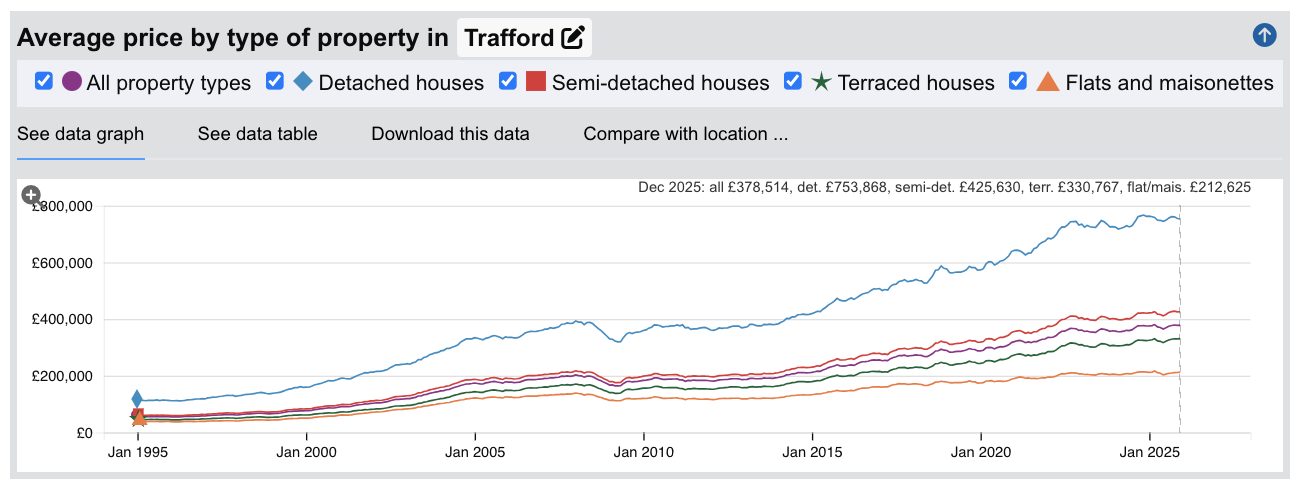
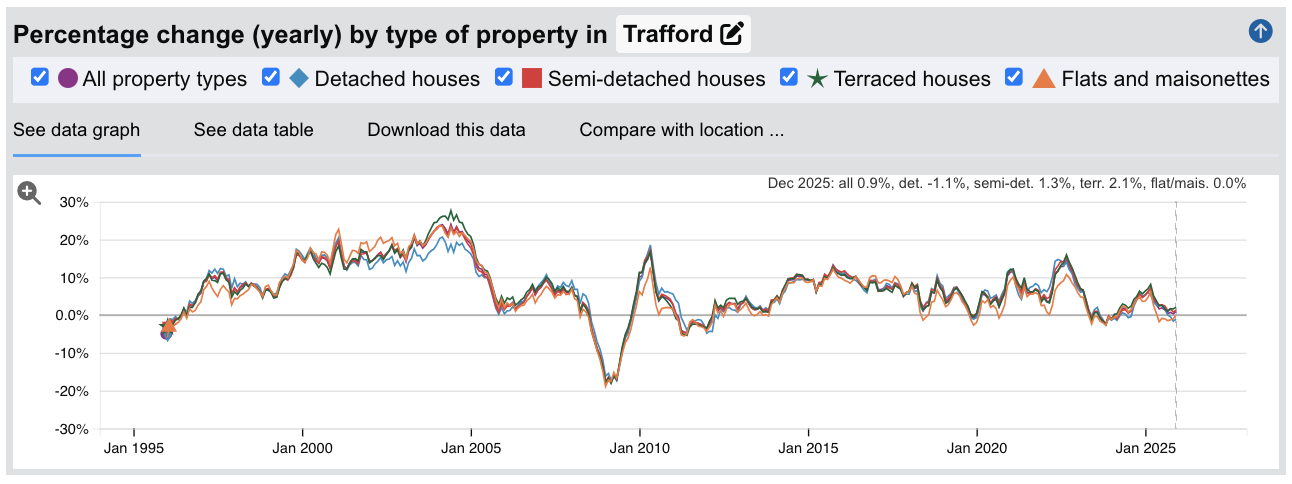
Trafford's average sold price peaked at £199,317 in October 2007, fell 17.9% to a trough of £163,713 by April 2009, and took until April 2014 to recover past the pre-crash peak. The worst annual change reading was -17.8% in March 2009. That was steeper than both the England decline of -15.5% and the North West decline of -14.0% over the same period. Premium boroughs with higher absolute prices tend to fall further in percentage terms during corrections, and Trafford followed that pattern.
Here is how Trafford's house prices have moved across the full 30-year Land Registry record:
- 1995-2007 (The Boom): Trafford's average sold price rose from £57,745 in January 1995 to £199,317 in October 2007. A 245% increase over 12 years, driven by cheap credit, strong employment in the Manchester corridor, and rising demand for the borough's school catchments.
- 2008-2009 (The Financial Crisis): Prices peaked at £199,317 (October 2007) and fell to a trough of £163,713 (April 2009). A 17.9% decline over 18 months. Flats were hit hardest at -18.9% annual change (January 2009), followed by terraced houses at -17.9%. Detached houses held up best with a peak decline of -17.2% (March 2009).
- 2010-2013 (Stagnation): Prices bounced quickly to £187,944 by November 2010 but then stalled. A second dip in 2011 saw annual changes fall back to -4.8% (June 2011). Prices drifted between £170,000 and £195,000 for three years.
- 2014-2016 (Recovery): Prices passed the pre-crash peak in April 2014 at £202,645. By December 2016, prices reached £238,255. Strong Manchester job growth and commuter demand drove the recovery.
- 2017-2019 (Pre-Pandemic Growth): Steady growth continued, reaching £290,000 by late 2019. The Metrolink extension and Manchester's emergence as a major business hub supported demand across the borough.
- 2020-2022 (Pandemic Surge): Prices accelerated from £290,000 to £370,000 between early 2020 and late 2022. The stamp duty holiday and the shift to remote working increased demand for Trafford's suburban housing with garden space.
- 2023 (Rate Shock): Prices flatlined and dipped slightly. The December 2023 average of £358,412 was down 0.4% year-on-year as mortgage rates rose above 5%.
- 2024-2025 (Current): Prices recovered through 2024 as mortgage rates eased. The November 2025 average stands at £377,036, up 0.1% year-on-year.
Long-term growth summary:
- 5 years (2020-2025): 22.1% growth (£308,684 to £377,036)
- 10 years (2015-2025): 58.2% growth (£238,255 to £377,036)
- 15 years (2010-2025): 100.6% growth (£187,944 to £377,036)
- 20 years (2005-2025): 117.2% growth (£173,644 to £377,036)
- 30 years (1995-2025): 552.9% growth (£57,745 to £377,036)
Trafford's current 0.1% annual growth is essentially flat after the sharp correction in 2023. The borough's higher price point makes it more sensitive to interest rate changes than cheaper parts of Greater Manchester. An investor buying today is entering at a plateau, not a peak. The 18-year property cycle places the UK roughly 10 years into its current upswing, with Land Registry data showing the previous peak-to-trough took 18 months and the full recovery took six and a half years.

Thinking of Buying?
We have off-market investment properties averaging 8%+ annual yield.
View Property DealsSold House Prices in Trafford
The average sold price across all property types in Trafford is £377,036, which is 29.2% above the England average of £291,865. Trafford is one of the few locations in our database where every property type sells above the England equivalent. That premium narrows at the cheaper end of the market: terraced houses are 34.5% above England at £329,432, while detached houses sit 59.4% above at £751,849.
| Property Type | Trafford Average | England Average | Difference |
|---|---|---|---|
| Detached houses | £751,849 | £471,667 | +59.4% |
| Semi-detached houses | £424,241 | £289,135 | +46.7% |
| Terraced houses | £329,432 | £244,830 | +34.5% |
| Flats and maisonettes | £211,413 | £219,340 | -3.6% |
| All property types | £377,036 | £291,865 | +29.2% |
Detached houses in Trafford average £751,849, which is 59.4% above the England average of £471,667. This reflects the concentration of large detached properties in the southern postcodes. WA14 (Altrincham, Bowdon) and WA15 (Hale, Timperley) drive this figure, with individual detached sales regularly exceeding £1 million.
Semi-detached houses average £424,241, sitting 46.7% above the England average of £289,135. Semi-detached homes are the dominant stock type across Stretford, Sale, and Urmston. The premium reflects both the quality of the housing stock and the proximity to Manchester city centre.
Terraced houses average £329,432, which is 34.5% above the England average of £244,830. The terraced market is concentrated in M16 (Old Trafford), M32 (Stretford), and M23 (Baguley), where the borough's more affordable housing sits. These postcodes also show the highest rental yields.
Flats and maisonettes are the exception. At £211,413, they sit 3.6% below the England average of £219,340. This is the only property type where Trafford is cheaper than the national average. The flat market is smaller here. Most of Trafford's stock is houses, and the limited new-build flat supply keeps values below what inner-city Manchester achieves.
Property Data Sources
Our location guide relies on diverse, authoritative datasets including:
- HM Land Registry UK House Price Index
- Ministry of Housing, Communities and Local Government
- Ordnance Survey Data Hub
- Propertydata.co.uk
We update our property data quarterly to ensure accuracy. Last update: February 2026. All data is presented as provided by our sources without adjustments or amendments.
Price Per Square Foot in Trafford
Sold prices per square foot in Trafford range from £252 in M31 (Partington, Carrington) to £448 in WA15 (Hale, Timperley). That is a 78% gap between the cheapest and most expensive square footage in the same borough. Data is available for 9 of 10 postcodes. M17 (Trafford Park) has insufficient recent transactions for PropertyData to calculate a figure.
| Rank | Area | Price Per Sq Ft |
|---|---|---|
| 1 | M31 (Partington, Carrington) | £252 |
| 2 | M23 (Baguley) | £306 |
| 3 | M32 (Stretford) | £314 |
| 4 | M16 (Old Trafford) | £315 |
| 5 | M41 (Urmston) | £356 |
| 6 | WA13 (Lymm) | £362 |
| 7 | M33 (Sale, Brooklands) | £392 |
| 8 | WA14 (Altrincham, Bowdon) | £421 |
| 9 | WA15 (Hale, Timperley) | £448 |
The table splits cleanly at the £356 mark. The five northern postcodes (M31, M23, M32, M16, M41) all sit at or below £356 per square foot. The four southern postcodes (WA13, M33, WA14, WA15) all trade above £362. M31 (Partington, Carrington) at £252 per square foot represents the cheapest property-by-area in the borough, where a buyer gets 78% more square footage per pound than in WA15.
For Sale Asking Prices in Trafford
Look at the asking price column and the gap between position 5 and position 6 in this table. The mean asking price across all 10 Trafford postcodes is £377,994. But the median postcode (M32 at £325,437) is £52,557 below that mean. The three WA postcodes at the top pull the average up significantly. An investor entering Trafford does not need to pay £378,000. Six of the ten postcodes have asking prices below £375,000.
| Rank | Area | Average Asking Price |
|---|---|---|
| 1 | WA15 (Hale, Timperley) | £636,887 |
| 2 | WA14 (Altrincham, Bowdon) | £556,278 |
| 3 | WA13 (Lymm) | £477,317 |
| 4 | M33 (Sale, Brooklands) | £426,907 |
| 5 | M41 (Urmston) | £373,447 |
| 6 | M32 (Stretford) | £325,437 |
| 7 | M16 (Old Trafford) | £264,635 |
| 8 | M23 (Baguley) | £262,716 |
| 9 | M31 (Partington, Carrington) | £241,935 |
| 10 | M17 (Trafford Park) | £214,382 |
M17 (Trafford Park) offers the lowest entry point at £214,382. Trafford Park is primarily a commercial and industrial area with limited residential stock, which explains both the low price and the sparse data for this postcode. M31 (Partington, Carrington) at £241,935 and M23 (Baguley) at £262,716 are the next most accessible. All three sit below the North West regional average asking price.
The premium tier starts at M33 (Sale, Brooklands) at £426,907. Sale is one of the borough's busiest markets with 58 sales per month. WA15 (Hale, Timperley) tops the table at £636,887. The gap between the cheapest and most expensive Trafford postcodes is £422,505. That range within a single local authority is larger than the total average asking price in many northern boroughs.
House Price Growth in Trafford
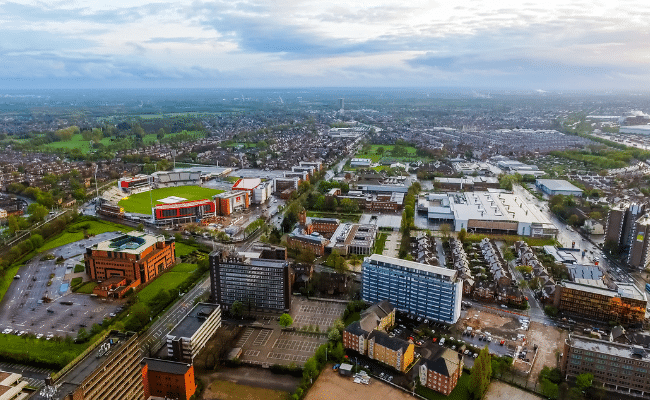
Growth in Trafford runs in the opposite direction to price. The cheapest postcodes have grown fastest over five years: M16 (Old Trafford) leads at 49.1%, followed by M23 (Baguley) at 43.2%. Compare that to WA13 (Lymm) at 11.4% and WA15 (Hale, Timperley) at 12.0%. Growth data is available for 8 of 10 postcodes. M17 has insufficient data and M31 has no 5-year figure.
| Area | 1 Year | 3 Years | 5 Years |
|---|---|---|---|
| M16 (Old Trafford) | 14.1% | 20.3% | 49.1% |
| M23 (Baguley) | 1.6% | 10.3% | 43.2% |
| M31 (Partington, Carrington) | 8.4% | 1.5% | 32.0% |
| M32 (Stretford) | 1.7% | 12.8% | 25.4% |
| M41 (Urmston) | 2.5% | 4.8% | 21.1% |
| M33 (Sale, Brooklands) | -0.5% | 1.1% | 17.1% |
| WA14 (Altrincham, Bowdon) | -2.0% | -2.0% | 15.7% |
| WA15 (Hale, Timperley) | 2.6% | 2.0% | 12.0% |
| WA13 (Lymm) | 0.4% | 2.2% | 11.4% |
| M17 (Trafford Park) | Not enough data | Not enough data | Not enough data |
M16 (Old Trafford) stands out with 14.1% growth in the last year alone. That is the only postcode showing double-digit annual growth. In contrast, WA14 (Altrincham, Bowdon) has declined 2.0% over both the 1-year and 3-year periods. The premium postcodes appear to have hit a ceiling while the more affordable areas continue to appreciate.
M31 (Partington, Carrington) is worth a closer look. It shows 8.4% growth over the last year but only 1.5% over three years, suggesting a recent acceleration from a low base.
Monthly Property Sales in Trafford
Sales volume tells you which markets are liquid enough to exit quickly if needed. M33 (Sale, Brooklands) leads Trafford with 58 transactions per month, followed by WA15 (Hale, Timperley) at 43 and M41 (Urmston) at 35. Sales data is available for 8 of 10 postcodes. M17 (Trafford Park) has insufficient residential transactions to generate a monthly figure. At the other end, M31 (Partington, Carrington) records just 7 sales per month, reflecting a smaller and more isolated housing market.
| Area | Sales Per Month | Turnover | Average Asking Price |
|---|---|---|---|
| M33 (Sale, Brooklands) | 58 | 49% | £426,907 |
| WA15 (Hale, Timperley) | 43 | 57% | £636,887 |
| M41 (Urmston) | 35 | 42% | £373,447 |
| WA14 (Altrincham, Bowdon) | 34 | 38% | £556,278 |
| M32 (Stretford) | 27 | 113% | £325,437 |
| M23 (Baguley) | 25 | 83% | £262,716 |
| M16 (Old Trafford) | 23 | 9% | £264,635 |
| WA13 (Lymm) | 14 | 59% | £477,317 |
| M31 (Partington, Carrington) | 7 | 61% | £241,935 |
| M17 (Trafford Park) | Not enough data | Not enough data | £214,382 |
M32 (Stretford) has the highest turnover rate at 113%, meaning properties listed for sale are turning over faster than the available stock replenishes. M23 (Baguley) follows at 83%. Both are mid-priced areas with strong tenant and buyer demand. In contrast, M16 (Old Trafford) has a turnover of just 9% despite 23 sales per month. That low turnover suggests a large stock base relative to the number transacting, which is typical of areas with high proportions of rented property.
Property Data Sources
Our location guide relies on diverse, authoritative datasets including:
- HM Land Registry UK House Price Index
- Ministry of Housing, Communities and Local Government
- Ordnance Survey Data Hub
- Propertydata.co.uk
We update our property data quarterly to ensure accuracy. Last update: February 2026. All data is presented as provided by our sources without adjustments or amendments.
Trafford Rental Market Analysis
For investors weighing up whether rental property is a worthwhile investment in Trafford, the data below breaks down average monthly rents and gross rental yields across the borough's postcodes.
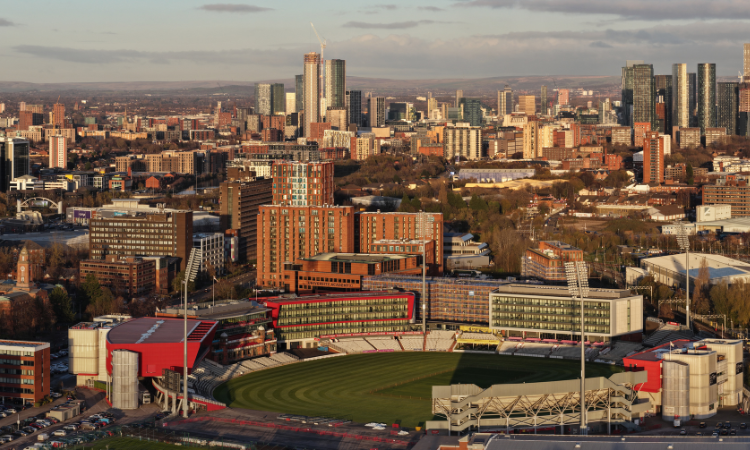
Rental data is available for 9 of 10 Trafford postcodes. M31 (Partington, Carrington) has insufficient rental listings for PropertyData to calculate a figure. Monthly rents range from £1,102 in M16 (Old Trafford) to £2,191 in WA15 (Hale, Timperley), with gross yields between 3.0% and 6.5%. If you are looking to build a property portfolio in Greater Manchester, Trafford's combination of premium tenant demand and accessible entry prices in the northern postcodes creates two distinct strategies under one borough.
Average Rent and Gross Rental Yields in Trafford
M17 (Trafford Park) tops the yield table at 6.5%, combining the borough's lowest asking price (£214,382) with a monthly rent of £1,161. M23 (Baguley) follows at 6.0%. The pattern reverses at the premium end: WA14 (Altrincham, Bowdon) has the lowest yield at 3.0% despite achieving the second-highest rent. High purchase prices compress yields even when rents are strong.
| Area | Average Monthly Rent | Average Asking Price | Gross Yield |
|---|---|---|---|
| M17 (Trafford Park) | £1,161 | £214,382 | 6.5% |
| M23 (Baguley) | £1,307 | £262,716 | 6.0% |
| M16 (Old Trafford) | £1,102 | £264,635 | 5.0% |
| M32 (Stretford) | £1,177 | £325,437 | 4.3% |
| WA15 (Hale, Timperley) | £2,191 | £636,887 | 4.1% |
| M41 (Urmston) | £1,177 | £373,447 | 3.8% |
| M33 (Sale, Brooklands) | £1,286 | £426,907 | 3.6% |
| WA13 (Lymm) | £1,414 | £477,317 | 3.6% |
| WA14 (Altrincham, Bowdon) | £1,411 | £556,278 | 3.0% |
| M31 (Partington, Carrington) | Not enough data | £241,935 | Not enough data |
Three postcodes deliver yields above 5.0%: M17 (6.5%), M23 (6.0%), and M16 (5.0%). These are the borough's most affordable areas, with asking prices between £214,382 and £264,635. The remaining six postcodes with rental data all sit between 3.0% and 4.3%. WA15 (Hale, Timperley) is worth a closer look: it commands the highest rent in the borough at £2,191 per month but its asking price of £636,887 pushes the yield down to 4.1%. The income is strong. The return on capital is compressed.
Is Trafford Rent High?
Rent as a percentage of income in Trafford ranges from 30.8% in M16 (Old Trafford) to 61.2% in WA15 (Hale, Timperley). The UK government typically considers rent affordable when it is below 30% of gross income. Only one Trafford postcode falls close to that threshold. The rest sit between 32% and 40%, with WA15 at 61.2% reflecting a premium rental market that serves a different income bracket than the local authority median.
The median gross weekly salary in Trafford is £826.40, which equates to £3,581 per month or £42,973 per year. This is above the North West regional median of £720.10 per week and the Great Britain median of £752.40 per week. Data from the Nomis Labour Market Profile (ASHE 2025).
| Rank | Area | Rent as % of Income |
|---|---|---|
| 1 | WA15 (Hale, Timperley) | 61.2% |
| 2 | WA13 (Lymm) | 39.5% |
| 3 | WA14 (Altrincham, Bowdon) | 39.4% |
| 4 | M23 (Baguley) | 36.5% |
| 5 | M33 (Sale, Brooklands) | 35.9% |
| 6 | M41 (Urmston) | 32.9% |
| 7 | M32 (Stretford) | 32.9% |
| 8 | M17 (Trafford Park) | 32.4% |
| 9 | M16 (Old Trafford) | 30.8% |
| — | M31 (Partington, Carrington) | Not enough data |
WA15 (Hale, Timperley) at 61.2% is an outlier that distorts the picture. Its monthly rent of £2,191 is the highest in the borough, but the tenants paying that figure earn considerably more than the Trafford median salary. The WA15 rental market serves executives, senior professionals, and relocated corporate tenants. For the remaining postcodes, rent-to-income ratios cluster between 30.8% and 39.5%, which is typical for Greater Manchester.
Thinking of Buying?
We have off-market investment properties averaging 8%+ annual yield.
View Property DealsBuy-to-Let Considerations
Are House Prices High in Trafford? Price-to-Earnings Ratios
Purchasing a property in Trafford requires between 5.0 and 14.8 times the median annual salary. This is based on the Nomis Labour Market Profile for Trafford showing the median gross annual income for Trafford residents is £42,973. The England benchmark sits at 7.5 times (£291,865 divided by £39,125). Four Trafford postcodes fall below that national benchmark.
| Rank | Area | Price-to-Earnings Ratio |
|---|---|---|
| 1 | M17 (Trafford Park) | 5.0x |
| 2 | M31 (Partington, Carrington) | 5.6x |
| 3 | M23 (Baguley) | 6.1x |
| 4 | M16 (Old Trafford) | 6.2x |
| 5 | M32 (Stretford) | 7.6x |
| 6 | M41 (Urmston) | 8.7x |
| 7 | M33 (Sale, Brooklands) | 9.9x |
| 8 | WA13 (Lymm) | 11.1x |
| 9 | WA14 (Altrincham, Bowdon) | 12.9x |
| 10 | WA15 (Hale, Timperley) | 14.8x |
The first four rows in this table all fall below the England benchmark of 7.5x: M17 (5.0x), M31 (5.6x), M23 (6.1x), and M16 (6.2x). These are the same postcodes that deliver the highest yields. The data tells a consistent story across every metric: the northern and western postcodes offer the most accessible price-to-earnings ratios, the strongest yields, and the fastest capital growth. M32 (Stretford) at 7.6x sits just above the national benchmark, making it a borderline case. The southern WA postcodes range from 11.1x to 14.8x, nearly double the national average.
Deposit Requirements in Trafford
A 30% deposit on a Trafford buy-to-let property ranges from £64,315 in M17 (Trafford Park) to £191,066 in WA15 (Hale, Timperley). The gap between the smallest and largest deposit is £126,751. For context, a £64,315 deposit in M17 buys into a postcode yielding 6.5%. A £97,631 deposit in M32 (Stretford) buys into the borough's regeneration hotspot. Use our stamp duty calculator to work out the additional purchase costs, and see our guide to buy-to-let costs for a full breakdown.
| Rank | Area | 30% Deposit Required |
|---|---|---|
| 1 | M17 (Trafford Park) | £64,315 |
| 2 | M31 (Partington, Carrington) | £72,580 |
| 3 | M23 (Baguley) | £78,815 |
| 4 | M16 (Old Trafford) | £79,390 |
| 5 | M32 (Stretford) | £97,631 |
| 6 | M41 (Urmston) | £112,034 |
| 7 | M33 (Sale, Brooklands) | £128,072 |
| 8 | WA13 (Lymm) | £143,195 |
| 9 | WA14 (Altrincham, Bowdon) | £166,883 |
| 10 | WA15 (Hale, Timperley) | £191,066 |
Five postcodes require deposits below £100,000: M17 (£64,315), M31 (£72,580), M23 (£78,815), M16 (£79,390), and M32 (£97,631). That sub-£100,000 entry point is notable for a borough where the mean asking price sits at nearly £378,000. These five postcodes account for the most accessible buy-to-let opportunities in Trafford, and three of them (M17, M23, M16) also deliver the borough's highest yields.
What the Trafford Data Tells Buy-to-Let Investors
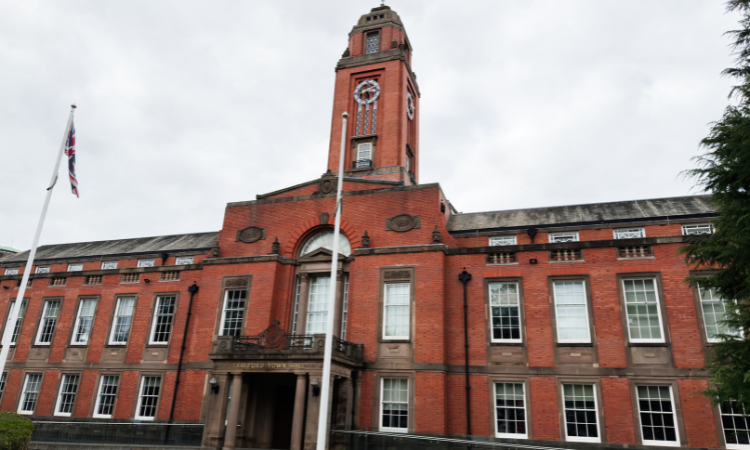
M16 (Old Trafford) and M23 (Baguley) are the postcodes where yield and growth converge. M16 delivers a 5.0% yield with 49.1% five-year growth and a deposit requirement of £79,390. M23 offers a 6.0% yield with 43.2% five-year growth at £78,815 deposit. Both sit below the England price-to-earnings benchmark at 6.2x and 6.1x respectively. The tenant base in these postcodes includes young professionals commuting into Manchester and families accessing the borough's schools.
M32 (Stretford) is the regeneration play. The Civic Quarter, the Bruntwood town centre programme, and the 228-home B&Q site development all sit in or adjacent to M32. At £325,437 asking price with a 4.3% yield, it is the transition postcode between Trafford's affordable north and its premium south. The 113% turnover rate is the highest in the borough, indicating strong market liquidity.
The southern WA postcodes show a different profile. WA14 (Altrincham, Bowdon) has declined 2.0% over both 1-year and 3-year periods. WA13 (Lymm) and WA15 (Hale, Timperley) show 5-year growth of 11.4% and 12.0% respectively, the lowest in the borough. Yields range from 3.0% to 4.1%. The rental income is high in absolute terms (£1,411 to £2,191 per month), but the capital required compresses returns. These are lifestyle assets rather than yield-driven investments.
M17 (Trafford Park) shows a 6.5% yield headline, but the data is sparse. No 1-year or 5-year growth figures, no sales per month data, and no price per square foot figure. The postcode is primarily commercial and industrial. Any residential purchase in M17 requires individual due diligence beyond what borough-level data provides.
Trafford operates a selective licensing scheme in parts of Old Trafford and Stretford. Check current licensing requirements before completing a purchase in these areas.
How Trafford Compares
Trafford's mean asking price of £377,994 is the highest across the 10 Greater Manchester boroughs in our database. It is 42% above Manchester itself and more than double Bolton's average. That premium reflects the borough's school catchments, transport links, and southern Cheshire-border postcodes. The comparison below shows how Trafford sits against four neighbouring boroughs.
| Location | Mean Asking Price | Mean Monthly Rent | Top Gross Yield |
|---|---|---|---|
| Trafford | £377,994 | £1,358 | 6.5% |
| Stockport | £369,265 | £1,322 | 6.2% |
| Manchester | £265,494 | £1,314 | 7.9% |
| Salford | £249,070 | £1,171 | 6.7% |
| Bolton | £254,422 | £954 | 6.7% |
Trafford and Stockport are the two most expensive Greater Manchester boroughs, sitting close together on price and rent. Manchester offers a higher top yield at 7.9% but at a lower average price. Salford and Bolton both deliver 6.7% top yields at lower entry points. The investor choosing Trafford is buying into the borough's premium positioning and school catchments rather than chasing the highest headline yield. The affordable northern Trafford postcodes (M16, M23, M17) compete directly with Manchester and Salford on yield, while offering access to a different tenant profile.
Frequently Asked Questions
What is the asking price of property in Urmston?
The average asking price in M41 (Urmston) is £373,447 based on current PropertyData figures. That places Urmston in the middle of the Trafford price range, below Sale (£426,907) and above Stretford (£325,437). Urmston offers 35 sales per month with a 42% turnover rate and a 3.8% gross yield. It is a popular family area with direct Metrolink and rail links into Manchester city centre.
How does Trafford compare to Manchester for buy-to-let?
Manchester has a higher top yield at 7.9% (vs Trafford's 6.5%) and a lower mean asking price of £265,494 (vs £377,994). Manchester's strength is rental demand from a large student and young professional population. Trafford's strength is its premium tenant base and stronger school catchments. In practice, Trafford's affordable postcodes (M16 at 5.0%, M23 at 6.0%) compete directly with inner Manchester on yield, while the southern postcodes serve a completely different market. The choice depends on whether an investor prioritises headline yield or tenant quality and long-term capital growth.
Is Trafford a good area for property investment?
The data shows a split market. Four postcodes (M16, M17, M23, M31) have price-to-earnings ratios below the England benchmark of 7.5x. Three postcodes (M16, M17, M23) deliver yields above 5.0%. M16 has returned 49.1% five-year capital growth. The southern postcodes offer lower yields (3.0% to 4.1%) but higher absolute rental income and access to one of Greater Manchester's wealthiest tenant pools.
The Stretford Civic Quarter regeneration programme is bringing over 1,200 new homes and significant infrastructure investment to the borough's midsection. Any investment decision depends on the investor's strategy, deposit available, and target tenant profile.
What are the best areas of Trafford for rental yield?
The three highest-yielding postcodes are M17 (Trafford Park) at 6.5%, M23 (Baguley) at 6.0%, and M16 (Old Trafford) at 5.0%. These are all in the northern and western parts of the borough, with asking prices between £214,382 and £264,635. M23 stands out for combining the second-highest yield with 43.2% five-year growth and strong market activity at 25 sales per month. M17 has sparse data beyond the yield and rent figures. M16 has the strongest growth performance in the borough at 49.1% over five years.
How much deposit do I need for a buy-to-let in Trafford?
At a standard 30% deposit, the entry range spans from £64,315 in M17 (Trafford Park) to £191,066 in WA15 (Hale, Timperley). Five postcodes require deposits below £100,000: M17 (£64,315), M31 (£72,580), M23 (£78,815), M16 (£79,390), and M32 (£97,631). For a mid-range entry, M32 (Stretford) at £97,631 deposit places an investor in the borough's main regeneration area with a 4.3% yield and 25.4% five-year growth. A rent-to-buy arrangement is one alternative for investors who want to enter the Trafford market with a lower initial outlay.
What is the population of Trafford?
Trafford's population was 235,052 at the 2021 Census, up 3.7% from 226,578 in 2011. That growth rate is below the England average of 6.6%. Trafford is a fully built-out suburban borough, so population growth comes from densification rather than outward expansion. The Stretford Civic Quarter programme, with 1,200+ planned homes and 228 homes already approved on the former B&Q site, is the primary source of new housing supply in the borough.