
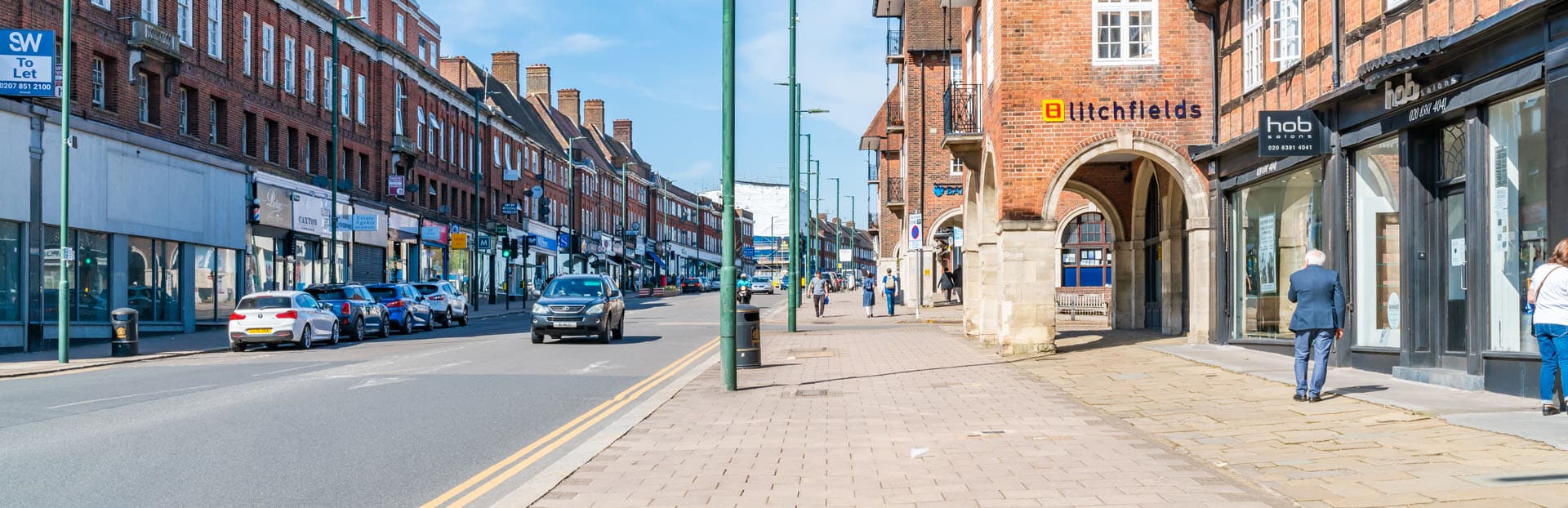
Barnet is a borough of north London. Average sold prices in Barnet sit at £588,293 on the HM Land Registry House Price Index, 8.5% above the London regional average of £542,065 and more than double England's £290,437. Barnet is London's second-most-populous borough, home to 389,344 residents at the 2021 Census, a deep tenant pool sitting behind some of the capital's highest prices.
That average hides a wide split. The borough's mean asking price is £693,741, running from NW9 (Colindale) at £443,019, the cheapest entry and the top gross yield at 5.6%, up to N2 (East Finchley) at £1,242,057, the widest single-borough spread in north London. The median resident earns £47,081 a year, so the price-to-earnings ladder runs from 9.4 times salary in NW9 to 26.4 times in N2. That is the tension every Barnet buyer is working with: deep tenant demand set against asking prices that put most of the borough out of reach for a leveraged buy-to-let.
This guide covers the London Borough of Barnet (ONS code E09000003) across all 13 postcodes that fall within the borough: EN4, EN5, HA8, N2, N3, N11, N12, N20, NW2, NW4, NW7, NW9 and NW11. Some of these cross into neighbouring boroughs, so the figures reflect borough-attributed sales and listings. For a wider regional view, see the north London buy-to-let guide or the broader London property investment overview.
Article updated: July 2026
Why Invest in Barnet?
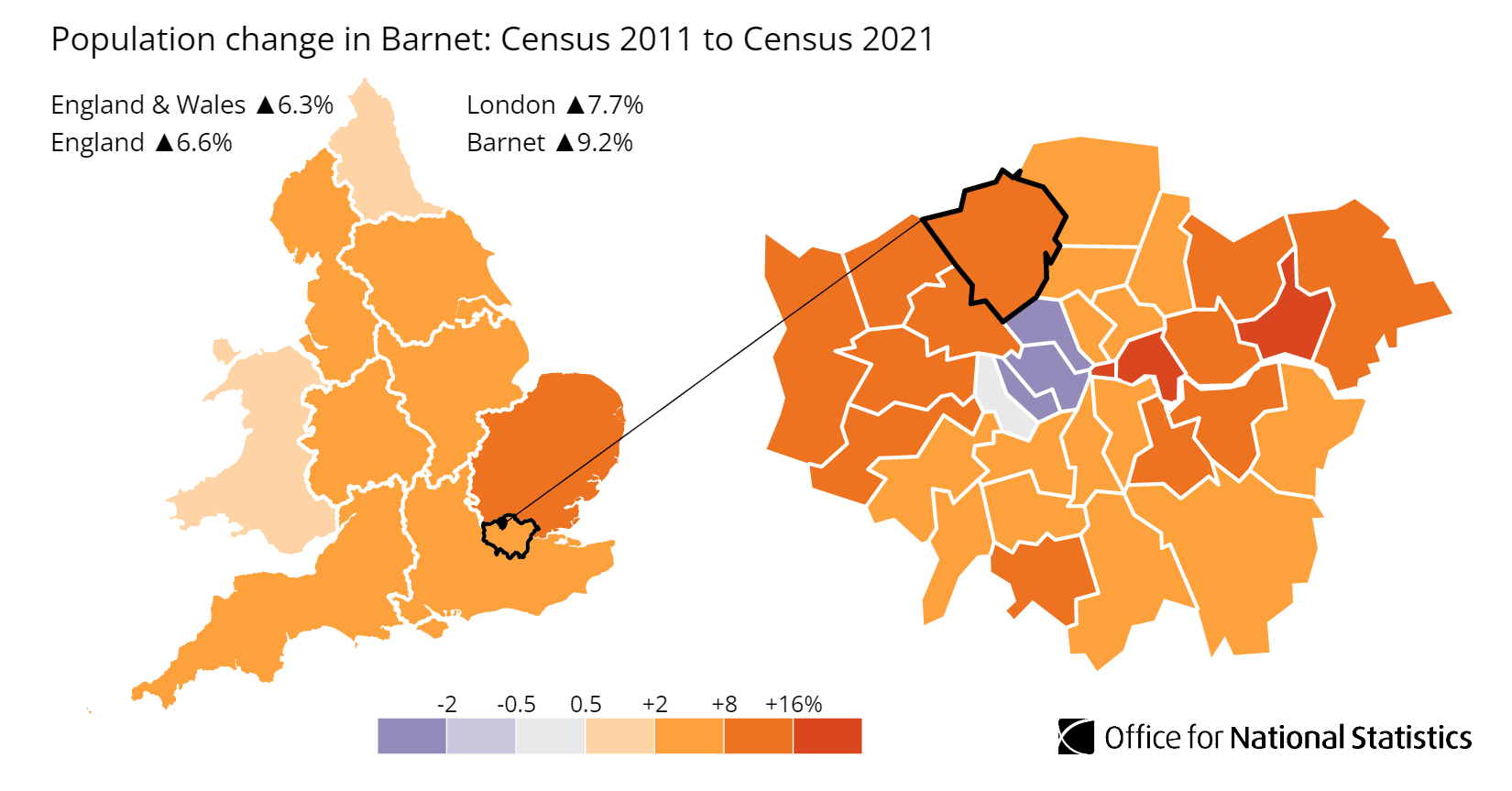
Barnet's population grew 9.25% between the 2011 and 2021 censuses, reaching 389,344, which makes it the second-largest London borough by population. That growth has not been spread evenly. Most of it has landed on the western side of the borough, in Colindale, Cricklewood and the Hendon corridor, where almost all the new housing has been built. A borough adding residents at that pace, served by the Northern line and Thameslink into central London, keeps a deep pool of renters topped up year on year.
The borough runs from Chipping Barnet in the north down to Golders Green in the south, taking in Hendon, Mill Hill, Edgware, Finchley, Friern Barnet and Totteridge. It is the only London borough that spreads across three postcode areas (N, NW and EN), which is why the data below covers 13 postcodes when most London boroughs fit into six or eight. That spread also means Barnet contains several quite different markets under one council, from trophy stock in Hampstead Garden Suburb to new-build flats in Colindale.
Median gross annual earnings for Barnet residents sit at £47,081, fractionally above the London median of £46,940. The employment rate is 73.7%, a little below the London average, and the bigger employers inside the borough include Barnet Hospital, which is part of the Royal Free London NHS Foundation Trust, and Middlesex University, whose Hendon campus sits on The Burroughs in NW4. Many residents commute into central London for work, which is why rental demand concentrates along the Northern line and Thameslink routes through Colindale, Hendon and Finchley.
Barnet Economic Summary
- Population: 389,344 (2021 Census). Growth of 9.25% from 2011.
- Median gross weekly pay: £905.40 (Barnet), £902.70 (London), £766.60 (Great Britain)
- Employment rate: 73.7% (Barnet), 75.0% (London), 75.6% (Great Britain)
- Unemployment rate: 8.2% (Barnet), 5.6% (London), 4.3% (Great Britain)
Source: ONS Explore Local Statistics for Barnet, Nomis Labour Market Profile for Barnet (ASHE 2025, Employment Oct 2024-Sep 2025)
Regeneration and Investment in Barnet
Barnet's three big regeneration programmes are all clustered in the same western corner of the borough, around Colindale and Cricklewood, and that is the same corner that already carries the borough's highest yield. The new supply is landing exactly where the investor maths still works, which shapes how the rental catchment will develop over the next decade.
- Brent Cross Town: A major mixed-use regeneration delivered by Related Argent in partnership with Barnet Council, set to add 6,700 new homes, three million square feet of business space for around 25,000 workers and 50 acres of parks and playing fields. The new Brent Cross West station, which opened on 10 December 2023, sits at the heart of it, with Thameslink trains reaching central London in around 12 minutes. The scheme reshapes the rental catchment across Cricklewood, Hendon and the surrounding NW postcodes for commuter tenants.
- Grahame Park Regeneration: A long-running estate transformation in Colindale, delivered with Notting Hill Genesis, that will provide roughly 4,000 new homes across social rent, shared ownership and private sale once complete. The first plot is finished, delivering 209 affordable homes. Further phases will add more density to NW9, the postcode that already carries Barnet's highest yield and the borough's highest monthly sales volume.
- Colindale Gardens: 249 new council homes in Colindale, part of Barnet Council's target to deliver 1,000 new council homes by 2026. The mix includes 42 three-bedroom family homes, 40 wheelchair-adaptable residences, plus studios and one and two-bedroom flats, which points to continued investment in the same NW9 cluster.
The new Brent Cross West station has had a steady first run rather than an instant one. It clocked around 575,000 journeys in its first year, close to 2,000 a day, with up to eight trains an hour in the peak. The direct Thameslink service into central London, with an interchange onto the Elizabeth line at Farringdon, has widened the commuter catchment for Cricklewood, Hendon and the NW9 and NW2 corridor. The supply side matters too: several thousand new homes over the next decade will add to the local comparables that lenders and valuers price against.
Source: Office for National Statistics - Population for Barnet
Barnet Property Market Analysis
Average property prices in Barnet have risen 494.5% since January 1995, from £98,948 to £588,293. The sections below trace that journey cycle by cycle, then break down current postcode-level data for sold prices, price per square foot, asking prices, growth trends and monthly transaction volumes.
When was the last house price crash in Barnet?
Barnet is a London borough, so all sold prices from HM Land Registry are recorded at borough level. The index runs from January 1995 to the latest reading in March 2026, covering 31 years of market cycles.
The 1995 to 2007 boom: Barnet started at £98,948 in January 1995. It passed £185,964 by December 2000 and £298,707 by December 2005, then climbed to a pre-crash peak of £366,867 in November 2007. That is a rise of 271% over the boom, driven by London's financial services growth and the steady gentrification of Finchley, Hendon and Mill Hill.
2008 to 2009, the financial crisis: Prices fell from the November 2007 peak of £366,867 to a trough of £304,000 in April 2009. That is a decline of 17.1% over 17 months. Like most of inner and outer London, Barnet's fall was sharp but short, and far less prolonged than many provincial markets that kept sliding into 2012 and 2013.
2010 to 2013, a fast recovery: Barnet did not spend years stuck below its old peak. By September 2010 the average had already passed the November 2007 high, reaching £368,858, a recovery of around three years. From there it kept climbing, hitting £415,976 by December 2013. London's pull and a shortage of stock pulled Barnet back up quicker than the national picture.
2014 to 2016, the surge: The recovery turned into a boom. Help to Buy, low interest rates and overflow demand from central London pushed the average from £477,930 in December 2014 to £553,927 by December 2016. By January 2015 Barnet stood at £489,392, already a third above its pre-crash peak.
2017 to 2019, the plateau: Growth flattened as stamp duty changes and Brexit uncertainty cooled inner London. Barnet drifted from £571,422 in December 2017 to £554,361 by December 2019, giving back a little ground.
2020 to 2022, the pandemic surge: The stamp duty holiday and the rush for space lifted prices again. Barnet climbed from £553,336 in January 2020 to £616,863 by January 2022, and reached its all-time high of £645,194 in October 2022.
2023 to present, the correction: Higher mortgage rates cooled demand and prices have eased since the October 2022 high. The average slipped from £622,080 in December 2024 to £588,293 by March 2026. That latest reading is 8.8% below the October 2022 peak and down 3.5% year-on-year, a sharper pullback than the London region and in contrast to England, which has been broadly flat.
Long-term growth summary:
- 5 years (March 2021 to March 2026): 2.0% growth (£577,034 to £588,293)
- 10 years (March 2016 to March 2026): 8.0% growth (£544,506 to £588,293)
- 15 years (March 2011 to March 2026): 60.6% growth (£366,218 to £588,293)
- 20 years (March 2006 to March 2026): 96.9% growth (£298,774 to £588,293)
- 30 years (January 1995 to March 2026): 494.5% growth (£98,948 to £588,293)
The shape of Barnet's record is the part worth holding onto. The 30-year return of 494.5% is strong, and the recovery from the 2009 trough was fast, back above the old peak inside three years. But the five-year number is almost flat at 2.0%, because the all-time high came in October 2022 and the market has been correcting since. An investor weighing Barnet today is looking at a borough with deep long-term growth and a live short-term pullback at the same time.
- All property types
- Detached
- Semi-detached
- Terraced
- Flats
Source: HM Land Registry House Price Index
| Year | All property types | Detached | Semi-detached | Terraced | Flats |
|---|---|---|---|---|---|
| 1995-01 | £98,948 | £250,463 | £124,778 | £90,238 | £71,768 |
| 1995-02 | £98,848 | £246,997 | £124,840 | £90,568 | £71,654 |
| 1995-03 | £97,848 | £244,179 | £123,557 | £89,756 | £70,917 |
| 1995-04 | £96,273 | £238,594 | £121,522 | £88,503 | £69,857 |
| 1995-05 | £95,737 | £238,070 | £120,796 | £88,036 | £69,413 |
| 1995-06 | £95,577 | £236,672 | £120,465 | £87,803 | £69,514 |
| 1995-07 | £96,992 | £241,148 | £122,528 | £89,248 | £70,207 |
| 1995-08 | £97,968 | £244,343 | £123,959 | £90,209 | £70,691 |
| 1995-09 | £98,936 | £248,625 | £125,419 | £91,234 | £71,002 |
| 1995-10 | £98,187 | £247,471 | £124,462 | £90,118 | £70,622 |
| 1995-11 | £96,401 | £241,856 | £122,048 | £88,121 | £69,712 |
| 1995-12 | £96,666 | £241,896 | £122,304 | £88,278 | £70,055 |
| 1996-01 | £96,642 | £241,189 | £122,341 | £88,474 | £69,941 |
| 1996-02 | £98,041 | £244,696 | £124,207 | £90,071 | £70,724 |
| 1996-03 | £96,959 | £242,521 | £122,952 | £88,978 | £69,866 |
| 1996-04 | £98,003 | £243,564 | £123,963 | £90,045 | £70,855 |
| 1996-05 | £96,587 | £239,274 | £122,122 | £88,993 | £69,811 |
| 1996-06 | £97,562 | £240,362 | £123,133 | £89,904 | £70,727 |
| 1996-07 | £98,056 | £243,839 | £124,201 | £90,306 | £70,707 |
| 1996-08 | £101,315 | £254,602 | £128,618 | £93,059 | £72,812 |
| 1996-09 | £103,408 | £261,637 | £131,603 | £95,230 | £73,911 |
| 1996-10 | £103,784 | £262,948 | £132,133 | £95,625 | £74,107 |
| 1996-11 | £103,053 | £259,804 | £131,068 | £95,054 | £73,706 |
| 1996-12 | £103,074 | £258,610 | £131,199 | £95,145 | £73,726 |
| 1997-01 | £104,542 | £261,780 | £133,277 | £96,721 | £74,615 |
| 1997-02 | £106,151 | £267,572 | £135,238 | £98,178 | £75,667 |
| 1997-03 | £107,269 | £271,744 | £136,527 | £99,257 | £76,391 |
| 1997-04 | £107,345 | £272,895 | £136,605 | £99,350 | £76,368 |
| 1997-05 | £109,557 | £279,106 | £139,998 | £101,402 | £77,631 |
| 1997-06 | £110,960 | £284,860 | £142,280 | £102,672 | £78,249 |
| 1997-07 | £113,745 | £293,246 | £146,167 | £105,628 | £79,813 |
| 1997-08 | £115,331 | £298,086 | £148,450 | £107,111 | £80,756 |
| 1997-09 | £119,202 | £309,082 | £153,824 | £110,700 | £83,220 |
| 1997-10 | £121,467 | £314,845 | £156,788 | £112,318 | £85,002 |
| 1997-11 | £122,359 | £318,859 | £158,002 | £113,061 | £85,507 |
| 1997-12 | £122,534 | £317,372 | £158,124 | £113,296 | £85,789 |
| 1998-01 | £122,939 | £320,579 | £158,580 | £113,833 | £85,871 |
| 1998-02 | £124,098 | £320,845 | £159,445 | £114,879 | £87,094 |
| 1998-03 | £126,082 | £326,334 | £161,811 | £117,163 | £88,308 |
| 1998-04 | £127,801 | £328,786 | £164,311 | £119,084 | £89,389 |
| 1998-05 | £130,052 | £334,011 | £167,575 | £121,761 | £90,615 |
| 1998-06 | £129,927 | £332,482 | £167,113 | £121,258 | £90,876 |
| 1998-07 | £131,571 | £337,028 | £169,435 | £122,651 | £91,988 |
| 1998-08 | £132,633 | £343,527 | £170,957 | £123,367 | £92,558 |
| 1998-09 | £132,928 | £347,440 | £172,019 | £123,666 | £92,310 |
| 1998-10 | £133,351 | £348,195 | £172,118 | £123,706 | £92,937 |
| 1998-11 | £132,680 | £345,157 | £171,061 | £122,797 | £92,737 |
| 1998-12 | £133,391 | £343,785 | £171,441 | £123,362 | £93,667 |
| 1999-01 | £133,850 | £346,331 | £172,137 | £123,826 | £93,852 |
| 1999-02 | £134,728 | £349,778 | £173,381 | £124,650 | £94,341 |
| 1999-03 | £134,606 | £350,586 | £173,153 | £124,441 | £94,255 |
| 1999-04 | £135,647 | £352,365 | £174,076 | £125,843 | £95,035 |
| 1999-05 | £137,248 | £353,065 | £175,758 | £127,879 | £96,314 |
| 1999-06 | £140,658 | £362,437 | £180,229 | £131,269 | £98,554 |
| 1999-07 | £144,365 | £373,543 | £185,378 | £134,733 | £100,909 |
| 1999-08 | £148,224 | £387,151 | £190,851 | £138,195 | £103,240 |
| 1999-09 | £152,314 | £400,551 | £196,042 | £141,870 | £105,993 |
| 1999-10 | £154,107 | £404,021 | £197,936 | £142,956 | £107,678 |
| 1999-11 | £156,800 | £411,536 | £201,121 | £145,217 | £109,712 |
| 1999-12 | £158,586 | £410,879 | £202,782 | £146,904 | £111,524 |
| 2000-01 | £163,005 | £424,775 | £209,197 | £151,149 | £114,149 |
| 2000-02 | £166,316 | £431,587 | £212,897 | £154,429 | £116,629 |
| 2000-03 | £169,648 | £444,305 | £217,678 | £157,622 | £118,422 |
| 2000-04 | £172,882 | £449,430 | £220,794 | £160,489 | £121,212 |
| 2000-05 | £175,799 | £456,065 | £225,010 | £162,690 | £123,309 |
| 2000-06 | £179,286 | £462,047 | £229,267 | £165,264 | £126,182 |
| 2000-07 | £180,873 | £470,813 | £232,425 | £166,423 | £126,810 |
| 2000-08 | £184,528 | £482,280 | £237,342 | £168,907 | £129,488 |
| 2000-09 | £186,271 | £491,213 | £239,476 | £170,180 | £130,630 |
| 2000-10 | £187,324 | £493,310 | £240,844 | £170,468 | £131,612 |
| 2000-11 | £185,889 | £491,070 | £238,262 | £169,099 | £130,783 |
| 2000-12 | £185,964 | £486,976 | £237,551 | £168,962 | £131,379 |
| 2001-01 | £186,127 | £484,996 | £236,668 | £169,673 | £131,776 |
| 2001-02 | £188,921 | £491,351 | £240,608 | £172,553 | £133,571 |
| 2001-03 | £189,046 | £492,596 | £241,413 | £173,138 | £133,251 |
| 2001-04 | £189,669 | £492,519 | £241,810 | £173,931 | £133,829 |
| 2001-05 | £189,481 | £487,405 | £240,777 | £174,296 | £134,005 |
| 2001-06 | £192,194 | £490,604 | £243,344 | £176,356 | £136,558 |
| 2001-07 | £195,107 | £499,902 | £247,540 | £178,800 | £138,447 |
| 2001-08 | £199,085 | £511,893 | £252,585 | £182,022 | £141,322 |
| 2001-09 | £202,546 | £525,048 | £257,077 | £185,237 | £143,509 |
| 2001-10 | £206,117 | £533,520 | £261,169 | £187,904 | £146,424 |
| 2001-11 | £210,667 | £542,771 | £266,732 | £191,248 | £150,128 |
| 2001-12 | £212,982 | £542,158 | £269,064 | £192,144 | £152,740 |
| 2002-01 | £215,588 | £545,699 | £272,209 | £193,987 | £154,988 |
| 2002-02 | £215,019 | £541,734 | £271,170 | £193,605 | £154,772 |
| 2002-03 | £217,121 | £549,721 | £274,090 | £195,894 | £155,912 |
| 2002-04 | £220,709 | £554,831 | £277,338 | £198,811 | £159,238 |
| 2002-05 | £227,621 | £569,509 | £285,699 | £204,857 | £164,541 |
| 2002-06 | £233,136 | £576,720 | £291,366 | £209,991 | £169,247 |
| 2002-07 | £240,917 | £598,279 | £301,812 | £217,587 | £174,326 |
| 2002-08 | £244,532 | £607,666 | £306,137 | £221,035 | £176,925 |
| 2002-09 | £247,938 | £618,978 | £311,878 | £224,144 | £178,720 |
| 2002-10 | £246,279 | £611,739 | £310,133 | £222,035 | £177,785 |
| 2002-11 | £250,041 | £622,173 | £314,717 | £224,640 | £180,771 |
| 2002-12 | £250,864 | £620,059 | £315,606 | £224,525 | £181,942 |
| 2003-01 | £259,066 | £638,086 | £324,613 | £232,385 | £188,273 |
| 2003-02 | £260,672 | £635,209 | £326,608 | £233,729 | £189,850 |
| 2003-03 | £265,928 | £648,544 | £332,394 | £238,608 | £193,865 |
| 2003-04 | £261,119 | £632,516 | £326,742 | £233,484 | £190,759 |
| 2003-05 | £259,289 | £626,665 | £324,793 | £232,419 | £189,180 |
| 2003-06 | £259,305 | £623,891 | £324,074 | £232,646 | £189,528 |
| 2003-07 | £266,054 | £640,889 | £332,771 | £239,765 | £193,953 |
| 2003-08 | £270,356 | £651,741 | £337,875 | £244,064 | £197,008 |
| 2003-09 | £273,137 | £659,031 | £342,673 | £247,429 | £198,245 |
| 2003-10 | £273,370 | £656,324 | £342,039 | £247,957 | £198,800 |
| 2003-11 | £273,421 | £654,245 | £341,999 | £247,995 | £198,998 |
| 2003-12 | £275,846 | £653,587 | £343,728 | £250,128 | £201,600 |
| 2004-01 | £275,644 | £654,868 | £343,797 | £249,680 | £201,337 |
| 2004-02 | £277,438 | £659,952 | £345,747 | £251,504 | £202,631 |
| 2004-03 | £277,352 | £661,253 | £345,168 | £251,952 | £202,447 |
| 2004-04 | £279,787 | £661,951 | £347,788 | £255,386 | £204,252 |
| 2004-05 | £285,355 | £665,278 | £353,527 | £261,534 | £208,892 |
| 2004-06 | £289,424 | £669,429 | £358,062 | £265,413 | £212,267 |
| 2004-07 | £293,616 | £679,417 | £363,952 | £269,606 | £214,992 |
| 2004-08 | £293,510 | £685,932 | £364,293 | £269,550 | £214,405 |
| 2004-09 | £295,110 | £694,488 | £367,553 | £271,298 | £214,818 |
| 2004-10 | £295,217 | £692,762 | £365,975 | £270,997 | £215,682 |
| 2004-11 | £299,444 | £699,303 | £370,658 | £274,845 | £219,135 |
| 2004-12 | £298,398 | £691,792 | £367,877 | £274,151 | £219,050 |
| 2005-01 | £299,990 | £696,672 | £369,546 | £276,204 | £220,086 |
| 2005-02 | £293,980 | £685,698 | £362,822 | £270,737 | £215,285 |
| 2005-03 | £290,863 | £680,468 | £359,683 | £268,640 | £212,419 |
| 2005-04 | £289,332 | £674,873 | £358,709 | £267,959 | £210,833 |
| 2005-05 | £290,466 | £672,363 | £359,271 | £269,860 | £211,934 |
| 2005-06 | £296,484 | £683,605 | £366,146 | £276,383 | £216,351 |
| 2005-07 | £296,921 | £685,389 | £367,254 | £276,766 | £216,441 |
| 2005-08 | £299,190 | £693,313 | £370,206 | £279,424 | £217,716 |
| 2005-09 | £300,337 | £700,781 | £372,675 | £280,394 | £217,964 |
| 2005-10 | £300,206 | £698,939 | £371,450 | £280,266 | £218,322 |
| 2005-11 | £300,627 | £697,749 | £372,299 | £280,748 | £218,595 |
| 2005-12 | £298,707 | £686,375 | £368,222 | £278,840 | £218,206 |
| 2006-01 | £299,474 | £691,227 | £369,452 | £280,148 | £218,305 |
| 2006-02 | £298,187 | £688,075 | £367,393 | £278,871 | £217,597 |
| 2006-03 | £298,774 | £694,970 | £369,570 | £279,852 | £217,087 |
| 2006-04 | £300,399 | £695,679 | £371,294 | £282,118 | £218,301 |
| 2006-05 | £303,852 | £705,569 | £375,962 | £285,495 | £220,509 |
| 2006-06 | £305,192 | £709,260 | £377,471 | £286,969 | £221,431 |
| 2006-07 | £310,189 | £722,751 | £384,818 | £292,013 | £224,413 |
| 2006-08 | £314,080 | £732,495 | £390,091 | £296,834 | £226,645 |
| 2006-09 | £318,616 | £745,666 | £396,625 | £301,354 | £229,368 |
| 2006-10 | £318,034 | £745,266 | £395,233 | £300,082 | £229,369 |
| 2006-11 | £319,024 | £747,917 | £396,649 | £300,699 | £230,103 |
| 2006-12 | £322,472 | £754,131 | £399,936 | £303,822 | £233,098 |
| 2007-01 | £325,090 | £761,495 | £403,822 | £306,618 | £234,582 |
| 2007-02 | £328,724 | £771,738 | £407,665 | £308,917 | £237,599 |
| 2007-03 | £329,220 | £776,872 | £408,837 | £309,639 | £237,410 |
| 2007-04 | £332,555 | £783,356 | £412,312 | £313,532 | £239,873 |
| 2007-05 | £338,187 | £793,587 | £418,934 | £320,099 | £243,849 |
| 2007-06 | £343,462 | £804,447 | £425,209 | £325,170 | £247,789 |
| 2007-07 | £351,885 | £829,256 | £436,913 | £333,033 | £253,255 |
| 2007-08 | £355,007 | £841,642 | £442,201 | £337,103 | £254,508 |
| 2007-09 | £361,688 | £862,347 | £451,759 | £342,991 | £258,806 |
| 2007-10 | £363,344 | £868,133 | £452,404 | £343,916 | £260,491 |
| 2007-11 | £366,867 | £879,372 | £456,373 | £345,490 | £263,481 |
| 2007-12 | £365,116 | £868,615 | £452,677 | £344,257 | £262,899 |
| 2008-01 | £365,392 | £872,783 | £453,312 | £344,123 | £262,942 |
| 2008-02 | £360,263 | £861,107 | £447,292 | £339,816 | £258,973 |
| 2008-03 | £356,287 | £858,623 | £443,622 | £336,893 | £255,200 |
| 2008-04 | £354,103 | £854,843 | £441,610 | £336,386 | £253,048 |
| 2008-05 | £358,555 | £868,110 | £447,798 | £341,357 | £255,810 |
| 2008-06 | £361,515 | £877,085 | £452,016 | £343,948 | £257,787 |
| 2008-07 | £358,031 | £871,906 | £449,494 | £339,847 | £254,945 |
| 2008-08 | £349,259 | £853,586 | £439,109 | £330,917 | £248,580 |
| 2008-09 | £340,308 | £836,488 | £428,199 | £321,809 | £242,096 |
| 2008-10 | £338,311 | £828,554 | £423,604 | £319,774 | £241,299 |
| 2008-11 | £333,984 | £821,297 | £418,154 | £315,718 | £238,085 |
| 2008-12 | £324,693 | £796,351 | £406,729 | £307,793 | £231,294 |
| 2009-01 | £312,482 | £769,927 | £392,336 | £295,205 | £222,495 |
| 2009-02 | £306,811 | £748,284 | £385,356 | £288,856 | £219,033 |
| 2009-03 | £306,247 | £743,633 | £384,257 | £286,623 | £219,400 |
| 2009-04 | £304,000 | £730,290 | £381,438 | £285,730 | £217,841 |
| 2009-05 | £305,904 | £733,378 | £383,694 | £289,097 | £218,807 |
| 2009-06 | £309,311 | £740,513 | £388,615 | £294,206 | £220,409 |
| 2009-07 | £319,423 | £767,785 | £403,438 | £304,894 | £226,259 |
| 2009-08 | £323,597 | £785,238 | £410,468 | £309,111 | £228,028 |
| 2009-09 | £329,530 | £803,782 | £419,345 | £315,090 | £231,343 |
| 2009-10 | £328,788 | £805,916 | £419,092 | £314,372 | £230,338 |
| 2009-11 | £329,848 | £807,250 | £420,127 | £316,727 | £230,830 |
| 2009-12 | £331,191 | £808,005 | £421,818 | £318,925 | £231,625 |
| 2010-01 | £336,166 | £821,407 | £430,023 | £324,806 | £233,989 |
| 2010-02 | £338,361 | £830,579 | £435,558 | £327,172 | £234,207 |
| 2010-03 | £344,596 | £853,868 | £444,867 | £332,119 | £237,912 |
| 2010-04 | £347,865 | £861,223 | £448,446 | £335,114 | £240,505 |
| 2010-05 | £351,273 | £867,479 | £451,548 | £337,732 | £243,695 |
| 2010-06 | £351,058 | £866,748 | £451,936 | £338,809 | £242,915 |
| 2010-07 | £356,801 | £890,191 | £459,849 | £345,184 | £245,836 |
| 2010-08 | £362,563 | £907,042 | £469,372 | £351,963 | £248,492 |
| 2010-09 | £368,858 | £929,333 | £478,422 | £358,097 | £252,037 |
| 2010-10 | £364,894 | £915,615 | £473,872 | £353,690 | £249,519 |
| 2010-11 | £362,446 | £912,135 | £469,802 | £350,187 | £248,341 |
| 2010-12 | £355,342 | £891,858 | £460,783 | £342,437 | £243,827 |
| 2011-01 | £358,068 | £908,100 | £464,443 | £344,203 | £245,310 |
| 2011-02 | £360,241 | £925,535 | £467,628 | £345,311 | £246,167 |
| 2011-03 | £366,218 | £953,042 | £474,734 | £350,739 | £249,785 |
| 2011-04 | £361,109 | £937,488 | £467,486 | £346,005 | £246,584 |
| 2011-05 | £355,660 | £905,303 | £459,042 | £341,719 | £244,096 |
| 2011-06 | £350,308 | £874,312 | £452,190 | £337,529 | £241,128 |
| 2011-07 | £352,426 | £872,986 | £454,974 | £339,730 | £242,902 |
| 2011-08 | £354,506 | £888,381 | £460,722 | £342,400 | £242,567 |
| 2011-09 | £359,713 | £913,462 | £468,651 | £347,748 | £244,979 |
| 2011-10 | £361,355 | £922,520 | £472,620 | £349,262 | £245,254 |
| 2011-11 | £367,379 | £939,541 | £479,156 | £353,991 | £249,980 |
| 2011-12 | £367,698 | £928,169 | £478,594 | £354,289 | £251,209 |
| 2012-01 | £372,606 | £934,694 | £485,273 | £359,986 | £254,538 |
| 2012-02 | £373,420 | £939,630 | £487,705 | £362,314 | £254,120 |
| 2012-03 | £369,775 | £932,182 | £482,621 | £359,163 | £251,439 |
| 2012-04 | £372,468 | £938,459 | £484,406 | £361,417 | £253,875 |
| 2012-05 | £374,927 | £934,510 | £485,676 | £363,813 | £256,605 |
| 2012-06 | £383,623 | £955,982 | £497,085 | £373,859 | £262,129 |
| 2012-07 | £384,332 | £961,266 | £498,865 | £375,770 | £261,889 |
| 2012-08 | £384,598 | £964,634 | £500,640 | £378,063 | £261,028 |
| 2012-09 | £389,395 | £981,032 | £507,773 | £382,525 | £263,873 |
| 2012-10 | £388,778 | £976,387 | £506,047 | £381,936 | £263,866 |
| 2012-11 | £387,557 | £972,838 | £503,780 | £380,105 | £263,407 |
| 2012-12 | £383,309 | £960,654 | £498,096 | £375,963 | £260,636 |
| 2013-01 | £384,910 | £971,698 | £503,083 | £377,044 | £260,678 |
| 2013-02 | £385,105 | £976,586 | £504,154 | £376,529 | £260,495 |
| 2013-03 | £385,837 | £981,066 | £505,187 | £376,328 | £260,999 |
| 2013-04 | £383,878 | £972,597 | £499,445 | £375,643 | £260,363 |
| 2013-05 | £386,773 | £978,596 | £502,801 | £378,464 | £262,503 |
| 2013-06 | £390,080 | £984,703 | £507,657 | £383,136 | £264,367 |
| 2013-07 | £400,439 | £1,010,115 | £522,508 | £393,804 | £270,953 |
| 2013-08 | £405,225 | £1,019,498 | £529,281 | £399,886 | £273,858 |
| 2013-09 | £408,695 | £1,034,291 | £534,096 | £402,465 | £276,032 |
| 2013-10 | £409,039 | £1,032,312 | £534,519 | £402,166 | £276,569 |
| 2013-11 | £414,310 | £1,043,793 | £540,973 | £406,822 | £280,464 |
| 2013-12 | £415,976 | £1,034,824 | £542,018 | £408,645 | £282,508 |
| 2014-01 | £422,570 | £1,052,443 | £550,510 | £414,460 | £287,110 |
| 2014-02 | £428,359 | £1,067,970 | £558,060 | £419,475 | £291,140 |
| 2014-03 | £436,431 | £1,090,877 | £568,335 | £427,422 | £296,479 |
| 2014-04 | £440,040 | £1,098,769 | £572,651 | £432,008 | £298,824 |
| 2014-05 | £446,773 | £1,110,915 | £580,318 | £439,521 | £303,650 |
| 2014-06 | £454,838 | £1,128,909 | £590,909 | £448,617 | £308,924 |
| 2014-07 | £465,126 | £1,151,578 | £605,202 | £459,664 | £315,612 |
| 2014-08 | £473,545 | £1,174,546 | £618,307 | £468,968 | £320,502 |
| 2014-09 | £478,091 | £1,189,063 | £625,623 | £472,865 | £323,251 |
| 2014-10 | £478,423 | £1,189,834 | £625,791 | £471,732 | £323,879 |
| 2014-11 | £475,753 | £1,184,799 | £621,623 | £467,831 | £322,450 |
| 2014-12 | £477,930 | £1,188,228 | £623,274 | £469,371 | £324,434 |
| 2015-01 | £489,392 | £1,216,691 | £638,498 | £480,943 | £332,078 |
| 2015-02 | £499,978 | £1,240,322 | £651,693 | £490,454 | £339,766 |
| 2015-03 | £501,962 | £1,243,621 | £654,580 | £492,380 | £341,141 |
| 2015-04 | £500,690 | £1,242,047 | £652,443 | £491,345 | £340,267 |
| 2015-05 | £494,422 | £1,222,203 | £644,587 | £485,889 | £335,945 |
| 2015-06 | £502,056 | £1,245,319 | £656,577 | £495,531 | £339,894 |
| 2015-07 | £498,811 | £1,233,833 | £653,373 | £493,061 | £337,409 |
| 2015-08 | £507,863 | £1,258,171 | £666,321 | £503,413 | £342,815 |
| 2015-09 | £513,899 | £1,278,461 | £674,064 | £507,778 | £347,111 |
| 2015-10 | £521,985 | £1,301,974 | £685,571 | £515,585 | £352,250 |
| 2015-11 | £530,195 | £1,325,950 | £696,951 | £522,990 | £357,670 |
| 2015-12 | £531,726 | £1,323,919 | £699,300 | £524,901 | £358,777 |
| 2016-01 | £543,259 | £1,348,176 | £715,582 | £535,608 | £366,665 |
| 2016-02 | £540,816 | £1,345,786 | £713,540 | £533,253 | £364,557 |
| 2016-03 | £544,506 | £1,362,766 | £718,361 | £536,549 | £366,800 |
| 2016-04 | £548,819 | £1,369,634 | £720,356 | £541,795 | £370,522 |
| 2016-05 | £566,074 | £1,392,057 | £737,434 | £558,410 | £384,578 |
| 2016-06 | £572,602 | £1,394,424 | £743,115 | £564,900 | £390,298 |
| 2016-07 | £567,768 | £1,382,236 | £738,073 | £560,062 | £386,739 |
| 2016-08 | £564,676 | £1,382,778 | £736,403 | £557,189 | £383,633 |
| 2016-09 | £567,395 | £1,388,366 | £741,738 | £559,492 | £385,188 |
| 2016-10 | £566,198 | £1,386,870 | £739,619 | £555,581 | £385,156 |
| 2016-11 | £558,380 | £1,373,370 | £729,115 | £546,337 | £380,062 |
| 2016-12 | £553,927 | £1,364,186 | £721,528 | £540,703 | £377,719 |
| 2017-01 | £565,277 | £1,391,739 | £734,933 | £552,262 | £385,692 |
| 2017-02 | £573,314 | £1,404,764 | £742,134 | £558,509 | £392,594 |
| 2017-03 | £582,754 | £1,426,987 | £752,606 | £566,609 | £399,746 |
| 2017-04 | £576,706 | £1,415,285 | £743,099 | £559,407 | £396,167 |
| 2017-05 | £578,080 | £1,414,461 | £744,980 | £560,209 | £397,397 |
| 2017-06 | £563,601 | £1,370,926 | £725,344 | £546,994 | £387,787 |
| 2017-07 | £559,978 | £1,352,965 | £721,697 | £543,936 | £385,336 |
| 2017-08 | £558,169 | £1,353,828 | £721,412 | £544,569 | £382,828 |
| 2017-09 | £570,646 | £1,393,623 | £740,549 | £556,551 | £390,389 |
| 2017-10 | £577,121 | £1,417,488 | £750,816 | £563,262 | £393,989 |
| 2017-11 | £574,440 | £1,410,084 | £748,503 | £560,494 | £391,979 |
| 2017-12 | £571,422 | £1,401,483 | £744,383 | £558,737 | £389,712 |
| 2018-01 | £564,119 | £1,378,635 | £734,665 | £551,468 | £385,008 |
| 2018-02 | £564,017 | £1,377,966 | £733,616 | £550,780 | £385,299 |
| 2018-03 | £570,788 | £1,389,610 | £744,396 | £558,395 | £389,499 |
| 2018-04 | £574,376 | £1,399,329 | £751,090 | £564,703 | £390,832 |
| 2018-05 | £565,451 | £1,379,851 | £742,720 | £558,738 | £383,317 |
| 2018-06 | £556,556 | £1,365,317 | £733,054 | £549,001 | £376,784 |
| 2018-07 | £555,172 | £1,371,460 | £731,657 | £547,241 | £375,449 |
| 2018-08 | £566,116 | £1,403,785 | £745,908 | £557,287 | £382,834 |
| 2018-09 | £567,427 | £1,411,223 | £748,197 | £559,772 | £383,154 |
| 2018-10 | £569,721 | £1,417,550 | £751,075 | £561,368 | £384,862 |
| 2018-11 | £567,267 | £1,421,516 | £750,409 | £559,976 | £382,027 |
| 2018-12 | £566,030 | £1,413,466 | £748,266 | £557,633 | £381,765 |
| 2019-01 | £560,732 | £1,401,225 | £742,254 | £552,352 | £377,961 |
| 2019-02 | £555,470 | £1,382,413 | £732,770 | £545,715 | £375,579 |
| 2019-03 | £547,889 | £1,366,119 | £722,710 | £539,967 | £369,996 |
| 2019-04 | £543,403 | £1,352,276 | £715,476 | £537,133 | £367,030 |
| 2019-05 | £534,695 | £1,326,615 | £705,696 | £530,933 | £360,245 |
| 2019-06 | £543,582 | £1,345,854 | £718,249 | £540,311 | £366,008 |
| 2019-07 | £545,419 | £1,346,305 | £721,406 | £542,193 | £367,250 |
| 2019-08 | £560,643 | £1,386,590 | £742,413 | £558,621 | £376,776 |
| 2019-09 | £563,119 | £1,397,543 | £744,333 | £561,456 | £378,450 |
| 2019-10 | £563,429 | £1,405,888 | £748,153 | £561,502 | £377,415 |
| 2019-11 | £562,539 | £1,407,638 | £749,315 | £559,887 | £376,185 |
| 2019-12 | £554,361 | £1,390,502 | £740,999 | £552,261 | £369,708 |
| 2020-01 | £553,336 | £1,386,228 | £739,352 | £552,373 | £368,881 |
| 2020-02 | £548,717 | £1,384,514 | £733,663 | £548,731 | £365,272 |
| 2020-03 | £553,895 | £1,402,233 | £741,314 | £553,686 | £368,393 |
| 2020-04 | £562,849 | £1,444,925 | £753,606 | £564,247 | £373,193 |
| 2020-05 | £559,968 | £1,436,336 | £747,445 | £558,896 | £372,294 |
| 2020-06 | £553,303 | £1,416,241 | £741,422 | £554,731 | £366,899 |
| 2020-07 | £551,273 | £1,396,385 | £738,990 | £553,185 | £365,949 |
| 2020-08 | £558,856 | £1,420,321 | £754,486 | £565,145 | £368,870 |
| 2020-09 | £565,007 | £1,446,312 | £764,826 | £572,402 | £371,932 |
| 2020-10 | £562,925 | £1,447,295 | £765,699 | £572,953 | £369,067 |
| 2020-11 | £561,616 | £1,444,271 | £764,800 | £572,907 | £367,770 |
| 2020-12 | £560,354 | £1,441,347 | £764,230 | £573,240 | £366,389 |
| 2021-01 | £568,521 | £1,455,747 | £772,306 | £579,447 | £373,006 |
| 2021-02 | £571,256 | £1,450,200 | £771,368 | £580,151 | £376,693 |
| 2021-03 | £577,034 | £1,449,453 | £772,915 | £583,557 | £383,182 |
| 2021-04 | £572,891 | £1,439,106 | £765,660 | £579,498 | £380,887 |
| 2021-05 | £574,178 | £1,445,620 | £767,941 | £580,797 | £381,364 |
| 2021-06 | £582,382 | £1,468,317 | £779,347 | £591,304 | £385,812 |
| 2021-07 | £587,044 | £1,500,721 | £785,634 | £593,906 | £388,273 |
| 2021-08 | £604,412 | £1,570,925 | £813,684 | £610,800 | £396,966 |
| 2021-09 | £603,347 | £1,586,398 | £815,844 | £608,120 | £394,562 |
| 2021-10 | £609,087 | £1,608,785 | £830,762 | £613,919 | £395,791 |
| 2021-11 | £608,294 | £1,607,259 | £829,930 | £613,087 | £395,181 |
| 2021-12 | £615,292 | £1,632,725 | £842,545 | £620,398 | £398,332 |
| 2022-01 | £616,863 | £1,632,360 | £845,644 | £624,393 | £398,570 |
| 2022-02 | £617,716 | £1,627,425 | £845,759 | £625,186 | £399,887 |
| 2022-03 | £617,685 | £1,632,243 | £846,635 | £623,900 | £399,709 |
| 2022-04 | £625,647 | £1,650,731 | £856,366 | £632,847 | £405,082 |
| 2022-05 | £623,219 | £1,647,455 | £856,051 | £632,410 | £401,821 |
| 2022-06 | £633,598 | £1,670,846 | £869,440 | £644,603 | £408,500 |
| 2022-07 | £632,847 | £1,668,327 | £870,452 | £645,964 | £406,814 |
| 2022-08 | £643,459 | £1,692,889 | £886,238 | £659,552 | £412,667 |
| 2022-09 | £638,764 | £1,686,200 | £882,451 | £656,848 | £407,911 |
| 2022-10 | £645,194 | £1,704,538 | £891,738 | £663,294 | £411,870 |
| 2022-11 | £640,820 | £1,698,103 | £886,003 | £657,896 | £408,955 |
| 2022-12 | £643,883 | £1,700,545 | £888,828 | £660,703 | £411,753 |
| 2023-01 | £639,514 | £1,689,327 | £884,026 | £654,584 | £409,078 |
| 2023-02 | £639,190 | £1,683,667 | £882,414 | £652,328 | £410,076 |
| 2023-03 | £630,148 | £1,667,091 | £870,575 | £639,131 | £404,843 |
| 2023-04 | £621,364 | £1,648,220 | £856,448 | £629,374 | £399,785 |
| 2023-05 | £614,497 | £1,628,765 | £845,711 | £622,264 | £395,865 |
| 2023-06 | £617,569 | £1,641,613 | £848,910 | £628,925 | £396,887 |
| 2023-07 | £623,461 | £1,653,389 | £857,944 | £637,180 | £399,983 |
| 2023-08 | £625,854 | £1,671,443 | £863,287 | £642,156 | £399,532 |
| 2023-09 | £622,619 | £1,656,413 | £860,483 | £639,650 | £397,105 |
| 2023-10 | £616,306 | £1,632,931 | £850,685 | £632,250 | £394,039 |
| 2023-11 | £620,681 | £1,639,042 | £856,983 | £634,007 | £397,827 |
| 2023-12 | £614,915 | £1,613,150 | £847,853 | £627,539 | £395,252 |
| 2024-01 | £611,415 | £1,604,962 | £843,727 | £624,812 | £392,499 |
| 2024-02 | £598,511 | £1,563,131 | £825,110 | £613,192 | £384,475 |
| 2024-03 | £603,844 | £1,582,001 | £830,008 | £616,968 | £388,836 |
| 2024-04 | £608,554 | £1,595,293 | £835,442 | £620,737 | £392,423 |
| 2024-05 | £615,678 | £1,611,151 | £842,780 | £627,776 | £397,982 |
| 2024-06 | £620,871 | £1,619,592 | £850,418 | £635,269 | £400,846 |
| 2024-07 | £627,406 | £1,634,583 | £861,256 | £644,975 | £403,764 |
| 2024-08 | £631,786 | £1,646,868 | £869,172 | £652,597 | £405,068 |
| 2024-09 | £626,774 | £1,646,344 | £865,991 | £647,974 | £399,858 |
| 2024-10 | £627,676 | £1,651,534 | £866,158 | £647,156 | £401,085 |
| 2024-11 | £628,074 | £1,657,782 | £867,371 | £647,000 | £400,997 |
| 2024-12 | £622,080 | £1,637,714 | £857,363 | £641,662 | £397,689 |
| 2025-01 | £614,123 | £1,616,062 | £848,025 | £635,585 | £391,560 |
| 2025-02 | £606,036 | £1,588,325 | £836,945 | £628,082 | £386,514 |
| 2025-03 | £609,803 | £1,571,182 | £838,027 | £632,684 | £391,569 |
| 2025-04 | £611,318 | £1,595,646 | £846,509 | £633,517 | £389,756 |
| 2025-05 | £617,001 | £1,622,256 | £857,883 | £638,980 | £391,793 |
| 2025-06 | £618,502 | £1,649,943 | £868,433 | £642,262 | £388,349 |
| 2025-07 | £621,833 | £1,635,689 | £870,046 | £648,565 | £391,821 |
| 2025-08 | £614,350 | £1,600,522 | £862,846 | £644,546 | £386,004 |
| 2025-09 | £608,265 | £1,588,614 | £857,379 | £639,781 | £380,644 |
| 2025-10 | £598,869 | £1,572,373 | £845,467 | £630,387 | £373,794 |
| 2025-11 | £596,732 | £1,577,263 | £840,340 | £627,906 | £372,550 |
| 2025-12 | £593,571 | £1,565,427 | £834,304 | £624,314 | £371,294 |
| 2026-01 | £587,704 | £1,556,321 | £828,267 | £620,436 | £366,057 |
| 2026-02 | £587,658 | £1,553,162 | £827,515 | £618,988 | £366,236 |
| 2026-03 | £588,293 | £1,551,281 | £827,569 | £621,578 | £366,173 |
- All property types
- Detached
- Semi-detached
- Terraced
- Flats
Source: HM Land Registry House Price Index
| Year | All property types | Detached | Semi-detached | Terraced | Flats |
|---|---|---|---|---|---|
| 1996-01 | -2.3% | -3.7% | -2.0% | -2.0% | -2.5% |
| 1996-02 | -0.8% | -0.9% | -0.5% | -0.5% | -1.3% |
| 1996-03 | -0.9% | -0.7% | -0.5% | -0.9% | -1.5% |
| 1996-04 | +1.8% | +2.1% | +2.0% | +1.7% | +1.4% |
| 1996-05 | +0.9% | +0.5% | +1.1% | +1.1% | +0.6% |
| 1996-06 | +2.1% | +1.6% | +2.2% | +2.4% | +1.7% |
| 1996-07 | +1.1% | +1.1% | +1.4% | +1.2% | +0.7% |
| 1996-08 | +3.4% | +4.2% | +3.8% | +3.2% | +3.0% |
| 1996-09 | +4.5% | +5.2% | +4.9% | +4.4% | +4.1% |
| 1996-10 | +5.7% | +6.3% | +6.2% | +6.1% | +4.9% |
| 1996-11 | +6.9% | +7.4% | +7.4% | +7.9% | +5.7% |
| 1996-12 | +6.6% | +6.9% | +7.3% | +7.8% | +5.2% |
| 1997-01 | +8.2% | +8.5% | +8.9% | +9.3% | +6.7% |
| 1997-02 | +8.3% | +9.3% | +8.9% | +9.0% | +7.0% |
| 1997-03 | +10.6% | +12.1% | +11.0% | +11.6% | +9.3% |
| 1997-04 | +9.5% | +12.0% | +10.2% | +10.3% | +7.8% |
| 1997-05 | +13.4% | +16.6% | +14.6% | +13.9% | +11.2% |
| 1997-06 | +13.7% | +18.5% | +15.5% | +14.2% | +10.6% |
| 1997-07 | +16.0% | +20.3% | +17.7% | +17.0% | +12.9% |
| 1997-08 | +13.8% | +17.1% | +15.4% | +15.1% | +10.9% |
| 1997-09 | +15.3% | +18.1% | +16.9% | +16.2% | +12.6% |
| 1997-10 | +17.0% | +19.7% | +18.7% | +17.5% | +14.7% |
| 1997-11 | +18.7% | +22.7% | +20.5% | +18.9% | +16.0% |
| 1997-12 | +18.9% | +22.7% | +20.5% | +19.1% | +16.4% |
| 1998-01 | +17.6% | +22.5% | +19.0% | +17.7% | +15.1% |
| 1998-02 | +16.9% | +19.9% | +17.9% | +17.0% | +15.1% |
| 1998-03 | +17.5% | +20.1% | +18.5% | +18.0% | +15.6% |
| 1998-04 | +19.1% | +20.5% | +20.3% | +19.9% | +17.1% |
| 1998-05 | +18.7% | +19.7% | +19.7% | +20.1% | +16.7% |
| 1998-06 | +17.1% | +16.7% | +17.5% | +18.1% | +16.1% |
| 1998-07 | +15.7% | +14.9% | +15.9% | +16.1% | +15.3% |
| 1998-08 | +15.0% | +15.2% | +15.2% | +15.2% | +14.6% |
| 1998-09 | +11.5% | +12.4% | +11.8% | +11.7% | +10.9% |
| 1998-10 | +9.8% | +10.6% | +9.8% | +10.1% | +9.3% |
| 1998-11 | +8.4% | +8.2% | +8.3% | +8.6% | +8.5% |
| 1998-12 | +8.9% | +8.3% | +8.4% | +8.9% | +9.2% |
| 1999-01 | +8.9% | +8.0% | +8.5% | +8.8% | +9.3% |
| 1999-02 | +8.6% | +9.0% | +8.7% | +8.5% | +8.3% |
| 1999-03 | +6.8% | +7.4% | +7.0% | +6.2% | +6.7% |
| 1999-04 | +6.1% | +7.2% | +5.9% | +5.7% | +6.3% |
| 1999-05 | +5.5% | +5.7% | +4.9% | +5.0% | +6.3% |
| 1999-06 | +8.3% | +9.0% | +7.8% | +8.3% | +8.4% |
| 1999-07 | +9.7% | +10.8% | +9.4% | +9.9% | +9.7% |
| 1999-08 | +11.8% | +12.7% | +11.6% | +12.0% | +11.5% |
| 1999-09 | +14.6% | +15.3% | +14.0% | +14.7% | +14.8% |
| 1999-10 | +15.6% | +16.0% | +15.0% | +15.6% | +15.9% |
| 1999-11 | +18.2% | +19.2% | +17.6% | +18.3% | +18.3% |
| 1999-12 | +18.9% | +19.5% | +18.3% | +19.1% | +19.1% |
| 2000-01 | +21.8% | +22.6% | +21.5% | +22.1% | +21.6% |
| 2000-02 | +23.4% | +23.4% | +22.8% | +23.9% | +23.6% |
| 2000-03 | +26.0% | +26.7% | +25.7% | +26.7% | +25.6% |
| 2000-04 | +27.5% | +27.5% | +26.8% | +27.5% | +27.5% |
| 2000-05 | +28.1% | +29.2% | +28.0% | +27.2% | +28.0% |
| 2000-06 | +27.5% | +27.5% | +27.2% | +25.9% | +28.0% |
| 2000-07 | +25.3% | +26.0% | +25.4% | +23.5% | +25.7% |
| 2000-08 | +24.5% | +24.6% | +24.4% | +22.2% | +25.4% |
| 2000-09 | +22.3% | +22.6% | +22.2% | +20.0% | +23.2% |
| 2000-10 | +21.6% | +22.1% | +21.7% | +19.2% | +22.2% |
| 2000-11 | +18.6% | +19.3% | +18.5% | +16.4% | +19.2% |
| 2000-12 | +17.3% | +18.5% | +17.1% | +15.0% | +17.8% |
| 2001-01 | +14.2% | +14.2% | +13.1% | +12.3% | +15.4% |
| 2001-02 | +13.6% | +13.8% | +13.0% | +11.7% | +14.5% |
| 2001-03 | +11.4% | +10.9% | +10.9% | +9.8% | +12.5% |
| 2001-04 | +9.7% | +9.6% | +9.5% | +8.4% | +10.4% |
| 2001-05 | +7.8% | +6.9% | +7.0% | +7.1% | +8.7% |
| 2001-06 | +7.2% | +6.2% | +6.1% | +6.7% | +8.2% |
| 2001-07 | +7.9% | +6.2% | +6.5% | +7.4% | +9.2% |
| 2001-08 | +7.9% | +6.1% | +6.4% | +7.8% | +9.1% |
| 2001-09 | +8.7% | +6.9% | +7.3% | +8.8% | +9.9% |
| 2001-10 | +10.0% | +8.2% | +8.4% | +10.2% | +11.3% |
| 2001-11 | +13.3% | +10.5% | +11.9% | +13.1% | +14.8% |
| 2001-12 | +14.5% | +11.3% | +13.3% | +13.7% | +16.3% |
| 2002-01 | +15.8% | +12.5% | +15.0% | +14.3% | +17.6% |
| 2002-02 | +13.8% | +10.3% | +12.7% | +12.2% | +15.9% |
| 2002-03 | +14.9% | +11.6% | +13.5% | +13.1% | +17.0% |
| 2002-04 | +16.4% | +12.7% | +14.7% | +14.3% | +19.0% |
| 2002-05 | +20.1% | +16.8% | +18.7% | +17.5% | +22.8% |
| 2002-06 | +21.3% | +17.6% | +19.7% | +19.1% | +23.9% |
| 2002-07 | +23.5% | +19.7% | +21.9% | +21.7% | +25.9% |
| 2002-08 | +22.8% | +18.7% | +21.2% | +21.4% | +25.2% |
| 2002-09 | +22.4% | +17.9% | +21.3% | +21.0% | +24.5% |
| 2002-10 | +19.5% | +14.7% | +18.7% | +18.2% | +21.4% |
| 2002-11 | +18.7% | +14.6% | +18.0% | +17.5% | +20.4% |
| 2002-12 | +17.8% | +14.4% | +17.3% | +16.9% | +19.1% |
| 2003-01 | +20.2% | +16.9% | +19.3% | +19.8% | +21.5% |
| 2003-02 | +21.2% | +17.3% | +20.4% | +20.7% | +22.7% |
| 2003-03 | +22.5% | +18.0% | +21.3% | +21.8% | +24.3% |
| 2003-04 | +18.3% | +14.0% | +17.8% | +17.4% | +19.8% |
| 2003-05 | +13.9% | +10.0% | +13.7% | +13.5% | +15.0% |
| 2003-06 | +11.2% | +8.2% | +11.2% | +10.8% | +12.0% |
| 2003-07 | +10.4% | +7.1% | +10.3% | +10.2% | +11.3% |
| 2003-08 | +10.6% | +7.3% | +10.4% | +10.4% | +11.4% |
| 2003-09 | +10.2% | +6.5% | +9.9% | +10.4% | +10.9% |
| 2003-10 | +11.0% | +7.3% | +10.3% | +11.7% | +11.8% |
| 2003-11 | +9.4% | +5.2% | +8.7% | +10.4% | +10.1% |
| 2003-12 | +10.0% | +5.4% | +8.9% | +11.4% | +10.8% |
| 2004-01 | +6.4% | +2.6% | +5.9% | +7.4% | +6.9% |
| 2004-02 | +6.4% | +3.9% | +5.9% | +7.6% | +6.7% |
| 2004-03 | +4.3% | +2.0% | +3.8% | +5.6% | +4.4% |
| 2004-04 | +7.1% | +4.7% | +6.4% | +9.4% | +7.1% |
| 2004-05 | +10.1% | +6.2% | +8.8% | +12.5% | +10.4% |
| 2004-06 | +11.6% | +7.3% | +10.5% | +14.1% | +12.0% |
| 2004-07 | +10.4% | +6.0% | +9.4% | +12.4% | +10.8% |
| 2004-08 | +8.6% | +5.2% | +7.8% | +10.4% | +8.8% |
| 2004-09 | +8.0% | +5.4% | +7.3% | +9.6% | +8.4% |
| 2004-10 | +8.0% | +5.6% | +7.0% | +9.3% | +8.5% |
| 2004-11 | +9.5% | +6.9% | +8.4% | +10.8% | +10.1% |
| 2004-12 | +8.2% | +5.8% | +7.0% | +9.6% | +8.7% |
| 2005-01 | +8.8% | +6.4% | +7.5% | +10.6% | +9.3% |
| 2005-02 | +6.0% | +3.9% | +4.9% | +7.6% | +6.2% |
| 2005-03 | +4.9% | +2.9% | +4.2% | +6.6% | +4.9% |
| 2005-04 | +3.4% | +2.0% | +3.1% | +4.9% | +3.2% |
| 2005-05 | +1.8% | +1.1% | +1.6% | +3.2% | +1.5% |
| 2005-06 | +2.4% | +2.1% | +2.3% | +4.1% | +1.9% |
| 2005-07 | +1.1% | +0.9% | +0.9% | +2.7% | +0.7% |
| 2005-08 | +1.9% | +1.1% | +1.6% | +3.7% | +1.5% |
| 2005-09 | +1.8% | +0.9% | +1.4% | +3.4% | +1.5% |
| 2005-10 | +1.7% | +0.9% | +1.5% | +3.4% | +1.2% |
| 2005-11 | +0.4% | -0.2% | +0.4% | +2.1% | -0.2% |
| 2005-12 | +0.1% | -0.8% | +0.1% | +1.7% | -0.4% |
| 2006-01 | -0.2% | -0.8% | 0.0% | +1.4% | -0.8% |
| 2006-02 | +1.4% | +0.3% | +1.3% | +3.0% | +1.1% |
| 2006-03 | +2.7% | +2.1% | +2.7% | +4.2% | +2.2% |
| 2006-04 | +3.8% | +3.1% | +3.5% | +5.3% | +3.5% |
| 2006-05 | +4.6% | +4.9% | +4.6% | +5.8% | +4.0% |
| 2006-06 | +2.9% | +3.8% | +3.1% | +3.8% | +2.3% |
| 2006-07 | +4.5% | +5.5% | +4.8% | +5.5% | +3.7% |
| 2006-08 | +5.0% | +5.7% | +5.4% | +6.2% | +4.1% |
| 2006-09 | +6.1% | +6.4% | +6.4% | +7.5% | +5.2% |
| 2006-10 | +5.9% | +6.6% | +6.4% | +7.1% | +5.1% |
| 2006-11 | +6.1% | +7.2% | +6.5% | +7.1% | +5.3% |
| 2006-12 | +8.0% | +9.9% | +8.6% | +9.0% | +6.8% |
| 2007-01 | +8.6% | +10.2% | +9.3% | +9.4% | +7.5% |
| 2007-02 | +10.2% | +12.2% | +11.0% | +10.8% | +9.2% |
| 2007-03 | +10.2% | +11.8% | +10.6% | +10.6% | +9.4% |
| 2007-04 | +10.7% | +12.6% | +11.0% | +11.1% | +9.9% |
| 2007-05 | +11.3% | +12.5% | +11.4% | +12.1% | +10.6% |
| 2007-06 | +12.5% | +13.4% | +12.6% | +13.3% | +11.9% |
| 2007-07 | +13.4% | +14.7% | +13.5% | +14.0% | +12.9% |
| 2007-08 | +13.0% | +14.9% | +13.4% | +13.6% | +12.3% |
| 2007-09 | +13.5% | +15.6% | +13.9% | +13.8% | +12.8% |
| 2007-10 | +14.2% | +16.5% | +14.5% | +14.6% | +13.6% |
| 2007-11 | +15.0% | +17.6% | +15.1% | +14.9% | +14.5% |
| 2007-12 | +13.2% | +15.2% | +13.2% | +13.3% | +12.8% |
| 2008-01 | +12.4% | +14.6% | +12.3% | +12.2% | +12.1% |
| 2008-02 | +9.6% | +11.6% | +9.7% | +10.0% | +9.0% |
| 2008-03 | +8.2% | +10.5% | +8.5% | +8.8% | +7.5% |
| 2008-04 | +6.5% | +9.1% | +7.1% | +7.3% | +5.5% |
| 2008-05 | +6.0% | +9.4% | +6.9% | +6.6% | +4.9% |
| 2008-06 | +5.3% | +9.0% | +6.3% | +5.8% | +4.0% |
| 2008-07 | +1.7% | +5.1% | +2.9% | +2.0% | +0.7% |
| 2008-08 | -1.6% | +1.4% | -0.7% | -1.8% | -2.3% |
| 2008-09 | -5.9% | -3.0% | -5.2% | -6.2% | -6.5% |
| 2008-10 | -6.9% | -4.6% | -6.4% | -7.0% | -7.4% |
| 2008-11 | -9.0% | -6.6% | -8.4% | -8.6% | -9.6% |
| 2008-12 | -11.1% | -8.3% | -10.2% | -10.6% | -12.0% |
| 2009-01 | -14.5% | -11.8% | -13.5% | -14.2% | -15.4% |
| 2009-02 | -14.8% | -13.1% | -13.8% | -15.0% | -15.4% |
| 2009-03 | -14.0% | -13.4% | -13.4% | -14.9% | -14.0% |
| 2009-04 | -14.1% | -14.6% | -13.6% | -15.1% | -13.9% |
| 2009-05 | -14.7% | -15.5% | -14.3% | -15.3% | -14.5% |
| 2009-06 | -14.4% | -15.6% | -14.0% | -14.5% | -14.5% |
| 2009-07 | -10.8% | -11.9% | -10.2% | -10.3% | -11.3% |
| 2009-08 | -7.3% | -8.0% | -6.5% | -6.6% | -8.3% |
| 2009-09 | -3.2% | -3.9% | -2.1% | -2.1% | -4.4% |
| 2009-10 | -2.8% | -2.7% | -1.1% | -1.7% | -4.5% |
| 2009-11 | -1.2% | -1.7% | +0.5% | +0.3% | -3.0% |
| 2009-12 | +2.0% | +1.5% | +3.7% | +3.6% | +0.1% |
| 2010-01 | +7.6% | +6.7% | +9.6% | +10.0% | +5.2% |
| 2010-02 | +10.3% | +11.0% | +13.0% | +13.3% | +6.9% |
| 2010-03 | +12.5% | +14.8% | +15.8% | +15.9% | +8.4% |
| 2010-04 | +14.4% | +17.9% | +17.6% | +17.3% | +10.4% |
| 2010-05 | +14.8% | +18.3% | +17.7% | +16.8% | +11.4% |
| 2010-06 | +13.5% | +17.0% | +16.3% | +15.2% | +10.2% |
| 2010-07 | +11.7% | +15.9% | +14.0% | +13.2% | +8.7% |
| 2010-08 | +12.0% | +15.5% | +14.4% | +13.9% | +9.0% |
| 2010-09 | +11.9% | +15.6% | +14.1% | +13.6% | +8.9% |
| 2010-10 | +11.0% | +13.6% | +13.1% | +12.5% | +8.3% |
| 2010-11 | +9.9% | +13.0% | +11.8% | +10.6% | +7.6% |
| 2010-12 | +7.3% | +10.4% | +9.2% | +7.4% | +5.3% |
| 2011-01 | +6.5% | +10.6% | +8.0% | +6.0% | +4.8% |
| 2011-02 | +6.5% | +11.4% | +7.4% | +5.5% | +5.1% |
| 2011-03 | +6.3% | +11.6% | +6.7% | +5.6% | +5.0% |
| 2011-04 | +3.8% | +8.9% | +4.2% | +3.2% | +2.5% |
| 2011-05 | +1.2% | +4.4% | +1.7% | +1.2% | +0.2% |
| 2011-06 | -0.2% | +0.9% | +0.1% | -0.4% | -0.7% |
| 2011-07 | -1.2% | -1.9% | -1.1% | -1.6% | -1.2% |
| 2011-08 | -2.2% | -2.1% | -1.8% | -2.7% | -2.4% |
| 2011-09 | -2.5% | -1.7% | -2.0% | -2.9% | -2.8% |
| 2011-10 | -1.0% | +0.8% | -0.3% | -1.3% | -1.7% |
| 2011-11 | +1.4% | +3.0% | +2.0% | +1.1% | +0.7% |
| 2011-12 | +3.5% | +4.1% | +3.9% | +3.5% | +3.0% |
| 2012-01 | +4.1% | +2.9% | +4.5% | +4.6% | +3.8% |
| 2012-02 | +3.7% | +1.5% | +4.3% | +4.9% | +3.2% |
| 2012-03 | +1.0% | -2.2% | +1.7% | +2.4% | +0.7% |
| 2012-04 | +3.1% | +0.1% | +3.6% | +4.5% | +3.0% |
| 2012-05 | +5.4% | +3.2% | +5.8% | +6.5% | +5.1% |
| 2012-06 | +9.5% | +9.3% | +9.9% | +10.8% | +8.7% |
| 2012-07 | +9.1% | +10.1% | +9.6% | +10.6% | +7.8% |
| 2012-08 | +8.5% | +8.6% | +8.7% | +10.4% | +7.6% |
| 2012-09 | +8.3% | +7.4% | +8.3% | +10.0% | +7.7% |
| 2012-10 | +7.6% | +5.8% | +7.1% | +9.4% | +7.6% |
| 2012-11 | +5.5% | +3.5% | +5.1% | +7.4% | +5.4% |
| 2012-12 | +4.2% | +3.5% | +4.1% | +6.1% | +3.8% |
| 2013-01 | +3.3% | +4.0% | +3.7% | +4.7% | +2.4% |
| 2013-02 | +3.1% | +3.9% | +3.4% | +3.9% | +2.5% |
| 2013-03 | +4.3% | +5.2% | +4.7% | +4.8% | +3.8% |
| 2013-04 | +3.1% | +3.6% | +3.1% | +3.9% | +2.6% |
| 2013-05 | +3.2% | +4.7% | +3.5% | +4.0% | +2.3% |
| 2013-06 | +1.7% | +3.0% | +2.1% | +2.5% | +0.9% |
| 2013-07 | +4.2% | +5.1% | +4.7% | +4.8% | +3.5% |
| 2013-08 | +5.4% | +5.7% | +5.7% | +5.8% | +4.9% |
| 2013-09 | +5.0% | +5.4% | +5.2% | +5.2% | +4.6% |
| 2013-10 | +5.2% | +5.7% | +5.6% | +5.3% | +4.8% |
| 2013-11 | +6.9% | +7.3% | +7.4% | +7.0% | +6.5% |
| 2013-12 | +8.5% | +7.7% | +8.8% | +8.7% | +8.4% |
| 2014-01 | +9.8% | +8.3% | +9.4% | +9.9% | +10.1% |
| 2014-02 | +11.2% | +9.4% | +10.7% | +11.4% | +11.8% |
| 2014-03 | +13.1% | +11.2% | +12.5% | +13.6% | +13.6% |
| 2014-04 | +14.6% | +13.0% | +14.7% | +15.0% | +14.8% |
| 2014-05 | +15.5% | +13.5% | +15.4% | +16.1% | +15.7% |
| 2014-06 | +16.6% | +14.6% | +16.4% | +17.1% | +16.9% |
| 2014-07 | +16.2% | +14.0% | +15.8% | +16.7% | +16.5% |
| 2014-08 | +16.9% | +15.2% | +16.8% | +17.3% | +17.0% |
| 2014-09 | +17.0% | +15.0% | +17.1% | +17.5% | +17.1% |
| 2014-10 | +17.0% | +15.3% | +17.1% | +17.3% | +17.1% |
| 2014-11 | +14.8% | +13.5% | +14.9% | +15.0% | +15.0% |
| 2014-12 | +14.9% | +14.8% | +15.0% | +14.9% | +14.8% |
| 2015-01 | +15.8% | +15.6% | +16.0% | +16.0% | +15.7% |
| 2015-02 | +16.7% | +16.1% | +16.8% | +16.9% | +16.7% |
| 2015-03 | +15.0% | +14.0% | +15.2% | +15.2% | +15.1% |
| 2015-04 | +13.8% | +13.0% | +13.9% | +13.7% | +13.9% |
| 2015-05 | +10.7% | +10.0% | +11.1% | +10.5% | +10.6% |
| 2015-06 | +10.4% | +10.3% | +11.1% | +10.5% | +10.0% |
| 2015-07 | +7.2% | +7.1% | +8.0% | +7.3% | +6.9% |
| 2015-08 | +7.2% | +7.1% | +7.8% | +7.3% | +7.0% |
| 2015-09 | +7.5% | +7.5% | +7.7% | +7.4% | +7.4% |
| 2015-10 | +9.1% | +9.4% | +9.6% | +9.3% | +8.8% |
| 2015-11 | +11.4% | +11.9% | +12.1% | +11.8% | +10.9% |
| 2015-12 | +11.3% | +11.4% | +12.2% | +11.8% | +10.6% |
| 2016-01 | +11.0% | +10.8% | +12.1% | +11.4% | +10.4% |
| 2016-02 | +8.2% | +8.5% | +9.5% | +8.7% | +7.3% |
| 2016-03 | +8.5% | +9.6% | +9.7% | +9.0% | +7.5% |
| 2016-04 | +9.6% | +10.3% | +10.4% | +10.3% | +8.9% |
| 2016-05 | +14.5% | +13.9% | +14.4% | +14.9% | +14.5% |
| 2016-06 | +14.1% | +12.0% | +13.2% | +14.0% | +14.8% |
| 2016-07 | +13.8% | +12.0% | +13.0% | +13.6% | +14.6% |
| 2016-08 | +11.2% | +9.9% | +10.5% | +10.7% | +11.9% |
| 2016-09 | +10.4% | +8.6% | +10.0% | +10.2% | +11.0% |
| 2016-10 | +8.5% | +6.5% | +7.9% | +7.8% | +9.3% |
| 2016-11 | +5.3% | +3.6% | +4.6% | +4.5% | +6.3% |
| 2016-12 | +4.2% | +3.0% | +3.2% | +3.0% | +5.3% |
| 2017-01 | +4.1% | +3.2% | +2.7% | +3.1% | +5.2% |
| 2017-02 | +6.0% | +4.4% | +4.0% | +4.7% | +7.7% |
| 2017-03 | +7.0% | +4.7% | +4.8% | +5.6% | +9.0% |
| 2017-04 | +5.1% | +3.3% | +3.2% | +3.3% | +6.9% |
| 2017-05 | +2.1% | +1.6% | +1.0% | +0.3% | +3.3% |
| 2017-06 | -1.6% | -1.7% | -2.4% | -3.2% | -0.6% |
| 2017-07 | -1.4% | -2.1% | -2.2% | -2.9% | -0.4% |
| 2017-08 | -1.2% | -2.1% | -2.0% | -2.3% | -0.2% |
| 2017-09 | +0.6% | +0.4% | -0.2% | -0.5% | +1.4% |
| 2017-10 | +1.9% | +2.2% | +1.5% | +1.4% | +2.3% |
| 2017-11 | +2.9% | +2.7% | +2.7% | +2.6% | +3.1% |
| 2017-12 | +3.2% | +2.7% | +3.2% | +3.3% | +3.2% |
| 2018-01 | -0.2% | -0.9% | 0.0% | -0.1% | -0.2% |
| 2018-02 | -1.6% | -1.9% | -1.1% | -1.4% | -1.9% |
| 2018-03 | -2.1% | -2.6% | -1.1% | -1.4% | -2.6% |
| 2018-04 | -0.4% | -1.1% | +1.1% | +0.9% | -1.3% |
| 2018-05 | -2.2% | -2.4% | -0.3% | -0.3% | -3.5% |
| 2018-06 | -1.3% | -0.4% | +1.1% | +0.4% | -2.8% |
| 2018-07 | -0.9% | +1.4% | +1.4% | +0.6% | -2.6% |
| 2018-08 | +1.4% | +3.7% | +3.4% | +2.3% | 0.0% |
| 2018-09 | -0.6% | +1.3% | +1.0% | +0.6% | -1.9% |
| 2018-10 | -1.3% | 0.0% | 0.0% | -0.3% | -2.3% |
| 2018-11 | -1.2% | +0.8% | +0.3% | -0.1% | -2.5% |
| 2018-12 | -0.9% | +0.9% | +0.5% | -0.2% | -2.0% |
| 2019-01 | -0.6% | +1.6% | +1.0% | +0.2% | -1.8% |
| 2019-02 | -1.5% | +0.3% | -0.1% | -0.9% | -2.5% |
| 2019-03 | -4.0% | -1.7% | -2.9% | -3.3% | -5.0% |
| 2019-04 | -5.4% | -3.4% | -4.7% | -4.9% | -6.1% |
| 2019-05 | -5.4% | -3.9% | -5.0% | -5.0% | -6.0% |
| 2019-06 | -2.3% | -1.4% | -2.0% | -1.6% | -2.9% |
| 2019-07 | -1.8% | -1.8% | -1.4% | -0.9% | -2.2% |
| 2019-08 | -1.0% | -1.2% | -0.5% | +0.2% | -1.6% |
| 2019-09 | -0.8% | -1.0% | -0.5% | +0.3% | -1.2% |
| 2019-10 | -1.1% | -0.8% | -0.4% | 0.0% | -1.9% |
| 2019-11 | -0.8% | -1.0% | -0.1% | 0.0% | -1.5% |
| 2019-12 | -2.1% | -1.6% | -1.0% | -1.0% | -3.2% |
| 2020-01 | -1.3% | -1.1% | -0.4% | 0.0% | -2.4% |
| 2020-02 | -1.2% | +0.2% | +0.1% | +0.6% | -2.7% |
| 2020-03 | +1.1% | +2.6% | +2.6% | +2.5% | -0.4% |
| 2020-04 | +3.6% | +6.9% | +5.3% | +5.0% | +1.7% |
| 2020-05 | +4.7% | +8.3% | +5.9% | +5.3% | +3.3% |
| 2020-06 | +1.8% | +5.2% | +3.2% | +2.7% | +0.2% |
| 2020-07 | +1.1% | +3.7% | +2.4% | +2.0% | -0.4% |
| 2020-08 | -0.3% | +2.4% | +1.6% | +1.2% | -2.1% |
| 2020-09 | +0.3% | +3.5% | +2.8% | +1.9% | -1.7% |
| 2020-10 | -0.1% | +2.9% | +2.3% | +2.0% | -2.2% |
| 2020-11 | -0.2% | +2.6% | +2.1% | +2.3% | -2.2% |
| 2020-12 | +1.1% | +3.7% | +3.1% | +3.8% | -0.9% |
| 2021-01 | +2.7% | +5.0% | +4.5% | +4.9% | +1.1% |
| 2021-02 | +4.1% | +4.7% | +5.1% | +5.7% | +3.1% |
| 2021-03 | +4.2% | +3.4% | +4.3% | +5.4% | +4.0% |
| 2021-04 | +1.8% | -0.4% | +1.6% | +2.7% | +2.1% |
| 2021-05 | +2.5% | +0.6% | +2.7% | +3.9% | +2.4% |
| 2021-06 | +5.3% | +3.7% | +5.1% | +6.6% | +5.2% |
| 2021-07 | +6.5% | +7.5% | +6.3% | +7.4% | +6.1% |
| 2021-08 | +8.2% | +10.6% | +7.8% | +8.1% | +7.6% |
| 2021-09 | +6.8% | +9.7% | +6.7% | +6.2% | +6.1% |
| 2021-10 | +8.2% | +11.2% | +8.5% | +7.1% | +7.2% |
| 2021-11 | +8.3% | +11.3% | +8.5% | +7.0% | +7.5% |
| 2021-12 | +9.8% | +13.3% | +10.2% | +8.2% | +8.7% |
| 2022-01 | +8.5% | +12.1% | +9.5% | +7.8% | +6.9% |
| 2022-02 | +8.1% | +12.2% | +9.6% | +7.8% | +6.2% |
| 2022-03 | +7.0% | +12.6% | +9.5% | +6.9% | +4.3% |
| 2022-04 | +9.2% | +14.7% | +11.8% | +9.2% | +6.4% |
| 2022-05 | +8.5% | +14.0% | +11.5% | +8.9% | +5.4% |
| 2022-06 | +8.8% | +13.8% | +11.6% | +9.0% | +5.9% |
| 2022-07 | +7.8% | +11.2% | +10.8% | +8.8% | +4.8% |
| 2022-08 | +6.5% | +7.8% | +8.9% | +8.0% | +4.0% |
| 2022-09 | +5.9% | +6.3% | +8.2% | +8.0% | +3.4% |
| 2022-10 | +5.9% | +6.0% | +7.3% | +8.0% | +4.1% |
| 2022-11 | +5.3% | +5.7% | +6.8% | +7.3% | +3.5% |
| 2022-12 | +4.6% | +4.2% | +5.5% | +6.5% | +3.4% |
| 2023-01 | +3.7% | +3.5% | +4.5% | +4.8% | +2.6% |
| 2023-02 | +3.5% | +3.5% | +4.3% | +4.3% | +2.5% |
| 2023-03 | +2.0% | +2.1% | +2.8% | +2.4% | +1.3% |
| 2023-04 | -0.7% | -0.2% | 0.0% | -0.5% | -1.3% |
| 2023-05 | -1.4% | -1.1% | -1.2% | -1.6% | -1.5% |
| 2023-06 | -2.5% | -1.7% | -2.4% | -2.4% | -2.8% |
| 2023-07 | -1.5% | -0.9% | -1.4% | -1.4% | -1.7% |
| 2023-08 | -2.7% | -1.3% | -2.6% | -2.6% | -3.2% |
| 2023-09 | -2.5% | -1.8% | -2.5% | -2.6% | -2.6% |
| 2023-10 | -4.5% | -4.2% | -4.6% | -4.7% | -4.3% |
| 2023-11 | -3.1% | -3.5% | -3.3% | -3.6% | -2.7% |
| 2023-12 | -4.5% | -5.1% | -4.6% | -5.0% | -4.0% |
| 2024-01 | -4.4% | -5.0% | -4.6% | -4.5% | -4.1% |
| 2024-02 | -6.4% | -7.2% | -6.5% | -6.0% | -6.2% |
| 2024-03 | -4.2% | -5.1% | -4.7% | -3.5% | -4.0% |
| 2024-04 | -2.1% | -3.2% | -2.5% | -1.4% | -1.8% |
| 2024-05 | +0.2% | -1.1% | -0.3% | +0.9% | +0.5% |
| 2024-06 | +0.5% | -1.3% | +0.2% | +1.0% | +1.0% |
| 2024-07 | +0.6% | -1.1% | +0.4% | +1.2% | +0.9% |
| 2024-08 | +0.9% | -1.5% | +0.7% | +1.6% | +1.4% |
| 2024-09 | +0.7% | -0.6% | +0.6% | +1.3% | +0.7% |
| 2024-10 | +1.8% | +1.1% | +1.8% | +2.4% | +1.8% |
| 2024-11 | +1.2% | +1.1% | +1.2% | +2.0% | +0.8% |
| 2024-12 | +1.2% | +1.5% | +1.1% | +2.3% | +0.6% |
| 2025-01 | +0.4% | +0.7% | +0.5% | +1.7% | -0.2% |
| 2025-02 | +1.3% | +1.6% | +1.4% | +2.4% | +0.5% |
| 2025-03 | +1.0% | -0.7% | +1.0% | +2.5% | +0.7% |
| 2025-04 | +0.5% | 0.0% | +1.3% | +2.1% | -0.7% |
| 2025-05 | +0.2% | +0.7% | +1.8% | +1.8% | -1.6% |
| 2025-06 | -0.4% | +1.9% | +2.1% | +1.1% | -3.1% |
| 2025-07 | -0.9% | +0.1% | +1.0% | +0.6% | -3.0% |
| 2025-08 | -2.8% | -2.8% | -0.7% | -1.2% | -4.7% |
| 2025-09 | -3.0% | -3.5% | -1.0% | -1.3% | -4.8% |
| 2025-10 | -4.6% | -4.8% | -2.4% | -2.6% | -6.8% |
| 2025-11 | -5.0% | -4.9% | -3.1% | -3.0% | -7.1% |
| 2025-12 | -4.6% | -4.4% | -2.7% | -2.7% | -6.6% |
| 2026-01 | -4.3% | -3.7% | -2.3% | -2.4% | -6.5% |
| 2026-02 | -3.0% | -2.2% | -1.1% | -1.4% | -5.2% |
| 2026-03 | -3.5% | -1.3% | -1.2% | -1.8% | -6.5% |
Source: HM Land Registry House Price Index for Barnet, January 1995 to March 2026.
Sold House Prices in Barnet
The March 2026 Land Registry figure puts Barnet's average sold price at £588,293, which is 102.9% above the England average of £290,437. That gap is already large at the headline, but it stretches further at the top of the market. Barnet's detached houses cost more than three times the England detached average, while flats sit at a much narrower premium. The split is what decides which stock a yield-focused landlord can actually use.
| Property Type | Barnet Average | England Average | Difference |
|---|---|---|---|
| Detached houses | £1,551,281 | £470,492 | +£1,080,789 (+229.7%) |
| Semi-detached houses | £827,569 | £288,185 | +£539,384 (+187.2%) |
| Terraced houses | £621,578 | £243,788 | +£377,790 (+155.0%) |
| Flats and maisonettes | £366,173 | £214,563 | +£151,610 (+70.7%) |
| All property types | £588,293 | £289,946 | +£298,347 (+102.9%) |
Detached houses at £1,551,281 are the trophy end of Barnet, running through Totteridge, Mill Hill, Hampstead Garden Suburb and East Finchley, where large family homes trade to wealth buyers rather than landlords. This is the least usable tier for income, and at -1.3% over the past year it is also easing.
Semi-detached houses at £827,569 cover a wider geography, from the 1930s estates around Hendon and Finchley to the tighter streets of Cricklewood, and are down 1.2% year-on-year.
Terraced houses at £621,578 are 155.0% above the England figure, with stock concentrated in Cricklewood, parts of Hendon, Colindale and the older New Barnet and High Barnet streets. These are the homes most likely to give a single-let that clears a lender's rental stress test, and prices are down 1.8% over the year.
Flats and maisonettes at £366,173 carry the narrowest premium at 70.7%, but they have fallen hardest at -6.5% year-on-year, weighed down by new-build supply from Colindale, Brent Cross and Hendon. For landlords, flats are also where the yields hold up best across the borough.
Price Per Square Foot in Barnet
Price per square foot across Barnet runs from £532 in HA8 (Edgware) to £747 in NW11 (Golders Green), a 40% spread within a single borough. Price per square foot is the fairest way to compare postcodes because it strips out the effect of property size. A low headline price can simply mean smaller homes. The table below ranks the true value of stock across the borough.
| Rank | Area | Price per sq ft |
|---|---|---|
| 1 | HA8 (Edgware, Burnt Oak) | £532 |
| 2 | NW4 (Hendon, Brent Cross) | £547 |
| 3 | NW9 (Colindale, The Hyde) | £576 |
| 4 | N11 (New Southgate, Friern Barnet) | £577 |
| 5 | EN5 (High Barnet, Arkley) | £587 |
| 6 | N12 (North Finchley, Woodside Park) | £607 |
| 7 | EN4 (Cockfosters, East Barnet) | £615 |
| 8 | N3 (Finchley Central) | £622 |
| 9 | NW2 (Cricklewood, Childs Hill) | £623 |
| 10 | NW7 (Mill Hill) | £628 |
| 11 | N20 (Whetstone, Totteridge) | £639 |
| 12 | N2 (East Finchley) | £731 |
| 13 | NW11 (Golders Green, Hampstead Garden Suburb) | £747 |
HA8 (Edgware) is the cheapest on this measure at £532 per square foot, 29% below the borough's top postcode. Edgware sits at the far north-western edge of Barnet on the Northern line's northern branch, and its pricing reflects that peripheral position. For an investor chasing space per pound, it delivers more square footage than anywhere else in the borough, with NW4 (Hendon) close behind at £547.
The telling detail is that NW9 (Colindale), Barnet's top-yielding postcode, sits at £576 in third place rather than at the bottom. NW9 is cheapest by total asking price but not by the square foot. NW11 and N2 form the premium tier at £747 and £731 per square foot. These are Hampstead Garden Suburb, Golders Green and East Finchley, where the stock is large, period and often listed, and where landlord yields sit under 3.2%, as the yields table makes clear.
For Sale Asking Prices in Barnet
Mean asking prices across Barnet's 13 postcodes run from £443,019 in NW9 up to £1,242,057 in N2, against a borough mean of £693,741. Where the sold-price section reflects completed transactions, asking prices show what current sellers think their stock is worth. In a borough where sold prices are down 3.5% over the year, the asking ladder shows where sellers have adjusted and where they are still anchored.
| Rank | Area | Average Asking Price |
|---|---|---|
| 1 | NW9 (Colindale, The Hyde) | £443,019 |
| 2 | N11 (New Southgate, Friern Barnet) | £502,794 |
| 3 | HA8 (Edgware, Burnt Oak) | £526,832 |
| 4 | N12 (North Finchley, Woodside Park) | £562,328 |
| 5 | NW2 (Cricklewood, Childs Hill) | £571,094 |
| 6 | EN5 (High Barnet, Arkley) | £616,113 |
| 7 | NW4 (Hendon, Brent Cross) | £629,745 |
| 8 | N3 (Finchley Central) | £652,369 |
| 9 | NW7 (Mill Hill) | £691,020 |
| 10 | N20 (Whetstone, Totteridge) | £775,388 |
| 11 | EN4 (Cockfosters, East Barnet) | £820,583 |
| 12 | NW11 (Golders Green, Hampstead Garden Suburb) | £985,285 |
| 13 | N2 (East Finchley) | £1,242,057 |
NW9 is the only Barnet postcode where the mean asking price sits under £500,000. At £443,019 it is 36% below the borough mean and 64% below N2 at the top. That gap is the single most important number in the Barnet dataset, because it decides which postcodes can produce rental maths that stress-test at current mortgage rates. It is also the postcode where all three regeneration programmes are landing new supply, which is why its sales volume is the highest in the borough.
The middle band from N11 to NW4, covering six postcodes between £502,794 and £629,745, absorbs most of Barnet's transaction volume and most of its rental stock. New Southgate, Edgware, North Finchley, Cricklewood and Hendon all sit here, and for a landlord comparing Barnet against London's highest-yield postcodes this is the tier where the yield maths turn borderline. The upper band from N20 through to N2 runs from £775,388 to £1,242,057, which sits above realistic buy-to-let territory for most investors and above the point where most lenders' stress tests will clear.
House Price Growth in Barnet
Growth across Barnet over one, three and five years looks nothing alike from postcode to postcode. NW11 leads the five-year table at +20.5%, while EN4 (Cockfosters) trails it at -3.6%. Some postcodes falling now have risen sharply over five years, and others climbing now have fallen over three. The table below ranks all 13 by five-year growth.
| Area | 1 Year | 3 Years | 5 Years |
|---|---|---|---|
| NW11 (Golders Green, Hampstead Garden Suburb) | +6.7% | +10.3% | +20.5% |
| N11 (New Southgate, Friern Barnet) | +0.8% | -5.3% | +14.0% |
| NW7 (Mill Hill) | +6.7% | +12.6% | +11.9% |
| NW4 (Hendon, Brent Cross) | +3.0% | -7.9% | +10.6% |
| HA8 (Edgware, Burnt Oak) | +3.8% | +5.0% | +8.9% |
| N20 (Whetstone, Totteridge) | +11.5% | +16.1% | +6.1% |
| N3 (Finchley Central) | +8.3% | +6.1% | +5.9% |
| N2 (East Finchley) | -7.2% | -11.5% | +1.6% |
| NW9 (Colindale, The Hyde) | -4.9% | -5.4% | +1.0% |
| EN5 (High Barnet, Arkley) | +3.5% | +5.6% | -0.1% |
| NW2 (Cricklewood, Childs Hill) | -1.2% | -2.5% | -0.3% |
| N12 (North Finchley, Woodside Park) | +9.2% | -3.9% | -3.2% |
| EN4 (Cockfosters, East Barnet) | -4.6% | -0.7% | -3.6% |
NW11 leads the five-year table at +20.5%, and it is up across all three windows. A £800,000 property bought in Golders Green five years ago would be worth around £964,000 on paper now. The driver is the thin supply of stock in Hampstead Garden Suburb and the willingness of wealth buyers to pay up. This is a growth reading, not a yield one: NW11 also sits at 3.1% gross yield, near the bottom of the borough.
The genuinely positive five-year performers sit just below it: N11 at +14.0%, NW7 at +11.9%, NW4 at +10.6% and HA8 at +8.9%. NW4 (Hendon) tells the clearest story, down 7.9% over three years but up 10.6% over five, which means the pandemic surge pulled Hendon forward and the correction has been walking it back, with the past year recovering at +3.0%. At the other end, N12 is down 3.2% over five years and EN4 down 3.6%, the two postcodes where the recent pullback has bitten hardest. NW9, the yield leader, is close to flat over five years at +1.0%, a reminder that its case rests on income and asking price rather than capital growth.
Monthly Property Sales in Barnet
NW9 records 31 sales a month against the borough low of 11 in N2, almost a three-times difference in transaction volume between the busiest and quietest postcodes. Sales volume tells an investor two things at once: how easily you can sell when you need to, and how much recent evidence a lender's valuer has to price against. A postcode running 30 sales a month has plenty of comparables. One running 11 has thinner evidence and can move more abruptly.
| Area | Sales per month | Turnover | Asking Price |
|---|---|---|---|
| NW9 (Colindale, The Hyde) | 31 | 4% | £443,019 |
| NW2 (Cricklewood, Childs Hill) | 27 | 4% | £571,094 |
| HA8 (Edgware, Burnt Oak) | 26 | 6% | £526,832 |
| NW7 (Mill Hill) | 22 | 7% | £691,020 |
| N11 (New Southgate, Friern Barnet) | 20 | 10% | £502,794 |
| EN5 (High Barnet, Arkley) | 20 | 5% | £616,113 |
| EN4 (Cockfosters, East Barnet) | 18 | 5% | £820,583 |
| NW4 (Hendon, Brent Cross) | 15 | 4% | £629,745 |
| NW11 (Golders Green, Hampstead Garden Suburb) | 15 | 4% | £985,285 |
| N20 (Whetstone, Totteridge) | 15 | 7% | £775,388 |
| N12 (North Finchley, Woodside Park) | 13 | 5% | £562,328 |
| N3 (Finchley Central) | 13 | 5% | £652,369 |
| N2 (East Finchley) | 11 | 4% | £1,242,057 |
Three postcodes carry the bulk of Barnet's volume: NW9, NW2 and HA8 all run between 26 and 31 sales a month. They share the same traits, asking prices under £575,000 and a deep pool of 1930s and post-war stock that moves through the market steadily. NW9 leads on volume despite being the cheapest postcode, which usually points to a liquid market rather than a struggling one.
N11 shows the borough's highest turnover at 10% on a more modest 20 sales a month. That combination means N11's monthly sales are a large share of the homes advertised there. NW9 sits at the opposite profile, 31 sales a month on just 4% turnover, so its sales are a small slice of what is on the market. The quietest tier is N12, N3 and N2 at 11 to 13 sales a month.
How Long Properties Take to Sell in Barnet
Selling speed splits the borough. HA8 (Edgware) clears fastest at about 507 days of equivalent stock turnover, while N2 (East Finchley) and the priciest postcodes sit slowest at around 761 days. Days on market is the typical time a home is up for sale before it sells, and the months of unsold stock shows how much for-sale supply is sitting there at the current rate of sales.
| Area | Days on Market | Months of Unsold Stock |
|---|---|---|
| N11 (New Southgate, Friern Barnet) | 338 | 11.1 |
| N20 (Whetstone, Totteridge) | 435 | 14.3 |
| NW7 (Mill Hill) | 435 | 14.3 |
| HA8 (Edgware, Burnt Oak) | 507 | 16.7 |
| EN4 (Cockfosters, East Barnet) | 608 | 20.0 |
| EN5 (High Barnet, Arkley) | 608 | 20.0 |
| N3 (Finchley Central) | 608 | 20.0 |
| N12 (North Finchley, Woodside Park) | 608 | 20.0 |
| NW2 (Cricklewood, Childs Hill) | 761 | 25.0 |
| NW4 (Hendon, Brent Cross) | 761 | 25.0 |
| NW9 (Colindale, The Hyde) | 761 | 25.0 |
| NW11 (Golders Green, Hampstead Garden Suburb) | 761 | 25.0 |
| N2 (East Finchley) | 761 | 25.0 |
How long a property takes to sell rarely makes it into the yield maths, and in Barnet the spread is wide. Two postcodes can show a similar yield, but N11's 11 months of unsold stock means a far quicker exit than the 25 months sitting against NW9 and the NW corridor. The slower-selling postcodes are not weaker investments, but they do mean more patience when the time comes to move a property on, and that holding cost belongs in the sums from the start.
What Type of Property Can You Buy in Barnet?
Flats are the largest single category in the western postcodes, peaking at 57.1% of stock in NW2, while detached and semi-detached houses dominate the outer ring through EN5, N20 and HA8. The mix of housing stock shapes which strategy fits each postcode. The shares quoted here and in the table are the housing-type breakdown a commercial property-data provider reports for each postcode, which it describes as Census-based. The Census release and the areas behind each figure are not specified in the data we hold, so read the percentages as the provider's reported figures rather than verified proportions of all the homes in the postcode.
| Area | Detached | Semi-detached | Terraced | Flats |
|---|---|---|---|---|
| NW2 (Cricklewood, Childs Hill) | 6.7% | 22.9% | 13.4% | 57.1% |
| N3 (Finchley Central) | 13.4% | 27.2% | 12.6% | 46.8% |
| N12 (North Finchley, Woodside Park) | 6.9% | 34.1% | 14.6% | 44.2% |
| NW11 (Golders Green, Hampstead Garden Suburb) | 14.6% | 32.8% | 9.3% | 43.3% |
| NW4 (Hendon, Brent Cross) | 15.0% | 33.2% | 8.8% | 42.8% |
| N11 (New Southgate, Friern Barnet) | 5.6% | 35.6% | 20.3% | 38.5% |
| N2 (East Finchley) | 22.5% | 24.2% | 14.8% | 38.5% |
| NW9 (Colindale, The Hyde) | 9.0% | 39.7% | 13.0% | 38.2% |
| NW7 (Mill Hill) | 18.4% | 37.0% | 11.3% | 33.3% |
| EN4 (Cockfosters, East Barnet) | 33.1% | 29.6% | 10.0% | 27.3% |
| HA8 (Edgware, Burnt Oak) | 30.2% | 35.6% | 11.8% | 22.4% |
| N20 (Whetstone, Totteridge) | 37.3% | 33.3% | 8.0% | 21.4% |
| EN5 (High Barnet, Arkley) | 40.4% | 25.6% | 13.5% | 20.5% |
NW2 (Cricklewood) holds the largest share of flats at 57.1%, with N3, N12, NW11 and NW4 all over 40%. That is the smaller-unit stock that typically forms the buy-to-let market, and it lines up with the western postcodes carrying the deeper rental sectors and, in NW9's case, the highest yield. City-edge flats suit single lets and sharers, while the terraced share in N11 at 20.3% offers lower-cost family lets.
EN5 (High Barnet) and N20 (Totteridge) sit at the other end, with detached houses at 40.4% and 37.3% and the smallest flat shares. Detached and semi-detached houses together account for around two-thirds of stock in the outer ring, which matches the higher asking prices and lower yields there. The housing in those postcodes is weighted towards owner-occupier family homes rather than the smaller units that drive rental income.
Flats combine purpose-built and converted units. A small share of mobile and temporary dwellings is not shown, so rows may not total 100%.
Barnet Rental Market Analysis
Monthly rents in Barnet run from £1,830 in HA8 to £2,563 in NW11, with gross yields from 2.4% in N2 up to 5.6% in NW9. For investors asking is buy-to-let worth it in Barnet, the sections below break down rents, yields and tenant affordability postcode by postcode. Readers comparing Barnet against cheaper regions can also scan current buy-to-let property for sale elsewhere, where asking prices sit well below the London floor. If you are looking at starting a property business in north London, Barnet's deep tenant pool and the widest yield gradient of any neighbouring borough make the postcode-by-postcode read the only one that matters.
Average Rent & Gross Rental Yields in Barnet
NW9 (Colindale, The Hyde) tops the borough at 5.6% gross yield, more than double the 2.4% in N2 (East Finchley). Every Barnet postcode has rental data, every one carries a meaningful rent, and the gap between top and bottom is wide enough to separate the genuinely investable postcodes from the trophy-asset ones.
| Area | Average Rent (PCM) | Asking Price | Gross Yield |
|---|---|---|---|
| NW9 (Colindale, The Hyde) | £2,075 | £443,019 | 5.6% |
| N11 (New Southgate, Friern Barnet) | £1,979 | £502,794 | 4.7% |
| NW2 (Cricklewood, Childs Hill) | £2,155 | £571,094 | 4.5% |
| N12 (North Finchley, Woodside Park) | £1,996 | £562,328 | 4.3% |
| HA8 (Edgware, Burnt Oak) | £1,830 | £526,832 | 4.2% |
| NW4 (Hendon, Brent Cross) | £1,981 | £629,745 | 3.8% |
| NW7 (Mill Hill) | £2,169 | £691,020 | 3.8% |
| N3 (Finchley Central) | £1,983 | £652,369 | 3.6% |
| EN5 (High Barnet, Arkley) | £1,833 | £616,113 | 3.6% |
| EN4 (Cockfosters, East Barnet) | £2,163 | £820,583 | 3.2% |
| N20 (Whetstone, Totteridge) | £2,077 | £775,388 | 3.2% |
| NW11 (Golders Green, Hampstead Garden Suburb) | £2,563 | £985,285 | 3.1% |
| N2 (East Finchley) | £2,497 | £1,242,057 | 2.4% |
NW9's yield advantage comes from price, not rent. Its £2,075 monthly rent is mid-pack for Barnet, roughly the same as Mill Hill's £2,169 and Cricklewood's £2,155. What sets it apart is the £443,019 asking price, 22% below NW2 and 55% below NW11 despite commanding similar rents. That price gap is the lever. New supply from Brent Cross Town, Grahame Park and Colindale Gardens means NW9 also has the deepest rental pool in the borough for commuter tenants on the Thameslink and Northern lines.
The 4.2% to 4.7% band, covering N11, NW2, N12 and HA8, is where the middle-tier maths still work. Four postcodes carry gross yields at 4.0% or above, which is the floor most lenders stress-test at, so this band is the borough's genuinely mortgageable yield territory. Each sits between £500,000 and £575,000 on asking price and pulls rents of £1,830 to £2,155 a month. The bottom of the table, NW11, N20 and N2, is trophy-asset territory rather than rental territory: NW11 pulls the highest rent at £2,563 against a £985,285 price for a 3.1% yield, and N2 at 2.4% is the lowest yield in the borough by a wide margin. These are capital-growth holdings for buyers with a different thesis, not income holdings for landlords.
Is Barnet Rent High?
Rents in Barnet consume between 46.6% and 65.3% of the local median gross monthly salary, with every postcode well above the traditional 30% affordability mark. NW11 (Golders Green) takes the largest share at 65.3% on £2,563 a month, while HA8 (Edgware) takes the lowest at 46.6% on £1,830. That spread is a feature of London rather than a Barnet quirk.
The median gross weekly salary in Barnet is £905.40, which equates to £3,923 per month or £47,081 per year. This sits fractionally above the London median of £902.70 per week and well above the Great Britain median of £766.60 per week. Data from the Nomis Labour Market Profile for Barnet (ASHE 2025).
| Rank | Area | Rent as % of Income |
|---|---|---|
| 1 | NW11 (Golders Green, Hampstead Garden Suburb) | 65.3% |
| 2 | N2 (East Finchley) | 63.6% |
| 3 | NW7 (Mill Hill) | 55.3% |
| 4 | EN4 (Cockfosters, East Barnet) | 55.1% |
| 5 | NW2 (Cricklewood, Childs Hill) | 54.9% |
| 6 | N20 (Whetstone, Totteridge) | 52.9% |
| 7 | NW9 (Colindale, The Hyde) | 52.9% |
| 8 | N12 (North Finchley, Woodside Park) | 50.9% |
| 9 | N3 (Finchley Central) | 50.5% |
| 10 | NW4 (Hendon, Brent Cross) | 50.5% |
| 11 | N11 (New Southgate, Friern Barnet) | 50.4% |
| 12 | EN5 (High Barnet, Arkley) | 46.7% |
| 13 | HA8 (Edgware, Burnt Oak) | 46.6% |
Every Barnet postcode shows rents above the 30% affordability benchmark, and most sit above 50%. Tenant household incomes typically run higher than the individual resident median, because so many renting households are two-earner couples, dual-income professionals or sharers, so the ratio here reads best as a relative measure across postcodes rather than an absolute statement about affordability. The three priciest rental postcodes, NW11, N2 and NW7, are paid by the higher-earning professional demographic that clusters around Hampstead Garden Suburb and the Northern line commuter belt. HA8 and EN5 sit at the affordable end, and they are the postcodes where a single-let most often finds a deep tenant pool on sub-£1,900 rents.
How Big Is Barnet's Private Rented Sector?
The private rented sector is deepest in NW4 and NW2, where it houses 40.3% and 40.2% of households, and shallowest in N20 and EN4 at 18.1% and 18.3%. The share of homes already rented privately is a guide to the size of the established tenant pool and the local lettings market. The table below shows household tenure by postcode.
| Area | Owned Outright | Owned with Mortgage | Private Rented | Social Rented |
|---|---|---|---|---|
| NW4 (Hendon, Brent Cross) | 27.7% | 25.5% | 40.3% | 6.0% |
| NW2 (Cricklewood, Childs Hill) | 21.4% | 17.6% | 40.2% | 19.2% |
| NW11 (Golders Green, Hampstead Garden Suburb) | 31.8% | 22.7% | 38.3% | 6.7% |
| N3 (Finchley Central) | 32.7% | 27.6% | 34.3% | 5.0% |
| NW9 (Colindale, The Hyde) | 26.3% | 23.3% | 32.6% | 16.3% |
| N12 (North Finchley, Woodside Park) | 29.0% | 26.5% | 32.3% | 10.9% |
| N2 (East Finchley) | 35.0% | 29.5% | 26.3% | 8.6% |
| N11 (New Southgate, Friern Barnet) | 30.1% | 29.6% | 25.9% | 12.9% |
| NW7 (Mill Hill) | 33.1% | 33.1% | 24.6% | 8.2% |
| HA8 (Edgware, Burnt Oak) | 32.5% | 32.7% | 23.8% | 10.2% |
| EN5 (High Barnet, Arkley) | 38.2% | 31.2% | 22.5% | 7.4% |
| EN4 (Cockfosters, East Barnet) | 38.9% | 35.8% | 18.3% | 6.4% |
| N20 (Whetstone, Totteridge) | 41.6% | 35.4% | 18.1% | 4.0% |
NW4 and NW2 have the largest private rented sectors in Barnet, both above 40% of households, which points to an active local lettings market and a wide pool of existing tenants. That is a different signal from yield: NW2 pairs its deep rented sector with a solid 4.5% gross yield, while NW4 pairs a similar rented share with a thinner 3.8%. The outer ring tells the opposite story. N20 and EN4 have the smallest rented sectors and the highest outright ownership, with N20 showing 41.6% owned outright. Rental listings are plentiful enough across the borough to read the market with confidence, and across every Barnet postcode the balance currently sits with landlords rather than tenants, with homes letting in well under three months on average.
Local Housing Allowance Rates in Barnet
Barnet's 13 postcodes split across three Broad Rental Market Areas, so the Local Housing Allowance a tenant can claim depends on which part of the borough they are in. Local Housing Allowance sets the maximum housing support a tenant on benefits can receive, so it fixes what the benefit will meet; market rents can sit above or below it. Most of the borough sits in the Outer North London area, the Edgware and Colindale corner sits in North West London, and Cricklewood and Golders Green sit in the higher Inner North London area. To check the current rate for a specific address, use the government's official Local Housing Allowance calculator.
| Property Size | Outer North London (weekly) | North West London (weekly) | Inner North London (weekly) |
|---|---|---|---|
| Shared accommodation | £136.93 | £142.99 | £163.00 |
| 1 bedroom | £264.66 | £253.15 | £331.39 |
| 2 bedrooms | £322.19 | £310.68 | £412.86 |
| 3 bedrooms | £390.08 | £386.63 | £497.10 |
| 4 bedrooms | £506.30 | £483.29 | £704.22 |
The Outer North London area covers most of Barnet, including EN4, EN5, N2, N3, N11, N12, N20, NW4 and NW7. There the two-bedroom rate of £322.19 a week works out at about £1,396 a month, well below the £1,830 to £2,563 market rents recorded across the borough. The North West London area covers HA8 and NW9, with a slightly lower two-bedroom rate of £310.68 a week, around £1,346 a month. The Inner North London area, which covers NW2 and NW11, runs highest: its two-bedroom rate of £412.86 a week is about £1,789 a month. Across all three areas a benefit-backed tenancy sits under Barnet's open-market rents, and the stock that fits within these rates is concentrated in the cheaper western postcodes where asking prices and rents are lowest.
Buy-to-Let Considerations in Barnet
Are House Prices High in Barnet? Price-to-Earnings Ratios
Buying in Barnet takes between 9.4 and 26.4 times the median annual salary. This is based on the Nomis Labour Market Profile for Barnet showing the median gross annual income for Barnet residents is £47,081. The table below ranks all 13 postcodes by price-to-earnings ratio, lowest first.
| Rank | Area | Price-to-Earnings Ratio |
|---|---|---|
| 1 | NW9 (Colindale, The Hyde) | 9.4x |
| 2 | N11 (New Southgate, Friern Barnet) | 10.7x |
| 3 | HA8 (Edgware, Burnt Oak) | 11.2x |
| 4 | N12 (North Finchley, Woodside Park) | 11.9x |
| 5 | NW2 (Cricklewood, Childs Hill) | 12.1x |
| 6 | EN5 (High Barnet, Arkley) | 13.1x |
| 7 | NW4 (Hendon, Brent Cross) | 13.4x |
| 8 | N3 (Finchley Central) | 13.9x |
| 9 | NW7 (Mill Hill) | 14.7x |
| 10 | N20 (Whetstone, Totteridge) | 16.5x |
| 11 | EN4 (Cockfosters, East Barnet) | 17.4x |
| 12 | NW11 (Golders Green, Hampstead Garden Suburb) | 20.9x |
| 13 | N2 (East Finchley) | 26.4x |
NW9 is the only Barnet postcode under 10 times salary, at 9.4x. Every other postcode needs more than 10 times the median resident salary, and the top three sit between 16.5 and 26.4 times. For a single-earner household on the Barnet median of £47,081, no postcode in the borough is affordable on conventional mortgage multiples without dual income, significant equity or external capital. The median of the table falls between EN5 at 13.1x and NW4 at 13.4x, which puts the typical Barnet postcode around 13 times salary, against an England average closer to 8 times. N2 at 26.4x and NW11 at 20.9x can only be bought by people whose income comes from sources beyond Barnet's median salary pool, which is why price growth in those postcodes tracks wealth flows more closely than local wages. Investors comparing Barnet against the best buy-to-let areas in the UK will find the ratio gap material.
Deposit Requirements in Barnet
A 30% deposit on an average Barnet property ranges from £132,906 in NW9 to £372,617 in N2. Buy-to-let mortgages typically require 25% to 30% deposits, and lenders stress-testing rental cover at current rates push most applicants towards the higher end. The table below shows the deposit required on an average property in each postcode.
Beyond the deposit, the SDLT calculator and other buy to let fees add to the total capital required.
| Rank | Area | 30% Deposit Required |
|---|---|---|
| 1 | NW9 (Colindale, The Hyde) | £132,906 |
| 2 | N11 (New Southgate, Friern Barnet) | £150,838 |
| 3 | HA8 (Edgware, Burnt Oak) | £158,050 |
| 4 | N12 (North Finchley, Woodside Park) | £168,698 |
| 5 | NW2 (Cricklewood, Childs Hill) | £171,328 |
| 6 | EN5 (High Barnet, Arkley) | £184,834 |
| 7 | NW4 (Hendon, Brent Cross) | £188,924 |
| 8 | N3 (Finchley Central) | £195,711 |
| 9 | NW7 (Mill Hill) | £207,306 |
| 10 | N20 (Whetstone, Totteridge) | £232,616 |
| 11 | EN4 (Cockfosters, East Barnet) | £246,175 |
| 12 | NW11 (Golders Green, Hampstead Garden Suburb) | £295,586 |
| 13 | N2 (East Finchley) | £372,617 |
The £132,906 entry point in NW9 is the lowest any Barnet buyer can access, 64% less than the £372,617 needed in N2. Stepping up from NW9 into N11 costs another £17,932 in deposit, then £7,212 more into HA8. The first four postcodes, NW9, N11, HA8 and N12, sit within a £36,000 deposit spread, which is the realistic choice set for most Barnet buy-to-let buyers comparing entry options. Investors working with tighter capital might find better value in BMV properties across the wider north London catchment, where the entry deposit can sit materially below the £130,000 figure even inside the same postcode ring.
The top four deposit figures, N20, EN4, NW11 and N2, all need over £230,000 in cash. At that level most investors either pay cash outright or spread the same capital across several cheaper properties. A £372,617 deposit on one N2 property could instead cover three properties in Barnet's cheaper postcodes at 30% deposits of around £130,000 each, producing three rental income streams rather than one. That arithmetic is one reason the investable stock in Barnet concentrates so heavily in NW9, HA8 and the middle band.
What the Barnet Data Tells Buy-to-Let Investors
Barnet's investable yield band sits in NW9, N11, NW2, N12 and HA8, with gross yields between 4.2% and 5.6%. Five of Barnet's 13 postcodes clear the 4.0% floor that buy-to-let stress tests typically require, and NW9 at 5.6% is the only one with meaningful headroom above it. Deposits in this band run from £132,906 to £171,328, and the tenant pool is deepest where the Brent Cross West station, Grahame Park regeneration and Colindale Gardens are concentrating new commuter supply. Single-let and small-HMO strategies fit best here.
The growth postcodes are NW11, N11, NW7, NW4 and HA8, with five-year gains between 8.9% and 20.5%. N11 and HA8 are the two that show up in both the yield band and the growth band, which makes them the rare Barnet postcodes where the income and capital stories overlap. NW11 leads on growth at +20.5% over five years but sits at 3.1% yield, so its five-year return there has come from capital rather than rent. New Southgate and Edgware are the postcodes that read across both the yield and growth bands.
Three postcodes sit at the weaker end of the data: N2, EN4 and N12. N2 (East Finchley) delivers 2.4% gross yield, has fallen 11.5% over three years and needs a £372,617 deposit. EN4 (Cockfosters) is down 3.6% over five years on a thin 3.2% yield. N12 (North Finchley) has slipped 3.2% over the same five years. These are the postcodes where the borough-level correction has bitten hardest, and N2 in particular is priced at a different strata of the market from the rest of Barnet. Buyers who want to come in below the open-market price often look through off market properties and buying investment property channels.
Licensing in Barnet is tighter than in most London boroughs. The council runs a borough-wide additional HMO licensing scheme that started on 27 October 2022 and runs to 27 October 2027, so any house in multiple occupation anywhere in Barnet needs a licence unless it is exempt. The council is also rolling out selective licensing, which extends the requirement to ordinary privately rented homes, beginning in the Burnt Oak and Colindale wards and with a wider scheme approved for further wards. Landlords targeting NW2, NW4 or NW9 stock should factor any licence cost into the buy-to-let maths from day one, checking the current position on the council's property licensing pages, and the landlord licensing scheme guide gives a broader primer.
How Barnet Compares
Barnet's £693,741 mean asking price is the highest of its neighbouring north London boroughs, £154,215 above Enfield at the low end, while its 5.6% top yield sits in the middle of the pack. The table below places Barnet alongside Enfield, Brent, Harrow and Haringey. Mean asking price and mean rent are simple averages across the postcodes with data, and top yield is the single highest postcode yield in each borough.
| Location | Mean Asking Price | Mean Monthly Rent | Mean Gross Yield | Top Yield (postcode) |
|---|---|---|---|---|
| Enfield | £539,526 | £1,906 | 4.2% | 6.4% (EN3) |
| Harrow | £549,497 | £1,921 | 4.2% | 5.4% (HA9) |
| Brent | £554,541 | £2,103 | 4.6% | 5.6% (NW9) |
| Haringey | £608,827 | £2,145 | 4.2% | 6.1% (N17) |
| Barnet | £693,741 | £2,100 | 3.6% | 5.6% (NW9) |
Enfield is the cheapest of the five and carries the highest top yield at 6.4%. A mean asking price of £539,526 sits £154,215 below Barnet, and the best Enfield postcode delivers 80 basis points more yield than anything in Barnet. For an investor led by asking price and yield first, Enfield answers the question Barnet makes difficult.
Brent matches Barnet's 5.6% top yield at a £139,200 lower mean asking price, so a Brent postcode at 5.6% can be bought with meaningfully less deposit than NW9 on an average property. Harrow is the lowest-yielding of the five at 5.4%, reflecting a rental market that skews towards longer family tenancies in its northern postcodes. Haringey combines a lower asking price with a 6.1% top yield and a deep tenant pool through Tottenham and Wood Green, which makes it the most direct competitor to Barnet on yield-focused selection.
For investors comparing at the London-wide level, the cheapest areas of London and the highest-yielding London postcodes give wider context. Barnet comes in above the median on price and in the middle on yield, with NW9 as its single meaningful entry point.
Frequently Asked Questions
What are the best areas in Barnet for property investment?
NW9 (Colindale, The Hyde) is the only Barnet postcode with a gross yield above 5%, at 5.6%, and it is also the cheapest way in at £443,019. Four more postcodes sit in the workable band: N11 at 4.7%, NW2 at 4.5%, N12 at 4.3% and HA8 at 4.2%, the level where most buy-to-let stress tests clear. Deposits in this band run from £132,906 in NW9 up to £171,328 in NW2. If you want growth as well as income, N11 and HA8 are the two that show up in both the yield band and the five-year growth table, while NW9 is the pick for a yield-led strategy.
Does Barnet require an HMO licence for buy-to-let landlords?
Yes, and Barnet's rules are tighter than most London boroughs. The council runs a borough-wide additional HMO licensing scheme that started on 27 October 2022 and runs to 27 October 2027, so any house in multiple occupation anywhere in Barnet needs a licence unless it is specifically exempt. The council is also rolling out selective licensing, which extends a licence requirement to ordinary privately rented homes, starting with the Burnt Oak and Colindale wards and with a wider scheme approved for further wards. For a primer on the underlying rules, see selective licensing schemes. In practice, HMO stock in Barnet concentrates in NW2 (Cricklewood), NW9 (Colindale) and parts of NW4 (Hendon), where older terraced and larger semi-detached homes support room lets, and a sample of current room adverts in NW9 puts a double with a shared bathroom at around £195 a week.
What is the average house price in Barnet?
On the Land Registry index for March 2026, the borough average is £588,293, down 3.5% year-on-year and down 8.8% from the October 2022 peak of £645,194. That compares with £290,437 for England and £542,065 for the London region, which puts Barnet 102.9% above the England figure. Within the borough, asking prices range from £443,019 in NW9 up to £1,242,057 in N2, with a borough mean of £693,741. By property type, detached homes average £1,551,281, semi-detached £827,569, terraced £621,578 and flats £366,173, and the current correction has hit flats hardest at -6.5% over the year.
How do buy-to-let prices and yields compare across Barnet?
Barnet is one of outer London's more affluent boroughs, and the data splits into two tiers. The trophy postcodes are priced well beyond local incomes: NW11 (Golders Green and Hampstead Garden Suburb) averages £985,285 at £747 per square foot, and N2 (East Finchley) averages £1,242,057 at £731 per square foot, against a median resident salary of £47,081 that sits only fractionally above the London median. The more workable entry points sit lower, with NW9 at £443,019, N11 at £502,794 and HA8 at £526,832. Gross yields are tight across the borough, topping out at NW9's 5.6% with every other postcode below 5%, so the figures read as a capital-value and tenant-demand market rather than a high-income one.
Will Brent Cross Town affect Barnet property prices?
Brent Cross Town is a large regeneration delivering 6,700 new homes, three million square feet of business space and 50 acres of parks, anchored by the new Brent Cross West station. The station opened on 10 December 2023 and made around 575,000 journeys in its first year, close to 2,000 a day, with up to eight trains an hour in the peak. For investors the most direct effect is on rental demand in NW9, NW2 and NW4, where the station catchment meets existing stock. The supply side matters too: several thousand new homes over the next decade will add to local comparables and may cap capital growth in the immediate NW2 and NW9 corridor, so the net effect on existing stock depends on how quickly the new neighbourhood fills with workers.
Where are the best buy-to-let flats to buy in Barnet?
On yield, the highest reading for buy-to-let flats is in NW9 (Colindale), at 5.6% on an average asking price of £443,019. Flat stock there is concentrated around the Colindale Northern line station and the Grahame Park regeneration corridor, both of which have delivered hundreds of new one and two-bedroom flats over the past five years. N11 (New Southgate) and N12 (North Finchley) come next, both with large flat shares and sub-£565,000 average prices, on yields of 4.7% and 4.3%. The flats segment across the borough is the most exposed to Barnet's current correction at -6.5% year-on-year, but it is also where yield holds up best. Investors looking for value beyond open-market listings can compare repossessed properties for sale and properties for renovation where below-average pricing is common.
How does Barnet compare to Enfield for buy-to-let?
Enfield is the cheaper, higher-yielding of the two. Its mean asking price of £539,526 sits £154,215 below Barnet's £693,741, and its top yield of 6.4% beats anything in Barnet by 80 basis points. Barnet trades that for a deeper trophy-asset market and the regeneration cluster around Colindale, but on pure asking price and income an investor will find the maths easier in Enfield. The exception is NW9, which at a 5.6% yield and a £443,019 entry is the one Barnet postcode that competes directly with Enfield's better postcodes.
What are the Local Housing Allowance rates in Barnet?
Barnet spans three Broad Rental Market Areas, so the rate depends on the postcode. Most of the borough sits in the Outer North London area, where the June 2026 rates run from £136.93 a week for a shared room to £506.30 for a four-bedroom home, with the two-bedroom rate at £322.19. HA8 and NW9 sit in the slightly lower North West London area, and NW2 and NW11 sit in the higher Inner North London area, where the two-bedroom rate is £412.86 a week. Those figures are the most a tenant on housing support can claim towards rent, so any rent above those levels is met from the tenant's own income. You can check the rate for any address with the official Local Housing Allowance calculator.
What type of property is most common in Barnet?
It depends on the postcode, and Barnet splits cleanly. In the western postcodes flats dominate, peaking at 57.1% of stock in NW2 (Cricklewood), with N3, N12, NW11 and NW4 all over 40%. In the outer ring, detached and semi-detached houses take over, with detached houses at 40.4% in EN5 (High Barnet) and 37.3% in N20 (Totteridge). The smaller flats and terraces that usually suit buy-to-let are concentrated in the western and central postcodes, which is also where the higher yields sit.
How do I buy an investment property in Barnet?
Start by deciding whether you are buying for income or for growth, because that points you at a different postcode. NW9 (Colindale) is the cheapest entry at £443,019 and the highest-yielding at 5.6%, so it leans towards income. N11 and HA8 offer a balance of a 4.0%-plus yield and positive five-year growth, while NW11 has the strongest five-year growth and the lowest yield. Budget for a 30% deposit, which runs from £132,906 in NW9 up to £372,617 in N2. Beyond what is listed openly, many experienced investors buy below asking through off-market property sales and BMV properties for sale. To see what is available now, browse investment properties or buy-to-let homes for sale.
Ready to buy property?
Browse investment properties with prices and gross yields shown for each opportunity.
See the latest deals