
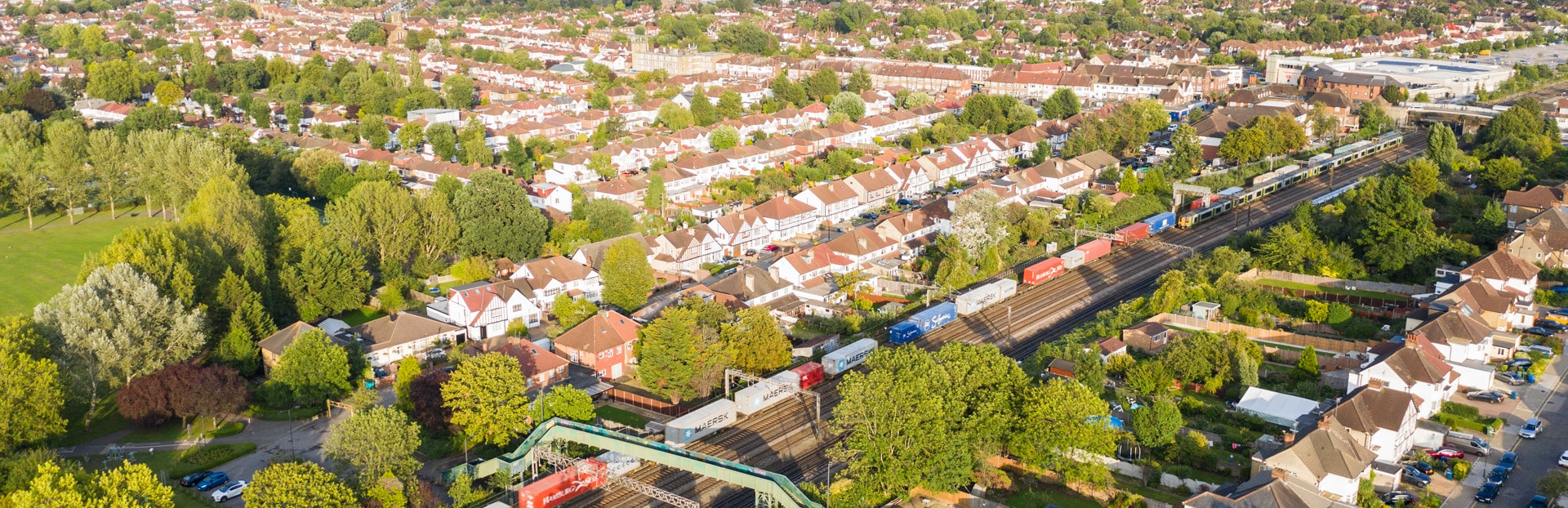
Harrow is a borough of north-west London. Land Registry sold prices in Harrow average £530,414, which is 2.1% below the London average of £542,065 but 82.9% above the England average of £289,946. That is the line worth holding onto: a London borough where the asking price sits just under the capital's own average, opening at £440,533 in HA1 (Harrow on the Hill) and reaching £677,755 in HA5 (Pinner, Eastcote). The headline premium over England is a London number, not a Harrow one. The more useful comparison is against London itself, where Harrow comes in slightly cheaper than the typical capital postcode.
All ten Harrow postcodes return rent and yield data, which is unusual for an outer London borough this size. Gross yields run from 3.5% in HA5 to 5.4% in HA9 (Wembley Park), and a 30% deposit starts at £132,160 in HA1. Five-year house price growth across the postcodes ranges from -0.1% in HA9 to 11.8% in HA3 (Kenton, Wealdstone), so the postcode with the borough's top yield is also the one with the flattest five-year capital record. That split between income and growth runs through the whole borough.
The London Borough of Harrow (ONS code E09000015) sits in outer north-west London and borders Barnet to the east, Brent to the south, and Ealing and Hillingdon to the west. This guide covers ten postcode districts: HA0 to HA5, HA7, HA8, HA9, and WD23. Several straddle borough lines. HA0 (Wembley), HA1, HA3 and HA9 share the Harrow/Brent boundary, HA4 (Ruislip) sits mainly in Hillingdon, and WD23 (Bushey) is in Hertsmere, Hertfordshire. The figures below cover the full postcode district in each case. Harrow forms part of the wider London property investment market.
Article updated: July 2026
Why Invest in Harrow?
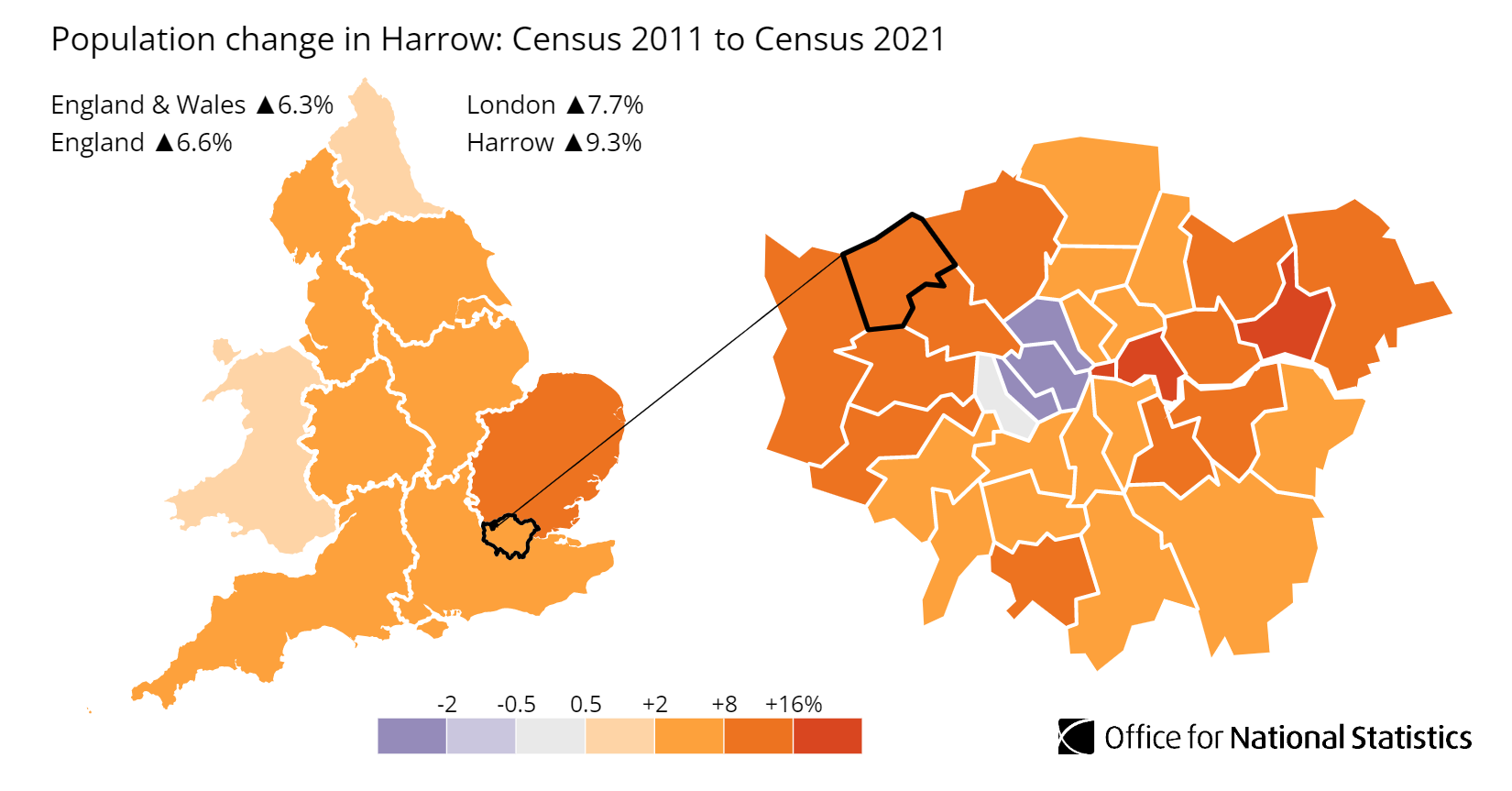
Harrow's population reached 261,203 at the 2021 Census, up 9.26% from 239,056 in 2011. That is faster than the England and Wales average of 6.3%, and it lands in a borough already wired into central London by four Underground lines, a London Overground line, and a Chiltern Railways mainline. The Metropolitan, Piccadilly, Jubilee and Bakerloo lines all serve stations within or on the edge of the borough, so a tenant in Harrow has several ways into the West End and the City.
Harrow-on-the-Hill is the borough's main interchange, with Chiltern Railways running fast services to London Marylebone alongside the Metropolitan line. Harrow & Wealdstone is the northern end of the Bakerloo line, Stanmore is the northern end of the Jubilee, and the London Overground Lioness line picks up Harrow & Wealdstone and Kenton. For a renter choosing where to live, that spread of routes is part of what holds demand up across the borough rather than concentrating it in one or two stations.
The borough also carries the kind of anchor employers and institutions that keep a rental market ticking over. The University of Westminster runs its Harrow Campus on Watford Road, home to its Media, Arts and Design courses. Northwick Park Hospital, run by London North West University Healthcare NHS Trust, is the borough's main acute hospital, sitting on the Harrow/Brent border and serving residents across both. The median resident here earns £45,232 a year, just under the London figure of £46,395 and well above the Great Britain median of £39,125, so local tenants are not leaning on the cheapest end of the market to keep up.
Harrow Economic Summary
- Population: 261,203 (2021 Census). Growth of 9.26% from 2011.
- Median annual salary: £45,232 (Harrow), £46,395 (London), £39,125 (Great Britain)
- Employment rate: 76.0% (Harrow)
- Median gross weekly pay: £869.80 (Harrow), £892.60 (London), £752.40 (Great Britain)
Source: ONS Census 2021, Nomis Labour Market Profile (ASHE 2025)
Regeneration and Investment in Harrow
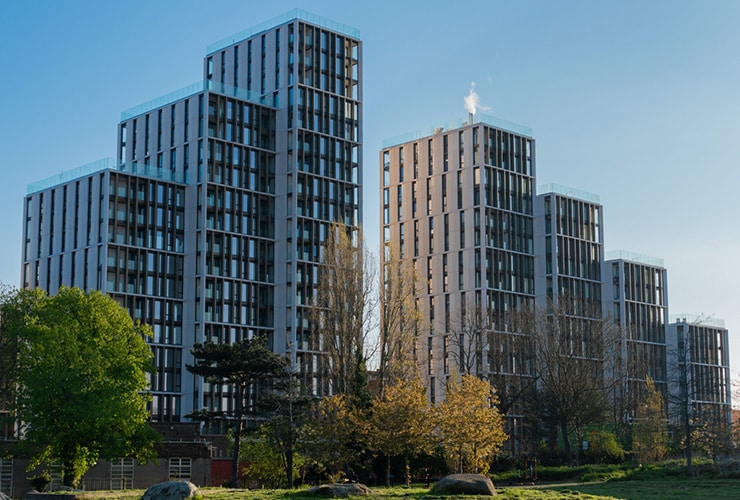
Harrow Council is running a multi-site regeneration programme with Wates Residential, with three projects between them targeting several thousand new homes. The activity is concentrated in Wealdstone, in the HA3 and HA1 postcodes around the town centre, which matters because that is also where the borough's recent one-year price movement has been strongest.
- Poets Corner (under construction, 1,000+ homes across three phases): The former Civic Centre site in Wealdstone is being turned into a mixed-use neighbourhood with Build to Rent and affordable housing, a new public space called Poets Garden, retail and community facilities. Details at Wates Residential.
- Byron Quarter (phase one, 149 homes): A Wates-delivered scheme off Christchurch Avenue in Wealdstone, mixing terraced houses and apartments including council homes, with a central green space and walking and cycling routes. Details at Harrow Council.
- Harrow View East, the former Kodak factory (planning approved, around 2,000 homes): A 23-hectare former industrial site in Wealdstone being redeveloped into a mixed-use neighbourhood with housing, a primary school, a health centre and local retail. The latest phase was approved in March 2025. Updates at Harrow Online.
Source: Office for National Statistics - Population for Harrow
Harrow Property Market Analysis
Harrow's average sold price has risen 511.5% since January 1995, from £86,737 to £530,414. The sections below walk through that journey cycle by cycle, then drill into current postcode-level data for sold prices, price per square foot, asking prices, growth, and how the market is moving today.
When was the last house price crash in Harrow?
The Land Registry records Harrow at borough level, so all sold prices here cover the London Borough of Harrow rather than individual postcodes. The index runs from January 1995 to March 2026, which is 31 years of market cycles to read.
The 1995 to 2007 boom: Harrow started at £86,737 in January 1995. By January 2007 the average reached £287,011, a 230.9% gain over twelve years on the back of low rates, easy credit and steady demand across outer London.
2008 to 2009, the financial crisis: The pre-crash peak was £315,087 in April 2008. Prices fell to a trough of £259,549 by April 2009, a drop of 17.6% in a year, and the worst single annual reading was -17.6% in April 2009. London as a whole fell on a similar scale, so Harrow tracked the capital rather than escaping it.
Recovery, 2010 to 2012: Prices stabilised through 2010 and 2011, then picked up. By August 2012 Harrow reached £317,620, finally clearing the April 2008 pre-crash peak. The round trip back to the old high took about four and a half years.
2014 to 2016, strong growth: The market accelerated, rising from £347,631 in March 2014 to £457,412 by March 2016. Help to Buy, cheap mortgages and London's wider recovery pushed Harrow up 31.6% across those two years.
2017 to 2019, the plateau: Growth slowed and prices drifted in a narrow band through the late 2010s as Brexit uncertainty and stamp duty changes weighed on outer London.
2020 to 2022, the pandemic surge: The stamp duty holiday and the move towards more space drove prices sharply higher. Harrow's all-time high came in at £561,854 in August 2022.
2023 to 2024, the rate shock: Higher mortgage rates pulled the market back from that peak. The post-peak low was £507,704 in March 2024, a fall of 9.6% from the all-time high. That correction was a good deal shallower than the 17.6% drop in 2008.
2024 to present: Prices recovered to £543,788 by March 2025, then eased again to £530,414 by the latest March 2026 reading, down 2.5% year-on-year. The current price sits 5.6% below the August 2022 all-time high.
Long-term growth summary from the current £530,414 (March 2026):
- 5 years (March 2021 to March 2026): 5.3% growth (£503,752 to £530,414)
- 10 years (March 2016 to March 2026): 16.0% growth (£457,412 to £530,414)
- 15 years (March 2011 to March 2026): 75.3% growth (£302,494 to £530,414)
- 20 years (March 2006 to March 2026): 100.9% growth (£264,040 to £530,414)
- 30 years (March 1996 to March 2026): 514.9% growth (£86,261 to £530,414)
The 2008 crash took 17.6% off Harrow in a year, but the borough was back above its old peak within four and a half years and has roughly doubled since. The 2022 to 2024 correction was milder at 9.6%, and prices have since clawed most of it back. The recent five-year figure of 5.3% is modest by Harrow's own history, a reminder that the borough is sitting just under its 2022 high rather than charging past it.
- All property types
- Detached
- Semi-detached
- Terraced
- Flats
Source: HM Land Registry House Price Index
| Year | All property types | Detached | Semi-detached | Terraced | Flats |
|---|---|---|---|---|---|
| 1995-01 | £86,737 | £195,181 | £98,840 | £79,207 | £62,622 |
| 1995-02 | £85,331 | £189,046 | £97,420 | £78,302 | £61,518 |
| 1995-03 | £85,352 | £188,631 | £97,482 | £78,440 | £61,443 |
| 1995-04 | £85,507 | £187,603 | £97,702 | £78,730 | £61,606 |
| 1995-05 | £85,800 | £188,504 | £98,111 | £78,898 | £61,741 |
| 1995-06 | £86,127 | £188,773 | £98,474 | £79,000 | £62,271 |
| 1995-07 | £86,181 | £189,441 | £98,655 | £79,099 | £61,969 |
| 1995-08 | £86,390 | £190,958 | £98,883 | £79,335 | £61,892 |
| 1995-09 | £85,547 | £190,292 | £97,974 | £78,628 | £60,905 |
| 1995-10 | £84,407 | £188,138 | £96,730 | £77,207 | £60,276 |
| 1995-11 | £84,154 | £187,055 | £96,430 | £76,660 | £60,513 |
| 1995-12 | £83,959 | £185,778 | £96,311 | £76,380 | £60,459 |
| 1996-01 | £85,147 | £188,301 | £97,660 | £77,674 | £61,153 |
| 1996-02 | £85,708 | £189,202 | £98,454 | £78,284 | £61,290 |
| 1996-03 | £86,261 | £191,093 | £99,059 | £78,688 | £61,704 |
| 1996-04 | £86,061 | £189,800 | £98,728 | £78,474 | £61,884 |
| 1996-05 | £86,705 | £190,684 | £99,289 | £79,337 | £62,426 |
| 1996-06 | £87,369 | £191,263 | £99,901 | £80,073 | £63,145 |
| 1996-07 | £88,058 | £193,942 | £100,813 | £80,675 | £63,292 |
| 1996-08 | £87,972 | £195,606 | £100,756 | £80,429 | £63,015 |
| 1996-09 | £89,227 | £199,843 | £102,298 | £81,620 | £63,466 |
| 1996-10 | £89,939 | £201,828 | £103,142 | £82,232 | £63,908 |
| 1996-11 | £90,534 | £202,373 | £103,801 | £82,790 | £64,486 |
| 1996-12 | £92,068 | £204,734 | £105,686 | £84,168 | £65,603 |
| 1997-01 | £92,257 | £204,687 | £105,966 | £84,507 | £65,564 |
| 1997-02 | £94,029 | £209,675 | £107,877 | £85,974 | £66,790 |
| 1997-03 | £94,538 | £211,637 | £108,245 | £86,514 | £67,112 |
| 1997-04 | £96,523 | £216,484 | £110,519 | £88,250 | £68,527 |
| 1997-05 | £98,212 | £220,544 | £112,795 | £89,882 | £69,339 |
| 1997-06 | £99,465 | £224,816 | £114,483 | £90,991 | £69,865 |
| 1997-07 | £102,471 | £232,501 | £118,140 | £94,012 | £71,528 |
| 1997-08 | £105,106 | £239,051 | £121,269 | £96,400 | £73,244 |
| 1997-09 | £108,052 | £246,604 | £124,769 | £99,033 | £75,161 |
| 1997-10 | £109,248 | £249,506 | £126,107 | £99,838 | £76,199 |
| 1997-11 | £110,356 | £253,114 | £127,434 | £100,792 | £76,846 |
| 1997-12 | £111,240 | £253,653 | £128,580 | £101,624 | £77,510 |
| 1998-01 | £111,382 | £255,575 | £128,627 | £101,887 | £77,441 |
| 1998-02 | £111,481 | £253,995 | £128,404 | £101,982 | £77,844 |
| 1998-03 | £113,164 | £258,249 | £130,263 | £103,643 | £78,926 |
| 1998-04 | £114,532 | £259,577 | £132,087 | £104,939 | £79,847 |
| 1998-05 | £117,030 | £264,576 | £135,208 | £107,615 | £81,296 |
| 1998-06 | £117,556 | £264,734 | £135,524 | £108,017 | £81,963 |
| 1998-07 | £120,852 | £272,549 | £139,499 | £111,093 | £84,103 |
| 1998-08 | £121,338 | £276,423 | £140,132 | £111,339 | £84,280 |
| 1998-09 | £121,998 | £280,131 | £141,244 | £111,963 | £84,344 |
| 1998-10 | £119,823 | £275,220 | £138,571 | £109,750 | £83,034 |
| 1998-11 | £119,949 | £274,446 | £138,717 | £109,446 | £83,420 |
| 1998-12 | £120,197 | £272,222 | £138,888 | £109,493 | £83,975 |
| 1999-01 | £121,363 | £275,643 | £140,163 | £110,395 | £84,855 |
| 1999-02 | £121,835 | £277,474 | £140,696 | £110,944 | £85,080 |
| 1999-03 | £123,064 | £282,005 | £141,917 | £111,988 | £86,008 |
| 1999-04 | £124,145 | £283,703 | £142,874 | £113,381 | £86,801 |
| 1999-05 | £124,063 | £281,570 | £142,589 | £113,543 | £86,913 |
| 1999-06 | £125,788 | £285,671 | £144,616 | £115,384 | £87,915 |
| 1999-07 | £127,886 | £291,974 | £147,106 | £117,373 | £89,154 |
| 1999-08 | £132,400 | £304,854 | £152,396 | £121,656 | £91,923 |
| 1999-09 | £135,154 | £313,569 | £155,427 | £124,042 | £93,817 |
| 1999-10 | £138,244 | £319,829 | £158,938 | £126,332 | £96,395 |
| 1999-11 | £139,924 | £323,708 | £160,788 | £127,651 | £97,756 |
| 1999-12 | £141,663 | £323,699 | £162,614 | £129,276 | £99,430 |
| 2000-01 | £144,390 | £331,774 | £166,032 | £131,781 | £100,963 |
| 2000-02 | £146,366 | £335,480 | £168,217 | £133,723 | £102,407 |
| 2000-03 | £148,750 | £343,934 | £171,194 | £135,966 | £103,598 |
| 2000-04 | £150,091 | £344,668 | £172,325 | £137,276 | £104,969 |
| 2000-05 | £154,195 | £353,726 | £177,014 | £140,798 | £108,003 |
| 2000-06 | £157,526 | £359,044 | £180,824 | £143,560 | £110,687 |
| 2000-07 | £160,348 | £368,854 | £184,546 | £145,818 | £112,220 |
| 2000-08 | £161,496 | £373,002 | £186,010 | £146,221 | £113,130 |
| 2000-09 | £160,869 | £375,259 | £185,106 | £145,269 | £112,699 |
| 2000-10 | £161,974 | £376,998 | £186,482 | £145,863 | £113,681 |
| 2000-11 | £162,618 | £379,548 | £186,893 | £146,268 | £114,365 |
| 2000-12 | £163,774 | £379,018 | £188,045 | £147,177 | £115,646 |
| 2001-01 | £163,869 | £377,850 | £187,618 | £147,758 | £115,939 |
| 2001-02 | £163,741 | £376,493 | £187,661 | £147,942 | £115,659 |
| 2001-03 | £165,323 | £380,580 | £189,763 | £149,623 | £116,362 |
| 2001-04 | £167,175 | £383,678 | £191,658 | £151,330 | £117,879 |
| 2001-05 | £169,521 | £386,203 | £193,966 | £153,716 | £119,834 |
| 2001-06 | £172,757 | £391,141 | £197,105 | £156,511 | £122,742 |
| 2001-07 | £175,994 | £399,550 | £201,072 | £159,408 | £124,807 |
| 2001-08 | £179,298 | £408,587 | £204,756 | £162,273 | £127,186 |
| 2001-09 | £181,010 | £415,782 | £206,651 | £163,729 | £128,286 |
| 2001-10 | £182,210 | £417,566 | £207,953 | £164,355 | £129,489 |
| 2001-11 | £183,461 | £418,796 | £209,529 | £164,959 | £130,658 |
| 2001-12 | £186,054 | £419,643 | £212,246 | £166,588 | £133,389 |
| 2002-01 | £188,866 | £424,696 | £215,359 | £168,728 | £135,754 |
| 2002-02 | £191,113 | £427,750 | £217,661 | £170,976 | £137,550 |
| 2002-03 | £192,565 | £432,291 | £219,585 | £172,569 | £138,153 |
| 2002-04 | £194,553 | £433,787 | £221,131 | £174,340 | £140,284 |
| 2002-05 | £197,911 | £439,365 | £224,861 | £177,091 | £143,032 |
| 2002-06 | £202,416 | £446,105 | £229,268 | £181,510 | £146,796 |
| 2002-07 | £207,763 | £459,526 | £235,580 | £186,766 | £150,135 |
| 2002-08 | £213,867 | £473,575 | £242,313 | £192,419 | £154,551 |
| 2002-09 | £220,295 | £489,686 | £250,329 | £198,061 | £158,626 |
| 2002-10 | £223,267 | £493,706 | £254,310 | £200,195 | £160,798 |
| 2002-11 | £227,478 | £503,645 | £259,129 | £203,510 | £164,030 |
| 2002-12 | £228,517 | £502,395 | £260,469 | £203,785 | £165,263 |
| 2003-01 | £230,881 | £506,912 | £262,095 | £206,391 | £167,502 |
| 2003-02 | £228,200 | £496,599 | £259,246 | £203,897 | £165,761 |
| 2003-03 | £230,561 | £502,322 | £261,480 | £206,548 | £167,459 |
| 2003-04 | £232,908 | £503,866 | £264,674 | £208,343 | £169,188 |
| 2003-05 | £238,959 | £515,006 | £271,828 | £214,435 | £173,140 |
| 2003-06 | £238,781 | £511,398 | £271,217 | £214,119 | £173,610 |
| 2003-07 | £239,278 | £512,517 | £271,926 | £215,007 | £173,621 |
| 2003-08 | £238,424 | £510,833 | £270,657 | £214,355 | £173,142 |
| 2003-09 | £240,826 | £516,991 | £274,013 | £217,114 | £174,029 |
| 2003-10 | £243,968 | £521,479 | £277,167 | £220,225 | £176,598 |
| 2003-11 | £245,095 | £522,523 | £278,668 | £221,228 | £177,357 |
| 2003-12 | £248,071 | £523,390 | £281,514 | £224,027 | £180,210 |
| 2004-01 | £249,001 | £526,283 | £282,790 | £224,711 | £180,750 |
| 2004-02 | £251,083 | £530,667 | £284,919 | £226,902 | £182,286 |
| 2004-03 | £249,564 | £529,457 | £282,959 | £225,905 | £181,005 |
| 2004-04 | £248,928 | £523,756 | £281,850 | £226,268 | £180,693 |
| 2004-05 | £253,035 | £524,941 | £285,767 | £230,755 | £184,417 |
| 2004-06 | £260,007 | £534,851 | £293,322 | £237,284 | £190,020 |
| 2004-07 | £263,750 | £541,804 | £298,161 | £240,767 | £192,396 |
| 2004-08 | £265,586 | £550,554 | £300,326 | £242,341 | £193,289 |
| 2004-09 | £262,191 | £546,303 | £297,162 | £239,195 | £190,160 |
| 2004-10 | £264,942 | £551,666 | £299,146 | £241,543 | £192,992 |
| 2004-11 | £262,724 | £544,870 | £296,322 | £239,695 | £191,686 |
| 2004-12 | £266,947 | £550,334 | £300,417 | £244,061 | £195,233 |
| 2005-01 | £263,077 | £544,003 | £295,754 | £240,798 | £192,321 |
| 2005-02 | £263,025 | £546,824 | £295,966 | £240,698 | £191,892 |
| 2005-03 | £256,993 | £536,822 | £289,214 | £235,485 | £187,081 |
| 2005-04 | £258,626 | £539,076 | £291,433 | £237,519 | £187,846 |
| 2005-05 | £258,531 | £534,740 | £291,006 | £237,992 | £188,046 |
| 2005-06 | £261,937 | £539,243 | £294,354 | £241,654 | £190,776 |
| 2005-07 | £263,401 | £541,825 | £296,329 | £243,181 | £191,583 |
| 2005-08 | £263,591 | £543,829 | £296,511 | £243,727 | £191,392 |
| 2005-09 | £263,138 | £545,618 | £296,749 | £243,355 | £190,322 |
| 2005-10 | £262,028 | £542,287 | £294,930 | £242,323 | £189,964 |
| 2005-11 | £260,958 | £538,499 | £293,938 | £241,496 | £189,115 |
| 2005-12 | £259,792 | £531,780 | £291,588 | £240,442 | £189,303 |
| 2006-01 | £259,719 | £534,382 | £291,533 | £240,636 | £188,841 |
| 2006-02 | £261,821 | £539,061 | £293,327 | £242,336 | £190,792 |
| 2006-03 | £264,040 | £547,605 | £296,601 | £244,639 | £191,406 |
| 2006-04 | £265,457 | £547,991 | £298,034 | £246,218 | £192,615 |
| 2006-05 | £268,607 | £555,563 | £301,699 | £249,222 | £194,687 |
| 2006-06 | £269,437 | £557,277 | £302,443 | £250,090 | £195,344 |
| 2006-07 | £270,809 | £561,502 | £304,504 | £251,738 | £195,728 |
| 2006-08 | £272,710 | £566,264 | £307,039 | £254,293 | £196,393 |
| 2006-09 | £277,385 | £578,124 | £312,853 | £258,455 | £199,360 |
| 2006-10 | £281,794 | £587,745 | £317,557 | £262,253 | £202,799 |
| 2006-11 | £282,866 | £590,021 | £319,025 | £263,044 | £203,528 |
| 2006-12 | £284,650 | £591,809 | £320,558 | £265,020 | £205,090 |
| 2007-01 | £287,011 | £598,239 | £323,407 | £267,268 | £206,523 |
| 2007-02 | £288,623 | £602,568 | £324,704 | £268,099 | £208,134 |
| 2007-03 | £288,005 | £604,299 | £324,263 | £267,794 | £207,159 |
| 2007-04 | £291,917 | £610,120 | £328,272 | £272,163 | £210,070 |
| 2007-05 | £294,944 | £614,309 | £331,232 | £275,714 | £212,352 |
| 2007-06 | £298,927 | £620,987 | £335,382 | £279,350 | £215,552 |
| 2007-07 | £299,656 | £627,512 | £336,651 | £279,731 | £215,566 |
| 2007-08 | £304,760 | £642,059 | £343,363 | £285,191 | £218,141 |
| 2007-09 | £310,783 | £658,879 | £350,582 | £290,421 | £222,062 |
| 2007-10 | £312,510 | £663,441 | £351,654 | £291,702 | £223,808 |
| 2007-11 | £314,401 | £668,993 | £353,343 | £292,359 | £225,713 |
| 2007-12 | £312,096 | £659,171 | £350,267 | £290,271 | £224,681 |
| 2008-01 | £312,934 | £663,556 | £351,384 | £290,759 | £225,106 |
| 2008-02 | £312,047 | £662,304 | £351,015 | £290,121 | £224,041 |
| 2008-03 | £311,881 | £668,205 | £352,061 | £290,619 | £222,643 |
| 2008-04 | £315,087 | £677,566 | £356,199 | £294,442 | £224,277 |
| 2008-05 | £314,017 | £676,899 | £354,913 | £293,803 | £223,324 |
| 2008-06 | £310,983 | £670,799 | £350,977 | £291,021 | £221,330 |
| 2008-07 | £305,837 | £661,393 | £346,007 | £286,046 | £217,279 |
| 2008-08 | £299,997 | £651,190 | £339,618 | £280,651 | £212,873 |
| 2008-09 | £294,796 | £644,992 | £333,640 | £275,246 | £209,109 |
| 2008-10 | £289,856 | £634,137 | £327,027 | £270,135 | £206,205 |
| 2008-11 | £277,579 | £610,320 | £313,336 | £258,671 | £197,236 |
| 2008-12 | £272,840 | £596,563 | £308,681 | £254,982 | £193,523 |
| 2009-01 | £266,827 | £583,807 | £302,349 | £249,018 | £189,160 |
| 2009-02 | £268,123 | £582,428 | £303,631 | £249,376 | £190,814 |
| 2009-03 | £264,319 | £573,104 | £298,607 | £244,849 | £188,956 |
| 2009-04 | £259,549 | £557,746 | £293,822 | £241,062 | £185,308 |
| 2009-05 | £259,605 | £555,804 | £294,027 | £242,146 | £184,946 |
| 2009-06 | £260,446 | £556,958 | £295,472 | £243,955 | £184,818 |
| 2009-07 | £264,646 | £567,294 | £301,034 | £248,774 | £186,808 |
| 2009-08 | £271,250 | £586,395 | £309,454 | £255,514 | £190,274 |
| 2009-09 | £277,865 | £603,356 | £317,938 | £262,130 | £193,966 |
| 2009-10 | £278,100 | £606,082 | £318,741 | £262,492 | £193,582 |
| 2009-11 | £278,071 | £605,454 | £318,683 | £263,457 | £193,165 |
| 2009-12 | £280,881 | £608,545 | £322,120 | £266,792 | £194,935 |
| 2010-01 | £286,005 | £622,659 | £328,974 | £272,535 | £197,308 |
| 2010-02 | £288,144 | £630,395 | £333,050 | £274,555 | £197,664 |
| 2010-03 | £291,691 | £645,982 | £337,787 | £277,559 | £199,307 |
| 2010-04 | £294,830 | £651,173 | £341,281 | £280,330 | £201,808 |
| 2010-05 | £298,326 | £657,596 | £344,547 | £283,581 | £204,805 |
| 2010-06 | £297,496 | £654,829 | £343,890 | £283,424 | £203,835 |
| 2010-07 | £301,116 | £668,822 | £348,236 | £287,189 | £205,499 |
| 2010-08 | £303,782 | £676,942 | £352,826 | £290,016 | £206,119 |
| 2010-09 | £305,186 | £684,895 | £354,875 | £291,317 | £206,403 |
| 2010-10 | £307,105 | £687,359 | £357,533 | £292,949 | £207,733 |
| 2010-11 | £305,850 | £686,471 | £355,549 | £290,991 | £207,374 |
| 2010-12 | £307,820 | £689,266 | £358,184 | £292,408 | £208,895 |
| 2011-01 | £303,193 | £684,282 | £352,212 | £287,650 | £205,768 |
| 2011-02 | £304,353 | £693,677 | £353,247 | £288,359 | £206,271 |
| 2011-03 | £302,494 | £696,954 | £350,383 | £286,455 | £204,771 |
| 2011-04 | £304,584 | £699,920 | £352,874 | £288,406 | £206,344 |
| 2011-05 | £301,838 | £683,509 | £349,167 | £286,344 | £205,590 |
| 2011-06 | £302,079 | £673,509 | £349,868 | £287,049 | £206,361 |
| 2011-07 | £299,496 | £663,319 | £347,082 | £285,106 | £204,692 |
| 2011-08 | £301,002 | £672,408 | £350,453 | £286,973 | £203,958 |
| 2011-09 | £302,599 | £683,120 | £352,697 | £288,674 | £203,998 |
| 2011-10 | £304,673 | £691,402 | £356,024 | £290,270 | £204,676 |
| 2011-11 | £307,724 | £698,724 | £358,847 | £292,613 | £207,380 |
| 2011-12 | £306,259 | £688,765 | £357,188 | £291,055 | £207,121 |
| 2012-01 | £306,845 | £686,598 | £358,274 | £292,063 | £207,431 |
| 2012-02 | £305,034 | £684,020 | £356,745 | £291,151 | £205,365 |
| 2012-03 | £302,710 | £678,806 | £353,585 | £289,197 | £203,755 |
| 2012-04 | £304,962 | £683,594 | £355,094 | £291,305 | £205,853 |
| 2012-05 | £303,376 | £674,864 | £353,049 | £289,899 | £205,250 |
| 2012-06 | £311,710 | £693,130 | £362,853 | £299,171 | £210,324 |
| 2012-07 | £310,149 | £691,246 | £361,262 | £298,293 | £208,779 |
| 2012-08 | £317,620 | £709,246 | £370,344 | £306,504 | £213,101 |
| 2012-09 | £318,201 | £713,877 | £371,478 | £306,736 | £213,131 |
| 2012-10 | £324,645 | £726,656 | £378,729 | £313,059 | £217,669 |
| 2012-11 | £320,550 | £717,181 | £373,788 | £308,925 | £215,102 |
| 2012-12 | £317,963 | £710,130 | £370,722 | £306,645 | £213,406 |
| 2013-01 | £313,653 | £704,009 | £367,220 | £302,061 | £209,673 |
| 2013-02 | £316,556 | £713,694 | £370,782 | £304,316 | £211,498 |
| 2013-03 | £318,184 | £719,679 | £373,059 | £305,121 | £212,525 |
| 2013-04 | £317,879 | £717,554 | £371,429 | £305,652 | £212,735 |
| 2013-05 | £319,694 | £719,823 | £373,414 | £307,438 | £214,146 |
| 2013-06 | £322,715 | £723,652 | £377,046 | £311,156 | £216,066 |
| 2013-07 | £329,374 | £738,170 | £385,037 | £317,876 | £220,350 |
| 2013-08 | £332,445 | £743,934 | £389,034 | £321,594 | £222,028 |
| 2013-09 | £333,681 | £750,987 | £390,655 | £322,433 | £222,555 |
| 2013-10 | £335,031 | £753,916 | £392,626 | £323,370 | £223,414 |
| 2013-11 | £338,090 | £760,412 | £396,341 | £326,050 | £225,523 |
| 2013-12 | £344,415 | £767,173 | £403,415 | £332,444 | £230,400 |
| 2014-01 | £346,447 | £770,829 | £406,073 | £334,000 | £231,847 |
| 2014-02 | £345,915 | £769,717 | £405,397 | £333,147 | £231,626 |
| 2014-03 | £347,631 | £775,307 | £407,376 | £334,438 | £232,717 |
| 2014-04 | £353,577 | £787,764 | £413,853 | £340,705 | £236,751 |
| 2014-05 | £360,500 | £799,918 | £421,450 | £348,087 | £241,591 |
| 2014-06 | £364,218 | £806,590 | £426,010 | £352,295 | £243,900 |
| 2014-07 | £369,795 | £817,839 | £433,242 | £358,129 | £247,286 |
| 2014-08 | £374,255 | £829,484 | £439,544 | £362,891 | £249,536 |
| 2014-09 | £382,865 | £850,856 | £450,143 | £371,146 | £254,930 |
| 2014-10 | £387,965 | £861,664 | £456,121 | £375,357 | £258,651 |
| 2014-11 | £395,865 | £879,910 | £465,241 | £382,309 | £264,181 |
| 2014-12 | £400,988 | £889,833 | £470,690 | £386,636 | £268,177 |
| 2015-01 | £399,771 | £887,628 | £468,922 | £385,179 | £267,561 |
| 2015-02 | £399,649 | £886,895 | £467,595 | £384,294 | £268,265 |
| 2015-03 | £396,549 | £879,056 | £464,132 | £380,954 | £266,314 |
| 2015-04 | £402,676 | £892,696 | £471,351 | £387,513 | £270,137 |
| 2015-05 | £406,021 | £895,552 | £476,364 | £391,413 | £272,034 |
| 2015-06 | £411,221 | £908,907 | £483,832 | £398,123 | £274,195 |
| 2015-07 | £416,109 | £917,556 | £490,132 | £403,298 | £277,232 |
| 2015-08 | £427,818 | £944,931 | £504,478 | £415,563 | £284,347 |
| 2015-09 | £433,897 | £962,044 | £511,465 | £420,849 | £288,429 |
| 2015-10 | £438,793 | £974,152 | £518,391 | £425,987 | £291,016 |
| 2015-11 | £438,556 | £975,950 | £518,407 | £425,465 | £290,693 |
| 2015-12 | £445,979 | £989,046 | £527,260 | £432,347 | £295,960 |
| 2016-01 | £447,170 | £990,385 | £529,028 | £432,664 | £297,046 |
| 2016-02 | £454,630 | £1,009,233 | £538,587 | £439,428 | £301,744 |
| 2016-03 | £457,412 | £1,021,143 | £541,695 | £442,014 | £303,283 |
| 2016-04 | £461,965 | £1,027,698 | £545,234 | £446,613 | £307,175 |
| 2016-05 | £461,656 | £1,013,976 | £541,662 | £445,861 | £309,320 |
| 2016-06 | £459,790 | £998,965 | £538,191 | £443,829 | £309,439 |
| 2016-07 | £464,802 | £1,010,554 | £544,480 | £448,589 | £312,633 |
| 2016-08 | £471,810 | £1,030,561 | £554,173 | £455,961 | £316,181 |
| 2016-09 | £472,326 | £1,032,079 | £556,069 | £456,340 | £316,065 |
| 2016-10 | £475,967 | £1,040,934 | £560,217 | £458,143 | £319,175 |
| 2016-11 | £470,403 | £1,033,013 | £553,583 | £451,196 | £315,801 |
| 2016-12 | £474,806 | £1,043,686 | £557,500 | £454,388 | £319,571 |
| 2017-01 | £468,456 | £1,029,419 | £549,504 | £448,606 | £315,403 |
| 2017-02 | £476,221 | £1,041,481 | £557,126 | £455,339 | £321,881 |
| 2017-03 | £477,305 | £1,042,432 | £557,918 | £455,884 | £323,113 |
| 2017-04 | £487,581 | £1,066,698 | £568,823 | £464,745 | £330,754 |
| 2017-05 | £485,693 | £1,059,052 | £567,249 | £462,471 | £329,678 |
| 2017-06 | £484,763 | £1,050,805 | £565,130 | £462,211 | £329,702 |
| 2017-07 | £477,645 | £1,028,281 | £557,728 | £455,791 | £324,895 |
| 2017-08 | £478,710 | £1,033,491 | £559,167 | £458,533 | £324,633 |
| 2017-09 | £481,694 | £1,046,713 | £564,211 | £461,209 | £325,571 |
| 2017-10 | £490,465 | £1,071,104 | £575,439 | £469,695 | £330,672 |
| 2017-11 | £486,720 | £1,062,939 | £572,339 | £465,713 | £327,779 |
| 2017-12 | £485,005 | £1,057,180 | £570,694 | £465,030 | £326,254 |
| 2018-01 | £484,773 | £1,053,932 | £570,263 | £464,771 | £326,384 |
| 2018-02 | £485,522 | £1,053,794 | £570,345 | £465,548 | £327,264 |
| 2018-03 | £483,406 | £1,047,141 | £568,481 | £463,447 | £325,692 |
| 2018-04 | £476,191 | £1,029,686 | £561,254 | £458,462 | £319,593 |
| 2018-05 | £473,633 | £1,025,803 | £559,766 | £456,972 | £316,730 |
| 2018-06 | £475,844 | £1,033,215 | £564,081 | £458,830 | £317,492 |
| 2018-07 | £475,730 | £1,039,616 | £563,851 | £458,322 | £317,195 |
| 2018-08 | £475,339 | £1,043,170 | £563,383 | £458,201 | £316,533 |
| 2018-09 | £472,555 | £1,040,879 | £560,074 | £455,939 | £314,248 |
| 2018-10 | £475,597 | £1,048,973 | £563,646 | £458,480 | £316,367 |
| 2018-11 | £469,301 | £1,040,573 | £557,712 | £452,457 | £311,219 |
| 2018-12 | £472,678 | £1,043,640 | £561,941 | £455,262 | £313,864 |
| 2019-01 | £463,886 | £1,025,538 | £552,147 | £446,571 | £307,786 |
| 2019-02 | £464,920 | £1,021,505 | £551,612 | £446,802 | £309,882 |
| 2019-03 | £455,478 | £1,001,441 | £540,074 | £438,468 | £303,387 |
| 2019-04 | £456,870 | £1,000,580 | £541,325 | £441,192 | £304,215 |
| 2019-05 | £453,896 | £994,167 | £539,441 | £440,078 | £300,993 |
| 2019-06 | £458,295 | £1,002,019 | £545,328 | £445,129 | £303,498 |
| 2019-07 | £456,668 | £995,652 | £543,444 | £443,371 | £302,640 |
| 2019-08 | £459,837 | £1,001,612 | £547,269 | £447,029 | £304,577 |
| 2019-09 | £463,219 | £1,011,334 | £549,627 | £450,607 | £307,190 |
| 2019-10 | £464,364 | £1,018,155 | £553,193 | £451,522 | £306,931 |
| 2019-11 | £461,389 | £1,019,773 | £551,517 | £448,079 | £303,972 |
| 2019-12 | £457,740 | £1,018,365 | £550,223 | £444,733 | £299,950 |
| 2020-01 | £457,751 | £1,016,572 | £550,227 | £445,756 | £299,719 |
| 2020-02 | £460,760 | £1,023,859 | £553,784 | £449,307 | £301,582 |
| 2020-03 | £461,094 | £1,022,604 | £553,168 | £449,448 | £302,317 |
| 2020-04 | £463,587 | £1,042,616 | £555,978 | £452,782 | £302,973 |
| 2020-05 | £460,900 | £1,036,952 | £551,383 | £448,754 | £302,041 |
| 2020-06 | £457,629 | £1,029,629 | £550,223 | £447,232 | £298,558 |
| 2020-07 | £462,950 | £1,031,036 | £556,973 | £452,652 | £302,408 |
| 2020-08 | £467,249 | £1,042,541 | £565,454 | £459,547 | £303,308 |
| 2020-09 | £471,719 | £1,058,324 | £571,243 | £464,567 | £305,608 |
| 2020-10 | £470,920 | £1,061,730 | £572,857 | £465,529 | £303,528 |
| 2020-11 | £475,545 | £1,074,127 | £579,021 | £470,985 | £305,991 |
| 2020-12 | £481,461 | £1,086,821 | £586,826 | £477,862 | £309,357 |
| 2021-01 | £488,065 | £1,094,635 | £592,826 | £482,832 | £315,052 |
| 2021-02 | £497,329 | £1,102,826 | £600,820 | £490,338 | £323,360 |
| 2021-03 | £503,752 | £1,103,771 | £604,672 | £494,781 | £330,438 |
| 2021-04 | £506,843 | £1,109,706 | £606,829 | £497,336 | £333,384 |
| 2021-05 | £502,070 | £1,103,951 | £601,296 | £492,632 | £329,760 |
| 2021-06 | £500,736 | £1,103,671 | £599,539 | £493,111 | £327,950 |
| 2021-07 | £499,327 | £1,118,503 | £598,694 | £489,852 | £325,919 |
| 2021-08 | £500,438 | £1,135,518 | £603,071 | £490,605 | £324,316 |
| 2021-09 | £501,833 | £1,150,692 | £607,101 | £490,738 | £323,717 |
| 2021-10 | £496,335 | £1,140,705 | £604,336 | £486,614 | £317,863 |
| 2021-11 | £501,443 | £1,153,062 | £610,522 | £491,684 | £321,071 |
| 2021-12 | £510,697 | £1,179,230 | £624,161 | £501,115 | £325,485 |
| 2022-01 | £516,121 | £1,187,874 | £631,250 | £507,788 | £328,523 |
| 2022-02 | £522,671 | £1,200,775 | £639,505 | £514,358 | £333,083 |
| 2022-03 | £512,251 | £1,179,508 | £627,691 | £503,688 | £326,020 |
| 2022-04 | £509,791 | £1,171,192 | £624,207 | £502,375 | £324,457 |
| 2022-05 | £510,364 | £1,170,865 | £626,197 | £504,254 | £323,419 |
| 2022-06 | £543,764 | £1,245,445 | £666,315 | £538,700 | £344,596 |
| 2022-07 | £557,046 | £1,275,250 | £683,578 | £552,742 | £351,948 |
| 2022-08 | £561,854 | £1,283,717 | £689,681 | £559,314 | £354,161 |
| 2022-09 | £540,280 | £1,236,044 | £664,120 | £538,362 | £339,486 |
| 2022-10 | £535,961 | £1,226,776 | £658,860 | £534,201 | £336,595 |
| 2022-11 | £537,717 | £1,234,486 | £660,994 | £535,433 | £337,587 |
| 2022-12 | £539,108 | £1,234,499 | £662,323 | £537,020 | £338,955 |
| 2023-01 | £541,838 | £1,241,526 | £667,207 | £538,479 | £340,265 |
| 2023-02 | £531,764 | £1,217,496 | £654,533 | £526,771 | £334,687 |
| 2023-03 | £524,013 | £1,205,905 | £646,009 | £516,266 | £329,541 |
| 2023-04 | £511,741 | £1,181,139 | £629,787 | £503,270 | £322,346 |
| 2023-05 | £511,735 | £1,181,292 | £629,448 | £503,377 | £322,441 |
| 2023-06 | £511,756 | £1,182,000 | £628,414 | £505,207 | £322,214 |
| 2023-07 | £518,187 | £1,191,535 | £636,689 | £513,244 | £325,953 |
| 2023-08 | £521,965 | £1,205,157 | £641,883 | £518,175 | £327,176 |
| 2023-09 | £525,080 | £1,210,241 | £646,480 | £521,964 | £328,708 |
| 2023-10 | £531,933 | £1,223,771 | £654,368 | £528,198 | £333,677 |
| 2023-11 | £525,703 | £1,206,619 | £647,397 | £520,652 | £330,207 |
| 2023-12 | £520,629 | £1,188,199 | £641,216 | £514,930 | £327,876 |
| 2024-01 | £515,586 | £1,178,578 | £635,239 | £510,920 | £324,054 |
| 2024-02 | £511,143 | £1,163,914 | £629,733 | £507,543 | £321,348 |
| 2024-03 | £507,704 | £1,159,129 | £624,009 | £503,764 | £319,822 |
| 2024-04 | £507,892 | £1,159,991 | £623,512 | £503,109 | £320,593 |
| 2024-05 | £513,607 | £1,171,757 | £628,641 | £508,860 | £325,205 |
| 2024-06 | £515,466 | £1,173,343 | £631,285 | £512,300 | £325,799 |
| 2024-07 | £520,468 | £1,181,488 | £638,676 | £519,165 | £327,892 |
| 2024-08 | £528,377 | £1,198,935 | £649,516 | £529,018 | £331,568 |
| 2024-09 | £533,692 | £1,219,229 | £657,872 | £534,040 | £333,360 |
| 2024-10 | £532,611 | £1,220,670 | £655,620 | £531,982 | £333,146 |
| 2024-11 | £528,333 | £1,214,867 | £651,314 | £526,830 | £329,982 |
| 2024-12 | £524,958 | £1,203,914 | £646,678 | £523,828 | £328,256 |
| 2025-01 | £524,195 | £1,202,043 | £647,473 | £524,151 | £326,525 |
| 2025-02 | £534,834 | £1,222,542 | £660,991 | £535,963 | £332,964 |
| 2025-03 | £543,788 | £1,226,525 | £670,579 | £546,820 | £340,553 |
| 2025-04 | £540,347 | £1,232,622 | £668,790 | £541,425 | £336,326 |
| 2025-05 | £529,902 | £1,217,111 | £657,434 | £529,990 | £328,434 |
| 2025-06 | £532,364 | £1,237,459 | £664,843 | £532,633 | £325,926 |
| 2025-07 | £540,297 | £1,243,834 | £674,171 | £543,553 | £331,336 |
| 2025-08 | £543,267 | £1,242,036 | £680,285 | £549,745 | £331,804 |
| 2025-09 | £539,358 | £1,236,241 | £676,822 | £546,650 | £328,049 |
| 2025-10 | £535,848 | £1,226,979 | £673,617 | £543,959 | £325,156 |
| 2025-11 | £533,167 | £1,223,207 | £668,915 | £541,388 | £323,856 |
| 2025-12 | £531,722 | £1,214,370 | £667,040 | £540,363 | £323,477 |
| 2026-01 | £535,142 | £1,220,594 | £672,907 | £545,875 | £324,261 |
| 2026-02 | £536,058 | £1,223,593 | £674,848 | £546,461 | £324,496 |
| 2026-03 | £530,414 | £1,212,081 | £668,349 | £542,531 | £319,945 |
- All property types
- Detached
- Semi-detached
- Terraced
- Flats
Source: HM Land Registry House Price Index
| Year | All property types | Detached | Semi-detached | Terraced | Flats |
|---|---|---|---|---|---|
| 1996-01 | -1.8% | -3.5% | -1.2% | -1.9% | -2.3% |
| 1996-02 | +0.4% | +0.1% | +1.1% | 0.0% | -0.4% |
| 1996-03 | +1.1% | +1.3% | +1.6% | +0.3% | +0.4% |
| 1996-04 | +0.6% | +1.2% | +1.1% | -0.3% | +0.5% |
| 1996-05 | +1.1% | +1.2% | +1.2% | +0.6% | +1.1% |
| 1996-06 | +1.4% | +1.3% | +1.4% | +1.4% | +1.4% |
| 1996-07 | +2.2% | +2.4% | +2.2% | +2.0% | +2.1% |
| 1996-08 | +1.8% | +2.4% | +1.9% | +1.4% | +1.8% |
| 1996-09 | +4.3% | +5.0% | +4.4% | +3.8% | +4.2% |
| 1996-10 | +6.6% | +7.3% | +6.6% | +6.5% | +6.0% |
| 1996-11 | +7.6% | +8.2% | +7.6% | +8.0% | +6.6% |
| 1996-12 | +9.7% | +10.2% | +9.7% | +10.2% | +8.5% |
| 1997-01 | +8.4% | +8.7% | +8.5% | +8.8% | +7.2% |
| 1997-02 | +9.7% | +10.8% | +9.6% | +9.8% | +9.0% |
| 1997-03 | +9.6% | +10.8% | +9.3% | +9.9% | +8.8% |
| 1997-04 | +12.2% | +14.1% | +11.9% | +12.5% | +10.7% |
| 1997-05 | +13.3% | +15.7% | +13.6% | +13.3% | +11.1% |
| 1997-06 | +13.8% | +17.5% | +14.6% | +13.6% | +10.6% |
| 1997-07 | +16.4% | +19.9% | +17.2% | +16.5% | +13.0% |
| 1997-08 | +19.5% | +22.2% | +20.4% | +19.9% | +16.2% |
| 1997-09 | +21.1% | +23.4% | +22.0% | +21.3% | +18.4% |
| 1997-10 | +21.5% | +23.6% | +22.3% | +21.4% | +19.2% |
| 1997-11 | +21.9% | +25.1% | +22.8% | +21.7% | +19.2% |
| 1997-12 | +20.8% | +23.9% | +21.7% | +20.7% | +18.2% |
| 1998-01 | +20.7% | +24.9% | +21.4% | +20.6% | +18.1% |
| 1998-02 | +18.6% | +21.1% | +19.0% | +18.6% | +16.6% |
| 1998-03 | +19.7% | +22.0% | +20.3% | +19.8% | +17.6% |
| 1998-04 | +18.7% | +19.9% | +19.5% | +18.9% | +16.5% |
| 1998-05 | +19.2% | +20.0% | +19.9% | +19.7% | +17.2% |
| 1998-06 | +18.2% | +17.8% | +18.4% | +18.7% | +17.3% |
| 1998-07 | +17.9% | +17.2% | +18.1% | +18.2% | +17.6% |
| 1998-08 | +15.4% | +15.6% | +15.6% | +15.5% | +15.1% |
| 1998-09 | +12.9% | +13.6% | +13.2% | +13.1% | +12.2% |
| 1998-10 | +9.7% | +10.3% | +9.9% | +9.9% | +9.0% |
| 1998-11 | +8.7% | +8.4% | +8.9% | +8.6% | +8.6% |
| 1998-12 | +8.1% | +7.3% | +8.0% | +7.7% | +8.3% |
| 1999-01 | +9.0% | +7.9% | +9.0% | +8.4% | +9.6% |
| 1999-02 | +9.3% | +9.2% | +9.6% | +8.8% | +9.3% |
| 1999-03 | +8.7% | +9.2% | +8.9% | +8.1% | +9.0% |
| 1999-04 | +8.4% | +9.3% | +8.2% | +8.0% | +8.7% |
| 1999-05 | +6.0% | +6.4% | +5.5% | +5.5% | +6.9% |
| 1999-06 | +7.0% | +7.9% | +6.7% | +6.8% | +7.3% |
| 1999-07 | +5.8% | +7.1% | +5.5% | +5.7% | +6.0% |
| 1999-08 | +9.1% | +10.3% | +8.8% | +9.3% | +9.1% |
| 1999-09 | +10.8% | +11.9% | +10.0% | +10.8% | +11.2% |
| 1999-10 | +15.4% | +16.2% | +14.7% | +15.1% | +16.1% |
| 1999-11 | +16.7% | +17.9% | +15.9% | +16.6% | +17.2% |
| 1999-12 | +17.9% | +18.9% | +17.1% | +18.1% | +18.4% |
| 2000-01 | +19.0% | +20.4% | +18.5% | +19.4% | +19.0% |
| 2000-02 | +20.1% | +20.9% | +19.6% | +20.5% | +20.4% |
| 2000-03 | +20.9% | +22.0% | +20.6% | +21.4% | +20.5% |
| 2000-04 | +20.9% | +21.5% | +20.6% | +21.1% | +20.9% |
| 2000-05 | +24.3% | +25.6% | +24.1% | +24.0% | +24.3% |
| 2000-06 | +25.2% | +25.7% | +25.0% | +24.4% | +25.9% |
| 2000-07 | +25.4% | +26.3% | +25.5% | +24.2% | +25.9% |
| 2000-08 | +22.0% | +22.4% | +22.1% | +20.2% | +23.1% |
| 2000-09 | +19.0% | +19.7% | +19.1% | +17.1% | +20.1% |
| 2000-10 | +17.2% | +17.9% | +17.3% | +15.5% | +17.9% |
| 2000-11 | +16.2% | +17.3% | +16.2% | +14.6% | +17.0% |
| 2000-12 | +15.6% | +17.1% | +15.6% | +13.8% | +16.3% |
| 2001-01 | +13.5% | +13.9% | +13.0% | +12.1% | +14.8% |
| 2001-02 | +11.9% | +12.2% | +11.6% | +10.6% | +12.9% |
| 2001-03 | +11.1% | +10.7% | +10.8% | +10.0% | +12.3% |
| 2001-04 | +11.4% | +11.3% | +11.2% | +10.2% | +12.3% |
| 2001-05 | +9.9% | +9.2% | +9.6% | +9.2% | +11.0% |
| 2001-06 | +9.7% | +8.9% | +9.0% | +9.0% | +10.9% |
| 2001-07 | +9.8% | +8.3% | +9.0% | +9.3% | +11.2% |
| 2001-08 | +11.0% | +9.5% | +10.1% | +11.0% | +12.4% |
| 2001-09 | +12.5% | +10.8% | +11.6% | +12.7% | +13.8% |
| 2001-10 | +12.5% | +10.8% | +11.5% | +12.7% | +13.9% |
| 2001-11 | +12.8% | +10.3% | +12.1% | +12.8% | +14.2% |
| 2001-12 | +13.6% | +10.7% | +12.9% | +13.2% | +15.3% |
| 2002-01 | +15.3% | +12.4% | +14.8% | +14.2% | +17.1% |
| 2002-02 | +16.7% | +13.6% | +16.0% | +15.6% | +18.9% |
| 2002-03 | +16.5% | +13.6% | +15.7% | +15.3% | +18.7% |
| 2002-04 | +16.4% | +13.1% | +15.4% | +15.2% | +19.0% |
| 2002-05 | +16.7% | +13.8% | +15.9% | +15.2% | +19.4% |
| 2002-06 | +17.2% | +14.1% | +16.3% | +16.0% | +19.6% |
| 2002-07 | +18.1% | +15.0% | +17.2% | +17.2% | +20.3% |
| 2002-08 | +19.3% | +15.9% | +18.3% | +18.6% | +21.5% |
| 2002-09 | +21.7% | +17.8% | +21.1% | +21.0% | +23.7% |
| 2002-10 | +22.5% | +18.2% | +22.3% | +21.8% | +24.2% |
| 2002-11 | +24.0% | +20.3% | +23.7% | +23.4% | +25.5% |
| 2002-12 | +22.8% | +19.7% | +22.7% | +22.3% | +23.9% |
| 2003-01 | +22.2% | +19.4% | +21.7% | +22.3% | +23.4% |
| 2003-02 | +19.4% | +16.1% | +19.1% | +19.3% | +20.5% |
| 2003-03 | +19.7% | +16.2% | +19.1% | +19.7% | +21.2% |
| 2003-04 | +19.7% | +16.2% | +19.7% | +19.5% | +20.6% |
| 2003-05 | +20.7% | +17.2% | +20.9% | +21.1% | +21.1% |
| 2003-06 | +18.0% | +14.6% | +18.3% | +18.0% | +18.3% |
| 2003-07 | +15.2% | +11.5% | +15.4% | +15.1% | +15.6% |
| 2003-08 | +11.5% | +7.9% | +11.7% | +11.4% | +12.0% |
| 2003-09 | +9.3% | +5.6% | +9.5% | +9.6% | +9.7% |
| 2003-10 | +9.3% | +5.6% | +9.0% | +10.0% | +9.8% |
| 2003-11 | +7.7% | +3.7% | +7.5% | +8.7% | +8.1% |
| 2003-12 | +8.6% | +4.2% | +8.1% | +9.9% | +9.0% |
| 2004-01 | +7.8% | +3.8% | +7.9% | +8.9% | +7.9% |
| 2004-02 | +10.0% | +6.9% | +9.9% | +11.3% | +10.0% |
| 2004-03 | +8.2% | +5.4% | +8.2% | +9.4% | +8.1% |
| 2004-04 | +6.9% | +3.9% | +6.5% | +8.6% | +6.8% |
| 2004-05 | +5.9% | +1.9% | +5.1% | +7.6% | +6.5% |
| 2004-06 | +8.9% | +4.6% | +8.2% | +10.8% | +9.5% |
| 2004-07 | +10.2% | +5.7% | +9.6% | +12.0% | +10.8% |
| 2004-08 | +11.4% | +7.8% | +11.0% | +13.1% | +11.6% |
| 2004-09 | +8.9% | +5.7% | +8.4% | +10.2% | +9.3% |
| 2004-10 | +8.6% | +5.8% | +7.9% | +9.7% | +9.3% |
| 2004-11 | +7.2% | +4.3% | +6.3% | +8.3% | +8.1% |
| 2004-12 | +7.6% | +5.1% | +6.7% | +8.9% | +8.3% |
| 2005-01 | +5.7% | +3.4% | +4.6% | +7.2% | +6.4% |
| 2005-02 | +4.8% | +3.0% | +3.9% | +6.1% | +5.3% |
| 2005-03 | +3.0% | +1.4% | +2.2% | +4.2% | +3.4% |
| 2005-04 | +3.9% | +2.9% | +3.4% | +5.0% | +4.0% |
| 2005-05 | +2.2% | +1.9% | +1.8% | +3.1% | +2.0% |
| 2005-06 | +0.7% | +0.8% | +0.4% | +1.8% | +0.4% |
| 2005-07 | -0.1% | 0.0% | -0.6% | +1.0% | -0.4% |
| 2005-08 | -0.8% | -1.2% | -1.3% | +0.6% | -1.0% |
| 2005-09 | +0.4% | -0.1% | -0.1% | +1.7% | +0.1% |
| 2005-10 | -1.1% | -1.7% | -1.4% | +0.3% | -1.6% |
| 2005-11 | -0.7% | -1.2% | -0.8% | +0.8% | -1.3% |
| 2005-12 | -2.7% | -3.4% | -2.9% | -1.5% | -3.0% |
| 2006-01 | -1.3% | -1.8% | -1.4% | -0.1% | -1.8% |
| 2006-02 | -0.5% | -1.4% | -0.9% | +0.7% | -0.6% |
| 2006-03 | +2.7% | +2.0% | +2.6% | +3.9% | +2.3% |
| 2006-04 | +2.6% | +1.7% | +2.3% | +3.7% | +2.5% |
| 2006-05 | +3.9% | +3.9% | +3.7% | +4.7% | +3.5% |
| 2006-06 | +2.9% | +3.3% | +2.7% | +3.5% | +2.4% |
| 2006-07 | +2.8% | +3.6% | +2.8% | +3.5% | +2.2% |
| 2006-08 | +3.5% | +4.1% | +3.6% | +4.3% | +2.6% |
| 2006-09 | +5.4% | +6.0% | +5.4% | +6.2% | +4.7% |
| 2006-10 | +7.5% | +8.4% | +7.7% | +8.2% | +6.8% |
| 2006-11 | +8.4% | +9.6% | +8.5% | +8.9% | +7.6% |
| 2006-12 | +9.6% | +11.3% | +9.9% | +10.2% | +8.3% |
| 2007-01 | +10.5% | +11.9% | +10.9% | +11.1% | +9.4% |
| 2007-02 | +10.2% | +11.8% | +10.7% | +10.6% | +9.1% |
| 2007-03 | +9.1% | +10.4% | +9.3% | +9.5% | +8.2% |
| 2007-04 | +10.0% | +11.3% | +10.1% | +10.5% | +9.1% |
| 2007-05 | +9.8% | +10.6% | +9.8% | +10.6% | +9.1% |
| 2007-06 | +10.9% | +11.4% | +10.9% | +11.7% | +10.3% |
| 2007-07 | +10.7% | +11.8% | +10.6% | +11.1% | +10.1% |
| 2007-08 | +11.8% | +13.4% | +11.8% | +12.2% | +11.1% |
| 2007-09 | +12.0% | +14.0% | +12.1% | +12.4% | +11.4% |
| 2007-10 | +10.9% | +12.9% | +10.7% | +11.2% | +10.4% |
| 2007-11 | +11.1% | +13.4% | +10.8% | +11.1% | +10.9% |
| 2007-12 | +9.6% | +11.4% | +9.3% | +9.5% | +9.6% |
| 2008-01 | +9.0% | +10.9% | +8.7% | +8.8% | +9.0% |
| 2008-02 | +8.1% | +9.9% | +8.1% | +8.2% | +7.6% |
| 2008-03 | +8.3% | +10.6% | +8.6% | +8.5% | +7.5% |
| 2008-04 | +7.9% | +11.1% | +8.5% | +8.2% | +6.8% |
| 2008-05 | +6.5% | +10.2% | +7.1% | +6.6% | +5.2% |
| 2008-06 | +4.0% | +8.0% | +4.6% | +4.2% | +2.7% |
| 2008-07 | +2.1% | +5.4% | +2.8% | +2.3% | +0.8% |
| 2008-08 | -1.6% | +1.4% | -1.1% | -1.6% | -2.4% |
| 2008-09 | -5.1% | -2.1% | -4.8% | -5.2% | -5.8% |
| 2008-10 | -7.2% | -4.4% | -7.0% | -7.4% | -7.9% |
| 2008-11 | -11.7% | -8.8% | -11.3% | -11.5% | -12.6% |
| 2008-12 | -12.6% | -9.5% | -11.9% | -12.2% | -13.9% |
| 2009-01 | -14.7% | -12.0% | -14.0% | -14.4% | -16.0% |
| 2009-02 | -14.1% | -12.1% | -13.5% | -14.0% | -14.8% |
| 2009-03 | -15.2% | -14.2% | -15.2% | -15.7% | -15.1% |
| 2009-04 | -17.6% | -17.7% | -17.5% | -18.1% | -17.4% |
| 2009-05 | -17.3% | -17.9% | -17.2% | -17.6% | -17.2% |
| 2009-06 | -16.3% | -17.0% | -15.8% | -16.2% | -16.5% |
| 2009-07 | -13.5% | -14.2% | -13.0% | -13.0% | -14.0% |
| 2009-08 | -9.6% | -10.0% | -8.9% | -9.0% | -10.6% |
| 2009-09 | -5.7% | -6.5% | -4.7% | -4.8% | -7.2% |
| 2009-10 | -4.1% | -4.4% | -2.5% | -2.8% | -6.1% |
| 2009-11 | +0.2% | -0.8% | +1.7% | +1.9% | -2.1% |
| 2009-12 | +2.9% | +2.0% | +4.4% | +4.6% | +0.7% |
| 2010-01 | +7.2% | +6.7% | +8.8% | +9.4% | +4.3% |
| 2010-02 | +7.5% | +8.2% | +9.7% | +10.1% | +3.6% |
| 2010-03 | +10.4% | +12.7% | +13.1% | +13.4% | +5.5% |
| 2010-04 | +13.6% | +16.8% | +16.2% | +16.3% | +8.9% |
| 2010-05 | +14.9% | +18.3% | +17.2% | +17.1% | +10.7% |
| 2010-06 | +14.2% | +17.6% | +16.4% | +16.2% | +10.3% |
| 2010-07 | +13.8% | +17.9% | +15.7% | +15.4% | +10.0% |
| 2010-08 | +12.0% | +15.4% | +14.0% | +13.5% | +8.3% |
| 2010-09 | +9.8% | +13.5% | +11.6% | +11.1% | +6.4% |
| 2010-10 | +10.4% | +13.4% | +12.2% | +11.6% | +7.3% |
| 2010-11 | +10.0% | +13.4% | +11.6% | +10.5% | +7.4% |
| 2010-12 | +9.6% | +13.3% | +11.2% | +9.6% | +7.2% |
| 2011-01 | +6.0% | +9.9% | +7.1% | +5.5% | +4.3% |
| 2011-02 | +5.6% | +10.0% | +6.1% | +5.0% | +4.4% |
| 2011-03 | +3.7% | +7.9% | +3.7% | +3.2% | +2.7% |
| 2011-04 | +3.3% | +7.5% | +3.4% | +2.9% | +2.2% |
| 2011-05 | +1.2% | +3.9% | +1.3% | +1.0% | +0.4% |
| 2011-06 | +1.5% | +2.9% | +1.7% | +1.3% | +1.2% |
| 2011-07 | -0.5% | -0.8% | -0.3% | -0.7% | -0.4% |
| 2011-08 | -0.9% | -0.7% | -0.7% | -1.0% | -1.0% |
| 2011-09 | -0.8% | -0.3% | -0.6% | -0.9% | -1.2% |
| 2011-10 | -0.8% | +0.6% | -0.4% | -0.9% | -1.5% |
| 2011-11 | +0.6% | +1.8% | +0.9% | +0.6% | 0.0% |
| 2011-12 | -0.5% | -0.1% | -0.3% | -0.5% | -0.8% |
| 2012-01 | +1.2% | +0.3% | +1.7% | +1.5% | +0.8% |
| 2012-02 | +0.2% | -1.4% | +1.0% | +1.0% | -0.4% |
| 2012-03 | +0.1% | -2.6% | +0.9% | +1.0% | -0.5% |
| 2012-04 | +0.1% | -2.3% | +0.6% | +1.0% | -0.2% |
| 2012-05 | +0.5% | -1.3% | +1.1% | +1.2% | -0.2% |
| 2012-06 | +3.2% | +2.9% | +3.7% | +4.2% | +1.9% |
| 2012-07 | +3.6% | +4.2% | +4.1% | +4.6% | +2.0% |
| 2012-08 | +5.5% | +5.5% | +5.7% | +6.8% | +4.5% |
| 2012-09 | +5.2% | +4.5% | +5.3% | +6.3% | +4.5% |
| 2012-10 | +6.6% | +5.1% | +6.4% | +7.9% | +6.3% |
| 2012-11 | +4.2% | +2.6% | +4.2% | +5.6% | +3.7% |
| 2012-12 | +3.8% | +3.1% | +3.8% | +5.4% | +3.0% |
| 2013-01 | +2.2% | +2.5% | +2.5% | +3.4% | +1.1% |
| 2013-02 | +3.8% | +4.3% | +3.9% | +4.5% | +3.0% |
| 2013-03 | +5.1% | +6.0% | +5.5% | +5.5% | +4.3% |
| 2013-04 | +4.2% | +5.0% | +4.6% | +4.9% | +3.3% |
| 2013-05 | +5.4% | +6.7% | +5.8% | +6.1% | +4.3% |
| 2013-06 | +3.5% | +4.4% | +3.9% | +4.0% | +2.7% |
| 2013-07 | +6.2% | +6.8% | +6.6% | +6.6% | +5.5% |
| 2013-08 | +4.7% | +4.9% | +5.0% | +4.9% | +4.2% |
| 2013-09 | +4.9% | +5.2% | +5.2% | +5.1% | +4.4% |
| 2013-10 | +3.2% | +3.8% | +3.7% | +3.3% | +2.6% |
| 2013-11 | +5.5% | +6.0% | +6.0% | +5.5% | +4.8% |
| 2013-12 | +8.3% | +8.0% | +8.8% | +8.4% | +8.0% |
| 2014-01 | +10.5% | +9.5% | +10.6% | +10.6% | +10.6% |
| 2014-02 | +9.3% | +7.8% | +9.3% | +9.5% | +9.5% |
| 2014-03 | +9.3% | +7.7% | +9.2% | +9.6% | +9.5% |
| 2014-04 | +11.2% | +9.8% | +11.4% | +11.5% | +11.3% |
| 2014-05 | +12.8% | +11.1% | +12.9% | +13.2% | +12.8% |
| 2014-06 | +12.9% | +11.5% | +13.0% | +13.2% | +12.9% |
| 2014-07 | +12.3% | +10.8% | +12.5% | +12.7% | +12.2% |
| 2014-08 | +12.6% | +11.5% | +13.0% | +12.8% | +12.4% |
| 2014-09 | +14.7% | +13.3% | +15.2% | +15.1% | +14.5% |
| 2014-10 | +15.8% | +14.3% | +16.2% | +16.1% | +15.8% |
| 2014-11 | +17.1% | +15.7% | +17.4% | +17.3% | +17.1% |
| 2014-12 | +16.4% | +16.0% | +16.7% | +16.3% | +16.4% |
| 2015-01 | +15.4% | +15.2% | +15.5% | +15.3% | +15.4% |
| 2015-02 | +15.5% | +15.2% | +15.3% | +15.4% | +15.8% |
| 2015-03 | +14.1% | +13.4% | +13.9% | +13.9% | +14.4% |
| 2015-04 | +13.9% | +13.3% | +13.9% | +13.7% | +14.1% |
| 2015-05 | +12.6% | +12.0% | +13.0% | +12.4% | +12.6% |
| 2015-06 | +12.9% | +12.7% | +13.6% | +13.0% | +12.4% |
| 2015-07 | +12.5% | +12.2% | +13.1% | +12.6% | +12.1% |
| 2015-08 | +14.3% | +13.9% | +14.8% | +14.5% | +14.0% |
| 2015-09 | +13.3% | +13.1% | +13.6% | +13.4% | +13.1% |
| 2015-10 | +13.1% | +13.1% | +13.7% | +13.5% | +12.5% |
| 2015-11 | +10.8% | +10.9% | +11.4% | +11.3% | +10.0% |
| 2015-12 | +11.2% | +11.1% | +12.0% | +11.8% | +10.4% |
| 2016-01 | +11.9% | +11.6% | +12.8% | +12.3% | +11.0% |
| 2016-02 | +13.8% | +13.8% | +15.2% | +14.3% | +12.5% |
| 2016-03 | +15.3% | +16.2% | +16.7% | +16.0% | +13.9% |
| 2016-04 | +14.7% | +15.1% | +15.7% | +15.3% | +13.7% |
| 2016-05 | +13.7% | +13.2% | +13.7% | +13.9% | +13.7% |
| 2016-06 | +11.8% | +9.9% | +11.2% | +11.5% | +12.9% |
| 2016-07 | +11.7% | +10.1% | +11.1% | +11.2% | +12.8% |
| 2016-08 | +10.3% | +9.1% | +9.9% | +9.7% | +11.2% |
| 2016-09 | +8.9% | +7.3% | +8.7% | +8.4% | +9.6% |
| 2016-10 | +8.5% | +6.9% | +8.1% | +7.5% | +9.7% |
| 2016-11 | +7.3% | +5.8% | +6.8% | +6.0% | +8.6% |
| 2016-12 | +6.5% | +5.5% | +5.7% | +5.1% | +8.0% |
| 2017-01 | +4.8% | +3.9% | +3.9% | +3.7% | +6.2% |
| 2017-02 | +4.7% | +3.2% | +3.4% | +3.6% | +6.7% |
| 2017-03 | +4.3% | +2.1% | +3.0% | +3.1% | +6.5% |
| 2017-04 | +5.5% | +3.8% | +4.3% | +4.1% | +7.7% |
| 2017-05 | +5.2% | +4.4% | +4.7% | +3.7% | +6.6% |
| 2017-06 | +5.4% | +5.2% | +5.0% | +4.1% | +6.5% |
| 2017-07 | +2.8% | +1.8% | +2.4% | +1.6% | +3.9% |
| 2017-08 | +1.5% | +0.3% | +0.9% | +0.6% | +2.7% |
| 2017-09 | +2.0% | +1.4% | +1.5% | +1.1% | +3.0% |
| 2017-10 | +3.0% | +2.9% | +2.7% | +2.5% | +3.6% |
| 2017-11 | +3.5% | +2.9% | +3.4% | +3.2% | +3.8% |
| 2017-12 | +2.1% | +1.3% | +2.4% | +2.3% | +2.1% |
| 2018-01 | +3.5% | +2.4% | +3.8% | +3.6% | +3.5% |
| 2018-02 | +2.0% | +1.2% | +2.4% | +2.2% | +1.7% |
| 2018-03 | +1.3% | +0.5% | +1.9% | +1.7% | +0.8% |
| 2018-04 | -2.3% | -3.5% | -1.3% | -1.4% | -3.4% |
| 2018-05 | -2.5% | -3.1% | -1.3% | -1.2% | -3.9% |
| 2018-06 | -1.8% | -1.7% | -0.2% | -0.7% | -3.7% |
| 2018-07 | -0.4% | +1.1% | +1.1% | +0.6% | -2.4% |
| 2018-08 | -0.7% | +0.9% | +0.8% | -0.1% | -2.5% |
| 2018-09 | -1.9% | -0.6% | -0.7% | -1.1% | -3.5% |
| 2018-10 | -3.0% | -2.1% | -2.0% | -2.4% | -4.3% |
| 2018-11 | -3.6% | -2.1% | -2.6% | -2.8% | -5.1% |
| 2018-12 | -2.5% | -1.3% | -1.5% | -2.1% | -3.8% |
| 2019-01 | -4.3% | -2.7% | -3.2% | -3.9% | -5.7% |
| 2019-02 | -4.2% | -3.1% | -3.3% | -4.0% | -5.3% |
| 2019-03 | -5.8% | -4.4% | -5.0% | -5.4% | -6.8% |
| 2019-04 | -4.1% | -2.8% | -3.6% | -3.8% | -4.8% |
| 2019-05 | -4.2% | -3.1% | -3.6% | -3.7% | -5.0% |
| 2019-06 | -3.7% | -3.0% | -3.3% | -3.0% | -4.4% |
| 2019-07 | -4.0% | -4.2% | -3.6% | -3.3% | -4.6% |
| 2019-08 | -3.3% | -4.0% | -2.9% | -2.4% | -3.8% |
| 2019-09 | -2.0% | -2.8% | -1.9% | -1.2% | -2.2% |
| 2019-10 | -2.4% | -2.9% | -1.9% | -1.5% | -3.0% |
| 2019-11 | -1.7% | -2.0% | -1.1% | -1.0% | -2.3% |
| 2019-12 | -3.2% | -2.4% | -2.1% | -2.3% | -4.4% |
| 2020-01 | -1.3% | -0.9% | -0.3% | -0.2% | -2.6% |
| 2020-02 | -0.9% | +0.2% | +0.4% | +0.6% | -2.7% |
| 2020-03 | +1.2% | +2.1% | +2.4% | +2.5% | -0.4% |
| 2020-04 | +1.5% | +4.2% | +2.7% | +2.6% | -0.4% |
| 2020-05 | +1.5% | +4.3% | +2.2% | +2.0% | +0.3% |
| 2020-06 | -0.1% | +2.8% | +0.9% | +0.5% | -1.6% |
| 2020-07 | +1.4% | +3.6% | +2.5% | +2.1% | -0.1% |
| 2020-08 | +1.6% | +4.1% | +3.3% | +2.8% | -0.4% |
| 2020-09 | +1.8% | +4.6% | +3.9% | +3.1% | -0.5% |
| 2020-10 | +1.4% | +4.3% | +3.6% | +3.1% | -1.1% |
| 2020-11 | +3.1% | +5.3% | +5.0% | +5.1% | +0.7% |
| 2020-12 | +5.2% | +6.7% | +6.7% | +7.4% | +3.1% |
| 2021-01 | +6.6% | +7.7% | +7.7% | +8.3% | +5.1% |
| 2021-02 | +7.9% | +7.7% | +8.5% | +9.1% | +7.2% |
| 2021-03 | +9.3% | +7.9% | +9.3% | +10.1% | +9.3% |
| 2021-04 | +9.3% | +6.4% | +9.1% | +9.8% | +10.0% |
| 2021-05 | +8.9% | +6.5% | +9.1% | +9.8% | +9.2% |
| 2021-06 | +9.4% | +7.2% | +9.0% | +10.3% | +9.8% |
| 2021-07 | +7.9% | +8.5% | +7.5% | +8.2% | +7.8% |
| 2021-08 | +7.1% | +8.9% | +6.7% | +6.8% | +6.9% |
| 2021-09 | +6.4% | +8.7% | +6.3% | +5.6% | +5.9% |
| 2021-10 | +5.4% | +7.4% | +5.5% | +4.5% | +4.7% |
| 2021-11 | +5.4% | +7.3% | +5.4% | +4.4% | +4.9% |
| 2021-12 | +6.1% | +8.5% | +6.4% | +4.9% | +5.2% |
| 2022-01 | +5.7% | +8.5% | +6.5% | +5.2% | +4.3% |
| 2022-02 | +5.1% | +8.9% | +6.4% | +4.9% | +3.0% |
| 2022-03 | +1.7% | +6.9% | +3.8% | +1.8% | -1.3% |
| 2022-04 | +0.6% | +5.5% | +2.9% | +1.0% | -2.7% |
| 2022-05 | +1.7% | +6.1% | +4.1% | +2.4% | -1.9% |
| 2022-06 | +8.6% | +12.8% | +11.1% | +9.2% | +5.1% |
| 2022-07 | +11.6% | +14.0% | +14.2% | +12.8% | +8.0% |
| 2022-08 | +12.3% | +13.1% | +14.4% | +14.0% | +9.2% |
| 2022-09 | +7.7% | +7.4% | +9.4% | +9.7% | +4.9% |
| 2022-10 | +8.0% | +7.5% | +9.0% | +9.8% | +5.9% |
| 2022-11 | +7.2% | +7.1% | +8.3% | +8.9% | +5.1% |
| 2022-12 | +5.6% | +4.7% | +6.1% | +7.2% | +4.1% |
| 2023-01 | +5.0% | +4.5% | +5.7% | +6.0% | +3.6% |
| 2023-02 | +1.7% | +1.4% | +2.3% | +2.4% | +0.5% |
| 2023-03 | +2.3% | +2.2% | +2.9% | +2.5% | +1.1% |
| 2023-04 | +0.4% | +0.8% | +0.9% | +0.2% | -0.7% |
| 2023-05 | +0.3% | +0.9% | +0.5% | -0.2% | -0.3% |
| 2023-06 | -5.9% | -5.1% | -5.7% | -6.2% | -6.5% |
| 2023-07 | -7.0% | -6.6% | -6.9% | -7.1% | -7.4% |
| 2023-08 | -7.1% | -6.1% | -6.9% | -7.4% | -7.6% |
| 2023-09 | -2.8% | -2.1% | -2.7% | -3.0% | -3.2% |
| 2023-10 | -0.8% | -0.2% | -0.7% | -1.1% | -0.9% |
| 2023-11 | -2.2% | -2.3% | -2.1% | -2.8% | -2.2% |
| 2023-12 | -3.4% | -3.8% | -3.2% | -4.1% | -3.3% |
| 2024-01 | -4.8% | -5.1% | -4.8% | -5.1% | -4.8% |
| 2024-02 | -3.9% | -4.4% | -3.8% | -3.7% | -4.0% |
| 2024-03 | -3.1% | -3.9% | -3.4% | -2.4% | -2.9% |
| 2024-04 | -0.8% | -1.8% | -1.0% | 0.0% | -0.5% |
| 2024-05 | +0.4% | -0.8% | -0.1% | +1.1% | +0.9% |
| 2024-06 | +0.7% | -0.7% | +0.5% | +1.4% | +1.1% |
| 2024-07 | +0.4% | -0.8% | +0.3% | +1.2% | +0.6% |
| 2024-08 | +1.2% | -0.5% | +1.2% | +2.1% | +1.3% |
| 2024-09 | +1.6% | +0.7% | +1.8% | +2.3% | +1.4% |
| 2024-10 | +0.1% | -0.3% | +0.2% | +0.7% | -0.2% |
| 2024-11 | +0.5% | +0.7% | +0.6% | +1.2% | -0.1% |
| 2024-12 | +0.8% | +1.3% | +0.9% | +1.7% | +0.1% |
| 2025-01 | +1.7% | +2.0% | +1.9% | +2.6% | +0.8% |
| 2025-02 | +4.6% | +5.0% | +5.0% | +5.6% | +3.6% |
| 2025-03 | +7.1% | +5.8% | +7.5% | +8.5% | +6.5% |
| 2025-04 | +6.4% | +6.3% | +7.3% | +7.6% | +4.9% |
| 2025-05 | +3.2% | +3.9% | +4.6% | +4.2% | +1.0% |
| 2025-06 | +3.3% | +5.5% | +5.3% | +4.0% | 0.0% |
| 2025-07 | +3.8% | +5.3% | +5.6% | +4.7% | +1.1% |
| 2025-08 | +2.8% | +3.6% | +4.7% | +3.9% | +0.1% |
| 2025-09 | +1.1% | +1.4% | +2.9% | +2.4% | -1.6% |
| 2025-10 | +0.6% | +0.5% | +2.7% | +2.3% | -2.4% |
| 2025-11 | +0.9% | +0.7% | +2.7% | +2.8% | -1.9% |
| 2025-12 | +1.3% | +0.9% | +3.1% | +3.2% | -1.5% |
| 2026-01 | +2.1% | +1.5% | +3.9% | +4.1% | -0.7% |
| 2026-02 | +0.2% | +0.1% | +2.1% | +2.0% | -2.5% |
| 2026-03 | -2.5% | -1.2% | -0.3% | -0.8% | -6.1% |
Sold House Prices in Harrow
The average sold price across all property types in Harrow is £530,414, which is £240,468 above the England average of £289,946. Harrow is a London borough, so that gap over England reflects the capital's pricing structure rather than anything unique to Harrow. Against London's own £542,065 average, Harrow comes in 2.1% cheaper. The breakdown by property type is where the borough's premium concentrates and where it eases off.
| Property Type | Harrow Average | England Average | Difference |
|---|---|---|---|
| Detached houses | £1,212,081 | £470,492 | +£741,589 (+157.6%) |
| Semi-detached houses | £668,349 | £288,185 | +£380,164 (+131.9%) |
| Terraced houses | £542,531 | £243,788 | +£298,743 (+122.5%) |
| Flats and maisonettes | £319,945 | £214,563 | +£105,382 (+49.1%) |
| All property types | £530,414 | £289,946 | +£240,468 (+82.9%) |
Detached houses carry the widest premium at 157.6% above the England average. At £1,212,081 they are priced for owner-occupiers, not buy-to-let, and Harrow's detached stock sits mainly in Pinner (HA5) and Stanmore (HA7), the borough's two most expensive postcodes by asking price.
Semi-detached houses at £668,349 sit 131.9% above England. This is Harrow's signature stock: large runs of interwar semis, concentrated in HA3 (Kenton, Wealdstone) and HA2 (North Harrow, Rayners Lane), where semi-detached homes make up 44.9% and 39.9% of the local mix. They are the borough's family housing backbone.
Terraced houses at £542,531 carry a 122.5% premium. The gap narrows because Harrow's terraced stock includes smaller Victorian and Edwardian houses in HA1 and HA3 that price more keenly than inner London terraces. It is the middle rung between the semis and the flats.
Flats and maisonettes at £319,945 show the narrowest premium at 49.1%, and they are the entry point for buy-to-let in Harrow. Flat prices here sit well below the London average for the type, and the flat stock is heaviest in HA1 (53.1% of homes) and HA9 (42.8%), which is exactly where the borough's higher yields show up.
Price Per Square Foot in Harrow
HA1 (Harrow on the Hill) is the cheapest postcode by asking price, yet it sits seventh of ten on price per square foot at £544. The two figures pull in different directions because HA1's low headline price reflects smaller units, not cheaper space. Strip out property size and the cost per square foot runs from £530 in HA3 (Kenton, Wealdstone) to £598 in HA5 (Pinner, Eastcote), a much tighter band than the asking-price spread.
| Rank | Area | Price Per Sq Ft |
|---|---|---|
| 1 | HA3 (Kenton, Wealdstone) | £530 |
| 2 | HA8 (Edgware) | £532 |
| 3 | HA2 (North Harrow, Rayners Lane) | £536 |
| 4 | HA9 (Wembley Park) | £537 |
| 5 | HA0 (Wembley) | £538 |
| 6 | WD23 (Bushey) | £538 |
| 7 | HA1 (Harrow on the Hill) | £544 |
| 8 | HA7 (Stanmore) | £576 |
| 9 | HA4 (Ruislip) | £597 |
| 10 | HA5 (Pinner, Eastcote) | £598 |
HA3 (Kenton, Wealdstone) at £530 per square foot is the cheapest space in the borough. Paired with a mid-range asking price of £555,430, that buys comparatively larger floorplans for the money, which fits its semi-detached-heavy stock. HA8 (Edgware) at £532 sits right alongside it in the eastern part of the borough.
HA5 (Pinner, Eastcote) tops the table at £598, with HA4 (Ruislip) a pound behind at £597. Both are dominated by detached and semi-detached housing on the borough's western and northern edges, and both command the highest prices per square foot to match. The figures here use transaction-based sold prices rather than asking-price estimates, so they reflect what buyers have actually paid per unit of space.
For Sale Asking Prices in Harrow
How far does a budget stretch in Harrow? Asking prices run from £440,533 in HA1 (Harrow on the Hill) to £677,755 in HA5 (Pinner, Eastcote), a gap of £237,222. The mean across all ten postcodes is £549,497, the figure that reappears in the comparison section at the end of this guide where Harrow is set against its neighbours.
| Rank | Area | Asking Price |
|---|---|---|
| 1 | HA1 (Harrow on the Hill) | £440,533 |
| 2 | HA0 (Wembley) | £474,704 |
| 3 | HA9 (Wembley Park) | £484,653 |
| 4 | HA2 (North Harrow, Rayners Lane) | £521,988 |
| 5 | HA8 (Edgware) | £526,832 |
| 6 | HA4 (Ruislip) | £552,209 |
| 7 | HA3 (Kenton, Wealdstone) | £555,430 |
| 8 | WD23 (Bushey) | £615,859 |
| 9 | HA7 (Stanmore) | £645,003 |
| 10 | HA5 (Pinner, Eastcote) | £677,755 |
HA1 (Harrow on the Hill) is the cheapest postcode at £440,533. This is the borough's commercial and transport hub around Harrow-on-the-Hill station, and its higher share of flats and smaller homes (flats are 53.1% of the stock here) pulls the average down.
The three priciest postcodes all sit on the borough's outer edges. HA5 (Pinner, Eastcote) at £677,755, HA7 (Stanmore) at £645,003 and WD23 (Bushey) at £615,859 are weighted towards larger family homes, detached stock and green-belt proximity. Their premium is about housing mix and setting rather than a faster route into central London.
House Price Growth in Harrow
HA3 (Kenton, Wealdstone) leads Harrow's five-year growth at 11.8%, while HA9 (Wembley Park), the borough's top-yielding postcode, is essentially flat at -0.1%. That is the borough's income-versus-growth split in two numbers. One-year figures scatter more widely, from +6.5% in HA3 down to -5.9% in HA9, so the recent year has reshuffled the order. The table below is ranked by five-year growth.
| Area | 1 Year | 3 Years | 5 Years |
|---|---|---|---|
| HA3 (Kenton, Wealdstone) | +6.5% | +1.7% | +11.8% |
| HA4 (Ruislip) | -1.4% | +3.7% | +10.8% |
| HA0 (Wembley) | -0.3% | +4.6% | +10.3% |
| WD23 (Bushey) | +4.4% | -5.6% | +10.3% |
| HA8 (Edgware) | +3.8% | +5.0% | +8.9% |
| HA5 (Pinner, Eastcote) | -2.1% | -2.5% | +5.3% |
| HA2 (North Harrow, Rayners Lane) | +0.7% | +3.2% | +4.6% |
| HA7 (Stanmore) | +2.0% | -1.7% | +4.1% |
| HA1 (Harrow on the Hill) | +6.0% | +5.8% | +3.6% |
| HA9 (Wembley Park) | -5.9% | +1.3% | -0.1% |
HA3 (Kenton, Wealdstone) leads with 11.8% over five years and is still climbing, up 6.5% in the past year. This is the postcode sitting closest to the Wealdstone regeneration, where Poets Corner, Byron Quarter and the former Kodak site are concentrated. New supply and refreshed town-centre activity line up with HA3 holding the borough's strongest sustained growth.
WD23 (Bushey) shows the most volatile profile in the table. Its five-year figure of 10.3% sits on top of a -5.6% three-year reading and a +4.4% recent year, so most of its gains came in the early-pandemic surge and the very recent recovery, with a soft patch in between. Bushey is in Hertsmere rather than the London Borough of Harrow, and its swings read more like a suburban Hertfordshire market than a London one.
HA9 (Wembley Park) has been the borough's growth laggard, down 0.1% over five years and 5.9% over the past year. That sits oddly next to its borough-leading 5.4% yield, and it reflects how much new-build flat stock has come through this postcode: a wave of completions can hold average prices flat even where rental demand is strong, which is exactly the pattern HA9 is showing.
Monthly Property Sales in Harrow
HA4 (Ruislip) records 32 sales a month, nearly double the 16 in HA7 (Stanmore). Transaction volume matters at exit: a postcode where fewer homes change hands can take longer to sell into, whatever yield it generates. Turnover rates run from 4% in HA1, HA7 and HA9 up to 8% in HA4.
| Area | Sales Per Month | Turnover | Asking Price |
|---|---|---|---|
| HA4 (Ruislip) | 32 | 8% | £552,209 |
| HA8 (Edgware) | 26 | 6% | £526,832 |
| HA2 (North Harrow, Rayners Lane) | 24 | 6% | £521,988 |
| HA3 (Kenton, Wealdstone) | 23 | 7% | £555,430 |
| WD23 (Bushey) | 23 | 7% | £615,859 |
| HA5 (Pinner, Eastcote) | 22 | 6% | £677,755 |
| HA1 (Harrow on the Hill) | 21 | 4% | £440,533 |
| HA0 (Wembley) | 18 | 6% | £474,704 |
| HA9 (Wembley Park) | 17 | 4% | £484,653 |
| HA7 (Stanmore) | 16 | 4% | £645,003 |
HA4 (Ruislip) is the busiest market in the borough at 32 sales a month and 8% turnover. That depth of transactions, the highest here, points to an easier exit when the time comes to sell, and it helps explain why HA4 also carries one of the steadier five-year growth records at 10.8%.
HA1, HA7 and HA9 share the lowest turnover at 4%. In HA1 that sits alongside 21 monthly sales, so the low rate reflects a large total housing stock rather than a quiet market. In HA9, the low turnover lines up with its flat five-year price record: a postcode absorbing new-build supply rather than churning existing stock. Either way, the slower-moving postcodes are worth reading next to the yield figures before committing.
How Long Properties Take to Sell in Harrow
Selling speed splits Harrow widely: HA4 (Ruislip) and WD23 (Bushey) clear in about 380 days, while HA1, HA7 and HA9 sit closer to 761 days. Days on market is the typical time a home is up for sale before it sells, and months of unsold stock shows how much for-sale supply is sitting there at the current pace of sales. Every Harrow postcode currently reads as a buyer's market, with supply running ahead of demand across the borough.
| Area | Avg Days to Sell | Months of Unsold Stock | Market |
|---|---|---|---|
| HA4 (Ruislip) | 380 | 12.5 | Buyer's market |
| WD23 (Bushey) | 380 | 12.5 | Buyer's market |
| HA0 (Wembley) | 435 | 14.3 | Buyer's market |
| HA3 (Kenton, Wealdstone) | 435 | 14.3 | Buyer's market |
| HA2 (North Harrow, Rayners Lane) | 507 | 16.7 | Buyer's market |
| HA5 (Pinner, Eastcote) | 507 | 16.7 | Buyer's market |
| HA8 (Edgware) | 507 | 16.7 | Buyer's market |
| HA1 (Harrow on the Hill) | 761 | 25.0 | Buyer's market |
| HA7 (Stanmore) | 761 | 25.0 | Buyer's market |
| HA9 (Wembley Park) | 761 | 25.0 | Buyer's market |
A yield figure says nothing about how quickly the capital can come back out. HA4's 12.5 months of unsold stock means a faster route to a sale than HA9's 25.0, even though HA9 carries the higher yield. For an income buyer that gap is a holding-cost question: a postcode that takes north of two years to clear is one to plan an exit around well in advance, not assume.
What Type of Property Can You Buy in Harrow?
Semi-detached houses are the largest single category in most Harrow postcodes, peaking at 44.9% in HA3, while flats dominate in HA1 (53.1%) and HA9 (42.8%). The stock mix shapes which strategy fits where. The figures below come from 2021 Census records for each postcode.
| Area | Detached | Semi-detached | Terraced | Flats |
|---|---|---|---|---|
| HA0 (Wembley) | 8.0% | 37.7% | 20.4% | 33.8% |
| HA1 (Harrow on the Hill) | 11.7% | 23.0% | 12.1% | 53.1% |
| HA2 (North Harrow, Rayners Lane) | 7.7% | 39.9% | 18.1% | 34.3% |
| HA3 (Kenton, Wealdstone) | 14.2% | 44.9% | 15.4% | 25.4% |
| HA4 (Ruislip) | 22.7% | 34.3% | 17.7% | 25.3% |
| HA5 (Pinner, Eastcote) | 34.1% | 36.0% | 7.7% | 22.2% |
| HA7 (Stanmore) | 32.3% | 32.7% | 7.9% | 27.0% |
| HA8 (Edgware) | 30.2% | 35.6% | 11.8% | 22.4% |
| HA9 (Wembley Park) | 10.2% | 35.1% | 11.8% | 42.8% |
| WD23 (Bushey) | 26.3% | 26.1% | 14.5% | 32.5% |
HA1 (Harrow on the Hill) holds the most flats at 53.1%, with HA9 (Wembley Park) next at 42.8%. That is the smaller-unit stock that usually carries a buy-to-let market, and it lines up with both postcodes sitting at the top of the borough's yield table. The flats around Harrow-on-the-Hill station and Wembley Park suit single lets and professional sharers commuting in on the Metropolitan and Jubilee lines.
At the other end, HA5 (Pinner, Eastcote) is the most detached-dominated postcode at 34.1%, with HA7 (Stanmore) close behind at 32.3%. Detached and semi-detached houses together make up around 70% of the stock in both, which matches their premium asking prices and their position at the bottom of the yield table. The housing here leans towards owner-occupier family homes rather than the smaller units that drive rental income.
Flats combine purpose-built and converted units. A small share of mobile and temporary dwellings is not shown, so rows may not total 100%.
Harrow Rental Market Analysis
Monthly rents in Harrow run from £1,641 in HA1 to £2,182 in HA9, with gross yields from 3.5% to 5.4% across all ten postcodes. For investors weighing up whether buy-to-let is worth it in Harrow, the sections below break down rents, yields and tenant affordability postcode by postcode. If you are looking at starting a property business in London, the borough's below-London-average asking prices paired with full rental coverage across every postcode make it straightforward to compare.
Average Rent & Gross Rental Yields in Harrow
Gross rental yields in Harrow reach 5.4% in HA9 (Wembley Park), with HA0 (Wembley) close behind at 5.2%, both on the borough's southern border with Brent. At the other end, HA5 (Pinner, Eastcote) returns 3.5%. The table below ranks all ten postcodes by gross yield, pairing rent with asking price. To see how the calculation works, our rental yield guide sets it out.
| Area | Average Monthly Rent | Asking Price | Gross Yield |
|---|---|---|---|
| HA9 (Wembley Park) | £2,182 | £484,653 | 5.4% |
| HA0 (Wembley) | £2,061 | £474,704 | 5.2% |
| HA1 (Harrow on the Hill) | £1,641 | £440,533 | 4.5% |
| HA2 (North Harrow, Rayners Lane) | £1,885 | £521,988 | 4.3% |
| HA4 (Ruislip) | £1,940 | £552,209 | 4.2% |
| HA8 (Edgware) | £1,830 | £526,832 | 4.2% |
| HA3 (Kenton, Wealdstone) | £1,785 | £555,430 | 3.9% |
| HA7 (Stanmore) | £2,075 | £645,003 | 3.9% |
| WD23 (Bushey) | £1,824 | £615,859 | 3.6% |
| HA5 (Pinner, Eastcote) | £1,993 | £677,755 | 3.5% |
HA9 (Wembley Park) tops the yield table at 5.4%, reaching it through the borough's highest rent of £2,182 against a low-by-Harrow asking price of £484,653. HA0 (Wembley) takes a slightly different route to its 5.2%: a marginally lower rent of £2,061 on an even lower £474,704 asking price. Both postcodes lean on flats as their main rental stock, serving young professionals commuting via Wembley Park on the Jubilee and Metropolitan lines.
HA7 (Stanmore) charges £2,075 a month, the third-highest rent in the borough, but its £645,003 asking price compresses the yield to 3.9%. The premium rent reflects the quality of the housing stock and its pull on professional tenants, but the asking price eats most of the income return.
HA5 (Pinner, Eastcote) returns the lowest yield at 3.5%. A £1,993 rent against the borough's highest asking price of £677,755 leaves the thinnest income return, which fits its detached-heavy, owner-occupier character. For where Harrow's yields sit among London boroughs, our guide to the areas of London with the highest rental yields sets the wider context.
Is Harrow Rent High?
Rent takes between 43.5% and 57.9% of the median local monthly income across Harrow's postcodes. These figures set each postcode's average monthly rent against Harrow's median gross salary, expressed as a percentage; a higher figure means tenants hand over a larger share of pre-tax pay to live there.
The median gross weekly salary in Harrow is £869.80, which works out at £3,769 per month or £45,232 per year. That sits just below the London regional median of £892.60 a week and well above the Great Britain median of £752.40. Data from the Nomis Labour Market Profile (ASHE 2025).
| Rank | Area | Rent as % of Income |
|---|---|---|
| 1 | HA9 (Wembley Park) | 57.9% |
| 2 | HA7 (Stanmore) | 55.1% |
| 3 | HA0 (Wembley) | 54.7% |
| 4 | HA5 (Pinner, Eastcote) | 52.9% |
| 5 | HA4 (Ruislip) | 51.5% |
| 6 | HA2 (North Harrow, Rayners Lane) | 50.0% |
| 7 | HA8 (Edgware) | 48.5% |
| 8 | WD23 (Bushey) | 48.4% |
| 9 | HA3 (Kenton, Wealdstone) | 47.3% |
| 10 | HA1 (Harrow on the Hill) | 43.5% |
Every Harrow postcode sits above the 40% mark, which is typical for London. For a landlord, these ratios point to sustained demand rather than slack: tenants are committing a large share of income to live in the borough, which reflects supply running behind demand on the rental side even while the sales market has softened.
HA9 (Wembley Park) carries the heaviest rent burden at 57.9%, driven by its £2,182 monthly rent, the highest in the borough. HA1 (Harrow on the Hill) at 43.5% is the most affordable for tenants, matching its position as the cheapest postcode on both rent and asking price.
How Big Is Harrow's Private Rented Sector?
The private rented sector is deepest in HA1 and HA9, where it accounts for 38.0% and 37.7% of households, and shallowest in HA5 and WD23 at 16.6% and 17.1%. The share of homes already let privately is a guide to the size of the established tenant pool and the local lettings market. The table below shows household tenure by postcode.
| Area | Owned Outright | Owned with Mortgage | Private Rented | Social Rented |
|---|---|---|---|---|
| HA1 (Harrow on the Hill) | 24.9% | 27.4% | 38.0% | 8.4% |
| HA9 (Wembley Park) | 25.6% | 19.8% | 37.7% | 15.3% |
| HA0 (Wembley) | 28.8% | 23.9% | 35.4% | 10.7% |
| HA2 (North Harrow, Rayners Lane) | 29.1% | 31.2% | 29.7% | 9.0% |
| HA3 (Kenton, Wealdstone) | 33.9% | 28.8% | 25.2% | 11.0% |
| HA8 (Edgware) | 32.5% | 32.7% | 23.8% | 10.2% |
| HA7 (Stanmore) | 36.0% | 31.3% | 23.2% | 9.1% |
| HA4 (Ruislip) | 36.2% | 35.8% | 18.2% | 8.8% |
| WD23 (Bushey) | 35.4% | 37.9% | 17.1% | 9.0% |
| HA5 (Pinner, Eastcote) | 40.2% | 34.2% | 16.6% | 8.4% |
HA1 and HA9 have the largest private rented sectors in Harrow, both close to four homes in ten. A deeper rented sector points to an active lettings market and a wider pool of sitting tenants, a separate signal from yield, and here the two line up: HA1 and HA9 also carry the borough's higher yields and its heaviest flat stock. HA9 pairs its deep rented sector with the highest rent in the borough, so the tenant base and the income both point the same way.
At the other end, HA5 (Pinner, Eastcote) and WD23 (Bushey) have the smallest rented sectors, around one home in six, alongside the highest outright ownership in the borough. These are owner-occupier suburbs first and rental markets second, which fits their low yields and premium prices. The rental side of the borough is tight right now: across every postcode, homes are letting faster than they are coming to market, and HA9 is the tightest of the lot, where a listing takes around 35 days to let.
Local Housing Allowance Rates in Harrow
Harrow is split across two Broad Rental Market Areas: nine postcodes (HA0 to HA9) fall in the North West London BRMA, while WD23 (Bushey) sits in the South West Herts BRMA, where rates are lower. Local Housing Allowance sets the maximum housing support a tenant on benefits can claim; the rates describe the benefit's share of the rent, and tenants meet any gap above them from their own income. Because Harrow straddles two areas, the rate that applies depends on the postcode. The figures below are the June 2026 weekly rates for each area.
| Property Size | North West London BRMA (HA0 to HA9) | South West Herts BRMA (WD23) |
|---|---|---|
| Shared accommodation | £142.99 | £115.37 |
| 1 bedroom | £253.15 | £218.63 |
| 2 bedrooms | £310.68 | £287.67 |
| 3 bedrooms | £386.63 | £345.21 |
| 4 bedrooms | £483.29 | £460.27 |
The two-bedroom North West London rate of £310.68 a week works out at about £1,346 a month, which sits below the £1,641 to £2,182 open-market rents across Harrow's postcodes. A benefit-backed tenancy at the LHA rate therefore comes in under the borough's market rents, and the stock that fits within it is concentrated in the lower-priced postcodes. The WD23 rates are lower across every size because Bushey is assessed against the South West Herts market rather than London. To check the current rate for a specific address, use the government's official Local Housing Allowance calculator.
Buy-to-Let Considerations
Are House Prices High in Harrow? Price-to-Earnings Ratios
Buying in Harrow takes between 9.7 and 15.0 times the median annual salary. This is based on the Nomis Labour Market Profile for Harrow, which puts the median gross annual income for Harrow residents at £45,232.
The national benchmark for price-to-earnings is 7.4x (England's average sold price of £289,946 divided by the Great Britain median salary of £39,125). Every Harrow postcode sits above that line, which is expected for an outer London borough where prices run well ahead of England's average.
| Rank | Area | Price-to-Earnings Ratio |
|---|---|---|
| 1 | HA1 (Harrow on the Hill) | 9.7x |
| 2 | HA0 (Wembley) | 10.5x |
| 3 | HA9 (Wembley Park) | 10.7x |
| 4 | HA2 (North Harrow, Rayners Lane) | 11.5x |
| 5 | HA8 (Edgware) | 11.6x |
| 6 | HA4 (Ruislip) | 12.2x |
| 7 | HA3 (Kenton, Wealdstone) | 12.3x |
| 8 | WD23 (Bushey) | 13.6x |
| 9 | HA7 (Stanmore) | 14.3x |
| 10 | HA5 (Pinner, Eastcote) | 15.0x |
HA1 (Harrow on the Hill) at 9.7x is the most affordable postcode relative to local earnings. It is also the cheapest by asking price and the lowest on rent-as-a-share-of-income, with the three measures converging in one postcode around Harrow's transport hub. The three lowest-ratio postcodes, HA1, HA0 and HA9, are the same three that lead the borough on yield.
The postcodes above 12x share a profile: family-oriented suburbs with larger, dearer stock. HA5 (Pinner) at 15.0x, HA7 (Stanmore) at 14.3x and WD23 (Bushey) at 13.6x sit on the borough's outer edges where detached and semi-detached homes dominate. Their high ratios are about house prices rather than low incomes. For how purchase costs feed into returns, see our stamp duty calculator and capital gains tax on property guide.
Deposit Requirements in Harrow
A 30% deposit on a buy-to-let property in Harrow runs from £132,160 in HA1 (Harrow on the Hill) to £203,327 in HA5 (Pinner, Eastcote). The £71,167 gap between the cheapest and dearest deposit tracks the asking-price spread across the borough. All figures use the 30% deposit that buy-to-let lenders typically require.
| Rank | Area | 30% Deposit Required |
|---|---|---|
| 1 | HA1 (Harrow on the Hill) | £132,160 |
| 2 | HA0 (Wembley) | £142,411 |
| 3 | HA9 (Wembley Park) | £145,396 |
| 4 | HA2 (North Harrow, Rayners Lane) | £156,596 |
| 5 | HA8 (Edgware) | £158,050 |
| 6 | HA4 (Ruislip) | £165,663 |
| 7 | HA3 (Kenton, Wealdstone) | £166,629 |
| 8 | WD23 (Bushey) | £184,758 |
| 9 | HA7 (Stanmore) | £193,501 |
| 10 | HA5 (Pinner, Eastcote) | £203,327 |
The three lowest deposits, in HA1, HA0 and HA9, are also the three highest-yielding postcodes, so the cheapest way into Harrow and the strongest income return point at the same end of the borough. Stepping from HA1's £132,160 to HA9's £145,396 is about £13,000 more for the borough's top 5.4% yield and its highest rent. Beyond the deposit, the stamp duty and other buy-to-let costs shape the total capital needed.
At the top of the table, five postcodes need deposits above £158,000, which puts the asking price north of half a million. At those levels the yields compress into the 3.5% to 4.2% band, and the premium postcodes (HA5, HA7, WD23) serve a different buyer, one weighing tenant quality and capital preservation over headline income. To see current stock, browse buy-to-let deals across the UK, look through below market value property for discounted purchases, or explore buy-to-let with no deposit if the deposit itself is the barrier.
What the Harrow Data Tells Buy-to-Let Investors
In Harrow, income and growth sit in different postcodes. HA9 (Wembley Park) and HA0 (Wembley) carry the top two yields at 5.4% and 5.2%, the lowest two asking prices after HA1, and the two lowest price-to-earnings ratios after HA1. Both run on flats and both sit on the Brent border, served by the Jubilee and Metropolitan lines through Wembley Park. They are where the borough's rental income concentrates.
But the same postcodes have the borough's flattest capital records. HA9 is down 0.1% over five years and 5.9% over the past one, weighed down by a steady run of new-build flat completions. So the income side of Harrow comes with soft recent price growth, which is the trade an investor is actually weighing here, not a free lunch on yield. For coming in below asking on these, experienced buyers often look through off-market property in Harrow.
HA3 (Kenton, Wealdstone) and HA4 (Ruislip) hold the inverse position. HA3 leads five-year growth at 11.8% and is still rising, sitting right on the Wealdstone regeneration, while HA4 pairs 10.8% five-year growth with the borough's deepest sales market at 32 a month. Their yields are lower, 3.9% and 4.2%, so these are the growth-and-liquidity end rather than the income end. HA1 (Harrow on the Hill) is the affordability anchor: cheapest entry, lowest deposit, lowest price-to-earnings at 9.7x, and a recent year of +6.0%, though its 4% turnover and 761 days on market make for a slow exit.
Harrow runs a selective licensing scheme in designated areas rather than across the whole borough, so a privately let home may need a council licence depending on where it sits. Designations change, so check whether a specific address falls in a licensed area on Harrow Council's selective licensing pages before buying. For below-market entry points, see our listings of repossessed houses for sale.
How Harrow Compares
Harrow's mean asking price of £549,497 sits in the middle of its near neighbours, just above Ealing and Hounslow and almost level with Brent, while Barnet is far dearer. The comparison below places Harrow alongside four neighbouring London boroughs. Mean asking price and mean monthly rent are simple averages across all postcodes with data; top gross yield is the single highest postcode yield in each borough.
| Location | Mean Asking Price | Mean Monthly Rent | Mean Gross Yield | Top Yield (postcode) |
|---|---|---|---|---|
| Hounslow | £512,043 | £1,920 | 4.5% | 5.7% (UB2) |
| Ealing | £541,582 | £2,164 | 4.8% | 5.7% (UB2) |
| Harrow | £549,497 | £1,921 | 4.2% | 5.4% (HA9) |
| Brent | £554,541 | £2,103 | 4.6% | 5.6% (NW9) |
| Barnet | £693,741 | £2,100 | 3.6% | 5.6% (NW9) |
Hounslow offers the lowest asking price of the group at £512,043 and the joint-highest top yield at 5.7%. It sits south-west of Harrow with Heathrow on its doorstep, a different tenant catchment from Harrow's Underground-led commuter base.
Ealing comes in £7,915 below Harrow on mean asking price and tops the group on both rent (£2,164) and top yield (5.7%). Its Elizabeth line connectivity gives it a route into central London that Harrow's postcodes do not share.
Brent is the closest match to Harrow on price, just £5,044 above it on mean asking price, with a higher top yield of 5.6% and a higher mean rent of £2,103. The two boroughs share the HA0 and HA9 postcode districts along their border, so investors comparing them are often looking at overlapping ground around Wembley.
Barnet at £693,741 is 26.2% dearer than Harrow on mean asking price. The higher entry buys a 5.6% top yield and a £2,100 mean rent, and Barnet covers more postcodes across a larger borough, which spreads its yield range wider than Harrow's.
For a wider view of the capital, see our North London overview, and for a data-driven comparison across every UK location, our best buy-to-let areas guide.
Frequently Asked Questions
Is Harrow a good place to live for buy-to-let tenants?
For a renter it holds up well, and it mostly comes down to transport and jobs. Four Underground lines, the Overground Lioness line and Chiltern Railways fast trains from Harrow-on-the-Hill to Marylebone give tenants several routes into central London rather than one, which keeps demand spread across the borough. The median resident earns £45,232 a year, just under London's £46,395 and well above the £39,125 national figure, so the local tenant base is not stretched to the cheapest end of the market.
There is also a steady source of working tenants. Northwick Park Hospital, run by the London North West University Healthcare NHS Trust, is the borough's main acute hospital, and the University of Westminster's Harrow Campus on Watford Road adds students and staff. Between the hospital, the university and the commuter routes, the borough has the kind of year-round demand that keeps voids down.
Which Harrow postcodes have the highest rental yields?
HA9 (Wembley Park) and HA0 (Wembley) lead, at 5.4% and 5.2% gross. Both sit on Harrow's southern border with Brent, both run mainly on flats, and both are served by Wembley Park station on the Jubilee and Metropolitan lines. HA9 gets there on the borough's highest rent, £2,182 a month, while HA0 pairs a slightly lower £2,061 rent with an even lower £474,704 asking price.
The catch is capital growth. HA9 is the borough's weakest five-year performer at -0.1%, so the income comes alongside a flat price record. The lowest yields are at the premium end, HA5 (Pinner) at 3.5% and WD23 (Bushey) at 3.6%, where high asking prices compress the return.
What are the different areas of Harrow for property investment?
It splits into three tiers by price, and they do not all behave the same way. The lower tier, HA1 (Harrow on the Hill, £440,533), HA0 (Wembley, £474,704) and HA9 (Wembley Park, £484,653), carries the borough's higher yields and is flat-heavy. The mid tier, HA2, HA8, HA4 and HA3, runs roughly £522,000 to £555,000 and is where the steadier five-year growth sits. The premium tier, WD23 (Bushey), HA7 (Stanmore) and HA5 (Pinner), runs from £616,000 to £678,000 and leans towards detached family homes and lower yields.
So if income matters most, the Wembley-side postcodes lead on yield; if you want growth that has actually shown up over five years, HA3 and HA4 have the stronger record.
How does Harrow compare to Brent for buy-to-let?
They are near-twins on price, with mean asking prices about £5,000 apart, and they physically overlap: HA0 and HA9 are shared postcode districts straddling the Harrow/Brent border. Brent's top yield is a touch higher at 5.6% against Harrow's 5.4%, and its mean rent of £2,103 edges Harrow's £1,921.
Because of the shared postcodes, an investor weighing the two is often looking at the same streets around Wembley. The main difference is what surrounds them: Brent takes in Wembley Stadium and the large-scale Wembley Park development, while Harrow's regeneration is focused up in Wealdstone around the town centre and the former Kodak site.
What is Harrow Council building on the old Kodak factory site?
The former Kodak factory in Wealdstone is being redeveloped into around 2,000 homes across several phases, under the name Harrow View East. The masterplan adds a primary school, a health centre and local retail alongside the housing, and the latest phase was approved in March 2025.
That is separate from the council's wider Wates Residential partnership, which is delivering more homes across other Wealdstone sites including Poets Corner (1,000-plus homes) and Byron Quarter (149 homes). The activity clusters in the HA3 and HA1 postcodes, which is also where Harrow's recent one-year price growth has been firmest.
What is the average house price in Harrow?
£530,414 as of March 2026 on the HM Land Registry index, about 2.1% below the London average of £542,065 and 82.9% above the England average of £289,946. By type, detached homes average £1,212,081, semi-detached £668,349, terraced £542,531 and flats £319,945. Asking prices by postcode run from £440,533 in HA1 up to £677,755 in HA5, with a borough-wide mean of £549,497.
Year-on-year the Land Registry figure is down 2.5%, and the current average sits 5.6% below the August 2022 all-time high of £561,854.
Are there new build homes in Harrow?
Yes, with most of the new supply concentrated in two places. Wealdstone is the council-led hub, where the Wates Residential partnership is delivering homes across Poets Corner, Byron Quarter and the former Kodak site, several thousand in total across the phases. HA9 (Wembley Park) has also taken a steady run of new-build flats over the past decade.
That HA9 supply is worth noting for an investor: the postcode has the borough's strongest rental demand and top yield, but its average price has been held flat over five years partly because new completions keep feeding the market. New build can support rent without lifting capital values in the same window.
What are property prices like in Pinner and Stanmore?
They are Harrow's two priciest postcodes. Pinner (HA5) averages £677,755 with a 3.5% yield, and Stanmore (HA7) £645,003 with a 3.9% yield. Stanmore charges the higher rent of the two at £2,075 a month against Pinner's £1,993, but both yields are held down by the asking price. On price per square foot they top the borough at £598 and £576.
Five-year growth has been modest in both, 5.3% in HA5 and 4.1% in HA7, with price-to-earnings ratios of 15.0x and 14.3x. These are detached-heavy, owner-occupier suburbs where the numbers favour capital preservation and tenant quality over headline yield.
How do I buy an investment property in Harrow?
Start by deciding whether you are buying for income or for growth, because in Harrow they point at different postcodes. The Wembley-side postcodes, HA9 and HA0, lead on yield at 5.4% and 5.2% but have soft recent price records. HA3 and HA4 have the stronger five-year growth and, in HA4's case, the deepest sales market for an easier exit. Budget for a 30% deposit, which runs from £132,160 in HA1 up to £203,327 in HA5.
Beyond what is listed openly, a lot of experienced investors buy below asking through off-market property and below market value property. To see what is available now, browse investment property in Harrow or buy-to-let deals across the UK.
Ready to buy property?
Browse investment properties with prices and gross yields shown for each opportunity.
Get property alerts