

Wells is a cathedral city in Somerset, in south-west England. Average sold prices across Somerset sit at £278,634 on the HM Land Registry House Price Index, 3.9% below the England average of £289,946 and 7.4% below the South West regional average of £300,849. That places Wells in a county that trades just under the national line, but the town itself sits above it. Asking prices in both Wells postcodes run past £350,000, which is the tension at the centre of this market: a modest county-level discount wrapped around a cathedral city where limited stock keeps local prices firm.
Wells is England's smallest city, with a population of around 12,000, and the market reflects that scale. There are two postcodes with data, BA4 and BA5, and only one of them, BA4, has enough rental listings to read a yield with any confidence. That single readable figure is 4.9%, which for a South West heritage market is respectable, but it comes with the caveat that Wells is a small, thinly-traded market rather than a deep one.
This guide covers the two postcodes serving Wells and its surrounding area: BA4 (Shepton Mallet) and BA5 (Wells). Sold prices, growth and earnings are published at the level of Somerset Council (ONS code E06000066), the unitary authority formed in April 2023, so those county-level figures describe Somerset rather than Wells alone. Investors weighing the wider South West may also look at Bath, Bristol, Exeter, or Salisbury.
Article updated: July 2026

Why Invest in Wells?
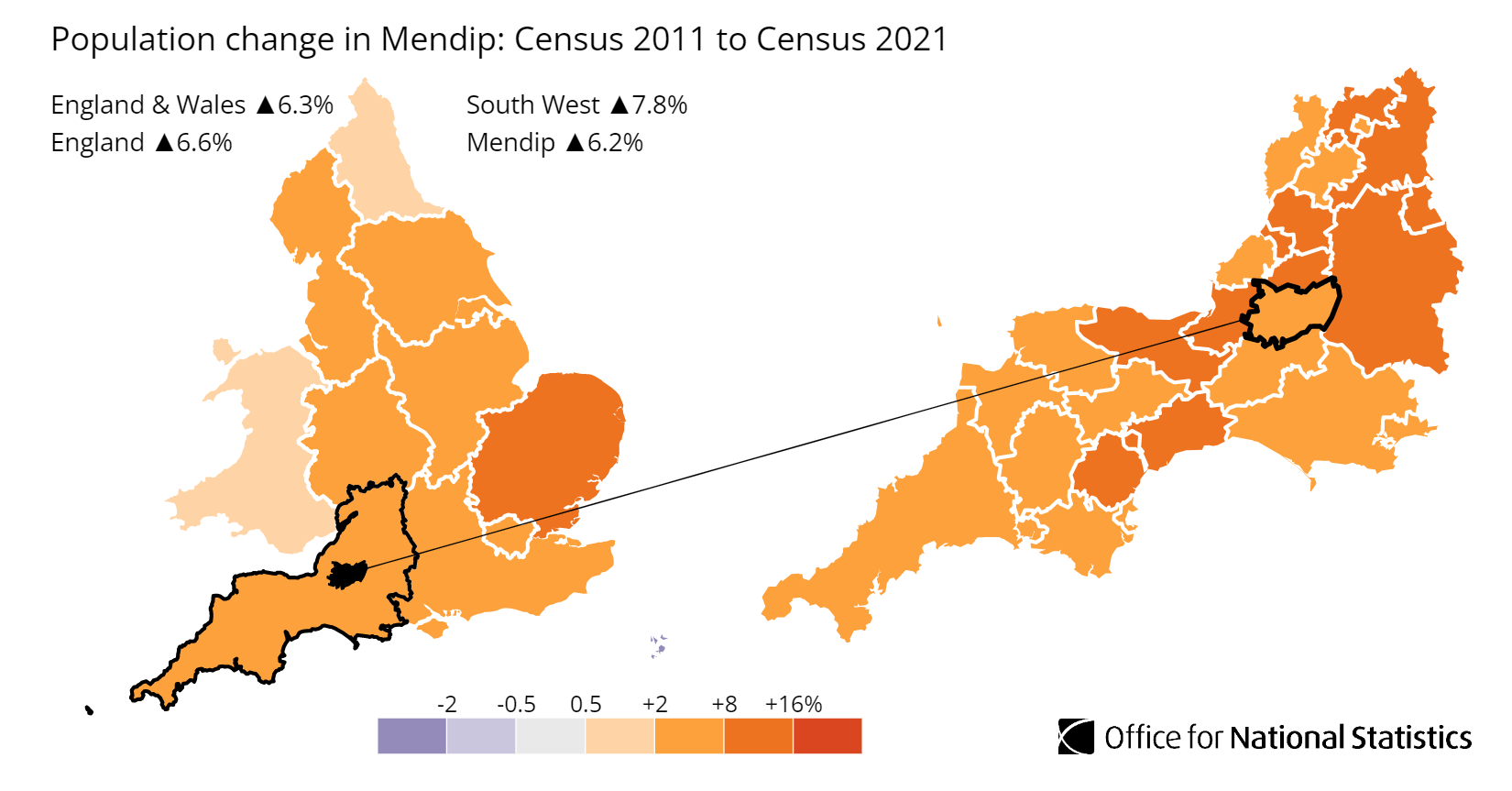
The former Mendip district that includes Wells grew its population 6.2% between the 2011 and 2021 censuses, from 109,279 to 116,089 residents. That growth rate sits just below the England and Wales average of 6.3% for the same period. Wells itself is home to around 12,000 people, which makes it the smallest city in England by a clear margin. City status here comes from the medieval cathedral, not from population, and day to day the place operates more like a market town than a city.
The scarcity is the point for an investor. Wells is hemmed in by conservation-area designations, the Mendip Hills to the north, and very little developable land inside the city boundary. When supply cannot easily grow, existing stock holds its value, and the numbers later in this guide bear that out: both postcodes posted positive five-year growth, and BA5 held its ground through the 2023 correction where many markets slipped.
Demand comes from three directions. Tourism around the cathedral, the Bishop's Palace and Vicar's Close supports a year-round hospitality and retail economy. Retirees and lifestyle relocators are drawn to the Somerset countryside between the Mendips and the Levels. And professional commuters use the A39 and A371 to reach Bath, Bristol and Taunton, none more than an hour away.
Median gross annual earnings across Somerset are £36,279, which is below both the South West median of £37,544 and the Great Britain median of £39,125. Set that against asking prices above £350,000 in both postcodes and the shape of the market becomes clear. Local wages alone do not support these prices; the buyers are equity-rich relocators, downsizers and second-home owners rather than first-time local purchasers. The price-to-earnings figures later in the guide put numbers on that gap.
The wider Somerset economy is being reshaped by two major projects north-west of Wells. Hinkley Point C, one of Europe's largest construction sites, sits about 30 miles away on the coast. The Agratas gigafactory at the former Royal Ordnance site near Bridgwater is under construction around 20 miles away. Both draw workers who spread across the county, and a share of that demand reaches smaller towns like Wells that suit people who want rural living within commuting range.
Wells Economic Summary
- Population (former Mendip district): 116,089 (2021 Census). Growth of 6.2% from 2011.
- Median annual salary: £36,279 (Somerset), £37,544 (South West), £39,125 (Great Britain)
- Employment rate: 79.2% (Somerset), 79.3% (South West), 75.6% (Great Britain)
- Unemployment rate: 3.2% (Somerset), 3.3% (South West), 4.3% (Great Britain)
- Key employment sectors: Tourism and heritage, agriculture and food production, energy and construction, healthcare, public services
Source: ONS Census 2021, Nomis Labour Market Profile (ASHE 2025, Employment Oct 2024-Sep 2025)
Somerset's employment rate of 79.2% is level with the South West average of 79.3% and well above the Great Britain figure of 75.6%. Unemployment at 3.2% sits below both the regional 3.3% and the national 4.3%. For a landlord, those figures point to a working tenant base with steady incomes, which matters more in a market where rents already run high against local pay.
Regeneration and Investment in Wells
Two projects worth a combined £39 billion are under construction within 30 miles of Wells. The city itself sees little large-scale building given its size and conservation constraints, so the investment story is county-wide, driven by energy and manufacturing that create employment across Somerset. Closer to home, one approved housing scheme adds meaningfully to a town where new stock is rare.
- Hinkley Point C (Under construction, £35 billion): Two new nuclear reactors on the Somerset coast, one of Europe's largest construction projects. It has created over 25,000 construction jobs and will support around 900 permanent roles once operational, with workers housed across the county including towns such as Wells, Bridgwater and Taunton. Updates at EDF Energy.
- Agratas Gigafactory at Gravity Smart Campus (Under construction, £4 billion): A Tata Group battery gigafactory at the former Royal Ordnance Factory site near Bridgwater, set to create around 4,000 direct jobs when fully operational and more across the supply chain. The scale of recruitment adds housing demand to a county with limited stock. Updates at Gravity.
- The Elms, Wells (Approved, October 2025): A 100-home development on the eastern edge of Wells, approved by Somerset Council, with a mix of market and affordable housing on greenfield land. For a city of 12,000 people, 100 homes is a notable addition to a constrained stock. Updates at Wells Nub News.
During the 2021 Census, Wells sat within the Mendip district council area. Since 1 April 2023 it has been part of the unitary Somerset Council, so census population data is recorded for the former Mendip district while recent sold prices are published for Somerset.
Source: Office for National Statistics - Population for the former Mendip district
Wells Property Market Analysis
Average property prices across Somerset have risen 439.3% since January 1995, from £51,663 to £278,634. The sections below trace that journey cycle by cycle, then drill into the postcode-level data for sold prices, price per square foot, asking prices, growth trends and monthly transaction volumes across Wells and Shepton Mallet.
When was the last house price crash in Wells?
Wells sits within Somerset, so all sold prices from HM Land Registry are recorded at the county level. The Land Registry House Price Index tracks average prices from January 1995 to March 2026, covering 31 years of market cycles across the county.
The 1995 to 2007 boom: Somerset started at £51,663 in January 1995. By January 2000 the average had reached £74,352, and from there prices more than doubled to a peak of £195,718 in September 2007. The rural South West rode the same cheap credit as the rest of the country, with the added pull of lifestyle demand and equity-rich buyers moving out from London and the South East.
2007 to 2009, the financial crisis: Prices fell from the September 2007 peak of £195,718 to a trough of £161,559 in May 2009, a decline of 17.5% over 20 months. The worst annual reading was -15.3% in May 2009. Somerset's fall was fractionally shallower than the South West region and England overall, both of which lost around 18% in the same downturn. A county with a large owner-occupier base and less stretched borrowing gave back rather less of its value than more debt-exposed markets did.
The 2010 to 2013 stagnation: Somerset bounced off the trough quickly, recovering to £172,494 by December 2009, then stalled. Prices traded sideways in a narrow band for four years, reaching only £178,111 by December 2013, still 9.0% below the pre-crash peak. The county spent the early 2010s unable to push past its 2007 high.
Recovery, 2014 to 2016: Growth returned at annual rates of 3% to 6%. Prices passed the September 2007 peak for the first time in September 2015 at £196,132, a recovery that took eight years. Somerset moved at a similar pace to the wider South West, lagging London and the South East where prices had already regained pre-crash levels.
The 2017 to 2019 pre-pandemic growth: Steady appreciation of 2% to 5% a year. Prices rose from £208,720 in January 2017 to £227,897 by December 2019. The same rural lifestyle appeal that drove the pre-crash boom carried the market, but at a more sustainable pace.
2020 to 2022, the pandemic surge: The stamp duty holiday and the shift to remote working accelerated the market sharply. Prices jumped from around £229,000 in early 2020 to an all-time high of £289,366 in November 2022. Somerset's mix of rural character, relative affordability and proximity to Bristol made it a prime beneficiary of the relocation trend.
The 2023 rate shock and after: Higher mortgage rates cooled things. From the November 2022 high of £289,366, prices eased to £278,634 by March 2026, a fall of 3.7% off the peak. Annual growth has since turned positive again, running at 0.7% at the latest reading, so the county has settled rather than slid.
Long-term growth summary:
- 5 years (March 2021 to March 2026): 13.9% growth (£244,614 to £278,634)
- 10 years (March 2016 to March 2026): 39.6% growth (£199,533 to £278,634)
- 15 years (March 2011 to March 2026): 62.3% growth (£171,662 to £278,634)
- 20 years (March 2006 to March 2026): 67.6% growth (£166,283 to £278,634)
- 30 years (January 1995 to March 2026): 439.3% growth (£51,663 to £278,634)
Somerset's 17.5% crash took eight years to recover in full, a long wait, but the recovery came and the county held up marginally better than the region and England through the downturn. The current average sits 42.4% above the 2007 peak. An investor who bought Somerset property at the exact September 2007 top would be sitting on that gain on the Land Registry average today.
- All property types
- Detached
- Semi-detached
- Terraced
- Flats
Source: HM Land Registry House Price Index
| Year | All property types | Detached | Semi-detached | Terraced | Flats |
|---|---|---|---|---|---|
| 1995-01 | £51,663 | £86,127 | £50,549 | £40,873 | £31,467 |
| 1995-02 | £52,103 | £86,031 | £51,254 | £41,377 | £31,753 |
| 1995-03 | £52,226 | £85,879 | £51,432 | £41,594 | £31,823 |
| 1995-04 | £52,929 | £86,536 | £52,250 | £42,252 | £32,328 |
| 1995-05 | £53,155 | £87,006 | £52,458 | £42,399 | £32,466 |
| 1995-06 | £53,268 | £87,333 | £52,573 | £42,380 | £32,642 |
| 1995-07 | £52,740 | £86,887 | £52,003 | £41,891 | £32,097 |
| 1995-08 | £52,253 | £86,536 | £51,462 | £41,436 | £31,568 |
| 1995-09 | £52,235 | £86,797 | £51,407 | £41,401 | £31,333 |
| 1995-10 | £52,344 | £87,148 | £51,595 | £41,323 | £31,470 |
| 1995-11 | £52,152 | £86,746 | £51,456 | £41,094 | £31,556 |
| 1995-12 | £51,494 | £85,475 | £50,888 | £40,563 | £31,234 |
| 1996-01 | £50,856 | £84,327 | £50,263 | £40,129 | £30,759 |
| 1996-02 | £51,171 | £84,613 | £50,639 | £40,489 | £30,883 |
| 1996-03 | £51,145 | £84,868 | £50,639 | £40,398 | £30,644 |
| 1996-04 | £52,067 | £86,279 | £51,511 | £41,219 | £31,212 |
| 1996-05 | £51,971 | £86,280 | £51,310 | £41,167 | £31,065 |
| 1996-06 | £52,457 | £87,045 | £51,717 | £41,579 | £31,519 |
| 1996-07 | £52,661 | £87,614 | £52,007 | £41,619 | £31,426 |
| 1996-08 | £53,247 | £89,081 | £52,512 | £41,974 | £31,495 |
| 1996-09 | £53,602 | £89,975 | £52,806 | £42,213 | £31,479 |
| 1996-10 | £53,344 | £89,801 | £52,481 | £41,950 | £31,266 |
| 1996-11 | £53,463 | £89,817 | £52,682 | £42,027 | £31,480 |
| 1996-12 | £53,618 | £89,931 | £52,917 | £42,175 | £31,523 |
| 1997-01 | £54,051 | £90,504 | £53,321 | £42,644 | £31,687 |
| 1997-02 | £54,352 | £91,161 | £53,585 | £42,839 | £31,853 |
| 1997-03 | £55,333 | £92,805 | £54,439 | £43,672 | £32,481 |
| 1997-04 | £55,958 | £93,719 | £55,127 | £44,166 | £32,878 |
| 1997-05 | £56,460 | £94,346 | £55,729 | £44,651 | £32,973 |
| 1997-06 | £56,741 | £95,188 | £56,045 | £44,756 | £32,862 |
| 1997-07 | £57,223 | £96,331 | £56,465 | £45,104 | £32,878 |
| 1997-08 | £58,210 | £98,516 | £57,360 | £45,751 | £33,271 |
| 1997-09 | £58,656 | £99,346 | £57,841 | £46,074 | £33,408 |
| 1997-10 | £59,189 | £100,373 | £58,413 | £46,397 | £33,731 |
| 1997-11 | £59,194 | £100,326 | £58,449 | £46,399 | £33,750 |
| 1997-12 | £59,492 | £100,829 | £58,834 | £46,568 | £33,926 |
| 1998-01 | £60,031 | £101,912 | £59,270 | £47,004 | £34,160 |
| 1998-02 | £60,419 | £102,391 | £59,671 | £47,307 | £34,601 |
| 1998-03 | £60,910 | £103,063 | £60,108 | £47,793 | £34,908 |
| 1998-04 | £60,706 | £102,622 | £59,945 | £47,643 | £34,815 |
| 1998-05 | £61,380 | £103,777 | £60,549 | £48,286 | £34,972 |
| 1998-06 | £61,807 | £104,747 | £60,862 | £48,559 | £35,274 |
| 1998-07 | £62,993 | £106,852 | £62,037 | £49,477 | £35,846 |
| 1998-08 | £63,876 | £108,717 | £62,851 | £50,096 | £36,172 |
| 1998-09 | £64,182 | £109,460 | £63,123 | £50,306 | £36,177 |
| 1998-10 | £63,885 | £108,870 | £62,858 | £50,033 | £36,197 |
| 1998-11 | £63,574 | £108,563 | £62,592 | £49,602 | £36,184 |
| 1998-12 | £63,639 | £108,511 | £62,747 | £49,608 | £36,393 |
| 1999-01 | £63,752 | £108,810 | £62,850 | £49,657 | £36,441 |
| 1999-02 | £64,276 | £109,448 | £63,426 | £50,122 | £36,815 |
| 1999-03 | £64,399 | £109,563 | £63,549 | £50,239 | £36,958 |
| 1999-04 | £65,096 | £110,389 | £64,221 | £50,944 | £37,395 |
| 1999-05 | £65,400 | £110,688 | £64,487 | £51,328 | £37,476 |
| 1999-06 | £66,773 | £113,008 | £65,744 | £52,513 | £38,116 |
| 1999-07 | £68,191 | £115,996 | £66,965 | £53,533 | £38,710 |
| 1999-08 | £69,395 | £118,416 | £68,004 | £54,416 | £39,335 |
| 1999-09 | £70,969 | £121,722 | £69,422 | £55,449 | £40,225 |
| 1999-10 | £72,220 | £123,953 | £70,766 | £56,243 | £41,165 |
| 1999-11 | £72,966 | £125,068 | £71,576 | £56,807 | £41,734 |
| 1999-12 | £73,662 | £125,759 | £72,349 | £57,422 | £42,458 |
| 2000-01 | £74,352 | £127,123 | £72,993 | £57,960 | £42,648 |
| 2000-02 | £75,128 | £128,600 | £73,653 | £58,572 | £43,001 |
| 2000-03 | £75,887 | £130,101 | £74,491 | £59,119 | £43,050 |
| 2000-04 | £77,040 | £131,505 | £75,562 | £60,227 | £43,906 |
| 2000-05 | £79,390 | £135,442 | £77,979 | £61,988 | £45,348 |
| 2000-06 | £80,661 | £137,539 | £79,250 | £62,936 | £46,238 |
| 2000-07 | £81,979 | £140,738 | £80,621 | £63,595 | £46,756 |
| 2000-08 | £82,410 | £142,096 | £81,064 | £63,649 | £47,009 |
| 2000-09 | £83,651 | £145,130 | £82,087 | £64,341 | £47,726 |
| 2000-10 | £84,606 | £146,555 | £83,139 | £65,002 | £48,542 |
| 2000-11 | £84,752 | £147,028 | £83,198 | £65,033 | £48,730 |
| 2000-12 | £83,998 | £145,069 | £82,516 | £64,614 | £48,521 |
| 2001-01 | £83,020 | £143,281 | £81,408 | £63,961 | £48,044 |
| 2001-02 | £82,778 | £142,297 | £81,253 | £63,944 | £47,951 |
| 2001-03 | £84,183 | £144,746 | £82,736 | £64,979 | £48,680 |
| 2001-04 | £85,811 | £147,600 | £84,247 | £66,290 | £49,574 |
| 2001-05 | £88,020 | £151,260 | £86,369 | £68,062 | £50,914 |
| 2001-06 | £89,225 | £153,003 | £87,500 | £69,070 | £51,882 |
| 2001-07 | £90,850 | £155,796 | £89,183 | £70,281 | £52,785 |
| 2001-08 | £91,913 | £157,950 | £90,088 | £71,061 | £53,385 |
| 2001-09 | £92,881 | £160,457 | £90,843 | £71,650 | £53,754 |
| 2001-10 | £94,525 | £163,266 | £92,486 | £72,821 | £54,942 |
| 2001-11 | £96,148 | £165,958 | £94,292 | £73,878 | £56,156 |
| 2001-12 | £97,254 | £167,140 | £95,574 | £74,717 | £57,326 |
| 2002-01 | £96,799 | £166,361 | £95,134 | £74,311 | £57,201 |
| 2002-02 | £97,509 | £167,277 | £95,635 | £75,112 | £57,626 |
| 2002-03 | £99,273 | £169,804 | £97,439 | £76,696 | £58,498 |
| 2002-04 | £102,088 | £173,950 | £100,120 | £79,076 | £60,523 |
| 2002-05 | £104,442 | £177,406 | £102,655 | £80,955 | £62,009 |
| 2002-06 | £107,570 | £182,558 | £105,527 | £83,490 | £64,127 |
| 2002-07 | £110,869 | £188,476 | £108,768 | £86,056 | £65,697 |
| 2002-08 | £115,119 | £196,023 | £112,778 | £89,308 | £68,250 |
| 2002-09 | £117,778 | £201,215 | £115,551 | £91,086 | £69,509 |
| 2002-10 | £120,488 | £205,521 | £118,423 | £93,059 | £71,447 |
| 2002-11 | £122,208 | £208,703 | £120,069 | £94,221 | £72,720 |
| 2002-12 | £124,415 | £211,505 | £122,374 | £95,995 | £74,751 |
| 2003-01 | £125,985 | £214,002 | £123,613 | £97,439 | £75,812 |
| 2003-02 | £126,817 | £214,302 | £124,782 | £98,287 | £76,430 |
| 2003-03 | £128,873 | £217,568 | £126,792 | £100,028 | £77,527 |
| 2003-04 | £129,431 | £217,346 | £127,721 | £100,591 | £78,215 |
| 2003-05 | £131,935 | £221,024 | £130,310 | £102,745 | £79,575 |
| 2003-06 | £133,105 | £222,801 | £131,381 | £103,720 | £80,483 |
| 2003-07 | £135,857 | £227,305 | £134,267 | £105,870 | £81,940 |
| 2003-08 | £137,023 | £229,255 | £135,247 | £106,798 | £82,910 |
| 2003-09 | £138,601 | £231,615 | £136,907 | £108,208 | £83,511 |
| 2003-10 | £140,113 | £233,715 | £138,153 | £109,658 | £84,656 |
| 2003-11 | £141,367 | £235,423 | £139,527 | £110,715 | £85,426 |
| 2003-12 | £142,530 | £235,825 | £140,775 | £112,043 | £86,698 |
| 2004-01 | £144,656 | £239,008 | £142,962 | £113,804 | £87,996 |
| 2004-02 | £145,576 | £239,210 | £143,768 | £114,961 | £89,048 |
| 2004-03 | £148,829 | £244,286 | £146,712 | £117,650 | £91,314 |
| 2004-04 | £150,051 | £244,269 | £148,062 | £119,262 | £92,408 |
| 2004-05 | £154,199 | £249,584 | £152,210 | £123,090 | £95,136 |
| 2004-06 | £155,326 | £250,092 | £153,581 | £124,451 | £95,747 |
| 2004-07 | £159,574 | £257,058 | £157,936 | £127,743 | £98,259 |
| 2004-08 | £160,970 | £259,647 | £159,379 | £128,795 | £98,832 |
| 2004-09 | £163,816 | £265,120 | £162,110 | £130,756 | £100,524 |
| 2004-10 | £164,981 | £266,823 | £163,016 | £131,760 | £101,616 |
| 2004-11 | £165,940 | £267,826 | £163,719 | £132,602 | £102,943 |
| 2004-12 | £164,729 | £264,037 | £162,368 | £132,267 | £102,872 |
| 2005-01 | £163,228 | £260,891 | £160,493 | £131,339 | £102,654 |
| 2005-02 | £162,911 | £259,642 | £160,289 | £131,267 | £102,585 |
| 2005-03 | £164,466 | £261,980 | £161,878 | £132,570 | £103,438 |
| 2005-04 | £164,653 | £260,863 | £162,386 | £133,175 | £103,339 |
| 2005-05 | £164,754 | £261,036 | £162,247 | £133,324 | £103,587 |
| 2005-06 | £165,267 | £260,840 | £162,719 | £134,077 | £104,105 |
| 2005-07 | £166,730 | £263,614 | £164,153 | £135,212 | £104,746 |
| 2005-08 | £168,358 | £266,383 | £165,551 | £136,788 | £105,350 |
| 2005-09 | £167,993 | £266,451 | £164,966 | £136,413 | £105,046 |
| 2005-10 | £167,850 | £265,974 | £164,518 | £136,461 | £105,262 |
| 2005-11 | £166,468 | £263,002 | £163,316 | £135,344 | £104,838 |
| 2005-12 | £166,641 | £262,394 | £163,327 | £135,749 | £105,374 |
| 2006-01 | £165,805 | £261,109 | £162,481 | £135,133 | £104,719 |
| 2006-02 | £166,201 | £261,278 | £162,723 | £135,619 | £105,155 |
| 2006-03 | £166,283 | £261,764 | £162,925 | £135,594 | £104,877 |
| 2006-04 | £167,931 | £263,857 | £164,676 | £137,022 | £105,990 |
| 2006-05 | £170,499 | £267,903 | £167,265 | £139,192 | £107,373 |
| 2006-06 | £172,993 | £271,305 | £169,839 | £141,389 | £108,896 |
| 2006-07 | £175,709 | £275,548 | £172,329 | £143,930 | £110,245 |
| 2006-08 | £178,898 | £281,196 | £175,488 | £146,591 | £111,613 |
| 2006-09 | £180,349 | £284,508 | £176,946 | £147,674 | £111,869 |
| 2006-10 | £181,788 | £286,937 | £178,270 | £148,633 | £113,146 |
| 2006-11 | £181,666 | £286,488 | £178,248 | £148,581 | £113,063 |
| 2006-12 | £182,667 | £286,826 | £179,010 | £149,710 | £114,351 |
| 2007-01 | £183,254 | £287,730 | £179,638 | £150,286 | £114,494 |
| 2007-02 | £183,268 | £287,113 | £179,474 | £150,358 | £115,068 |
| 2007-03 | £185,878 | £291,172 | £182,132 | £152,644 | £116,385 |
| 2007-04 | £187,176 | £292,759 | £183,346 | £154,105 | £116,960 |
| 2007-05 | £190,332 | £297,088 | £186,282 | £156,937 | £119,183 |
| 2007-06 | £190,595 | £297,571 | £186,324 | £157,197 | £119,447 |
| 2007-07 | £193,039 | £302,085 | £188,615 | £158,954 | £120,975 |
| 2007-08 | £194,517 | £305,935 | £190,105 | £160,230 | £120,606 |
| 2007-09 | £195,718 | £309,020 | £191,261 | £160,912 | £120,969 |
| 2007-10 | £194,887 | £307,472 | £190,257 | £160,296 | £120,725 |
| 2007-11 | £195,312 | £308,256 | £190,465 | £160,310 | £121,654 |
| 2007-12 | £194,334 | £306,438 | £189,325 | £159,444 | £121,547 |
| 2008-01 | £195,507 | £308,865 | £190,364 | £160,087 | £122,472 |
| 2008-02 | £191,264 | £301,771 | £186,304 | £156,621 | £120,023 |
| 2008-03 | £190,988 | £300,827 | £186,432 | £156,713 | £119,277 |
| 2008-04 | £189,042 | £297,271 | £184,677 | £155,424 | £117,772 |
| 2008-05 | £190,796 | £299,392 | £186,671 | £157,248 | £118,412 |
| 2008-06 | £189,450 | £297,646 | £185,206 | £155,925 | £117,812 |
| 2008-07 | £186,014 | £292,623 | £182,194 | £152,924 | £115,261 |
| 2008-08 | £183,408 | £289,780 | £179,363 | £150,281 | £113,778 |
| 2008-09 | £179,559 | £285,148 | £175,440 | £146,828 | £110,884 |
| 2008-10 | £177,123 | £281,403 | £172,882 | £144,708 | £109,701 |
| 2008-11 | £173,568 | £275,326 | £169,585 | £141,818 | £107,640 |
| 2008-12 | £168,566 | £265,987 | £164,813 | £138,245 | £104,684 |
| 2009-01 | £165,852 | £262,346 | £161,949 | £135,805 | £103,078 |
| 2009-02 | £163,367 | £258,864 | £159,385 | £133,650 | £101,563 |
| 2009-03 | £164,247 | £261,045 | £160,137 | £133,920 | £102,358 |
| 2009-04 | £161,644 | £255,652 | £157,927 | £132,328 | £100,532 |
| 2009-05 | £161,559 | £255,296 | £158,115 | £132,612 | £99,548 |
| 2009-06 | £162,336 | £256,194 | £159,072 | £133,654 | £99,235 |
| 2009-07 | £165,653 | £262,550 | £162,379 | £136,277 | £100,100 |
| 2009-08 | £168,195 | £266,950 | £165,002 | £138,444 | £100,853 |
| 2009-09 | £170,457 | £271,114 | £167,280 | £140,210 | £101,665 |
| 2009-10 | £172,349 | £274,171 | £169,227 | £141,808 | £102,515 |
| 2009-11 | £172,215 | £274,534 | £168,572 | £141,747 | £102,497 |
| 2009-12 | £172,494 | £273,948 | £169,003 | £142,364 | £102,789 |
| 2010-01 | £173,447 | £276,236 | £169,975 | £143,211 | £102,325 |
| 2010-02 | £174,223 | £277,822 | £171,493 | £143,579 | £101,814 |
| 2010-03 | £174,146 | £278,950 | £171,318 | £143,177 | £101,215 |
| 2010-04 | £173,744 | £277,947 | £171,079 | £142,778 | £101,303 |
| 2010-05 | £174,303 | £278,726 | £171,335 | £143,406 | £101,832 |
| 2010-06 | £175,911 | £281,008 | £173,117 | £144,938 | £102,391 |
| 2010-07 | £176,246 | £282,544 | £173,329 | £145,120 | £101,827 |
| 2010-08 | £177,560 | £285,316 | £175,093 | £145,941 | £101,712 |
| 2010-09 | £177,473 | £286,453 | £174,952 | £145,513 | £101,021 |
| 2010-10 | £177,764 | £286,834 | £175,358 | £145,583 | £101,455 |
| 2010-11 | £176,918 | £285,777 | £174,112 | £144,773 | £101,437 |
| 2010-12 | £176,593 | £284,777 | £173,863 | £144,589 | £101,518 |
| 2011-01 | £175,337 | £283,237 | £172,400 | £143,524 | £100,646 |
| 2011-02 | £173,396 | £279,980 | £170,294 | £142,032 | £99,778 |
| 2011-03 | £171,662 | £278,093 | £168,166 | £140,454 | £98,716 |
| 2011-04 | £172,226 | £278,594 | £168,690 | £140,990 | £99,369 |
| 2011-05 | £173,290 | £279,881 | £169,933 | £141,892 | £100,085 |
| 2011-06 | £173,488 | £279,445 | £170,648 | £141,973 | £100,379 |
| 2011-07 | £174,533 | £280,648 | £171,708 | £142,936 | £101,232 |
| 2011-08 | £175,701 | £283,155 | £173,129 | £143,901 | £100,792 |
| 2011-09 | £175,176 | £283,295 | £172,479 | £143,373 | £99,834 |
| 2011-10 | £173,646 | £281,901 | £171,241 | £141,752 | £98,148 |
| 2011-11 | £173,350 | £281,478 | £170,837 | £141,232 | £98,673 |
| 2011-12 | £172,820 | £280,192 | £170,441 | £140,723 | £98,793 |
| 2012-01 | £171,190 | £277,554 | £168,906 | £139,366 | £97,803 |
| 2012-02 | £168,210 | £272,555 | £165,934 | £137,281 | £95,636 |
| 2012-03 | £168,625 | £272,162 | £166,502 | £138,125 | £95,860 |
| 2012-04 | £170,007 | £274,096 | £167,789 | £139,368 | £96,888 |
| 2012-05 | £170,849 | £275,034 | £168,828 | £140,054 | £97,561 |
| 2012-06 | £171,534 | £276,806 | £169,263 | £140,612 | £97,514 |
| 2012-07 | £172,115 | £277,761 | £169,681 | £141,250 | £97,702 |
| 2012-08 | £173,366 | £279,895 | £170,878 | £142,581 | £97,628 |
| 2012-09 | £174,871 | £282,586 | £172,386 | £143,728 | £98,322 |
| 2012-10 | £175,714 | £283,880 | £173,387 | £144,409 | £98,629 |
| 2012-11 | £175,042 | £282,851 | £172,661 | £143,745 | £98,536 |
| 2012-12 | £172,495 | £278,900 | £170,180 | £141,695 | £96,755 |
| 2013-01 | £171,417 | £277,015 | £169,436 | £140,773 | £95,896 |
| 2013-02 | £171,776 | £277,577 | £169,776 | £141,063 | £96,129 |
| 2013-03 | £173,108 | £279,540 | £171,151 | £142,083 | £97,155 |
| 2013-04 | £173,688 | £280,553 | £171,409 | £142,692 | £97,572 |
| 2013-05 | £173,795 | £280,341 | £171,570 | £142,849 | £97,847 |
| 2013-06 | £174,045 | £280,470 | £171,934 | £143,234 | £97,723 |
| 2013-07 | £174,835 | £281,339 | £172,764 | £144,094 | £98,094 |
| 2013-08 | £176,418 | £284,504 | £174,400 | £145,277 | £98,406 |
| 2013-09 | £177,478 | £286,800 | £175,255 | £146,020 | £98,899 |
| 2013-10 | £177,634 | £287,989 | £175,497 | £145,808 | £98,521 |
| 2013-11 | £177,484 | £287,673 | £175,480 | £145,601 | £98,515 |
| 2013-12 | £178,111 | £288,049 | £176,416 | £146,065 | £99,249 |
| 2014-01 | £177,822 | £287,307 | £175,996 | £145,843 | £99,578 |
| 2014-02 | £178,062 | £288,161 | £176,115 | £145,946 | £99,636 |
| 2014-03 | £178,426 | £288,969 | £176,554 | £146,244 | £99,497 |
| 2014-04 | £181,067 | £293,010 | £179,291 | £148,596 | £100,691 |
| 2014-05 | £182,317 | £294,393 | £180,546 | £149,908 | £101,437 |
| 2014-06 | £183,909 | £296,970 | £182,158 | £151,239 | £102,234 |
| 2014-07 | £184,961 | £298,627 | £183,367 | £152,194 | £102,490 |
| 2014-08 | £187,302 | £302,930 | £185,683 | £154,020 | £103,487 |
| 2014-09 | £188,515 | £305,000 | £186,715 | £155,108 | £104,101 |
| 2014-10 | £187,764 | £303,918 | £185,796 | £154,292 | £104,139 |
| 2014-11 | £186,172 | £301,352 | £184,363 | £152,847 | £103,321 |
| 2014-12 | £185,134 | £299,974 | £183,397 | £151,704 | £102,921 |
| 2015-01 | £186,565 | £302,438 | £184,923 | £152,773 | £103,637 |
| 2015-02 | £187,113 | £303,451 | £185,377 | £153,122 | £104,107 |
| 2015-03 | £187,478 | £304,475 | £185,814 | £153,168 | £104,277 |
| 2015-04 | £187,009 | £303,983 | £185,329 | £152,764 | £103,802 |
| 2015-05 | £188,678 | £306,525 | £187,152 | £154,105 | £104,718 |
| 2015-06 | £190,669 | £309,199 | £189,339 | £156,068 | £105,429 |
| 2015-07 | £192,408 | £311,942 | £191,301 | £157,476 | £106,177 |
| 2015-08 | £194,914 | £316,361 | £193,772 | £159,563 | £107,145 |
| 2015-09 | £196,132 | £319,422 | £194,649 | £160,213 | £107,855 |
| 2015-10 | £196,081 | £319,344 | £194,576 | £160,201 | £107,794 |
| 2015-11 | £195,743 | £319,048 | £194,373 | £159,712 | £107,589 |
| 2015-12 | £196,209 | £319,863 | £195,027 | £160,019 | £107,668 |
| 2016-01 | £197,938 | £322,981 | £197,072 | £161,170 | £108,379 |
| 2016-02 | £198,922 | £324,606 | £197,677 | £161,999 | £109,362 |
| 2016-03 | £199,533 | £325,646 | £197,902 | £162,491 | £110,201 |
| 2016-04 | £200,765 | £327,282 | £198,670 | £163,865 | £111,152 |
| 2016-05 | £200,365 | £325,371 | £198,519 | £163,966 | £111,038 |
| 2016-06 | £202,312 | £328,106 | £200,688 | £165,832 | £111,667 |
| 2016-07 | £202,922 | £329,039 | £201,471 | £166,293 | £111,896 |
| 2016-08 | £205,744 | £334,183 | £204,218 | £168,445 | £113,256 |
| 2016-09 | £206,311 | £335,163 | £205,014 | £168,676 | £113,653 |
| 2016-10 | £207,075 | £337,133 | £205,796 | £168,691 | £114,518 |
| 2016-11 | £207,271 | £338,767 | £206,131 | £168,089 | £114,614 |
| 2016-12 | £207,151 | £338,934 | £205,784 | £167,859 | £114,762 |
| 2017-01 | £208,720 | £341,817 | £207,282 | £169,198 | £115,251 |
| 2017-02 | £208,174 | £340,269 | £206,282 | £168,998 | £115,712 |
| 2017-03 | £209,697 | £343,219 | £207,794 | £169,937 | £116,681 |
| 2017-04 | £210,363 | £344,158 | £208,266 | £170,416 | £117,566 |
| 2017-05 | £212,396 | £346,747 | £210,762 | £172,085 | £118,738 |
| 2017-06 | £213,845 | £348,183 | £212,100 | £173,667 | £119,757 |
| 2017-07 | £215,059 | £349,545 | £213,649 | £174,690 | £120,504 |
| 2017-08 | £217,058 | £353,333 | £215,221 | £176,533 | £121,202 |
| 2017-09 | £218,088 | £355,714 | £216,267 | £177,156 | £121,492 |
| 2017-10 | £219,439 | £358,517 | £217,704 | £178,219 | £121,604 |
| 2017-11 | £220,611 | £360,593 | £219,285 | £178,898 | £122,092 |
| 2017-12 | £220,672 | £360,353 | £219,726 | £178,962 | £121,924 |
| 2018-01 | £220,205 | £359,540 | £219,422 | £178,500 | £121,670 |
| 2018-02 | £220,745 | £360,956 | £219,996 | £178,923 | £121,441 |
| 2018-03 | £220,423 | £360,554 | £219,736 | £178,819 | £120,774 |
| 2018-04 | £221,742 | £362,601 | £220,982 | £180,252 | £120,983 |
| 2018-05 | £220,827 | £361,121 | £220,207 | £179,714 | £119,876 |
| 2018-06 | £222,448 | £363,564 | £222,146 | £180,886 | £120,822 |
| 2018-07 | £223,448 | £365,897 | £223,058 | £181,492 | £121,183 |
| 2018-08 | £226,113 | £369,745 | £225,910 | £183,809 | £122,594 |
| 2018-09 | £227,179 | £372,219 | £226,911 | £184,605 | £122,661 |
| 2018-10 | £227,206 | £372,041 | £227,226 | £184,506 | £122,744 |
| 2018-11 | £226,787 | £372,173 | £226,734 | £183,907 | £122,302 |
| 2018-12 | £226,883 | £372,075 | £226,856 | £183,875 | £122,794 |
| 2019-01 | £225,510 | £370,279 | £225,468 | £182,584 | £121,965 |
| 2019-02 | £225,228 | £369,974 | £225,316 | £182,145 | £121,907 |
| 2019-03 | £222,830 | £366,258 | £223,099 | £180,277 | £120,024 |
| 2019-04 | £223,363 | £366,463 | £223,669 | £181,187 | £120,063 |
| 2019-05 | £222,360 | £364,009 | £222,743 | £180,882 | £119,305 |
| 2019-06 | £225,071 | £368,067 | £225,239 | £183,373 | £120,908 |
| 2019-07 | £226,649 | £370,299 | £226,760 | £184,802 | £121,926 |
| 2019-08 | £229,082 | £375,149 | £228,949 | £186,716 | £122,811 |
| 2019-09 | £229,790 | £376,284 | £229,433 | £187,448 | £123,230 |
| 2019-10 | £229,575 | £375,968 | £229,612 | £187,082 | £122,907 |
| 2019-11 | £228,812 | £374,515 | £229,282 | £186,159 | £122,678 |
| 2019-12 | £227,897 | £372,831 | £228,696 | £185,333 | £122,081 |
| 2020-01 | £228,956 | £374,752 | £229,889 | £186,282 | £122,135 |
| 2020-02 | £228,686 | £374,262 | £229,615 | £186,282 | £121,669 |
| 2020-03 | £229,019 | £375,234 | £230,179 | £186,458 | £121,308 |
| 2020-04 | £227,288 | £372,868 | £228,223 | £185,264 | £119,827 |
| 2020-05 | £226,893 | £371,831 | £228,162 | £184,855 | £119,710 |
| 2020-06 | £227,130 | £371,515 | £228,706 | £185,315 | £119,625 |
| 2020-07 | £229,548 | £375,211 | £231,162 | £187,191 | £121,299 |
| 2020-08 | £231,307 | £378,826 | £233,040 | £188,842 | £120,971 |
| 2020-09 | £235,492 | £387,061 | £237,026 | £192,114 | £122,379 |
| 2020-10 | £237,833 | £391,990 | £239,236 | £194,026 | £122,742 |
| 2020-11 | £240,011 | £395,748 | £240,927 | £195,925 | £124,140 |
| 2020-12 | £242,709 | £400,115 | £243,423 | £198,408 | £125,393 |
| 2021-01 | £244,069 | £400,014 | £244,962 | £199,930 | £127,412 |
| 2021-02 | £245,332 | £399,808 | £246,294 | £201,399 | £129,469 |
| 2021-03 | £244,614 | £396,049 | £245,574 | £201,309 | £130,820 |
| 2021-04 | £244,075 | £395,021 | £244,863 | £201,028 | £130,646 |
| 2021-05 | £244,307 | £395,538 | £245,039 | £201,277 | £130,578 |
| 2021-06 | £246,588 | £398,518 | £246,936 | £203,860 | £131,836 |
| 2021-07 | £245,441 | £396,223 | £246,321 | £202,749 | £131,263 |
| 2021-08 | £248,404 | £402,178 | £249,589 | £204,702 | £132,056 |
| 2021-09 | £251,533 | £407,986 | £253,215 | £206,751 | £133,176 |
| 2021-10 | £253,990 | £415,271 | £255,075 | £207,928 | £133,309 |
| 2021-11 | £257,053 | £421,075 | £258,144 | £210,180 | £134,540 |
| 2021-12 | £256,488 | £422,422 | £257,308 | £209,067 | £133,332 |
| 2022-01 | £261,678 | £429,780 | £263,019 | £213,769 | £135,715 |
| 2022-02 | £264,980 | £434,243 | £266,476 | £216,719 | £137,902 |
| 2022-03 | £267,394 | £438,106 | £269,490 | £218,531 | £138,738 |
| 2022-04 | £270,650 | £442,786 | £272,520 | £221,799 | £140,397 |
| 2022-05 | £272,508 | £445,880 | £274,455 | £223,654 | £140,535 |
| 2022-06 | £276,747 | £451,456 | £278,647 | £227,825 | £143,144 |
| 2022-07 | £281,436 | £458,538 | £283,842 | £231,893 | £145,162 |
| 2022-08 | £283,193 | £461,544 | £285,445 | £233,692 | £145,448 |
| 2022-09 | £286,908 | £468,631 | £289,185 | £236,667 | £146,271 |
| 2022-10 | £286,764 | £469,269 | £288,766 | £236,275 | £146,063 |
| 2022-11 | £289,366 | £473,993 | £291,372 | £238,153 | £147,362 |
| 2022-12 | £287,389 | £470,348 | £289,376 | £236,531 | £146,850 |
| 2023-01 | £285,584 | £467,728 | £288,061 | £234,695 | £145,478 |
| 2023-02 | £283,827 | £465,370 | £286,462 | £232,867 | £144,497 |
| 2023-03 | £281,214 | £462,527 | £284,419 | £229,697 | £142,599 |
| 2023-04 | £278,014 | £457,923 | £281,152 | £226,734 | £141,046 |
| 2023-05 | £275,362 | £452,276 | £278,735 | £224,721 | £140,109 |
| 2023-06 | £273,962 | £448,983 | £276,824 | £224,444 | £139,365 |
| 2023-07 | £276,158 | £451,949 | £279,136 | £226,781 | £140,065 |
| 2023-08 | £279,258 | £457,643 | £282,170 | £229,726 | £140,743 |
| 2023-09 | £281,113 | £460,601 | £284,256 | £231,362 | £141,363 |
| 2023-10 | £281,513 | £460,429 | £284,596 | £231,746 | £142,127 |
| 2023-11 | £276,694 | £453,051 | £280,008 | £227,174 | £139,906 |
| 2023-12 | £272,735 | £446,339 | £276,075 | £223,667 | £138,352 |
| 2024-01 | £270,283 | £442,547 | £273,547 | £221,767 | £136,843 |
| 2024-02 | £270,816 | £441,719 | £274,331 | £222,792 | £137,270 |
| 2024-03 | £269,551 | £439,614 | £273,002 | £221,700 | £136,830 |
| 2024-04 | £267,269 | £434,494 | £270,756 | £220,041 | £136,409 |
| 2024-05 | £264,236 | £429,175 | £267,532 | £217,613 | £135,238 |
| 2024-06 | £266,739 | £431,733 | £270,061 | £220,466 | £136,567 |
| 2024-07 | £270,737 | £438,226 | £274,182 | £224,225 | £137,832 |
| 2024-08 | £274,994 | £445,298 | £278,244 | £228,273 | £139,348 |
| 2024-09 | £275,745 | £448,103 | £279,393 | £228,441 | £138,692 |
| 2024-10 | £275,038 | £447,549 | £278,360 | £227,581 | £138,607 |
| 2024-11 | £274,058 | £446,300 | £277,956 | £226,325 | £137,852 |
| 2024-12 | £275,348 | £449,128 | £279,090 | £227,315 | £138,223 |
| 2025-01 | £274,452 | £448,232 | £278,810 | £226,465 | £136,795 |
| 2025-02 | £276,750 | £451,835 | £280,897 | £228,659 | £137,917 |
| 2025-03 | £276,609 | £447,908 | £280,833 | £229,518 | £139,397 |
| 2025-04 | £274,879 | £446,630 | £279,510 | £227,308 | £137,941 |
| 2025-05 | £272,937 | £444,557 | £277,867 | £225,451 | £136,078 |
| 2025-06 | £269,576 | £441,714 | £274,959 | £222,046 | £132,547 |
| 2025-07 | £273,674 | £446,312 | £279,088 | £226,620 | £134,573 |
| 2025-08 | £275,588 | £448,578 | £281,637 | £228,418 | £135,219 |
| 2025-09 | £281,153 | £457,975 | £287,503 | £233,207 | £137,222 |
| 2025-10 | £280,926 | £458,012 | £287,663 | £232,725 | £136,769 |
| 2025-11 | £280,303 | £456,855 | £286,876 | £232,482 | £136,358 |
| 2025-12 | £278,329 | £452,766 | £285,139 | £230,999 | £135,554 |
| 2026-01 | £279,210 | £453,314 | £286,091 | £232,316 | £135,799 |
| 2026-02 | £278,400 | £452,425 | £285,512 | £231,339 | £135,137 |
| 2026-03 | £278,634 | £452,948 | £286,142 | £231,776 | £134,247 |
- All property types
- Detached
- Semi-detached
- Terraced
- Flats
Source: HM Land Registry House Price Index
| Year | All property types | Detached | Semi-detached | Terraced | Flats |
|---|---|---|---|---|---|
| 1996-01 | -1.6% | -2.1% | -0.6% | -1.8% | -2.3% |
| 1996-02 | -1.8% | -1.6% | -1.2% | -2.1% | -2.7% |
| 1996-03 | -2.1% | -1.2% | -1.5% | -2.9% | -3.7% |
| 1996-04 | -1.6% | -0.3% | -1.4% | -2.4% | -3.5% |
| 1996-05 | -2.2% | -0.8% | -2.2% | -2.9% | -4.3% |
| 1996-06 | -1.5% | -0.3% | -1.6% | -1.9% | -3.4% |
| 1996-07 | -0.2% | +0.8% | 0.0% | -0.6% | -2.1% |
| 1996-08 | +1.9% | +2.9% | +2.0% | +1.3% | -0.2% |
| 1996-09 | +2.6% | +3.7% | +2.7% | +2.0% | +0.5% |
| 1996-10 | +1.9% | +3.0% | +1.7% | +1.5% | -0.7% |
| 1996-11 | +2.5% | +3.5% | +2.4% | +2.3% | -0.2% |
| 1996-12 | +4.1% | +5.2% | +4.0% | +4.0% | +0.9% |
| 1997-01 | +6.3% | +7.3% | +6.1% | +6.3% | +3.0% |
| 1997-02 | +6.2% | +7.7% | +5.8% | +5.8% | +3.1% |
| 1997-03 | +8.2% | +9.4% | +7.5% | +8.1% | +6.0% |
| 1997-04 | +7.5% | +8.6% | +7.0% | +7.2% | +5.3% |
| 1997-05 | +8.6% | +9.3% | +8.6% | +8.5% | +6.1% |
| 1997-06 | +8.2% | +9.4% | +8.4% | +7.6% | +4.3% |
| 1997-07 | +8.7% | +9.9% | +8.6% | +8.4% | +4.6% |
| 1997-08 | +9.3% | +10.6% | +9.2% | +9.0% | +5.6% |
| 1997-09 | +9.4% | +10.4% | +9.5% | +9.1% | +6.1% |
| 1997-10 | +11.0% | +11.8% | +11.3% | +10.6% | +7.9% |
| 1997-11 | +10.7% | +11.7% | +10.9% | +10.4% | +7.2% |
| 1997-12 | +11.0% | +12.1% | +11.2% | +10.4% | +7.6% |
| 1998-01 | +11.1% | +12.6% | +11.2% | +10.2% | +7.8% |
| 1998-02 | +11.2% | +12.3% | +11.4% | +10.4% | +8.6% |
| 1998-03 | +10.1% | +11.1% | +10.4% | +9.4% | +7.5% |
| 1998-04 | +8.5% | +9.5% | +8.7% | +7.9% | +5.9% |
| 1998-05 | +8.7% | +10.0% | +8.6% | +8.1% | +6.1% |
| 1998-06 | +8.9% | +10.0% | +8.6% | +8.5% | +7.3% |
| 1998-07 | +10.1% | +10.9% | +9.9% | +9.7% | +9.0% |
| 1998-08 | +9.7% | +10.4% | +9.6% | +9.5% | +8.7% |
| 1998-09 | +9.4% | +10.2% | +9.1% | +9.2% | +8.3% |
| 1998-10 | +7.9% | +8.5% | +7.6% | +7.8% | +7.3% |
| 1998-11 | +7.4% | +8.2% | +7.1% | +6.9% | +7.2% |
| 1998-12 | +7.0% | +7.6% | +6.7% | +6.5% | +7.3% |
| 1999-01 | +6.2% | +6.8% | +6.0% | +5.6% | +6.7% |
| 1999-02 | +6.4% | +6.9% | +6.3% | +6.0% | +6.4% |
| 1999-03 | +5.7% | +6.3% | +5.7% | +5.1% | +5.9% |
| 1999-04 | +7.2% | +7.6% | +7.1% | +6.9% | +7.4% |
| 1999-05 | +6.5% | +6.7% | +6.5% | +6.3% | +7.2% |
| 1999-06 | +8.0% | +7.9% | +8.0% | +8.1% | +8.1% |
| 1999-07 | +8.3% | +8.6% | +7.9% | +8.2% | +8.0% |
| 1999-08 | +8.6% | +8.9% | +8.2% | +8.6% | +8.7% |
| 1999-09 | +10.6% | +11.2% | +10.0% | +10.2% | +11.2% |
| 1999-10 | +13.0% | +13.9% | +12.6% | +12.4% | +13.7% |
| 1999-11 | +14.8% | +15.2% | +14.4% | +14.5% | +15.3% |
| 1999-12 | +15.7% | +15.9% | +15.3% | +15.8% | +16.7% |
| 2000-01 | +16.6% | +16.8% | +16.1% | +16.7% | +17.0% |
| 2000-02 | +16.9% | +17.5% | +16.1% | +16.9% | +16.8% |
| 2000-03 | +17.8% | +18.7% | +17.2% | +17.7% | +16.5% |
| 2000-04 | +18.3% | +19.1% | +17.7% | +18.2% | +17.4% |
| 2000-05 | +21.4% | +22.4% | +20.9% | +20.8% | +21.0% |
| 2000-06 | +20.8% | +21.7% | +20.5% | +19.8% | +21.3% |
| 2000-07 | +20.2% | +21.3% | +20.4% | +18.8% | +20.8% |
| 2000-08 | +18.8% | +20.0% | +19.2% | +17.0% | +19.5% |
| 2000-09 | +17.9% | +19.2% | +18.2% | +16.0% | +18.6% |
| 2000-10 | +17.2% | +18.2% | +17.5% | +15.6% | +17.9% |
| 2000-11 | +16.2% | +17.6% | +16.2% | +14.5% | +16.8% |
| 2000-12 | +14.0% | +15.4% | +14.1% | +12.5% | +14.3% |
| 2001-01 | +11.7% | +12.7% | +11.5% | +10.4% | +12.7% |
| 2001-02 | +10.2% | +10.7% | +10.3% | +9.2% | +11.5% |
| 2001-03 | +10.9% | +11.3% | +11.1% | +9.9% | +13.1% |
| 2001-04 | +11.4% | +12.2% | +11.5% | +10.1% | +12.9% |
| 2001-05 | +10.9% | +11.7% | +10.8% | +9.8% | +12.3% |
| 2001-06 | +10.6% | +11.2% | +10.4% | +9.7% | +12.2% |
| 2001-07 | +10.8% | +10.7% | +10.6% | +10.5% | +12.9% |
| 2001-08 | +11.5% | +11.2% | +11.1% | +11.6% | +13.6% |
| 2001-09 | +11.0% | +10.6% | +10.7% | +11.4% | +12.6% |
| 2001-10 | +11.7% | +11.4% | +11.2% | +12.0% | +13.2% |
| 2001-11 | +13.4% | +12.9% | +13.3% | +13.6% | +15.2% |
| 2001-12 | +15.8% | +15.2% | +15.8% | +15.6% | +18.1% |
| 2002-01 | +16.6% | +16.1% | +16.9% | +16.2% | +19.1% |
| 2002-02 | +17.8% | +17.6% | +17.7% | +17.5% | +20.2% |
| 2002-03 | +17.9% | +17.3% | +17.8% | +18.0% | +20.2% |
| 2002-04 | +19.0% | +17.9% | +18.8% | +19.3% | +22.1% |
| 2002-05 | +18.7% | +17.3% | +18.9% | +18.9% | +21.8% |
| 2002-06 | +20.6% | +19.3% | +20.6% | +20.9% | +23.6% |
| 2002-07 | +22.0% | +21.0% | +22.0% | +22.4% | +24.5% |
| 2002-08 | +25.2% | +24.1% | +25.2% | +25.7% | +27.8% |
| 2002-09 | +26.8% | +25.4% | +27.2% | +27.1% | +29.3% |
| 2002-10 | +27.5% | +25.9% | +28.0% | +27.8% | +30.0% |
| 2002-11 | +27.1% | +25.8% | +27.3% | +27.5% | +29.5% |
| 2002-12 | +27.9% | +26.5% | +28.0% | +28.5% | +30.4% |
| 2003-01 | +30.2% | +28.6% | +29.9% | +31.1% | +32.5% |
| 2003-02 | +30.1% | +28.1% | +30.5% | +30.9% | +32.6% |
| 2003-03 | +29.8% | +28.1% | +30.1% | +30.4% | +32.5% |
| 2003-04 | +26.8% | +24.9% | +27.6% | +27.2% | +29.2% |
| 2003-05 | +26.3% | +24.6% | +26.9% | +26.9% | +28.3% |
| 2003-06 | +23.7% | +22.0% | +24.5% | +24.2% | +25.5% |
| 2003-07 | +22.5% | +20.6% | +23.4% | +23.0% | +24.7% |
| 2003-08 | +19.0% | +17.0% | +19.9% | +19.6% | +21.5% |
| 2003-09 | +17.7% | +15.1% | +18.5% | +18.8% | +20.1% |
| 2003-10 | +16.3% | +13.7% | +16.7% | +17.8% | +18.5% |
| 2003-11 | +15.7% | +12.8% | +16.2% | +17.5% | +17.5% |
| 2003-12 | +14.6% | +11.5% | +15.0% | +16.7% | +16.0% |
| 2004-01 | +14.8% | +11.7% | +15.7% | +16.8% | +16.1% |
| 2004-02 | +14.8% | +11.6% | +15.2% | +17.0% | +16.5% |
| 2004-03 | +15.5% | +12.3% | +15.7% | +17.6% | +17.8% |
| 2004-04 | +15.9% | +12.4% | +15.9% | +18.6% | +18.1% |
| 2004-05 | +16.9% | +12.9% | +16.8% | +19.8% | +19.6% |
| 2004-06 | +16.7% | +12.2% | +16.9% | +20.0% | +19.0% |
| 2004-07 | +17.5% | +13.1% | +17.6% | +20.7% | +19.9% |
| 2004-08 | +17.5% | +13.3% | +17.8% | +20.6% | +19.2% |
| 2004-09 | +18.2% | +14.5% | +18.4% | +20.8% | +20.4% |
| 2004-10 | +17.7% | +14.2% | +18.0% | +20.2% | +20.0% |
| 2004-11 | +17.4% | +13.8% | +17.3% | +19.8% | +20.5% |
| 2004-12 | +15.6% | +12.0% | +15.3% | +18.1% | +18.7% |
| 2005-01 | +12.8% | +9.2% | +12.3% | +15.4% | +16.7% |
| 2005-02 | +11.9% | +8.5% | +11.5% | +14.2% | +15.2% |
| 2005-03 | +10.5% | +7.2% | +10.3% | +12.7% | +13.3% |
| 2005-04 | +9.7% | +6.8% | +9.7% | +11.7% | +11.8% |
| 2005-05 | +6.8% | +4.6% | +6.6% | +8.3% | +8.9% |
| 2005-06 | +6.4% | +4.3% | +6.0% | +7.7% | +8.7% |
| 2005-07 | +4.5% | +2.6% | +3.9% | +5.8% | +6.6% |
| 2005-08 | +4.6% | +2.6% | +3.9% | +6.2% | +6.6% |
| 2005-09 | +2.5% | +0.5% | +1.8% | +4.3% | +4.5% |
| 2005-10 | +1.7% | -0.3% | +0.9% | +3.6% | +3.6% |
| 2005-11 | +0.3% | -1.8% | -0.2% | +2.1% | +1.8% |
| 2005-12 | +1.2% | -0.6% | +0.6% | +2.6% | +2.4% |
| 2006-01 | +1.6% | +0.1% | +1.2% | +2.9% | +2.0% |
| 2006-02 | +2.0% | +0.6% | +1.5% | +3.3% | +2.5% |
| 2006-03 | +1.1% | -0.1% | +0.6% | +2.3% | +1.4% |
| 2006-04 | +2.0% | +1.1% | +1.4% | +2.9% | +2.6% |
| 2006-05 | +3.5% | +2.6% | +3.1% | +4.4% | +3.7% |
| 2006-06 | +4.7% | +4.0% | +4.4% | +5.5% | +4.6% |
| 2006-07 | +5.4% | +4.5% | +5.0% | +6.4% | +5.3% |
| 2006-08 | +6.3% | +5.6% | +6.0% | +7.2% | +5.9% |
| 2006-09 | +7.4% | +6.8% | +7.3% | +8.3% | +6.5% |
| 2006-10 | +8.3% | +7.9% | +8.4% | +8.9% | +7.5% |
| 2006-11 | +9.1% | +8.9% | +9.1% | +9.8% | +7.8% |
| 2006-12 | +9.6% | +9.3% | +9.6% | +10.3% | +8.5% |
| 2007-01 | +10.5% | +10.2% | +10.6% | +11.2% | +9.3% |
| 2007-02 | +10.3% | +9.9% | +10.3% | +10.9% | +9.4% |
| 2007-03 | +11.8% | +11.2% | +11.8% | +12.6% | +11.0% |
| 2007-04 | +11.5% | +11.0% | +11.3% | +12.5% | +10.4% |
| 2007-05 | +11.6% | +10.9% | +11.4% | +12.7% | +11.0% |
| 2007-06 | +10.2% | +9.7% | +9.7% | +11.2% | +9.7% |
| 2007-07 | +9.9% | +9.6% | +9.5% | +10.4% | +9.7% |
| 2007-08 | +8.7% | +8.8% | +8.3% | +9.3% | +8.1% |
| 2007-09 | +8.5% | +8.6% | +8.1% | +9.0% | +8.1% |
| 2007-10 | +7.2% | +7.2% | +6.7% | +7.8% | +6.7% |
| 2007-11 | +7.5% | +7.6% | +6.9% | +7.9% | +7.6% |
| 2007-12 | +6.4% | +6.8% | +5.8% | +6.5% | +6.3% |
| 2008-01 | +6.7% | +7.3% | +6.0% | +6.5% | +7.0% |
| 2008-02 | +4.4% | +5.1% | +3.8% | +4.2% | +4.3% |
| 2008-03 | +2.7% | +3.3% | +2.4% | +2.7% | +2.5% |
| 2008-04 | +1.0% | +1.5% | +0.7% | +0.9% | +0.7% |
| 2008-05 | +0.2% | +0.8% | +0.2% | +0.2% | -0.6% |
| 2008-06 | -0.6% | 0.0% | -0.6% | -0.8% | -1.4% |
| 2008-07 | -3.6% | -3.1% | -3.4% | -3.8% | -4.7% |
| 2008-08 | -5.7% | -5.3% | -5.7% | -6.2% | -5.7% |
| 2008-09 | -8.3% | -7.7% | -8.3% | -8.8% | -8.3% |
| 2008-10 | -9.1% | -8.5% | -9.1% | -9.7% | -9.1% |
| 2008-11 | -11.1% | -10.7% | -11.0% | -11.5% | -11.5% |
| 2008-12 | -13.3% | -13.2% | -12.9% | -13.3% | -13.9% |
| 2009-01 | -15.2% | -15.1% | -14.9% | -15.2% | -15.8% |
| 2009-02 | -14.6% | -14.2% | -14.4% | -14.7% | -15.4% |
| 2009-03 | -14.0% | -13.2% | -14.1% | -14.5% | -14.2% |
| 2009-04 | -14.5% | -14.0% | -14.5% | -14.9% | -14.6% |
| 2009-05 | -15.3% | -14.7% | -15.3% | -15.7% | -15.9% |
| 2009-06 | -14.3% | -13.9% | -14.1% | -14.3% | -15.8% |
| 2009-07 | -10.9% | -10.3% | -10.9% | -10.9% | -13.2% |
| 2009-08 | -8.3% | -7.9% | -8.0% | -7.9% | -11.4% |
| 2009-09 | -5.1% | -4.9% | -4.7% | -4.5% | -8.3% |
| 2009-10 | -2.7% | -2.6% | -2.1% | -2.0% | -6.6% |
| 2009-11 | -0.8% | -0.3% | -0.6% | 0.0% | -4.8% |
| 2009-12 | +2.3% | +3.0% | +2.5% | +3.0% | -1.8% |
| 2010-01 | +4.6% | +5.3% | +5.0% | +5.5% | -0.7% |
| 2010-02 | +6.6% | +7.3% | +7.6% | +7.4% | +0.2% |
| 2010-03 | +6.0% | +6.9% | +7.0% | +6.9% | -1.1% |
| 2010-04 | +7.5% | +8.7% | +8.3% | +7.9% | +0.8% |
| 2010-05 | +7.9% | +9.2% | +8.4% | +8.1% | +2.3% |
| 2010-06 | +8.4% | +9.7% | +8.8% | +8.4% | +3.2% |
| 2010-07 | +6.4% | +7.6% | +6.7% | +6.5% | +1.7% |
| 2010-08 | +5.6% | +6.9% | +6.1% | +5.4% | +0.9% |
| 2010-09 | +4.1% | +5.7% | +4.6% | +3.8% | -0.6% |
| 2010-10 | +3.1% | +4.6% | +3.6% | +2.7% | -1.0% |
| 2010-11 | +2.7% | +4.1% | +3.3% | +2.1% | -1.0% |
| 2010-12 | +2.4% | +4.0% | +2.9% | +1.6% | -1.2% |
| 2011-01 | +1.1% | +2.5% | +1.4% | +0.2% | -1.6% |
| 2011-02 | -0.5% | +0.8% | -0.7% | -1.1% | -2.0% |
| 2011-03 | -1.4% | -0.3% | -1.8% | -1.9% | -2.5% |
| 2011-04 | -0.9% | +0.2% | -1.4% | -1.3% | -1.9% |
| 2011-05 | -0.6% | +0.4% | -0.8% | -1.1% | -1.7% |
| 2011-06 | -1.4% | -0.6% | -1.4% | -2.0% | -2.0% |
| 2011-07 | -1.0% | -0.7% | -0.9% | -1.5% | -0.6% |
| 2011-08 | -1.0% | -0.8% | -1.1% | -1.4% | -0.9% |
| 2011-09 | -1.3% | -1.1% | -1.4% | -1.5% | -1.2% |
| 2011-10 | -2.3% | -1.7% | -2.3% | -2.6% | -3.3% |
| 2011-11 | -2.0% | -1.5% | -1.9% | -2.4% | -2.7% |
| 2011-12 | -2.1% | -1.6% | -2.0% | -2.7% | -2.7% |
| 2012-01 | -2.4% | -2.0% | -2.0% | -2.9% | -2.8% |
| 2012-02 | -3.0% | -2.7% | -2.6% | -3.3% | -4.2% |
| 2012-03 | -1.8% | -2.1% | -1.0% | -1.7% | -2.9% |
| 2012-04 | -1.3% | -1.6% | -0.5% | -1.2% | -2.5% |
| 2012-05 | -1.4% | -1.7% | -0.7% | -1.3% | -2.5% |
| 2012-06 | -1.1% | -0.9% | -0.8% | -1.0% | -2.9% |
| 2012-07 | -1.4% | -1.0% | -1.2% | -1.2% | -3.5% |
| 2012-08 | -1.3% | -1.2% | -1.3% | -0.9% | -3.1% |
| 2012-09 | -0.2% | -0.3% | -0.1% | +0.2% | -1.5% |
| 2012-10 | +1.2% | +0.7% | +1.3% | +1.9% | +0.5% |
| 2012-11 | +1.0% | +0.5% | +1.1% | +1.8% | -0.1% |
| 2012-12 | -0.2% | -0.5% | -0.2% | +0.7% | -2.1% |
| 2013-01 | +0.1% | -0.2% | +0.3% | +1.0% | -2.0% |
| 2013-02 | +2.1% | +1.8% | +2.3% | +2.8% | +0.5% |
| 2013-03 | +2.7% | +2.7% | +2.8% | +2.9% | +1.4% |
| 2013-04 | +2.2% | +2.4% | +2.2% | +2.4% | +0.7% |
| 2013-05 | +1.7% | +1.9% | +1.6% | +2.0% | +0.3% |
| 2013-06 | +1.5% | +1.3% | +1.6% | +1.9% | +0.2% |
| 2013-07 | +1.6% | +1.3% | +1.8% | +2.0% | +0.4% |
| 2013-08 | +1.8% | +1.6% | +2.1% | +1.9% | +0.8% |
| 2013-09 | +1.5% | +1.5% | +1.7% | +1.6% | +0.6% |
| 2013-10 | +1.1% | +1.4% | +1.2% | +1.0% | -0.1% |
| 2013-11 | +1.4% | +1.7% | +1.6% | +1.3% | 0.0% |
| 2013-12 | +3.3% | +3.3% | +3.7% | +3.1% | +2.6% |
| 2014-01 | +3.7% | +3.7% | +3.9% | +3.6% | +3.8% |
| 2014-02 | +3.7% | +3.8% | +3.7% | +3.5% | +3.6% |
| 2014-03 | +3.1% | +3.4% | +3.2% | +2.9% | +2.4% |
| 2014-04 | +4.2% | +4.4% | +4.6% | +4.1% | +3.2% |
| 2014-05 | +4.9% | +5.0% | +5.2% | +4.9% | +3.7% |
| 2014-06 | +5.7% | +5.9% | +5.9% | +5.6% | +4.6% |
| 2014-07 | +5.8% | +6.1% | +6.1% | +5.6% | +4.5% |
| 2014-08 | +6.2% | +6.5% | +6.5% | +6.0% | +5.2% |
| 2014-09 | +6.2% | +6.3% | +6.5% | +6.2% | +5.3% |
| 2014-10 | +5.7% | +5.5% | +5.9% | +5.8% | +5.7% |
| 2014-11 | +4.9% | +4.8% | +5.1% | +5.0% | +4.9% |
| 2014-12 | +3.9% | +4.1% | +4.0% | +3.9% | +3.7% |
| 2015-01 | +4.9% | +5.3% | +5.1% | +4.8% | +4.1% |
| 2015-02 | +5.1% | +5.3% | +5.3% | +4.9% | +4.5% |
| 2015-03 | +5.1% | +5.4% | +5.2% | +4.7% | +4.8% |
| 2015-04 | +3.3% | +3.7% | +3.4% | +2.8% | +3.1% |
| 2015-05 | +3.5% | +4.1% | +3.7% | +2.8% | +3.2% |
| 2015-06 | +3.7% | +4.1% | +3.9% | +3.2% | +3.1% |
| 2015-07 | +4.0% | +4.5% | +4.3% | +3.5% | +3.6% |
| 2015-08 | +4.1% | +4.4% | +4.4% | +3.6% | +3.5% |
| 2015-09 | +4.0% | +4.7% | +4.2% | +3.3% | +3.6% |
| 2015-10 | +4.4% | +5.1% | +4.7% | +3.8% | +3.5% |
| 2015-11 | +5.1% | +5.9% | +5.4% | +4.5% | +4.1% |
| 2015-12 | +6.0% | +6.6% | +6.3% | +5.5% | +4.6% |
| 2016-01 | +6.1% | +6.8% | +6.6% | +5.5% | +4.6% |
| 2016-02 | +6.3% | +7.0% | +6.6% | +5.8% | +5.0% |
| 2016-03 | +6.4% | +7.0% | +6.5% | +6.1% | +5.7% |
| 2016-04 | +7.4% | +7.7% | +7.2% | +7.3% | +7.1% |
| 2016-05 | +6.2% | +6.1% | +6.1% | +6.4% | +6.0% |
| 2016-06 | +6.1% | +6.1% | +6.0% | +6.3% | +5.9% |
| 2016-07 | +5.5% | +5.5% | +5.3% | +5.6% | +5.4% |
| 2016-08 | +5.6% | +5.6% | +5.4% | +5.6% | +5.7% |
| 2016-09 | +5.2% | +4.9% | +5.3% | +5.3% | +5.4% |
| 2016-10 | +5.6% | +5.6% | +5.8% | +5.3% | +6.2% |
| 2016-11 | +5.9% | +6.2% | +6.0% | +5.2% | +6.5% |
| 2016-12 | +5.6% | +6.0% | +5.5% | +4.9% | +6.6% |
| 2017-01 | +5.4% | +5.8% | +5.2% | +5.0% | +6.3% |
| 2017-02 | +4.7% | +4.8% | +4.4% | +4.3% | +5.8% |
| 2017-03 | +5.1% | +5.4% | +5.0% | +4.6% | +5.9% |
| 2017-04 | +4.8% | +5.2% | +4.8% | +4.0% | +5.8% |
| 2017-05 | +6.0% | +6.6% | +6.2% | +5.0% | +6.9% |
| 2017-06 | +5.7% | +6.1% | +5.7% | +4.7% | +7.2% |
| 2017-07 | +6.0% | +6.2% | +6.0% | +5.0% | +7.7% |
| 2017-08 | +5.5% | +5.7% | +5.4% | +4.8% | +7.0% |
| 2017-09 | +5.7% | +6.1% | +5.5% | +5.0% | +6.9% |
| 2017-10 | +6.0% | +6.3% | +5.8% | +5.6% | +6.2% |
| 2017-11 | +6.4% | +6.4% | +6.4% | +6.4% | +6.5% |
| 2017-12 | +6.5% | +6.3% | +6.8% | +6.6% | +6.2% |
| 2018-01 | +5.5% | +5.2% | +5.9% | +5.5% | +5.6% |
| 2018-02 | +6.0% | +6.1% | +6.6% | +5.9% | +5.0% |
| 2018-03 | +5.1% | +5.1% | +5.7% | +5.2% | +3.5% |
| 2018-04 | +5.4% | +5.4% | +6.1% | +5.8% | +2.9% |
| 2018-05 | +4.0% | +4.1% | +4.5% | +4.4% | +1.0% |
| 2018-06 | +4.0% | +4.4% | +4.7% | +4.2% | +0.9% |
| 2018-07 | +3.9% | +4.7% | +4.4% | +3.9% | +0.6% |
| 2018-08 | +4.2% | +4.6% | +5.0% | +4.1% | +1.1% |
| 2018-09 | +4.2% | +4.6% | +4.9% | +4.2% | +1.0% |
| 2018-10 | +3.5% | +3.8% | +4.4% | +3.5% | +0.9% |
| 2018-11 | +2.8% | +3.2% | +3.4% | +2.8% | +0.2% |
| 2018-12 | +2.8% | +3.3% | +3.2% | +2.7% | +0.7% |
| 2019-01 | +2.4% | +3.0% | +2.8% | +2.3% | +0.2% |
| 2019-02 | +2.0% | +2.5% | +2.4% | +1.8% | +0.4% |
| 2019-03 | +1.1% | +1.6% | +1.5% | +0.8% | -0.6% |
| 2019-04 | +0.7% | +1.1% | +1.2% | +0.5% | -0.8% |
| 2019-05 | +0.7% | +0.8% | +1.2% | +0.6% | -0.5% |
| 2019-06 | +1.2% | +1.2% | +1.4% | +1.4% | +0.1% |
| 2019-07 | +1.4% | +1.2% | +1.7% | +1.8% | +0.6% |
| 2019-08 | +1.3% | +1.5% | +1.3% | +1.6% | +0.2% |
| 2019-09 | +1.1% | +1.1% | +1.1% | +1.5% | +0.5% |
| 2019-10 | +1.0% | +1.1% | +1.0% | +1.4% | +0.1% |
| 2019-11 | +0.9% | +0.6% | +1.1% | +1.2% | +0.3% |
| 2019-12 | +0.4% | +0.2% | +0.8% | +0.8% | -0.6% |
| 2020-01 | +1.5% | +1.2% | +2.0% | +2.0% | +0.1% |
| 2020-02 | +1.5% | +1.2% | +1.9% | +2.3% | -0.2% |
| 2020-03 | +2.8% | +2.5% | +3.2% | +3.4% | +1.1% |
| 2020-04 | +1.8% | +1.7% | +2.0% | +2.3% | -0.2% |
| 2020-05 | +2.0% | +2.1% | +2.4% | +2.2% | +0.3% |
| 2020-06 | +0.9% | +0.9% | +1.5% | +1.1% | -1.1% |
| 2020-07 | +1.3% | +1.3% | +1.9% | +1.3% | -0.5% |
| 2020-08 | +1.0% | +1.0% | +1.8% | +1.1% | -1.5% |
| 2020-09 | +2.5% | +2.9% | +3.3% | +2.5% | -0.7% |
| 2020-10 | +3.6% | +4.3% | +4.2% | +3.7% | -0.1% |
| 2020-11 | +4.9% | +5.7% | +5.1% | +5.2% | +1.2% |
| 2020-12 | +6.5% | +7.3% | +6.4% | +7.1% | +2.7% |
| 2021-01 | +6.6% | +6.7% | +6.6% | +7.3% | +4.3% |
| 2021-02 | +7.3% | +6.8% | +7.3% | +8.1% | +6.4% |
| 2021-03 | +6.8% | +5.5% | +6.7% | +8.0% | +7.8% |
| 2021-04 | +7.4% | +5.9% | +7.3% | +8.5% | +9.0% |
| 2021-05 | +7.7% | +6.4% | +7.4% | +8.9% | +9.1% |
| 2021-06 | +8.6% | +7.3% | +8.0% | +10.0% | +10.2% |
| 2021-07 | +6.9% | +5.6% | +6.6% | +8.3% | +8.2% |
| 2021-08 | +7.4% | +6.2% | +7.1% | +8.4% | +9.2% |
| 2021-09 | +6.8% | +5.4% | +6.8% | +7.6% | +8.8% |
| 2021-10 | +6.8% | +5.9% | +6.6% | +7.2% | +8.6% |
| 2021-11 | +7.1% | +6.4% | +7.1% | +7.3% | +8.4% |
| 2021-12 | +5.7% | +5.6% | +5.7% | +5.4% | +6.3% |
| 2022-01 | +7.2% | +7.4% | +7.4% | +6.9% | +6.5% |
| 2022-02 | +8.0% | +8.6% | +8.2% | +7.6% | +6.5% |
| 2022-03 | +9.3% | +10.6% | +9.7% | +8.6% | +6.1% |
| 2022-04 | +10.9% | +12.1% | +11.3% | +10.3% | +7.5% |
| 2022-05 | +11.5% | +12.7% | +12.0% | +11.1% | +7.6% |
| 2022-06 | +12.2% | +13.3% | +12.8% | +11.8% | +8.6% |
| 2022-07 | +14.7% | +15.7% | +15.2% | +14.4% | +10.6% |
| 2022-08 | +14.0% | +14.8% | +14.4% | +14.2% | +10.1% |
| 2022-09 | +14.1% | +14.9% | +14.2% | +14.5% | +9.8% |
| 2022-10 | +12.9% | +13.0% | +13.2% | +13.6% | +9.6% |
| 2022-11 | +12.6% | +12.6% | +12.9% | +13.3% | +9.5% |
| 2022-12 | +12.0% | +11.3% | +12.5% | +13.1% | +10.1% |
| 2023-01 | +9.1% | +8.8% | +9.5% | +9.8% | +7.2% |
| 2023-02 | +7.1% | +7.2% | +7.5% | +7.5% | +4.8% |
| 2023-03 | +5.2% | +5.6% | +5.5% | +5.1% | +2.8% |
| 2023-04 | +2.7% | +3.4% | +3.2% | +2.2% | +0.5% |
| 2023-05 | +1.0% | +1.4% | +1.6% | +0.5% | -0.3% |
| 2023-06 | -1.0% | -0.5% | -0.7% | -1.5% | -2.6% |
| 2023-07 | -1.9% | -1.4% | -1.7% | -2.2% | -3.5% |
| 2023-08 | -1.4% | -0.8% | -1.1% | -1.7% | -3.2% |
| 2023-09 | -2.0% | -1.7% | -1.7% | -2.2% | -3.4% |
| 2023-10 | -1.8% | -1.9% | -1.4% | -1.9% | -2.7% |
| 2023-11 | -4.4% | -4.4% | -3.9% | -4.6% | -5.1% |
| 2023-12 | -5.1% | -5.1% | -4.6% | -5.4% | -5.8% |
| 2024-01 | -5.4% | -5.4% | -5.0% | -5.5% | -5.9% |
| 2024-02 | -4.6% | -5.1% | -4.2% | -4.3% | -5.0% |
| 2024-03 | -4.1% | -5.0% | -4.0% | -3.5% | -4.0% |
| 2024-04 | -3.9% | -5.1% | -3.7% | -3.0% | -3.3% |
| 2024-05 | -4.0% | -5.1% | -4.0% | -3.2% | -3.5% |
| 2024-06 | -2.6% | -3.8% | -2.4% | -1.8% | -2.0% |
| 2024-07 | -2.0% | -3.0% | -1.8% | -1.1% | -1.6% |
| 2024-08 | -1.5% | -2.7% | -1.4% | -0.6% | -1.0% |
| 2024-09 | -1.9% | -2.7% | -1.7% | -1.3% | -1.9% |
| 2024-10 | -2.3% | -2.8% | -2.2% | -1.8% | -2.5% |
| 2024-11 | -1.0% | -1.5% | -0.7% | -0.4% | -1.5% |
| 2024-12 | +1.0% | +0.6% | +1.1% | +1.6% | -0.1% |
| 2025-01 | +1.5% | +1.3% | +1.9% | +2.1% | 0.0% |
| 2025-02 | +2.2% | +2.3% | +2.4% | +2.6% | +0.5% |
| 2025-03 | +2.6% | +1.9% | +2.9% | +3.5% | +1.9% |
| 2025-04 | +2.8% | +2.8% | +3.2% | +3.3% | +1.1% |
| 2025-05 | +3.3% | +3.6% | +3.8% | +3.6% | +0.6% |
| 2025-06 | +1.0% | +2.3% | +1.8% | +0.7% | -3.0% |
| 2025-07 | +1.1% | +1.8% | +1.8% | +1.0% | -2.4% |
| 2025-08 | +0.2% | +0.7% | +1.2% | +0.1% | -3.0% |
| 2025-09 | +2.0% | +2.2% | +2.9% | +2.1% | -1.1% |
| 2025-10 | +2.1% | +2.3% | +3.3% | +2.3% | -1.3% |
| 2025-11 | +2.3% | +2.4% | +3.2% | +2.7% | -1.1% |
| 2025-12 | +1.1% | +0.8% | +2.2% | +1.6% | -1.9% |
| 2026-01 | +1.7% | +1.1% | +2.6% | +2.6% | -0.7% |
| 2026-02 | +0.6% | +0.1% | +1.6% | +1.2% | -2.0% |
| 2026-03 | +0.7% | +1.1% | +1.9% | +1.0% | -3.7% |
Source: HM Land Registry House Price Index for Somerset, January 1995 to March 2026.
Sold House Prices in Wells
The average sold price across all property types in Somerset is £278,634, which is 3.9% below the England average of £289,946 as of March 2026. That county discount is modest, and it is not spread evenly. Semi-detached houses are almost level with England, while flats sit more than a third below. The pattern says something about the housing mix: family homes trade close to national levels, but there is no city-centre apartment market to lift the flat average.
| Property Type | Somerset Average | England Average | Difference |
|---|---|---|---|
| Detached houses | £452,948 | £470,492 | -3.7% |
| Semi-detached houses | £286,142 | £288,185 | -0.7% |
| Terraced houses | £231,776 | £243,788 | -4.9% |
| Flats and maisonettes | £134,247 | £214,563 | -37.4% |
| All property types | £278,634 | £289,946 | -3.9% |
Detached houses at £452,948 carry a 3.7% discount to England's £470,492. Somerset's detached stock runs from village cottages to larger rural homes, and lifestyle demand from downsizers and remote workers keeps values close to the national mark. Annual growth of 1.1% points to steady rather than heated demand.
Semi-detached houses at £286,142 are just 0.7% below England's £288,185, effectively level. Family semis are the backbone of the Somerset market, and owner-occupier demand holds them close to national prices. Annual growth of 1.9% is the strongest of the four types, which fits a stock in steady, everyday demand.
Terraced houses at £231,776 offer a 4.9% discount to England's £243,788. Terraces here tend to be period properties in market towns such as Wells, Shepton Mallet and Frome, and in Wells itself the short supply of terraced stock near the cathedral commands a local premium the county average does not capture. Annual growth of 1.0% keeps pace with the wider market.
Flats and maisonettes at £134,247 show the deepest discount at 37.4% below England's £214,563. Somerset's flat market is thin, made up of older conversions and small developments in market towns rather than purpose-built blocks. Low volumes and the absence of new apartment schemes keep the average well below national levels, and annual change of -3.7% confirms a soft, low-turnover corner of the market.
Price Per Square Foot in Wells
Just £29 per square foot separates Wells's two postcodes, with BA4 at £311 and BA5 at £340. Price per square foot strips out the effect of property size and gives a cleaner read on what you pay for location. BA5, covering Wells city and its cathedral surrounds, commands the higher rate; BA4, covering Shepton Mallet and the villages between, comes in lower.
| Rank | Area | Price Per Sq Ft |
|---|---|---|
| 1 | BA4 (Shepton Mallet) | £311 |
| 2 | BA5 (Wells) | £340 |
BA4 at £311 per square foot is the cheaper of the two, drawn from 316 transactions analysed. Shepton Mallet and its surrounding villages hold larger, less-constrained properties where the per-foot rate sits lower. Even so, £311 is high by national standards, where many northern postcodes fall below £150, a reminder that rural Somerset carries a premium wherever you buy.
BA5 at £340 per square foot tops the table, a 9.3% premium over BA4, from 392 transactions analysed. That figure buys proximity to the cathedral, the medieval streets and the heritage stock that defines Wells city. When a buyer pays more per square foot, they are paying for the location rather than the space, and in BA5 that location is the draw.
Figures reflect averages across all property types and ages. Individual values depend on condition, position within the postcode, and building age.
For Sale Asking Prices in Wells
BA4 at £354,391 and BA5 at £394,777 sit £40,386 apart, and both run well above the Somerset sold-price average of £278,634. Asking prices reflect what sellers and agents expect the market to pay, and in a supply-short market like Wells they can sit close to what buyers eventually agree. The mean asking price across the two postcodes is £374,584.
| Rank | Area | Asking Price |
|---|---|---|
| 1 | BA4 (Shepton Mallet) | £354,391 |
| 2 | BA5 (Wells) | £394,777 |
BA4 at £354,391 is the lower entry point, though it is not cheap on any absolute measure. It covers Shepton Mallet and the villages towards Frome, where the stock leans towards larger family homes and period properties on village lanes. A 30% deposit here is £106,317.
BA5 at £394,777 carries the cathedral-city premium, £40,386 more than BA4. Wells proper, with its medieval streets, the Bishop's Palace and the pull of nearby Glastonbury, draws buyers who pay for the setting. A 30% deposit in BA5 is £118,433. Both postcodes sitting above the county sold-price average confirms that Wells trades at a premium within a county that itself sits just below England.

House Price Growth in Wells
Both Wells postcodes delivered positive five-year growth, BA5 at 14.1% and BA4 at 8.3%, but their three-year records split sharply. Growth over one, three and five years shows where prices have moved. In a low-volume market like Wells the one-year figure can swing on a handful of sales, so the five-year reading carries more weight because it spans a fuller cycle.
| Area | 1 Year | 3 Years | 5 Years |
|---|---|---|---|
| BA5 (Wells) | 4.6% | 6.8% | 14.1% |
| BA4 (Shepton Mallet) | 0.4% | -7.8% | 8.3% |
BA5's positive figures across all three timeframes stand out. Growth of 4.6% over one year, 6.8% over three and 14.1% over five, through a period that included the 2023 correction, is the mark of a supply-short location. Wells city sees little new housing, and homes near the cathedral rarely come to market, so when they do, competition keeps prices firm.
BA4 tells a split story: 8.3% over five years but -7.8% over three, alongside a near-flat 0.4% over the past year. Prices in Shepton Mallet surged during the pandemic, gave that back through 2023, and have only just steadied. An investor who bought in BA4 five years ago is ahead; one who bought three years ago is still recovering the ground lost in the correction.
Monthly Property Sales in Wells
Wells records 39 property sales a month across both postcodes, with BA5 at 21 and BA4 at 18. Transaction volume is an exit-strategy question as much as a demand signal, because it tells you how easily you could sell when the time comes. In a market this small, low volume reflects the size of the housing stock rather than any weakness in demand.
| Area | Sales Per Month | Turnover | Asking Price |
|---|---|---|---|
| BA5 (Wells) | 21 | 8% | £394,777 |
| BA4 (Shepton Mallet) | 18 | 9% | £354,391 |
BA5's 21 sales a month is reasonable for a city of 12,000 people, and it shows a market that transacts regularly rather than one that seizes up. Individual postcodes in larger cities often see 30 to 50 sales a month, but they serve populations many times bigger; on a per-head basis, Wells is active.
BA4 at 18 sales a month, with turnover of 9%, points to a stable, low-churn market. Shepton Mallet and the surrounding villages attract owners who stay put, so competition for stock is limited but so is the pool of buyers when you come to sell. Turnover of 8% to 9% across both postcodes is modest, which is what you would expect in a heritage market where owners hold for the long term.
How Long Properties Take to Sell in Wells
Both Wells postcodes carry more than 11 months of unsold stock, with homes in BA4 taking about 338 days to sell and BA5 about 380. Days on market is the typical time a home is up for sale before it sells; the months of unsold stock shows how much for-sale supply is sitting there at the current rate of sales. In a low-volume market these numbers run long, and that is a feature of the stock rather than a warning.
| Area | Avg Days to Sell | Months of Unsold Stock | Market |
|---|---|---|---|
| BA4 (Shepton Mallet) | 338 | 11.1 | Balanced market |
| BA5 (Wells) | 380 | 12.5 | Buyer's market |
A yield number says nothing about how quickly you can get back out. BA4's 11.1 months of unsold stock is the shorter of the two, and its balanced reading means buyers and sellers are roughly matched. BA5's 12.5 months and buyer's-market reading mean more choice for a purchaser and a longer wait for a seller, so an investor buying in BA5 should plan for a patient exit rather than a quick sale.
What Type of Property Can You Buy in Wells?
Detached houses are the largest category in both postcodes, at 60.9% of stock in BA4 and 63.3% in BA5, with terraces and flats a small minority throughout. The mix of housing shapes which strategies fit. The shares quoted here and in the table are the housing-type breakdown a commercial property-data provider reports for each postcode, which it describes as Census-based. The Census release and the areas behind each figure are not specified in the data we hold, so read the percentages as the provider's reported figures rather than verified proportions of all the homes in the postcode.
| Area | Detached | Semi-detached | Terraced | Flats |
|---|---|---|---|---|
| BA4 (Shepton Mallet) | 60.9% | 25.3% | 10.1% | 1.7% |
| BA5 (Wells) | 63.3% | 21.9% | 9.6% | 3.5% |
BA4 holds a slightly higher share of terraced houses at 10.1% and semi-detached homes at 25.3%. That is the smaller-unit stock that usually forms the entry point for a buy-to-let, and it lines up with BA4 carrying the lower asking price and the one readable yield in Wells. The bulk of both postcodes, though, is detached family housing aimed at owner-occupiers.
BA5 is the more detached-dominated postcode at 63.3%, with the smallest terraced share at 9.6%. Flats are scarce across both, at 1.7% in BA4 and 3.5% in BA5, which is why the county flat average sits so far below England and why the smaller-unit rental stock investors often look for is thin on the ground here.
Flats combine purpose-built and converted units. A small share of mobile and temporary dwellings is not shown, so rows may not total 100%.

Wells Rental Market Analysis
Only BA4 has enough rental listings to read a yield, and there it runs at 4.9% on a £1,458 monthly rent. For investors asking is buy to let worth it in Wells, the sections below cover the one measurable yield, tenant affordability and the depth of the local rented sector. If you are working out how to build a property portfolio in the South West, Wells pairs a firm capital record with a rental picture that is only partly visible because the market is so small. Browse current buy-to-let investments for sale across the region.
Average Rent & Gross Rental Yields in Wells
BA4 (Shepton Mallet) is the only Wells postcode with a readable gross yield, at 4.9%, where an average monthly rent of £1,458 meets an asking price of £354,391. Gross yield is calculated from the average asking price and average monthly rent for a postcode. It does not account for void periods, maintenance, management fees or mortgage costs, so it is a starting point for comparison rather than a profit forecast.
BA5 (Wells) has too few homes advertised to rent at any one time to produce a reliable average rent, so its yield is unmeasured rather than low. This is a data gap created by the thinness of the Wells city rental market, not a sign of weak returns. The table shows the position for both postcodes.
| Area | Average Monthly Rent | Asking Price | Gross Yield |
|---|---|---|---|
| BA4 (Shepton Mallet) | £1,458 | £354,391 | 4.9% |
| BA5 (Wells) | Not enough data | £394,777 | Not enough data |
BA4's 4.9% is a respectable figure for a South West heritage market, and it rests on a strong absolute rent of £1,458 a month rather than a low purchase price. Shepton Mallet's tenant base draws on local employment and workers linked to the Hinkley Point C and Bridgwater projects who prefer to live away from the coast, which supports rents at that level.
For BA5, the sensible read is that the rental market is too shallow to price with confidence. Wells city has a small pool of rental homes, so an investor there would be relying on a thin market and should treat the absence of a yield figure as a reason to do their own local rent research before buying, rather than assuming the BA4 number carries across.
Is Wells Rent High?
The one measurable rent in Wells, £1,458 a month in BA4, takes about 48.2% of the local median gross monthly salary. The widely cited threshold for rent affordability is 30% of gross income, and BA4's rent sits well above it against Somerset's median pay. That gap is the clearest sign that Wells rents are set by who moves here rather than by local wages alone.
The median gross weekly salary in Somerset is £710.60, and the median annual salary is £36,279, about £3,023 a month. That is below the South West median of £734.00 a week and the Great Britain median of £766.60 a week. Data from the Nomis Labour Market Profile (ASHE 2025).
A rent-to-income ratio above 40% would stretch a tenant earning the county median, but the tenants who rent in the Wells area typically earn more than that figure suggests. Many work in Bath, Bristol or the energy sector rather than locally, and the Somerset-wide salary does not capture their real household incomes. For a landlord, that mix matters: the headline affordability ratio looks demanding, but the actual tenant base is better paid than the county average implies.
How Big Is Wells's Private Rented Sector?
The private rented sector accounts for 18.9% of households in BA4 and 16.5% in BA5, below the shares seen in most cities and a sign of a market weighted towards owner-occupation. The share of homes already rented privately is a guide to the size of the established tenant pool and the local lettings market. The table shows household tenure by postcode.
| Area | Owned Outright | Owned with Mortgage | Private Rented | Social Rented |
|---|---|---|---|---|
| BA4 (Shepton Mallet) | 49.9% | 26.6% | 18.9% | 4.1% |
| BA5 (Wells) | 53.2% | 27.6% | 16.5% | 2.3% |
BA4 has the larger private rented sector of the two at 18.9%, alongside a rented-and-social share that still leaves three-quarters of homes in owner-occupation. That is a shallower tenant pool than a university or commuter city would offer, but it is a genuine one, supported by the local and project-linked employment that also underpins the BA4 rent figure.
BA5 has the smaller rented sector at 16.5% and the highest outright ownership at 53.2%, which fits a heritage city where a large share of homes are held long-term and few come up to let. The high owner-occupation in Wells city is part of why its rental market is too thin to price, and why an investor there is buying into a small, tightly-held stock rather than an active lettings market.
Local Housing Allowance Rates in Wells
Both Wells postcodes fall within the Mendip Broad Rental Market Area, where Local Housing Allowance runs from £93.21 a week for a shared room to £310.68 a week for a four-bedroom home. Local Housing Allowance is the upper limit used when housing support is worked out, not a rent that landlords must charge. A tenant may be awarded less than the rate, and the rent that award leaves unpaid stays with the tenant. The rates below apply across the whole of the Wells area. To check the current rate for a specific address, you can use the government's official Local Housing Allowance calculator.
| Property Size | Weekly LHA Rate | Monthly Equivalent |
|---|---|---|
| Shared accommodation | £93.21 | £404 |
| 1 bedroom | £138.08 | £598 |
| 2 bedrooms | £178.36 | £773 |
| 3 bedrooms | £224.38 | £972 |
| 4 bedrooms | £310.68 | £1,346 |
The two-bedroom LHA rate of £178.36 a week works out at about £773 a month, below the £1,458 average market rent recorded in BA4. A benefit-backed tenancy at the LHA rate therefore sits some way under open-market rents in the Wells area, and the stock that fits within these rates is more likely to be found in Shepton Mallet than in Wells city, where prices and rents run higher. The rates are identical across both postcodes because they are set for the whole Mendip market area.
Buy-to-Let Considerations
Are House Prices High in Wells? Price-to-Earnings Ratios
Buying in Wells takes between 9.8 and 10.9 times the median annual salary. This is based on the Nomis Labour Market Profile for Somerset, which puts the median gross annual income at £36,279.
For a yardstick, England's £289,946 average sold price is 7.4 times the £39,125 Great Britain median salary, so 7.4x marks the national line. Both Wells postcodes clear it comfortably, which is the numerical version of the point made throughout this guide: local wages do not set Wells prices, incoming equity does.
| Rank | Area | Price-to-Earnings Ratio |
|---|---|---|
| 1 | BA4 (Shepton Mallet) | 9.8x |
| 2 | BA5 (Wells) | 10.9x |
BA4 at 9.8x is the lower ratio but still sits a third above the national benchmark. Shepton Mallet is more affordable than Wells city, but not affordable in absolute terms. The gap is filled by buyers with equity from elsewhere, downsizers, and households earning above the Somerset median.
BA5 at 10.9x reflects the Wells cathedral-city premium. At £394,777 against a £36,279 median salary, the ratio runs close to eleven times local earnings. For an investor, that means the case for BA5 leans on the scarcity and lifestyle demand that hold prices up, rather than on local affordability that could pull more buyers in.
Deposit Requirements in Wells
A 30% deposit in Wells runs from £106,317 in BA4 to £118,433 in BA5, both firmly in six-figure territory. The gap of £12,116 between the two is modest, so the deposit alone is not the deciding factor between them; the growth records and the readable-yield question matter more.
Beyond the deposit, the stamp duty calculation and other buy-to-let running costs add to the total capital required.
| Rank | Area | 30% Deposit Required |
|---|---|---|
| 1 | BA4 (Shepton Mallet) | £106,317 |
| 2 | BA5 (Wells) | £118,433 |
Six-figure deposits place Wells in a different bracket from most buy-to-let entry points. Many northern postcodes ask for a deposit below £50,000 on a stronger income return, where Wells asks for more than double that capital, and only one of its two postcodes even carries a measurable yield. The capital case here rests on holding an asset in a supply-short heritage market rather than on the cash return per pound invested. Investors with limited capital looking for higher income may find below market value property a more accessible route into the South West.

What the Wells Data Tells Buy-to-Let Investors
In Wells the cheaper postcode is also the only one with a yield you can measure. BA4 (Shepton Mallet) has the lower asking price at £354,391, the one readable gross yield at 4.9% on £1,458 a month rent, and a 30% deposit of £106,317. For buying an investment property where the rental numbers are visible, BA4 is where the data lets you underwrite a return.
BA5 (Wells) is the stronger performer on capital, with positive growth across one, three and five years (4.6%, 6.8% and 14.1%), against BA4's split record of 8.3% over five years but -7.8% over three. What BA5 does not offer is a readable rent, because Wells city's rental market is too thin to price. An investor drawn to BA5's growth would be buying capital on solid ground but flying blind on income until they had gathered their own local rent evidence.
Across both postcodes the shared features are constrained supply, high prices against local earnings (9.8x to 10.9x, above the 7.4x benchmark) and long selling times (338 to 380 days). Monthly sales of 18 to 21 are low, which suits a long-term hold rather than a quick turnaround. Buyers who want to come in below asking often look through off-market property channels, which can matter more in a market where so little comes up openly.
Wells has no selective licensing scheme for private landlords; Somerset Council operates mandatory HMO licensing only, which applies to larger shared houses of five or more occupants. With a firm capital record, an employed tenant base and structurally short supply, Wells reads as a scarcity-driven market: one measurable income figure, a well-supported capital story, and enough gaps in the rental data that local knowledge counts for a lot.
How Wells Compares
Wells's mean asking price of £374,584 is the second-lowest of five South West locations compared here, but its top readable yield of 4.9% sits near the bottom of the group. The comparison places Wells alongside four nearby locations, each with a different investor profile. Mean asking price and mean monthly rent are simple averages across the postcodes with data; top gross yield is the single highest postcode yield in each location.
| Location | Mean Asking Price | Mean Monthly Rent | Mean Gross Yield | Top Yield (postcode) |
|---|---|---|---|---|
| Bristol | £373,692 | £1,655 | 5.3% | 6.9% (BS7) |
| Wells | £374,584 | £1,458 | 4.7% | 4.9% (BA4) |
| Exeter | £398,902 | £1,268 | 3.8% | 5.0% (EX1, EX4) |
| Salisbury | £437,020 | £1,304 | 3.6% | 4.6% (SP1) |
| Bath | £478,576 | £1,642 | 4.1% | 4.4% (BA2) |
Wells at £374,584 is priced almost level with Bristol at £373,692, a difference of under £900, yet the two markets pull in opposite directions. Bristol's top yield of 6.9% and mean rent of £1,655 come from a deep, liquid city market with a large student and professional tenant base, where Wells offers a two-postcode heritage market with one readable yield of 4.9%. For the same capital outlay, Bristol shows far more rental depth.
Salisbury is the closest peer in character: a cathedral city with heritage appeal and constrained supply. Its mean asking price of £437,020 is £62,436 above Wells, and its top yield of 4.6% sits just below Wells's 4.9%, so the two trade a similar low-yield, scarcity-driven profile at different price points. Exeter at 5.0% and Bath at 4.4% round out the group, with Exeter offering a broadly comparable yield on a deeper market and Bath the priciest entry of the five. For a data-led comparison across every UK location, see our best places to invest in buy-to-let guide.
Frequently Asked Questions
Is Wells a good place to live for buy-to-let tenants?
Wells suits tenants who want a quiet, walkable heritage setting rather than city amenities. It is England's smallest city, around 12,000 people, with a cathedral, the Bishop's Palace, independent shops and direct access to the Mendip Hills. Somerset's employment rate of 79.2% is level with the South West and above the national 75.6%, and unemployment at 3.2% runs below the 4.3% national figure, so the working tenant base is steady.
The trade-offs are practical ones: there is no railway station, public transport is limited, and the local economy is smaller than nearby Bath or Bristol. Many tenants who rent in the Wells area commute out to those cities or work in the energy and construction projects across the county.
What are the best areas in Wells for property investment?
The choice is between two postcodes that do different jobs. BA4 (Shepton Mallet) is the cheaper entry at £354,391 and the only postcode with a readable yield, at 4.9% on a £1,458 monthly rent, so it is the one where the income numbers are visible. BA5 (Wells) is dearer at £394,777 and has no reliable rent figure, but it has grown across one, three and five years (4.6%, 6.8% and 14.1%).
So if a measurable income return matters most, BA4 leads on the data. If the priority is a capital record in the cathedral city itself, BA5 has the stronger growth history, with the caveat that its rental market is too thin to price and would need local research before buying.
How does Wells compare to Bath for property investment?
Bath is the larger and deeper market of the two. Its mean asking price of £478,576 is well above Wells's £374,584, but it carries a higher top yield at 4.4% against Wells's 4.9% readable figure and a higher mean rent at £1,642 against £1,458, drawn from a much wider pool of postcodes and a student population of around 30,000 that Wells has nothing to match.
Wells's counterpoint is a lower capital requirement and the scarcity of a two-postcode micro-market. Bath offers depth, liquidity and a bigger rental base; Wells offers a smaller, tightly-held market where less comes to the open market. They serve different strategies rather than competing head to head.
How does the Hinkley Point C construction affect the Wells rental market?
Hinkley Point C has created over 25,000 construction jobs across Somerset, and some of that demand reaches Wells about 30 miles to the south-east. The £35 billion nuclear project on the Somerset coast houses workers across the county, and a share of the supervisory and managerial staff prefer smaller market towns to Bridgwater. With construction expected to run into the early 2030s, that demand supports rents in BA4 in particular, where the one readable Wells yield sits.
Can I find buy-to-let property in Wells under £250,000?
Not on a postcode average, since both Wells postcodes sit comfortably above £250,000. The route under that mark is by property type rather than by area: across Somerset the Land Registry puts the average flat at £134,247 and the average terraced house at £231,776, so smaller terraces and flats can list below £250,000 even where the postcode average does not. That kind of stock is far more likely to turn up in Shepton Mallet or the surrounding villages than in Wells city, where the heritage premium lifts even modest homes higher.
What are average house prices in Wells?
The average sold price across Somerset is £278,634 on the Land Registry index, about 3.9% below the England average of £289,946 as of March 2026. Asking prices by postcode run from £354,391 in BA4 (Shepton Mallet) to £394,777 in BA5 (Wells), with a two-postcode mean of £374,584. By type across Somerset, detached homes average £452,948, semi-detached £286,142, terraced £231,776 and flats £134,247.
Through a buy-to-let lens, BA4 is both the cheaper entry and the only postcode with a measurable yield, at 4.9%, while BA5 trades higher and carries no reliable rent figure.
What are the Local Housing Allowance rates in Wells?
Both Wells postcodes fall in the Mendip Broad Rental Market Area, so they share one set of rates. As of June 2026, Local Housing Allowance runs at £93.21 a week for a shared room, £138.08 for a one-bedroom home, £178.36 for two bedrooms, £224.38 for three and £310.68 for four. A rate is the most that housing support will allow for rent in the Mendip area. It is not what every tenant receives, since the award can be lower, and the tenant pays whatever rent the award does not cover.
What type of property is most common in Wells?
Detached houses, by a wide margin and in both postcodes. They make up 60.9% of the stock in BA4 (Shepton Mallet) and 63.3% in BA5 (Wells). The smaller homes that usually suit buy-to-let, terraces and flats, are a small share throughout: terraces run at around 10% in each postcode, and flats at 1.7% in BA4 and 3.5% in BA5. That heavily detached, owner-occupier mix is part of why the rental stock is thin.
How do I buy an investment property in Wells?
Start by deciding whether the visible income or the capital record matters more, because that points you at a different postcode. BA4 (Shepton Mallet) is the cheaper entry at £354,391 and the only postcode with a readable yield, at 4.9%. BA5 (Wells) is dearer at £394,777, with stronger growth across one, three and five years but no reliable rent figure to underwrite. Budget for a 30% deposit, which runs from £106,317 in BA4 to £118,433 in BA5.
Because so little comes to the open market in a town this small, plenty of experienced investors buy below asking through off market property and BMV property. To see what is available now, browse investment properties or available buy-to-let property.
Ready to buy property?
Browse investment properties with prices and gross yields shown for each opportunity.
Get property alerts