• Skip to main content
Property Investments UK Logo.
Skip NavigationMenu
  • About
  • Articles
    • Calculators
    • Data
    • General Concepts
    • Investment Strategies
    • Latest Articles
    • Location Research
    • Property Experts
    • Properties for Sale
    • Regulations and Compliance
    • Selling Property
  • Buy a Property
  • Training
  • Contact

We Currently Have High Yielding (8%+) Properties to Buy near Blackburn...

► ► ►
Click Here To Find Out More

Where to Buy Property Investments in Blackburn: Yields of 4.7%

Blackburn's gross rental yields range from 4.0% to 4.7% across postcodes with rental data, with PR5 delivering the highest returns. Average sold prices sit 44.2% below the England average, and the borough's population grew 4.9% to 154,738 between the 2011 and 2021 censuses.

Blackburn's average sold price of £162,893 makes it one of the most affordable boroughs in the North West for buy-to-let investors. That is 25.1% below the North West regional average and creates entry points that larger Lancashire cities cannot match. Asking prices start from £212,555 in BB6, and rental data is available for 4 of the borough's 5 postcodes.

This guide covers all 5 Blackburn postcodes (BB1, BB2, BB3, BB6, and PR5) under the Blackburn with Darwen unitary authority (ONS code E06000008). Blackburn sits in east Lancashire, roughly equidistant between Preston and Burnley. Investors comparing options in the region may also consider Preston, Bolton, Wigan, or Blackpool. Browse all our North West location guides.

Article updated: March 2026

Blackburn Buy-to-Let Market Overview 2026

Blackburn offers some of the lowest entry prices in northern England, with a £250m town centre masterplan now moving toward site start and sold prices 44.2% below the England average.


  • Average sold price: £162,893 (44.2% below England's £291,865)
  • Asking price range: £212,555 (BB6) to £230,465 (BB2)
  • Rental yields: 4.0% (BB3) to 4.7% (PR5) across postcodes with rental data
  • Rental income: Monthly rents from £764 (BB1) to £874 (PR5)
  • Price per sq ft: Sold prices from £170/sq ft (BB3) to £226/sq ft (PR5)
  • Market activity: Sales ranging from 17 per month (BB6) to 55 per month (BB2)
  • Deposit requirements: 30% deposits range from £63,767 (BB6) to £69,140 (BB2)
  • Affordability ratios: Property prices from 6.4 to 7.0 times Blackburn's median annual salary of £33,076
Top Gross Yield 4.7% PR5 (Bamber Bridge)
Below England Average 44.2% Average sold price £162,893 vs £291,865
Entry Deposit From £63,767 BB6 at 30%

Contents

  • Why Invest in Blackburn?
  • Regeneration & Investment in Blackburn
  • Blackburn Property Market Analysis
  • When was the last house price crash in Blackburn?
  • Sold House Prices in Blackburn
  • Price Per Square Foot in Blackburn
  • For Sale Asking Prices in Blackburn
  • House Price Growth in Blackburn
  • Monthly Property Sales in Blackburn
  • Rental Market Analysis
  • Average Rent & Gross Rental Yields in Blackburn
  • Is Blackburn Rent High?
  • Buy-to-Let Considerations
  • Are House Prices High? Price-to-Earnings Ratios
  • Deposit Requirements in Blackburn
  • What the Blackburn Data Tells Buy-to-Let Investors
  • How Blackburn Compares
  • Frequently Asked Questions
Robert Jones, Founder of Property Investments UK
  • by Robert Jones, Founder of Property Investments UK

    With two decades in UK property, Rob has been investing in buy-to-let since 2005, and uses property data to develop tools for property market analysis.
Map of Blackburn
Map of Blackburn

Property Data Sources

Our location guide relies on diverse, authoritative datasets including:

  • HM Land Registry UK House Price Index
  • Ministry of Housing, Communities and Local Government
  • Ordnance Survey Data Hub
  • Propertydata.co.uk

We update our property data quarterly to ensure accuracy. Last update: March 2026. All data is presented as provided by our sources without adjustments or amendments.

Why Invest in Blackburn?

Blackburn's median annual salary of £33,076 is 15.4% below the North West average, yet all five postcodes sit below the national 7.5x price-to-earnings benchmark. The borough's industrial heritage in textiles and manufacturing has given way to healthcare, distribution, and public sector employment. Royal Blackburn Teaching Hospital, part of East Lancashire Hospitals NHS Trust, is the area's largest single employer. The hospital serves a catchment of over 500,000 people across east Lancashire and creates consistent demand for rental accommodation from healthcare workers.

Between the 2011 and 2021 censuses, Blackburn's population grew from 147,489 to 154,738, a rise of 4.9%. That is below the England average of 6.6% but represents steady demand for housing in a borough where new supply has been limited.

The £250m town centre masterplan is the biggest structural shift in Blackburn's economy for decades. Centred on the former Thwaites brewery site, it includes a £45m Skills and Cyber Campus that will bring thousands of students into the town centre daily. That is not a speculative proposal. The government has extended the delivery deadline to March 2027, and site remediation is underway. For property investment in Lancashire, the campus represents a new source of rental demand that did not exist five years ago.

Earnings in Blackburn sit well below both the regional and national averages. The median annual salary is £33,076, compared to £37,445 across the North West and £39,125 for Great Britain. Lower local wages combined with very affordable house prices mean that price-to-earnings ratios across the borough are among the lowest in England. Every postcode sits below the national 7.5x benchmark.

Blackburn Economic Summary

  • Population: 154,738 (2021 Census). Growth of 4.9% from 2011.
  • Median annual salary: £33,076 (Blackburn), £37,445 (North West), £39,125 (Great Britain)
  • Employment rate: 63.6% (Blackburn), 74.2% (North West), 75.6% (Great Britain)
  • Unemployment rate: 5.0% (Blackburn), 4.1% (North West), 4.3% (Great Britain)
  • Key employment sectors: Healthcare (NHS Trust), manufacturing, distribution, public services, digital/cyber (emerging)

Source: ONS Census 2021, Nomis Labour Market Profile (ASHE 2025, Employment Oct 2024-Sep 2025)

Blackburn's employment rate of 63.6% sits well below the North West average of 74.2% and the national 75.6%. Economic inactivity is higher here than in most comparable boroughs. But the unemployment rate of 5.0% is closer to the regional 4.1% and national 4.3%. For buy-to-let investors, the key question is whether tenants in employment can afford the rent. With rents ranging from £764 to £874 per month and rent-to-income ratios below 32%, the affordability picture for tenants is actually stronger than the headline employment rate suggests.

↑ Back to table of contents

Regeneration and Investment in Blackburn

£250m is committed to Blackburn's town centre masterplan, the largest single investment programme in the borough's history. The Skills Campus alone has the potential to reshape rental demand in the town centre postcodes.

  • Blackburn Town Centre Masterplan (masterplanning, £250m): Full-scale transformation of the former Thwaites brewery site and surrounding town centre. Includes residential development, a new hotel, 700-space car park with EV charging, and the relocation of Morrisons to free up land. The council secured £20m in Levelling Up funding alongside its own match funding. Site starts targeted for 2026. Updates at Discover BWD.
  • Blackburn Skills and Cyber Campus (under development, £45m): New skills and education campus of national significance within the wider town centre masterplan. Will bring thousands of students into Blackburn town centre daily when operational from 2029. Government extended the delivery deadline to March 2027 for construction completion. For investors, this creates a new tenant demographic in a town centre currently undersupplied for residential stock. Updates at Invest in Lancashire.
  • North East Blackburn Strategic Housing Site (under development, 1,500 homes): Major housing growth site north of Whalley Old Road covering 214 acres, with the council owning 45% of the land. LK Group appointed for site remediation, with market launch planned for late 2026. The scheme targets 30 homes by end of 2026, 300 by 2031, and up to 1,500 in total. New-build housing of this scale in a borough where supply has been constrained could shift the dynamic in BB1 and BB2. Updates at Place North West.

↑ Back to table of contents

Source: Office for National Statistics - Population for Blackburn with Darwen

Blackburn with Darwen population growth map

Blackburn Property Market Analysis

When Was the Last House Price Crash in Blackburn?

Blackburn's property prices crashed 22.7% between December 2007 and April 2013, and the recovery took 12 years and 11 months. All sold property prices come from the HM Land Registry House Price Index for the Blackburn with Darwen unitary authority. The data runs from January 1995 to December 2025 and shows one of the most dramatic boom-and-bust cycles of any borough in the North West.

  • 1995-2000 (Slow start): Blackburn began 1995 at £33,529. Growth was minimal for the first five years. By January 2000, the average had only risen to £38,213. That is 14.0% growth over five years while London and the South East were accelerating.
  • 2000-2007 (The boom): Blackburn caught up fast. Prices more than tripled from £38,213 in January 2000 to a peak of £118,333 in December 2007. The sharpest growth came in mid-2004, when the annual change hit 44.9%. Cheap credit and speculative buying pushed prices well beyond what local wages could support.
  • 2007-2009 (The financial crisis): From the peak of £118,333 in December 2007 to March 2009, prices had fallen to £101,579. But the trough did not come until much later. The worst annual change reading was -14.7% in June 2009. Property types were hit unevenly: flats fell hardest at -15.9%, terraced houses at -14.9%, while detached and semi-detached properties declined -13.8% and -13.9% respectively. Blackburn's peak-to-trough decline of 22.7% was deeper than England's 18.2% and the North West's 18.3%.
  • 2009-2013 (Extended decline): Unlike many English cities that bottomed out in 2009, Blackburn kept falling. The average traded between £92,000 and £103,000 for four years. The true trough came in April 2013 at £91,404. That is a total decline of 22.7% from the December 2007 peak. The extended slump reflects Blackburn's weaker economic base. Towns with lower wages and fewer employers recover more slowly.
  • 2014-2016 (False dawn): Recovery was painfully slow. By January 2016, prices had only reached £98,962. Still 16.4% below the pre-crash peak after eight years. Blackburn was one of the slowest recovering local authorities in the North West.
  • 2017-2019 (Steady climb): Prices rose from £102,721 in January 2017 to £112,616 by December 2019. Consistent annual growth of 3-5% but still £5,700 below the 2007 peak. Blackburn was the last part of the 18-year property cycle to turn.
  • 2020-2022 (Pandemic surge): The stamp duty holiday and demand shift hit Blackburn hard in the best way. Prices jumped from £112,345 in March 2020 to £142,351 by December 2022. That is 26.7% growth in under three years. Blackburn finally passed its pre-crash peak in November 2020 at £119,964. The recovery took 12 years and 11 months.
  • 2023 (Rate shock): Interest rate rises cooled the market briefly. Prices dipped from £142,351 in December 2022 to £140,423 by December 2023. A decline of 1.4%. Mild compared to the 2008 crash.
  • 2024-2025 (Acceleration): Prices recovered strongly. By December 2025, the average reached £162,893 with annual growth of 6.1%. That outperforms the North West (+4.5%) and England (+1.7%). Blackburn now sits 37.7% above its pre-crash peak.

Long-Term Property Value Growth in Blackburn

  • 5 years (2020-2025): +34.2% (£121,337 to £162,893)
  • 10 years (2015-2025): +64.4% (£99,078 to £162,893)
  • 15 years (2010-2025): +63.5% (£99,642 to £162,893)
  • 20 years (2005-2025): +72.9% (£94,191 to £162,893)
  • 30 years (1995-2025): +385.8% (£33,529 to £162,893)

The 2008 crash is the reference point for Blackburn investors assessing downside exposure. A 22.7% decline took nearly 13 years to recover. That is longer than most North West towns. But the price base today is different. Land Registry sold prices at £162,893 are backed by £250m of committed town centre investment that did not exist in 2007. The borough's distance from pre-crash speculative levels and the emergence of new employment through the Skills Campus change the structural picture, even if property prices are never guaranteed.

Source: HM Land Registry House Price Index for Blackburn with Darwen

Line chart showing average property prices in Blackburn With Darwen from January 1995 to December 2025, rising from £33,529 to £162,893 (+385.8%) Line chart showing year-on-year percentage change in Blackburn With Darwen property prices from January 1995 to December 2025, with current annual change of +6.1%

Source: HM Land Registry House Price Index for Blackburn with Darwen, January 1995 to December 2025.

↑ Back to table of contents

Property investment

Thinking of Buying?

We have off-market investment properties averaging 8%+ annual yield.

View Property Deals

Sold House Prices in Blackburn

Blackburn's average sold price of £162,893 is 44.2% below England's £291,865 and 25.1% below the North West average of £217,428. That is one of the steepest discounts in northern England. But the size of the gap depends entirely on what you buy.

Look at the flats column. Flats in Blackburn average £89,051, a discount of 59.4% to the England average of £219,340. No other property type comes close to that gap. It reflects Blackburn's housing stock profile: predominantly terraced and semi-detached homes from the Victorian and Edwardian periods, with a small and relatively low-value flat market.

Property Type Blackburn Average England Average Difference
Detached houses £293,479 £471,667 -37.7%
Semi-detached houses £180,413 £289,135 -37.6%
Terraced houses £135,360 £244,830 -44.7%
Flats and maisonettes £89,051 £219,340 -59.4%
All property types £162,893 £291,865 -44.2%

Detached and semi-detached houses show near-identical discounts at 37.7% and 37.6%. These are Blackburn's suburban stock, concentrated in areas like BB6 (Langho, Great Harwood) and parts of BB2 (Pleasington). Owner-occupier demand keeps these closer to the national average than the terraced and flat market, but the gap is still substantial.

Terraced houses average £135,360, a 44.7% discount to England. Terraces are the dominant housing type in Blackburn. The Victorian and Edwardian terraces in BB1 (Blackburn North) and BB3 (Darwen) form the backbone of the rental stock. For buy-to-let investors, this is where most of the activity sits. Low entry prices, established tenant demand, and the kind of housing that generates reliable rental income without requiring premium rents.

Flats at £89,051 represent the deepest discount in the market at 59.4%. Blackburn's flat stock is small and predominantly older conversions or ex-local authority blocks. There is no premium new-build apartment market of the kind that inflates flat averages in cities like Manchester or Liverpool. For investors, this means sub-£90,000 entry points but with a smaller tenant pool to draw from.

↑ Back to table of contents

Property Data Sources

Our location guide relies on diverse, authoritative datasets including:

  • HM Land Registry UK House Price Index
  • Ministry of Housing, Communities and Local Government
  • Ordnance Survey Data Hub
  • Propertydata.co.uk

We update our property data quarterly to ensure accuracy. Last update: March 2026. All data is presented as provided by our sources without adjustments or amendments.

Price Per Square Foot in Blackburn

Average asking prices can mislead. A postcode might look expensive simply because it has larger properties. Price per square foot strips out that size bias and shows what you are actually paying for space.

Blackburn's price per square foot ranges from £170 in BB3 to £226 in PR5. The spread of £56 per square foot across five postcodes is narrower than many towns, which tells you Blackburn is a relatively uniform market without extreme pockets of premium or depressed value.

Rank Area Price Per Sq Ft
1 BB3 (Darwen) £170
2 BB1 (Blackburn North, Roe Lee) £179
3 BB2 (Blackburn South/West, Pleasington) £191
4 BB6 (Langho, Great Harwood) £191
5 PR5 (Bamber Bridge) £226

BB3 Darwen at £170 per square foot is the cheapest space in the borough. Darwen sits south of Blackburn town centre and has its own distinct identity. Older terraced stock keeps per-foot costs low. BB1 at £179 is close behind. These two postcodes cover the most affordable parts of the borough for investors who want to maximise the amount of space they get for their capital.

PR5 Bamber Bridge at £226 stands apart from the rest of the borough. This is the most expensive space per square foot in Blackburn's postcode area, reflecting its position as a more suburban, commuter-friendly location on the edge of both Blackburn and Preston. The premium over BB3 is 33%. Investors comparing PR5 against the Blackburn core are paying a third more per square foot, but PR5 also delivers the highest yield at 4.7%.

Figures reflect averages across all property types and ages. Individual values depend on condition, location within the postcode, and building age.

↑ Back to table of contents

For Sale Asking Prices in Blackburn

Asking prices reflect what sellers and agents think the market will pay. They are not the same as sold prices, which capture what buyers actually paid.

Blackburn's asking prices range from £212,555 in BB6 to £230,465 in BB2. That is a spread of just £17,910 across all five postcodes. Blackburn has one of the tightest asking price ranges of any location in this series. The practical implication: your entry cost is broadly the same wherever you buy. The decision between postcodes comes down to yield, growth trajectory, and tenant profile rather than affordability.

Rank Area Average Asking Price
1 BB6 (Langho, Great Harwood) £212,555
2 BB1 (Blackburn North, Roe Lee) £213,725
3 PR5 (Bamber Bridge) £222,338
4 BB3 (Darwen) £228,923
5 BB2 (Blackburn South/West, Pleasington) £230,465

BB6 and BB1 sit within £1,200 of each other at the bottom of the range. BB6 covers the more rural areas of Langho and Great Harwood, while BB1 takes in central Blackburn and Roe Lee. Similar prices but different characters. BB1 has stronger rental demand and more transaction volume (40 sales per month vs BB6's 17), which matters for liquidity.

BB2 at £230,465 is the most expensive postcode but only by 8.4% over the cheapest. Pleasington and Blackburn's south-western suburbs command a modest premium. BB2 also has the highest transaction volume at 55 sales per month, which suggests a deep and active market.

The mean asking price across all five Blackburn postcodes is £221,601. That figure appears in the comparison section later, where Blackburn is measured against Preston, Bolton, Wigan, and Blackpool.

↑ Back to table of contents

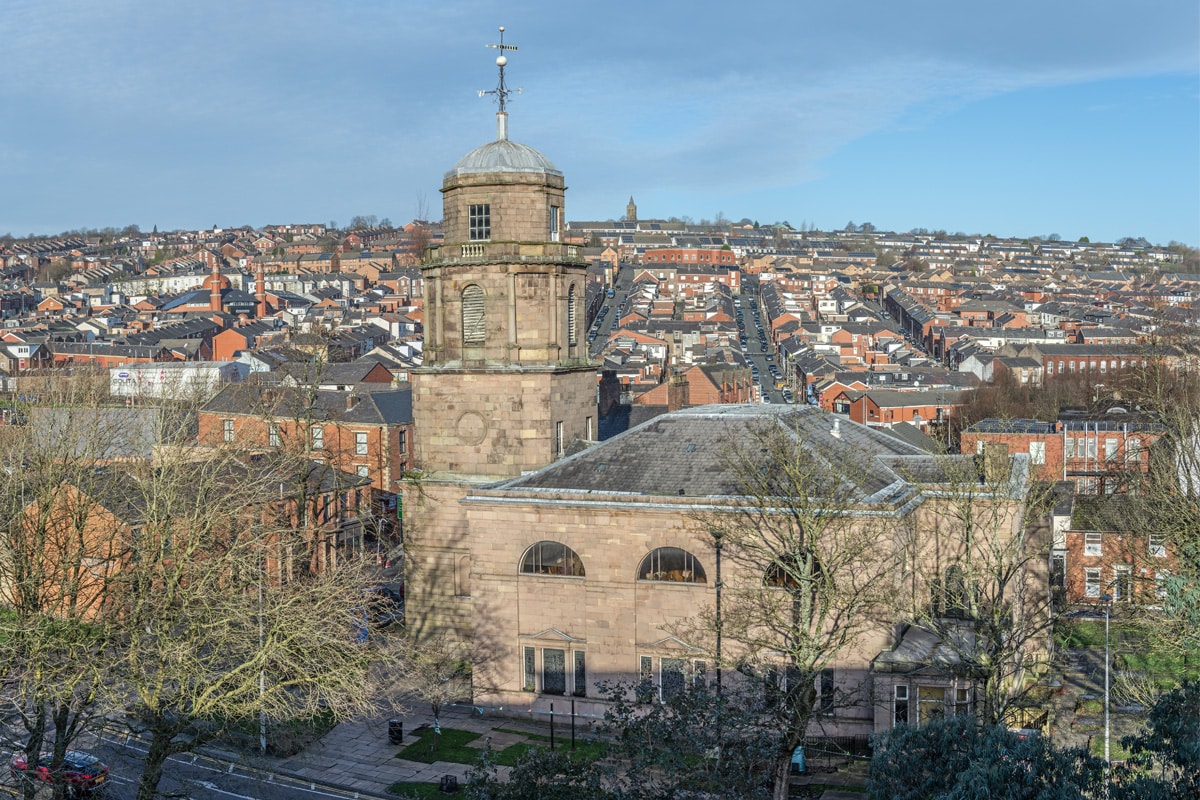
St Johns Church in Blackburn.
St. Johns Church, Blackburn

House Price Growth in Blackburn

Compare the 1-year column against the 5-year column in this table. All five Blackburn postcodes delivered five-year growth above 20%, but four of the five show negative one-year growth. That contrast tells a story. The pandemic surge lifted everything. The post-2023 correction has been selective, with only PR5 continuing to grow.

Area 1 Year 3 Years 5 Years
BB1 (Blackburn North, Roe Lee) -1.8% 1.8% 25.0%
BB6 (Langho, Great Harwood) -0.5% -0.8% 23.6%
PR5 (Bamber Bridge) 6.1% 6.0% 22.1%
BB3 (Darwen) -1.2% 6.5% 20.1%
BB2 (Blackburn South/West, Pleasington) -2.8% 12.9% 20.0%

PR5 Bamber Bridge is the only postcode in positive territory over one year at +6.1%. It also delivers consistent three-year growth of 6.0%. PR5 sits on the boundary between Blackburn and Preston, benefiting from demand drivers in both boroughs. Five-year asking price growth of 22.1% is the second strongest after BB1's 25.0%, with both one-year and three-year figures reinforcing the upward trend.

BB2 shows an interesting pattern: the strongest three-year growth at 12.9% but the worst one-year performance at -2.8%. That suggests BB2 surged in 2022-2023 and has since given back some gains. The three-year figure captures the pandemic uplift, while the one-year figure shows a correction. Whether that represents a buying opportunity or a sign of overextension depends on how you read the data.

BB6 at -0.8% over three years is the weakest mid-term performer. Langho and Great Harwood are the most rural parts of the borough, with the lowest transaction volume (17 sales per month) and no rental data. Low liquidity markets tend to lag in both upturns and downturns.

↑ Back to table of contents

Monthly Property Sales in Blackburn

Blackburn's monthly sales range from 17 in BB6 to 55 in BB2, with a combined total of 199 transactions per month across all five postcodes. The standout figure is PR5's turnover rate of 86%, suggesting properties change hands quickly once listed.

Area Sales Per Month Turnover Asking Price
BB2 (Blackburn South/West, Pleasington) 55 30% £230,465
PR5 (Bamber Bridge) 48 86% £222,338
BB1 (Blackburn North, Roe Lee) 40 75% £213,725
BB3 (Darwen) 39 24% £228,923
BB6 (Langho, Great Harwood) 17 17% £212,555

BB2 has the highest volume at 55 sales per month but a lower turnover rate at 30%. That tells you there is a large pool of stock. Properties sell, but there is always more available. For buyers, this means less competition per property. For sellers looking to exit, the volume is reassuring.

PR5 and BB1 have the highest turnover rates at 86% and 75%. In these postcodes, the ratio of sales to available stock is high. Properties move quickly. For exit strategy planning, PR5 and BB1 offer the strongest combination of volume and speed. If you need to sell, these postcodes have the most active buyer pools in the borough.

BB6 at 17 sales per month and 17% turnover is the thinnest market in Blackburn. Low volume means less reliable price data and longer selling times. Combined with BB6's lack of rental data, this postcode presents a different proposition from the rest of the borough.

↑ Back to table of contents

Property Data Sources

Our location guide relies on diverse, authoritative datasets including:

  • HM Land Registry UK House Price Index
  • Ministry of Housing, Communities and Local Government
  • Ordnance Survey Data Hub
  • Propertydata.co.uk

We update our property data quarterly to ensure accuracy. Last update: March 2026. All data is presented as provided by our sources without adjustments or amendments.

Red brick terraced housing, shops and businesses with a large domed mosque in the background. Photograph of Charlotte Street in Blackburn.
Charlotte Street in Blackburn

Blackburn Rental Market Analysis

For investors weighing up whether rental property is a worthwhile investment in Blackburn, the data below breaks down average monthly rents and gross rental yields across the borough's postcodes.

Rental data is available for 4 of 5 postcodes. BB6 (Langho, Great Harwood) has insufficient current listings for reliable figures. For the four with data, monthly rents range from £764 in BB1 to £874 in PR5 and gross yields range from 4.0% to 4.7%. If you are looking to build a property portfolio in the North West, Blackburn's combination of very low entry prices and stable rental demand from healthcare and public sector workers makes it worth examining.

Average Rent & Gross Rental Yields in Blackburn

Gross rental yield is calculated from the average asking price and average monthly rent for each postcode. It does not account for void periods, maintenance, management fees, or mortgage costs. It is a starting point for comparison, not a profit forecast.

PR5 delivers Blackburn's highest gross yield at 4.7%, where monthly rents of £874 meet asking prices of £222,338. At the other end, BB3 Darwen at 4.0% reflects higher asking prices absorbing similar rents to BB1. The yield spread across Blackburn's four data-rich postcodes is 0.7 percentage points. That is a narrow band, which tells you that rents and prices are broadly proportional across the borough.

Area Average Monthly Rent Average Asking Price Gross Yield
PR5 (Bamber Bridge) £874 £222,338 4.7%
BB2 (Blackburn South/West, Pleasington) £860 £230,465 4.5%
BB1 (Blackburn North, Roe Lee) £764 £213,725 4.3%
BB3 (Darwen) £764 £228,923 4.0%
BB6 (Langho, Great Harwood) Not enough data £212,555 Not enough data

PR5 at 4.7% leads because it combines the highest absolute rent (£874) with a mid-range asking price (£222,338). Bamber Bridge draws from both Blackburn and Preston tenant pools, which supports stronger rents than the Blackburn postcodes alone. PR5 is also the only postcode with positive one-year price growth (+6.1%), making it the standout for total return.

BB1 and BB3 have near-identical rents at £764 per month, but BB1 delivers the better yield at 4.3%. The reason is price. BB1's asking price of £213,725 is £15,198 lower than BB3's £228,923. Same rental income, lower entry cost, better yield. For investors choosing between Blackburn's core postcodes, that price difference matters.

BB3 Darwen at 4.0% has the lowest yield despite reasonable rents. The higher asking prices in Darwen absorb the rental income. Darwen has its own centre and housing market that operates semi-independently from Blackburn. The lower turnover (24%) and slower growth (-1.2% one-year) suggest a market that moves more cautiously than the Blackburn postcodes.

Gross Rental Yield by Postcode

PR5
4.7%
BB2
4.5%
BB1
4.3%
BB3
4.0%

↑ Back to table of contents

Is Blackburn Rent High?

How much of a Blackburn tenant's salary goes on rent? That question matters from both sides. For tenants, it determines whether they can sustain payments long-term. For landlords, areas where rent consumes a lower share of income tend to produce more reliable tenants and fewer arrears.

The median gross weekly salary in Blackburn is £636.10, which equates to £2,756 per month or £33,076 per year. This is below the North West regional median of £720.10 per week and the Great Britain median of £752.40 per week. Data from the Nomis Labour Market Profile (ASHE 2025).

Across Blackburn's four postcodes with rental data, rent ranges from 27.7% to 31.7% of the local median gross monthly salary. The general benchmark is that rent becomes stretched above 30% of gross income. Two postcodes sit below that level and two sit just above. Compared to many North West towns, Blackburn's rent-to-income ratios are moderate.

Rank Area Rent as % of Income
1 PR5 (Bamber Bridge) 31.7%
2 BB2 (Blackburn South/West, Pleasington) 31.2%
3 BB1 (Blackburn North, Roe Lee) 27.7%
4 BB3 (Darwen) 27.7%
— BB6 (Langho, Great Harwood) Not enough data

BB1 and BB3 at 27.7% sit comfortably below the 30% threshold. At these levels, tenants on the local median salary have meaningful headroom after rent. Lower affordability pressure means lower arrears, fewer voids, and longer tenancies. For investors who prioritise reliability over maximum rent, these two postcodes offer the strongest tenant affordability in the borough.

PR5 at 31.7% is the highest ratio but only marginally above the benchmark. PR5 draws tenants from both the Blackburn and Preston labour markets. Many PR5 tenants earn above the Blackburn median, particularly those commuting into Preston. The borough-wide salary figure understates what tenants in this postcode actually earn.

↑ Back to table of contents

Property investment

Thinking of Buying?

We have off-market investment properties averaging 8%+ annual yield.

View Property Deals

Buy-to-Let Considerations

Are Blackburn House Prices High? Price-to-Earnings Ratios

Every postcode in Blackburn sits below the national 7.5x price-to-earnings benchmark. The price-to-earnings ratio compares a postcode's average asking price to the local median annual salary of £33,076. The national benchmark of 7.5x is calculated from England's average sold price of £291,865 against Great Britain's median annual salary of £39,125.

Purchasing a property in Blackburn requires between 6.4 and 7.0 times the median annual salary. This is based on the Nomis Labour Market Profile for Blackburn showing the median gross annual income for Blackburn residents is £33,076.

All five of Blackburn's postcodes sit below the national benchmark of 7.5x. That is unusual. Most locations in this series have at least one or two postcodes above the benchmark. In Blackburn, every single postcode is affordable relative to local wages. The range is tight: 6.4x to 7.0x.

Rank Area Price-to-Earnings Ratio
1 BB6 (Langho, Great Harwood) 6.4x
2 BB1 (Blackburn North, Roe Lee) 6.5x
3 PR5 (Bamber Bridge) 6.7x
4 BB3 (Darwen) 6.9x
5 BB2 (Blackburn South/West, Pleasington) 7.0x

BB6 at 6.4x is the most affordable postcode relative to local incomes. Lower asking prices of £212,555 against the £33,076 median salary produce the tightest ratio. BB1 at 6.5x is close behind. Both sit more than a full multiple below the national 7.5x benchmark.

Even BB2, the most expensive postcode at 7.0x, remains below the national benchmark. Compare that to most cities covered in this series, where the premium postcodes typically sit at 9x or above. Blackburn's uniformly low ratios reflect the combination of modest house prices and lower local wages working in the same direction.

↑ Back to table of contents

Deposit Requirements in Blackburn

A 30% deposit on a Blackburn buy-to-let property ranges from £63,767 to £69,140. Most buy-to-let lenders require a minimum 25% deposit. The table below uses a more conservative 30% to reflect the rates and products available at higher loan-to-value ratios. A 30% deposit typically unlocks better interest rates, which matters for cash flow.

The entire borough sits within a £5,373 deposit band. That means the choice between postcodes is not a capital question. Every postcode in Blackburn is accessible at broadly the same deposit level.

Rank Area 30% Deposit Required
1 BB6 (Langho, Great Harwood) £63,767
2 BB1 (Blackburn North, Roe Lee) £64,118
3 PR5 (Bamber Bridge) £66,701
4 BB3 (Darwen) £68,677
5 BB2 (Blackburn South/West, Pleasington) £69,140

The difference between the cheapest and most expensive deposit is £5,373. In practical terms, every postcode in Blackburn requires a deposit between £64,000 and £69,000. Compare that to cities like Manchester or Liverpool where the range spans £30,000 or more. Blackburn's tight band means the deposit is not the deciding factor. Yield, growth, and tenant demand are.

PR5 at £66,701 sits in the middle but delivers the highest yield (4.7%) and the only positive one-year growth (+6.1%). The extra £2,934 over BB6's deposit buys access to the strongest-performing postcode across multiple metrics.

Deposit is only part of the upfront cost. Budget for stamp duty (use our stamp duty calculator for an accurate figure), legal fees, and survey costs. For a full breakdown, see our guide to buy-to-let costs.

↑ Back to table of contents

What the Blackburn Data Tells Buy-to-Let Investors

The postcode-level data across this guide points to a market where the entry cost is low, the affordability ratios are strong, and one postcode separates itself from the rest. For investors comparing investment property options across the North West, Blackburn's numbers tell a clear story.

For yield, the numbers favour PR5 (4.7%) and BB2 (4.5%). Both sit below 7.0x price-to-earnings with 30% deposits under £70,000. PR5 stands out across the widest range of metrics: highest yield, only positive one-year growth (+6.1%), highest price per square foot (£226), and the second-highest transaction volume (48 sales per month). It benefits from proximity to both Blackburn and Preston.

For growth, the Land Registry data tells a different story from the PropertyData asking prices. Sold prices grew 6.1% year-on-year across Blackburn with Darwen, outperforming the North West (+4.5%) and England (+1.7%) across every time horizon. But four of five postcodes show negative one-year asking price growth. That divergence suggests the broader market is rising (Land Registry captures completed sales) while listing prices have corrected from post-pandemic highs. The five-year figures (20% to 25% across all postcodes) show the underlying trend.

BB6 has the weakest data profile. No rental data, the lowest transaction volume (17 per month), the lowest turnover (17%), and negative three-year growth (-0.8%). BB6 covers Langho and Great Harwood, areas that are more rural and less connected to Blackburn's town centre economy. The numbers show a slower, less liquid market.

Blackburn with Darwen operates a selective licensing scheme in designated areas. Landlords in those areas must hold a licence for each privately rented property. Check whether your target postcode falls within a designated zone before purchasing.

↑ Back to table of contents

KEY FINDING
PR5 Bamber Bridge delivers the highest yield (4.7%), the only positive one-year growth (+6.1%), and the best turnover rate (86%) in Blackburn's postcode area. With a 30% deposit of £66,701, a price-to-earnings ratio of 6.7x, and rental income of £874 per month, PR5 leads across the widest range of metrics. Its position between Blackburn and Preston draws from both tenant pools.

How Blackburn Buy-to-Let Compares to Nearby Areas

Blackburn's top yield of 4.7% is the lowest in this five-location comparison, but its Land Registry growth of 6.1% outperforms them all. The table below compares Blackburn against four nearby Lancashire and Greater Manchester towns using the same methodology: mean asking price across all postcodes, mean monthly rent across postcodes with data, and top single-postcode gross yield.

Location Mean Asking Price Mean Monthly Rent Top Gross Yield
Blackpool £198,183 £750 6.3%
Blackburn £221,601 £816 4.7%
Wigan £227,201 £892 5.6%
Bolton £248,685 £936 5.1%
Preston £249,695 £999 6.2%

Blackburn sits second from the bottom on price and offers the lowest top yield in this group at 4.7%. That is the honest reading of the comparison. Blackpool is cheaper and offers a higher top yield. Preston and Wigan both deliver stronger yields at similar or slightly higher price points.

Where Blackburn distinguishes itself is on capital growth and affordability. The Land Registry data shows Blackburn's sold prices growing 6.1% year-on-year, outperforming the North West average of 4.5%. All five postcodes sit below the 7.5x national affordability benchmark. And the £250m town centre masterplan represents a scale of committed investment that none of the comparison locations can match.

Bolton is the closest comparison in character: a Lancashire borough with similar economic drivers, similar tenant profiles, and a marginally higher top yield (5.1%) at a higher entry cost (£248,685 mean asking). Investors choosing between the two are weighing current yield against future growth potential. Blackburn's growth data and regeneration pipeline are its differentiators. For more options across the region, see our guide to the best buy-to-let locations in the UK.

↑ Back to table of contents

Frequently Asked Questions

Is Blackburn a good place to live?

Blackburn is one of the most affordable places to live in the North West. The borough's average sold price of £162,893 is 44.2% below the England average and 25.1% below the regional average. The Royal Blackburn Teaching Hospital is a major employer, and the £250m town centre masterplan is bringing new investment into the centre. Population grew 4.9% between 2011 and 2021.

Employment rates (63.6%) sit below regional averages, which is reflected in lower property prices. Areas like Pleasington (BB2) and Bamber Bridge (PR5) offer suburban living, while BB1 and BB3 provide more affordable urban stock.

What are the main areas in Blackburn?

Five postcodes cover the Blackburn with Darwen borough. BB1 takes in Blackburn North and Roe Lee, the central core of the town. BB2 covers Blackburn South and West, including the more residential Pleasington area. BB3 is Darwen, a separate town five miles south with its own centre and housing market. BB6 includes the more rural areas of Langho and Great Harwood to the east. PR5 covers Bamber Bridge, on the boundary between Blackburn and Preston.

Each postcode has a distinct character. BB1 and BB2 are the most active markets by transaction volume (40 and 55 sales per month). PR5 delivers the strongest yields and growth.

Is Blackburn in Lancashire?

Blackburn is in Lancashire, yes. It sits within the Blackburn with Darwen unitary authority (ONS code E06000008), which has been administratively independent from Lancashire County Council since 1998. The borough covers Blackburn town, Darwen to the south, and surrounding villages. It borders Preston to the west, Burnley and Pendle to the east, and Chorley and Hyndburn to the south and north. For property data, all Land Registry figures use the Blackburn with Darwen local authority boundary.

How does Blackburn compare to Preston for buy-to-let?

Preston delivers higher yields and rents; Blackburn offers lower entry costs and stronger recent growth. Preston offers higher top yields (6.2% vs 4.7%), higher rents (£999 vs £816 mean monthly), and a larger, more diverse economy anchored by the University of Central Lancashire and BAE Systems. Preston's mean asking price of £249,695 is £28,094 above Blackburn's £221,601, which means a higher entry cost. Blackburn's advantage is affordability: every postcode sits below the 7.5x price-to-earnings benchmark, and the £250m town centre masterplan is a larger single investment than anything currently in Preston's pipeline. Blackburn's Land Registry growth of 6.1% year-on-year also outperforms the regional average. Investors prioritising current income lean toward Preston. Investors buying for long-term capital growth from a low base may find Blackburn's numbers more compelling.

Are there new build homes for sale in Blackburn?

New build supply in Blackburn is limited compared to larger Lancashire cities. The £250m town centre masterplan includes residential development on the former Thwaites brewery site, and a separate 1,500-home housing site has been identified at Holden Fold. Both are in early stages. Most buy-to-let stock in Blackburn consists of existing Victorian and Edwardian terraced and semi-detached properties. New build homes in BB1 and BB2 appear occasionally through smaller developments, but they are a small fraction of overall sales. The 199 average monthly sales across the borough are predominantly existing stock.

Can I find buy-to-let property in Blackburn under £100,000?

Yes. The average asking prices in this guide range from £212,555 to £230,465, but those are postcode averages across all property types. Blackburn's average flat price from the Land Registry is £89,051, which confirms that sub-£100,000 stock exists. Individual terraced houses in BB1 and BB3 also list below £100,000, particularly older two-bedroom properties. Investors looking for below market value properties will find Blackburn's lower end of the market worth investigating. At that price point, a 30% deposit is under £30,000. Due diligence on actual tenant demand, property condition, and whether the property falls within a selective licensing area is essential at the lower end of the market.

↑ Back to table of contents

Ready to Invest..?

We can give you access to off-market investment properties, with an average 8%+ annual yield (beating the UK's average of 3-5%). Click below to see what is available.

See Investment Properties

Filed Under: North West

Get to Know Us
  • Cookies
  • Contact Us
  • Privacy Policy
  • Reviews
  • Terms and Conditions
Learn Strategies
  • Buy to Let
  • HMOs
  • Holiday Lets
  • PBSA
  • Student HMOs
  • Serviced Accommodation
Calculators
  • England: SDLT Calculator
  • Scotland: LBTT Calculator
  • Wales: LTT Calculator
  • Loan to Value Calculator
  • Buy to Let Calculator
  • HMO Calculator
Services
  • Buy an Investment Property
  • Property Training
London
  • East London
  • Greater London
  • North London
  • South London
  • West London
Midlands
  • Birmingham
  • Leicester
  • Nottingham
  • Stoke
  • Wolverhampton
North East
  • Durham
  • Middlesbrough
  • Newcastle
  • Sunderland
North West
  • Chester
  • Liverpool
  • Manchester
  • Salford
  • Stockport
South East
  • Bournemouth
  • Brighton
  • Cambridge
  • Oxford
  • Southampton
South West
  • Bath
  • Bristol
  • Cheltenham
  • Gloucester
  • Wiltshire
PROPERTY INVESTMENTS UK

Westminster House,
10 Westminster Road,
Macclesfield.
SK10 1BX

Company Number: 08852962
VAT Number: 293 4194 80

DISCLAIMER

Your capital is at risk when buying property. The value of property can go down as well as up. Historic performance and forecasts are not reliable indicators of future performance. We do not provide tax, financial, or investment advice. Any general information provided is intended to help you make your own informed decisions. We strongly recommend that you obtain independent professional advice (for example, from a qualified tax adviser, financial adviser, or solicitor) before making any investment or financial decision. Disclaimer for website services, content and products.

A Member of The Property Ombudsman

The Property Ombudsman logo

© 2014-2026 Property Investments UK. All Rights Reserved.

Sitemap