
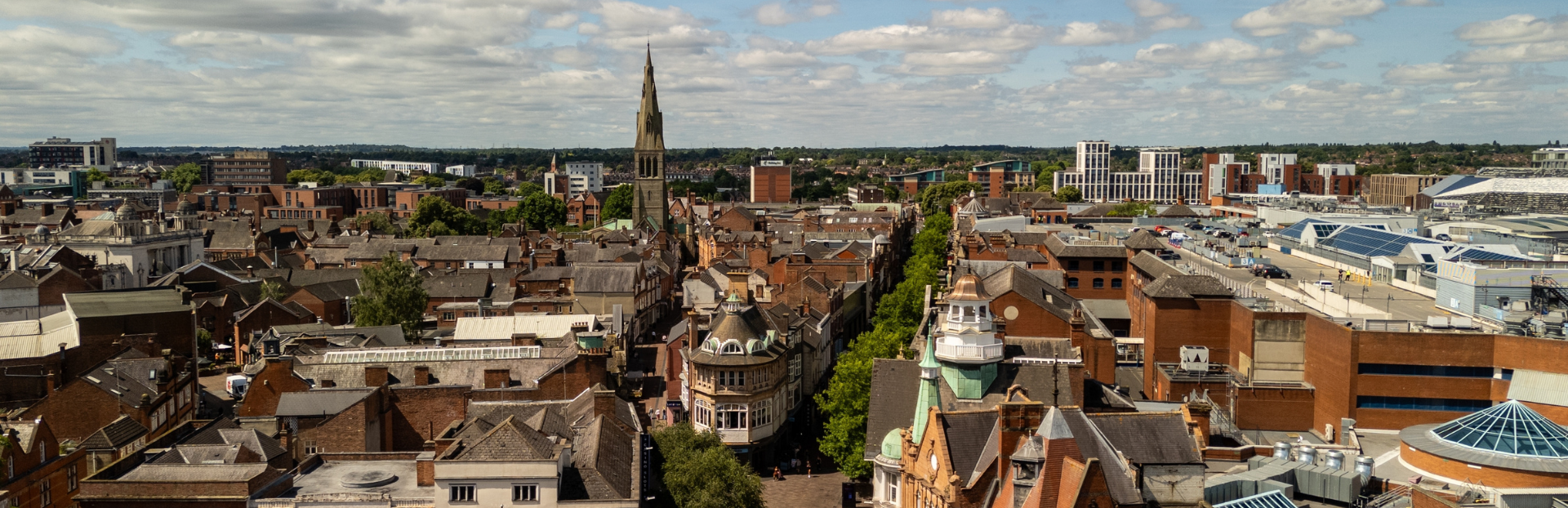
Leicester is a city in the East Midlands. The average sold price in Leicester is £233,480 on the HM Land Registry House Price Index, 19.5% below the England average of £289,946 and 3.4% under the East Midlands average of £241,747. That puts Leicester firmly in the affordable tier of the East Midlands, cheaper than the regional average rather than carrying a city premium on top of it. The population grew 11.74% between the 2011 and 2021 censuses, from 329,839 to 368,571 residents, one of the faster-growing major cities in England.
Where Leicester stands out is the gap between its prices and its rents. Local wages sit below the regional and national average, which holds prices down, while two universities and a large teaching hospital keep tenant demand steady. The result is a yield spread that runs from 7.3% in the city centre down to 3.2% in the rural fringe, the widest of any East Midlands city we cover. The cheapest postcode is also the highest-yielding, which is unusual.
This guide covers the unitary authority of Leicester (ONS code E06000016) across postcodes LE1, LE2, LE3, LE4, LE5, LE7, LE8, LE18, and LE19. Leicester sits at the centre of the East Midlands, 26 miles south of Nottingham and 25 miles east of Coventry. The wider county market is covered in our best buy-to-let areas guide.
Article updated: July 2026
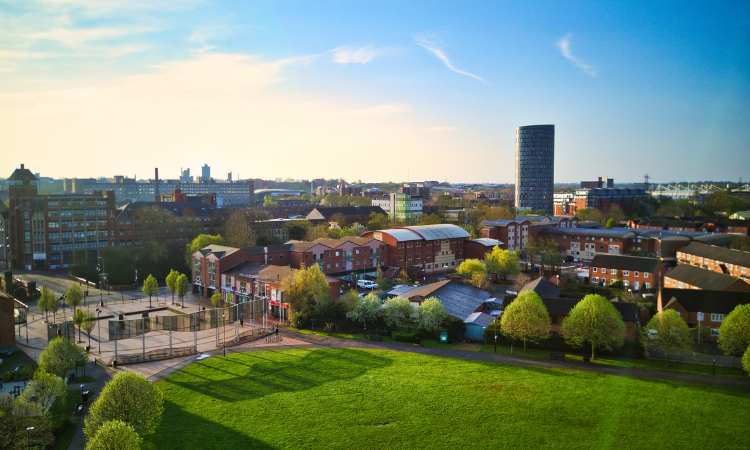
Why Invest in Leicester?
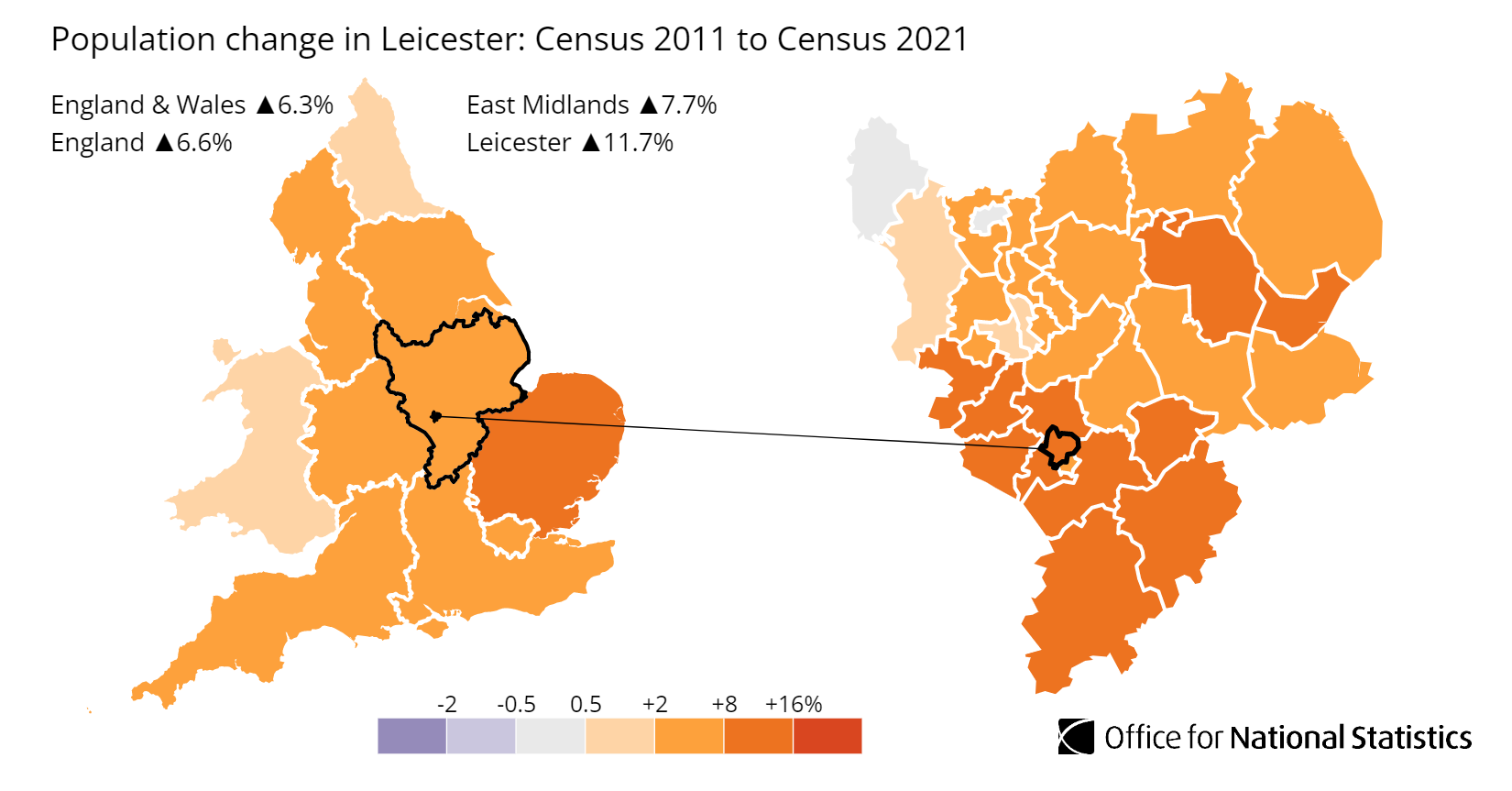
Leicester's population grew 11.74% between the 2011 and 2021 censuses, from 329,839 to 368,571 residents, nearly double the England and Wales average of 6.3%. A large student intake and inward migration give Leicester one of the youngest age profiles of any English city outside London, and a steady stream of new renters entering the market each year.
The economy has broadened well beyond the textiles and hosiery trade the city was built on. Two universities, a major teaching hospital, and one of the country's largest food and drink manufacturing clusters now anchor employment across very different sectors and skill levels. The University of Leicester and De Montfort University together draw more than 40,000 students into the city, with De Montfort's campus sitting in the city centre itself. That concentration drives the rental demand in the inner postcodes, particularly LE1 and LE2.
Median gross annual earnings in Leicester are £32,281, which is below both the East Midlands median of £36,192 and the Great Britain median of £39,125. Lower local wages keep house prices in check, and when affordable prices meet steady tenant demand, yields hold up. That is the mechanism behind LE1's 7.3% gross yield from a city-centre postcode where asking prices average £132,064. The trade-off is a softer employment picture, which the table below sets out.
Leicester Economic Summary
- Population: 368,571 (2021 Census). Growth of 11.74% from 2011.
- Median annual salary: £32,281 (Leicester), £36,192 (East Midlands), £39,125 (Great Britain)
- Employment rate: 65.1% (local), 73.4% (East Midlands), 75.6% (Great Britain)
- Unemployment rate: 9.2% (local)
- Key employment sectors: Higher education, healthcare, food and drink manufacturing, textiles, logistics and distribution
Source: ONS Census 2021, Nomis Labour Market Profile (ASHE 2025, Employment Oct 2024-Sep 2025)
Leicester's employment rate of 65.1% sits below the East Midlands figure of 73.4% and the Great Britain figure of 75.6%, and the local unemployment rate of 9.2% runs higher than both. A large student body lowers the headline employment numbers, since students count as economically inactive while they study, but it is also what keeps the rental market full. University Hospitals of Leicester NHS Trust, which runs Leicester Royal Infirmary and Leicester General Hospital, is one of the largest trusts in the country and provides a layer of healthcare employment that does not move with the economic cycle.
Regeneration and Investment in Leicester
Leicester's regeneration is led by the £80 million Waterside scheme, which is turning 17 acres of former industrial land beside the River Soar into 350 new homes. The work runs across transport, waterfront, and heritage sites, with the common aim of joining the city centre to the residential areas around it.
- Leicester Waterside (under construction, £80 million): Keepmoat is delivering 350 new homes on former industrial land between Wolsey Island and the city centre, beside the Grand Union Canal and the River Soar, in partnership with Leicester City Council. The scheme includes flood mitigation, biodiversity work, and upgraded walking and cycling routes into the centre, with completion targeted for the end of 2026. The brownfield-to-residential transformation adds canal-side stock close to the LE3 and LE1 boundary. Updates at Build News.
- Corah Works Redevelopment (planning approved, October 2025): Cityregen Leicester and Galliford Try Investments are transforming the historic 1865 Corah Works textile factory into 1,000 new homes alongside commercial units and public space, preserving the original facade and landmark chimneys. The scheme improves the link between the city centre and Abbey Park, which benefits the surrounding LE1 and LE4 postcodes. Updates at Galliford Try Investments.
- Leicester Transport Investment Programme (funding confirmed, £80 million): Government-funded transport upgrades running through 2030, including up to 48 new electric buses, resurfacing on arterial routes such as Melton Road and Aylestone Road, and access improvements at Ashton Green and the St George's Cultural Quarter. Better connections on those routes feed the rental areas of LE4 and LE2. Updates at Leicester City Council.
Source: Office for National Statistics - Population for Leicester
Leicester Property Market Analysis
Average property prices in Leicester have risen 539.5% since January 1995, from £36,512 to £233,480. The sections below walk through that journey cycle by cycle, then drill down to postcode-level data for sold prices, price per square foot, asking prices, growth, and monthly transaction volumes.
When Was the Last House Price Crash in Leicester?
All sold prices for Leicester are recorded by HM Land Registry at unitary authority level, covering the City of Leicester. The Land Registry House Price Index tracks the average from January 1995 to March 2026, 31 years of market cycles.
The 1995 to 2007 climb: Leicester started at £36,512 in January 1995. By December 2000 the average had reached £48,453, and the early-2000s credit boom then took it much higher, to £118,949 by December 2005. The market peaked at £133,205 in October 2007.
2008 to 2009, the financial crisis: Prices fell from the October 2007 peak of £133,205 to a trough of £108,353 in February 2009, a decline of 18.7% over 16 months. The worst year-on-year reading was -17.5% in February 2009. Leicester's fall tracked the wider market closely, sitting between the England decline of 18.2% and the East Midlands regional decline of 18.6%, rather than escaping it the way some higher-value markets did.
The 2010 to 2014 stagnation: Prices bounced off the trough but went nowhere for years. The average was £118,779 in December 2010, almost identical to where it had been five years earlier, and it drifted in a narrow band through 2012 and 2013. Leicester spent the early part of the decade unable to recover the ground it had lost.
Recovery, 2015 to 2016: Growth returned. Prices passed the October 2007 pre-crash peak of £133,205 for the first time in August 2015, at £135,025. That recovery took close to eight years. By March 2016 the average had reached £141,767.
2016 to 2019 steady growth: The market climbed through the second half of the decade, reaching £199,481 by March 2021. Affordability and a strengthening rental market kept Leicester moving while more expensive cities slowed.
2020 to 2022, the pandemic surge: The stamp duty holiday and a shift towards space and value pushed Leicester sharply higher, with the average reaching £231,136 by December 2022.
2023 to present: Higher mortgage rates cooled the market. Prices eased to £226,980 by December 2023 before recovering to an all-time high of £237,015 in September 2025, then settling back to £233,480 by March 2026. The current price is 75.3% above the October 2007 pre-crash peak.
Long-term growth summary:
- 5 years (March 2021 to March 2026): 17.0% growth (£199,481 to £233,480)
- 10 years (March 2016 to March 2026): 64.7% growth (£141,767 to £233,480)
- 15 years (March 2011 to March 2026): 100.3% growth (£116,546 to £233,480)
- 20 years (March 2006 to March 2026): 97.2% growth (£118,380 to £233,480)
- 30 years (January 1995 to March 2026): 539.5% growth (£36,512 to £233,480)
Leicester's 18.7% crash was deeper than Chester's but in line with the East Midlands and England as a whole, and the 30-year return of 539.5% is among the strongest in the region. The eight-year recovery period mirrored the national picture, held back by the long stagnation between 2010 and 2014. An investor who bought at the exact peak in October 2007 would now be sitting on a 75.3% gain on the Land Registry average.
- All property types
- Detached
- Semi-detached
- Terraced
- Flats
Source: HM Land Registry House Price Index
| Year | All property types | Detached | Semi-detached | Terraced | Flats |
|---|---|---|---|---|---|
| 1995-01 | £36,512 | £65,355 | £40,206 | £31,771 | £28,363 |
| 1995-02 | £37,530 | £66,683 | £41,534 | £32,601 | £29,118 |
| 1995-03 | £37,616 | £66,658 | £41,623 | £32,710 | £29,107 |
| 1995-04 | £37,780 | £66,666 | £41,841 | £32,863 | £29,246 |
| 1995-05 | £37,601 | £66,285 | £41,593 | £32,739 | £29,136 |
| 1995-06 | £37,880 | £66,820 | £41,948 | £32,933 | £29,509 |
| 1995-07 | £38,225 | £67,647 | £42,328 | £33,221 | £29,665 |
| 1995-08 | £38,206 | £68,022 | £42,277 | £33,195 | £29,471 |
| 1995-09 | £38,142 | £67,970 | £42,138 | £33,190 | £29,251 |
| 1995-10 | £37,845 | £67,638 | £41,933 | £32,824 | £29,151 |
| 1995-11 | £37,941 | £67,832 | £42,142 | £32,824 | £29,443 |
| 1995-12 | £37,738 | £67,574 | £42,058 | £32,553 | £29,326 |
| 1996-01 | £37,535 | £67,314 | £41,811 | £32,396 | £28,996 |
| 1996-02 | £36,798 | £65,891 | £41,037 | £31,768 | £28,239 |
| 1996-03 | £36,503 | £65,565 | £40,778 | £31,464 | £27,887 |
| 1996-04 | £36,389 | £65,126 | £40,609 | £31,414 | £27,845 |
| 1996-05 | £36,910 | £65,968 | £41,074 | £31,945 | £28,184 |
| 1996-06 | £37,326 | £66,526 | £41,408 | £32,381 | £28,696 |
| 1996-07 | £37,996 | £67,837 | £42,158 | £32,957 | £29,091 |
| 1996-08 | £38,472 | £69,049 | £42,675 | £33,334 | £29,435 |
| 1996-09 | £38,659 | £69,682 | £42,857 | £33,502 | £29,315 |
| 1996-10 | £38,128 | £68,902 | £42,307 | £33,003 | £28,865 |
| 1996-11 | £37,707 | £67,976 | £41,865 | £32,639 | £28,596 |
| 1996-12 | £37,233 | £66,939 | £41,406 | £32,214 | £28,226 |
| 1997-01 | £38,133 | £68,513 | £42,392 | £33,016 | £28,818 |
| 1997-02 | £38,308 | £69,088 | £42,614 | £33,119 | £28,920 |
| 1997-03 | £38,014 | £68,691 | £42,229 | £32,872 | £28,736 |
| 1997-04 | £37,484 | £67,515 | £41,641 | £32,432 | £28,388 |
| 1997-05 | £37,017 | £66,348 | £41,116 | £32,089 | £27,862 |
| 1997-06 | £37,969 | £68,147 | £42,196 | £32,916 | £28,396 |
| 1997-07 | £38,616 | £69,438 | £42,903 | £33,501 | £28,649 |
| 1997-08 | £39,086 | £70,565 | £43,422 | £33,888 | £28,925 |
| 1997-09 | £38,777 | £69,964 | £43,086 | £33,624 | £28,681 |
| 1997-10 | £38,902 | £70,382 | £43,278 | £33,674 | £28,831 |
| 1997-11 | £39,296 | £71,233 | £43,807 | £33,957 | £29,080 |
| 1997-12 | £39,880 | £72,431 | £44,578 | £34,385 | £29,489 |
| 1998-01 | £39,560 | £72,007 | £44,170 | £34,123 | £29,224 |
| 1998-02 | £40,070 | £72,823 | £44,699 | £34,578 | £29,793 |
| 1998-03 | £39,883 | £72,430 | £44,426 | £34,461 | £29,626 |
| 1998-04 | £40,379 | £73,119 | £45,055 | £34,872 | £29,969 |
| 1998-05 | £40,182 | £72,594 | £44,784 | £34,765 | £29,661 |
| 1998-06 | £40,931 | £73,948 | £45,566 | £35,430 | £30,343 |
| 1998-07 | £41,047 | £74,224 | £45,657 | £35,543 | £30,420 |
| 1998-08 | £41,248 | £74,920 | £45,854 | £35,696 | £30,585 |
| 1998-09 | £41,034 | £74,682 | £45,641 | £35,496 | £30,268 |
| 1998-10 | £41,298 | £75,379 | £45,964 | £35,676 | £30,554 |
| 1998-11 | £41,741 | £76,549 | £46,655 | £35,904 | £30,964 |
| 1998-12 | £41,438 | £76,007 | £46,385 | £35,584 | £30,933 |
| 1999-01 | £41,179 | £75,514 | £46,119 | £35,345 | £30,795 |
| 1999-02 | £40,776 | £74,466 | £45,598 | £35,061 | £30,575 |
| 1999-03 | £41,223 | £75,271 | £46,083 | £35,449 | £30,946 |
| 1999-04 | £41,981 | £76,207 | £46,882 | £36,190 | £31,431 |
| 1999-05 | £42,626 | £77,155 | £47,550 | £36,805 | £31,879 |
| 1999-06 | £43,682 | £79,001 | £48,657 | £37,776 | £32,565 |
| 1999-07 | £44,046 | £79,972 | £48,996 | £38,099 | £32,784 |
| 1999-08 | £44,534 | £80,998 | £49,483 | £38,551 | £33,030 |
| 1999-09 | £43,663 | £79,599 | £48,452 | £37,806 | £32,440 |
| 1999-10 | £43,791 | £80,046 | £48,731 | £37,790 | £32,739 |
| 1999-11 | £43,628 | £79,763 | £48,630 | £37,589 | £32,723 |
| 1999-12 | £44,755 | £81,577 | £49,929 | £38,549 | £33,707 |
| 2000-01 | £44,723 | £81,721 | £49,909 | £38,498 | £33,620 |
| 2000-02 | £44,871 | £82,184 | £50,096 | £38,591 | £33,675 |
| 2000-03 | £44,891 | £82,359 | £50,213 | £38,553 | £33,463 |
| 2000-04 | £45,718 | £83,463 | £51,053 | £39,324 | £34,244 |
| 2000-05 | £46,168 | £84,060 | £51,545 | £39,719 | £34,743 |
| 2000-06 | £47,343 | £86,119 | £52,860 | £40,705 | £35,880 |
| 2000-07 | £47,666 | £87,246 | £53,308 | £40,905 | £36,007 |
| 2000-08 | £48,952 | £90,092 | £54,843 | £41,893 | £37,170 |
| 2000-09 | £48,773 | £90,482 | £54,634 | £41,672 | £37,078 |
| 2000-10 | £49,048 | £91,195 | £55,112 | £41,797 | £37,392 |
| 2000-11 | £48,380 | £90,282 | £54,377 | £41,184 | £36,930 |
| 2000-12 | £48,453 | £90,252 | £54,577 | £41,181 | £37,197 |
| 2001-01 | £48,866 | £90,913 | £54,926 | £41,590 | £37,567 |
| 2001-02 | £49,421 | £91,635 | £55,525 | £42,115 | £37,872 |
| 2001-03 | £50,669 | £93,914 | £56,919 | £43,211 | £38,580 |
| 2001-04 | £51,258 | £95,012 | £57,468 | £43,764 | £39,068 |
| 2001-05 | £52,818 | £97,552 | £59,141 | £45,149 | £40,365 |
| 2001-06 | £53,196 | £97,890 | £59,444 | £45,530 | £40,924 |
| 2001-07 | £54,229 | £99,771 | £60,637 | £46,393 | £41,749 |
| 2001-08 | £55,042 | £101,723 | £61,503 | £47,064 | £42,442 |
| 2001-09 | £55,871 | £103,879 | £62,351 | £47,756 | £43,125 |
| 2001-10 | £56,987 | £106,002 | £63,676 | £48,656 | £44,086 |
| 2001-11 | £57,876 | £107,628 | £64,812 | £49,339 | £44,856 |
| 2001-12 | £59,853 | £110,890 | £67,146 | £50,948 | £46,847 |
| 2002-01 | £60,276 | £111,769 | £67,613 | £51,273 | £47,446 |
| 2002-02 | £61,507 | £114,059 | £68,871 | £52,369 | £48,512 |
| 2002-03 | £61,613 | £114,037 | £68,986 | £52,509 | £48,326 |
| 2002-04 | £63,670 | £117,266 | £71,152 | £54,348 | £50,184 |
| 2002-05 | £64,851 | £118,823 | £72,535 | £55,356 | £51,287 |
| 2002-06 | £67,608 | £123,558 | £75,431 | £57,802 | £53,688 |
| 2002-07 | £70,123 | £128,211 | £78,175 | £59,998 | £55,516 |
| 2002-08 | £72,916 | £133,372 | £81,214 | £62,417 | £57,747 |
| 2002-09 | £74,536 | £136,842 | £83,170 | £63,701 | £58,909 |
| 2002-10 | £75,667 | £139,055 | £84,749 | £64,505 | £59,781 |
| 2002-11 | £76,906 | £141,707 | £86,101 | £65,535 | £60,872 |
| 2002-12 | £78,685 | £144,445 | £88,187 | £67,023 | £62,521 |
| 2003-01 | £80,486 | £147,396 | £89,864 | £68,732 | £64,129 |
| 2003-02 | £82,093 | £149,453 | £91,736 | £70,126 | £65,521 |
| 2003-03 | £83,427 | £151,683 | £93,037 | £71,389 | £66,456 |
| 2003-04 | £84,787 | £153,453 | £94,766 | £72,504 | £67,554 |
| 2003-05 | £86,827 | £156,920 | £97,098 | £74,275 | £68,879 |
| 2003-06 | £88,894 | £160,160 | £99,455 | £76,015 | £70,955 |
| 2003-07 | £90,622 | £162,506 | £101,343 | £77,604 | £72,092 |
| 2003-08 | £92,239 | £164,629 | £103,059 | £79,098 | £73,393 |
| 2003-09 | £94,416 | £168,076 | £105,406 | £81,127 | £74,377 |
| 2003-10 | £96,486 | £171,502 | £107,613 | £82,974 | £76,054 |
| 2003-11 | £96,549 | £171,387 | £107,685 | £83,060 | £75,971 |
| 2003-12 | £97,628 | £171,806 | £108,742 | £84,139 | £77,262 |
| 2004-01 | £97,772 | £171,859 | £108,823 | £84,341 | £77,195 |
| 2004-02 | £100,167 | £175,392 | £111,399 | £86,553 | £78,890 |
| 2004-03 | £100,563 | £175,949 | £111,620 | £87,034 | £78,949 |
| 2004-04 | £103,891 | £179,440 | £115,131 | £90,297 | £81,449 |
| 2004-05 | £106,698 | £182,121 | £117,776 | £93,157 | £83,911 |
| 2004-06 | £110,435 | £186,858 | £121,771 | £96,525 | £87,342 |
| 2004-07 | £112,131 | £189,320 | £123,788 | £98,125 | £88,155 |
| 2004-08 | £114,049 | £192,636 | £126,027 | £99,863 | £89,203 |
| 2004-09 | £116,281 | £197,062 | £128,664 | £101,988 | £89,805 |
| 2004-10 | £117,029 | £198,446 | £129,341 | £102,603 | £90,761 |
| 2004-11 | £116,809 | £197,931 | £129,088 | £102,352 | £90,853 |
| 2004-12 | £116,650 | £196,473 | £128,713 | £102,269 | £91,359 |
| 2005-01 | £115,413 | £194,182 | £126,983 | £101,195 | £91,151 |
| 2005-02 | £115,959 | £194,540 | £127,545 | £101,587 | £92,114 |
| 2005-03 | £114,314 | £191,783 | £125,837 | £100,107 | £90,685 |
| 2005-04 | £116,437 | £194,060 | £128,372 | £102,141 | £91,766 |
| 2005-05 | £116,882 | £194,669 | £128,645 | £102,757 | £91,858 |
| 2005-06 | £117,886 | £194,811 | £129,411 | £103,978 | £92,753 |
| 2005-07 | £118,743 | £196,283 | £130,271 | £104,786 | £93,401 |
| 2005-08 | £120,094 | £198,444 | £131,657 | £106,122 | £94,209 |
| 2005-09 | £120,403 | £199,698 | £132,134 | £106,364 | £93,992 |
| 2005-10 | £119,274 | £197,827 | £130,750 | £105,456 | £93,121 |
| 2005-11 | £118,504 | £196,078 | £130,031 | £104,812 | £92,285 |
| 2005-12 | £118,949 | £195,804 | £130,205 | £105,329 | £93,254 |
| 2006-01 | £119,239 | £196,067 | £130,333 | £105,753 | £93,398 |
| 2006-02 | £119,412 | £195,824 | £130,234 | £106,015 | £93,921 |
| 2006-03 | £118,380 | £194,944 | £129,357 | £105,101 | £92,312 |
| 2006-04 | £119,693 | £196,403 | £130,807 | £106,359 | £93,254 |
| 2006-05 | £119,896 | £196,655 | £131,127 | £106,540 | £93,254 |
| 2006-06 | £122,464 | £199,583 | £133,875 | £108,990 | £95,264 |
| 2006-07 | £122,756 | £199,868 | £134,101 | £109,417 | £95,224 |
| 2006-08 | £123,599 | £201,028 | £135,005 | £110,457 | £95,120 |
| 2006-09 | £122,780 | £200,390 | £134,060 | £109,668 | £94,537 |
| 2006-10 | £122,550 | £200,341 | £133,882 | £109,415 | £94,266 |
| 2006-11 | £123,984 | £202,768 | £135,591 | £110,659 | £95,194 |
| 2006-12 | £125,454 | £204,384 | £137,060 | £112,192 | £96,166 |
| 2007-01 | £127,342 | £207,359 | £139,140 | £113,961 | £97,383 |
| 2007-02 | £126,690 | £206,079 | £138,300 | £113,298 | £97,501 |
| 2007-03 | £127,217 | £206,979 | £138,870 | £113,903 | £97,530 |
| 2007-04 | £128,574 | £208,379 | £140,091 | £115,341 | £98,678 |
| 2007-05 | £130,381 | £210,488 | £141,824 | £117,233 | £99,958 |
| 2007-06 | £131,585 | £212,218 | £143,014 | £118,367 | £101,055 |
| 2007-07 | £131,700 | £212,852 | £143,167 | £118,449 | £100,979 |
| 2007-08 | £132,473 | £214,777 | £144,051 | £119,269 | £100,795 |
| 2007-09 | £132,566 | £215,571 | £144,271 | £119,284 | £100,590 |
| 2007-10 | £133,205 | £217,023 | £144,859 | £119,835 | £101,246 |
| 2007-11 | £132,646 | £216,848 | £144,413 | £119,090 | £101,018 |
| 2007-12 | £132,272 | £216,258 | £143,973 | £118,672 | £101,084 |
| 2008-01 | £130,461 | £213,792 | £142,061 | £116,953 | £99,711 |
| 2008-02 | £131,276 | £215,081 | £142,932 | £117,665 | £100,437 |
| 2008-03 | £131,462 | £215,755 | £143,414 | £117,849 | £99,830 |
| 2008-04 | £131,827 | £216,516 | £143,825 | £118,358 | £99,484 |
| 2008-05 | £129,767 | £212,510 | £141,630 | £116,577 | £97,858 |
| 2008-06 | £128,531 | £209,877 | £140,066 | £115,580 | £97,268 |
| 2008-07 | £127,521 | £207,774 | £139,317 | £114,426 | £96,677 |
| 2008-08 | £125,967 | £205,532 | £137,496 | £113,111 | £95,401 |
| 2008-09 | £123,860 | £203,930 | £135,122 | £111,073 | £93,698 |
| 2008-10 | £122,944 | £202,923 | £134,021 | £110,253 | £93,012 |
| 2008-11 | £119,427 | £197,601 | £130,530 | £106,858 | £90,180 |
| 2008-12 | £114,538 | £188,519 | £125,364 | £102,577 | £86,230 |
| 2009-01 | £109,795 | £181,599 | £120,142 | £98,213 | £82,729 |
| 2009-02 | £108,353 | £179,702 | £118,437 | £96,832 | £82,028 |
| 2009-03 | £110,480 | £183,872 | £120,680 | £98,537 | £84,256 |
| 2009-04 | £109,796 | £181,715 | £120,217 | £97,908 | £83,641 |
| 2009-05 | £110,037 | £181,443 | £120,479 | £98,307 | £83,591 |
| 2009-06 | £109,416 | £179,994 | £119,912 | £97,915 | £82,550 |
| 2009-07 | £111,432 | £183,385 | £122,069 | £99,939 | £83,462 |
| 2009-08 | £113,205 | £186,337 | £124,043 | £101,708 | £84,125 |
| 2009-09 | £113,854 | £187,567 | £124,913 | £102,290 | £84,139 |
| 2009-10 | £113,595 | £187,594 | £124,825 | £101,914 | £83,692 |
| 2009-11 | £113,443 | £188,009 | £124,580 | £101,862 | £83,156 |
| 2009-12 | £114,776 | £189,394 | £126,040 | £103,315 | £83,789 |
| 2010-01 | £115,570 | £190,895 | £126,863 | £104,297 | £83,575 |
| 2010-02 | £115,900 | £191,805 | £127,660 | £104,387 | £83,293 |
| 2010-03 | £114,950 | £191,856 | £126,715 | £103,130 | £82,764 |
| 2010-04 | £115,353 | £192,447 | £127,311 | £103,292 | £83,382 |
| 2010-05 | £116,539 | £194,529 | £128,422 | £104,337 | £84,661 |
| 2010-06 | £117,983 | £196,306 | £130,101 | £105,924 | £84,908 |
| 2010-07 | £119,614 | £199,717 | £131,799 | £107,455 | £85,776 |
| 2010-08 | £120,867 | £201,962 | £133,524 | £108,539 | £86,008 |
| 2010-09 | £121,351 | £203,917 | £134,060 | £108,767 | £86,451 |
| 2010-10 | £120,925 | £203,659 | £133,700 | £108,248 | £86,129 |
| 2010-11 | £118,614 | £200,719 | £131,085 | £106,017 | £84,672 |
| 2010-12 | £118,779 | £200,921 | £131,384 | £106,070 | £84,866 |
| 2011-01 | £116,094 | £196,844 | £128,403 | £103,556 | £83,118 |
| 2011-02 | £117,176 | £198,790 | £129,479 | £104,563 | £83,975 |
| 2011-03 | £116,546 | £199,083 | £128,720 | £103,844 | £83,506 |
| 2011-04 | £117,572 | £200,703 | £129,828 | £104,865 | £84,015 |
| 2011-05 | £116,390 | £198,082 | £128,521 | £103,785 | £83,615 |
| 2011-06 | £116,520 | £196,504 | £128,771 | £104,026 | £84,062 |
| 2011-07 | £117,079 | £196,928 | £129,413 | £104,435 | £85,012 |
| 2011-08 | £118,430 | £199,483 | £131,030 | £105,684 | £85,373 |
| 2011-09 | £118,384 | £200,166 | £130,937 | £105,737 | £84,674 |
| 2011-10 | £118,535 | £201,162 | £131,334 | £105,749 | £84,215 |
| 2011-11 | £118,359 | £201,053 | £131,286 | £105,380 | £84,355 |
| 2011-12 | £117,609 | £199,717 | £130,672 | £104,510 | £84,016 |
| 2012-01 | £118,069 | £200,039 | £131,207 | £104,925 | £84,527 |
| 2012-02 | £115,991 | £196,072 | £128,878 | £103,330 | £82,516 |
| 2012-03 | £117,293 | £197,134 | £130,233 | £104,690 | £83,529 |
| 2012-04 | £115,656 | £194,386 | £128,336 | £103,284 | £82,355 |
| 2012-05 | £116,311 | £195,416 | £129,011 | £103,838 | £83,041 |
| 2012-06 | £116,569 | £195,809 | £129,040 | £104,284 | £83,115 |
| 2012-07 | £118,492 | £198,455 | £131,087 | £106,242 | £84,206 |
| 2012-08 | £120,495 | £201,533 | £133,306 | £108,281 | £85,056 |
| 2012-09 | £119,983 | £201,233 | £132,861 | £107,704 | £84,546 |
| 2012-10 | £120,102 | £201,529 | £133,089 | £107,662 | £84,832 |
| 2012-11 | £119,977 | £201,665 | £132,996 | £107,380 | £84,991 |
| 2012-12 | £119,715 | £201,874 | £132,839 | £106,980 | £84,741 |
| 2013-01 | £119,623 | £201,957 | £133,014 | £106,808 | £84,304 |
| 2013-02 | £119,914 | £202,461 | £133,302 | £107,087 | £84,485 |
| 2013-03 | £120,031 | £203,093 | £133,547 | £107,142 | £84,303 |
| 2013-04 | £119,994 | £203,182 | £133,269 | £107,206 | £84,371 |
| 2013-05 | £120,807 | £204,394 | £134,243 | £107,859 | £85,114 |
| 2013-06 | £121,391 | £204,163 | £134,806 | £108,570 | £85,585 |
| 2013-07 | £121,575 | £203,843 | £134,870 | £108,901 | £85,717 |
| 2013-08 | £122,186 | £204,694 | £135,472 | £109,543 | £86,067 |
| 2013-09 | £123,962 | £208,897 | £137,500 | £110,984 | £87,180 |
| 2013-10 | £124,237 | £210,569 | £138,080 | £110,974 | £87,153 |
| 2013-11 | £123,608 | £210,260 | £137,565 | £110,280 | £86,456 |
| 2013-12 | £122,378 | £207,425 | £136,272 | £109,176 | £85,770 |
| 2014-01 | £123,821 | £209,626 | £137,793 | £110,496 | £86,947 |
| 2014-02 | £124,898 | £211,631 | £138,984 | £111,456 | £87,716 |
| 2014-03 | £125,352 | £212,543 | £139,555 | £111,760 | £88,161 |
| 2014-04 | £126,100 | £213,313 | £140,377 | £112,521 | £88,628 |
| 2014-05 | £126,149 | £212,648 | £140,291 | £112,628 | £88,957 |
| 2014-06 | £128,161 | £215,908 | £142,489 | £114,597 | £90,021 |
| 2014-07 | £128,221 | £215,885 | £142,551 | £114,730 | £89,898 |
| 2014-08 | £129,257 | £217,858 | £143,890 | £115,756 | £90,014 |
| 2014-09 | £128,992 | £217,479 | £143,572 | £115,541 | £89,781 |
| 2014-10 | £129,836 | £219,411 | £144,705 | £116,118 | £90,386 |
| 2014-11 | £129,144 | £218,663 | £144,083 | £115,355 | £89,930 |
| 2014-12 | £129,379 | £219,537 | £144,394 | £115,390 | £90,321 |
| 2015-01 | £129,453 | £219,652 | £144,432 | £115,415 | £90,550 |
| 2015-02 | £131,307 | £222,948 | £146,173 | £116,939 | £92,656 |
| 2015-03 | £130,877 | £222,655 | £145,901 | £116,328 | £92,581 |
| 2015-04 | £132,432 | £225,638 | £147,582 | £117,750 | £93,511 |
| 2015-05 | £131,971 | £224,635 | £147,401 | £117,317 | £92,805 |
| 2015-06 | £133,063 | £225,804 | £148,622 | £118,625 | £92,740 |
| 2015-07 | £133,055 | £225,216 | £148,818 | £118,598 | £92,688 |
| 2015-08 | £135,025 | £228,546 | £150,937 | £120,492 | £93,753 |
| 2015-09 | £137,809 | £234,440 | £154,003 | £122,793 | £95,903 |
| 2015-10 | £138,012 | £235,567 | £154,319 | £122,958 | £95,661 |
| 2015-11 | £138,068 | £236,164 | £154,531 | £122,891 | £95,648 |
| 2015-12 | £138,172 | £236,762 | £154,810 | £122,924 | £95,503 |
| 2016-01 | £140,103 | £239,808 | £157,113 | £124,563 | £96,967 |
| 2016-02 | £142,019 | £243,038 | £159,424 | £126,200 | £98,271 |
| 2016-03 | £141,767 | £241,569 | £159,073 | £125,976 | £98,591 |
| 2016-04 | £141,660 | £242,078 | £158,901 | £125,930 | £98,186 |
| 2016-05 | £143,477 | £244,851 | £160,447 | £127,704 | £99,838 |
| 2016-06 | £145,807 | £249,565 | £162,988 | £129,790 | £101,250 |
| 2016-07 | £147,700 | £251,916 | £164,801 | £131,580 | £103,033 |
| 2016-08 | £146,983 | £251,021 | £164,134 | £130,863 | £102,448 |
| 2016-09 | £147,620 | £252,139 | £165,018 | £131,378 | £102,775 |
| 2016-10 | £149,185 | £256,193 | £167,122 | £132,391 | £104,015 |
| 2016-11 | £149,554 | £258,376 | £167,816 | £132,385 | £104,333 |
| 2016-12 | £150,371 | £260,432 | £168,595 | £132,959 | £105,366 |
| 2017-01 | £147,970 | £256,539 | £165,679 | £130,820 | £103,994 |
| 2017-02 | £148,965 | £257,817 | £166,397 | £131,790 | £105,138 |
| 2017-03 | £149,990 | £259,936 | £167,592 | £132,471 | £106,289 |
| 2017-04 | £152,889 | £264,635 | £170,721 | £134,988 | £108,687 |
| 2017-05 | £152,863 | £263,820 | £171,077 | £134,769 | £108,882 |
| 2017-06 | £153,736 | £263,997 | £171,837 | £135,673 | £109,802 |
| 2017-07 | £155,401 | £266,039 | £173,814 | £137,241 | £110,827 |
| 2017-08 | £159,196 | £272,293 | £177,903 | £140,857 | £113,161 |
| 2017-09 | £159,638 | £273,619 | £178,530 | £141,248 | £113,163 |
| 2017-10 | £159,626 | £274,680 | £178,858 | £141,053 | £112,877 |
| 2017-11 | £159,466 | £275,264 | £179,165 | £140,819 | £112,161 |
| 2017-12 | £160,273 | £276,619 | £180,479 | £141,589 | £112,100 |
| 2018-01 | £162,955 | £280,929 | £183,466 | £143,994 | £113,998 |
| 2018-02 | £163,843 | £282,925 | £184,117 | £144,758 | £114,959 |
| 2018-03 | £162,634 | £280,928 | £182,645 | £143,816 | £113,965 |
| 2018-04 | £163,155 | £282,055 | £183,382 | £144,552 | £113,468 |
| 2018-05 | £163,429 | £282,039 | £183,917 | £144,928 | £113,209 |
| 2018-06 | £167,405 | £289,001 | £188,708 | £148,293 | £115,859 |
| 2018-07 | £166,699 | £287,867 | £187,805 | £147,560 | £115,718 |
| 2018-08 | £168,692 | £291,111 | £190,001 | £149,405 | £117,051 |
| 2018-09 | £168,292 | £290,663 | £189,361 | £149,132 | £116,777 |
| 2018-10 | £170,069 | £293,872 | £191,581 | £150,679 | £117,737 |
| 2018-11 | £170,541 | £295,725 | £192,506 | £150,986 | £117,477 |
| 2018-12 | £171,907 | £298,126 | £194,333 | £152,064 | £118,313 |
| 2019-01 | £169,760 | £295,182 | £192,074 | £150,001 | £116,738 |
| 2019-02 | £166,012 | £289,349 | £187,620 | £146,534 | £114,618 |
| 2019-03 | £164,210 | £286,893 | £185,720 | £144,984 | £112,863 |
| 2019-04 | £166,933 | £290,982 | £188,602 | £147,635 | £114,693 |
| 2019-05 | £171,334 | £297,316 | £193,758 | £151,852 | £117,096 |
| 2019-06 | £173,495 | £299,999 | £196,158 | £153,865 | £118,836 |
| 2019-07 | £173,681 | £299,886 | £196,246 | £154,128 | £119,096 |
| 2019-08 | £174,397 | £300,967 | £196,866 | £154,880 | £119,667 |
| 2019-09 | £174,910 | £302,080 | £196,905 | £155,589 | £120,188 |
| 2019-10 | £175,662 | £303,341 | £198,359 | £156,124 | £120,031 |
| 2019-11 | £174,385 | £301,252 | £197,525 | £154,803 | £118,568 |
| 2019-12 | £176,149 | £304,028 | £200,279 | £156,352 | £118,623 |
| 2020-01 | £176,542 | £305,653 | £200,732 | £156,710 | £118,466 |
| 2020-02 | £178,791 | £310,086 | £203,019 | £158,705 | £120,165 |
| 2020-03 | £180,797 | £314,423 | £205,083 | £160,293 | £121,946 |
| 2020-04 | £179,516 | £313,038 | £203,551 | £159,426 | £120,289 |
| 2020-05 | £179,564 | £313,875 | £203,862 | £159,330 | £119,999 |
| 2020-06 | £179,441 | £313,088 | £203,954 | £159,379 | £119,418 |
| 2020-07 | £184,165 | £319,651 | £209,297 | £163,485 | £123,404 |
| 2020-08 | £184,400 | £319,607 | £209,681 | £163,835 | £123,231 |
| 2020-09 | £183,862 | £319,320 | £208,991 | £163,358 | £122,747 |
| 2020-10 | £185,079 | £322,207 | £210,335 | £164,509 | £123,179 |
| 2020-11 | £189,201 | £328,968 | £214,631 | £168,386 | £126,139 |
| 2020-12 | £191,429 | £332,368 | £216,960 | £170,624 | £127,499 |
| 2021-01 | £193,875 | £333,489 | £219,549 | £172,751 | £130,666 |
| 2021-02 | £195,399 | £332,807 | £220,706 | £174,287 | £133,424 |
| 2021-03 | £199,481 | £336,127 | £224,711 | £178,037 | £138,320 |
| 2021-04 | £197,688 | £332,715 | £222,201 | £176,749 | £137,304 |
| 2021-05 | £198,209 | £334,144 | £222,844 | £177,265 | £137,226 |
| 2021-06 | £199,756 | £335,714 | £224,069 | £179,279 | £138,037 |
| 2021-07 | £199,115 | £335,420 | £223,618 | £178,535 | £137,250 |
| 2021-08 | £199,562 | £337,407 | £224,538 | £178,795 | £136,726 |
| 2021-09 | £200,074 | £339,590 | £225,674 | £178,945 | £136,345 |
| 2021-10 | £205,446 | £351,643 | £232,122 | £183,376 | £139,185 |
| 2021-11 | £207,153 | £355,263 | £234,133 | £184,803 | £140,184 |
| 2021-12 | £207,901 | £359,055 | £235,270 | £185,203 | £139,911 |
| 2022-01 | £210,767 | £361,894 | £238,622 | £188,189 | £141,351 |
| 2022-02 | £213,874 | £366,250 | £242,241 | £191,103 | £143,418 |
| 2022-03 | £217,200 | £371,895 | £246,731 | £193,796 | £145,047 |
| 2022-04 | £218,301 | £373,669 | £247,755 | £194,975 | £145,742 |
| 2022-05 | £216,652 | £370,700 | £245,977 | £193,615 | £144,132 |
| 2022-06 | £218,313 | £372,277 | £247,436 | £195,708 | £145,030 |
| 2022-07 | £217,613 | £369,837 | £246,779 | £195,356 | £144,093 |
| 2022-08 | £224,496 | £381,037 | £254,370 | £201,936 | £148,159 |
| 2022-09 | £223,661 | £379,850 | £253,464 | £201,147 | £147,490 |
| 2022-10 | £227,464 | £387,274 | £257,883 | £204,403 | £149,686 |
| 2022-11 | £228,476 | £389,578 | £259,323 | £205,083 | £150,049 |
| 2022-12 | £231,136 | £393,953 | £262,493 | £207,451 | £151,594 |
| 2023-01 | £231,749 | £395,478 | £263,612 | £207,662 | £151,819 |
| 2023-02 | £228,566 | £391,131 | £259,880 | £204,481 | £150,195 |
| 2023-03 | £225,412 | £388,112 | £256,763 | £200,847 | £148,283 |
| 2023-04 | £225,987 | £390,201 | £257,458 | £201,112 | £148,861 |
| 2023-05 | £225,145 | £387,742 | £256,565 | £200,401 | £148,425 |
| 2023-06 | £227,678 | £390,283 | £258,901 | £203,203 | £150,192 |
| 2023-07 | £225,080 | £383,974 | £255,872 | £201,182 | £148,452 |
| 2023-08 | £225,444 | £384,125 | £256,215 | £201,859 | £148,089 |
| 2023-09 | £225,269 | £383,623 | £255,966 | £201,966 | £147,472 |
| 2023-10 | £226,466 | £385,136 | £257,022 | £203,165 | £148,592 |
| 2023-11 | £227,520 | £388,269 | £258,605 | £203,662 | £149,352 |
| 2023-12 | £226,980 | £387,250 | £258,387 | £202,888 | £149,116 |
| 2024-01 | £226,485 | £387,129 | £257,886 | £202,504 | £148,319 |
| 2024-02 | £224,367 | £381,903 | £255,368 | £200,984 | £146,673 |
| 2024-03 | £222,574 | £379,245 | £253,074 | £199,259 | £146,049 |
| 2024-04 | £221,728 | £376,428 | £252,097 | £198,572 | £145,732 |
| 2024-05 | £225,421 | £381,678 | £255,959 | £201,838 | £149,056 |
| 2024-06 | £224,195 | £377,981 | £254,360 | £201,255 | £147,798 |
| 2024-07 | £224,533 | £378,075 | £254,587 | £201,955 | £147,461 |
| 2024-08 | £225,007 | £378,966 | £254,983 | £202,824 | £146,923 |
| 2024-09 | £228,418 | £385,840 | £259,208 | £205,751 | £148,631 |
| 2024-10 | £230,730 | £390,678 | £261,668 | £207,725 | £150,382 |
| 2024-11 | £229,991 | £389,855 | £261,395 | £206,781 | £149,570 |
| 2024-12 | £229,737 | £390,263 | £261,006 | £206,604 | £149,213 |
| 2025-01 | £227,468 | £386,564 | £258,977 | £204,575 | £146,835 |
| 2025-02 | £228,155 | £387,519 | £259,564 | £205,505 | £146,985 |
| 2025-03 | £228,677 | £383,269 | £259,736 | £206,635 | £148,298 |
| 2025-04 | £227,998 | £383,477 | £259,445 | £205,712 | £147,343 |
| 2025-05 | £225,760 | £380,861 | £257,301 | £203,458 | £145,391 |
| 2025-06 | £225,509 | £383,692 | £257,933 | £202,882 | £143,288 |
| 2025-07 | £230,191 | £389,230 | £262,941 | £207,747 | £146,057 |
| 2025-08 | £232,643 | £391,562 | £266,071 | £210,397 | £146,603 |
| 2025-09 | £237,015 | £399,404 | £271,216 | £214,470 | £148,626 |
| 2025-10 | £233,787 | £394,361 | £267,921 | £211,392 | £146,187 |
| 2025-11 | £232,451 | £392,641 | £266,239 | £210,202 | £145,361 |
| 2025-12 | £229,126 | £386,133 | £262,536 | £207,214 | £143,386 |
| 2026-01 | £231,662 | £389,908 | £265,523 | £209,765 | £144,367 |
| 2026-02 | £235,172 | £396,034 | £269,995 | £212,742 | £146,208 |
| 2026-03 | £233,480 | £393,225 | £268,378 | £211,457 | £143,981 |
- All property types
- Detached
- Semi-detached
- Terraced
- Flats
Source: HM Land Registry House Price Index
| Year | All property types | Detached | Semi-detached | Terraced | Flats |
|---|---|---|---|---|---|
| 1996-01 | +2.8% | +3.0% | +4.0% | +2.0% | +2.2% |
| 1996-02 | -1.9% | -1.2% | -1.2% | -2.6% | -3.0% |
| 1996-03 | -3.0% | -1.6% | -2.0% | -3.8% | -4.2% |
| 1996-04 | -3.7% | -2.3% | -2.9% | -4.4% | -4.8% |
| 1996-05 | -1.8% | -0.5% | -1.2% | -2.4% | -3.3% |
| 1996-06 | -1.5% | -0.4% | -1.3% | -1.7% | -2.8% |
| 1996-07 | -0.6% | +0.3% | -0.4% | -0.8% | -1.9% |
| 1996-08 | +0.7% | +1.5% | +0.9% | +0.4% | -0.1% |
| 1996-09 | +1.4% | +2.5% | +1.7% | +0.9% | +0.2% |
| 1996-10 | +0.7% | +1.9% | +0.9% | +0.5% | -1.0% |
| 1996-11 | -0.6% | +0.2% | -0.7% | -0.6% | -2.9% |
| 1996-12 | -1.3% | -0.9% | -1.5% | -1.0% | -3.8% |
| 1997-01 | +1.6% | +1.8% | +1.4% | +1.9% | -0.6% |
| 1997-02 | +4.1% | +4.9% | +3.8% | +4.3% | +2.4% |
| 1997-03 | +4.1% | +4.8% | +3.6% | +4.5% | +3.0% |
| 1997-04 | +3.0% | +3.7% | +2.5% | +3.2% | +1.9% |
| 1997-05 | +0.3% | +0.6% | +0.1% | +0.5% | -1.1% |
| 1997-06 | +1.7% | +2.4% | +1.9% | +1.7% | -1.0% |
| 1997-07 | +1.6% | +2.4% | +1.8% | +1.7% | -1.5% |
| 1997-08 | +1.6% | +2.2% | +1.7% | +1.7% | -1.7% |
| 1997-09 | +0.3% | +0.4% | +0.5% | +0.4% | -2.2% |
| 1997-10 | +2.0% | +2.1% | +2.3% | +2.0% | -0.1% |
| 1997-11 | +4.2% | +4.8% | +4.6% | +4.0% | +1.7% |
| 1997-12 | +7.1% | +8.2% | +7.7% | +6.7% | +4.5% |
| 1998-01 | +3.7% | +5.1% | +4.2% | +3.4% | +1.4% |
| 1998-02 | +4.6% | +5.4% | +4.9% | +4.4% | +3.0% |
| 1998-03 | +4.9% | +5.4% | +5.2% | +4.8% | +3.1% |
| 1998-04 | +7.7% | +8.3% | +8.2% | +7.5% | +5.6% |
| 1998-05 | +8.5% | +9.4% | +8.9% | +8.3% | +6.5% |
| 1998-06 | +7.8% | +8.5% | +8.0% | +7.6% | +6.9% |
| 1998-07 | +6.3% | +6.9% | +6.4% | +6.1% | +6.2% |
| 1998-08 | +5.5% | +6.2% | +5.6% | +5.3% | +5.7% |
| 1998-09 | +5.8% | +6.7% | +5.9% | +5.6% | +5.5% |
| 1998-10 | +6.2% | +7.1% | +6.2% | +5.9% | +6.0% |
| 1998-11 | +6.2% | +7.5% | +6.5% | +5.7% | +6.5% |
| 1998-12 | +3.9% | +4.9% | +4.1% | +3.5% | +4.9% |
| 1999-01 | +4.1% | +4.9% | +4.4% | +3.6% | +5.4% |
| 1999-02 | +1.8% | +2.3% | +2.0% | +1.4% | +2.6% |
| 1999-03 | +3.4% | +3.9% | +3.7% | +2.9% | +4.5% |
| 1999-04 | +4.0% | +4.2% | +4.1% | +3.8% | +4.9% |
| 1999-05 | +6.1% | +6.3% | +6.2% | +5.9% | +7.5% |
| 1999-06 | +6.7% | +6.8% | +6.8% | +6.6% | +7.3% |
| 1999-07 | +7.3% | +7.7% | +7.3% | +7.2% | +7.8% |
| 1999-08 | +8.0% | +8.1% | +7.9% | +8.0% | +8.0% |
| 1999-09 | +6.4% | +6.6% | +6.2% | +6.5% | +7.2% |
| 1999-10 | +6.0% | +6.2% | +6.0% | +5.9% | +7.2% |
| 1999-11 | +4.5% | +4.2% | +4.2% | +4.7% | +5.7% |
| 1999-12 | +8.0% | +7.3% | +7.6% | +8.3% | +9.0% |
| 2000-01 | +8.6% | +8.2% | +8.2% | +8.9% | +9.2% |
| 2000-02 | +10.0% | +10.4% | +9.9% | +10.1% | +10.1% |
| 2000-03 | +8.9% | +9.4% | +9.0% | +8.8% | +8.1% |
| 2000-04 | +8.9% | +9.5% | +8.9% | +8.7% | +8.9% |
| 2000-05 | +8.3% | +8.9% | +8.4% | +7.9% | +9.0% |
| 2000-06 | +8.4% | +9.0% | +8.6% | +7.8% | +10.2% |
| 2000-07 | +8.2% | +9.1% | +8.8% | +7.4% | +9.8% |
| 2000-08 | +9.9% | +11.2% | +10.8% | +8.7% | +12.5% |
| 2000-09 | +11.7% | +13.7% | +12.8% | +10.2% | +14.3% |
| 2000-10 | +12.0% | +13.9% | +13.1% | +10.6% | +14.2% |
| 2000-11 | +10.9% | +13.2% | +11.8% | +9.6% | +12.9% |
| 2000-12 | +8.3% | +10.6% | +9.3% | +6.8% | +10.4% |
| 2001-01 | +9.3% | +11.2% | +10.1% | +8.0% | +11.7% |
| 2001-02 | +10.1% | +11.5% | +10.8% | +9.1% | +12.5% |
| 2001-03 | +12.9% | +14.0% | +13.4% | +12.1% | +15.3% |
| 2001-04 | +12.1% | +13.8% | +12.6% | +11.3% | +14.1% |
| 2001-05 | +14.4% | +16.1% | +14.7% | +13.7% | +16.2% |
| 2001-06 | +12.4% | +13.7% | +12.5% | +11.9% | +14.1% |
| 2001-07 | +13.8% | +14.4% | +13.7% | +13.4% | +15.9% |
| 2001-08 | +12.4% | +12.9% | +12.1% | +12.3% | +14.2% |
| 2001-09 | +14.6% | +14.8% | +14.1% | +14.6% | +16.3% |
| 2001-10 | +16.2% | +16.2% | +15.5% | +16.4% | +17.9% |
| 2001-11 | +19.6% | +19.2% | +19.2% | +19.8% | +21.5% |
| 2001-12 | +23.5% | +22.9% | +23.0% | +23.7% | +25.9% |
| 2002-01 | +23.4% | +22.9% | +23.1% | +23.3% | +26.3% |
| 2002-02 | +24.5% | +24.5% | +24.0% | +24.3% | +28.1% |
| 2002-03 | +21.6% | +21.4% | +21.2% | +21.5% | +25.3% |
| 2002-04 | +24.2% | +23.4% | +23.8% | +24.2% | +28.5% |
| 2002-05 | +22.8% | +21.8% | +22.6% | +22.6% | +27.1% |
| 2002-06 | +27.1% | +26.2% | +26.9% | +27.0% | +31.2% |
| 2002-07 | +29.3% | +28.5% | +28.9% | +29.3% | +33.0% |
| 2002-08 | +32.5% | +31.1% | +32.0% | +32.6% | +36.1% |
| 2002-09 | +33.4% | +31.7% | +33.4% | +33.4% | +36.6% |
| 2002-10 | +32.8% | +31.2% | +33.1% | +32.6% | +35.6% |
| 2002-11 | +32.9% | +31.7% | +32.8% | +32.8% | +35.7% |
| 2002-12 | +31.5% | +30.3% | +31.3% | +31.6% | +33.5% |
| 2003-01 | +33.5% | +31.9% | +32.9% | +34.1% | +35.2% |
| 2003-02 | +33.5% | +31.0% | +33.2% | +33.9% | +35.1% |
| 2003-03 | +35.4% | +33.0% | +34.9% | +36.0% | +37.5% |
| 2003-04 | +33.2% | +30.9% | +33.2% | +33.4% | +34.6% |
| 2003-05 | +33.9% | +32.1% | +33.9% | +34.2% | +34.3% |
| 2003-06 | +31.5% | +29.6% | +31.8% | +31.5% | +32.2% |
| 2003-07 | +29.2% | +26.7% | +29.6% | +29.3% | +29.9% |
| 2003-08 | +26.5% | +23.4% | +26.9% | +26.7% | +27.1% |
| 2003-09 | +26.7% | +22.8% | +26.7% | +27.4% | +26.3% |
| 2003-10 | +27.5% | +23.3% | +27.0% | +28.6% | +27.2% |
| 2003-11 | +25.5% | +20.9% | +25.1% | +26.7% | +24.8% |
| 2003-12 | +24.1% | +18.9% | +23.3% | +25.5% | +23.6% |
| 2004-01 | +21.5% | +16.6% | +21.1% | +22.7% | +20.4% |
| 2004-02 | +22.0% | +17.4% | +21.4% | +23.4% | +20.4% |
| 2004-03 | +20.5% | +16.0% | +20.0% | +21.9% | +18.8% |
| 2004-04 | +22.5% | +16.9% | +21.5% | +24.5% | +20.6% |
| 2004-05 | +22.9% | +16.1% | +21.3% | +25.4% | +21.8% |
| 2004-06 | +24.2% | +16.7% | +22.4% | +27.0% | +23.1% |
| 2004-07 | +23.7% | +16.5% | +22.1% | +26.4% | +22.3% |
| 2004-08 | +23.6% | +17.0% | +22.3% | +26.3% | +21.5% |
| 2004-09 | +23.2% | +17.2% | +22.1% | +25.7% | +20.7% |
| 2004-10 | +21.3% | +15.7% | +20.2% | +23.7% | +19.3% |
| 2004-11 | +21.0% | +15.5% | +19.9% | +23.2% | +19.6% |
| 2004-12 | +19.5% | +14.4% | +18.4% | +21.5% | +18.2% |
| 2005-01 | +18.0% | +13.0% | +16.7% | +20.0% | +18.1% |
| 2005-02 | +15.8% | +10.9% | +14.5% | +17.4% | +16.8% |
| 2005-03 | +13.7% | +9.0% | +12.7% | +15.0% | +14.9% |
| 2005-04 | +12.1% | +8.1% | +11.5% | +13.1% | +12.7% |
| 2005-05 | +9.5% | +6.9% | +9.2% | +10.3% | +9.5% |
| 2005-06 | +6.7% | +4.3% | +6.3% | +7.7% | +6.2% |
| 2005-07 | +5.9% | +3.7% | +5.2% | +6.8% | +6.0% |
| 2005-08 | +5.3% | +3.0% | +4.5% | +6.3% | +5.6% |
| 2005-09 | +3.5% | +1.3% | +2.7% | +4.3% | +4.7% |
| 2005-10 | +1.9% | -0.3% | +1.1% | +2.8% | +2.6% |
| 2005-11 | +1.5% | -0.9% | +0.7% | +2.4% | +1.6% |
| 2005-12 | +2.0% | -0.3% | +1.2% | +3.0% | +2.1% |
| 2006-01 | +3.3% | +1.0% | +2.6% | +4.5% | +2.5% |
| 2006-02 | +3.0% | +0.7% | +2.1% | +4.4% | +2.0% |
| 2006-03 | +3.6% | +1.6% | +2.8% | +5.0% | +1.8% |
| 2006-04 | +2.8% | +1.2% | +1.9% | +4.1% | +1.6% |
| 2006-05 | +2.6% | +1.0% | +1.9% | +3.7% | +1.5% |
| 2006-06 | +3.9% | +2.4% | +3.4% | +4.8% | +2.7% |
| 2006-07 | +3.4% | +1.8% | +2.9% | +4.4% | +2.0% |
| 2006-08 | +2.9% | +1.3% | +2.5% | +4.1% | +1.0% |
| 2006-09 | +2.0% | +0.3% | +1.5% | +3.1% | +0.6% |
| 2006-10 | +2.7% | +1.3% | +2.4% | +3.8% | +1.2% |
| 2006-11 | +4.6% | +3.4% | +4.3% | +5.6% | +3.2% |
| 2006-12 | +5.5% | +4.4% | +5.3% | +6.5% | +3.1% |
| 2007-01 | +6.8% | +5.8% | +6.8% | +7.8% | +4.3% |
| 2007-02 | +6.1% | +5.2% | +6.2% | +6.9% | +3.8% |
| 2007-03 | +7.5% | +6.2% | +7.4% | +8.4% | +5.7% |
| 2007-04 | +7.4% | +6.1% | +7.1% | +8.4% | +5.8% |
| 2007-05 | +8.7% | +7.0% | +8.2% | +10.0% | +7.2% |
| 2007-06 | +7.4% | +6.3% | +6.8% | +8.6% | +6.1% |
| 2007-07 | +7.3% | +6.5% | +6.8% | +8.3% | +6.0% |
| 2007-08 | +7.2% | +6.8% | +6.7% | +8.0% | +6.0% |
| 2007-09 | +8.0% | +7.6% | +7.6% | +8.8% | +6.4% |
| 2007-10 | +8.7% | +8.3% | +8.2% | +9.5% | +7.4% |
| 2007-11 | +7.0% | +6.9% | +6.5% | +7.6% | +6.1% |
| 2007-12 | +5.4% | +5.8% | +5.0% | +5.8% | +5.1% |
| 2008-01 | +2.4% | +3.1% | +2.1% | +2.6% | +2.4% |
| 2008-02 | +3.6% | +4.4% | +3.3% | +3.9% | +3.0% |
| 2008-03 | +3.3% | +4.2% | +3.3% | +3.5% | +2.4% |
| 2008-04 | +2.5% | +3.9% | +2.7% | +2.6% | +0.8% |
| 2008-05 | -0.5% | +1.0% | -0.1% | -0.6% | -2.1% |
| 2008-06 | -2.3% | -1.1% | -2.1% | -2.4% | -3.7% |
| 2008-07 | -3.2% | -2.4% | -2.7% | -3.4% | -4.3% |
| 2008-08 | -4.9% | -4.3% | -4.5% | -5.2% | -5.4% |
| 2008-09 | -6.6% | -5.4% | -6.3% | -6.9% | -6.9% |
| 2008-10 | -7.7% | -6.5% | -7.5% | -8.0% | -8.1% |
| 2008-11 | -10.0% | -8.9% | -9.6% | -10.3% | -10.7% |
| 2008-12 | -13.4% | -12.8% | -12.9% | -13.6% | -14.7% |
| 2009-01 | -15.8% | -15.1% | -15.4% | -16.0% | -17.0% |
| 2009-02 | -17.5% | -16.4% | -17.1% | -17.7% | -18.3% |
| 2009-03 | -16.0% | -14.8% | -15.9% | -16.4% | -15.6% |
| 2009-04 | -16.7% | -16.1% | -16.4% | -17.3% | -15.9% |
| 2009-05 | -15.2% | -14.6% | -14.9% | -15.7% | -14.6% |
| 2009-06 | -14.9% | -14.2% | -14.4% | -15.3% | -15.1% |
| 2009-07 | -12.6% | -11.7% | -12.4% | -12.7% | -13.7% |
| 2009-08 | -10.1% | -9.3% | -9.8% | -10.1% | -11.8% |
| 2009-09 | -8.1% | -8.0% | -7.6% | -7.9% | -10.2% |
| 2009-10 | -7.6% | -7.6% | -6.9% | -7.6% | -10.0% |
| 2009-11 | -5.0% | -4.9% | -4.6% | -4.7% | -7.8% |
| 2009-12 | +0.2% | +0.5% | +0.5% | +0.7% | -2.8% |
| 2010-01 | +5.3% | +5.1% | +5.6% | +6.2% | +1.0% |
| 2010-02 | +7.0% | +6.7% | +7.8% | +7.8% | +1.5% |
| 2010-03 | +4.0% | +4.3% | +5.0% | +4.7% | -1.8% |
| 2010-04 | +5.1% | +5.9% | +5.9% | +5.5% | -0.3% |
| 2010-05 | +5.9% | +7.2% | +6.6% | +6.1% | +1.3% |
| 2010-06 | +7.8% | +9.1% | +8.5% | +8.2% | +2.9% |
| 2010-07 | +7.3% | +8.9% | +8.0% | +7.5% | +2.8% |
| 2010-08 | +6.8% | +8.4% | +7.6% | +6.7% | +2.2% |
| 2010-09 | +6.6% | +8.7% | +7.3% | +6.3% | +2.7% |
| 2010-10 | +6.5% | +8.6% | +7.1% | +6.2% | +2.9% |
| 2010-11 | +4.6% | +6.8% | +5.2% | +4.1% | +1.8% |
| 2010-12 | +3.5% | +6.1% | +4.2% | +2.7% | +1.3% |
| 2011-01 | +0.5% | +3.1% | +1.2% | -0.7% | -0.5% |
| 2011-02 | +1.1% | +3.6% | +1.4% | +0.2% | +0.8% |
| 2011-03 | +1.4% | +3.8% | +1.6% | +0.7% | +0.9% |
| 2011-04 | +1.9% | +4.3% | +2.0% | +1.5% | +0.8% |
| 2011-05 | -0.1% | +1.8% | +0.1% | -0.5% | -1.2% |
| 2011-06 | -1.2% | +0.1% | -1.0% | -1.8% | -1.0% |
| 2011-07 | -2.1% | -1.4% | -1.8% | -2.8% | -0.9% |
| 2011-08 | -2.0% | -1.2% | -1.9% | -2.6% | -0.7% |
| 2011-09 | -2.4% | -1.8% | -2.3% | -2.8% | -2.1% |
| 2011-10 | -2.0% | -1.2% | -1.8% | -2.3% | -2.2% |
| 2011-11 | -0.2% | +0.2% | +0.2% | -0.6% | -0.4% |
| 2011-12 | -1.0% | -0.6% | -0.5% | -1.5% | -1.0% |
| 2012-01 | +1.7% | +1.6% | +2.2% | +1.3% | +1.7% |
| 2012-02 | -1.0% | -1.4% | -0.5% | -1.2% | -1.7% |
| 2012-03 | +0.6% | -1.0% | +1.2% | +0.8% | 0.0% |
| 2012-04 | -1.6% | -3.1% | -1.1% | -1.5% | -2.0% |
| 2012-05 | -0.1% | -1.3% | +0.4% | +0.1% | -0.7% |
| 2012-06 | 0.0% | -0.4% | +0.2% | +0.2% | -1.1% |
| 2012-07 | +1.2% | +0.8% | +1.3% | +1.7% | -0.9% |
| 2012-08 | +1.7% | +1.0% | +1.7% | +2.5% | -0.4% |
| 2012-09 | +1.4% | +0.5% | +1.5% | +1.9% | -0.2% |
| 2012-10 | +1.3% | +0.2% | +1.3% | +1.8% | +0.7% |
| 2012-11 | +1.4% | +0.3% | +1.3% | +1.9% | +0.8% |
| 2012-12 | +1.8% | +1.1% | +1.7% | +2.4% | +0.9% |
| 2013-01 | +1.3% | +1.0% | +1.4% | +1.8% | -0.3% |
| 2013-02 | +3.4% | +3.3% | +3.4% | +3.6% | +2.4% |
| 2013-03 | +2.3% | +3.0% | +2.5% | +2.3% | +0.9% |
| 2013-04 | +3.8% | +4.5% | +3.8% | +3.8% | +2.4% |
| 2013-05 | +3.9% | +4.6% | +4.1% | +3.9% | +2.5% |
| 2013-06 | +4.1% | +4.3% | +4.5% | +4.1% | +3.0% |
| 2013-07 | +2.6% | +2.7% | +2.9% | +2.5% | +1.8% |
| 2013-08 | +1.4% | +1.6% | +1.6% | +1.2% | +1.2% |
| 2013-09 | +3.3% | +3.8% | +3.5% | +3.0% | +3.1% |
| 2013-10 | +3.4% | +4.5% | +3.8% | +3.1% | +2.7% |
| 2013-11 | +3.0% | +4.3% | +3.4% | +2.7% | +1.7% |
| 2013-12 | +2.2% | +2.7% | +2.6% | +2.1% | +1.2% |
| 2014-01 | +3.5% | +3.8% | +3.6% | +3.5% | +3.1% |
| 2014-02 | +4.2% | +4.5% | +4.3% | +4.1% | +3.8% |
| 2014-03 | +4.4% | +4.7% | +4.5% | +4.3% | +4.6% |
| 2014-04 | +5.1% | +5.0% | +5.3% | +5.0% | +5.0% |
| 2014-05 | +4.4% | +4.0% | +4.5% | +4.4% | +4.5% |
| 2014-06 | +5.6% | +5.8% | +5.7% | +5.6% | +5.2% |
| 2014-07 | +5.5% | +5.9% | +5.7% | +5.4% | +4.9% |
| 2014-08 | +5.8% | +6.4% | +6.2% | +5.7% | +4.6% |
| 2014-09 | +4.1% | +4.1% | +4.4% | +4.1% | +3.0% |
| 2014-10 | +4.5% | +4.2% | +4.8% | +4.6% | +3.7% |
| 2014-11 | +4.5% | +4.0% | +4.7% | +4.6% | +4.0% |
| 2014-12 | +5.7% | +5.8% | +6.0% | +5.7% | +5.3% |
| 2015-01 | +4.5% | +4.8% | +4.8% | +4.5% | +4.1% |
| 2015-02 | +5.1% | +5.3% | +5.2% | +4.9% | +5.6% |
| 2015-03 | +4.4% | +4.8% | +4.5% | +4.1% | +5.0% |
| 2015-04 | +5.0% | +5.8% | +5.1% | +4.6% | +5.5% |
| 2015-05 | +4.6% | +5.6% | +5.1% | +4.2% | +4.3% |
| 2015-06 | +3.8% | +4.6% | +4.3% | +3.5% | +3.0% |
| 2015-07 | +3.8% | +4.3% | +4.4% | +3.4% | +3.1% |
| 2015-08 | +4.5% | +4.9% | +4.9% | +4.1% | +4.2% |
| 2015-09 | +6.8% | +7.8% | +7.3% | +6.3% | +6.8% |
| 2015-10 | +6.3% | +7.4% | +6.6% | +5.9% | +5.8% |
| 2015-11 | +6.9% | +8.0% | +7.3% | +6.5% | +6.4% |
| 2015-12 | +6.8% | +7.8% | +7.2% | +6.5% | +5.7% |
| 2016-01 | +8.2% | +9.2% | +8.8% | +7.9% | +7.1% |
| 2016-02 | +8.2% | +9.0% | +9.1% | +7.9% | +6.1% |
| 2016-03 | +8.3% | +8.5% | +9.0% | +8.3% | +6.5% |
| 2016-04 | +7.0% | +7.3% | +7.7% | +6.9% | +5.0% |
| 2016-05 | +8.7% | +9.0% | +8.9% | +8.9% | +7.6% |
| 2016-06 | +9.6% | +10.5% | +9.7% | +9.4% | +9.2% |
| 2016-07 | +11.0% | +11.9% | +10.7% | +10.9% | +11.2% |
| 2016-08 | +8.9% | +9.8% | +8.7% | +8.6% | +9.3% |
| 2016-09 | +7.1% | +7.5% | +7.2% | +7.0% | +7.2% |
| 2016-10 | +8.1% | +8.8% | +8.3% | +7.7% | +8.7% |
| 2016-11 | +8.3% | +9.4% | +8.6% | +7.7% | +9.1% |
| 2016-12 | +8.8% | +10.0% | +8.9% | +8.2% | +10.3% |
| 2017-01 | +5.6% | +7.0% | +5.5% | +5.0% | +7.2% |
| 2017-02 | +4.9% | +6.1% | +4.4% | +4.4% | +7.0% |
| 2017-03 | +5.8% | +7.6% | +5.4% | +5.2% | +7.8% |
| 2017-04 | +7.9% | +9.3% | +7.4% | +7.2% | +10.7% |
| 2017-05 | +6.5% | +7.7% | +6.6% | +5.5% | +9.1% |
| 2017-06 | +5.4% | +5.8% | +5.4% | +4.5% | +8.4% |
| 2017-07 | +5.2% | +5.6% | +5.5% | +4.3% | +7.6% |
| 2017-08 | +8.3% | +8.5% | +8.4% | +7.6% | +10.5% |
| 2017-09 | +8.1% | +8.5% | +8.2% | +7.5% | +10.1% |
| 2017-10 | +7.0% | +7.2% | +7.0% | +6.5% | +8.5% |
| 2017-11 | +6.6% | +6.5% | +6.8% | +6.4% | +7.5% |
| 2017-12 | +6.6% | +6.2% | +7.0% | +6.5% | +6.4% |
| 2018-01 | +10.1% | +9.5% | +10.7% | +10.1% | +9.6% |
| 2018-02 | +10.0% | +9.7% | +10.6% | +9.8% | +9.3% |
| 2018-03 | +8.4% | +8.1% | +9.0% | +8.6% | +7.2% |
| 2018-04 | +6.7% | +6.6% | +7.4% | +7.1% | +4.4% |
| 2018-05 | +6.9% | +6.9% | +7.5% | +7.5% | +4.0% |
| 2018-06 | +8.9% | +9.5% | +9.8% | +9.3% | +5.5% |
| 2018-07 | +7.3% | +8.2% | +8.0% | +7.5% | +4.4% |
| 2018-08 | +6.0% | +6.9% | +6.8% | +6.1% | +3.4% |
| 2018-09 | +5.4% | +6.2% | +6.1% | +5.6% | +3.2% |
| 2018-10 | +6.5% | +7.0% | +7.1% | +6.8% | +4.3% |
| 2018-11 | +6.9% | +7.4% | +7.4% | +7.2% | +4.7% |
| 2018-12 | +7.3% | +7.8% | +7.7% | +7.4% | +5.5% |
| 2019-01 | +4.2% | +5.1% | +4.7% | +4.2% | +2.4% |
| 2019-02 | +1.3% | +2.3% | +1.9% | +1.2% | -0.3% |
| 2019-03 | +1.0% | +2.1% | +1.7% | +0.8% | -1.0% |
| 2019-04 | +2.3% | +3.2% | +2.8% | +2.1% | +1.1% |
| 2019-05 | +4.8% | +5.4% | +5.4% | +4.8% | +3.4% |
| 2019-06 | +3.6% | +3.8% | +3.9% | +3.8% | +2.6% |
| 2019-07 | +4.2% | +4.2% | +4.5% | +4.5% | +2.9% |
| 2019-08 | +3.4% | +3.4% | +3.6% | +3.7% | +2.2% |
| 2019-09 | +3.9% | +3.9% | +4.0% | +4.3% | +2.9% |
| 2019-10 | +3.3% | +3.2% | +3.5% | +3.6% | +1.9% |
| 2019-11 | +2.3% | +1.9% | +2.6% | +2.5% | +0.9% |
| 2019-12 | +2.5% | +2.0% | +3.1% | +2.8% | +0.3% |
| 2020-01 | +4.0% | +3.5% | +4.5% | +4.5% | +1.5% |
| 2020-02 | +7.7% | +7.2% | +8.2% | +8.3% | +4.8% |
| 2020-03 | +10.1% | +9.6% | +10.4% | +10.6% | +8.0% |
| 2020-04 | +7.5% | +7.6% | +7.9% | +8.0% | +4.9% |
| 2020-05 | +4.8% | +5.6% | +5.2% | +4.9% | +2.5% |
| 2020-06 | +3.4% | +4.4% | +4.0% | +3.6% | +0.5% |
| 2020-07 | +6.0% | +6.6% | +6.7% | +6.1% | +3.6% |
| 2020-08 | +5.7% | +6.2% | +6.5% | +5.8% | +3.0% |
| 2020-09 | +5.1% | +5.7% | +6.1% | +5.0% | +2.1% |
| 2020-10 | +5.4% | +6.2% | +6.0% | +5.4% | +2.6% |
| 2020-11 | +8.5% | +9.2% | +8.7% | +8.8% | +6.4% |
| 2020-12 | +8.7% | +9.3% | +8.3% | +9.1% | +7.5% |
| 2021-01 | +9.8% | +9.1% | +9.4% | +10.2% | +10.3% |
| 2021-02 | +9.3% | +7.3% | +8.7% | +9.8% | +11.0% |
| 2021-03 | +10.3% | +6.9% | +9.6% | +11.1% | +13.4% |
| 2021-04 | +10.1% | +6.3% | +9.2% | +10.9% | +14.1% |
| 2021-05 | +10.4% | +6.5% | +9.3% | +11.3% | +14.4% |
| 2021-06 | +11.3% | +7.2% | +9.9% | +12.5% | +15.6% |
| 2021-07 | +8.1% | +4.9% | +6.8% | +9.2% | +11.2% |
| 2021-08 | +8.2% | +5.6% | +7.1% | +9.1% | +11.0% |
| 2021-09 | +8.8% | +6.3% | +8.0% | +9.5% | +11.1% |
| 2021-10 | +11.0% | +9.1% | +10.4% | +11.5% | +13.0% |
| 2021-11 | +9.5% | +8.0% | +9.1% | +9.7% | +11.1% |
| 2021-12 | +8.6% | +8.0% | +8.4% | +8.5% | +9.7% |
| 2022-01 | +8.7% | +8.5% | +8.7% | +8.9% | +8.2% |
| 2022-02 | +9.5% | +10.0% | +9.8% | +9.6% | +7.5% |
| 2022-03 | +8.9% | +10.6% | +9.8% | +8.9% | +4.9% |
| 2022-04 | +10.4% | +12.3% | +11.5% | +10.3% | +6.1% |
| 2022-05 | +9.3% | +10.9% | +10.4% | +9.2% | +5.0% |
| 2022-06 | +9.3% | +10.9% | +10.4% | +9.2% | +5.1% |
| 2022-07 | +9.3% | +10.3% | +10.4% | +9.4% | +5.0% |
| 2022-08 | +12.5% | +12.9% | +13.3% | +12.9% | +8.4% |
| 2022-09 | +11.8% | +11.9% | +12.3% | +12.4% | +8.2% |
| 2022-10 | +10.7% | +10.1% | +11.1% | +11.5% | +7.5% |
| 2022-11 | +10.3% | +9.7% | +10.8% | +11.0% | +7.0% |
| 2022-12 | +11.2% | +9.7% | +11.6% | +12.0% | +8.4% |
| 2023-01 | +10.0% | +9.3% | +10.5% | +10.3% | +7.4% |
| 2023-02 | +6.9% | +6.8% | +7.3% | +7.0% | +4.7% |
| 2023-03 | +3.8% | +4.4% | +4.1% | +3.6% | +2.2% |
| 2023-04 | +3.5% | +4.4% | +3.9% | +3.1% | +2.1% |
| 2023-05 | +3.9% | +4.6% | +4.3% | +3.5% | +3.0% |
| 2023-06 | +4.3% | +4.8% | +4.6% | +3.8% | +3.6% |
| 2023-07 | +3.4% | +3.8% | +3.7% | +3.0% | +3.0% |
| 2023-08 | +0.4% | +0.8% | +0.7% | 0.0% | 0.0% |
| 2023-09 | +0.7% | +1.0% | +1.0% | +0.4% | 0.0% |
| 2023-10 | -0.4% | -0.6% | -0.3% | -0.6% | -0.7% |
| 2023-11 | -0.4% | -0.3% | -0.3% | -0.7% | -0.5% |
| 2023-12 | -1.8% | -1.7% | -1.6% | -2.2% | -1.6% |
| 2024-01 | -2.3% | -2.1% | -2.2% | -2.5% | -2.3% |
| 2024-02 | -1.8% | -2.4% | -1.7% | -1.7% | -2.3% |
| 2024-03 | -1.3% | -2.3% | -1.4% | -0.8% | -1.5% |
| 2024-04 | -1.9% | -3.5% | -2.1% | -1.3% | -2.1% |
| 2024-05 | +0.1% | -1.6% | -0.2% | +0.7% | +0.4% |
| 2024-06 | -1.5% | -3.2% | -1.8% | -1.0% | -1.6% |
| 2024-07 | -0.2% | -1.5% | -0.5% | +0.4% | -0.7% |
| 2024-08 | -0.2% | -1.3% | -0.5% | +0.5% | -0.8% |
| 2024-09 | +1.4% | +0.6% | +1.3% | +1.9% | +0.8% |
| 2024-10 | +1.9% | +1.4% | +1.8% | +2.2% | +1.2% |
| 2024-11 | +1.1% | +0.4% | +1.1% | +1.5% | +0.1% |
| 2024-12 | +1.2% | +0.8% | +1.0% | +1.8% | +0.1% |
| 2025-01 | +0.4% | -0.1% | +0.4% | +1.0% | -1.0% |
| 2025-02 | +1.7% | +1.5% | +1.6% | +2.2% | +0.2% |
| 2025-03 | +2.7% | +1.1% | +2.6% | +3.7% | +1.5% |
| 2025-04 | +2.8% | +1.9% | +2.9% | +3.6% | +1.1% |
| 2025-05 | +0.2% | -0.2% | +0.5% | +0.8% | -2.5% |
| 2025-06 | +0.6% | +1.5% | +1.4% | +0.8% | -3.0% |
| 2025-07 | +2.5% | +2.9% | +3.3% | +2.9% | -0.9% |
| 2025-08 | +3.4% | +3.3% | +4.3% | +3.7% | -0.2% |
| 2025-09 | +3.8% | +3.5% | +4.6% | +4.2% | 0.0% |
| 2025-10 | +1.3% | +0.9% | +2.4% | +1.8% | -2.8% |
| 2025-11 | +1.1% | +0.7% | +1.9% | +1.7% | -2.8% |
| 2025-12 | -0.3% | -1.1% | +0.6% | +0.3% | -3.9% |
| 2026-01 | +1.8% | +0.9% | +2.5% | +2.5% | -1.7% |
| 2026-02 | +3.1% | +2.2% | +4.0% | +3.5% | -0.5% |
| 2026-03 | +2.1% | +2.6% | +3.3% | +2.3% | -2.9% |
Sold House Prices in Leicester
The average sold price across all property types in Leicester is £233,480, which is 19.5% below the England average of £289,946 as of March 2026. That discount holds across every property type, but it is widest at the bottom of the market. Flats sit 32.9% below England while detached houses are 16.4% below, so the gap between Leicester and the national average grows the smaller and cheaper the home.
| Property Type | Leicester Average | England Average | Difference |
|---|---|---|---|
| Detached houses | £393,225 | £470,492 | -16.4% |
| Semi-detached houses | £268,378 | £288,185 | -6.9% |
| Terraced houses | £211,457 | £243,788 | -13.3% |
| Flats and maisonettes | £143,981 | £214,563 | -32.9% |
| All property types | £233,480 | £289,946 | -19.5% |
Detached houses at £393,225 carry the largest discount in cash terms but the smallest premium over the rest of Leicester's stock relative to England, at 16.4% below the national £470,492. The detached market concentrates in the outer postcodes, in LE8, LE19, and LE7, where 51% to 58% of homes are detached. Annual growth of 2.6% points to steady demand rather than a hot market.
Semi-detached houses at £268,378 hold the narrowest discount to England at 6.9% below £288,185, and they are the closest match to the Leicester all-types average. This is the core of the city's family-letting stock, spread fairly evenly across LE3, LE4, and LE2, where semis make up around 40% of homes. Annual growth of 3.3% is the strongest of any property type in the city.
Terraced houses at £211,457 sit 13.3% below England's £243,788. Leicester's Victorian terraces cluster in the inner postcodes, with LE5 and LE1 holding the highest terraced shares at 22.5% and 20.3%. This is the stock that typically suits buy-to-let, priced below the city average and renting to students and working households. Annual growth of 2.3% keeps pace with the wider market.
Flats and maisonettes at £143,981 show the deepest discount at 32.9% below England's £214,563. The flat market is overwhelmingly a city-centre story: LE1 is 55.3% flats, far ahead of anywhere else in Leicester. Annual change of -2.9% confirms a soft market for apartment stock, in contrast to the price growth in the house types.
Price Per Square Foot in Leicester
£131 per square foot separates Leicester's cheapest postcode from its dearest, with LE1 at £178 and LE7 at £309. Measuring by the square foot strips out the size of the homes and isolates what each location commands. LE1 is the clear outlier on the cheap side, with the rest of the city clustered between £252 and £309.
| Rank | Area | Price Per Sq Ft |
|---|---|---|
| 1 | LE1 (City Centre) | £178 |
| 2 | LE3 (Westcotes, Braunstone) | £252 |
| 3 | LE2 (Clarendon Park, Aylestone) | £276 |
| 4 | LE5 (Evington, Hamilton) | £285 |
| 5 | LE18 (Wigston) | £292 |
| 6 | LE4 (Belgrave, Birstall) | £297 |
| 7 | LE19 (Enderby, Narborough) | £304 |
| 8 | LE8 (Oadby fringe, Countesthorpe) | £306 |
| 9 | LE7 (Syston, Anstey) | £309 |
LE1 at £178 per square foot is the cheapest space in Leicester, well below the next postcode. The city centre is dominated by flats, including converted factory and warehouse stock, and that lower per-square-foot rate is the bricks-and-mortar side of the same discount that shows up in LE1's asking prices and its market-leading yield. Based on 107 transactions analysed, LE1 sits 29% below LE7.
LE7 at £309 per square foot tops the table, just ahead of LE8 and LE19. These are the outer, more rural postcodes towards Syston, Anstey, and Countesthorpe, where the housing is larger and more detached. When buyers pay more per square foot here, they are paying for location and lower-density living rather than rental income, which is reflected in LE7 holding the lowest yield in the city.
For Sale Asking Prices in Leicester
LE1 at £132,064 and LE7 at £408,871 sit 209.6% apart, the widest asking price gap in the city. The hierarchy follows the rural-versus-central split: the city centre is cheapest, the outer villages dearest. The same split shows up in completed sales: our sold-price ranking of the most expensive streets in Leicester draws seven of its ten entries from the villages, two of them in LE7. The mean asking price across all nine Leicester postcodes is £300,970.
| Rank | Area | Asking Price |
|---|---|---|
| 1 | LE1 (City Centre) | £132,064 |
| 2 | LE3 (Westcotes, Braunstone) | £260,649 |
| 3 | LE4 (Belgrave, Birstall) | £281,881 |
| 4 | LE2 (Clarendon Park, Aylestone) | £304,703 |
| 5 | LE5 (Evington, Hamilton) | £306,555 |
| 6 | LE18 (Wigston) | £318,769 |
| 7 | LE19 (Enderby, Narborough) | £345,183 |
| 8 | LE8 (Oadby fringe, Countesthorpe) | £350,054 |
| 9 | LE7 (Syston, Anstey) | £408,871 |
LE1 at £132,064 is the only postcode where the asking price sits well below the city's £233,480 Land Registry average, and it is roughly half the price of the next postcode up. The £128,585 step between LE1 and LE3 is by far the biggest in the table. For an investor with a fixed budget, LE1 offers the lowest barrier to entry in Leicester by a wide margin, with the flats and converted stock that fit a city-centre let.
LE7 at £408,871 is the most expensive postcode and the only one above £350,000. Syston, Anstey, and the villages north of the city push the average up with larger detached homes. To put it in context, that is more than three times the LE1 figure within the same city. LE7 is owner-occupier and family territory, and the yield data below confirms it earns its keep through value rather than rental income.

House Price Growth in Leicester
LE4 posted the strongest five-year growth in Leicester at 21.5%, while LE1 has been the weakest performer, down 26.3% over one year and 24.1% over three. Every postcode delivered positive five-year returns, but the recent picture is mixed, with several postcodes flat or slightly negative over the past year.
| Area | 1 Year | 3 Years | 5 Years |
|---|---|---|---|
| LE4 (Belgrave, Birstall) | 2.0% | 2.6% | 21.5% |
| LE3 (Westcotes, Braunstone) | -0.5% | 0.4% | 17.3% |
| LE19 (Enderby, Narborough) | 2.5% | 5.5% | 15.7% |
| LE5 (Evington, Hamilton) | -1.4% | 4.2% | 13.5% |
| LE18 (Wigston) | 0.0% | -4.2% | 12.5% |
| LE2 (Clarendon Park, Aylestone) | -0.4% | -2.0% | 10.1% |
| LE7 (Syston, Anstey) | -3.3% | 1.3% | 7.9% |
| LE8 (Oadby fringe, Countesthorpe) | 1.7% | 1.1% | 7.0% |
| LE1 (City Centre) | -26.3% | -24.1% | 0.4% |
LE4 has the highest five-year growth at 21.5%, alongside positive one-year and three-year readings of 2.0% and 2.6%. Belgrave and Birstall combine affordable semi-detached and terraced stock with steady demand, and that mix has held up better than the premium postcodes through the recent slowdown. LE3 and LE19 follow close behind at 17.3% and 15.7% over five years.
LE1 stands apart with a 0.4% five-year return and sharp recent falls of 26.3% over a year and 24.1% over three. The city-centre flat market is small and thinly traded, so a handful of low-value sales can swing the average hard, and the figures here reflect a few transactions rather than a broad-based decline. It is a postcode to read alongside its low transaction count, not on the headline percentage alone.
The middle of the table, LE2, LE5, and LE18, shows the pattern of a market that ran hard through the pandemic and has since cooled, with strong five-year numbers sitting on top of flat or slightly negative recent readings.
Monthly Property Sales in Leicester
Transaction volumes vary widely across Leicester, from just 6 sales a month in LE1 to 75 in LE3. The busier postcodes, LE2, LE3, and LE4, see steady turnover, while the thin city-centre market in LE1 trades far less often. Turnover rates run from 2% in LE1 up to 16% in LE4.
| Area | Sales Per Month | Turnover | Asking Price |
|---|---|---|---|
| LE3 (Westcotes, Braunstone) | 75 | 14% | £260,649 |
| LE2 (Clarendon Park, Aylestone) | 73 | 9% | £304,703 |
| LE4 (Belgrave, Birstall) | 62 | 16% | £281,881 |
| LE7 (Syston, Anstey) | 58 | 11% | £408,871 |
| LE5 (Evington, Hamilton) | 41 | 14% | £306,555 |
| LE8 (Oadby fringe, Countesthorpe) | 39 | 11% | £350,054 |
| LE18 (Wigston) | 29 | 10% | £318,769 |
| LE19 (Enderby, Narborough) | 15 | 14% | £345,183 |
| LE1 (City Centre) | 6 | 2% | £132,064 |
LE3 records the most transactions at 75 a month, with LE2 close behind at 73. These are the large inner suburbs west and south of the centre, where a deep pool of mid-priced family homes changes hands regularly. For a landlord, that volume signals an easier exit when the time comes to sell, since there is always a working market for the stock.
LE1 sits at the other extreme, with 6 sales a month and a 2% turnover rate, the thinnest market in the city by a wide margin. The flip side of the city centre's low prices and high headline yield is that very few flats actually sell in any given month, so an investor counting on a quick resale should treat LE1 with care. LE4 has the highest turnover at 16%: its 62 sales a month are the largest share of the homes advertised for sale in the city.
How Long Properties Take to Sell in Leicester
Selling speed splits Leicester sharply: LE19 (Enderby, Narborough) clears fastest at around 138 days, while LE1 (City Centre) is the slowest by a distance. Days on market measures how long a typical home is listed before it sells, and the months of unsold stock shows how much for-sale supply is sitting there at the current rate of sales. The gap between the two ends of Leicester is a real holding cost.
| Area | Avg Days to Sell | Months of Unsold Stock | Market |
|---|---|---|---|
| LE19 (Enderby, Narborough) | 138 | 4.5 | Seller's market |
| LE3 (Westcotes, Braunstone) | 217 | 7.1 | Balanced market |
| LE4 (Belgrave, Birstall) | 217 | 7.1 | Balanced market |
| LE5 (Evington, Hamilton) | 234 | 7.7 | Balanced market |
| LE7 (Syston, Anstey) | 254 | 8.3 | Balanced market |
| LE18 (Wigston) | 277 | 9.1 | Balanced market |
| LE8 (Oadby fringe, Countesthorpe) | 304 | 10.0 | Balanced market |
| LE2 (Clarendon Park, Aylestone) | 338 | 11.1 | Balanced market |
| LE1 (City Centre) | 1,521 | 50.0 | Buyer's market |
LE19's 4.5 months of unsold stock is the only seller's market in Leicester, with homes finding a buyer in roughly 138 days. Most of the city sits in balanced territory between 7 and 11 months of supply, a normal range where a sale takes a few months without a backlog building up. LE1 is the clear exception. At 50 months of unsold stock and well over a thousand days to sell, the city-centre flat market barely moves, which is the holding cost hiding behind that headline 7.3% yield. A high yield is worth little if the property is hard to exit, and LE1 is the postcode where that warning carries the most weight.
What Type of Property Can You Buy in Leicester?
The housing mix flips completely from one end of Leicester to the other: LE1 is 55.3% flats with almost no detached homes, while LE8 is 58.0% detached with very few flats. That spread shapes which strategy fits each postcode. The shares quoted here and in the table are the housing-type breakdown a commercial property-data provider reports for each postcode, which it describes as Census-based. The Census release and the areas behind each figure are not specified in the data we hold, so read the percentages as the provider's reported figures rather than verified proportions of all the homes in the postcode.
| Area | Detached | Semi-detached | Terraced | Flats |
|---|---|---|---|---|
| LE1 (City Centre) | 2.9% | 21.3% | 20.3% | 55.3% |
| LE2 (Clarendon Park, Aylestone) | 27.4% | 39.3% | 15.7% | 17.6% |
| LE3 (Westcotes, Braunstone) | 32.0% | 42.1% | 15.1% | 10.7% |
| LE4 (Belgrave, Birstall) | 21.4% | 40.2% | 19.2% | 18.8% |
| LE5 (Evington, Hamilton) | 17.3% | 32.4% | 22.5% | 27.8% |
| LE7 (Syston, Anstey) | 51.8% | 28.6% | 12.3% | 7.1% |
| LE8 (Oadby fringe, Countesthorpe) | 58.0% | 26.1% | 11.5% | 3.7% |
| LE18 (Wigston) | 31.5% | 48.1% | 14.4% | 5.9% |
| LE19 (Enderby, Narborough) | 54.7% | 31.4% | 10.1% | 3.1% |
LE1 holds by far the largest flat share at 55.3%, with terraced houses adding another 20.3%. That is the smaller-unit stock that drives the buy-to-let market, and it lines up with LE1 carrying the lowest asking price and the highest yield in the city. The city-centre flats suit single lets and student sharers, while the inner terraces support lower-cost shared and family lets. LE5 is the next most flat-heavy at 27.8%.
LE8 and LE19 are the most detached-dominated postcodes at 58.0% and 54.7%, with flats below 4% in both. Detached and semi-detached houses together make up more than 80% of the stock in these outer areas, which matches their premium asking prices and lower yields. The housing here is weighted towards owner-occupier family homes rather than the smaller units that generate rental income.
The flats figure covers both purpose-built blocks and conversions. A small share of mobile and temporary dwellings is not shown, so rows may not total 100%.
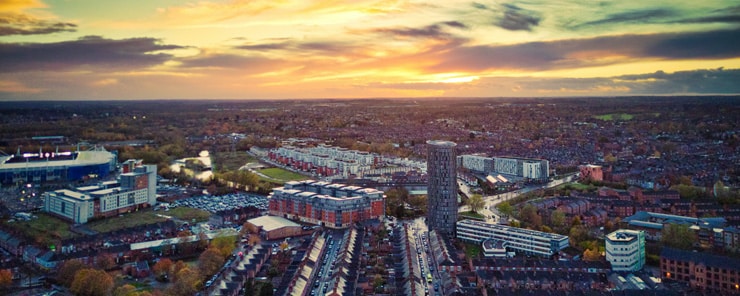
Leicester Rental Market Analysis
Monthly rents in Leicester range from £805 in LE1 to £1,275 in LE8, with gross rental yields from 3.2% to 7.3% across the eight postcodes with rental data. For investors asking is buy to let worth it in Leicester, the sections below break down rents, yields, and tenant affordability postcode by postcode. If you are working out how to build a property portfolio in the East Midlands, Leicester's mix of low asking prices and two-university demand offers some of the highest headline yields in the region. Browse available buy-to-let property across the area.
Average Rent & Gross Rental Yields in Leicester
Gross rental yields in Leicester range from 3.2% in LE7 to 7.3% in LE1. The cheapest postcode delivers the highest yield and the most expensive delivers the lowest, the clearest version of that relationship in any city we cover. LE8 charges the highest rent at £1,275 a month but yields 4.4%, because its £350,054 asking price absorbs most of that rent.
| Area | Average Monthly Rent | Asking Price | Gross Yield |
|---|---|---|---|
| LE1 (City Centre) | £805 | £132,064 | 7.3% |
| LE3 (Westcotes, Braunstone) | £1,068 | £260,649 | 4.9% |
| LE4 (Belgrave, Birstall) | £1,084 | £281,881 | 4.6% |
| LE8 (Oadby fringe, Countesthorpe) | £1,275 | £350,054 | 4.4% |
| LE5 (Evington, Hamilton) | £1,076 | £306,555 | 4.2% |
| LE2 (Clarendon Park, Aylestone) | £1,044 | £304,703 | 4.1% |
| LE18 (Wigston) | £1,014 | £318,769 | 3.8% |
| LE7 (Syston, Anstey) | £1,096 | £408,871 | 3.2% |
| LE19 (Enderby, Narborough) | Not enough data | £345,183 | Not enough data |
LE1 at 7.3% combines the lowest asking price with the lowest rent (£805) and still produces the best yield by a clear margin. A 30% deposit of £39,619 buys into the highest-yielding postcode in the city, the cheapest entry point on this list. The tenant base is mostly students and young professionals drawn by the city-centre flats and De Montfort University's central campus, so void risk is concentrated around the academic year. The 7.3% headline has to be weighed against the thin resale market set out above.
LE7 at 3.2% sits at the bottom of Leicester's yield table. The £1,096 monthly rent is solid, but the £408,871 asking price means the income return is compressed. In the outer villages around Syston and Anstey, the premium price does more for capital value than for rental yield, and the appeal is to investors weighting growth over income. LE19 appears in the table with no rental figure: it has asking-price and growth data, but no current rent or yield reading.
Is Leicester Rent High?
Monthly rents in Leicester consume between 29.9% and 47.4% of the local median gross monthly salary. The widely cited threshold for rent affordability is 30% of gross income. Only LE1 falls below that line, and the rest of the city sits above it, with LE8 the most stretched at 47.4%. That spread is wider than many cities because Leicester pairs below-average local wages with rents that hold up across the board.
The median gross weekly salary in Leicester is £639.50, and the median annual salary is £32,281, about £2,690 a month. This is below the East Midlands median of £720.80 per week and the Great Britain median of £766.60 per week. Data from the Nomis Labour Market Profile (ASHE 2025).
| Rank | Area | Rent as % of Income |
|---|---|---|
| 1 | LE8 (Oadby fringe, Countesthorpe) | 47.4% |
| 2 | LE7 (Syston, Anstey) | 40.7% |
| 3 | LE4 (Belgrave, Birstall) | 40.3% |
| 4 | LE5 (Evington, Hamilton) | 40.0% |
| 5 | LE3 (Westcotes, Braunstone) | 39.7% |
| 6 | LE2 (Clarendon Park, Aylestone) | 38.8% |
| 7 | LE18 (Wigston) | 37.7% |
| 8 | LE1 (City Centre) | 29.9% |
| — | LE19 (Enderby, Narborough) | Not enough data |
LE1 at 29.9% is the only postcode that sits inside the 30% affordability mark. A monthly rent of £805 against a median monthly salary of £2,690 leaves headroom, though the typical LE1 renter is a student or young professional rather than a median-wage earner. Affordable rents tend to correlate with lower arrears and longer tenancies, which matters more in the inner postcodes than the headline yield alone suggests.
LE8 at 47.4% is the least affordable on the local median, but the context matters: LE8 commands the highest rent in Leicester at £1,275, and the households renting larger homes in the Oadby fringe and Countesthorpe are typically dual-income rather than single earners on the median salary. Across the rest of the city, rents taking roughly 38% to 41% of median income reflect Leicester's gap between modest local wages and a rental market propped up by student and migration demand.
How Big Is Leicester's Private Rented Sector?
The private rented sector is deepest in LE1, where it accounts for 45.9% of households, and thinnest in LE19 and LE18 at 11.3% and 13.5%. How much of the stock is already let privately is a read on how established the local tenant base is, and Leicester's city-centre figure points to one of the most rental-dominated postcodes in the region. The table below shows household tenure by postcode.
| Area | Owned Outright | Owned with Mortgage | Private Rented | Social Rented |
|---|---|---|---|---|
| LE1 (City Centre) | 13.9% | 13.4% | 45.9% | 26.1% |
| LE5 (Evington, Hamilton) | 25.7% | 23.6% | 29.8% | 20.0% |
| LE4 (Belgrave, Birstall) | 27.5% | 28.9% | 22.9% | 19.7% |
| LE2 (Clarendon Park, Aylestone) | 35.7% | 28.7% | 22.6% | 12.1% |
| LE3 (Westcotes, Braunstone) | 27.0% | 36.1% | 19.6% | 16.6% |
| LE7 (Syston, Anstey) | 40.7% | 33.4% | 17.5% | 7.4% |
| LE8 (Oadby fringe, Countesthorpe) | 44.6% | 32.9% | 15.4% | 6.0% |
| LE18 (Wigston) | 39.4% | 36.6% | 13.5% | 9.3% |
| LE19 (Enderby, Narborough) | 30.2% | 50.4% | 11.3% | 6.8% |
LE1 has the deepest private rented sector in Leicester at 45.9% of households, the mark of a postcode built around renting rather than owning. Pair that with its market-leading 7.3% yield and large flat share, and LE1 reads as the most committed buy-to-let postcode in the city, with the caveat that owner-occupation is low and resale is slow. LE5 follows at 29.8%, where Evington and Hamilton mix renting with family ownership.
The outer postcodes tell the opposite story. LE19, LE18, and LE8 have private rented sectors below 16% and the highest owner-occupation, with LE19 showing the largest mortgaged-ownership share at 50.4%. These are settled family suburbs where the rental market is a smaller part of the picture, which matches their lower yields and detached-heavy stock.
On the lettings side, the inner postcodes have enough homes advertised to read the market with some confidence: LE1, LE2, and LE3 each held around 220 to 450 rental listings, taking roughly 93 to 105 days to let, which points to steady supply rather than a shortage. The outer postcodes, LE4, LE5, LE7, and LE8, had far fewer homes on the rental market at any one time and let faster, around 28 to 60 days, so the balance there currently sits with landlords.
Local Housing Allowance Rates in Leicester
All nine Leicester postcodes fall within the Leicester Broad Rental Market Area, where Local Housing Allowance runs from £91.00 a week for a shared room to £241.64 a week for a four-bedroom home. Local Housing Allowance sets the most a tenant on housing benefit can receive towards rent, so it describes the benefit's share of the rent, and tenants meet any gap above it themselves; it puts no floor under the wider market. The rates below apply across the whole of Leicester. To check the current rate for a specific address, you can use the government's official Local Housing Allowance calculator.
| Property Size | Weekly LHA Rate | Monthly Equivalent |
|---|---|---|
| Shared accommodation | £91.00 | £394 |
| 1 bedroom | £124.27 | £538 |
| 2 bedrooms | £149.59 | £648 |
| 3 bedrooms | £178.36 | £773 |
| 4 bedrooms | £241.64 | £1,047 |
The two-bedroom LHA rate of £149.59 a week works out at about £648 a month, below the £805 to £1,275 open-market rents recorded across Leicester's postcodes. A benefit-backed tenancy at the LHA rate therefore sits under the city's market rents, and the stock that fits within these rates is concentrated in LE1, where both asking prices and rents are lowest. The rates are identical in every Leicester postcode because they are set across the whole Leicester market area.
Buy-to-Let Considerations
Are Leicester House Prices High? Price-to-Earnings Ratios
Buying in Leicester takes between 4.1 and 12.7 times the local median annual salary. This is based on the Nomis Labour Market Profile for Leicester, which puts the median gross annual income for Leicester residents at £32,281.
The national benchmark for price-to-earnings is 7.4x (England's average sold price of £289,946 divided by the Great Britain median annual salary of £39,125). One of Leicester's nine postcodes, LE1, sits below that national benchmark, while the rest run above it because local wages are lower than the national median even though prices are cheaper.
| Rank | Area | Price-to-Earnings Ratio |
|---|---|---|
| 1 | LE1 (City Centre) | 4.1x |
| 2 | LE3 (Westcotes, Braunstone) | 8.1x |
| 3 | LE4 (Belgrave, Birstall) | 8.7x |
| 4 | LE2 (Clarendon Park, Aylestone) | 9.4x |
| 5 | LE5 (Evington, Hamilton) | 9.5x |
| 6 | LE18 (Wigston) | 9.9x |
| 7 | LE19 (Enderby, Narborough) | 10.7x |
| 8 | LE8 (Oadby fringe, Countesthorpe) | 10.8x |
| 9 | LE7 (Syston, Anstey) | 12.7x |
LE1 at 4.1x is well below the national benchmark of 7.4x, the most affordable entry point in Leicester against local earnings. A property at just over four times the median local salary is rare for a city-centre postcode, and it is the affordability side of the same equation that gives LE1 its 7.3% yield. The number reflects the cheap flat stock that dominates the city centre.
LE7 at 12.7x sits well above the national benchmark, the priciest postcode against local incomes. At nearly thirteen times the median Leicester salary, the outer villages around Syston and Anstey are firmly in owner-occupier territory, bought by households on incomes well above the city median. For investors, that ratio compresses the yield and lengthens the payback period.
Deposit Requirements in Leicester
A 30% deposit on a buy-to-let property in Leicester ranges from £39,619 in LE1 to £122,661 in LE7. The gap between the cheapest and most expensive deposit is £83,042, more than enough to fund a second LE1 deposit twice over. That spread is one of the widest in the East Midlands, and it gives investors a genuine choice of entry level within a single city.
Beyond the deposit, the stamp duty calculation and the other ongoing rental costs shape the total capital you need.
| Rank | Area | 30% Deposit Required |
|---|---|---|
| 1 | LE1 (City Centre) | £39,619 |
| 2 | LE3 (Westcotes, Braunstone) | £78,195 |
| 3 | LE4 (Belgrave, Birstall) | £84,564 |
| 4 | LE2 (Clarendon Park, Aylestone) | £91,411 |
| 5 | LE5 (Evington, Hamilton) | £91,966 |
| 6 | LE18 (Wigston) | £95,631 |
| 7 | LE19 (Enderby, Narborough) | £103,555 |
| 8 | LE8 (Oadby fringe, Countesthorpe) | £105,016 |
| 9 | LE7 (Syston, Anstey) | £122,661 |
LE1 is the cheapest way into Leicester, at a £39,619 deposit for the city's highest yield. Stepping up to LE3 nearly doubles the deposit to £78,195, and that money buys a different kind of postcode: family semis and terraces in Westcotes and Braunstone, a busier resale market at 75 sales a month, and a 17.3% five-year growth record, against LE1's quicker income but slow exit. The two postcodes sit at opposite ends of the same trade-off between yield and liquidity.
At the top of the table, LE7 and LE8 are within £17,645 of each other on deposit but earn differently. LE8 brings in the city's highest rent at £1,275 a month for a 4.4% yield, while LE7 charges £1,096 for a 3.2% yield off a higher price. Both are detached-heavy outer postcodes weighted towards capital value, where the larger deposit buys family housing rather than rental income.
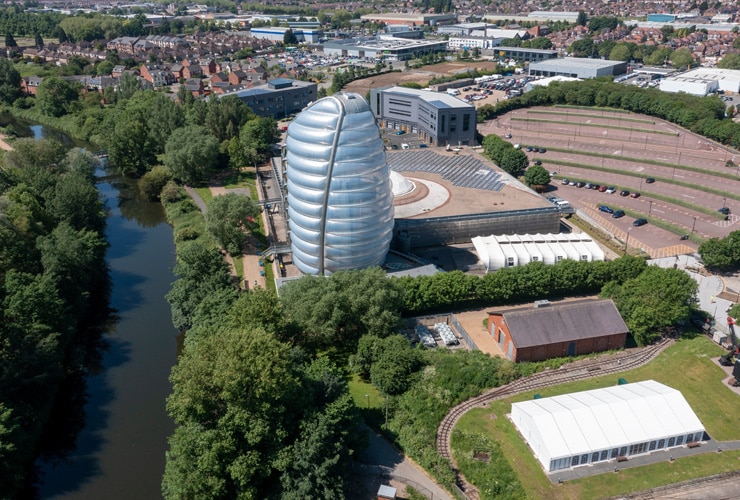
What the Leicester Data Tells Buy-to-Let Investors
In Leicester the cheapest way in is also the highest-yielding postcode, by a wide margin. LE1 has the top yield at 7.3%, the lowest asking price for an investment property in Leicester at £132,064, and the most affordable prices against local earnings at 4.1 times income. A 30% deposit there is £39,619, less than half the next postcode up, for a flat renting at £805 a month with a 45.9% private rented sector around it.
The catch with LE1 is liquidity. At 6 sales a month, 50 months of unsold stock and a -26.3% one-year reading off a tiny transaction base, the city-centre flat market is thin and slow to exit. The 7.3% yield is real, but it comes with a holding cost most yield tables leave out: when you want to sell, very few LE1 flats actually change hands. That is the part of the return that does not reach the rent column.
For investors who want income with an easier exit, LE3 and LE4 sit in the middle of the table at 4.9% and 4.6% yields on busier markets, with LE4 also posting the strongest five-year growth in the city at 21.5%. At the top end, LE7 carries the lowest yield at 3.2% on a 12.7 times price-to-earnings ratio, where the premium price does more for capital value than for rental return. Buyers who want to come in below asking often look through off-market property in Leicester channels, before stock reaches the open portals.
Leicester has no selective licensing scheme for private landlords, though larger shared houses still need an HMO licence, which you can check on Leicester City Council's property licensing pages. With two universities, a major teaching hospital and one of England's faster-growing populations, it reads as a higher-yield, lower-cost market than the southern East Midlands: strong rental demand and cheap entry, set against below-average local wages and a thin city-centre resale market.
How Leicester Compares
Leicester's mean asking price of £300,970 is the second-highest of five East Midlands and neighbouring cities compared here, yet its top yield of 7.3% beats every one of them except Nottingham. The comparison below places Leicester alongside four nearby cities, each with a different investor profile. The mean asking price and mean monthly rent are simple averages across all postcodes with data. Top gross yield is the single highest postcode yield in each location.
| Location | Mean Asking Price | Mean Monthly Rent | Mean Gross Yield | Top Yield (postcode) |
|---|---|---|---|---|
| Nottingham | £242,515 | £1,053 | 5.2% | 8.2% (NG1, NG7) |
| Derby | £282,243 | £984 | 4.2% | 5.8% (DE1) |
| Coventry | £293,448 | £1,085 | 4.4% | 6.9% (CV1) |
| Leicester | £300,970 | £1,058 | 4.2% | 7.3% (LE1) |
| Northampton | £342,830 | £1,211 | 4.2% | 5.7% (NN1) |
Leicester sits second-dearest in this group on mean asking price at £300,970, behind only Northampton at £342,830, but its 7.3% top yield is the second-highest in the table. That combination, a mid-to-high mean price alongside a strong top yield, comes from the spread within the city: cheap, high-yielding flats in LE1 sit under pricier family postcodes that pull the average up.
For investors prioritising headline income, Nottingham at 8.2% leads the table on top yield and is also the cheapest on mean asking price at £242,515. Coventry at 6.9% offers a similar high-yield profile a little further south. Derby and Northampton round out the group with lower top yields of 5.8% and 5.7%, weighted more towards capital value. Leicester's draw is the pairing of a region-leading yield in its cheapest postcode with the depth of demand from two universities and a teaching hospital. For a data-driven comparison across the whole country, see our highest-yielding areas guide.
Frequently Asked Questions
Is Leicester a good place to live for buy-to-let tenants?
For renters, yes, and that is what holds the market up. Two universities and De Montfort's city-centre campus bring more than 40,000 students into Leicester each year, and University Hospitals of Leicester is one of the largest NHS trusts in the country, so there is a steady base of student and healthcare renters that does not move much with the wider economy.
The flip side is the local wage picture. The median salary of £32,281 a year is below both the East Midlands and the national average, and the employment rate of 65.1% is lower too, partly because students count as economically inactive. For a landlord that means strong demand at the affordable end of the market, with rents in most postcodes taking a fair chunk of a median local income.
What are the best areas in Leicester for buy-to-let?
It depends whether you are buying for income or for an easy life when you sell. LE1 (City Centre) is the cheapest way in at £132,064 and carries the highest yield by a distance at 7.3%, with a 45.9% private rented sector around it, so on pure income it leads. The catch is that LE1 is the slowest postcode in the city to sell out of, with just 6 sales a month.
If you want yield with a busier resale market, LE3 (Westcotes, Braunstone) and LE4 (Belgrave, Birstall) sit in the middle at 4.9% and 4.6%, and LE4 also posted the strongest five-year growth at 21.5%. At the top end, LE7 and LE8 are detached-heavy outer postcodes weighted towards capital value rather than rental return, with yields of 3.2% and 4.4%.
How do student accommodation demand, costs and returns compare in Leicester?
The University of Leicester and De Montfort University provide student-demand context for LE1 and LE2. For return comparison, the available figure is LE1's 7.3% postcode-wide gross yield, alongside LE1's mean monthly rent of £805; neither figure is specific to student accommodation.
A June 2026 sample of LE1 room adverts puts a double room with a shared bathroom at around £135 a week, with most between £104 and £162 (the middle 80% of 22 adverts). These are advertised room rents and a postcode gross yield, not a net-return calculation: purchase, conversion, licensing, utilities, management, maintenance and seasonal void costs are not combined in this guide. LE2 and LE3 carry HMO room data too. For the purpose-built end of the market, see our guide to student property investment.
How does Leicester compare to Nottingham for property investment?
They are close neighbours with a similar pitch, and Nottingham edges it on the headline numbers. Nottingham has a higher top yield at 8.2% against Leicester's 7.3%, and a lower mean asking price at £242,515 against £300,970, so on a straight income comparison it looks the cheaper, higher-yielding option of the two.
Leicester's case is the depth and breadth of its demand: a faster-growing population, two universities, and one of the largest NHS trusts in the country, spread across a wide range of postcodes from cheap city-centre flats to family suburbs. Both are strong East Midlands student cities, so the choice often comes down to the specific stock and price you can find rather than the city-level averages.
What are average house prices in Leicester?
The average sold price across Leicester is £233,480 on the Land Registry index, about 19.5% below the England average of £289,946 and 3.4% under the East Midlands average as of March 2026. Asking prices by postcode run from £132,064 in LE1 (City Centre) up to £408,871 in LE7 (Syston, Anstey), with a city-wide mean of £300,970. By type, detached homes average £393,225, semi-detached £268,378, terraced £211,457 and flats £143,981.
Through a buy-to-let lens, LE1 is the cheapest entry and the highest-yielding at 7.3%, while LE7 is the dearest and lowest-yielding at 3.2%.
Can I find buy-to-let property under £150,000 in Leicester?
Yes, but mostly in one place. LE1 (City Centre) averages £132,064 on asking prices, the only postcode below £150,000, and it is built around flats and converted stock that suit a city-centre let. Everywhere else in Leicester sits well above that, with the next cheapest postcode at £260,649.
If sub-£150,000 is the target, LE1 flats are where to look, with the caveat that the resale market there is thin. Across the city, flats average £143,981 on the Land Registry index, so the cheaper entry points are about property type as much as postcode. You can also look at below market value properties to come in under asking.
What is the average rent in Leicester?
Across the eight postcodes with rental data, the mean monthly rent is £1,058. It runs from £805 in LE1 (City Centre), where the stock is smaller flats, up to £1,275 in LE8 (Oadby fringe, Countesthorpe), where the homes are larger and more family-sized. Most of the inner and mid postcodes sit between roughly £1,000 and £1,100 a month.
Set against the local median monthly salary of £2,690, those rents take between 29.9% and 47.4% of income depending on the postcode, with only LE1 falling inside the widely used 30% affordability mark.
What type of property is most common in Leicester?
It splits sharply by area. In the city centre, LE1 is 55.3% flats, the highest flat share by far. Move out to the suburbs and detached and semi-detached houses dominate: LE8 is 58.0% detached and LE19 is 54.7%, both with flats below 4%. Semi-detached houses are the most evenly spread type across the city, making up around 40% of stock in LE2, LE3, LE4, and LE18.
How do I buy an investment property in Leicester?
Decide the goal first, because income and growth point at different parts of the city. For yield, LE1 (City Centre) is the cheapest entry at £132,064 and the highest-yielding at 7.3%, though it is slow to resell. For a busier market with solid yield and growth, LE3 and LE4 sit in the middle of the table. Budget for a 30% deposit, which runs from £39,619 in LE1 to £122,661 in LE7 depending on the postcode.
Beyond what is listed openly, a lot of experienced investors buy below asking through off-market property in Leicester and BMV property. To see what is available now, browse investment property or buy-to-let homes for sale.
Ready to buy property?
Browse investment properties with prices and gross yields shown for each opportunity.
Get property alerts