
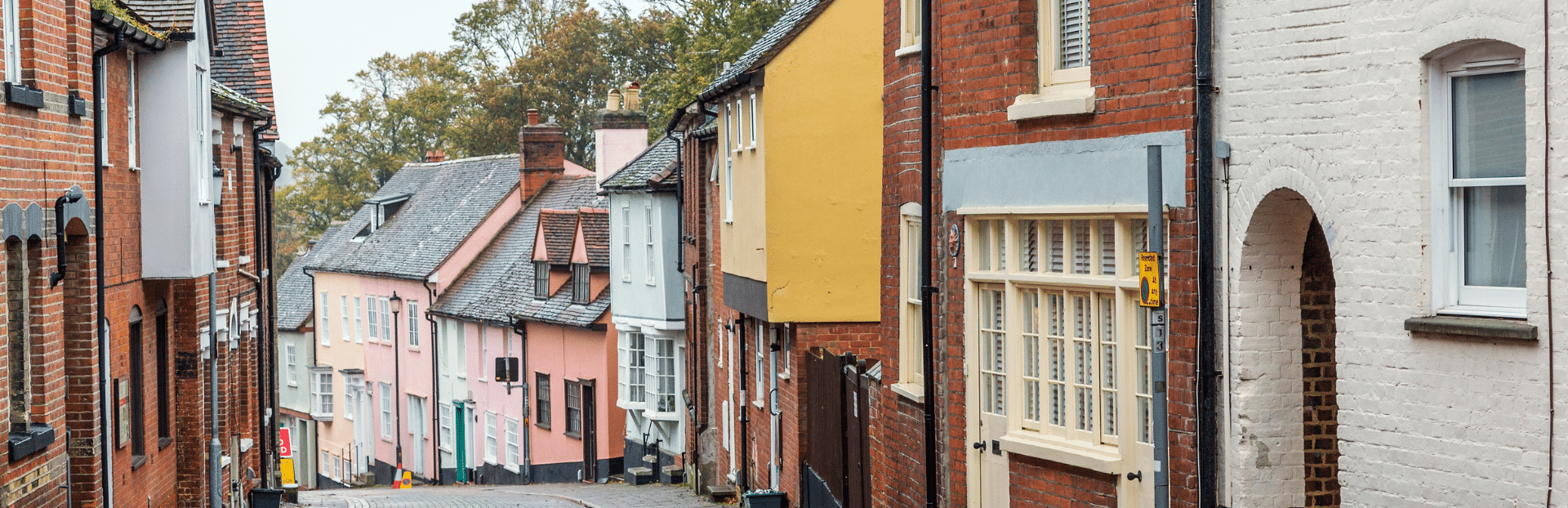
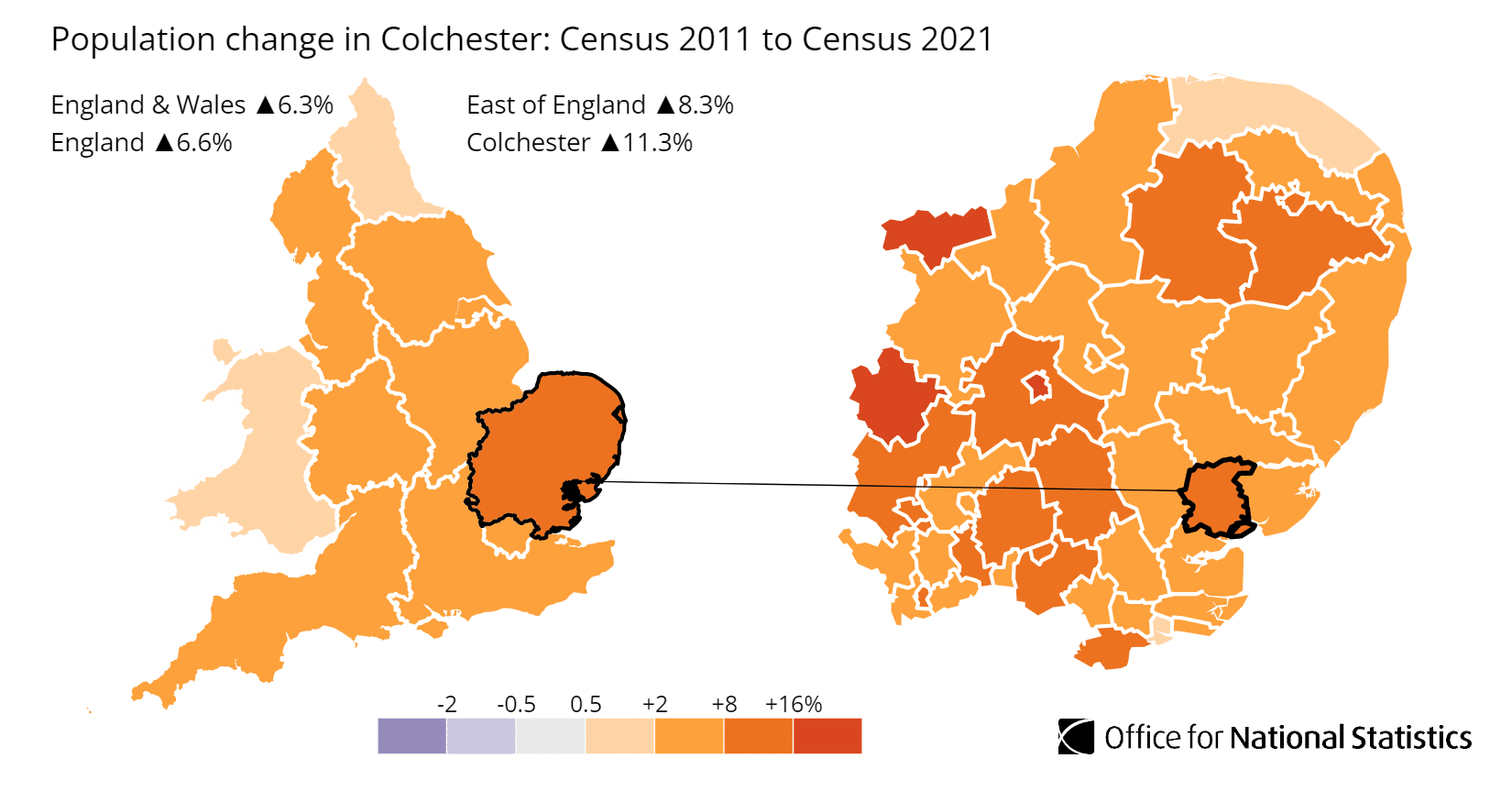
Colchester is a city in Essex, in the East of England. Average sold prices in Colchester sit at £300,327 on the HM Land Registry House Price Index, 3.6% above the England average of £289,946 yet 10.9% below the East of England regional average of £337,182. That combination is unusual. Colchester carries a price tag above the national line, the mark of a commuter market within reach of London, but stays cheaper than its own region, which is led by the pricier towns nearer the capital. Britain's oldest recorded town grew its population 11.35% between the 2011 and 2021 censuses, from 173,074 to 192,715 residents, well ahead of the England and Wales average of 6.3%.
What makes Colchester read differently from most markets above the England average is that the entry yield has not been squeezed out. The cheapest postcode, CO1 at £236,216, still returns a 5.4% gross yield, and CO2 matches it. Most towns priced above the national average have traded that income away. Here the spread runs from CO1 at £236,216 up to CO6 at £485,194, a two-tier market inside a single city, and the higher yields sit at the affordable end rather than the premium one.
This guide covers the City of Colchester (ONS code E07000071) across postcodes CO1, CO2, CO3, CO4, CO5, CO6, and CO7. Colchester sits in the East of England, about 60 miles north-east of London and 20 miles south of Ipswich. The wider Essex buy-to-let region also includes Chelmsford and Southend to the south.
Article updated: July 2026
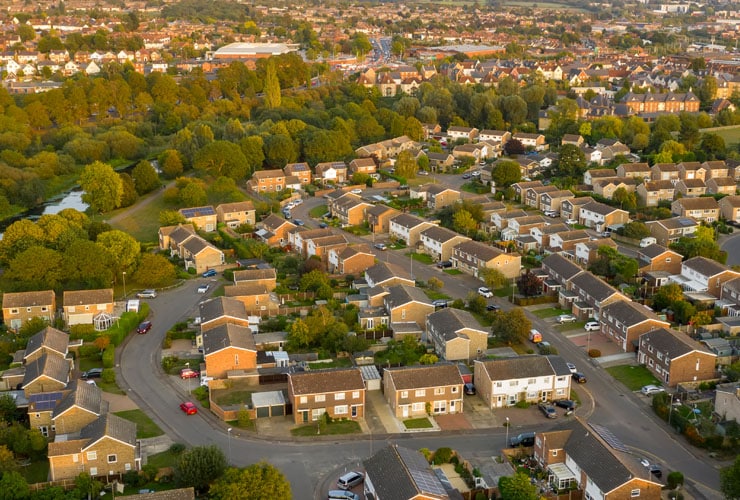
Why Invest in Colchester?
Colchester grew its population 11.35% between the 2011 and 2021 censuses, from 173,074 to 192,715 residents, almost double the England and Wales rate of 6.3%. Few places of its size have added people that quickly. Colchester's pull is part geography and part history: it is one of the closest large towns to London on the main line into Liverpool Street, and it is the oldest recorded town in Britain, with a Roman wall, a Norman castle, and a centre that draws year-round footfall.
The local employment rate of 76.0% sits a little above Great Britain's 75.6%. Colchester's economy leans on its garrison, a large education base built around the University of Essex, and the public sector, alongside the retail and hospitality that a historic town centre generates. The University of Essex brings a sizeable student population into the rental market, while the army garrison underpins a steady stream of service-family tenants who tend to rent rather than buy.
Median gross annual earnings in Colchester are £39,353, which is 0.6% above the Great Britain median of £39,125 but below the East of England weekly median of £804.90. A wage roughly on the national line, paired with prices above it, is what drives the affordability stretch in the premium postcodes. It also explains why the income return holds up best at the cheaper end, where rents and asking prices both sit lower.
Colchester Economic Summary
- Population (City of Colchester): 192,715 (2021 Census). Growth of 11.35% from 2011.
- Median annual salary: £39,353 (local), £39,125 (Great Britain)
- Median weekly salary: £766.60 (local), £804.90 (East of England), £766.60 (Great Britain)
- Employment rate: 76.0% (local), 75.6% (Great Britain)
- Key employment sectors: Education, public administration and defence, health, retail, accommodation and food
Source: ONS Census 2021, Nomis Labour Market Profile (ASHE 2025)
Regeneration and Investment in Colchester
Colchester's biggest housing project is the Tendring Colchester Borders Garden Community, a 7,750-home new settlement on the town's eastern edge, with £65 million of Homes England money confirmed in March 2026 for the link road that unlocks it. It is one of the largest planned communities in the East of England, and the infrastructure funding is the signal that it is moving from masterplan to delivery.
- Tendring Colchester Borders Garden Community (Planning, 7,750 homes): Latimer by Clarion Housing Group, with Mersea Homes, is the master developer for a new community of up to 7,750 homes, of which 30% are designated affordable. The plan sets out three neighbourhoods, four primary schools, a secondary school, a 60-hectare country park, and a projected 6,000-plus jobs. It adds a significant supply of new-build stock to the east of Colchester over the next two decades. Updates at Latimer by Clarion Housing Group.
- A1331 Link Road (Funded, £65 million): Homes England confirmed £65 million in March 2026 to complete the A1331 link road connecting the A133 to the A120, the piece of infrastructure that unlocks the 7,750 garden-community homes. Construction is expected to begin in 2027 with completion targeted for 2030. Updates at Tendring District Council.
- City Centre Regeneration (Active, £40 million-plus): A wider programme is reshaping the town centre, with more than £50 million committed. Named schemes include St Botolph's Circus (£12 million) to improve connectivity, the award-winning Digital Forum workspace (£6.25 million), and St Nicholas Square (£1.6 million). The work targets the business space and public realm that support a growing resident and visitor base. Updates at Invest Colchester.
Colchester Property Market Analysis
Average property prices in Colchester have risen 430.6% since January 1995, from £56,599 to £300,327. The sections below trace that climb cycle by cycle, then drill into current postcode-level data for sold prices, price per square foot, asking prices, growth trends, and monthly transaction volumes.
When was the last house price crash in Colchester?
Colchester's sold prices are recorded by HM Land Registry at City of Colchester level. The House Price Index tracks the average from January 1995 to March 2026, covering 31 years and the full sweep of the market's cycles.
The 1995 to 2008 climb: Colchester opened at £56,599 in January 1995. By December 2000 the average had reached £87,983, a 55.5% rise in six years as cheaper credit and easier lending fed in. The early-2000s boom carried prices to £171,584 by December 2005, and the market topped out at £195,177 in January 2008. As a commuter town within reach of London, Colchester rode the boom harder than most of the country.
2008 to 2009, the financial crisis: The fall was steep. Prices dropped from the January 2008 peak of £195,177 to a trough of £143,042 in April 2009, a decline of 26.7% in 15 months. The worst year-on-year reading was -24.1% in April 2009. That is a deeper correction than Colchester's heritage-town image suggests, and a far harder fall than markets further from London. Commuter-belt towns that had run up fastest in the boom gave back the most when credit dried up.
The 2010 to 2013 plateau: Prices recovered off the April 2009 trough but then stalled. The average reached £172,578 by December 2010, drifted to £175,988 by December 2012, and only firmed to £183,066 by December 2013. For four years Colchester traded in a narrow band, still short of its pre-crash peak.
Recovery, 2014 to 2016: Growth came back hard once London's ripple reached out along the line. Prices rose from £204,104 in December 2014 to £225,886 in April 2016. The pre-crash peak of £195,177 was finally cleared in August 2014, a recovery that took six and a half years. By December 2016 the average stood at £245,572, an annual rise of 10.1%.
The 2017 to 2019 cooling: The pace eased as London itself softened. Prices climbed to £261,520 by December 2017, then almost flatlined at £262,411 in December 2018 before slipping to £253,706 by December 2019. Annual growth fell from 6.5% to -3.3% across those three years, a clear stall after the post-crash surge.
2020 to 2022, the pandemic surge: The stamp duty holiday and the race for space sent buyers out of London towards towns like Colchester with bigger homes and faster trains. Prices jumped from £257,624 in June 2020 to £269,665 by December 2020, then ran on to £285,949 by December 2021. The market hit its all-time high of £313,537 in December 2022, an annual rise of 9.6%.
The 2023 rate shock: Higher mortgage rates cooled the market sharply. Prices eased to £299,076 by June 2023 and £295,703 by December 2023, a -5.7% annual reading. Colchester gave back some of the pandemic gains, more than steadier markets did, because so many of its buyers borrow to commute.
2024 to present: The market has steadied rather than re-accelerated. Prices recovered to £299,224 by December 2024 and £300,816 by December 2025, then settled at £300,327 by the latest reading in March 2026. The current average is 4.2% below the December 2022 high and 53.9% above the January 2008 pre-crash peak.
Long-term growth summary:
- 5 years (March 2021 to March 2026): 13.4% growth (£264,813 to £300,327)
- 10 years (March 2016 to March 2026): 33.7% growth (£224,554 to £300,327)
- 15 years (March 2011 to March 2026): 75.6% growth (£170,984 to £300,327)
- 20 years (March 2006 to March 2026): 70.8% growth (£175,848 to £300,327)
- 30 years (January 1995 to March 2026): 430.6% growth (£56,599 to £300,327)
Colchester's 26.7% crash was deeper than England's 18.2% and slower to mend, six and a half years against England's quicker bounce, which is the trade-off that comes with a commuter market: it runs harder in the good years and falls further in the bad ones. The 30-year return of 430.6% still beats the England average, and an investor who bought at the exact January 2008 peak would be up 53.9% on the Land Registry average today, having sat through that long recovery to get there.
- All property types
- Detached
- Semi-detached
- Terraced
- Flats
Source: HM Land Registry House Price Index
| Year | All property types | Detached | Semi-detached | Terraced | Flats |
|---|---|---|---|---|---|
| 1995-01 | £56,599 | £94,982 | £58,940 | £46,177 | £37,576 |
| 1995-02 | £55,823 | £93,041 | £58,379 | £45,606 | £37,117 |
| 1995-03 | £55,650 | £92,411 | £58,228 | £45,616 | £37,024 |
| 1995-04 | £55,089 | £91,107 | £57,713 | £45,224 | £36,739 |
| 1995-05 | £54,726 | £90,483 | £57,337 | £44,919 | £36,518 |
| 1995-06 | £54,375 | £89,992 | £56,992 | £44,477 | £36,382 |
| 1995-07 | £54,235 | £90,142 | £56,836 | £44,310 | £36,089 |
| 1995-08 | £54,417 | £90,912 | £56,959 | £44,450 | £35,975 |
| 1995-09 | £54,130 | £90,738 | £56,645 | £44,243 | £35,550 |
| 1995-10 | £53,289 | £89,397 | £55,848 | £43,371 | £35,070 |
| 1995-11 | £52,559 | £88,179 | £55,123 | £42,610 | £34,743 |
| 1995-12 | £52,306 | £87,628 | £54,932 | £42,359 | £34,628 |
| 1996-01 | £52,825 | £88,533 | £55,474 | £42,878 | £34,825 |
| 1996-02 | £53,318 | £89,108 | £56,095 | £43,422 | £35,066 |
| 1996-03 | £53,045 | £88,916 | £55,887 | £43,126 | £34,711 |
| 1996-04 | £53,246 | £89,114 | £56,060 | £43,368 | £34,905 |
| 1996-05 | £53,363 | £89,331 | £56,106 | £43,564 | £34,923 |
| 1996-06 | £54,231 | £90,601 | £56,905 | £44,325 | £35,735 |
| 1996-07 | £54,722 | £91,612 | £57,462 | £44,663 | £35,924 |
| 1996-08 | £54,116 | £91,159 | £56,769 | £43,982 | £35,364 |
| 1996-09 | £54,415 | £92,134 | £57,003 | £44,199 | £35,273 |
| 1996-10 | £53,694 | £91,187 | £56,262 | £43,523 | £34,674 |
| 1996-11 | £54,504 | £92,306 | £57,152 | £44,245 | £35,278 |
| 1996-12 | £54,172 | £91,576 | £56,960 | £43,990 | £34,984 |
| 1997-01 | £54,441 | £91,988 | £57,204 | £44,300 | £35,117 |
| 1997-02 | £54,253 | £91,853 | £57,001 | £44,079 | £34,942 |
| 1997-03 | £55,084 | £93,221 | £57,743 | £44,845 | £35,539 |
| 1997-04 | £55,365 | £93,409 | £58,138 | £45,129 | £35,756 |
| 1997-05 | £56,675 | £95,443 | £59,648 | £46,295 | £36,423 |
| 1997-06 | £56,892 | £96,103 | £59,977 | £46,402 | £36,285 |
| 1997-07 | £58,108 | £98,532 | £61,235 | £47,385 | £36,781 |
| 1997-08 | £58,576 | £99,788 | £61,670 | £47,640 | £36,949 |
| 1997-09 | £58,798 | £100,307 | £61,920 | £47,785 | £37,000 |
| 1997-10 | £58,659 | £100,166 | £61,820 | £47,555 | £36,950 |
| 1997-11 | £58,678 | £100,232 | £61,867 | £47,552 | £36,930 |
| 1997-12 | £59,152 | £100,986 | £62,454 | £47,883 | £37,241 |
| 1998-01 | £60,259 | £103,089 | £63,484 | £48,817 | £37,878 |
| 1998-02 | £61,038 | £104,163 | £64,283 | £49,495 | £38,541 |
| 1998-03 | £62,163 | £106,003 | £65,445 | £50,508 | £39,199 |
| 1998-04 | £63,179 | £107,564 | £66,707 | £51,307 | £39,789 |
| 1998-05 | £63,981 | £108,841 | £67,591 | £52,083 | £40,135 |
| 1998-06 | £64,425 | £109,691 | £67,971 | £52,374 | £40,548 |
| 1998-07 | £64,479 | £109,918 | £67,940 | £52,439 | £40,546 |
| 1998-08 | £65,097 | £111,552 | £68,490 | £52,782 | £40,825 |
| 1998-09 | £65,646 | £112,792 | £69,066 | £53,172 | £41,012 |
| 1998-10 | £65,900 | £113,209 | £69,307 | £53,320 | £41,305 |
| 1998-11 | £65,546 | £112,678 | £68,984 | £52,882 | £41,190 |
| 1998-12 | £65,333 | £112,052 | £68,827 | £52,696 | £41,209 |
| 1999-01 | £66,512 | £114,122 | £70,101 | £53,641 | £41,888 |
| 1999-02 | £66,433 | £113,698 | £70,051 | £53,675 | £41,853 |
| 1999-03 | £66,738 | £114,212 | £70,305 | £53,928 | £42,081 |
| 1999-04 | £65,532 | £111,692 | £69,021 | £53,173 | £41,367 |
| 1999-05 | £67,046 | £114,101 | £70,590 | £54,526 | £42,314 |
| 1999-06 | £68,831 | £117,202 | £72,444 | £56,047 | £43,342 |
| 1999-07 | £70,562 | £120,794 | £74,155 | £57,330 | £44,276 |
| 1999-08 | £71,603 | £122,923 | £75,113 | £58,209 | £44,803 |
| 1999-09 | £71,742 | £123,618 | £75,098 | £58,239 | £44,855 |
| 1999-10 | £73,312 | £126,312 | £76,801 | £59,291 | £46,049 |
| 1999-11 | £74,428 | £128,069 | £78,027 | £60,105 | £46,903 |
| 1999-12 | £75,680 | £129,556 | £79,379 | £61,204 | £47,980 |
| 2000-01 | £76,603 | £131,402 | £80,353 | £61,963 | £48,376 |
| 2000-02 | £77,810 | £133,647 | £81,574 | £62,931 | £49,069 |
| 2000-03 | £79,143 | £136,275 | £83,143 | £63,946 | £49,581 |
| 2000-04 | £80,846 | £138,578 | £84,906 | £65,438 | £50,935 |
| 2000-05 | £82,949 | £142,050 | £87,226 | £67,041 | £52,365 |
| 2000-06 | £84,313 | £144,233 | £88,667 | £68,029 | £53,473 |
| 2000-07 | £84,724 | £145,827 | £89,176 | £68,113 | £53,397 |
| 2000-08 | £84,661 | £146,379 | £89,082 | £67,742 | £53,381 |
| 2000-09 | £85,928 | £149,483 | £90,203 | £68,524 | £54,105 |
| 2000-10 | £87,085 | £151,447 | £91,501 | £69,272 | £55,010 |
| 2000-11 | £87,262 | £151,955 | £91,576 | £69,321 | £55,234 |
| 2000-12 | £87,983 | £152,703 | £92,405 | £69,846 | £56,019 |
| 2001-01 | £87,068 | £151,005 | £91,206 | £69,246 | £55,584 |
| 2001-02 | £87,965 | £152,093 | £92,237 | £70,190 | £56,071 |
| 2001-03 | £87,632 | £151,608 | £91,944 | £70,018 | £55,617 |
| 2001-04 | £89,956 | £155,619 | £94,293 | £71,960 | £57,086 |
| 2001-05 | £90,689 | £156,633 | £95,008 | £72,589 | £57,729 |
| 2001-06 | £92,793 | £159,807 | £97,078 | £74,356 | £59,427 |
| 2001-07 | £95,051 | £163,793 | £99,498 | £76,092 | £60,842 |
| 2001-08 | £97,343 | £168,261 | £101,673 | £77,827 | £62,310 |
| 2001-09 | £99,663 | £173,148 | £103,864 | £79,511 | £63,652 |
| 2001-10 | £100,744 | £174,846 | £105,057 | £80,257 | £64,549 |
| 2001-11 | £101,935 | £176,693 | £106,462 | £81,027 | £65,527 |
| 2001-12 | £102,552 | £176,828 | £107,322 | £81,409 | £66,500 |
| 2002-01 | £103,341 | £178,195 | £108,125 | £81,921 | £67,184 |
| 2002-02 | £104,710 | £180,264 | £109,382 | £83,240 | £68,159 |
| 2002-03 | £105,756 | £181,888 | £110,562 | £84,240 | £68,646 |
| 2002-04 | £107,316 | £183,799 | £112,057 | £85,659 | £70,126 |
| 2002-05 | £110,211 | £188,108 | £115,333 | £87,932 | £72,259 |
| 2002-06 | £112,014 | £190,990 | £116,913 | £89,528 | £73,714 |
| 2002-07 | £117,551 | £200,800 | £122,636 | £94,008 | £77,076 |
| 2002-08 | £120,248 | £205,639 | £125,274 | £96,181 | £78,848 |
| 2002-09 | £125,903 | £215,775 | £131,400 | £100,490 | £82,243 |
| 2002-10 | £127,798 | £218,813 | £133,701 | £101,736 | £83,636 |
| 2002-11 | £130,812 | £224,118 | £136,817 | £103,988 | £85,746 |
| 2002-12 | £132,215 | £225,420 | £138,516 | £105,110 | £87,210 |
| 2003-01 | £133,571 | £227,360 | £139,544 | £106,498 | £88,386 |
| 2003-02 | £134,205 | £227,350 | £140,541 | £107,158 | £89,034 |
| 2003-03 | £134,439 | £227,883 | £140,553 | £107,531 | £89,094 |
| 2003-04 | £135,439 | £228,643 | £142,012 | £108,329 | £89,996 |
| 2003-05 | £137,540 | £231,951 | £144,229 | £110,220 | £91,270 |
| 2003-06 | £139,219 | £234,053 | £146,072 | £111,580 | £92,824 |
| 2003-07 | £141,272 | £237,164 | £148,401 | £113,472 | £93,922 |
| 2003-08 | £141,233 | £236,794 | £148,376 | £113,541 | £93,971 |
| 2003-09 | £141,916 | £237,955 | £149,228 | £114,341 | £93,926 |
| 2003-10 | £141,201 | £236,414 | £148,339 | £113,922 | £93,649 |
| 2003-11 | £143,322 | £239,635 | £150,668 | £115,707 | £95,095 |
| 2003-12 | £145,338 | £241,356 | £152,849 | £117,714 | £97,114 |
| 2004-01 | £148,424 | £246,250 | £156,026 | £120,324 | £99,279 |
| 2004-02 | £150,483 | £248,497 | £158,050 | £122,434 | £100,940 |
| 2004-03 | £152,930 | £252,387 | £160,335 | £124,650 | £102,468 |
| 2004-04 | £155,082 | £253,748 | £162,798 | £127,150 | £104,047 |
| 2004-05 | £157,629 | £256,012 | £165,416 | £129,835 | £106,165 |
| 2004-06 | £159,730 | £257,689 | £167,732 | £131,884 | £108,052 |
| 2004-07 | £161,089 | £259,751 | £169,353 | £133,064 | £108,796 |
| 2004-08 | £162,041 | £261,807 | £170,426 | £133,830 | £109,115 |
| 2004-09 | £162,708 | £263,853 | £171,220 | £134,345 | £108,995 |
| 2004-10 | £163,521 | £264,891 | £171,664 | £135,034 | £110,058 |
| 2004-11 | £165,970 | £268,420 | £174,011 | £137,086 | £112,119 |
| 2004-12 | £165,610 | £266,245 | £173,309 | £137,172 | £112,628 |
| 2005-01 | £164,752 | £264,483 | £172,113 | £136,700 | £112,277 |
| 2005-02 | £164,328 | £263,029 | £171,886 | £136,479 | £112,065 |
| 2005-03 | £166,118 | £266,018 | £174,028 | £138,058 | £112,864 |
| 2005-04 | £167,040 | £266,239 | £175,485 | £139,209 | £113,293 |
| 2005-05 | £167,412 | £266,874 | £175,599 | £139,741 | £113,527 |
| 2005-06 | £168,897 | £268,117 | £177,056 | £141,379 | £114,748 |
| 2005-07 | £169,502 | £269,597 | £177,632 | £141,803 | £115,043 |
| 2005-08 | £169,396 | £269,642 | £177,425 | £141,872 | £114,786 |
| 2005-09 | £168,281 | £268,673 | £176,130 | £140,934 | £113,757 |
| 2005-10 | £168,718 | £269,157 | £176,223 | £141,435 | £114,313 |
| 2005-11 | £169,077 | £269,161 | £176,680 | £141,865 | £114,630 |
| 2005-12 | £171,584 | £271,828 | £179,015 | £144,082 | £117,086 |
| 2006-01 | £173,545 | £274,838 | £181,070 | £145,993 | £118,198 |
| 2006-02 | £175,060 | £276,267 | £182,387 | £147,355 | £119,624 |
| 2006-03 | £175,848 | £278,425 | £183,487 | £148,034 | £119,422 |
| 2006-04 | £176,907 | £279,423 | £184,745 | £149,032 | £120,208 |
| 2006-05 | £177,380 | £280,561 | £185,523 | £149,459 | £120,189 |
| 2006-06 | £177,600 | £279,971 | £185,888 | £149,882 | £120,419 |
| 2006-07 | £177,372 | £279,906 | £185,685 | £150,061 | £119,889 |
| 2006-08 | £178,880 | £282,970 | £187,417 | £151,810 | £120,255 |
| 2006-09 | £178,984 | £284,424 | £187,639 | £151,896 | £119,808 |
| 2006-10 | £181,450 | £288,652 | £190,150 | £153,802 | £121,523 |
| 2006-11 | £181,794 | £289,147 | £190,620 | £154,019 | £121,754 |
| 2006-12 | £185,570 | £293,718 | £194,403 | £157,536 | £124,677 |
| 2007-01 | £186,496 | £295,101 | £195,442 | £158,449 | £125,200 |
| 2007-02 | £187,114 | £295,306 | £195,819 | £158,796 | £126,147 |
| 2007-03 | £185,847 | £293,732 | £194,697 | £157,884 | £124,903 |
| 2007-04 | £186,003 | £293,196 | £194,889 | £158,469 | £124,961 |
| 2007-05 | £188,650 | £296,587 | £197,635 | £161,245 | £126,679 |
| 2007-06 | £190,804 | £299,762 | £199,696 | £163,190 | £128,243 |
| 2007-07 | £193,334 | £304,668 | £202,258 | £165,200 | £129,785 |
| 2007-08 | £194,482 | £308,475 | £203,810 | £166,375 | £129,581 |
| 2007-09 | £193,220 | £307,655 | £202,561 | £165,169 | £128,391 |
| 2007-10 | £192,010 | £305,977 | £201,038 | £164,019 | £127,725 |
| 2007-11 | £191,067 | £304,514 | £199,823 | £162,824 | £127,463 |
| 2007-12 | £193,790 | £308,466 | £202,472 | £165,079 | £129,562 |
| 2008-01 | £195,177 | £310,980 | £203,816 | £166,045 | £130,589 |
| 2008-02 | £194,205 | £308,943 | £202,717 | £165,205 | £130,166 |
| 2008-03 | £191,431 | £304,742 | £200,309 | £163,061 | £127,911 |
| 2008-04 | £188,508 | £300,039 | £197,485 | £161,057 | £125,614 |
| 2008-05 | £185,625 | £295,198 | £194,665 | £158,859 | £123,532 |
| 2008-06 | £178,999 | £284,621 | £187,560 | £153,204 | £119,196 |
| 2008-07 | £177,137 | £281,885 | £185,881 | £151,465 | £117,848 |
| 2008-08 | £174,291 | £278,602 | £182,943 | £149,048 | £115,600 |
| 2008-09 | £169,565 | £272,960 | £177,660 | £144,687 | £112,280 |
| 2008-10 | £163,795 | £264,156 | £171,462 | £139,615 | £108,479 |
| 2008-11 | £153,527 | £247,428 | £160,710 | £130,823 | £101,744 |
| 2008-12 | £150,384 | £241,674 | £157,790 | £128,620 | £99,429 |
| 2009-01 | £148,317 | £239,222 | £155,372 | £126,620 | £98,071 |
| 2009-02 | £151,884 | £245,165 | £159,001 | £129,395 | £100,675 |
| 2009-03 | £147,727 | £238,223 | £154,257 | £125,429 | £98,609 |
| 2009-04 | £143,042 | £229,129 | £149,729 | £121,845 | £95,720 |
| 2009-05 | £144,535 | £231,061 | £151,469 | £123,450 | £96,585 |
| 2009-06 | £150,870 | £241,371 | £158,455 | £129,173 | £100,214 |
| 2009-07 | £157,592 | £253,286 | £165,703 | £135,062 | £103,820 |
| 2009-08 | £161,420 | £260,373 | £169,881 | £138,528 | £105,601 |
| 2009-09 | £165,184 | £267,073 | £174,054 | £141,928 | £107,450 |
| 2009-10 | £165,315 | £267,688 | £174,527 | £142,096 | £107,025 |
| 2009-11 | £166,437 | £270,319 | £175,758 | £143,324 | £107,123 |
| 2009-12 | £167,864 | £271,770 | £177,711 | £144,959 | £107,859 |
| 2010-01 | £169,666 | £276,394 | £179,861 | £146,750 | £107,832 |
| 2010-02 | £170,301 | £277,914 | £180,992 | £147,479 | £107,529 |
| 2010-03 | £173,047 | £284,199 | £183,477 | £149,646 | £108,932 |
| 2010-04 | £173,626 | £284,136 | £184,061 | £150,169 | £109,843 |
| 2010-05 | £173,958 | £284,812 | £184,184 | £150,250 | £110,368 |
| 2010-06 | £172,046 | £281,417 | £182,553 | £148,923 | £108,654 |
| 2010-07 | £172,007 | £282,772 | £182,574 | £148,851 | £107,857 |
| 2010-08 | £173,135 | £285,426 | £184,248 | £149,674 | £107,852 |
| 2010-09 | £174,274 | £288,685 | £185,303 | £150,416 | £108,183 |
| 2010-10 | £175,502 | £290,410 | £186,481 | £151,486 | £109,207 |
| 2010-11 | £174,589 | £289,357 | £185,191 | £150,582 | £108,787 |
| 2010-12 | £172,578 | £285,454 | £183,164 | £148,799 | £107,781 |
| 2011-01 | £172,891 | £286,468 | £183,192 | £148,902 | £108,134 |
| 2011-02 | £170,807 | £282,880 | £180,618 | £147,254 | £107,144 |
| 2011-03 | £170,984 | £284,315 | £180,413 | £147,199 | £107,210 |
| 2011-04 | £170,843 | £283,779 | £180,210 | £147,241 | £107,193 |
| 2011-05 | £171,376 | £283,832 | £180,889 | £147,711 | £107,944 |
| 2011-06 | £173,571 | £286,089 | £183,619 | £149,814 | £109,550 |
| 2011-07 | £172,555 | £283,704 | £182,651 | £148,962 | £109,237 |
| 2011-08 | £173,650 | £286,460 | £184,167 | £149,869 | £108,941 |
| 2011-09 | £171,960 | £284,848 | £182,358 | £148,319 | £107,220 |
| 2011-10 | £171,129 | £284,644 | £181,748 | £147,286 | £105,984 |
| 2011-11 | £172,667 | £286,765 | £183,283 | £148,496 | £107,463 |
| 2011-12 | £173,376 | £287,419 | £184,237 | £149,005 | £108,141 |
| 2012-01 | £174,687 | £289,119 | £185,839 | £150,271 | £108,887 |
| 2012-02 | £171,700 | £284,268 | £182,857 | £148,025 | £106,391 |
| 2012-03 | £171,599 | £282,979 | £182,756 | £148,415 | £106,539 |
| 2012-04 | £171,286 | £282,292 | £182,182 | £148,197 | £106,624 |
| 2012-05 | £171,575 | £282,392 | £182,407 | £148,448 | £107,120 |
| 2012-06 | £173,063 | £285,166 | £183,897 | £149,975 | £107,681 |
| 2012-07 | £175,173 | £288,746 | £186,231 | £151,879 | £108,768 |
| 2012-08 | £176,150 | £290,562 | £187,484 | £152,945 | £108,826 |
| 2012-09 | £175,020 | £289,522 | £186,154 | £151,674 | £108,009 |
| 2012-10 | £174,950 | £289,078 | £186,113 | £151,817 | £107,940 |
| 2012-11 | £174,682 | £288,637 | £185,611 | £151,643 | £107,914 |
| 2012-12 | £175,988 | £290,951 | £187,121 | £152,831 | £108,455 |
| 2013-01 | £175,606 | £290,614 | £187,121 | £152,270 | £107,888 |
| 2013-02 | £176,407 | £291,983 | £188,067 | £152,861 | £108,336 |
| 2013-03 | £175,249 | £290,239 | £186,829 | £151,646 | £107,694 |
| 2013-04 | £174,974 | £289,680 | £186,184 | £151,731 | £107,540 |
| 2013-05 | £175,966 | £290,835 | £187,294 | £152,705 | £108,303 |
| 2013-06 | £175,538 | £289,415 | £187,051 | £152,661 | £107,947 |
| 2013-07 | £176,406 | £290,631 | £187,970 | £153,493 | £108,544 |
| 2013-08 | £178,099 | £293,912 | £189,888 | £154,872 | £109,249 |
| 2013-09 | £181,707 | £300,761 | £193,510 | £157,805 | £111,296 |
| 2013-10 | £183,500 | £304,833 | £195,456 | £158,954 | £112,086 |
| 2013-11 | £183,535 | £305,088 | £195,530 | £158,922 | £112,014 |
| 2013-12 | £183,066 | £303,314 | £195,354 | £158,622 | £111,984 |
| 2014-01 | £184,720 | £305,779 | £197,063 | £160,060 | £113,228 |
| 2014-02 | £185,544 | £307,472 | £197,808 | £160,712 | £113,755 |
| 2014-03 | £188,393 | £312,470 | £200,885 | £163,015 | £115,406 |
| 2014-04 | £188,191 | £311,430 | £200,726 | £163,228 | £115,218 |
| 2014-05 | £190,949 | £315,021 | £203,667 | £165,965 | £117,051 |
| 2014-06 | £192,314 | £317,304 | £205,207 | £167,293 | £117,684 |
| 2014-07 | £194,511 | £321,273 | £207,647 | £169,228 | £118,780 |
| 2014-08 | £196,045 | £324,838 | £209,471 | £170,367 | £119,282 |
| 2014-09 | £197,751 | £328,074 | £211,123 | £171,744 | £120,327 |
| 2014-10 | £201,338 | £334,221 | £215,025 | £174,580 | £122,636 |
| 2014-11 | £202,111 | £335,551 | £215,883 | £174,996 | £123,306 |
| 2014-12 | £204,104 | £338,996 | £217,940 | £176,552 | £124,666 |
| 2015-01 | £201,092 | £333,919 | £214,756 | £173,899 | £122,887 |
| 2015-02 | £202,231 | £335,680 | £215,587 | £174,928 | £123,866 |
| 2015-03 | £203,921 | £338,913 | £217,516 | £176,109 | £124,880 |
| 2015-04 | £208,300 | £346,427 | £222,132 | £179,980 | £127,406 |
| 2015-05 | £209,942 | £348,924 | £224,340 | £181,272 | £128,321 |
| 2015-06 | £209,072 | £346,971 | £223,854 | £181,042 | £127,250 |
| 2015-07 | £211,166 | £350,237 | £226,355 | £182,812 | £128,484 |
| 2015-08 | £213,114 | £353,878 | £228,530 | £184,695 | £129,234 |
| 2015-09 | £218,129 | £363,534 | £233,565 | £188,566 | £132,313 |
| 2015-10 | £219,021 | £365,659 | £234,591 | £189,274 | £132,562 |
| 2015-11 | £222,208 | £371,410 | £238,153 | £191,801 | £134,394 |
| 2015-12 | £223,055 | £372,811 | £239,203 | £192,627 | £134,731 |
| 2016-01 | £226,308 | £378,038 | £243,036 | £195,253 | £136,728 |
| 2016-02 | £224,978 | £375,769 | £241,628 | £194,068 | £135,967 |
| 2016-03 | £224,554 | £374,824 | £241,033 | £193,397 | £136,200 |
| 2016-04 | £225,886 | £376,709 | £242,144 | £194,951 | £137,011 |
| 2016-05 | £229,912 | £381,675 | £245,881 | £198,972 | £140,185 |
| 2016-06 | £234,060 | £388,396 | £250,175 | £202,874 | £142,603 |
| 2016-07 | £235,689 | £391,068 | £251,795 | £204,237 | £143,738 |
| 2016-08 | £240,080 | £399,566 | £256,678 | £207,602 | £146,105 |
| 2016-09 | £244,471 | £406,976 | £261,766 | £211,175 | £148,665 |
| 2016-10 | £246,761 | £411,806 | £264,174 | £212,353 | £150,343 |
| 2016-11 | £245,336 | £410,901 | £262,648 | £210,464 | £149,388 |
| 2016-12 | £245,572 | £411,552 | £262,370 | £210,450 | £149,976 |
| 2017-01 | £244,366 | £409,463 | £260,939 | £209,555 | £149,243 |
| 2017-02 | £249,394 | £416,274 | £265,657 | £213,951 | £153,232 |
| 2017-03 | £247,318 | £412,679 | £263,445 | £211,850 | £152,194 |
| 2017-04 | £251,737 | £419,515 | £267,874 | £215,514 | £155,356 |
| 2017-05 | £251,171 | £417,672 | £267,833 | £214,914 | £155,148 |
| 2017-06 | £255,701 | £423,916 | £272,638 | £219,179 | £158,196 |
| 2017-07 | £256,754 | £424,846 | £273,982 | £220,125 | £159,022 |
| 2017-08 | £259,113 | £429,403 | £276,368 | £222,718 | £159,889 |
| 2017-09 | £259,157 | £430,560 | £276,474 | £222,713 | £159,485 |
| 2017-10 | £261,061 | £434,882 | £278,824 | £224,340 | £160,036 |
| 2017-11 | £259,887 | £433,625 | £277,997 | £222,921 | £159,100 |
| 2017-12 | £261,520 | £436,243 | £280,167 | £224,380 | £159,876 |
| 2018-01 | £260,242 | £433,939 | £278,973 | £223,229 | £159,108 |
| 2018-02 | £261,472 | £436,225 | £280,201 | £224,590 | £159,615 |
| 2018-03 | £259,043 | £432,269 | £277,703 | £222,742 | £157,874 |
| 2018-04 | £260,875 | £435,344 | £279,968 | £225,002 | £158,316 |
| 2018-05 | £259,921 | £433,893 | £279,501 | £224,348 | £157,221 |
| 2018-06 | £259,610 | £433,217 | £279,613 | £223,929 | £156,941 |
| 2018-07 | £259,745 | £434,215 | £279,652 | £223,781 | £156,937 |
| 2018-08 | £261,615 | £437,321 | £281,589 | £225,537 | £158,019 |
| 2018-09 | £263,843 | £441,789 | £283,980 | £227,615 | £158,934 |
| 2018-10 | £263,514 | £441,206 | £283,660 | £227,231 | £158,799 |
| 2018-11 | £261,018 | £438,208 | £281,259 | £224,788 | £156,818 |
| 2018-12 | £262,411 | £440,195 | £282,823 | £225,732 | £157,953 |
| 2019-01 | £261,857 | £440,364 | £282,449 | £224,966 | £157,216 |
| 2019-02 | £262,083 | £440,686 | £282,506 | £224,825 | £157,756 |
| 2019-03 | £257,977 | £434,747 | £278,341 | £221,402 | £154,662 |
| 2019-04 | £258,265 | £434,343 | £278,843 | £222,238 | £154,730 |
| 2019-05 | £256,645 | £430,938 | £277,478 | £221,710 | £153,248 |
| 2019-06 | £258,322 | £433,194 | £279,204 | £223,487 | £154,347 |
| 2019-07 | £261,489 | £438,096 | £282,406 | £226,311 | £156,521 |
| 2019-08 | £263,148 | £441,496 | £284,116 | £227,977 | £157,121 |
| 2019-09 | £264,211 | £443,251 | £284,886 | £229,164 | £157,835 |
| 2019-10 | £258,109 | £433,117 | £279,073 | £223,777 | £153,712 |
| 2019-11 | £256,282 | £430,278 | £277,553 | £221,952 | £152,388 |
| 2019-12 | £253,706 | £426,380 | £275,285 | £219,835 | £150,243 |
| 2020-01 | £255,160 | £429,392 | £276,903 | £221,161 | £150,768 |
| 2020-02 | £255,485 | £430,101 | £277,095 | £221,315 | £151,102 |
| 2020-03 | £254,834 | £429,235 | £276,520 | £220,300 | £150,883 |
| 2020-04 | £254,039 | £429,047 | £275,662 | £219,941 | £149,611 |
| 2020-05 | £254,012 | £428,933 | £275,995 | £219,596 | £149,580 |
| 2020-06 | £257,624 | £434,790 | £280,176 | £223,160 | £151,303 |
| 2020-07 | £256,363 | £431,506 | £278,682 | £222,076 | £151,216 |
| 2020-08 | £257,506 | £434,149 | £280,228 | £223,656 | £150,883 |
| 2020-09 | £257,815 | £435,867 | £280,651 | £223,859 | £150,459 |
| 2020-10 | £265,784 | £451,030 | £289,278 | £230,821 | £154,292 |
| 2020-11 | £268,625 | £456,169 | £291,721 | £233,412 | £156,200 |
| 2020-12 | £269,665 | £458,060 | £292,524 | £234,693 | £156,727 |
| 2021-01 | £266,217 | £449,162 | £288,424 | £232,032 | £156,254 |
| 2021-02 | £265,144 | £443,987 | £286,861 | £231,611 | £157,285 |
| 2021-03 | £264,813 | £439,829 | £285,940 | £231,758 | £159,111 |
| 2021-04 | £263,450 | £437,270 | £284,130 | £230,733 | £158,637 |
| 2021-05 | £264,341 | £439,343 | £285,023 | £231,430 | £158,962 |
| 2021-06 | £267,294 | £443,667 | £287,853 | £234,924 | £160,698 |
| 2021-07 | £271,135 | £450,121 | £292,669 | £237,835 | £162,706 |
| 2021-08 | £274,624 | £457,295 | £297,150 | £240,488 | £163,697 |
| 2021-09 | £277,968 | £463,831 | £301,450 | £242,869 | £164,929 |
| 2021-10 | £279,589 | £470,306 | £302,883 | £243,608 | £164,610 |
| 2021-11 | £285,826 | £481,812 | £309,632 | £248,761 | £167,946 |
| 2021-12 | £285,949 | £484,741 | £309,831 | £248,234 | £166,922 |
| 2022-01 | £288,818 | £487,968 | £313,586 | £251,574 | £168,272 |
| 2022-02 | £288,733 | £486,842 | £313,506 | £251,875 | £168,645 |
| 2022-03 | £290,562 | £490,000 | £316,078 | £253,167 | £169,374 |
| 2022-04 | £291,961 | £491,958 | £317,309 | £254,973 | £170,203 |
| 2022-05 | £295,612 | £498,023 | £321,679 | £258,561 | £171,592 |
| 2022-06 | £300,755 | £505,393 | £327,137 | £263,927 | £174,876 |
| 2022-07 | £303,552 | £509,464 | £330,782 | £266,760 | £176,031 |
| 2022-08 | £305,573 | £512,856 | £332,965 | £269,241 | £176,508 |
| 2022-09 | £306,030 | £514,201 | £333,745 | £269,797 | £175,872 |
| 2022-10 | £310,383 | £522,489 | £338,151 | £273,364 | £178,198 |
| 2022-11 | £312,345 | £526,460 | £340,187 | £274,751 | £179,229 |
| 2022-12 | £313,537 | £528,144 | £341,383 | £275,795 | £180,282 |
| 2023-01 | £312,831 | £527,324 | £341,193 | £274,788 | £179,406 |
| 2023-02 | £311,581 | £526,281 | £339,759 | £273,031 | £178,619 |
| 2023-03 | £310,217 | £526,043 | £338,684 | £270,480 | £177,203 |
| 2023-04 | £306,721 | £520,750 | £334,766 | £267,046 | £175,287 |
| 2023-05 | £303,126 | £513,371 | £330,999 | £263,925 | £173,613 |
| 2023-06 | £299,076 | £505,308 | £326,315 | £261,319 | £171,300 |
| 2023-07 | £299,388 | £504,883 | £327,013 | £262,181 | £171,225 |
| 2023-08 | £296,570 | £500,322 | £324,311 | £260,500 | £168,781 |
| 2023-09 | £298,372 | £503,451 | £326,510 | £262,381 | £169,431 |
| 2023-10 | £293,989 | £495,225 | £321,451 | £258,552 | £167,406 |
| 2023-11 | £296,423 | £500,244 | £324,208 | £259,789 | £168,982 |
| 2023-12 | £295,703 | £498,400 | £323,423 | £258,831 | £169,026 |
| 2024-01 | £296,679 | £500,676 | £324,435 | £259,911 | £169,230 |
| 2024-02 | £290,869 | £488,934 | £318,250 | £255,700 | £166,041 |
| 2024-03 | £289,410 | £486,162 | £316,531 | £254,472 | £165,537 |
| 2024-04 | £290,410 | £486,069 | £317,658 | £255,590 | £166,852 |
| 2024-05 | £292,190 | £488,298 | £319,343 | £257,176 | £168,461 |
| 2024-06 | £293,825 | £489,872 | £321,078 | £259,450 | £169,400 |
| 2024-07 | £293,713 | £489,826 | £321,182 | £260,101 | £168,490 |
| 2024-08 | £294,186 | £491,144 | £321,676 | £261,146 | £167,990 |
| 2024-09 | £294,505 | £493,418 | £322,515 | £261,126 | £167,110 |
| 2024-10 | £295,338 | £495,800 | £322,887 | £261,258 | £167,934 |
| 2024-11 | £297,299 | £499,678 | £325,639 | £262,506 | £168,676 |
| 2024-12 | £299,224 | £503,885 | £327,641 | £264,067 | £169,442 |
| 2025-01 | £297,729 | £502,117 | £326,794 | £262,931 | £167,470 |
| 2025-02 | £297,505 | £501,706 | £326,186 | £263,326 | £167,235 |
| 2025-03 | £297,837 | £497,929 | £326,329 | £264,860 | £169,282 |
| 2025-04 | £298,434 | £501,323 | £327,446 | £264,382 | £168,607 |
| 2025-05 | £299,041 | £503,480 | £328,498 | £264,716 | £168,121 |
| 2025-06 | £298,498 | £505,898 | £328,745 | £263,542 | £165,616 |
| 2025-07 | £299,109 | £504,097 | £329,392 | £265,582 | £166,520 |
| 2025-08 | £299,689 | £504,669 | £330,787 | £266,290 | £166,348 |
| 2025-09 | £297,416 | £501,440 | £328,663 | £264,668 | £164,140 |
| 2025-10 | £299,729 | £505,893 | £331,637 | £266,535 | £164,907 |
| 2025-11 | £301,510 | £508,687 | £333,375 | £268,447 | £165,950 |
| 2025-12 | £300,816 | £506,474 | £332,749 | £268,211 | £165,792 |
| 2026-01 | £298,446 | £501,659 | £330,505 | £266,905 | £164,088 |
| 2026-02 | £300,669 | £506,241 | £333,507 | £268,584 | £164,573 |
| 2026-03 | £300,327 | £506,220 | £333,951 | £268,521 | £163,143 |
- All property types
- Detached
- Semi-detached
- Terraced
- Flats
Source: HM Land Registry House Price Index
| Year | All property types | Detached | Semi-detached | Terraced | Flats |
|---|---|---|---|---|---|
| 1996-01 | -6.7% | -6.8% | -5.9% | -7.1% | -7.3% |
| 1996-02 | -4.5% | -4.2% | -3.9% | -4.8% | -5.5% |
| 1996-03 | -4.7% | -3.8% | -4.0% | -5.5% | -6.2% |
| 1996-04 | -3.3% | -2.2% | -2.9% | -4.1% | -5.0% |
| 1996-05 | -2.5% | -1.3% | -2.1% | -3.0% | -4.4% |
| 1996-06 | -0.3% | +0.7% | -0.2% | -0.3% | -1.8% |
| 1996-07 | +0.9% | +1.6% | +1.1% | +0.8% | -0.5% |
| 1996-08 | -0.6% | +0.3% | -0.3% | -1.1% | -1.7% |
| 1996-09 | +0.5% | +1.5% | +0.6% | -0.1% | -0.8% |
| 1996-10 | +0.8% | +2.0% | +0.7% | +0.4% | -1.1% |
| 1996-11 | +3.7% | +4.7% | +3.7% | +3.8% | +1.5% |
| 1996-12 | +3.6% | +4.5% | +3.7% | +3.9% | +1.0% |
| 1997-01 | +3.1% | +3.9% | +3.1% | +3.3% | +0.8% |
| 1997-02 | +1.8% | +3.1% | +1.6% | +1.5% | -0.4% |
| 1997-03 | +3.8% | +4.8% | +3.3% | +4.0% | +2.4% |
| 1997-04 | +4.0% | +4.8% | +3.7% | +4.1% | +2.4% |
| 1997-05 | +6.2% | +6.8% | +6.3% | +6.3% | +4.3% |
| 1997-06 | +4.9% | +6.1% | +5.4% | +4.7% | +1.5% |
| 1997-07 | +6.2% | +7.6% | +6.6% | +6.1% | +2.4% |
| 1997-08 | +8.2% | +9.5% | +8.6% | +8.3% | +4.5% |
| 1997-09 | +8.1% | +8.9% | +8.6% | +8.1% | +4.9% |
| 1997-10 | +9.2% | +9.8% | +9.9% | +9.3% | +6.6% |
| 1997-11 | +7.7% | +8.6% | +8.2% | +7.5% | +4.7% |
| 1997-12 | +9.2% | +10.3% | +9.6% | +8.9% | +6.5% |
| 1998-01 | +10.7% | +12.1% | +11.0% | +10.2% | +7.9% |
| 1998-02 | +12.5% | +13.4% | +12.8% | +12.3% | +10.3% |
| 1998-03 | +12.9% | +13.7% | +13.3% | +12.6% | +10.3% |
| 1998-04 | +14.1% | +15.2% | +14.7% | +13.7% | +11.3% |
| 1998-05 | +12.9% | +14.0% | +13.3% | +12.5% | +10.2% |
| 1998-06 | +13.2% | +14.1% | +13.3% | +12.9% | +11.7% |
| 1998-07 | +11.0% | +11.6% | +11.0% | +10.7% | +10.2% |
| 1998-08 | +11.1% | +11.8% | +11.1% | +10.8% | +10.5% |
| 1998-09 | +11.6% | +12.4% | +11.5% | +11.3% | +10.8% |
| 1998-10 | +12.3% | +13.0% | +12.1% | +12.1% | +11.8% |
| 1998-11 | +11.7% | +12.4% | +11.5% | +11.2% | +11.5% |
| 1998-12 | +10.5% | +11.0% | +10.2% | +10.1% | +10.7% |
| 1999-01 | +10.4% | +10.7% | +10.4% | +9.9% | +10.6% |
| 1999-02 | +8.8% | +9.2% | +9.0% | +8.4% | +8.6% |
| 1999-03 | +7.4% | +7.7% | +7.4% | +6.8% | +7.4% |
| 1999-04 | +3.7% | +3.8% | +3.5% | +3.6% | +4.0% |
| 1999-05 | +4.8% | +4.8% | +4.4% | +4.7% | +5.4% |
| 1999-06 | +6.8% | +6.8% | +6.6% | +7.0% | +6.9% |
| 1999-07 | +9.4% | +9.9% | +9.1% | +9.3% | +9.2% |
| 1999-08 | +10.0% | +10.2% | +9.7% | +10.3% | +9.7% |
| 1999-09 | +9.3% | +9.6% | +8.7% | +9.5% | +9.4% |
| 1999-10 | +11.2% | +11.6% | +10.8% | +11.2% | +11.5% |
| 1999-11 | +13.6% | +13.7% | +13.1% | +13.7% | +13.9% |
| 1999-12 | +15.8% | +15.6% | +15.3% | +16.1% | +16.4% |
| 2000-01 | +15.2% | +15.1% | +14.6% | +15.5% | +15.5% |
| 2000-02 | +17.1% | +17.5% | +16.4% | +17.2% | +17.2% |
| 2000-03 | +18.6% | +19.3% | +18.3% | +18.6% | +17.8% |
| 2000-04 | +23.4% | +24.1% | +23.0% | +23.1% | +23.1% |
| 2000-05 | +23.7% | +24.5% | +23.6% | +23.0% | +23.8% |
| 2000-06 | +22.5% | +23.1% | +22.4% | +21.4% | +23.4% |
| 2000-07 | +20.1% | +20.7% | +20.3% | +18.8% | +20.6% |
| 2000-08 | +18.2% | +19.1% | +18.6% | +16.4% | +19.1% |
| 2000-09 | +19.8% | +20.9% | +20.1% | +17.7% | +20.6% |
| 2000-10 | +18.8% | +19.9% | +19.1% | +16.8% | +19.5% |
| 2000-11 | +17.2% | +18.7% | +17.4% | +15.3% | +17.8% |
| 2000-12 | +16.3% | +17.9% | +16.4% | +14.1% | +16.8% |
| 2001-01 | +13.7% | +14.9% | +13.5% | +11.8% | +14.9% |
| 2001-02 | +13.1% | +13.8% | +13.1% | +11.5% | +14.3% |
| 2001-03 | +10.7% | +11.3% | +10.6% | +9.5% | +12.2% |
| 2001-04 | +11.3% | +12.3% | +11.1% | +10.0% | +12.1% |
| 2001-05 | +9.3% | +10.3% | +8.9% | +8.3% | +10.2% |
| 2001-06 | +10.1% | +10.8% | +9.5% | +9.3% | +11.1% |
| 2001-07 | +12.2% | +12.3% | +11.6% | +11.7% | +13.9% |
| 2001-08 | +15.0% | +14.9% | +14.1% | +14.9% | +16.7% |
| 2001-09 | +16.0% | +15.8% | +15.1% | +16.0% | +17.6% |
| 2001-10 | +15.7% | +15.5% | +14.8% | +15.9% | +17.3% |
| 2001-11 | +16.8% | +16.3% | +16.3% | +16.9% | +18.6% |
| 2001-12 | +16.6% | +15.8% | +16.1% | +16.6% | +18.7% |
| 2002-01 | +18.7% | +18.0% | +18.6% | +18.3% | +20.9% |
| 2002-02 | +19.0% | +18.5% | +18.6% | +18.6% | +21.6% |
| 2002-03 | +20.7% | +20.0% | +20.2% | +20.3% | +23.4% |
| 2002-04 | +19.3% | +18.1% | +18.8% | +19.0% | +22.8% |
| 2002-05 | +21.5% | +20.1% | +21.4% | +21.1% | +25.2% |
| 2002-06 | +20.7% | +19.5% | +20.4% | +20.4% | +24.0% |
| 2002-07 | +23.7% | +22.6% | +23.3% | +23.5% | +26.7% |
| 2002-08 | +23.5% | +22.2% | +23.2% | +23.6% | +26.5% |
| 2002-09 | +26.3% | +24.6% | +26.5% | +26.4% | +29.2% |
| 2002-10 | +26.9% | +25.1% | +27.3% | +26.8% | +29.6% |
| 2002-11 | +28.3% | +26.8% | +28.5% | +28.3% | +30.9% |
| 2002-12 | +28.9% | +27.5% | +29.1% | +29.1% | +31.1% |
| 2003-01 | +29.3% | +27.6% | +29.1% | +30.0% | +31.6% |
| 2003-02 | +28.2% | +26.1% | +28.5% | +28.7% | +30.6% |
| 2003-03 | +27.1% | +25.3% | +27.1% | +27.6% | +29.8% |
| 2003-04 | +26.2% | +24.4% | +26.7% | +26.5% | +28.3% |
| 2003-05 | +24.8% | +23.3% | +25.1% | +25.3% | +26.3% |
| 2003-06 | +24.3% | +22.5% | +24.9% | +24.6% | +25.9% |
| 2003-07 | +20.2% | +18.1% | +21.0% | +20.7% | +21.9% |
| 2003-08 | +17.5% | +15.2% | +18.4% | +18.0% | +19.2% |
| 2003-09 | +12.7% | +10.3% | +13.6% | +13.8% | +14.2% |
| 2003-10 | +10.5% | +8.0% | +10.9% | +12.0% | +12.0% |
| 2003-11 | +9.6% | +6.9% | +10.1% | +11.3% | +10.9% |
| 2003-12 | +9.9% | +7.1% | +10.3% | +12.0% | +11.4% |
| 2004-01 | +11.1% | +8.3% | +11.8% | +13.0% | +12.3% |
| 2004-02 | +12.1% | +9.3% | +12.5% | +14.3% | +13.4% |
| 2004-03 | +13.8% | +10.8% | +14.1% | +15.9% | +15.0% |
| 2004-04 | +14.5% | +11.0% | +14.6% | +17.4% | +15.6% |
| 2004-05 | +14.6% | +10.4% | +14.7% | +17.8% | +16.3% |
| 2004-06 | +14.7% | +10.1% | +14.8% | +18.2% | +16.4% |
| 2004-07 | +14.0% | +9.5% | +14.1% | +17.3% | +15.8% |
| 2004-08 | +14.7% | +10.6% | +14.9% | +17.9% | +16.1% |
| 2004-09 | +14.7% | +10.9% | +14.7% | +17.5% | +16.0% |
| 2004-10 | +15.8% | +12.0% | +15.7% | +18.5% | +17.5% |
| 2004-11 | +15.8% | +12.0% | +15.5% | +18.5% | +17.9% |
| 2004-12 | +13.9% | +10.3% | +13.4% | +16.5% | +16.0% |
| 2005-01 | +11.0% | +7.4% | +10.3% | +13.6% | +13.1% |
| 2005-02 | +9.2% | +5.8% | +8.8% | +11.5% | +11.0% |
| 2005-03 | +8.6% | +5.4% | +8.5% | +10.8% | +10.1% |
| 2005-04 | +7.7% | +4.9% | +7.8% | +9.5% | +8.9% |
| 2005-05 | +6.2% | +4.2% | +6.2% | +7.6% | +6.9% |
| 2005-06 | +5.7% | +4.0% | +5.6% | +7.2% | +6.2% |
| 2005-07 | +5.2% | +3.8% | +4.9% | +6.6% | +5.7% |
| 2005-08 | +4.5% | +3.0% | +4.1% | +6.0% | +5.2% |
| 2005-09 | +3.4% | +1.8% | +2.9% | +4.9% | +4.4% |
| 2005-10 | +3.2% | +1.6% | +2.7% | +4.7% | +3.9% |
| 2005-11 | +1.9% | +0.3% | +1.5% | +3.5% | +2.2% |
| 2005-12 | +3.6% | +2.1% | +3.3% | +5.0% | +4.0% |
| 2006-01 | +5.3% | +3.9% | +5.2% | +6.8% | +5.3% |
| 2006-02 | +6.5% | +5.0% | +6.1% | +8.0% | +6.7% |
| 2006-03 | +5.9% | +4.7% | +5.4% | +7.2% | +5.8% |
| 2006-04 | +5.9% | +5.0% | +5.3% | +7.1% | +6.1% |
| 2006-05 | +6.0% | +5.1% | +5.7% | +7.0% | +5.9% |
| 2006-06 | +5.2% | +4.4% | +5.0% | +6.0% | +4.9% |
| 2006-07 | +4.6% | +3.8% | +4.5% | +5.8% | +4.2% |
| 2006-08 | +5.6% | +4.9% | +5.6% | +7.0% | +4.8% |
| 2006-09 | +6.4% | +5.9% | +6.5% | +7.8% | +5.3% |
| 2006-10 | +7.5% | +7.2% | +7.9% | +8.7% | +6.3% |
| 2006-11 | +7.5% | +7.4% | +7.9% | +8.6% | +6.2% |
| 2006-12 | +8.2% | +8.1% | +8.6% | +9.3% | +6.5% |
| 2007-01 | +7.5% | +7.4% | +7.9% | +8.5% | +5.9% |
| 2007-02 | +6.9% | +6.9% | +7.4% | +7.8% | +5.5% |
| 2007-03 | +5.7% | +5.5% | +6.1% | +6.7% | +4.6% |
| 2007-04 | +5.1% | +4.9% | +5.5% | +6.3% | +4.0% |
| 2007-05 | +6.4% | +5.7% | +6.5% | +7.9% | +5.4% |
| 2007-06 | +7.4% | +7.1% | +7.4% | +8.9% | +6.5% |
| 2007-07 | +9.0% | +8.8% | +8.9% | +10.1% | +8.3% |
| 2007-08 | +8.7% | +9.0% | +8.7% | +9.6% | +7.8% |
| 2007-09 | +8.0% | +8.2% | +8.0% | +8.7% | +7.2% |
| 2007-10 | +5.8% | +6.0% | +5.7% | +6.6% | +5.1% |
| 2007-11 | +5.1% | +5.3% | +4.8% | +5.7% | +4.7% |
| 2007-12 | +4.4% | +5.0% | +4.2% | +4.8% | +3.9% |
| 2008-01 | +4.7% | +5.4% | +4.3% | +4.8% | +4.3% |
| 2008-02 | +3.8% | +4.6% | +3.5% | +4.0% | +3.2% |
| 2008-03 | +3.0% | +3.7% | +2.9% | +3.3% | +2.4% |
| 2008-04 | +1.3% | +2.3% | +1.3% | +1.6% | +0.5% |
| 2008-05 | -1.6% | -0.5% | -1.5% | -1.5% | -2.5% |
| 2008-06 | -6.2% | -5.1% | -6.1% | -6.1% | -7.1% |
| 2008-07 | -8.4% | -7.5% | -8.1% | -8.3% | -9.2% |
| 2008-08 | -10.4% | -9.7% | -10.2% | -10.4% | -10.8% |
| 2008-09 | -12.2% | -11.3% | -12.3% | -12.4% | -12.5% |
| 2008-10 | -14.7% | -13.7% | -14.7% | -14.9% | -15.1% |
| 2008-11 | -19.6% | -18.7% | -19.6% | -19.7% | -20.2% |
| 2008-12 | -22.4% | -21.7% | -22.1% | -22.1% | -23.3% |
| 2009-01 | -24.0% | -23.1% | -23.8% | -23.7% | -24.9% |
| 2009-02 | -21.8% | -20.6% | -21.6% | -21.7% | -22.7% |
| 2009-03 | -22.8% | -21.8% | -23.0% | -23.1% | -22.9% |
| 2009-04 | -24.1% | -23.6% | -24.2% | -24.3% | -23.8% |
| 2009-05 | -22.1% | -21.7% | -22.2% | -22.3% | -21.8% |
| 2009-06 | -15.7% | -15.2% | -15.5% | -15.7% | -15.9% |
| 2009-07 | -11.0% | -10.1% | -10.9% | -10.8% | -11.9% |
| 2009-08 | -7.4% | -6.5% | -7.1% | -7.1% | -8.6% |
| 2009-09 | -2.6% | -2.2% | -2.0% | -1.9% | -4.3% |
| 2009-10 | +0.9% | +1.3% | +1.8% | +1.8% | -1.3% |
| 2009-11 | +8.4% | +9.3% | +9.4% | +9.6% | +5.3% |
| 2009-12 | +11.6% | +12.5% | +12.6% | +12.7% | +8.5% |
| 2010-01 | +14.4% | +15.5% | +15.8% | +15.9% | +10.0% |
| 2010-02 | +12.1% | +13.4% | +13.8% | +14.0% | +6.8% |
| 2010-03 | +17.1% | +19.3% | +18.9% | +19.3% | +10.5% |
| 2010-04 | +21.4% | +24.0% | +22.9% | +23.2% | +14.8% |
| 2010-05 | +20.4% | +23.3% | +21.6% | +21.7% | +14.3% |
| 2010-06 | +14.0% | +16.6% | +15.2% | +15.3% | +8.4% |
| 2010-07 | +9.1% | +11.6% | +10.2% | +10.2% | +3.9% |
| 2010-08 | +7.3% | +9.6% | +8.5% | +8.0% | +2.1% |
| 2010-09 | +5.5% | +8.1% | +6.5% | +6.0% | +0.7% |
| 2010-10 | +6.2% | +8.5% | +6.8% | +6.6% | +2.0% |
| 2010-11 | +4.9% | +7.0% | +5.4% | +5.1% | +1.6% |
| 2010-12 | +2.8% | +5.0% | +3.1% | +2.6% | -0.1% |
| 2011-01 | +1.9% | +3.6% | +1.9% | +1.5% | +0.3% |
| 2011-02 | +0.3% | +1.8% | -0.2% | -0.2% | -0.4% |
| 2011-03 | -1.2% | 0.0% | -1.7% | -1.6% | -1.6% |
| 2011-04 | -1.6% | -0.1% | -2.1% | -1.9% | -2.4% |
| 2011-05 | -1.5% | -0.3% | -1.8% | -1.7% | -2.2% |
| 2011-06 | +0.9% | +1.7% | +0.6% | +0.6% | +0.8% |
| 2011-07 | +0.3% | +0.3% | 0.0% | +0.1% | +1.3% |
| 2011-08 | +0.3% | +0.4% | 0.0% | +0.1% | +1.0% |
| 2011-09 | -1.3% | -1.3% | -1.6% | -1.4% | -0.9% |
| 2011-10 | -2.5% | -2.0% | -2.5% | -2.8% | -3.0% |
| 2011-11 | -1.1% | -0.9% | -1.0% | -1.4% | -1.2% |
| 2011-12 | +0.5% | +0.7% | +0.6% | +0.1% | +0.3% |
| 2012-01 | +1.0% | +0.9% | +1.4% | +0.9% | +0.7% |
| 2012-02 | +0.5% | +0.5% | +1.2% | +0.5% | -0.7% |
| 2012-03 | +0.4% | -0.5% | +1.3% | +0.8% | -0.6% |
| 2012-04 | +0.3% | -0.5% | +1.1% | +0.6% | -0.5% |
| 2012-05 | +0.1% | -0.5% | +0.8% | +0.5% | -0.8% |
| 2012-06 | -0.3% | -0.3% | +0.2% | +0.1% | -1.7% |
| 2012-07 | +1.5% | +1.8% | +2.0% | +2.0% | -0.4% |
| 2012-08 | +1.4% | +1.4% | +1.8% | +2.1% | -0.1% |
| 2012-09 | +1.8% | +1.6% | +2.1% | +2.3% | +0.7% |
| 2012-10 | +2.2% | +1.6% | +2.4% | +3.1% | +1.8% |
| 2012-11 | +1.2% | +0.7% | +1.3% | +2.1% | +0.4% |
| 2012-12 | +1.5% | +1.2% | +1.6% | +2.6% | +0.3% |
| 2013-01 | +0.5% | +0.5% | +0.7% | +1.3% | -0.9% |
| 2013-02 | +2.7% | +2.7% | +2.8% | +3.3% | +1.8% |
| 2013-03 | +2.1% | +2.6% | +2.2% | +2.2% | +1.1% |
| 2013-04 | +2.2% | +2.6% | +2.2% | +2.4% | +0.9% |
| 2013-05 | +2.6% | +3.0% | +2.7% | +2.9% | +1.1% |
| 2013-06 | +1.4% | +1.5% | +1.7% | +1.8% | +0.2% |
| 2013-07 | +0.7% | +0.7% | +0.9% | +1.1% | -0.2% |
| 2013-08 | +1.1% | +1.2% | +1.3% | +1.3% | +0.4% |
| 2013-09 | +3.8% | +3.9% | +4.0% | +4.0% | +3.0% |
| 2013-10 | +4.9% | +5.4% | +5.0% | +4.7% | +3.8% |
| 2013-11 | +5.1% | +5.7% | +5.3% | +4.8% | +3.8% |
| 2013-12 | +4.0% | +4.2% | +4.4% | +3.8% | +3.3% |
| 2014-01 | +5.2% | +5.2% | +5.3% | +5.1% | +4.9% |
| 2014-02 | +5.2% | +5.3% | +5.2% | +5.1% | +5.0% |
| 2014-03 | +7.5% | +7.7% | +7.5% | +7.5% | +7.2% |
| 2014-04 | +7.6% | +7.5% | +7.8% | +7.6% | +7.1% |
| 2014-05 | +8.5% | +8.3% | +8.7% | +8.7% | +8.1% |
| 2014-06 | +9.6% | +9.6% | +9.7% | +9.6% | +9.0% |
| 2014-07 | +10.3% | +10.5% | +10.5% | +10.3% | +9.4% |
| 2014-08 | +10.1% | +10.5% | +10.3% | +10.0% | +9.2% |
| 2014-09 | +8.8% | +9.1% | +9.1% | +8.8% | +8.1% |
| 2014-10 | +9.7% | +9.6% | +10.0% | +9.8% | +9.4% |
| 2014-11 | +10.1% | +10.0% | +10.4% | +10.1% | +10.1% |
| 2014-12 | +11.5% | +11.8% | +11.6% | +11.3% | +11.3% |
| 2015-01 | +8.9% | +9.2% | +9.0% | +8.6% | +8.5% |
| 2015-02 | +9.0% | +9.2% | +9.0% | +8.8% | +8.9% |
| 2015-03 | +8.2% | +8.5% | +8.3% | +8.0% | +8.2% |
| 2015-04 | +10.7% | +11.2% | +10.7% | +10.3% | +10.6% |
| 2015-05 | +9.9% | +10.8% | +10.2% | +9.2% | +9.6% |
| 2015-06 | +8.7% | +9.3% | +9.1% | +8.2% | +8.1% |
| 2015-07 | +8.6% | +9.0% | +9.0% | +8.0% | +8.2% |
| 2015-08 | +8.7% | +8.9% | +9.1% | +8.4% | +8.3% |
| 2015-09 | +10.3% | +10.8% | +10.6% | +9.8% | +10.0% |
| 2015-10 | +8.8% | +9.4% | +9.1% | +8.4% | +8.1% |
| 2015-11 | +9.9% | +10.7% | +10.3% | +9.6% | +9.0% |
| 2015-12 | +9.3% | +10.0% | +9.8% | +9.1% | +8.1% |
| 2016-01 | +12.5% | +13.2% | +13.2% | +12.3% | +11.3% |
| 2016-02 | +11.2% | +11.9% | +12.1% | +10.9% | +9.8% |
| 2016-03 | +10.1% | +10.6% | +10.8% | +9.8% | +9.1% |
| 2016-04 | +8.4% | +8.7% | +9.0% | +8.3% | +7.5% |
| 2016-05 | +9.5% | +9.4% | +9.6% | +9.8% | +9.2% |
| 2016-06 | +12.0% | +11.9% | +11.8% | +12.1% | +12.1% |
| 2016-07 | +11.6% | +11.7% | +11.2% | +11.7% | +11.9% |
| 2016-08 | +12.7% | +12.9% | +12.3% | +12.4% | +13.1% |
| 2016-09 | +12.1% | +12.0% | +12.1% | +12.0% | +12.4% |
| 2016-10 | +12.7% | +12.6% | +12.6% | +12.2% | +13.4% |
| 2016-11 | +10.4% | +10.6% | +10.3% | +9.7% | +11.2% |
| 2016-12 | +10.1% | +10.4% | +9.7% | +9.3% | +11.3% |
| 2017-01 | +8.0% | +8.3% | +7.4% | +7.3% | +9.2% |
| 2017-02 | +10.9% | +10.8% | +9.9% | +10.2% | +12.7% |
| 2017-03 | +10.1% | +10.1% | +9.3% | +9.5% | +11.7% |
| 2017-04 | +11.4% | +11.4% | +10.6% | +10.5% | +13.4% |
| 2017-05 | +9.2% | +9.4% | +8.9% | +8.0% | +10.7% |
| 2017-06 | +9.2% | +9.1% | +9.0% | +8.0% | +10.9% |
| 2017-07 | +8.9% | +8.6% | +8.8% | +7.8% | +10.6% |
| 2017-08 | +7.9% | +7.5% | +7.7% | +7.3% | +9.4% |
| 2017-09 | +6.0% | +5.8% | +5.6% | +5.5% | +7.3% |
| 2017-10 | +5.8% | +5.6% | +5.5% | +5.6% | +6.4% |
| 2017-11 | +5.9% | +5.5% | +5.8% | +5.9% | +6.5% |
| 2017-12 | +6.5% | +6.0% | +6.8% | +6.6% | +6.6% |
| 2018-01 | +6.5% | +6.0% | +6.9% | +6.5% | +6.6% |
| 2018-02 | +4.8% | +4.8% | +5.5% | +5.0% | +4.2% |
| 2018-03 | +4.7% | +4.7% | +5.4% | +5.1% | +3.7% |
| 2018-04 | +3.6% | +3.8% | +4.5% | +4.4% | +1.9% |
| 2018-05 | +3.5% | +3.9% | +4.4% | +4.4% | +1.3% |
| 2018-06 | +1.5% | +2.2% | +2.6% | +2.2% | -0.8% |
| 2018-07 | +1.2% | +2.2% | +2.1% | +1.7% | -1.3% |
| 2018-08 | +1.0% | +1.8% | +1.9% | +1.3% | -1.2% |
| 2018-09 | +1.8% | +2.6% | +2.7% | +2.2% | -0.3% |
| 2018-10 | +0.9% | +1.5% | +1.7% | +1.3% | -0.8% |
| 2018-11 | +0.4% | +1.1% | +1.2% | +0.8% | -1.4% |
| 2018-12 | +0.3% | +0.9% | +0.9% | +0.6% | -1.2% |
| 2019-01 | +0.6% | +1.5% | +1.2% | +0.8% | -1.2% |
| 2019-02 | +0.2% | +1.0% | +0.8% | +0.1% | -1.2% |
| 2019-03 | -0.4% | +0.6% | +0.2% | -0.6% | -2.0% |
| 2019-04 | -1.0% | -0.2% | -0.4% | -1.2% | -2.3% |
| 2019-05 | -1.3% | -0.7% | -0.7% | -1.2% | -2.5% |
| 2019-06 | -0.5% | 0.0% | -0.1% | -0.2% | -1.7% |
| 2019-07 | +0.7% | +0.9% | +1.0% | +1.1% | -0.3% |
| 2019-08 | +0.6% | +1.0% | +0.9% | +1.1% | -0.6% |
| 2019-09 | +0.1% | +0.3% | +0.3% | +0.7% | -0.7% |
| 2019-10 | -2.1% | -1.8% | -1.6% | -1.5% | -3.2% |
| 2019-11 | -1.8% | -1.8% | -1.3% | -1.3% | -2.8% |
| 2019-12 | -3.3% | -3.1% | -2.7% | -2.6% | -4.9% |
| 2020-01 | -2.6% | -2.5% | -2.0% | -1.7% | -4.1% |
| 2020-02 | -2.5% | -2.4% | -1.9% | -1.6% | -4.2% |
| 2020-03 | -1.2% | -1.3% | -0.7% | -0.5% | -2.4% |
| 2020-04 | -1.6% | -1.2% | -1.1% | -1.0% | -3.3% |
| 2020-05 | -1.0% | -0.5% | -0.5% | -1.0% | -2.4% |
| 2020-06 | -0.3% | +0.4% | +0.3% | -0.1% | -2.0% |
| 2020-07 | -2.0% | -1.5% | -1.3% | -1.9% | -3.4% |
| 2020-08 | -2.1% | -1.7% | -1.4% | -1.9% | -4.0% |
| 2020-09 | -2.4% | -1.7% | -1.5% | -2.3% | -4.7% |
| 2020-10 | +3.0% | +4.1% | +3.7% | +3.1% | +0.4% |
| 2020-11 | +4.8% | +6.0% | +5.1% | +5.2% | +2.5% |
| 2020-12 | +6.3% | +7.4% | +6.3% | +6.8% | +4.3% |
| 2021-01 | +4.3% | +4.6% | +4.2% | +4.9% | +3.6% |
| 2021-02 | +3.8% | +3.2% | +3.5% | +4.7% | +4.1% |
| 2021-03 | +3.9% | +2.5% | +3.4% | +5.2% | +5.5% |
| 2021-04 | +3.7% | +1.9% | +3.1% | +4.9% | +6.0% |
| 2021-05 | +4.1% | +2.4% | +3.3% | +5.4% | +6.3% |
| 2021-06 | +3.8% | +2.0% | +2.7% | +5.3% | +6.2% |
| 2021-07 | +5.8% | +4.3% | +5.0% | +7.1% | +7.6% |
| 2021-08 | +6.6% | +5.3% | +6.0% | +7.5% | +8.5% |
| 2021-09 | +7.8% | +6.4% | +7.4% | +8.5% | +9.6% |
| 2021-10 | +5.2% | +4.3% | +4.7% | +5.5% | +6.7% |
| 2021-11 | +6.4% | +5.6% | +6.1% | +6.6% | +7.5% |
| 2021-12 | +6.0% | +5.8% | +5.9% | +5.8% | +6.5% |
| 2022-01 | +8.5% | +8.6% | +8.7% | +8.4% | +7.7% |
| 2022-02 | +8.9% | +9.7% | +9.3% | +8.7% | +7.2% |
| 2022-03 | +9.7% | +11.4% | +10.5% | +9.2% | +6.5% |
| 2022-04 | +10.8% | +12.5% | +11.7% | +10.5% | +7.3% |
| 2022-05 | +11.8% | +13.4% | +12.9% | +11.7% | +7.9% |
| 2022-06 | +12.5% | +13.9% | +13.6% | +12.3% | +8.8% |
| 2022-07 | +12.0% | +13.2% | +13.0% | +12.2% | +8.2% |
| 2022-08 | +11.3% | +12.2% | +12.1% | +12.0% | +7.8% |
| 2022-09 | +10.1% | +10.9% | +10.7% | +11.1% | +6.6% |
| 2022-10 | +11.0% | +11.1% | +11.6% | +12.2% | +8.3% |
| 2022-11 | +9.3% | +9.3% | +9.9% | +10.4% | +6.7% |
| 2022-12 | +9.6% | +9.0% | +10.2% | +11.1% | +8.0% |
| 2023-01 | +8.3% | +8.1% | +8.8% | +9.2% | +6.6% |
| 2023-02 | +7.9% | +8.1% | +8.4% | +8.4% | +5.9% |
| 2023-03 | +6.8% | +7.4% | +7.2% | +6.8% | +4.6% |
| 2023-04 | +5.1% | +5.9% | +5.5% | +4.7% | +3.0% |
| 2023-05 | +2.5% | +3.1% | +2.9% | +2.1% | +1.2% |
| 2023-06 | -0.6% | 0.0% | -0.3% | -1.0% | -2.0% |
| 2023-07 | -1.4% | -0.9% | -1.1% | -1.7% | -2.7% |
| 2023-08 | -2.9% | -2.4% | -2.6% | -3.2% | -4.4% |
| 2023-09 | -2.5% | -2.1% | -2.2% | -2.7% | -3.7% |
| 2023-10 | -5.3% | -5.2% | -4.9% | -5.4% | -6.1% |
| 2023-11 | -5.1% | -5.0% | -4.7% | -5.4% | -5.7% |
| 2023-12 | -5.7% | -5.6% | -5.3% | -6.2% | -6.2% |
| 2024-01 | -5.2% | -5.1% | -4.9% | -5.4% | -5.7% |
| 2024-02 | -6.6% | -7.1% | -6.3% | -6.3% | -7.0% |
| 2024-03 | -6.7% | -7.6% | -6.5% | -5.9% | -6.6% |
| 2024-04 | -5.3% | -6.7% | -5.1% | -4.3% | -4.8% |
| 2024-05 | -3.6% | -4.9% | -3.5% | -2.6% | -3.0% |
| 2024-06 | -1.8% | -3.1% | -1.6% | -0.7% | -1.1% |
| 2024-07 | -1.9% | -3.0% | -1.8% | -0.8% | -1.6% |
| 2024-08 | -0.8% | -1.8% | -0.8% | +0.2% | -0.5% |
| 2024-09 | -1.3% | -2.0% | -1.2% | -0.5% | -1.4% |
| 2024-10 | +0.5% | +0.1% | +0.4% | +1.0% | +0.3% |
| 2024-11 | +0.3% | -0.1% | +0.4% | +1.0% | -0.2% |
| 2024-12 | +1.2% | +1.1% | +1.3% | +2.0% | +0.2% |
| 2025-01 | +0.4% | +0.3% | +0.7% | +1.2% | -1.0% |
| 2025-02 | +2.3% | +2.6% | +2.5% | +3.0% | +0.7% |
| 2025-03 | +2.9% | +2.4% | +3.1% | +4.1% | +2.3% |
| 2025-04 | +2.8% | +3.1% | +3.1% | +3.4% | +1.1% |
| 2025-05 | +2.3% | +3.1% | +2.9% | +2.9% | -0.2% |
| 2025-06 | +1.6% | +3.3% | +2.4% | +1.6% | -2.2% |
| 2025-07 | +1.8% | +2.9% | +2.6% | +2.1% | -1.2% |
| 2025-08 | +1.9% | +2.8% | +2.8% | +2.0% | -1.0% |
| 2025-09 | +1.0% | +1.6% | +1.9% | +1.4% | -1.8% |
| 2025-10 | +1.5% | +2.0% | +2.7% | +2.0% | -1.8% |
| 2025-11 | +1.4% | +1.8% | +2.4% | +2.3% | -1.6% |
| 2025-12 | +0.5% | +0.5% | +1.6% | +1.6% | -2.2% |
| 2026-01 | +0.2% | -0.1% | +1.1% | +1.5% | -2.0% |
| 2026-02 | +1.1% | +0.9% | +2.2% | +2.0% | -1.6% |
| 2026-03 | +0.8% | +1.7% | +2.3% | +1.4% | -3.6% |
Sold House Prices in Colchester
The average sold price across all property types in Colchester is £300,327, which is 3.6% above the England average of £289,946 as of March 2026. That premium is not spread evenly. Detached houses run 7.6% above the England figure while terraced houses sit 10.1% above and flats fall 24.0% below. The pattern points to where Colchester's value really is: family houses command a commuter premium, while the thinner flat market trades well under the national line.
| Property Type | Colchester Average | England Average | Difference |
|---|---|---|---|
| Detached houses | £506,220 | £470,492 | +7.6% |
| Semi-detached houses | £333,951 | £288,185 | +15.9% |
| Terraced houses | £268,521 | £243,788 | +10.1% |
| Flats and maisonettes | £163,143 | £214,563 | -24.0% |
| All property types | £300,327 | £289,946 | +3.6% |
Detached houses at £506,220 sit 7.6% above England's £470,492. These are the larger family homes in the villages around CO5, CO6, and CO7, where commuter demand from buyers wanting more space within the London catchment keeps prices firm. Annual growth of 1.7% points to a steady rather than racing market at the top end.
Semi-detached houses at £333,951 carry the biggest premium of all, 15.9% above England's £288,185. This is the heart of Colchester's owner-occupier and family-let stock, found across CO3 and CO4, and the strength of the premium reflects how much commuter demand concentrates on three-bed semis within walking distance of a station. Annual growth of 2.3% is the firmest of the four house types.
Terraced houses at £268,521 are 10.1% above England's £243,788. The terraced stock is densest in CO1 and CO2, the town-centre and inner postcodes, where Victorian terraces and period conversions form the bulk of the affordable buy-to-let market. Annual growth of 1.4% keeps pace with the wider market.
Flats and maisonettes at £163,143 are the one type below the England line, at a 24.0% discount to £214,563. Colchester is not a flat-heavy market. The smaller pool of apartment stock, concentrated in CO1, trades on local demand alone, without the institutional premium that lifts flat values in larger cities. Annual change of -3.6% confirms a softer corner of the market.
Price Per Square Foot in Colchester
Just £72 per square foot separates Colchester's cheapest postcode from its most expensive, with CO1 at £308 and CO5 at £380. Measuring by the square foot strips out how big the homes are and shows what a location commands in its own right. CO5 (Tiptree, West Mersea) tops the table, reflecting the coastal and village premium on the Mersea Island side of the city.
| Rank | Area | Price Per Sq Ft |
|---|---|---|
| 1 | CO1 (Town Centre) | £308 |
| 2 | CO2 (Old Heath, Berechurch) | £322 |
| 3 | CO4 (Highwoods, Severalls Park) | £348 |
| 4 | CO7 (Wivenhoe, Brightlingsea) | £351 |
| 5 | CO3 (Stanway, Lexden) | £365 |
| 6 | CO6 (Coggeshall, Earls Colne) | £366 |
| 7 | CO5 (Tiptree, West Mersea) | £380 |
CO1 at £308 per square foot is the cheapest space in Colchester. The town-centre postcode holds the older, smaller stock, period terraces and conversions, where the floor area is cheaper but the units are more compact. Based on 405 transactions analysed, CO1's rate sits 19% below CO5's.
CO5 at £380 per square foot tops the table. Paying more per square foot is paying for location, and in CO5 that means West Mersea on the coast and the established village stock around Tiptree. Across 612 transactions analysed, CO5 holds a consistent premium over the rest of the city.
For Sale Asking Prices in Colchester
CO1 at £236,216 and CO6 at £485,194 sit 105.4% apart, the widest asking-price gap among Colchester's seven postcodes. The hierarchy follows the geography: the inner town-centre postcodes are cheapest, the outlying villages dearest. The mean asking price across all seven Colchester postcodes is £367,298.
| Rank | Area | Asking Price |
|---|---|---|
| 1 | CO1 (Town Centre) | £236,216 |
| 2 | CO2 (Old Heath, Berechurch) | £271,820 |
| 3 | CO4 (Highwoods, Severalls Park) | £330,908 |
| 4 | CO3 (Stanway, Lexden) | £381,123 |
| 5 | CO7 (Wivenhoe, Brightlingsea) | £406,629 |
| 6 | CO5 (Tiptree, West Mersea) | £459,196 |
| 7 | CO6 (Coggeshall, Earls Colne) | £485,194 |
CO1 at £236,216 and CO2 at £271,820 are the two postcodes priced below the city-wide Land Registry average of £300,327, and CO1 is the cheapest entry into Colchester by a clear margin. The step up from CO1 to CO2 is £35,604, and from CO2 to CO4 it jumps a further £59,088. For an investor on a fixed budget, CO1 and CO2 are where the money goes furthest.
CO6's £485,194 asking price marks the rural top end. Coggeshall and Earls Colne are village postcodes north-west of the city, where larger detached homes and a low-volume market lift the average. CO5 and CO6 together form Colchester's premium owner-occupier belt, and the yield data in the sections below shows the income return follows the price the other way.

House Price Growth in Colchester
CO4 is the only Colchester postcode positive across all three timeframes: 2.4% (one-year), 0.4% (three-year), and 8.1% (five-year). Every postcode delivered positive five-year returns, but the shorter windows split them. CO2 has the strongest five-year figure at 16.8%, while CO7 sits at the other end with negative one-year and three-year readings.
| Area | 1 Year | 3 Years | 5 Years |
|---|---|---|---|
| CO2 (Old Heath, Berechurch) | -3.0% | -3.0% | 16.8% |
| CO1 (Town Centre) | 0.2% | -7.5% | 10.2% |
| CO3 (Stanway, Lexden) | -3.6% | -2.7% | 9.1% |
| CO5 (Tiptree, West Mersea) | 0.8% | -1.5% | 8.8% |
| CO4 (Highwoods, Severalls Park) | 2.4% | 0.4% | 8.1% |
| CO7 (Wivenhoe, Brightlingsea) | -4.0% | -7.0% | 5.9% |
| CO6 (Coggeshall, Earls Colne) | 2.5% | -6.4% | 2.7% |
CO2 at 16.8% has the highest five-year return in Colchester, even though its one and three-year readings are both -3.0%. Old Heath and Berechurch saw an earlier surge that has since cooled, so the long-run number is strong while the recent trend has softened. The five-year figure shows the gain is banked; the shorter windows show the market pausing.
CO4 is the steady performer, the only postcode positive over one, three, and five years (2.4%, 0.4%, 8.1%). Highwoods and Severalls Park sit north of the city near the hospital and business park, an area of newer family stock that has held its value through the rate-shock period better than the older or more rural postcodes.
CO7 records the weakest recent run, -4.0% over one year and -7.0% over three, though its five-year return of 5.9% remains positive. Wivenhoe and Brightlingsea are riverside and coastal markets that ran up in the pandemic and have given back more of those gains since.
Monthly Property Sales in Colchester
Transaction volumes range from 26 sales a month in CO1 and CO5 to 48 in CO4, with turnover from 6% in CO5 and CO7 to 13% in CO4. Even the quieter postcodes see steady activity. Turnover, monthly sales as a share of the homes advertised for sale, varies more than the raw count and shows where sales are largest relative to what is on the market.
| Area | Sales Per Month | Turnover | Asking Price |
|---|---|---|---|
| CO4 (Highwoods, Severalls Park) | 48 | 13% | £330,908 |
| CO2 (Old Heath, Berechurch) | 36 | 10% | £271,820 |
| CO3 (Stanway, Lexden) | 33 | 11% | £381,123 |
| CO7 (Wivenhoe, Brightlingsea) | 33 | 6% | £406,629 |
| CO6 (Coggeshall, Earls Colne) | 30 | 10% | £485,194 |
| CO1 (Town Centre) | 26 | 12% | £236,216 |
| CO5 (Tiptree, West Mersea) | 26 | 6% | £459,196 |
CO4 records the most sales at 48 a month on a 13% turnover, the busiest market in the city. Highwoods and Severalls Park combine a large stock of mid-priced family homes with steady demand, so properties move quickly. For an investor, an active market like this means an easier exit when the time comes to sell.
CO5 and CO7 share the lowest turnover at 6%, where the coastal and village stock sits longer before selling. CO1 turns over at 12% and CO3 at 11% despite very different price points, the town-centre flats and the premium Lexden houses each finding buyers at a similar pace. Turnover, not the headline count, is the read on how readily a postcode trades.
How Long Properties Take to Sell in Colchester
CO1 and CO4 clear fastest at about 234 days, while CO5 (Tiptree, West Mersea) and CO7 (Wivenhoe, Brightlingsea) take roughly 507 days, more than twice as long. Days on market is the typical time a home is listed before it sells; months of unsold stock measures how much for-sale supply is queued at the current rate of sales. The gap between the two ends of Colchester is a real holding cost an investor carries on the way out.
| Area | Avg Days to Sell | Months of Unsold Stock | Market |
|---|---|---|---|
| CO1 (Town Centre) | 234 | 7.7 | Balanced market |
| CO4 (Highwoods, Severalls Park) | 234 | 7.7 | Balanced market |
| CO3 (Stanway, Lexden) | 254 | 8.3 | Balanced market |
| CO2 (Old Heath, Berechurch) | 277 | 9.1 | Balanced market |
| CO6 (Coggeshall, Earls Colne) | 304 | 10.0 | Balanced market |
| CO5 (Tiptree, West Mersea) | 507 | 16.7 | Buyer's market |
| CO7 (Wivenhoe, Brightlingsea) | 507 | 16.7 | Buyer's market |
CO1 and CO4 share the quickest exit at around 234 days and 7.7 months of unsold stock. The inner town-centre and the family stock to the north both find buyers fastest. At the other end, CO5 and CO7 carry 16.7 months of supply, so a sale there can take well over a year. Two postcodes can show similar yields, but the coastal markets tie your money up far longer when you come to sell.
What Type of Property Can You Buy in Colchester?
Detached homes are the largest single category in every Colchester postcode, from 43.1% of stock in CO1 to 60.6% in CO5, while terraced houses and flats are concentrated in the inner postcodes CO1 and CO2. The mix of housing stock shapes which strategy fits where. The shares quoted here and in the table are the housing-type breakdown a commercial property-data provider reports for each postcode, which it describes as Census-based. The Census release and the areas behind each figure are not specified in the data we hold, so read the percentages as the provider's reported figures rather than verified proportions of all the homes in the postcode.
| Area | Detached | Semi-detached | Terraced | Flats |
|---|---|---|---|---|
| CO1 (Town Centre) | 43.1% | 31.8% | 10.8% | 14.2% |
| CO2 (Old Heath, Berechurch) | 48.4% | 28.0% | 12.2% | 11.0% |
| CO3 (Stanway, Lexden) | 46.1% | 29.5% | 11.7% | 12.6% |
| CO4 (Highwoods, Severalls Park) | 56.9% | 26.6% | 7.8% | 8.5% |
| CO5 (Tiptree, West Mersea) | 60.6% | 28.2% | 6.6% | 3.8% |
| CO6 (Coggeshall, Earls Colne) | 58.7% | 28.0% | 8.7% | 4.3% |
| CO7 (Wivenhoe, Brightlingsea) | 56.9% | 27.9% | 7.5% | 6.2% |
CO1 holds the largest share of flats at 14.2% and a sizeable terraced share at 10.8%. That smaller-unit stock is what typically forms the buy-to-let market, and it lines up with CO1 carrying the cheapest asking price and one of the two highest yields in the city. Town-centre flats suit single lets and University of Essex sharers, while the inner terraces offer lower-cost family lets.
CO5 is the most detached-dominated postcode at 60.6%, with the smallest flat share at 3.8%. Detached and semi-detached houses together account for nearly 89% of CO5's stock, which matches its premium prices and lowest yield. The housing on the Mersea side is weighted towards owner-occupier family homes rather than the smaller units that drive rental income.
The flats figure covers both purpose-built blocks and conversions; a few non-standard dwellings are excluded, so rows may fall short of 100%.
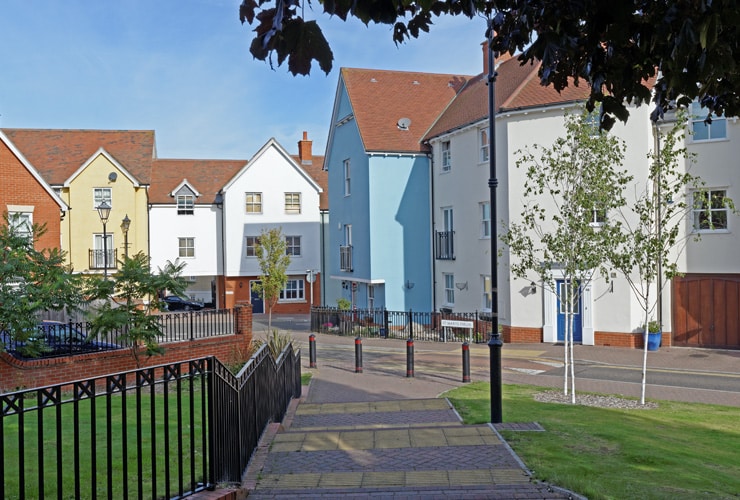
Colchester Rental Market Analysis
Monthly rents in Colchester range from £1,072 in CO1 to £1,409 in CO4, with gross rental yields from 3.4% to 5.4% across all seven postcodes. For investors asking is buy to let a good investment in Colchester, the sections below break down rents, yields, and tenant affordability postcode by postcode. If you are looking at how to start a property business in the East of England, Colchester pairs a London-catchment location with entry yields above 5% at the affordable end, a combination its pricier neighbours nearer the capital cannot match. Browse current buy-to-let property for sale across the region.
Average Rent & Gross Rental Yields in Colchester
Gross rental yields in Colchester range from 3.4% in CO6 to 5.4% in CO1 and CO2. The two cheapest postcodes deliver the joint-highest yield, and the most expensive delivers the lowest. CO4 charges the highest monthly rent at £1,409 yet still returns 5.1% because its £330,908 asking price stays well below the premium village postcodes.
| Area | Average Monthly Rent | Asking Price | Gross Yield |
|---|---|---|---|
| CO1 (Town Centre) | £1,072 | £236,216 | 5.4% |
| CO2 (Old Heath, Berechurch) | £1,226 | £271,820 | 5.4% |
| CO4 (Highwoods, Severalls Park) | £1,409 | £330,908 | 5.1% |
| CO7 (Wivenhoe, Brightlingsea) | £1,394 | £406,629 | 4.1% |
| CO3 (Stanway, Lexden) | £1,211 | £381,123 | 3.8% |
| CO5 (Tiptree, West Mersea) | £1,396 | £459,196 | 3.6% |
| CO6 (Coggeshall, Earls Colne) | £1,384 | £485,194 | 3.4% |
CO1 at 5.4% pairs the lowest asking price with the lowest rent (£1,072) and still tops the yield table. A 30% deposit of £70,865 gets an investor into the joint-highest-yielding postcode in Colchester. The town-centre tenant profile is mixed: University of Essex students and young professionals on the flats, working households on the terraces, which spreads void risk across segments.
CO6 at 3.4% sits at the bottom. The £1,384 monthly rent is healthy, but the £485,194 asking price means the income return is compressed. In the village postcodes the premium price does far more for the rent in absolute terms than it does for the yield.
Is Colchester Rent High?
Monthly rents in Colchester consume between 32.7% and 43.0% of the local median gross monthly salary. The widely cited threshold for rent affordability is 30% of gross income. Every Colchester postcode sits above that line, with CO1 closest to it. That reflects prices and rents pitched at a London-catchment level against a wage that sits roughly on the national median.
The median gross weekly salary in Colchester is £766.60, and the median annual salary is £39,353, about £3,279 a month. This is level with the Great Britain median of £766.60 per week and below the East of England median of £804.90 per week. Data from the Nomis Labour Market Profile (ASHE 2025).
| Rank | Area | Rent as % of Income |
|---|---|---|
| 1 | CO4 (Highwoods, Severalls Park) | 43.0% |
| 2 | CO5 (Tiptree, West Mersea) | 42.6% |
| 3 | CO7 (Wivenhoe, Brightlingsea) | 42.5% |
| 4 | CO6 (Coggeshall, Earls Colne) | 42.2% |
| 5 | CO2 (Old Heath, Berechurch) | 37.4% |
| 6 | CO3 (Stanway, Lexden) | 36.9% |
| 7 | CO1 (Town Centre) | 32.7% |
CO1 at 32.7% is the most affordable for tenants, closest to the 30% benchmark. A monthly rent of £1,072 against a monthly salary of £3,279 leaves the most headroom in the city. Affordable rents tend to correlate with lower voids and fewer arrears, because tenants who are not stretched stay longer.
CO4 at 43.0% is the least affordable on the median wage, but it carries the highest rent in Colchester at £1,409. Tenants paying that in Highwoods and Severalls Park are typically dual-income or higher-earning households rather than single earners on the median salary, so the headline ratio overstates the stretch for the people actually renting there.
How Big Is Colchester's Private Rented Sector?
The private rented sector is deepest in CO1 at 27.0% of households and CO2 at 21.3%, and shallowest in the village postcodes CO5 and CO6 at 13.4%. The share of homes already rented privately is a guide to how large and how tested the local tenant pool is. The table below shows household tenure by postcode.
| Area | Owned Outright | Owned with Mortgage | Private Rented | Social Rented |
|---|---|---|---|---|
| CO1 (Town Centre) | 36.4% | 26.7% | 27.0% | 9.6% |
| CO2 (Old Heath, Berechurch) | 38.2% | 29.0% | 21.3% | 11.1% |
| CO7 (Wivenhoe, Brightlingsea) | 46.1% | 33.3% | 15.1% | 5.1% |
| CO3 (Stanway, Lexden) | 37.8% | 38.9% | 14.9% | 7.8% |
| CO4 (Highwoods, Severalls Park) | 43.8% | 33.1% | 14.1% | 8.2% |
| CO5 (Tiptree, West Mersea) | 45.6% | 33.6% | 13.4% | 6.7% |
| CO6 (Coggeshall, Earls Colne) | 43.9% | 34.7% | 13.4% | 7.6% |
CO1 has the deepest private rented sector at 27.0% of households, more than a quarter of all homes, which lines up with its position as the town-centre, highest-yield, lowest-entry postcode. A rented share that size points to an active lettings market and a wide pool of existing tenants, a different signal from yield but pointing the same way for CO1. CO2 follows at 21.3%, with the inner postcodes clearly carrying the city's rental demand.
The village postcodes tell the opposite story: CO5 and CO6 both sit at 13.4% private rented, with the highest outright ownership in the city. These are settled owner-occupier markets where lettings stock is thinner. The rental signal backs this up: CO1 reads as a landlord's market with around 79 homes advertised to let and a quick 45 days to let on average, while listings thin out in the outlying postcodes.
Local Housing Allowance Rates in Colchester
All seven Colchester postcodes fall within the Colchester Broad Rental Market Area, where Local Housing Allowance runs from £92.36 a week for a shared room to £287.67 a week for a four-bedroom home. Local Housing Allowance sets the maximum housing support a tenant on benefits can claim, so it fixes what the benefit will meet; market rents can sit above or below it. The rates below apply across the whole of Colchester. To check the current rate for a specific address, you can use the government's official Local Housing Allowance calculator.
| Property Size | Weekly LHA Rate | Monthly Equivalent |
|---|---|---|
| Shared accommodation | £92.36 | £400 |
| 1 bedroom | £143.84 | £623 |
| 2 bedrooms | £182.96 | £793 |
| 3 bedrooms | £224.38 | £972 |
| 4 bedrooms | £287.67 | £1,246 |
The two-bedroom LHA rate of £182.96 a week works out at about £793 a month, below the £1,072 to £1,409 market rents recorded across Colchester's postcodes. A benefit-backed tenancy at the LHA rate therefore sits under the open-market figure, and the stock that fits within these rates clusters in CO1 and CO2, where both asking prices and rents are lowest. The rates are identical in every Colchester postcode because they are set once across the whole Colchester market area.
Buy-to-Let Considerations
Are House Prices High in Colchester? Price-to-Earnings Ratios
Buying in Colchester takes between 6.0 and 12.3 times the median annual salary. This is based on the Nomis Labour Market Profile for Colchester showing the median gross annual income for residents is £39,353.
The national benchmark for price-to-earnings is 7.4x (England's average sold price of £289,946 divided by the Great Britain median annual salary of £39,125). Two of Colchester's seven postcodes (CO1 and CO2) sit below that national benchmark, meaning they are more affordable relative to local incomes than the England average is relative to national incomes.
| Rank | Area | Price-to-Earnings Ratio |
|---|---|---|
| 1 | CO1 (Town Centre) | 6.0x |
| 2 | CO2 (Old Heath, Berechurch) | 6.9x |
| 3 | CO4 (Highwoods, Severalls Park) | 8.4x |
| 4 | CO3 (Stanway, Lexden) | 9.7x |
| 5 | CO7 (Wivenhoe, Brightlingsea) | 10.3x |
| 6 | CO5 (Tiptree, West Mersea) | 11.7x |
| 7 | CO6 (Coggeshall, Earls Colne) | 12.3x |
CO1 at 6.0x is the most affordable entry in Colchester and the only postcode well below the national benchmark of 7.4x. A property at six times local earnings is competitive with much higher-yielding markets elsewhere, but here it comes inside a London-catchment town. CO2 at 6.9x also clears the benchmark.
CO6 at 12.3x sits at the top. At more than twelve times the local median salary, the village postcodes are firmly premium owner-occupier territory, bought by higher-earning or equity-rich households rather than first-time buyers. For investors, the elevated ratio is what compresses the yield at that end of the market.
Deposit Requirements in Colchester
A 30% deposit on a buy-to-let property in Colchester ranges from £70,865 in CO1 to £145,558 in CO6. The gap between the cheapest and most expensive deposit is £74,693, enough to more than fund a second CO1 deposit. For investors comparing Colchester with the rest of Essex, the CO1 entry sits below Chelmsford and Southend but above the cheaper end of Basildon and Harlow.
Beyond the deposit, the stamp duty land tax calculator and other buy to let fees affect the total capital required.
| Rank | Area | 30% Deposit Required |
|---|---|---|
| 1 | CO1 (Town Centre) | £70,865 |
| 2 | CO2 (Old Heath, Berechurch) | £81,546 |
| 3 | CO4 (Highwoods, Severalls Park) | £99,272 |
| 4 | CO3 (Stanway, Lexden) | £114,337 |
| 5 | CO7 (Wivenhoe, Brightlingsea) | £121,989 |
| 6 | CO5 (Tiptree, West Mersea) | £137,759 |
| 7 | CO6 (Coggeshall, Earls Colne) | £145,558 |
CO1 is the cheapest way into Colchester at a £70,865 deposit. That buys the joint-highest yield at 5.4% on a home renting at £1,072 a month. Stepping up to CO2 costs about £10,700 more and buys the same 5.4% yield on a higher rent of £1,226, in a postcode with a slightly deeper owner-occupier base. The two inner postcodes give an investor the lowest entry and the strongest income return in the city.
At the other end, CO5 and CO6 ask for deposits of £137,759 and £145,558 but return 3.6% and 3.4%. They are within £7,799 of each other on the deposit yet sit in different markets, CO5 on the coast at West Mersea and CO6 in the villages north-west of the city. The extra capital buys location and space rather than income; the yield works hardest back in CO1 and CO2.
What the Colchester Data Tells Buy-to-Let Investors
In Colchester the cheapest way in is also the joint-highest-yielding, which is rare for a market priced above the England average. CO1 has the top yield at 5.4%, the lowest asking price for buying an investment property at £236,216, and the best affordability against local earnings at 6.0 times income. A 30% deposit there is £70,865, the lowest in the city, for a home renting at £1,072 a month. CO2 matches the 5.4% yield on a higher £1,226 rent.
CO4 is the steady all-rounder. It is the only postcode positive across one, three, and five years (2.4%, 0.4%, 8.1%). It is also the busiest market in the city at 48 sales a month, on a 5.1% yield against the highest rent of £1,409. It sits between the income of the inner postcodes and the price of the villages, and it clears fastest alongside CO1 at around 234 days to sell.
The village postcodes work differently. CO6 carries the highest asking price at £485,194 but the lowest yield at 3.4% and a 12.3 times price-to-earnings ratio, so the premium price does more for the rent than the return. CO5 and CO7 add a real holding cost on exit, with around 507 days to sell against 234 in CO1. Buyers who want to come in below asking tend to work the off-market property sales routes, especially in the slower coastal markets where stock sits longest.
Colchester reads as a London-catchment commuter market with the income still intact at the affordable end: prices above the England average, a deeper-than-typical 2008 crash in its history, but entry yields above 5% in CO1 and CO2 that most towns at this price level have lost. The headline returns are lower than the higher-yield Northern cities, with a more stable, commuter-backed tenant base underneath them.
How Colchester Compares
Colchester's mean asking price of £367,298 is the lowest of five Essex locations compared here, while its top yield of 5.4% sits in the middle of the group. The comparison below places Colchester alongside four nearby Essex markets, each with a different investor profile. The mean asking price and mean monthly rent are simple averages across all postcodes with data. Top gross yield is the single highest postcode yield in each location.
| Location | Mean Asking Price | Mean Monthly Rent | Mean Gross Yield | Top Yield (postcode) |
|---|---|---|---|---|
| Colchester | £367,298 | £1,299 | 4.2% | 5.4% (CO1, CO2) |
| Southend-on-Sea | £375,500 | £1,313 | 4.2% | 4.9% (SS2) |
| Basildon | £417,382 | £1,501 | 4.3% | 6.1% (SS13, SS14) |
| Harlow | £431,182 | £1,516 | 4.2% | 5.6% (CM20) |
| Chelmsford | £538,633 | £1,529 | 3.4% | 4.5% (CM9) |
Colchester's £367,298 mean asking price is the lowest of the five, below Southend-on-Sea, Basildon, Harlow and Chelmsford. Its 5.4% top yield sits in the middle of the group, behind Basildon's 6.1% and Harlow's 5.6% but ahead of Southend's 4.9% and Chelmsford's 4.5%, where the higher prices nearer London compress the return.
For investors prioritising income, Basildon tops the group at 6.1% and Harlow follows at 5.6%, though both sit above Colchester on price. Colchester's pitch is the combination: a heritage town and university market with a London commuter line, the cheapest entry of the five, with a yield that holds above 5%. The same trade-offs run across the county, so it is worth reading Colchester next to its neighbours rather than in isolation, and our wider Ipswich guide covers the next major market north along the same line. For a data-driven comparison across all UK locations, see our best buy-to-let areas guide.
Frequently Asked Questions
Is Colchester a good place to live for buy-to-let tenants?
For most tenants, yes, and it comes down to the commute and the jobs. Colchester is one of the closest large towns to London on the Liverpool Street line, so it draws renters who want a house rather than a flat without paying London prices. The employment rate of 76.0% sits a little above the national 75.6%, and the University of Essex and the army garrison both add steady, renewing tenant demand on top of the commuter base.
It is also an easy place to rent in. A historic, walkable centre with fast trains and a university tends to suit professional and student renters alike, and the deepest rental market sits in the cheaper town-centre postcodes, where 27.0% of CO1 homes are already let privately.
What are the best areas in Colchester for property investment?
Colchester's seven postcodes split fairly cleanly by price, yield and rental depth. CO1 (Town Centre) is the cheapest way in at £236,216 and shares the top yield at 5.4%, so it leans towards income. It also has the deepest rental market in the city, with 27.0% of homes already let privately. CO2 (Old Heath, Berechurch) matches that 5.4% yield on a slightly higher entry.
CO4 (Highwoods, Severalls Park) is the steadier middle ground: a 5.1% yield, the highest rent in the city at £1,409, and the only postcode that grew over one, three, and five years. At the top end, the village and coastal postcodes CO5 and CO6 are premium owner-occupier areas where yields drop to 3.6% and 3.4%. So if income matters most, CO1, CO2, and CO4 lead; the village premium comes with lower rental returns.
What is the average house price in Colchester?
The average sold price across Colchester is £300,327 on the Land Registry index, about 3.6% above the England average of £289,946 as of March 2026, but 10.9% below the East of England regional average. Asking prices by postcode run from £236,216 in CO1 (Town Centre) up to £485,194 in CO6 (Coggeshall, Earls Colne), with a city-wide mean of £367,298. By type, detached homes average £506,220, semi-detached £333,951, terraced £268,521, and flats £163,143.
Through a buy-to-let lens, CO1 is the cheapest entry and shares the highest yield at 5.4%, while CO6 is the dearest and lowest-yielding at 3.4%.
How does Colchester compare to Chelmsford for buy-to-let?
They are the two big Essex commuter towns, but they sit at different price points. Chelmsford is dearer, with a mean asking price of £452,547 against Colchester's £367,298, and a lower top yield of 4.8% against Colchester's 5.4%. Chelmsford is closer to London and has city status with a faster commute, which is what the higher price buys.
Colchester trades a little of that commute for a lower entry and a stronger income return, plus a large university market that Chelmsford does not have on the same scale. If yield and asking price lead, Colchester has the edge; if proximity to London is the priority, Chelmsford justifies its premium.
Is there demand for student accommodation in Colchester?
Yes, driven by the University of Essex, whose main Colchester campus sits at Wivenhoe Park on the CO4 and CO7 side of the city. The cheaper town-centre stock in CO1, where rents average £1,072 a month and the private rented sector is the deepest in the city, is the most workable for shared student lets. Student houses come with summer voids and more hands-on management than a standard tenancy, so factor that in. For the purpose-built end of the market, see our guide to UK student accommodation investment.
On the HMO side, a sample of current room adverts in CO4 puts a double with a shared bathroom at around £142 a week, with most between £127 and £162 across 47 adverts, and CO2 reads similar at about £140 a week. Those were the only areas with enough live adverts for a reliable figure. For how the numbers work on a shared house, see our complete guide to investing in HMOs.
Can I find buy-to-let property under £250,000 in Colchester?
Yes, but mainly in one postcode. CO1 (Town Centre) is the only area with an average asking price below £250,000, at £236,216, so it is the natural place to look for sub-£250,000 stock. Beyond that, it is a matter of property type rather than postcode: terraced houses across Colchester average £268,521 and flats £163,143 on the Land Registry index, so the smaller units in CO1 and CO2 are where the budget reaches. If sub-£250,000 is the target, CO1 flats and terraces are the starting point, or explore BMV properties.
When will the garden community affect Colchester property prices?
Not for several years. The Tendring Colchester Borders Garden Community plans up to 7,750 homes, but the A1331 link road that unlocks the site only had its £65 million of Homes England funding confirmed in March 2026, with construction expected from 2027 and completion targeted for 2030. The first homes follow the infrastructure, so any real effect on the wider market is a 2030-and-beyond story.
What the funding does signal now is commitment: a major new-build supply is coming to the east of the city over the next two decades, which is worth factoring in for anyone holding for the long term in the CO4 and CO7 postcodes nearest the site.
What are the Local Housing Allowance rates in Colchester?
All seven Colchester postcodes fall in the Colchester Broad Rental Market Area, so they share one set of rates. As of June 2026, Local Housing Allowance runs at £92.36 a week for a shared room, £143.84 for a one-bed, £182.96 for two beds, £224.38 for three, and £287.67 for four. That figure is the most a tenant on housing support can claim towards rent, so it describes the benefit's share of the rent, and tenants meet any gap above it themselves, and the stock that fits within it concentrates in the cheaper CO1 and CO2 postcodes.
What type of property is most common in Colchester?
Detached houses, in every postcode, and by a clear margin. They run from 43.1% of the stock in CO1 (Town Centre) up to 60.6% in CO5 (Tiptree, West Mersea), reflecting how much of the city is family housing rather than apartments. The smaller homes that usually suit buy-to-let, terraces and flats, are most concentrated in the inner postcodes: CO1 holds the largest flat share at 14.2% and CO3 the next at 12.6%.
That mix is why the investment stock clusters in CO1 and CO2. The villages and coastal postcodes are detached-dominated owner-occupier markets, with flats down at 3.8% in CO5, while the town-centre postcodes carry the terraces, flats, and conversions that work hardest as lets.
How do I buy an investment property in Colchester?
Decide the goal first, because income and growth point to different postcodes here. For income, CO1 (Town Centre) is the cheapest entry at £236,216 and shares the top yield at 5.4%, with CO2 matching the yield on a higher rent. For a steadier mix of income and recent growth, CO4 (Highwoods, Severalls Park) pairs a 5.1% yield with the only positive run across one, three, and five years. At 30% down, the deposit runs from £70,865 in CO1 to £145,558 in CO6, so the budget shapes the shortlist as much as the strategy does.
Beyond what is listed openly, experienced investors often buy below asking through off market property and BMV properties for sale, which is especially worth doing in the slower coastal postcodes where stock sits longest. To see what is available now, browse investment properties or buy-to-let homes for sale.
Ready to buy property?
Browse investment properties with prices and gross yields shown for each opportunity.
Get property alerts