
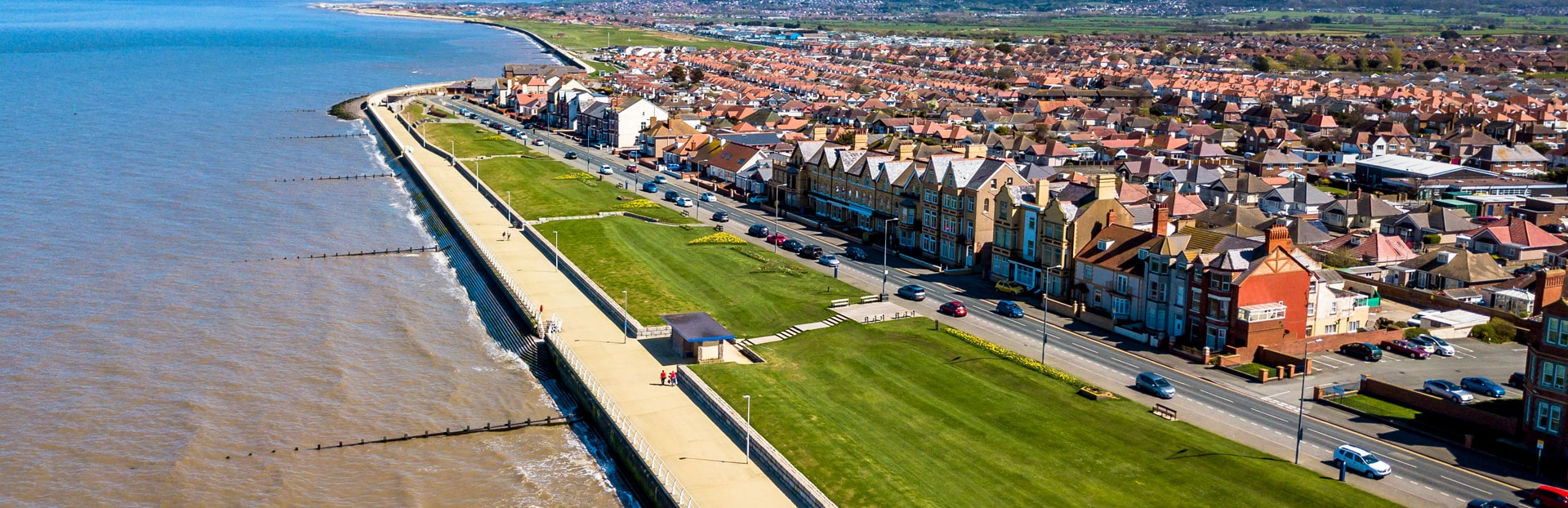
Rhyl is a seaside town in Denbighshire, on the north Wales coast. Average sold prices across Denbighshire sit at £198,570 on the HM Land Registry House Price Index, 6.9% below the Wales average of £213,240. That is the county-wide figure. Rhyl's own coastal postcode, LL18, carries a £211,762 asking price and the only rental data in the guide: a 4.2% gross yield, on a market you can enter for a 30% deposit of £63,528.
Rhyl is a North Wales seaside town, and its three postcodes read as three different markets. LL18 covers Rhyl on the coast and Rhuddlan just inland, the busiest and most rented of the three; LL19 is Prestatyn along the shore to the east; LL22 is Abergele and the quieter countryside to the west. Asking prices climb from £211,762 in LL18 to £249,407 in LL22, a £37,645 spread, and only LL18 has a published rent and yield in this snapshot. This guide covers LL18 and LL19 within the Denbighshire unitary authority (ONS code W06000004), and LL22, which sits across the county boundary in Conwy County Borough, so the Denbighshire sold prices, wages, employment figures and council rules on this page do not cover Abergele addresses.
The Land Registry sold-price, growth and population figures in this guide are recorded at Denbighshire local-authority level, a large, mostly rural county that stretches from the coast at Rhyl and Prestatyn to the inland market towns of Denbigh and Ruthin, so those county-wide numbers describe a wider market than coastal Rhyl alone. The LL postcode tables below are Rhyl-specific. Our neighbouring North Wales guides cover St Asaph and Wrexham. Browse all our top buy-to-let locations.
Article updated: July 2026
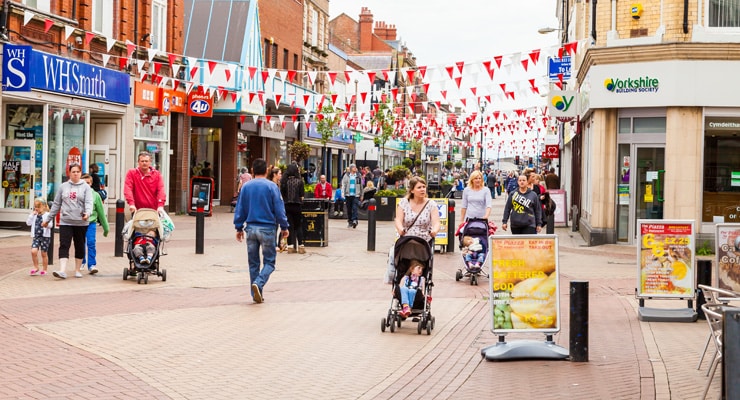
Why Invest in Rhyl?
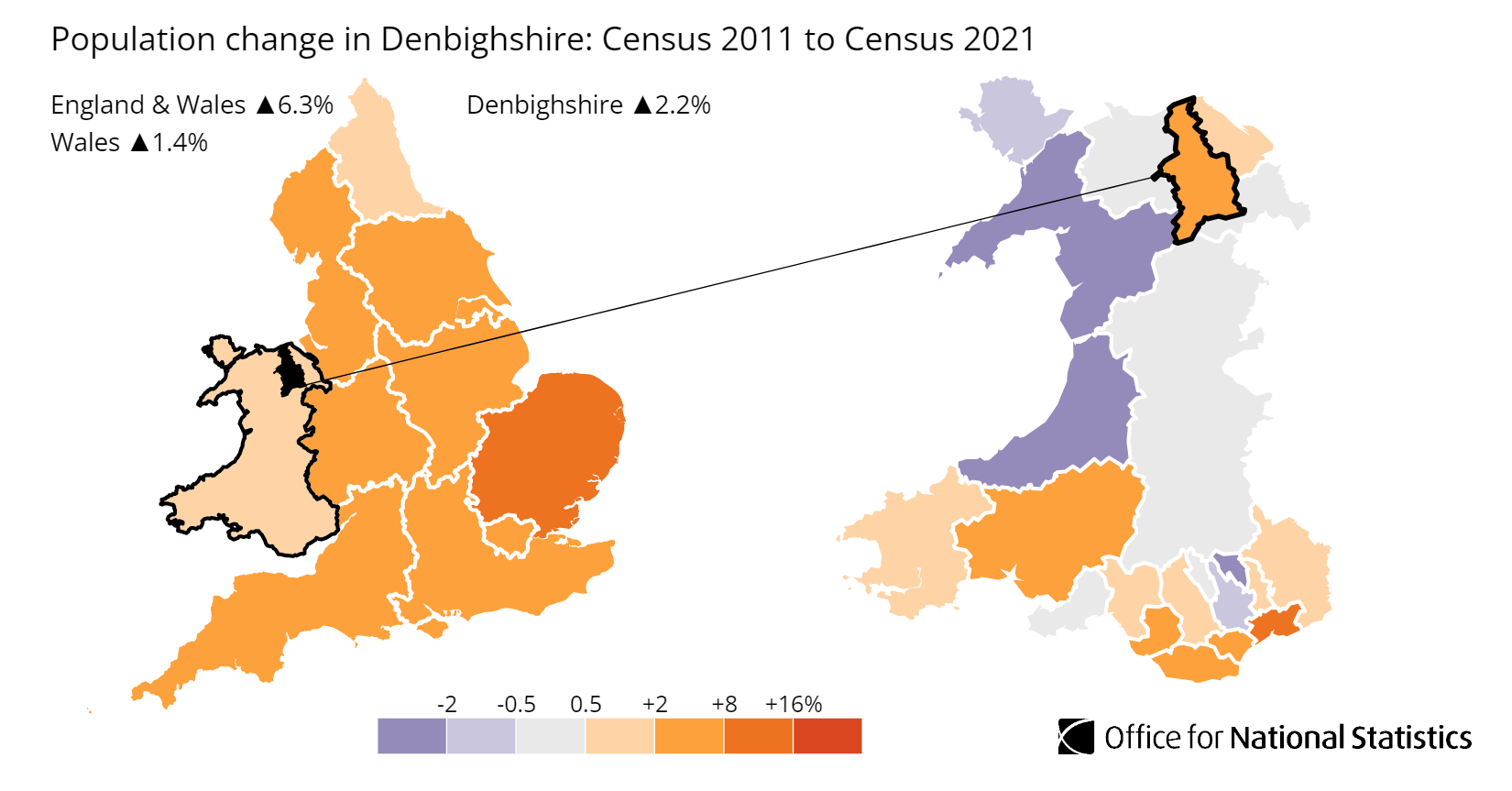
Denbighshire, the local authority Rhyl sits within, grew its population 2.2% between the 2011 and 2021 censuses, from 93,734 to 95,817 residents. That is well below the England and Wales average of 6.3%, the slow, settled pattern of a rural county rather than a growing city. Rhyl is the largest town in the county and its main coastal centre, and it has the lowest mean asking price of the five Welsh markets compared on this page, with the A55 expressway putting Chester, Liverpool and Manchester within commuting reach.
The employment rate across Denbighshire is 74.2%, above the Wales average of 72.3% but below the Great Britain rate of 75.6%. The economy leans heavily on one sector: health and social work accounts for 31.0% of all employee jobs, more than double the next largest, followed by wholesale and retail at 11.9% and accommodation and food at 8.3%.
Median gross annual earnings across Denbighshire are £32,691, which is 10.1% below the Wales median of £36,353 and 16.4% below the Great Britain median of £39,125. The one published rent in the guide, £747 a month in LL18, takes about 27% of that median, and the yield it produces sits in the mid-single digits rather than the high figures seen in cheaper city markets.
Rhyl Economic Summary
- Population (Denbighshire): 95,817 (2021 Census). Growth of 2.2% from 2011.
- Median annual salary: £32,691 (Denbighshire), £36,353 (Wales), £39,125 (Great Britain)
- Employment rate: 74.2% (Denbighshire), 72.3% (Wales), 75.6% (Great Britain)
- Unemployment rate: Suppressed (Denbighshire), withheld by ONS on small sample sizes
- Key employment sectors: Health and social work, wholesale and retail, accommodation and food, education, manufacturing
Source: ONS Census 2021, Nomis Labour Market Profile for Denbighshire (ASHE 2025, Employment Oct 2024-Sep 2025)
Regeneration and Investment in Rhyl
Rhyl is the focus of Denbighshire's regeneration spending, with a £20 million "Our Rhyl" programme and £11 million of Levelling Up money both directed at the town centre and seafront. After decades as a faded resort, the coastal strip is where the county is concentrating its public investment, and much of it lands squarely on the LL18 postcode that carries the guide's only rental data.
- Our Rhyl Pride in Place Programme (Approved, £20 million): A 10-year regeneration plan covering high streets, heritage, housing, transport, health and skills, directed by an independent community-led board. Denbighshire's cabinet endorsed the draft plan and its submission to the UK Government's Pride in Place programme in November 2025, with the council's own report noting the £20 million is a catalyst rather than the whole answer for the town. Details at Nation.Cymru.
- Vale of Clwyd Levelling Up Fund (Funded, £20 million): Denbighshire secured £20 million from the Levelling Up Fund, of which £11 million is committed to Rhyl for town-centre regeneration, the Queens Market redevelopment, new community facilities, and promenade and cycle routes connecting the town to the beach. The projects were in delivery when ministers visited in January 2024. Details at GOV.UK.
- North Wales Hospital Denbigh (Planning approved, up to 300 homes): The Grade II*-listed former psychiatric hospital on a 50-acre site in Denbigh is being converted into apartments, shops and restaurants by Jones Bros over a phased programme, a scheme projected to create around 1,200 jobs. It sits inland rather than on the coast, but it is the largest residential project in the county and adds to Denbighshire's wider housing pipeline. Details at Construction UK Magazine.
Source: Office for National Statistics - Population for Denbighshire
Rhyl Property Market Analysis
Average property prices in Denbighshire have risen 415.0% since January 1995, from £38,559 to £198,570. These county-wide figures are recorded at Denbighshire local-authority level, so they cover the inland market towns as well as Rhyl itself. The sections below trace that journey cycle by cycle, then drill into the current postcode-level data for Rhyl's three LL outcodes.
When was the last house price crash in Rhyl?
Rhyl sits within the Denbighshire unitary authority, so all sold property prices from HM Land Registry are recorded at that county level. The Land Registry House Price Index tracks average prices from January 1995 to March 2026, covering 31 years of market cycles.
The 1995 to 2007 boom: Denbighshire started at £38,559 in January 1995. By December 2000, prices had reached £53,031, and the market then accelerated hard through the mid-2000s as low interest rates and accessible credit met a rural North Wales housing shortage. The average reached £126,926 by December 2005 and peaked at £145,640 in September 2007.
2008 to 2013, a deep and drawn-out crash: Denbighshire's downturn was one of the harder ones in Wales. Prices fell from the September 2007 peak of £145,640 to a trough of £116,111 in March 2013, a decline of 20.3% spread over five and a half years. The worst single year-on-year reading came in May 2009 at -17.5%. Where England and Wales both bottomed in 2009 and turned, Denbighshire kept sliding for a further four years.
2014 to 2019, a slow climb back: Recovery was gradual rather than sharp. Prices did not surpass the September 2007 peak until August 2018, when the average reached £146,380, a round-trip of nearly 11 years and one of the longest in the country. Growth held steady but modest through the rest of the decade.
2020 to 2022, the pandemic surge: Over the period of the Land Transaction Tax holiday and the shift to remote working, Denbighshire's average rose overall, with month-to-month dips along the way. Prices rose from £152,396 in June 2020 to £162,080 by December 2020, then ran to £180,769 by December 2021 and £191,582 by December 2022.
The 2023 rate shock: Higher mortgage rates cooled things. Prices eased to £186,440 by June 2023 and £184,876 by December 2023 before steadying. Denbighshire's low price base meant it had less far to fall than higher-value markets.
2024 to present: Prices reached £193,697 by December 2024 and an all-time high of £201,651 in October 2025, before easing back to £198,570 by the latest March 2026 reading. The current price is 36.3% above the September 2007 pre-crash peak.
Long-term growth summary:
- 5 years (March 2021 to March 2026): 17.8% growth (£168,597 to £198,570)
- 10 years (March 2016 to March 2026): 50.3% growth (£132,131 to £198,570)
- 15 years (March 2011 to March 2026): 63.2% growth (£121,647 to £198,570)
- 20 years (March 2006 to March 2026): 53.0% growth (£129,812 to £198,570)
- 31 years (January 1995 to March 2026): 415.0% growth (£38,559 to £198,570)
Denbighshire's 20.3% crash was deeper than both the England and Wales falls, and the recovery to its pre-crash peak took almost 11 years. Prices took longer than most to recover and still sit below the Wales average. An investor who bought at the exact peak in September 2007 would be sitting on a 36.3% gain on the Land Registry average, nearly two decades later.
- All property types
- Detached
- Semi-detached
- Terraced
- Flats
Source: HM Land Registry House Price Index
| Year | All property types | Detached | Semi-detached | Terraced | Flats |
|---|---|---|---|---|---|
| 1995-01 | £38,559 | £53,723 | £34,167 | £26,605 | £23,000 |
| 1995-02 | £40,538 | £56,215 | £36,120 | £28,015 | £24,061 |
| 1995-03 | £41,509 | £57,440 | £37,027 | £28,787 | £24,641 |
| 1995-04 | £42,808 | £59,064 | £38,275 | £29,773 | £25,433 |
| 1995-05 | £43,086 | £59,369 | £38,554 | £30,012 | £25,650 |
| 1995-06 | £43,926 | £60,572 | £39,314 | £30,494 | £26,197 |
| 1995-07 | £44,548 | £61,566 | £39,824 | £30,856 | £26,394 |
| 1995-08 | £44,022 | £61,052 | £39,262 | £30,408 | £25,884 |
| 1995-09 | £43,072 | £59,773 | £38,393 | £29,784 | £25,169 |
| 1995-10 | £43,104 | £59,822 | £38,478 | £29,675 | £25,212 |
| 1995-11 | £43,344 | £60,122 | £38,727 | £29,767 | £25,520 |
| 1995-12 | £42,459 | £58,896 | £37,962 | £29,095 | £25,023 |
| 1996-01 | £40,876 | £56,778 | £36,511 | £27,991 | £24,011 |
| 1996-02 | £41,078 | £56,990 | £36,740 | £28,190 | £23,991 |
| 1996-03 | £40,616 | £56,392 | £36,348 | £27,806 | £23,638 |
| 1996-04 | £41,712 | £57,811 | £37,323 | £28,702 | £24,374 |
| 1996-05 | £41,614 | £57,693 | £37,164 | £28,730 | £24,329 |
| 1996-06 | £42,284 | £58,593 | £37,722 | £29,286 | £24,873 |
| 1996-07 | £42,754 | £59,334 | £38,117 | £29,543 | £24,978 |
| 1996-08 | £43,176 | £60,112 | £38,408 | £29,724 | £25,059 |
| 1996-09 | £43,033 | £60,118 | £38,169 | £29,549 | £24,754 |
| 1996-10 | £41,357 | £57,882 | £36,657 | £28,303 | £23,708 |
| 1996-11 | £40,228 | £56,223 | £35,715 | £27,533 | £23,128 |
| 1996-12 | £40,955 | £57,111 | £36,461 | £28,044 | £23,537 |
| 1997-01 | £41,947 | £58,457 | £37,335 | £28,796 | £24,089 |
| 1997-02 | £42,259 | £58,980 | £37,592 | £28,918 | £24,229 |
| 1997-03 | £42,744 | £59,674 | £37,971 | £29,294 | £24,539 |
| 1997-04 | £43,630 | £60,814 | £38,812 | £29,938 | £25,057 |
| 1997-05 | £44,582 | £62,037 | £39,707 | £30,664 | £25,523 |
| 1997-06 | £45,087 | £62,887 | £40,118 | £30,925 | £25,602 |
| 1997-07 | £44,454 | £62,102 | £39,510 | £30,476 | £25,041 |
| 1997-08 | £43,773 | £61,338 | £38,823 | £29,931 | £24,494 |
| 1997-09 | £44,037 | £61,687 | £39,062 | £30,129 | £24,646 |
| 1997-10 | £45,306 | £63,555 | £40,181 | £30,883 | £25,395 |
| 1997-11 | £45,448 | £63,757 | £40,314 | £30,960 | £25,490 |
| 1997-12 | £44,522 | £62,468 | £39,546 | £30,241 | £24,918 |
| 1998-01 | £44,259 | £62,171 | £39,242 | £30,089 | £24,737 |
| 1998-02 | £44,166 | £61,933 | £39,207 | £30,032 | £24,873 |
| 1998-03 | £43,942 | £61,568 | £39,015 | £29,917 | £24,734 |
| 1998-04 | £44,987 | £62,805 | £40,064 | £30,701 | £25,335 |
| 1998-05 | £46,885 | £65,428 | £41,733 | £32,093 | £26,265 |
| 1998-06 | £45,904 | £64,104 | £40,810 | £31,434 | £25,812 |
| 1998-07 | £44,789 | £62,658 | £39,771 | £30,620 | £25,148 |
| 1998-08 | £44,463 | £62,378 | £39,409 | £30,323 | £24,878 |
| 1998-09 | £46,247 | £64,957 | £40,952 | £31,530 | £25,749 |
| 1998-10 | £46,015 | £64,753 | £40,708 | £31,276 | £25,689 |
| 1998-11 | £45,084 | £63,521 | £39,893 | £30,521 | £25,214 |
| 1998-12 | £46,269 | £65,021 | £41,055 | £31,301 | £26,080 |
| 1999-01 | £46,412 | £65,130 | £41,244 | £31,405 | £26,149 |
| 1999-02 | £46,932 | £65,758 | £41,752 | £31,796 | £26,463 |
| 1999-03 | £46,372 | £65,035 | £41,233 | £31,392 | £26,087 |
| 1999-04 | £46,822 | £65,493 | £41,651 | £31,868 | £26,381 |
| 1999-05 | £47,135 | £65,828 | £41,935 | £32,194 | £26,569 |
| 1999-06 | £47,123 | £65,790 | £41,885 | £32,273 | £26,511 |
| 1999-07 | £48,644 | £68,138 | £43,112 | £33,238 | £27,256 |
| 1999-08 | £49,511 | £69,450 | £43,801 | £33,838 | £27,671 |
| 1999-09 | £50,367 | £70,848 | £44,444 | £34,349 | £28,136 |
| 1999-10 | £49,992 | £70,385 | £44,141 | £33,956 | £28,052 |
| 1999-11 | £49,677 | £69,939 | £43,905 | £33,667 | £28,003 |
| 1999-12 | £49,873 | £70,039 | £44,166 | £33,853 | £28,329 |
| 2000-01 | £48,903 | £68,691 | £43,312 | £33,193 | £27,651 |
| 2000-02 | £49,369 | £69,444 | £43,676 | £33,469 | £27,847 |
| 2000-03 | £50,102 | £70,570 | £44,350 | £33,874 | £27,970 |
| 2000-04 | £51,026 | £71,699 | £45,196 | £34,630 | £28,721 |
| 2000-05 | £51,061 | £71,661 | £45,302 | £34,636 | £28,829 |
| 2000-06 | £50,973 | £71,524 | £45,229 | £34,540 | £28,969 |
| 2000-07 | £51,449 | £72,498 | £45,587 | £34,625 | £28,964 |
| 2000-08 | £52,022 | £73,465 | £46,070 | £34,838 | £29,270 |
| 2000-09 | £52,393 | £74,292 | £46,246 | £34,939 | £29,383 |
| 2000-10 | £52,641 | £74,592 | £46,546 | £35,015 | £29,679 |
| 2000-11 | £53,456 | £75,869 | £47,195 | £35,495 | £30,182 |
| 2000-12 | £53,031 | £75,059 | £46,956 | £35,231 | £30,170 |
| 2001-01 | £52,179 | £73,823 | £46,159 | £34,749 | £29,757 |
| 2001-02 | £51,507 | £72,652 | £45,670 | £34,415 | £29,459 |
| 2001-03 | £51,525 | £72,643 | £45,714 | £34,464 | £29,331 |
| 2001-04 | £52,924 | £74,615 | £46,911 | £35,453 | £30,173 |
| 2001-05 | £53,181 | £74,929 | £47,131 | £35,692 | £30,331 |
| 2001-06 | £53,613 | £75,460 | £47,522 | £36,025 | £30,837 |
| 2001-07 | £54,181 | £76,261 | £48,060 | £36,364 | £31,119 |
| 2001-08 | £55,421 | £78,153 | £49,078 | £37,126 | £31,860 |
| 2001-09 | £55,696 | £78,783 | £49,164 | £37,250 | £31,939 |
| 2001-10 | £56,194 | £79,469 | £49,629 | £37,549 | £32,352 |
| 2001-11 | £56,442 | £79,803 | £49,900 | £37,656 | £32,540 |
| 2001-12 | £57,903 | £81,682 | £51,349 | £38,589 | £33,695 |
| 2002-01 | £58,353 | £82,368 | £51,745 | £38,822 | £34,033 |
| 2002-02 | £59,389 | £83,752 | £52,640 | £39,625 | £34,723 |
| 2002-03 | £60,022 | £84,512 | £53,264 | £40,143 | £34,964 |
| 2002-04 | £60,897 | £85,563 | £54,067 | £40,867 | £35,763 |
| 2002-05 | £63,296 | £88,733 | £56,338 | £42,503 | £37,311 |
| 2002-06 | £64,713 | £90,736 | £57,511 | £43,525 | £38,345 |
| 2002-07 | £67,502 | £94,752 | £59,941 | £45,377 | £39,770 |
| 2002-08 | £68,465 | £96,208 | £60,720 | £46,002 | £40,335 |
| 2002-09 | £68,897 | £96,988 | £61,120 | £46,089 | £40,377 |
| 2002-10 | £69,165 | £97,303 | £61,470 | £46,172 | £40,667 |
| 2002-11 | £71,810 | £101,240 | £63,721 | £47,798 | £42,313 |
| 2002-12 | £73,671 | £103,505 | £65,564 | £49,156 | £43,760 |
| 2003-01 | £74,826 | £105,094 | £66,499 | £50,075 | £44,584 |
| 2003-02 | £75,118 | £105,148 | £66,995 | £50,355 | £44,920 |
| 2003-03 | £74,945 | £105,034 | £66,723 | £50,253 | £44,747 |
| 2003-04 | £77,666 | £108,560 | £69,379 | £52,092 | £46,464 |
| 2003-05 | £80,872 | £112,866 | £72,316 | £54,385 | £48,186 |
| 2003-06 | £85,790 | £119,477 | £76,806 | £57,846 | £51,330 |
| 2003-07 | £87,887 | £122,147 | £78,787 | £59,442 | £52,484 |
| 2003-08 | £86,570 | £120,116 | £77,647 | £58,713 | £51,892 |
| 2003-09 | £86,871 | £120,395 | £77,982 | £59,046 | £51,783 |
| 2003-10 | £88,460 | £122,545 | £79,361 | £60,240 | £52,842 |
| 2003-11 | £90,680 | £125,529 | £81,386 | £61,813 | £54,190 |
| 2003-12 | £93,980 | £129,536 | £84,514 | £64,454 | £56,762 |
| 2004-01 | £94,134 | £129,592 | £84,661 | £64,738 | £56,908 |
| 2004-02 | £93,933 | £128,965 | £84,506 | £64,955 | £56,859 |
| 2004-03 | £95,367 | £131,019 | £85,622 | £66,063 | £57,437 |
| 2004-04 | £99,856 | £136,201 | £89,966 | £69,801 | £60,454 |
| 2004-05 | £104,021 | £141,174 | £93,838 | £73,254 | £63,557 |
| 2004-06 | £108,111 | £146,045 | £97,793 | £76,480 | £66,474 |
| 2004-07 | £112,450 | £151,746 | £101,766 | £79,659 | £69,191 |
| 2004-08 | £117,664 | £158,794 | £106,531 | £83,289 | £72,343 |
| 2004-09 | £116,641 | £157,606 | £105,438 | £82,574 | £71,658 |
| 2004-10 | £116,295 | £157,328 | £104,949 | £82,293 | £71,780 |
| 2004-11 | £115,213 | £155,750 | £103,903 | £81,699 | £71,444 |
| 2004-12 | £115,779 | £156,013 | £104,505 | £82,483 | £72,247 |
| 2005-01 | £121,904 | £164,149 | £109,964 | £87,075 | £75,993 |
| 2005-02 | £121,807 | £163,681 | £110,050 | £87,113 | £75,711 |
| 2005-03 | £124,758 | £167,497 | £112,835 | £89,213 | £77,168 |
| 2005-04 | £117,857 | £157,450 | £106,906 | £84,573 | £72,972 |
| 2005-05 | £118,319 | £158,151 | £107,153 | £85,023 | £73,327 |
| 2005-06 | £117,094 | £155,993 | £106,064 | £84,520 | £72,850 |
| 2005-07 | £119,307 | £159,008 | £108,056 | £86,114 | £74,029 |
| 2005-08 | £125,915 | £167,872 | £113,940 | £90,956 | £78,115 |
| 2005-09 | £132,830 | £177,320 | £120,048 | £95,971 | £82,180 |
| 2005-10 | £135,972 | £181,567 | £122,655 | £98,408 | £84,451 |
| 2005-11 | £132,681 | £176,871 | £119,756 | £96,198 | £82,463 |
| 2005-12 | £126,926 | £168,828 | £114,573 | £92,204 | £79,604 |
| 2006-01 | £124,489 | £165,355 | £112,370 | £90,661 | £77,981 |
| 2006-02 | £126,046 | £166,884 | £113,827 | £92,155 | £79,343 |
| 2006-03 | £129,812 | £172,075 | £117,216 | £94,873 | £80,997 |
| 2006-04 | £131,320 | £173,770 | £118,709 | £96,119 | £82,022 |
| 2006-05 | £132,259 | £175,028 | £119,588 | £96,778 | £82,508 |
| 2006-06 | £132,828 | £175,199 | £120,287 | £97,489 | £83,267 |
| 2006-07 | £134,329 | £177,035 | £121,580 | £98,882 | £84,056 |
| 2006-08 | £137,116 | £180,771 | £124,105 | £101,001 | £85,270 |
| 2006-09 | £136,026 | £179,739 | £122,998 | £100,057 | £84,019 |
| 2006-10 | £135,160 | £178,848 | £122,171 | £99,150 | £83,654 |
| 2006-11 | £130,581 | £172,794 | £118,026 | £95,778 | £80,881 |
| 2006-12 | £132,495 | £174,731 | £119,836 | £97,578 | £82,675 |
| 2007-01 | £131,456 | £173,141 | £118,937 | £97,036 | £81,919 |
| 2007-02 | £134,317 | £176,723 | £121,514 | £99,216 | £84,100 |
| 2007-03 | £134,232 | £176,728 | £121,377 | £99,179 | £83,652 |
| 2007-04 | £136,963 | £179,980 | £123,887 | £101,470 | £85,409 |
| 2007-05 | £138,383 | £181,398 | £125,178 | £102,895 | £86,496 |
| 2007-06 | £138,984 | £182,109 | £125,616 | £103,438 | £87,191 |
| 2007-07 | £142,360 | £186,791 | £128,557 | £105,900 | £89,160 |
| 2007-08 | £142,952 | £188,188 | £128,946 | £106,266 | £88,674 |
| 2007-09 | £145,640 | £191,993 | £131,334 | £108,140 | £90,104 |
| 2007-10 | £141,625 | £187,049 | £127,549 | £104,973 | £87,761 |
| 2007-11 | £140,260 | £185,347 | £126,249 | £103,731 | £87,456 |
| 2007-12 | £135,614 | £179,359 | £121,897 | £100,215 | £84,956 |
| 2008-01 | £135,439 | £179,261 | £121,642 | £100,035 | £84,976 |
| 2008-02 | £136,043 | £180,086 | £122,202 | £100,540 | £85,125 |
| 2008-03 | £140,898 | £186,557 | £126,788 | £104,171 | £87,369 |
| 2008-04 | £143,513 | £189,936 | £129,261 | £106,281 | £88,530 |
| 2008-05 | £142,604 | £188,423 | £128,635 | £105,811 | £87,811 |
| 2008-06 | £137,091 | £180,928 | £123,708 | £101,862 | £84,552 |
| 2008-07 | £133,009 | £175,407 | £120,184 | £98,763 | £82,012 |
| 2008-08 | £132,949 | £175,622 | £119,967 | £98,648 | £81,850 |
| 2008-09 | £130,802 | £173,515 | £117,737 | £96,665 | £80,272 |
| 2008-10 | £131,510 | £174,737 | £118,245 | £97,025 | £80,676 |
| 2008-11 | £127,398 | £169,174 | £114,651 | £93,831 | £78,385 |
| 2008-12 | £127,554 | £169,008 | £114,926 | £94,182 | £78,581 |
| 2009-01 | £125,977 | £167,213 | £113,349 | £92,839 | £77,671 |
| 2009-02 | £125,851 | £167,176 | £113,233 | £92,751 | £77,563 |
| 2009-03 | £124,105 | £164,936 | £111,619 | £91,382 | £76,856 |
| 2009-04 | £120,550 | £159,675 | £108,744 | £89,110 | £74,698 |
| 2009-05 | £117,696 | £155,755 | £106,281 | £87,185 | £72,492 |
| 2009-06 | £117,048 | £154,878 | £105,815 | £86,795 | £71,315 |
| 2009-07 | £119,088 | £157,763 | £107,597 | £88,321 | £71,867 |
| 2009-08 | £119,160 | £158,119 | £107,519 | £88,378 | £71,278 |
| 2009-09 | £121,276 | £160,970 | £109,420 | £89,943 | £72,368 |
| 2009-10 | £122,924 | £163,216 | £110,961 | £91,110 | £72,971 |
| 2009-11 | £123,839 | £164,639 | £111,611 | £91,760 | £73,406 |
| 2009-12 | £127,097 | £168,532 | £114,844 | £94,542 | £74,972 |
| 2010-01 | £126,434 | £168,142 | £114,014 | £93,820 | £73,989 |
| 2010-02 | £127,483 | £169,618 | £115,109 | £94,379 | £74,062 |
| 2010-03 | £123,959 | £165,594 | £111,579 | £91,337 | £71,689 |
| 2010-04 | £121,838 | £162,417 | £109,864 | £89,942 | £70,494 |
| 2010-05 | £122,715 | £163,647 | £110,548 | £90,643 | £71,138 |
| 2010-06 | £123,936 | £165,042 | £111,762 | £91,745 | £71,617 |
| 2010-07 | £128,362 | £171,315 | £115,583 | £94,853 | £73,704 |
| 2010-08 | £129,175 | £172,452 | £116,471 | £95,252 | £73,627 |
| 2010-09 | £129,345 | £173,195 | £116,408 | £95,070 | £73,352 |
| 2010-10 | £127,768 | £171,121 | £115,016 | £93,797 | £72,555 |
| 2010-11 | £128,012 | £171,788 | £115,021 | £93,807 | £72,845 |
| 2010-12 | £124,945 | £167,461 | £112,448 | £91,557 | £71,160 |
| 2011-01 | £123,895 | £166,262 | £111,346 | £90,738 | £70,592 |
| 2011-02 | £120,282 | £161,339 | £108,028 | £88,293 | £68,556 |
| 2011-03 | £121,647 | £163,692 | £108,896 | £89,109 | £69,334 |
| 2011-04 | £119,045 | £160,044 | £106,566 | £87,410 | £67,882 |
| 2011-05 | £122,684 | £164,693 | £109,969 | £90,099 | £70,285 |
| 2011-06 | £121,042 | £161,975 | £108,855 | £89,068 | £69,448 |
| 2011-07 | £121,605 | £162,450 | £109,527 | £89,557 | £70,009 |
| 2011-08 | £120,589 | £161,312 | £108,683 | £88,690 | £68,530 |
| 2011-09 | £122,161 | £163,758 | £109,947 | £89,753 | £68,912 |
| 2011-10 | £122,299 | £164,434 | £109,995 | £89,447 | £68,411 |
| 2011-11 | £118,015 | £158,589 | £106,168 | £86,235 | £66,495 |
| 2011-12 | £117,102 | £157,296 | £105,448 | £85,451 | £66,141 |
| 2012-01 | £118,934 | £159,570 | £107,297 | £86,880 | £66,837 |
| 2012-02 | £123,421 | £165,554 | £111,305 | £90,441 | £68,958 |
| 2012-03 | £123,010 | £164,612 | £111,116 | £90,585 | £68,815 |
| 2012-04 | £121,625 | £162,800 | £109,662 | £89,570 | £68,538 |
| 2012-05 | £120,538 | £161,333 | £108,666 | £88,737 | £68,087 |
| 2012-06 | £120,216 | £161,004 | £108,264 | £88,539 | £67,778 |
| 2012-07 | £121,967 | £163,168 | £109,913 | £90,201 | £68,545 |
| 2012-08 | £120,678 | £161,357 | £108,865 | £89,466 | £67,374 |
| 2012-09 | £123,137 | £164,864 | £110,955 | £91,191 | £68,455 |
| 2012-10 | £122,774 | £164,444 | £110,649 | £90,727 | £68,289 |
| 2012-11 | £122,955 | £164,757 | £110,735 | £90,794 | £68,491 |
| 2012-12 | £123,332 | £165,298 | £111,115 | £90,912 | £68,731 |
| 2013-01 | £120,412 | £161,327 | £108,650 | £88,739 | £66,823 |
| 2013-02 | £119,126 | £159,603 | £107,450 | £87,850 | £66,198 |
| 2013-03 | £116,111 | £155,591 | £104,682 | £85,716 | £64,482 |
| 2013-04 | £119,844 | £160,615 | £107,945 | £88,627 | £66,477 |
| 2013-05 | £123,646 | £165,539 | £111,477 | £91,516 | £68,797 |
| 2013-06 | £123,796 | £165,434 | £111,786 | £91,887 | £68,974 |
| 2013-07 | £120,910 | £161,415 | £109,208 | £89,953 | £67,538 |
| 2013-08 | £119,138 | £159,087 | £107,620 | £88,657 | £66,186 |
| 2013-09 | £122,204 | £163,615 | £110,119 | £90,638 | £67,676 |
| 2013-10 | £122,359 | £164,190 | £110,107 | £90,403 | £67,470 |
| 2013-11 | £121,908 | £163,794 | £109,647 | £89,796 | £67,118 |
| 2013-12 | £121,583 | £163,018 | £109,686 | £89,557 | £67,176 |
| 2014-01 | £124,076 | £166,344 | £111,896 | £91,440 | £68,721 |
| 2014-02 | £124,494 | £167,035 | £112,167 | £91,744 | £68,847 |
| 2014-03 | £122,660 | £164,741 | £110,450 | £90,315 | £67,390 |
| 2014-04 | £121,351 | £162,747 | £109,406 | £89,593 | £66,556 |
| 2014-05 | £122,375 | £163,831 | £110,444 | £90,590 | £67,312 |
| 2014-06 | £123,521 | £165,300 | £111,471 | £91,548 | £67,995 |
| 2014-07 | £123,971 | £166,015 | £111,836 | £91,853 | £68,015 |
| 2014-08 | £124,865 | £167,406 | £112,561 | £92,423 | £68,236 |
| 2014-09 | £127,170 | £170,611 | £114,532 | £94,138 | £69,437 |
| 2014-10 | £127,622 | £171,287 | £114,915 | £94,286 | £69,907 |
| 2014-11 | £127,740 | £171,530 | £115,068 | £94,142 | £69,943 |
| 2014-12 | £129,141 | £173,528 | £116,349 | £94,951 | £70,649 |
| 2015-01 | £128,881 | £173,173 | £116,177 | £94,717 | £70,369 |
| 2015-02 | £129,477 | £173,867 | £116,682 | £95,330 | £70,876 |
| 2015-03 | £129,167 | £173,582 | £116,370 | £94,897 | £70,779 |
| 2015-04 | £130,651 | £175,729 | £117,615 | £95,939 | £71,402 |
| 2015-05 | £131,239 | £176,539 | £118,230 | £96,260 | £71,557 |
| 2015-06 | £132,987 | £178,736 | £119,883 | £97,808 | £72,175 |
| 2015-07 | £134,416 | £180,496 | £121,300 | £98,934 | £72,936 |
| 2015-08 | £134,603 | £180,944 | £121,353 | £99,003 | £72,808 |
| 2015-09 | £133,919 | £180,451 | £120,449 | £98,205 | £72,497 |
| 2015-10 | £134,235 | £181,195 | £120,583 | £98,217 | £72,430 |
| 2015-11 | £136,361 | £184,178 | £122,486 | £99,618 | £73,494 |
| 2015-12 | £134,958 | £182,272 | £121,297 | £98,623 | £72,404 |
| 2016-01 | £133,174 | £179,666 | £119,927 | £97,269 | £71,483 |
| 2016-02 | £131,216 | £176,975 | £118,208 | £95,912 | £70,268 |
| 2016-03 | £132,131 | £178,221 | £119,022 | £96,443 | £71,128 |
| 2016-04 | £132,374 | £178,666 | £119,039 | £96,797 | £71,115 |
| 2016-05 | £133,261 | £179,580 | £119,843 | £97,756 | £72,050 |
| 2016-06 | £133,981 | £180,494 | £120,443 | £98,538 | £72,221 |
| 2016-07 | £137,472 | £185,068 | £123,621 | £101,182 | £74,323 |
| 2016-08 | £136,031 | £183,335 | £122,278 | £99,922 | £73,314 |
| 2016-09 | £136,112 | £183,444 | £122,467 | £99,788 | £73,375 |
| 2016-10 | £133,341 | £180,021 | £119,892 | £97,294 | £72,040 |
| 2016-11 | £134,566 | £182,149 | £120,823 | £97,655 | £72,681 |
| 2016-12 | £135,141 | £183,114 | £121,178 | £97,959 | £73,140 |
| 2017-01 | £136,207 | £184,731 | £122,040 | £98,652 | £73,543 |
| 2017-02 | £136,570 | £185,084 | £122,277 | £99,117 | £74,276 |
| 2017-03 | £133,442 | £180,965 | £119,486 | £96,624 | £72,631 |
| 2017-04 | £135,731 | £183,971 | £121,504 | £98,390 | £74,193 |
| 2017-05 | £136,339 | £184,553 | £122,310 | £98,794 | £74,585 |
| 2017-06 | £138,227 | £186,767 | £124,101 | £100,458 | £75,926 |
| 2017-07 | £136,473 | £184,176 | £122,689 | £99,222 | £75,180 |
| 2017-08 | £136,896 | £184,672 | £123,033 | £99,735 | £75,290 |
| 2017-09 | £138,786 | £187,430 | £124,665 | £100,989 | £75,984 |
| 2017-10 | £140,261 | £189,571 | £126,018 | £101,954 | £76,221 |
| 2017-11 | £140,770 | £190,421 | £126,515 | £102,076 | £76,259 |
| 2017-12 | £139,500 | £188,609 | £125,488 | £101,139 | £75,535 |
| 2018-01 | £140,586 | £190,029 | £126,571 | £101,847 | £76,118 |
| 2018-02 | £140,038 | £189,359 | £126,054 | £101,513 | £75,404 |
| 2018-03 | £142,813 | £193,200 | £128,576 | £103,492 | £76,409 |
| 2018-04 | £142,212 | £192,368 | £128,020 | £103,248 | £75,612 |
| 2018-05 | £142,045 | £192,161 | £127,949 | £103,060 | £75,177 |
| 2018-06 | £144,575 | £195,418 | £130,403 | £104,819 | £76,733 |
| 2018-07 | £144,566 | £195,562 | £130,321 | £104,703 | £76,644 |
| 2018-08 | £146,380 | £197,954 | £131,953 | £106,111 | £77,651 |
| 2018-09 | £143,852 | £194,703 | £129,590 | £104,243 | £75,936 |
| 2018-10 | £144,640 | £195,775 | £130,346 | £104,696 | £76,486 |
| 2018-11 | £143,673 | £194,749 | £129,432 | £103,692 | £75,647 |
| 2018-12 | £143,685 | £194,713 | £129,491 | £103,656 | £75,844 |
| 2019-01 | £144,681 | £196,285 | £130,327 | £104,160 | £76,189 |
| 2019-02 | £146,669 | £198,926 | £132,090 | £105,659 | £77,470 |
| 2019-03 | £145,595 | £197,591 | £131,110 | £104,808 | £76,558 |
| 2019-04 | £143,831 | £194,948 | £129,639 | £103,835 | £75,444 |
| 2019-05 | £144,841 | £195,974 | £130,785 | £104,814 | £75,781 |
| 2019-06 | £145,349 | £196,486 | £131,318 | £105,321 | £76,111 |
| 2019-07 | £147,318 | £198,881 | £133,136 | £106,979 | £77,487 |
| 2019-08 | £148,298 | £200,374 | £133,879 | £107,740 | £77,808 |
| 2019-09 | £150,061 | £202,725 | £135,316 | £109,289 | £78,862 |
| 2019-10 | £152,683 | £206,255 | £137,893 | £110,967 | £79,962 |
| 2019-11 | £153,463 | £207,331 | £138,838 | £111,187 | £80,123 |
| 2019-12 | £155,385 | £210,040 | £140,705 | £112,426 | £80,536 |
| 2020-01 | £153,262 | £207,263 | £138,720 | £110,941 | £79,203 |
| 2020-02 | £151,126 | £204,412 | £136,589 | £109,604 | £78,338 |
| 2020-03 | £149,707 | £202,442 | £135,289 | £108,580 | £77,932 |
| 2020-04 | £153,857 | £208,228 | £138,894 | £111,728 | £79,604 |
| 2020-05 | £151,129 | £204,464 | £136,590 | £109,598 | £78,206 |
| 2020-06 | £152,396 | £206,084 | £137,817 | £110,593 | £78,620 |
| 2020-07 | £147,702 | £199,599 | £133,656 | £107,123 | £76,588 |
| 2020-08 | £151,063 | £204,124 | £136,767 | £109,676 | £77,698 |
| 2020-09 | £150,769 | £203,928 | £136,434 | £109,417 | £77,145 |
| 2020-10 | £153,792 | £208,558 | £138,921 | £111,467 | £78,049 |
| 2020-11 | £158,454 | £215,250 | £142,741 | £114,901 | £80,531 |
| 2020-12 | £162,080 | £220,262 | £145,805 | £117,711 | £82,408 |
| 2021-01 | £166,144 | £224,892 | £149,709 | £121,110 | £85,685 |
| 2021-02 | £166,072 | £223,926 | £149,867 | £121,567 | £86,734 |
| 2021-03 | £168,597 | £226,387 | £152,397 | £123,931 | £89,368 |
| 2021-04 | £168,121 | £225,743 | £151,853 | £123,739 | £89,214 |
| 2021-05 | £169,313 | £227,451 | £152,834 | £124,650 | £89,738 |
| 2021-06 | £171,490 | £230,264 | £154,570 | £126,797 | £90,876 |
| 2021-07 | £170,283 | £228,502 | £153,698 | £125,798 | £90,146 |
| 2021-08 | £168,299 | £226,007 | £151,976 | £124,144 | £88,589 |
| 2021-09 | £166,929 | £224,297 | £150,922 | £122,770 | £87,485 |
| 2021-10 | £169,629 | £229,181 | £152,751 | £124,141 | £88,214 |
| 2021-11 | £176,681 | £239,103 | £158,985 | £128,989 | £91,641 |
| 2021-12 | £180,769 | £245,558 | £162,247 | £131,484 | £93,175 |
| 2022-01 | £186,354 | £252,460 | £167,685 | £135,915 | £95,882 |
| 2022-02 | £184,164 | £249,254 | £165,781 | £134,529 | £95,030 |
| 2022-03 | £183,529 | £248,277 | £165,531 | £133,816 | £94,390 |
| 2022-04 | £180,217 | £243,674 | £162,497 | £131,715 | £92,607 |
| 2022-05 | £182,523 | £246,648 | £164,703 | £133,556 | £93,391 |
| 2022-06 | £187,093 | £252,380 | £168,923 | £137,433 | £96,100 |
| 2022-07 | £190,390 | £256,364 | £172,241 | £140,147 | £97,734 |
| 2022-08 | £194,545 | £261,891 | £175,957 | £143,475 | £99,568 |
| 2022-09 | £194,740 | £262,252 | £176,131 | £143,618 | £99,021 |
| 2022-10 | £195,618 | £263,963 | £176,602 | £143,932 | £99,163 |
| 2022-11 | £193,910 | £261,904 | £174,943 | £142,458 | £98,172 |
| 2022-12 | £191,582 | £258,792 | £172,831 | £140,662 | £97,174 |
| 2023-01 | £193,131 | £260,876 | £174,438 | £141,532 | £97,766 |
| 2023-02 | £191,447 | £258,915 | £172,832 | £139,990 | £96,801 |
| 2023-03 | £190,682 | £258,403 | £172,183 | £138,649 | £96,039 |
| 2023-04 | £188,752 | £256,087 | £170,317 | £137,010 | £95,140 |
| 2023-05 | £189,087 | £256,090 | £170,862 | £137,357 | £95,560 |
| 2023-06 | £186,440 | £252,066 | £168,417 | £136,044 | £94,292 |
| 2023-07 | £187,869 | £253,409 | £169,933 | £137,558 | £94,903 |
| 2023-08 | £188,448 | £254,131 | £170,426 | £138,277 | £94,818 |
| 2023-09 | £192,549 | £259,572 | £174,228 | £141,386 | £96,607 |
| 2023-10 | £187,676 | £252,758 | £169,836 | £137,952 | £94,485 |
| 2023-11 | £188,082 | £253,569 | £170,216 | £137,888 | £94,692 |
| 2023-12 | £184,876 | £249,218 | £167,298 | £135,431 | £93,451 |
| 2024-01 | £187,749 | £253,226 | £169,851 | £137,507 | £94,736 |
| 2024-02 | £188,160 | £252,946 | £170,576 | £138,308 | £95,071 |
| 2024-03 | £187,812 | £252,133 | £170,410 | £138,167 | £95,245 |
| 2024-04 | £187,685 | £251,272 | £170,482 | £138,451 | £95,822 |
| 2024-05 | £183,956 | £246,198 | £167,048 | £135,748 | £94,251 |
| 2024-06 | £188,415 | £251,881 | £171,053 | £139,505 | £96,323 |
| 2024-07 | £189,993 | £253,993 | £172,470 | £140,905 | £96,486 |
| 2024-08 | £194,811 | £260,405 | £176,707 | £144,830 | £98,496 |
| 2024-09 | £196,069 | £262,560 | £177,913 | £145,393 | £98,302 |
| 2024-10 | £197,175 | £264,552 | £178,649 | £145,931 | £98,882 |
| 2024-11 | £197,108 | £264,869 | £178,725 | £145,399 | £98,319 |
| 2024-12 | £193,697 | £260,781 | £175,380 | £142,717 | £96,316 |
| 2025-01 | £194,519 | £262,110 | £176,321 | £143,081 | £95,914 |
| 2025-02 | £195,491 | £263,351 | £177,077 | £143,980 | £96,575 |
| 2025-03 | £197,568 | £264,544 | £179,367 | £146,448 | £98,880 |
| 2025-04 | £194,657 | £260,676 | £177,016 | £143,970 | £97,073 |
| 2025-05 | £191,929 | £257,173 | £174,714 | £141,802 | £95,021 |
| 2025-06 | £190,939 | £256,737 | £173,900 | £140,409 | £93,103 |
| 2025-07 | £192,833 | £258,751 | £175,590 | £142,554 | £94,027 |
| 2025-08 | £196,777 | £263,361 | £179,515 | £145,884 | £95,892 |
| 2025-09 | £199,595 | £267,158 | £182,143 | £148,064 | £96,822 |
| 2025-10 | £201,651 | £269,983 | £184,150 | £149,389 | £97,609 |
| 2025-11 | £198,169 | £265,441 | £180,897 | £146,811 | £95,828 |
| 2025-12 | £196,490 | £263,004 | £179,421 | £145,760 | £94,945 |
| 2026-01 | £192,794 | £257,844 | £176,119 | £143,357 | £92,806 |
| 2026-02 | £194,079 | £259,951 | £177,222 | £144,064 | £92,926 |
| 2026-03 | £198,570 | £265,998 | £181,501 | £147,409 | £94,218 |
- All property types
- Detached
- Semi-detached
- Terraced
- Flats
Source: HM Land Registry House Price Index
| Year | All property types | Detached | Semi-detached | Terraced | Flats |
|---|---|---|---|---|---|
| 1996-01 | +6.0% | +5.7% | +6.9% | +5.2% | +4.4% |
| 1996-02 | +1.3% | +1.4% | +1.7% | +0.6% | -0.3% |
| 1996-03 | -2.1% | -1.8% | -1.8% | -3.4% | -4.1% |
| 1996-04 | -2.6% | -2.1% | -2.5% | -3.6% | -4.2% |
| 1996-05 | -3.4% | -2.8% | -3.6% | -4.3% | -5.2% |
| 1996-06 | -3.7% | -3.3% | -4.0% | -4.0% | -5.1% |
| 1996-07 | -4.0% | -3.6% | -4.3% | -4.3% | -5.4% |
| 1996-08 | -1.9% | -1.5% | -2.2% | -2.2% | -3.2% |
| 1996-09 | -0.1% | +0.6% | -0.6% | -0.8% | -1.6% |
| 1996-10 | -4.1% | -3.2% | -4.7% | -4.6% | -6.0% |
| 1996-11 | -7.2% | -6.5% | -7.8% | -7.5% | -9.4% |
| 1996-12 | -3.5% | -3.0% | -4.0% | -3.6% | -5.9% |
| 1997-01 | +2.6% | +3.0% | +2.3% | +2.9% | +0.3% |
| 1997-02 | +2.9% | +3.5% | +2.3% | +2.6% | +1.0% |
| 1997-03 | +5.2% | +5.8% | +4.5% | +5.3% | +3.8% |
| 1997-04 | +4.6% | +5.2% | +4.0% | +4.3% | +2.8% |
| 1997-05 | +7.1% | +7.5% | +6.8% | +6.7% | +4.9% |
| 1997-06 | +6.6% | +7.3% | +6.4% | +5.6% | +2.9% |
| 1997-07 | +4.0% | +4.7% | +3.7% | +3.2% | +0.3% |
| 1997-08 | +1.4% | +2.0% | +1.1% | +0.7% | -2.3% |
| 1997-09 | +2.3% | +2.6% | +2.3% | +2.0% | -0.4% |
| 1997-10 | +9.5% | +9.8% | +9.6% | +9.1% | +7.1% |
| 1997-11 | +13.0% | +13.4% | +12.9% | +12.4% | +10.2% |
| 1997-12 | +8.7% | +9.4% | +8.5% | +7.8% | +5.9% |
| 1998-01 | +5.5% | +6.4% | +5.1% | +4.5% | +2.7% |
| 1998-02 | +4.5% | +5.0% | +4.3% | +3.9% | +2.7% |
| 1998-03 | +2.8% | +3.2% | +2.7% | +2.1% | +0.8% |
| 1998-04 | +3.1% | +3.3% | +3.2% | +2.5% | +1.1% |
| 1998-05 | +5.2% | +5.5% | +5.1% | +4.7% | +2.9% |
| 1998-06 | +1.8% | +1.9% | +1.7% | +1.6% | +0.8% |
| 1998-07 | +0.8% | +0.9% | +0.7% | +0.5% | +0.4% |
| 1998-08 | +1.6% | +1.7% | +1.5% | +1.3% | +1.6% |
| 1998-09 | +5.0% | +5.3% | +4.8% | +4.7% | +4.5% |
| 1998-10 | +1.6% | +1.9% | +1.3% | +1.3% | +1.2% |
| 1998-11 | -0.8% | -0.4% | -1.0% | -1.4% | -1.1% |
| 1998-12 | +3.9% | +4.1% | +3.8% | +3.5% | +4.7% |
| 1999-01 | +4.9% | +4.8% | +5.1% | +4.4% | +5.7% |
| 1999-02 | +6.3% | +6.2% | +6.5% | +5.9% | +6.4% |
| 1999-03 | +5.5% | +5.6% | +5.7% | +4.9% | +5.5% |
| 1999-04 | +4.1% | +4.3% | +4.0% | +3.8% | +4.1% |
| 1999-05 | +0.5% | +0.6% | +0.5% | +0.3% | +1.2% |
| 1999-06 | +2.7% | +2.6% | +2.6% | +2.7% | +2.7% |
| 1999-07 | +8.6% | +8.7% | +8.4% | +8.6% | +8.4% |
| 1999-08 | +11.4% | +11.3% | +11.1% | +11.6% | +11.2% |
| 1999-09 | +8.9% | +9.1% | +8.5% | +8.9% | +9.3% |
| 1999-10 | +8.6% | +8.7% | +8.4% | +8.6% | +9.2% |
| 1999-11 | +10.2% | +10.1% | +10.1% | +10.3% | +11.1% |
| 1999-12 | +7.8% | +7.7% | +7.6% | +8.2% | +8.6% |
| 2000-01 | +5.4% | +5.5% | +5.0% | +5.7% | +5.7% |
| 2000-02 | +5.2% | +5.6% | +4.6% | +5.3% | +5.2% |
| 2000-03 | +8.0% | +8.5% | +7.6% | +7.9% | +7.2% |
| 2000-04 | +9.0% | +9.5% | +8.5% | +8.7% | +8.9% |
| 2000-05 | +8.3% | +8.9% | +8.0% | +7.6% | +8.5% |
| 2000-06 | +8.2% | +8.7% | +8.0% | +7.0% | +9.3% |
| 2000-07 | +5.8% | +6.4% | +5.7% | +4.2% | +6.3% |
| 2000-08 | +5.1% | +5.8% | +5.2% | +3.0% | +5.8% |
| 2000-09 | +4.0% | +4.9% | +4.1% | +1.7% | +4.4% |
| 2000-10 | +5.3% | +6.0% | +5.4% | +3.1% | +5.8% |
| 2000-11 | +7.6% | +8.5% | +7.5% | +5.4% | +7.8% |
| 2000-12 | +6.3% | +7.2% | +6.3% | +4.1% | +6.5% |
| 2001-01 | +6.7% | +7.5% | +6.6% | +4.7% | +7.6% |
| 2001-02 | +4.3% | +4.6% | +4.6% | +2.8% | +5.8% |
| 2001-03 | +2.8% | +2.9% | +3.1% | +1.7% | +4.9% |
| 2001-04 | +3.7% | +4.1% | +3.8% | +2.4% | +5.1% |
| 2001-05 | +4.2% | +4.6% | +4.0% | +3.0% | +5.2% |
| 2001-06 | +5.2% | +5.5% | +5.1% | +4.3% | +6.4% |
| 2001-07 | +5.3% | +5.2% | +5.4% | +5.0% | +7.4% |
| 2001-08 | +6.5% | +6.4% | +6.5% | +6.6% | +8.8% |
| 2001-09 | +6.3% | +6.0% | +6.3% | +6.6% | +8.7% |
| 2001-10 | +6.8% | +6.5% | +6.6% | +7.2% | +9.0% |
| 2001-11 | +5.6% | +5.2% | +5.7% | +6.1% | +7.8% |
| 2001-12 | +9.2% | +8.8% | +9.4% | +9.5% | +11.7% |
| 2002-01 | +11.8% | +11.6% | +12.1% | +11.7% | +14.4% |
| 2002-02 | +15.3% | +15.3% | +15.3% | +15.1% | +17.9% |
| 2002-03 | +16.5% | +16.3% | +16.5% | +16.5% | +19.2% |
| 2002-04 | +15.1% | +14.7% | +15.3% | +15.3% | +18.5% |
| 2002-05 | +19.0% | +18.4% | +19.5% | +19.1% | +23.0% |
| 2002-06 | +20.7% | +20.2% | +21.0% | +20.8% | +24.3% |
| 2002-07 | +24.6% | +24.2% | +24.7% | +24.8% | +27.8% |
| 2002-08 | +23.5% | +23.1% | +23.7% | +23.9% | +26.6% |
| 2002-09 | +23.7% | +23.1% | +24.3% | +23.7% | +26.4% |
| 2002-10 | +23.1% | +22.4% | +23.9% | +23.0% | +25.7% |
| 2002-11 | +27.2% | +26.9% | +27.7% | +26.9% | +30.0% |
| 2002-12 | +27.2% | +26.7% | +27.7% | +27.4% | +29.9% |
| 2003-01 | +28.2% | +27.6% | +28.5% | +29.0% | +31.0% |
| 2003-02 | +26.5% | +25.5% | +27.3% | +27.1% | +29.4% |
| 2003-03 | +24.9% | +24.3% | +25.3% | +25.2% | +28.0% |
| 2003-04 | +27.5% | +26.9% | +28.3% | +27.5% | +29.9% |
| 2003-05 | +27.8% | +27.2% | +28.4% | +28.0% | +29.1% |
| 2003-06 | +32.6% | +31.7% | +33.6% | +32.9% | +33.9% |
| 2003-07 | +30.2% | +28.9% | +31.4% | +31.0% | +32.0% |
| 2003-08 | +26.4% | +24.9% | +27.9% | +27.6% | +28.7% |
| 2003-09 | +26.1% | +24.1% | +27.6% | +28.1% | +28.2% |
| 2003-10 | +27.9% | +25.9% | +29.1% | +30.5% | +29.9% |
| 2003-11 | +26.3% | +24.0% | +27.7% | +29.3% | +28.1% |
| 2003-12 | +27.6% | +25.1% | +28.9% | +31.1% | +29.7% |
| 2004-01 | +25.8% | +23.3% | +27.3% | +29.3% | +27.6% |
| 2004-02 | +25.0% | +22.7% | +26.1% | +29.0% | +26.6% |
| 2004-03 | +27.2% | +24.7% | +28.3% | +31.5% | +28.4% |
| 2004-04 | +28.6% | +25.5% | +29.7% | +34.0% | +30.1% |
| 2004-05 | +28.6% | +25.1% | +29.8% | +34.7% | +31.9% |
| 2004-06 | +26.0% | +22.2% | +27.3% | +32.2% | +29.5% |
| 2004-07 | +27.9% | +24.2% | +29.2% | +34.0% | +31.8% |
| 2004-08 | +35.9% | +32.2% | +37.2% | +41.9% | +39.4% |
| 2004-09 | +34.3% | +30.9% | +35.2% | +39.8% | +38.4% |
| 2004-10 | +31.5% | +28.4% | +32.2% | +36.6% | +35.8% |
| 2004-11 | +27.1% | +24.1% | +27.7% | +32.2% | +31.8% |
| 2004-12 | +23.2% | +20.4% | +23.7% | +28.0% | +27.3% |
| 2005-01 | +29.5% | +26.7% | +29.9% | +34.5% | +33.5% |
| 2005-02 | +29.7% | +26.9% | +30.2% | +34.1% | +33.2% |
| 2005-03 | +30.8% | +27.8% | +31.8% | +35.0% | +34.4% |
| 2005-04 | +18.0% | +15.6% | +18.8% | +21.2% | +20.7% |
| 2005-05 | +13.7% | +12.0% | +14.2% | +16.1% | +15.4% |
| 2005-06 | +8.3% | +6.8% | +8.5% | +10.5% | +9.6% |
| 2005-07 | +6.1% | +4.8% | +6.2% | +8.1% | +7.0% |
| 2005-08 | +7.0% | +5.7% | +7.0% | +9.2% | +8.0% |
| 2005-09 | +13.9% | +12.5% | +13.9% | +16.2% | +14.7% |
| 2005-10 | +16.9% | +15.4% | +16.9% | +19.6% | +17.7% |
| 2005-11 | +15.2% | +13.6% | +15.3% | +17.7% | +15.4% |
| 2005-12 | +9.6% | +8.2% | +9.6% | +11.8% | +10.2% |
| 2006-01 | +2.1% | +0.7% | +2.2% | +4.1% | +2.6% |
| 2006-02 | +3.5% | +2.0% | +3.4% | +5.8% | +4.8% |
| 2006-03 | +4.1% | +2.7% | +3.9% | +6.3% | +5.0% |
| 2006-04 | +11.4% | +10.4% | +11.0% | +13.7% | +12.4% |
| 2006-05 | +11.8% | +10.7% | +11.6% | +13.8% | +12.5% |
| 2006-06 | +13.4% | +12.3% | +13.4% | +15.3% | +14.3% |
| 2006-07 | +12.6% | +11.3% | +12.5% | +14.8% | +13.5% |
| 2006-08 | +8.9% | +7.7% | +8.9% | +11.0% | +9.2% |
| 2006-09 | +2.4% | +1.4% | +2.5% | +4.3% | +2.2% |
| 2006-10 | -0.6% | -1.5% | -0.4% | +0.8% | -0.9% |
| 2006-11 | -1.6% | -2.3% | -1.4% | -0.4% | -1.9% |
| 2006-12 | +4.4% | +3.5% | +4.6% | +5.8% | +3.9% |
| 2007-01 | +5.6% | +4.7% | +5.8% | +7.0% | +5.1% |
| 2007-02 | +6.6% | +5.9% | +6.8% | +7.7% | +6.0% |
| 2007-03 | +3.4% | +2.7% | +3.5% | +4.5% | +3.3% |
| 2007-04 | +4.3% | +3.6% | +4.4% | +5.6% | +4.1% |
| 2007-05 | +4.6% | +3.6% | +4.7% | +6.3% | +4.8% |
| 2007-06 | +4.6% | +3.9% | +4.4% | +6.1% | +4.7% |
| 2007-07 | +6.0% | +5.5% | +5.7% | +7.1% | +6.1% |
| 2007-08 | +4.3% | +4.1% | +3.9% | +5.2% | +4.0% |
| 2007-09 | +7.1% | +6.8% | +6.8% | +8.1% | +7.2% |
| 2007-10 | +4.8% | +4.6% | +4.4% | +5.9% | +4.9% |
| 2007-11 | +7.4% | +7.3% | +7.0% | +8.3% | +8.1% |
| 2007-12 | +2.4% | +2.6% | +1.7% | +2.7% | +2.8% |
| 2008-01 | +3.0% | +3.5% | +2.3% | +3.1% | +3.7% |
| 2008-02 | +1.3% | +1.9% | +0.6% | +1.3% | +1.2% |
| 2008-03 | +5.0% | +5.6% | +4.5% | +5.0% | +4.4% |
| 2008-04 | +4.8% | +5.5% | +4.3% | +4.7% | +3.7% |
| 2008-05 | +3.1% | +3.9% | +2.8% | +2.8% | +1.5% |
| 2008-06 | -1.4% | -0.6% | -1.5% | -1.5% | -3.0% |
| 2008-07 | -6.6% | -6.1% | -6.5% | -6.7% | -8.0% |
| 2008-08 | -7.0% | -6.7% | -7.0% | -7.2% | -7.7% |
| 2008-09 | -10.2% | -9.6% | -10.4% | -10.6% | -10.9% |
| 2008-10 | -7.1% | -6.6% | -7.3% | -7.6% | -8.1% |
| 2008-11 | -9.2% | -8.7% | -9.2% | -9.5% | -10.4% |
| 2008-12 | -5.9% | -5.8% | -5.7% | -6.0% | -7.5% |
| 2009-01 | -7.0% | -6.7% | -6.8% | -7.2% | -8.6% |
| 2009-02 | -7.5% | -7.2% | -7.3% | -7.7% | -8.9% |
| 2009-03 | -11.9% | -11.6% | -12.0% | -12.3% | -12.0% |
| 2009-04 | -16.0% | -15.9% | -15.9% | -16.2% | -15.6% |
| 2009-05 | -17.5% | -17.3% | -17.4% | -17.6% | -17.4% |
| 2009-06 | -14.6% | -14.4% | -14.5% | -14.8% | -15.7% |
| 2009-07 | -10.5% | -10.1% | -10.5% | -10.6% | -12.4% |
| 2009-08 | -10.4% | -10.0% | -10.4% | -10.4% | -12.9% |
| 2009-09 | -7.3% | -7.2% | -7.1% | -7.0% | -9.8% |
| 2009-10 | -6.5% | -6.6% | -6.2% | -6.1% | -9.6% |
| 2009-11 | -2.8% | -2.7% | -2.7% | -2.2% | -6.4% |
| 2009-12 | -0.4% | -0.3% | -0.1% | +0.4% | -4.6% |
| 2010-01 | +0.4% | +0.6% | +0.6% | +1.1% | -4.7% |
| 2010-02 | +1.3% | +1.5% | +1.7% | +1.8% | -4.5% |
| 2010-03 | -0.1% | +0.4% | 0.0% | 0.0% | -6.7% |
| 2010-04 | +1.1% | +1.7% | +1.0% | +0.9% | -5.6% |
| 2010-05 | +4.3% | +5.1% | +4.0% | +4.0% | -1.9% |
| 2010-06 | +5.9% | +6.6% | +5.6% | +5.7% | +0.4% |
| 2010-07 | +7.8% | +8.6% | +7.4% | +7.4% | +2.6% |
| 2010-08 | +8.4% | +9.1% | +8.3% | +7.8% | +3.3% |
| 2010-09 | +6.7% | +7.6% | +6.4% | +5.7% | +1.4% |
| 2010-10 | +3.9% | +4.8% | +3.7% | +2.9% | -0.6% |
| 2010-11 | +3.4% | +4.3% | +3.1% | +2.2% | -0.8% |
| 2010-12 | -1.7% | -0.6% | -2.1% | -3.2% | -5.1% |
| 2011-01 | -2.0% | -1.1% | -2.3% | -3.3% | -4.6% |
| 2011-02 | -5.6% | -4.9% | -6.2% | -6.4% | -7.4% |
| 2011-03 | -1.9% | -1.1% | -2.4% | -2.4% | -3.3% |
| 2011-04 | -2.3% | -1.5% | -3.0% | -2.8% | -3.7% |
| 2011-05 | 0.0% | +0.6% | -0.5% | -0.6% | -1.2% |
| 2011-06 | -2.3% | -1.9% | -2.6% | -2.9% | -3.0% |
| 2011-07 | -5.3% | -5.2% | -5.2% | -5.6% | -5.0% |
| 2011-08 | -6.6% | -6.5% | -6.7% | -6.9% | -6.9% |
| 2011-09 | -5.6% | -5.4% | -5.6% | -5.6% | -6.1% |
| 2011-10 | -4.3% | -3.9% | -4.4% | -4.6% | -5.7% |
| 2011-11 | -7.8% | -7.7% | -7.7% | -8.1% | -8.7% |
| 2011-12 | -6.3% | -6.1% | -6.2% | -6.7% | -7.1% |
| 2012-01 | -4.0% | -4.0% | -3.6% | -4.3% | -5.3% |
| 2012-02 | +2.6% | +2.6% | +3.0% | +2.4% | +0.6% |
| 2012-03 | +1.1% | +0.6% | +2.0% | +1.7% | -0.7% |
| 2012-04 | +2.2% | +1.7% | +2.9% | +2.5% | +1.0% |
| 2012-05 | -1.7% | -2.0% | -1.2% | -1.5% | -3.1% |
| 2012-06 | -0.7% | -0.6% | -0.5% | -0.6% | -2.4% |
| 2012-07 | +0.3% | +0.4% | +0.4% | +0.7% | -2.1% |
| 2012-08 | +0.1% | 0.0% | +0.2% | +0.9% | -1.7% |
| 2012-09 | +0.8% | +0.7% | +0.9% | +1.6% | -0.7% |
| 2012-10 | +0.4% | 0.0% | +0.6% | +1.4% | -0.2% |
| 2012-11 | +4.2% | +3.9% | +4.3% | +5.3% | +3.0% |
| 2012-12 | +5.3% | +5.1% | +5.4% | +6.4% | +3.9% |
| 2013-01 | +1.2% | +1.1% | +1.3% | +2.1% | 0.0% |
| 2013-02 | -3.5% | -3.6% | -3.5% | -2.9% | -4.0% |
| 2013-03 | -5.6% | -5.5% | -5.8% | -5.4% | -6.3% |
| 2013-04 | -1.5% | -1.3% | -1.6% | -1.1% | -3.0% |
| 2013-05 | +2.6% | +2.6% | +2.6% | +3.1% | +1.0% |
| 2013-06 | +3.0% | +2.8% | +3.3% | +3.8% | +1.8% |
| 2013-07 | -0.9% | -1.1% | -0.6% | -0.3% | -1.5% |
| 2013-08 | -1.3% | -1.4% | -1.1% | -0.9% | -1.8% |
| 2013-09 | -0.8% | -0.8% | -0.8% | -0.6% | -1.1% |
| 2013-10 | -0.3% | -0.2% | -0.5% | -0.4% | -1.2% |
| 2013-11 | -0.9% | -0.6% | -1.0% | -1.1% | -2.0% |
| 2013-12 | -1.4% | -1.4% | -1.3% | -1.5% | -2.3% |
| 2014-01 | +3.0% | +3.1% | +3.0% | +3.0% | +2.8% |
| 2014-02 | +4.5% | +4.7% | +4.4% | +4.4% | +4.0% |
| 2014-03 | +5.6% | +5.9% | +5.5% | +5.4% | +4.5% |
| 2014-04 | +1.3% | +1.3% | +1.4% | +1.1% | +0.1% |
| 2014-05 | -1.0% | -1.0% | -0.9% | -1.0% | -2.2% |
| 2014-06 | -0.2% | -0.1% | -0.3% | -0.4% | -1.4% |
| 2014-07 | +2.5% | +2.8% | +2.4% | +2.1% | +0.7% |
| 2014-08 | +4.8% | +5.2% | +4.6% | +4.2% | +3.1% |
| 2014-09 | +4.1% | +4.3% | +4.0% | +3.9% | +2.6% |
| 2014-10 | +4.3% | +4.3% | +4.4% | +4.3% | +3.6% |
| 2014-11 | +4.8% | +4.7% | +4.9% | +4.8% | +4.2% |
| 2014-12 | +6.2% | +6.4% | +6.1% | +6.0% | +5.2% |
| 2015-01 | +3.9% | +4.1% | +3.8% | +3.6% | +2.4% |
| 2015-02 | +4.0% | +4.1% | +4.0% | +3.9% | +2.9% |
| 2015-03 | +5.3% | +5.4% | +5.4% | +5.1% | +5.0% |
| 2015-04 | +7.7% | +8.0% | +7.5% | +7.1% | +7.3% |
| 2015-05 | +7.2% | +7.8% | +7.0% | +6.3% | +6.3% |
| 2015-06 | +7.7% | +8.1% | +7.5% | +6.8% | +6.1% |
| 2015-07 | +8.4% | +8.7% | +8.5% | +7.7% | +7.2% |
| 2015-08 | +7.8% | +8.1% | +7.8% | +7.1% | +6.7% |
| 2015-09 | +5.3% | +5.8% | +5.2% | +4.3% | +4.4% |
| 2015-10 | +5.2% | +5.8% | +4.9% | +4.2% | +3.6% |
| 2015-11 | +6.7% | +7.4% | +6.4% | +5.8% | +5.1% |
| 2015-12 | +4.5% | +5.0% | +4.3% | +3.9% | +2.5% |
| 2016-01 | +3.3% | +3.7% | +3.2% | +2.7% | +1.6% |
| 2016-02 | +1.3% | +1.8% | +1.3% | +0.6% | -0.9% |
| 2016-03 | +2.3% | +2.7% | +2.3% | +1.6% | +0.5% |
| 2016-04 | +1.3% | +1.7% | +1.2% | +0.9% | -0.4% |
| 2016-05 | +1.5% | +1.7% | +1.4% | +1.6% | +0.7% |
| 2016-06 | +0.7% | +1.0% | +0.5% | +0.7% | +0.1% |
| 2016-07 | +2.3% | +2.5% | +1.9% | +2.3% | +1.9% |
| 2016-08 | +1.1% | +1.3% | +0.8% | +0.9% | +0.7% |
| 2016-09 | +1.6% | +1.7% | +1.7% | +1.6% | +1.2% |
| 2016-10 | -0.7% | -0.6% | -0.6% | -0.9% | -0.5% |
| 2016-11 | -1.3% | -1.1% | -1.4% | -2.0% | -1.1% |
| 2016-12 | +0.1% | +0.5% | -0.1% | -0.7% | +1.0% |
| 2017-01 | +2.3% | +2.8% | +1.8% | +1.4% | +2.9% |
| 2017-02 | +4.1% | +4.6% | +3.4% | +3.3% | +5.7% |
| 2017-03 | +1.0% | +1.5% | +0.4% | +0.2% | +2.1% |
| 2017-04 | +2.5% | +3.0% | +2.1% | +1.6% | +4.3% |
| 2017-05 | +2.3% | +2.8% | +2.1% | +1.1% | +3.5% |
| 2017-06 | +3.2% | +3.5% | +3.0% | +1.9% | +5.1% |
| 2017-07 | -0.7% | -0.5% | -0.8% | -1.9% | +1.2% |
| 2017-08 | +0.6% | +0.7% | +0.6% | -0.2% | +2.7% |
| 2017-09 | +2.0% | +2.2% | +1.8% | +1.2% | +3.6% |
| 2017-10 | +5.2% | +5.3% | +5.1% | +4.8% | +5.8% |
| 2017-11 | +4.6% | +4.5% | +4.7% | +4.5% | +4.9% |
| 2017-12 | +3.2% | +3.0% | +3.6% | +3.2% | +3.3% |
| 2018-01 | +3.2% | +2.9% | +3.7% | +3.2% | +3.5% |
| 2018-02 | +2.5% | +2.3% | +3.1% | +2.4% | +1.5% |
| 2018-03 | +7.0% | +6.8% | +7.6% | +7.1% | +5.2% |
| 2018-04 | +4.8% | +4.6% | +5.4% | +4.9% | +1.9% |
| 2018-05 | +4.2% | +4.1% | +4.6% | +4.3% | +0.8% |
| 2018-06 | +4.6% | +4.6% | +5.1% | +4.3% | +1.1% |
| 2018-07 | +5.9% | +6.2% | +6.2% | +5.5% | +1.9% |
| 2018-08 | +6.9% | +7.2% | +7.3% | +6.4% | +3.1% |
| 2018-09 | +3.6% | +3.9% | +4.0% | +3.2% | -0.1% |
| 2018-10 | +3.1% | +3.3% | +3.4% | +2.7% | +0.3% |
| 2018-11 | +2.1% | +2.3% | +2.3% | +1.6% | -0.8% |
| 2018-12 | +3.0% | +3.2% | +3.2% | +2.5% | +0.4% |
| 2019-01 | +2.9% | +3.3% | +3.0% | +2.3% | +0.1% |
| 2019-02 | +4.7% | +5.1% | +4.8% | +4.1% | +2.7% |
| 2019-03 | +1.9% | +2.3% | +2.0% | +1.3% | +0.2% |
| 2019-04 | +1.1% | +1.3% | +1.3% | +0.6% | -0.2% |
| 2019-05 | +2.0% | +2.0% | +2.2% | +1.7% | +0.8% |
| 2019-06 | +0.5% | +0.5% | +0.7% | +0.5% | -0.8% |
| 2019-07 | +1.9% | +1.7% | +2.2% | +2.2% | +1.1% |
| 2019-08 | +1.3% | +1.2% | +1.5% | +1.5% | +0.2% |
| 2019-09 | +4.3% | +4.1% | +4.4% | +4.8% | +3.9% |
| 2019-10 | +5.6% | +5.4% | +5.8% | +6.0% | +4.5% |
| 2019-11 | +6.8% | +6.5% | +7.3% | +7.2% | +5.9% |
| 2019-12 | +8.1% | +7.9% | +8.7% | +8.5% | +6.2% |
| 2020-01 | +5.9% | +5.6% | +6.4% | +6.5% | +4.0% |
| 2020-02 | +3.0% | +2.8% | +3.4% | +3.7% | +1.1% |
| 2020-03 | +2.8% | +2.5% | +3.2% | +3.6% | +1.8% |
| 2020-04 | +7.0% | +6.8% | +7.1% | +7.6% | +5.5% |
| 2020-05 | +4.3% | +4.3% | +4.4% | +4.6% | +3.2% |
| 2020-06 | +4.8% | +4.9% | +4.9% | +5.0% | +3.3% |
| 2020-07 | +0.3% | +0.4% | +0.4% | +0.1% | -1.2% |
| 2020-08 | +1.9% | +1.9% | +2.2% | +1.8% | -0.1% |
| 2020-09 | +0.5% | +0.6% | +0.8% | +0.1% | -2.2% |
| 2020-10 | +0.7% | +1.1% | +0.7% | +0.5% | -2.4% |
| 2020-11 | +3.3% | +3.8% | +2.8% | +3.3% | +0.5% |
| 2020-12 | +4.3% | +4.9% | +3.6% | +4.7% | +2.3% |
| 2021-01 | +8.4% | +8.5% | +7.9% | +9.2% | +8.2% |
| 2021-02 | +9.9% | +9.5% | +9.7% | +10.9% | +10.7% |
| 2021-03 | +12.6% | +11.8% | +12.6% | +14.1% | +14.7% |
| 2021-04 | +9.3% | +8.4% | +9.3% | +10.8% | +12.1% |
| 2021-05 | +12.0% | +11.2% | +11.9% | +13.7% | +14.7% |
| 2021-06 | +12.5% | +11.7% | +12.2% | +14.7% | +15.6% |
| 2021-07 | +15.3% | +14.5% | +15.0% | +17.4% | +17.7% |
| 2021-08 | +11.4% | +10.7% | +11.1% | +13.2% | +14.0% |
| 2021-09 | +10.7% | +10.0% | +10.6% | +12.2% | +13.4% |
| 2021-10 | +10.3% | +9.9% | +10.0% | +11.4% | +13.0% |
| 2021-11 | +11.5% | +11.1% | +11.4% | +12.3% | +13.8% |
| 2021-12 | +11.5% | +11.5% | +11.3% | +11.7% | +13.1% |
| 2022-01 | +12.2% | +12.3% | +12.0% | +12.2% | +11.9% |
| 2022-02 | +10.9% | +11.3% | +10.6% | +10.7% | +9.6% |
| 2022-03 | +8.9% | +9.7% | +8.6% | +8.0% | +5.6% |
| 2022-04 | +7.2% | +7.9% | +7.0% | +6.4% | +3.8% |
| 2022-05 | +7.8% | +8.4% | +7.8% | +7.1% | +4.1% |
| 2022-06 | +9.1% | +9.6% | +9.3% | +8.4% | +5.7% |
| 2022-07 | +11.8% | +12.2% | +12.1% | +11.4% | +8.4% |
| 2022-08 | +15.6% | +15.9% | +15.8% | +15.6% | +12.4% |
| 2022-09 | +16.7% | +16.9% | +16.7% | +17.0% | +13.2% |
| 2022-10 | +15.3% | +15.2% | +15.6% | +15.9% | +12.4% |
| 2022-11 | +9.8% | +9.5% | +10.0% | +10.4% | +7.1% |
| 2022-12 | +6.0% | +5.4% | +6.5% | +7.0% | +4.3% |
| 2023-01 | +3.6% | +3.3% | +4.0% | +4.1% | +2.0% |
| 2023-02 | +4.0% | +3.9% | +4.3% | +4.1% | +1.9% |
| 2023-03 | +3.9% | +4.1% | +4.0% | +3.6% | +1.7% |
| 2023-04 | +4.7% | +5.1% | +4.8% | +4.0% | +2.7% |
| 2023-05 | +3.6% | +3.8% | +3.7% | +2.8% | +2.3% |
| 2023-06 | -0.3% | -0.1% | -0.3% | -1.0% | -1.9% |
| 2023-07 | -1.3% | -1.2% | -1.3% | -1.8% | -2.9% |
| 2023-08 | -3.1% | -3.0% | -3.1% | -3.6% | -4.8% |
| 2023-09 | -1.1% | -1.0% | -1.1% | -1.6% | -2.4% |
| 2023-10 | -4.1% | -4.2% | -3.8% | -4.2% | -4.7% |
| 2023-11 | -3.0% | -3.2% | -2.7% | -3.2% | -3.5% |
| 2023-12 | -3.5% | -3.7% | -3.2% | -3.7% | -3.8% |
| 2024-01 | -2.8% | -2.9% | -2.6% | -2.8% | -3.1% |
| 2024-02 | -1.7% | -2.3% | -1.3% | -1.2% | -1.8% |
| 2024-03 | -1.5% | -2.4% | -1.0% | -0.3% | -0.8% |
| 2024-04 | -0.6% | -1.9% | +0.1% | +1.1% | +0.7% |
| 2024-05 | -2.7% | -3.9% | -2.2% | -1.2% | -1.4% |
| 2024-06 | +1.1% | -0.1% | +1.6% | +2.5% | +2.2% |
| 2024-07 | +1.1% | +0.2% | +1.5% | +2.4% | +1.7% |
| 2024-08 | +3.4% | +2.5% | +3.7% | +4.7% | +3.9% |
| 2024-09 | +1.8% | +1.2% | +2.1% | +2.8% | +1.8% |
| 2024-10 | +5.1% | +4.7% | +5.2% | +5.8% | +4.7% |
| 2024-11 | +4.8% | +4.5% | +5.0% | +5.4% | +3.8% |
| 2024-12 | +4.8% | +4.6% | +4.8% | +5.4% | +3.1% |
| 2025-01 | +3.6% | +3.5% | +3.8% | +4.1% | +1.2% |
| 2025-02 | +3.9% | +4.1% | +3.8% | +4.1% | +1.6% |
| 2025-03 | +5.2% | +4.9% | +5.3% | +6.0% | +3.8% |
| 2025-04 | +3.7% | +3.7% | +3.8% | +4.0% | +1.3% |
| 2025-05 | +4.3% | +4.5% | +4.6% | +4.5% | +0.8% |
| 2025-06 | +1.3% | +1.9% | +1.7% | +0.6% | -3.3% |
| 2025-07 | +1.5% | +1.9% | +1.8% | +1.2% | -2.5% |
| 2025-08 | +1.0% | +1.1% | +1.6% | +0.7% | -2.6% |
| 2025-09 | +1.8% | +1.8% | +2.4% | +1.8% | -1.5% |
| 2025-10 | +2.3% | +2.1% | +3.1% | +2.4% | -1.3% |
| 2025-11 | +0.5% | +0.2% | +1.2% | +1.0% | -2.5% |
| 2025-12 | +1.4% | +0.9% | +2.3% | +2.1% | -1.4% |
| 2026-01 | -0.9% | -1.6% | -0.1% | +0.2% | -3.2% |
| 2026-02 | -0.7% | -1.3% | +0.1% | +0.1% | -3.8% |
| 2026-03 | +0.5% | +0.5% | +1.2% | +0.7% | -4.7% |
Sold House Prices in Denbighshire
The average sold price across all property types in Denbighshire is £198,570, which is 6.9% below the Wales average of £213,240 as of March 2026. These are county-wide figures covering the whole of Denbighshire, not Rhyl alone, but the discount runs across every property type and it is deepest at the cheaper end. Flats sell at 25.3% below the Wales average, while detached houses are 20.5% below. The discount is not confined to smaller homes: detached houses also sell below the Wales average.
| Property Type | Denbighshire Average | Wales Average | Difference |
|---|---|---|---|
| Detached houses | £265,998 | £334,744 | -20.5% |
| Semi-detached houses | £181,501 | £212,913 | -14.8% |
| Terraced houses | £147,409 | £170,907 | -13.7% |
| Flats and maisonettes | £94,218 | £126,165 | -25.3% |
| All property types | £198,570 | £213,240 | -6.9% |
Detached houses across Denbighshire average £265,998, a 20.5% discount to the Wales figure of £334,744. Annual growth of 0.5% points to a flat top of the market over the past year. LL22 (Abergele) has the highest detached share of the three postcodes at 71.4%, but its addresses in Conwy sit outside this Denbighshire figure.
Semi-detached houses across Denbighshire average £181,501, sitting 14.8% below the Wales average of £212,913, and they posted the strongest annual growth of any type at 1.2%. Rhyl and Prestatyn sit inside that county figure; Abergele's Conwy addresses do not.
Terraced houses average £147,409, some 13.7% below the Wales average of £170,907. The terraced stock concentrates in Rhyl proper, in LL18, where the older Victorian seafront and town-centre terraces sit. At 0.7% annual growth, terraced prices held broadly flat over the year while remaining the cheapest houses in the county.
Flats and maisonettes average £94,218, the deepest discount at 25.3% below the Wales average of £126,165. Rhyl's flat stock is a mix of seafront conversions and purpose-built blocks along the promenade, and across the county flats are the cheapest type on the index, though that is a county average rather than the price of any current Rhyl flat. Annual change of -4.7% confirms a softer year for flats, the one property type to fall.
Price Per Square Foot in Rhyl
Rhyl's price per square foot runs from £215 in LL18 to £246 in LL22, a narrow £31 gap that tracks the same coast-to-countryside gradient as the asking prices. Measuring by the square foot takes property size out of the comparison, though not property type or condition, so it gets closer to what each postcode itself commands. The spread here is modest, which tells you the three markets are closer in underlying value than the headline asking prices suggest.
| Rank | Area | Price Per Sq Ft |
|---|---|---|
| 1 | LL18 (Rhyl, Rhuddlan) | £215 |
| 2 | LL19 (Prestatyn) | £232 |
| 3 | LL22 (Abergele) | £246 |
LL18 at £215 per square foot is the cheapest space in Rhyl. It holds the highest share of terraces and flats of the three postcodes, though the square-foot figure covers every property type. It is also the postcode carrying the guide's only rental yield; with no published yield for the other two, the figures cannot show whether cheaper space brings a higher return.
LL22 at £246 tops the table, around 14% above LL18. Abergele and the countryside to the west hold more of the larger detached homes. Even after allowing for property size, LL22 costs around 14% more per square foot than LL18, a mild premium.
For Sale Asking Prices in Rhyl
LL18 at £211,762 and LL22 at £249,407 sit 17.8% apart, a modest spread across Rhyl's three postcodes. The hierarchy follows the per-square-foot picture: the busy coastal town at the bottom, the quieter countryside at the top. The mean asking price across the three Rhyl postcodes is £232,158.
| Rank | Area | Asking Price |
|---|---|---|
| 1 | LL18 (Rhyl, Rhuddlan) | £211,762 |
| 2 | LL19 (Prestatyn) | £235,306 |
| 3 | LL22 (Abergele) | £249,407 |
LL18 at £211,762 is the cheapest postcode in Rhyl. It covers the town centre, the seafront and Rhuddlan, the most rented part of the local market, and it is the only outcode with a published yield in this snapshot, which the sections below set out.
LL22 at £249,407 is the priciest of the three, covering Abergele and the surrounding countryside. The premium over LL18 is real but modest, and although 17.9% of LL22 households rent privately, there is no published rent or yield to weigh against its higher asking price. LL19 at Prestatyn sits between the two at £235,306, a settled coastal town in its own right.
House Price Growth in Rhyl
All three Rhyl postcodes posted positive five-year growth, from 8.7% in LL22 to 16.3% in LL19, even where the shorter-term readings turned flat or negative. The one-year column is where the recent easing shows, with LL22 slipping and LL18 and LL19 close to flat.
| Area | 1 Year | 3 Years | 5 Years |
|---|---|---|---|
| LL19 (Prestatyn) | 0.1% | -0.4% | 16.3% |
| LL18 (Rhyl, Rhuddlan) | 2.0% | 3.9% | 12.1% |
| LL22 (Abergele) | -1.0% | 3.8% | 8.7% |
LL19 leads on the five-year measure at 16.3%, the strongest of the three, though its one and three-year readings have gone flat as the market cooled. LL18 is positive across all three windows, with 2.0% over the year and 12.1% over five years.
LL22 at Abergele sits at the bottom of the five-year table at 8.7% and is the only postcode negative over the year, down 1.0%, so the dearest postcode pairs the highest asking price with the weakest recent growth.
Monthly Property Sales in Rhyl
Transaction volumes range from 17 sales a month in LL22 to 39 in LL18, with turnover rates from 9% to 15%. The busiest postcode is also the cheapest and most rented, and its monthly sales are the highest against the homes it has on the market. The quieter, detached LL22 sits at the low end on both counts. Turnover here is each month's sales measured against the homes currently for sale, not against every home in the postcode.
| Area | Sales Per Month | Turnover | Asking Price |
|---|---|---|---|
| LL18 (Rhyl, Rhuddlan) | 39 | 15% | £211,762 |
| LL19 (Prestatyn) | 19 | 13% | £235,306 |
| LL22 (Abergele) | 17 | 9% | £249,407 |
LL18 is the busiest market by a distance at 39 sales a month, more than the other two combined, and it also leads on turnover at 15%. LL18 has more sales relative to the number of homes advertised, so its larger monthly sales total is not simply a reflection of having more properties for sale.
LL22 at Abergele is the quietest market at 17 sales a month and 9% turnover, the lowest of the three. It has the longest queue of listings at the current sales rate, which the months-of-stock data below sets out.
How Long Properties Take to Sell in Rhyl
Homes in LL18 take an estimated 190 days to sell while in LL22 the estimate is 338, nearly twice as long, and that gap is a cost most yield tables leave out. The days figure is an estimate from the current pace of sales, not a measured time from listing to completion; months of unsold stock is how many months of homes are on the market at that pace, 6.3 in LL18 against 11.1 in LL22. In Rhyl the postcode with the shortest estimated selling time is also the cheapest and the one with the published yield.
| Area | Avg Days to Sell | Months of Unsold Stock | Market |
|---|---|---|---|
| LL18 (Rhyl, Rhuddlan) | 190 | 6.3 | Balanced market |
| LL19 (Prestatyn) | 217 | 7.1 | Balanced market |
| LL22 (Abergele) | 338 | 11.1 | Balanced market |
LL18's estimated 190 days and 6.3 months of unsold stock sit well under the LL22 figures of 338 days and 11.1 months, where nearly a year of supply is queued at the current rate of sales. Within Rhyl, LL18's is the thinnest queue of competing listings. Abergele has the longest estimated selling time, with the dearest stock in the guide also the most heavily stocked against its sales.
What Type of Property Can You Buy in Rhyl?
Detached homes are the largest single category in all three Rhyl postcodes, peaking at 71.4% of stock in LL22, while LL18 holds the town's terraces and flats and the highest share of smaller units. The figures below are drawn from 2021 Census records for each postcode.
| Area | Detached | Semi-detached | Terraced | Flats |
|---|---|---|---|---|
| LL18 (Rhyl, Rhuddlan) | 53.9% | 26.0% | 10.1% | 9.3% |
| LL19 (Prestatyn) | 58.3% | 29.6% | 6.5% | 5.0% |
| LL22 (Abergele) | 71.4% | 17.4% | 8.0% | 2.9% |
LL18 holds the largest share of smaller units in Rhyl, with terraced houses at 10.1% and flats at 9.3%, the highest flat share of the three by a clear margin. That town-centre and seafront stock lines up with LL18 carrying the lowest asking price, the highest private rented share, and the only published yield in the guide.
LL22 at Abergele is the most detached-dominated postcode at 71.4%, with flats under 3%. The countryside outcode is weighted towards detached family houses; 17.9% of its households rent privately, but it has no published rent or yield in this snapshot, so its rental income position is unmeasured rather than weak.
The flats figure covers both purpose-built blocks and conversions, and a small share of non-standard dwellings is excluded, so rows may not total 100%.
Rhyl Rental Market Analysis
In this snapshot only LL18 has a published rent and yield, £747 a month for a 4.2% gross yield, so Rhyl's rental picture rests almost entirely on the coastal town itself. For investors asking is buy to let worth it in Rhyl, the sections below set out the rent, tenant affordability and the size of the rented sector for the one postcode with the data. If you are working out how to build a property portfolio in North Wales, Rhyl's low purchase prices come with low rents: LL18 averages £747 a month in a county where median earnings are £32,691 a year. Browse available buy-to-let property across the region.
Average Rent & Gross Rental Yields in Rhyl
The one Rhyl postcode with rental data, LL18, delivers a 4.2% gross yield on a £747 monthly rent. LL19 and LL22 publish no rent or yield in this snapshot, so they appear in the table without one. LL18 covers Rhyl and Rhuddlan, including the town's terraces and flats, and has the highest proportion of households renting privately of the three.
| Area | Average Monthly Rent | Asking Price | Gross Yield |
|---|---|---|---|
| LL18 (Rhyl, Rhuddlan) | £747 | £211,762 | 4.2% |
| LL19 (Prestatyn) | Not enough data | £235,306 | Not enough data |
| LL22 (Abergele) | Not enough data | £249,407 | Not enough data |
LL18's 4.2% yield pairs a £747 monthly rent with the town's £211,762 asking price. The asking price is low and so is the rent: £747 a month in a county where median wages sit 16% below the Great Britain figure. A 30% deposit of £63,528 gets an investor into the only Rhyl postcode with a published rent and yield.
Prestatyn and Abergele both have private renters, 16.4% and 17.9% of households, but the snapshot publishes no rent or yield for either, so the cells are left blank rather than estimated. The missing figures are no signal either way; what the data does measure is that LL18, at 26.5%, has the deepest private rented share of the three.
Is Rhyl Rent High?
The £747 monthly rent in LL18 consumes about 27.4% of the Denbighshire median gross monthly salary, sitting under the widely cited 30% affordability line. The ratio is the £747 rent set against the Denbighshire median wage of £32,691.
The median gross annual salary across Denbighshire is £32,691, which equates to about £2,724 per month. This is 10.1% below the Wales median of £36,353 and 16.4% below the Great Britain figure. Data from the Nomis Labour Market Profile for Denbighshire (ASHE 2025).
| Rank | Area | Rent as % of Income |
|---|---|---|
| 1 | LL18 (Rhyl, Rhuddlan) | 27.4% |
| - | LL19 (Prestatyn) | Not enough data |
| - | LL22 (Abergele) | Not enough data |
In LL18 the £747 rent takes about 27% of the median local earner's gross pay, so it leaves room against the 30% line. Prestatyn and Abergele have no reliable rent figure to measure against income, so they are left without a ratio. The ratio is one rent against one median wage; it says nothing about how long tenants stay, whether they pay on time, or where rents go next.
How Big Is Rhyl's Private Rented Sector?
The private rented sector is deepest in LL18, where it accounts for 26.5% of households, well ahead of Prestatyn's 16.4% and Abergele's 17.9%. LL18's 26.5% describes households already renting, not how many tenants are currently looking for a home. The table below shows household tenure by postcode.
| Area | Owned Outright | Owned with Mortgage | Private Rented | Social Rented |
|---|---|---|---|---|
| LL18 (Rhyl, Rhuddlan) | 39.8% | 25.2% | 26.5% | 7.9% |
| LL22 (Abergele) | 51.6% | 25.2% | 17.9% | 4.6% |
| LL19 (Prestatyn) | 46.0% | 32.0% | 16.4% | 5.1% |
LL18 has by far the largest private rented sector in Rhyl at 26.5%, more than a quarter of all households, against an owner-occupied base that is the smallest of the three. It is the postcode with the town's only published yield, and it carries the highest social-rented share at 7.9%, marking LL18 out as the most tenanted, least owner-occupied part of Rhyl.
Prestatyn and Abergele have smaller private rented sectors, at 16.4% and 17.9%, with majority ownership. Both have private renters; the snapshot simply has no published rent or yield for either, so their income case is unmeasured rather than weak.
Local Housing Allowance Rates in Rhyl
All three Rhyl postcodes fall within the North Clwyd Broad Rental Market Area, where Local Housing Allowance runs from £78.80 a week for a shared room to £196.77 a week for a four-bedroom home. Local Housing Allowance caps the housing benefit a tenant can receive, so it caps the benefit's contribution rather than the rent itself, and the actual award can be lower. To check the rate for a specific address, use the government's official Local Housing Allowance calculator.
| Property Size | Weekly LHA Rate | Monthly Equivalent |
|---|---|---|
| Shared accommodation | £78.80 | £341 |
| 1 bedroom | £90.90 | £394 |
| 2 bedrooms | £126.58 | £549 |
| 3 bedrooms | £149.59 | £648 |
| 4 bedrooms | £196.77 | £853 |
The two-bedroom North Clwyd rate of £126.58 a week works out at about £549 a month. The £747 LL18 rent averages every size of home, so the two are not a like-for-like pair. The rate is the most housing support will count towards a two-bedroom home. The award can be lower, and rent above the rate comes out of the tenant's own income. Because all three postcodes share the one BRMA, the same area rates apply across Rhyl, Prestatyn and Abergele, though the figures update each April.
Buy-to-Let Considerations
Are House Prices High in Rhyl? Price-to-Earnings Ratios
Buying a property in Rhyl costs between 6.5 and 7.6 times the Denbighshire median salary across the three postcodes. This is based on the Nomis Labour Market Profile for Denbighshire showing the median gross annual income across the county is £32,691. The LL22 row divides Abergele's asking price by that Denbighshire figure; Abergele is in Conwy, whose wage this guide does not carry, so its ratio is a benchmark comparison rather than a measure of local affordability there.
The national benchmark for price-to-earnings is 5.5x (the Wales average sold price of £213,240 divided by the Great Britain median annual salary of £39,125). All three Rhyl postcodes sit above that benchmark, because Denbighshire wages are well below the national median even though the prices themselves are modest. The affordability squeeze in Rhyl comes from the low-wage side of the ratio rather than from high prices.
| Rank | Area | Price-to-Earnings Ratio |
|---|---|---|
| 1 | LL18 (Rhyl, Rhuddlan) | 6.5x |
| 2 | LL19 (Prestatyn) | 7.2x |
| 3 | LL22 (Abergele) | 7.6x |
Even in LL18, where the price-to-earnings ratio is lowest at 6.5x, the asking price amounts to six and a half years of Denbighshire's median gross pay. LL18 is also the postcode with the only published yield and the least unsold stock against its sales.
LL22 at 7.6x sits at the top of the table. The ratio sets LL22's postcode average, the dearest of the three and covering every property type, against the Denbighshire wage, and Abergele's addresses are in Conwy, so the row compares LL22 prices with a neighbouring county's earnings rather than measuring affordability for Abergele residents. LL22 also carries the most unsold stock against its sales, and no yield is published for it, so its income position is unmeasured.
Deposit Requirements in Rhyl
A 30% deposit on a buy-to-let property in Rhyl ranges from £63,528 in LL18 to £74,822 in LL22. The gap of £11,294 between the cheapest and dearest entry is narrow, so the deposit does little to separate the three; the rental and stock data are where they differ, and that data concentrates in LL18.
Beyond the deposit, the Wales LTT calculator and other buy-to-let running costs shape the total capital required. Purchase tax in Wales is Land Transaction Tax, collected by the Welsh Revenue Authority, and a buyer who already owns another home, or buys through a company, pays the higher residential rates, a separate schedule of bands that replaces the main rates rather than being added to them.
| Rank | Area | 30% Deposit Required |
|---|---|---|
| 1 | LL18 (Rhyl, Rhuddlan) | £63,528 |
| 2 | LL19 (Prestatyn) | £70,592 |
| 3 | LL22 (Abergele) | £74,822 |
LL18 is the cheapest way into Rhyl at a £63,528 deposit, and it buys the town's highest turnover, the least unsold stock against its sales, and the only published yield at the same time. Stepping up to LL19 at Prestatyn costs around £7,000 more for a settled coastal town with strong five-year growth but no reliable rental figure.
At the top, LL22 demands £74,822, just over £11,000 more than LL18, on a postcode average that covers every property type in a postcode where 71.4% of the stock is detached. It comes with the most unsold stock of the three, 11.1 months at the current rate of sale, and no reliable rental figure is published for LL22 in this snapshot.
What the Rhyl Data Tells Buy-to-Let Investors
In Rhyl the data points almost entirely at one postcode: LL18 is the cheapest, the most rented, the least stocked against its monthly sales, and the only outcode with a published yield. LL18 has the lowest asking price for an investment property in Rhyl at £211,762, and it carries the town's only gross yield at 4.2% on a £747 rent. It also leads on turnover at 15%, carries the least unsold stock at 6.3 months, and has the highest private rented share at 26.5%. A 30% deposit there is £63,528.
LL19 (Prestatyn) is the growth outlier, with the strongest five-year capital reading at 16.3%, but no published yield is available for it in this snapshot, so its measurable story here rests on the sold-price record rather than income. LL22 (Abergele) is the priciest and quietest of the three: the dearest deposit at £74,822, the lowest five-year growth at 8.7%, the most unsold stock at 11.1 months, and no reliable rental figure. What the snapshot measures for LL22 is its price, growth and stock record, plus a 17.9% private rented share in the tenure data; its rental income position is unmeasured. Homes sold before they reach the portals are covered in our guide to off-market property in Rhyl.
A private landlord letting a home in Wales under an occupation contract must register with Rent Smart Wales (holiday lets and some other arrangements sit outside the scheme), and those who let or manage their own property also need a separate licence. With its low price base, a 26.5% private rented share in LL18, and £31 million of public regeneration money aimed squarely at the town, the LL18 data shows modest but positive returns off cheap stock, set against a lower-wage local economy and a history of a deep, slow crash.
How Rhyl Compares
Rhyl's mean asking price of £232,158 is the lowest of five Welsh markets compared here, though its top yield of 4.2% sits below the higher-yielding cities in the group. The comparison below places Rhyl alongside four other Welsh locations, each with a different investor profile. The mean asking price and mean monthly rent are simple averages across all postcodes with data, and the top gross yield is the single highest postcode yield in each location.
| Location | Mean Asking Price | Mean Monthly Rent | Mean Gross Yield | Top Yield (postcode) |
|---|---|---|---|---|
| Rhyl | £232,158 | £747 | 3.9% | 4.2% (LL18) |
| Swansea | £251,779 | £1,057 | 5.0% | 8.6% (SA1) |
| Wrexham | £261,327 | £821 | 3.8% | 4.3% (LL11, LL14) |
| Newport | £276,613 | £1,012 | 4.4% | 5.1% (NP11, NP19) |
| Cardiff | £316,904 | £1,202 | 4.6% | 7.3% (CF10) |
Rhyl is the cheapest location in this comparison at a £232,158 mean asking price, which is its clearest draw: it is the lowest barrier to entry of the group. Its 4.2% top yield sits just behind Wrexham at 4.3%, the closest North Wales market to it, and well below Swansea and Cardiff.
Swansea and Cardiff show far higher top yields, 8.6% and 7.3%, at higher asking prices. Newport at 5.1% sits below both on yield. Rhyl has the lowest mean asking price of the five, the lowest top yield of the five at 4.2% against Wrexham's 4.3%, and a single yield-bearing postcode. For a data-led view across every UK market, see our guide to the highest-yielding areas.
Frequently Asked Questions
Is Rhyl a good place to live for buy-to-let tenants?
Rhyl is an affordable North Wales seaside town with the A55 giving it road links to Chester and beyond. On the local economy, the Denbighshire employment rate is 74.2%, below the Great Britain figure, and wages are 16% under the national median.
The town-centre and seafront stock in LL18 is where more than a quarter of households already rent, against 16.4% in Prestatyn and 17.9% in Abergele, and the LL18 rent sits at about 27% of median local earnings, under the 30% line.
What are the best areas in Rhyl for property investment?
For income, the data concentrates in one place. LL18 (Rhyl, Rhuddlan) is the only postcode with a published yield, at 4.2%, and it is also the cheapest entry at £211,762. It carries the least unsold stock too, at 6.3 months at the current rate of sale, and holds the deepest rented sector of the three at 26.5%. That is where the measured buy-to-let data sits.
LL19 (Prestatyn) has the strongest five-year price growth of the three at 16.3%, but this snapshot has no published yield for it, so its income position is unmeasured here. LL22 (Abergele) is the priciest and quietest, with detached countryside stock, the most unsold stock against its sales, and no reliable rental figure.
Which Rhyl postcodes have rental data?
Only LL18 (Rhyl, Rhuddlan) has enough published rental evidence for an average rent and yield in this snapshot. The missing figures for the other postcodes do not establish weak demand or explain why the evidence is thin. LL18 covers the town itself, holds the highest share of terraces and flats of the three, and has the deepest private rented sector of the three compared postcodes at 26.5%.
Prestatyn and Abergele are genuine places to research for rental property, but this snapshot does not provide an average rent or yield for either postcode. Their rental case therefore needs direct current evidence rather than an inference from the missing figures.
What are average house prices in Rhyl?
Sold prices are recorded across Denbighshire, and the county average is £198,570 on the Land Registry index, about 6.9% below the Wales average of £213,240 as of March 2026. Those are county-wide figures rather than Rhyl alone. Asking prices for the three Rhyl postcodes run from £211,762 in LL18 (Rhyl, Rhuddlan) up to £249,407 in LL22 (Abergele), with a mean of £232,158. By type across the county, detached homes average £265,998, semi-detached £181,501, terraced £147,409, and flats £94,218.
Through a buy-to-let lens, LL18 is the cheapest entry and the only postcode with a published yield at 4.2%, while LL22 is the dearest with no reliable rental figure.
What type of property is most common in Rhyl?
Detached houses, across all three postcodes. They are the largest single category in each, peaking at 71.4% of the stock in LL22 (Abergele) out in the countryside. The exception is LL18 (Rhyl, Rhuddlan), which holds the town's terraces and flats: at 10.1% terraced and 9.3% flats it has the highest share of smaller units of the three. LL18 is also where the town's only published yield and its highest turnover both sit.
Can I find buy-to-let property under £150,000 in Rhyl?
Not on the postcode averages: whole-postcode asking prices run from £211,762 in LL18 upward, and they average every property type. The Land Registry index for Denbighshire puts flats at £94,218 and terraced houses at £147,409, but those are county-wide averages rather than the price of any current Rhyl flat or terrace, so a sub-£150,000 purchase depends on the individual listing rather than the postcode. LL18 holds the highest share of flats and terraces of the three postcodes. Sellers pricing below the market are listed under below market value stock.
Do I need to register as a landlord in Rhyl?
Yes. A private landlord letting a home in Rhyl under an occupation contract must register with Rent Smart Wales, and any landlord who lets or manages their own property, or an agent acting for them, must also hold a separate licence, which involves approved training. Holiday lets and some other arrangements sit outside the scheme; Rent Smart Wales lists them. It applies the same way in LL18, LL19 and LL22, and across the whole of Wales. Houses in multiple occupation can carry council licensing on top, and which council that is depends on the address: Denbighshire County Council for Rhyl and Prestatyn, Conwy County Borough Council for Abergele.
What are the Local Housing Allowance rates in Rhyl?
All three Rhyl postcodes fall within the North Clwyd Broad Rental Market Area, so the town shares one set of rates. As of June 2026, Local Housing Allowance there runs at £78.80 a week for a shared room, £90.90 for a one-bed, £126.58 for two beds, £149.59 for three, and £196.77 for four. The LHA figure is the most a tenant on housing support can claim towards rent, so it caps the benefit's contribution rather than the rent itself; the actual award can be lower, and whatever the award does not cover comes from the tenant's own income.
How do I buy an investment property in Rhyl?
The rental data sits in one postcode: LL18 (Rhyl, Rhuddlan), at £211,762 and a 4.2% yield, is the only postcode with a published rent and yield. LL19 (Prestatyn) has the strongest five-year growth at 16.3%, and LL22 (Abergele) is the countryside end with detached stock. A 30% deposit runs from £63,528 in LL18 to £74,822 in LL22, and a buyer who already owns another property pays Land Transaction Tax at the higher residential rates.
Beyond what is listed openly, off-market property and BMV property are covered in their own guides, and LL22 is where the most unsold stock sits. To see what is available now, browse investment property or buy-to-let homes for sale.
Ready to buy property?
Browse investment properties with prices and gross yields shown for each opportunity.
Get property alerts