
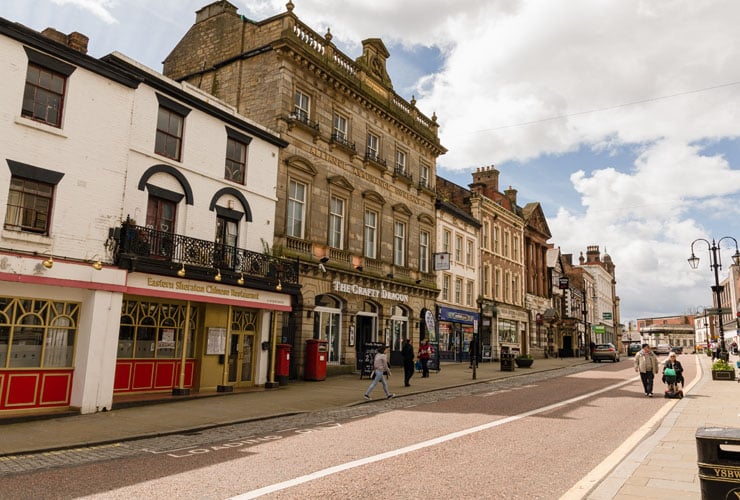
Average sold prices across Wrexham sit at £207,472 on the HM Land Registry House Price Index, 2.7% below the Wales average of £213,240. Wrexham is the largest city in North Wales, and its sold price has climbed from £44,580 in January 1995 to £207,472 today. For an investor, the draw is a low, stable price base on the Welsh-English border rather than a high headline yield: returns top out at 4.3% in LL14, but rents across the town sit comfortably under 30% of local income.
Wrexham is a compact four-postcode market with a clear split down the middle. LL14 (Cefn Mawr, Rhosllanerchrugog) leads on yield at 4.3% off a £240,180 asking price, while LL12 (Rossett, Gresford) is the premium suburb at £315,775 with too little rental stock to publish a yield. That £75,595 spread separates the affordable valley and town-centre stock, where the income return concentrates, from the commuter-belt villages towards Chester. This guide covers Wrexham County Borough (ONS code W06000006) across the LL11 to LL14 postcodes.
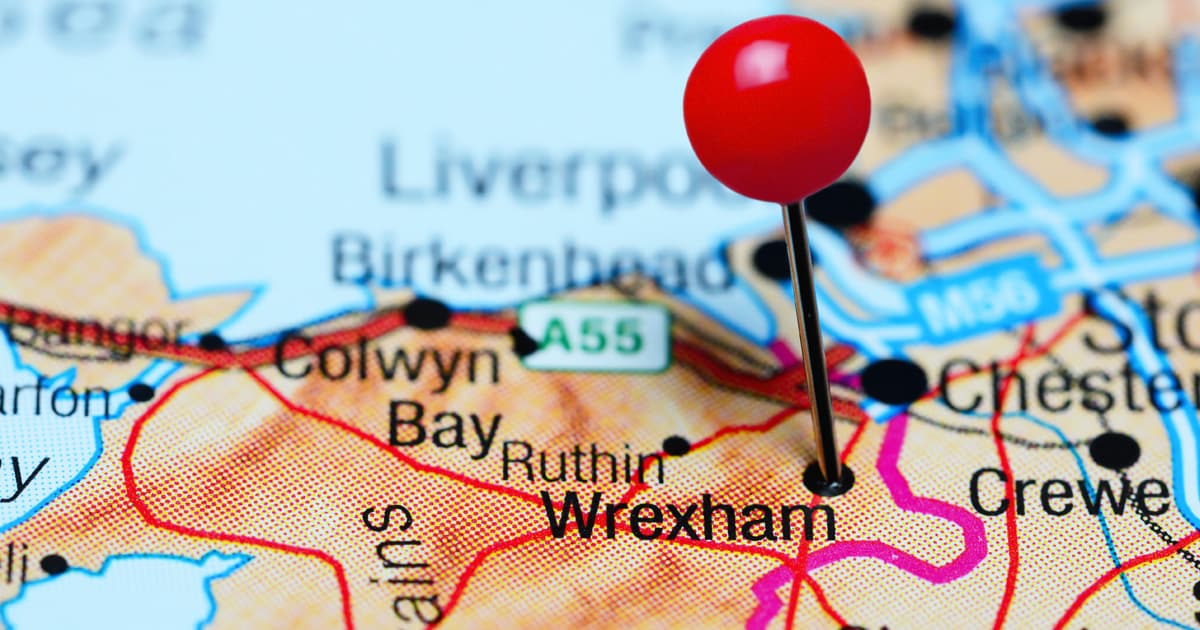
Wrexham sits on the Welsh-English border, 12 miles south of Chester and around 40 miles from Liverpool, and was granted city status in 2022. That location gives it a cross-border tenant pool that few Welsh markets share. The wider Cardiff buy-to-let market anchors South Wales, but Wrexham's own economy leans on manufacturing, healthcare, and a growing regeneration pipeline, and its nearest Welsh peers sit a long way to the south.
Article updated: July 2026
Why Invest in Wrexham?
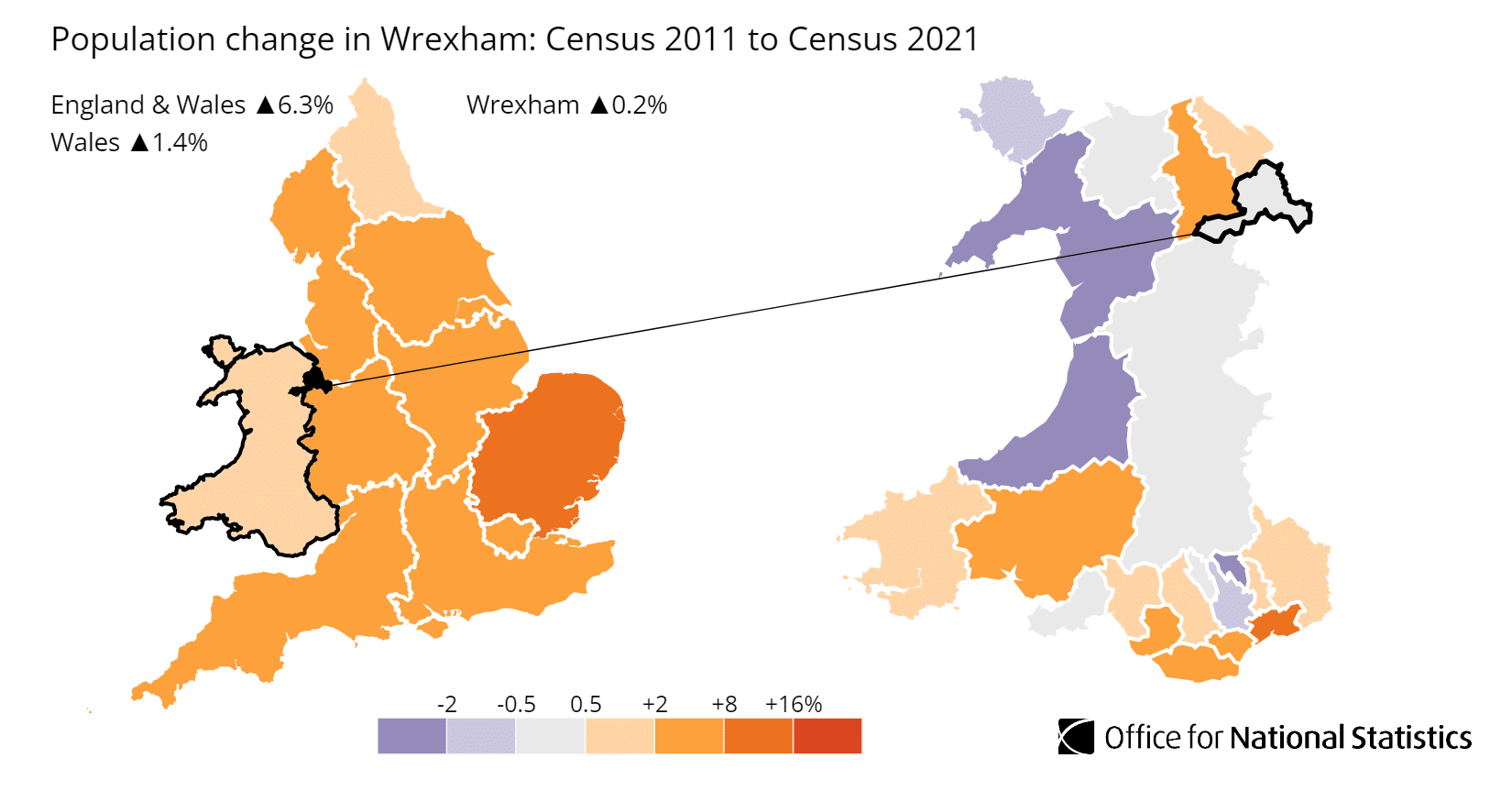
Wrexham's population held almost flat between the 2011 and 2021 censuses, edging up 0.2% from 134,844 to 135,117 residents. A settled population points to a stable tenant base rather than the churn of a fast-growing city, and in Wrexham that base rests on a border economy that has long drawn work from both sides of the Welsh-English line. The city gained formal status in 2022, and a regeneration pipeline running through to the late 2020s is aimed at shifting that flat trajectory.
Wrexham has historically been a manufacturing and industrial centre. The Wrexham Industrial Estate in LL13 is one of the largest in Britain, supporting thousands of jobs across advanced manufacturing, food production, and logistics. Healthcare is a second major employer through Wrexham Maelor Hospital, and Wrexham University adds an education and research base to the city. Proximity to Chester and the Cheshire economy means a share of Wrexham residents commute across the border, which broadens the local labour and rental market beyond the town itself.
Median gross annual earnings across Wrexham are £35,246, below the Wales median of £36,353 and 9.9% under the Great Britain median of £39,125. Lower local wages are part of why Wrexham's yields are modest rather than high: the price base is affordable, but rents track a tenant ceiling set by a lower-wage economy. The upside of that same maths is affordability, with market rents across the town sitting inside 30% of the local median income, which is a different profile from the high-yield, stretched-affordability Welsh cities to the south.
Wrexham Economic Summary
- Population (Wrexham): 135,117 (2021 Census). Change of +0.2% from 2011.
- Median annual salary: £35,246 (local), £36,353 (Wales), £39,125 (Great Britain)
- Employment rate: 71.9% (local)
- Unemployment rate: Not published (small sample size)
- Key employment sectors: Manufacturing, human health and social work, education, public administration, retail and hospitality
Source: ONS Census 2021, Nomis Labour Market Profile (ASHE 2025)
Regeneration and Investment in Wrexham
Wrexham is working through the largest wave of public investment the city has seen, concentrated on the Mold Road corridor, the Racecourse Ground, and the city centre. The programmes below are backed by the Welsh Government, Wrexham Council, and regional partners, with delivery running through to the late 2020s.
- Wrexham Gateway (In progress): A mixed-use regeneration of the Mold Road corridor at Wrexham General Station, delivering a multi-modal transport hub and around 7,000 sq m of new office space, backed by Growth Deal, public-sector, and private investment and projected to create roughly 150 jobs in its first phase. The project is led by Wrexham Council, the Welsh Government, Transport for Wales, and Wrexham University. Updates at Ambition North Wales.
- Kop Stand Redevelopment (In progress, £18 million public funding): A new 7,500-seat stand at Wrexham AFC's Racecourse Ground, featuring safe-standing, hospitality, and community facilities. The Welsh Government confirmed £18 million in public funding in December 2025, with the stand targeted for the 2026/27 season and the wider ground planned to reach around 18,000 capacity. Updates at Football Ground Guide.
- Transforming Towns Programme (In progress, £10 million+): Over £10 million of Welsh Government funding for Wrexham city centre, including the £2.5 million refurbishment of the Butchers' Market, High Street public-realm improvements, the Old Library creative hub on Queen's Square, and the Museum of Two Halves, the National Football Museum for Wales, opening in 2026. Updates at Wrexham.com.
Source: Office for National Statistics - Population for Wrexham
Wrexham Property Market Analysis
Average property prices in Wrexham have risen 365.4% since January 1995, from £44,580 to £207,472. The sections below trace that path cycle by cycle, then drill into current postcode-level data for sold prices, price per square foot, asking prices, growth trends, and monthly transaction volumes.
When was the last house price crash in Wrexham?
Wrexham's sold prices are recorded by HM Land Registry at the level of Wrexham County Borough. The Land Registry House Price Index tracks average prices from January 1995 to March 2026, covering 31 years of market cycles.
The 1995 to 2008 boom: Wrexham started at £44,580 in January 1995. Prices climbed steadily through the late 1990s, then accelerated through the early 2000s, reaching £133,050 by March 2006. The market ran on into the credit boom and peaked at £155,480 in January 2008, more than triple the 1995 starting point, helped by low borrowing costs and spillover demand from Chester and Liverpool.
2008 to 2009, the financial crisis: Wrexham's fall was sharp. Prices dropped from the January 2008 peak of £155,480 to a trough of £117,847 in March 2009, a decline of 24.2% in barely over a year. The worst single year-on-year reading was -22.8% in February 2009. That was a steeper correction than Wales as a whole, a reflection of how far the border market had run in the boom.
2010 to 2019, a long recovery: From the 2009 trough, Wrexham ground back slowly. Prices flatlined in the low £130,000s for years and did not surpass the January 2008 pre-crash peak until September 2019, when the average reached £155,671. That round-trip took almost twelve years, one of the longer recoveries of any UK market and a marker of how heavily the crash sat locally.
2020 to 2022, the pandemic surge: The stamp duty holiday and a shift towards value and space finally moved Wrexham decisively. Prices rose through 2020 and 2021, with the strongest year-on-year reading of the series at 15.4% in October 2021, and the average pushed past £197,000 by December 2022.
The 2023 rate shock: Higher mortgage rates flattened the market. Prices held broadly steady through 2023, with Wrexham's lower price base meaning it had less far to fall than higher-value markets.
2024 to present: Prices recovered through 2024 and reached an all-time high of £210,756 in September 2025, before easing to £207,472 by the latest March 2026 reading. The current price is 33.4% above the January 2008 pre-crash peak.
Long-term growth summary:
- 5 years (March 2021 to March 2026): 23.5% growth (£167,938 to £207,472)
- 10 years (March 2016 to March 2026): 52.2% growth (£136,284 to £207,472)
- 15 years (March 2011 to March 2026): 57.1% growth (£132,046 to £207,472)
- 20 years (March 2006 to March 2026): 55.9% growth (£133,050 to £207,472)
- 30 years (January 1995 to March 2026): 365.4% growth (£44,580 to £207,472)
Wrexham's 24.2% crash was deeper than the wider Welsh fall, and the recovery to its pre-crash peak took almost twelve years. That long correction is the backdrop to today's market: a buyer entering now does so at prices that sit just below the Wales average and have grown 23.5% over five years. An investor who bought at the exact peak in January 2008 would be sitting on a 33.4% gain on the Land Registry average eighteen years later, but only after a decade of waiting to get back to par.
- All property types
- Detached
- Semi-detached
- Terraced
- Flats
Source: HM Land Registry House Price Index
| Year | All property types | Detached | Semi-detached | Terraced | Flats |
|---|---|---|---|---|---|
| 1995-01 | £44,580 | £68,303 | £39,240 | £32,006 | £29,763 |
| 1995-02 | £45,711 | £69,541 | £40,463 | £32,822 | £30,574 |
| 1995-03 | £44,614 | £67,680 | £39,511 | £32,139 | £29,787 |
| 1995-04 | £43,285 | £65,441 | £38,405 | £31,229 | £28,902 |
| 1995-05 | £42,157 | £63,733 | £37,386 | £30,450 | £28,046 |
| 1995-06 | £42,921 | £64,994 | £38,096 | £30,878 | £28,635 |
| 1995-07 | £44,715 | £67,918 | £39,641 | £32,112 | £29,685 |
| 1995-08 | £44,603 | £68,073 | £39,461 | £31,941 | £29,484 |
| 1995-09 | £44,421 | £67,919 | £39,246 | £31,814 | £29,234 |
| 1995-10 | £44,305 | £67,772 | £39,218 | £31,597 | £29,270 |
| 1995-11 | £43,223 | £66,082 | £38,310 | £30,763 | £28,745 |
| 1995-12 | £43,124 | £65,874 | £38,277 | £30,651 | £28,697 |
| 1996-01 | £42,050 | £64,289 | £37,326 | £29,864 | £27,801 |
| 1996-02 | £43,966 | £67,077 | £39,114 | £31,240 | £28,897 |
| 1996-03 | £42,783 | £65,414 | £38,076 | £30,309 | £28,001 |
| 1996-04 | £43,469 | £66,370 | £38,654 | £30,919 | £28,412 |
| 1996-05 | £43,287 | £66,140 | £38,398 | £30,893 | £28,333 |
| 1996-06 | £43,638 | £66,669 | £38,679 | £31,190 | £28,658 |
| 1996-07 | £43,066 | £65,918 | £38,176 | £30,675 | £28,221 |
| 1996-08 | £43,067 | £66,273 | £38,096 | £30,530 | £27,945 |
| 1996-09 | £43,799 | £67,570 | £38,683 | £31,011 | £28,246 |
| 1996-10 | £44,238 | £68,361 | £39,049 | £31,267 | £28,412 |
| 1996-11 | £43,653 | £67,314 | £38,583 | £30,887 | £28,183 |
| 1996-12 | £44,286 | £68,164 | £39,201 | £31,357 | £28,356 |
| 1997-01 | £44,821 | £68,978 | £39,652 | £31,778 | £28,734 |
| 1997-02 | £44,415 | £68,463 | £39,302 | £31,397 | £28,340 |
| 1997-03 | £44,674 | £68,913 | £39,480 | £31,592 | £28,712 |
| 1997-04 | £44,343 | £68,235 | £39,257 | £31,380 | £28,449 |
| 1997-05 | £46,332 | £71,115 | £41,055 | £32,876 | £29,615 |
| 1997-06 | £46,609 | £71,689 | £41,282 | £33,015 | £29,501 |
| 1997-07 | £47,673 | £73,563 | £42,138 | £33,744 | £29,909 |
| 1997-08 | £47,985 | £74,376 | £42,313 | £33,882 | £29,986 |
| 1997-09 | £47,554 | £73,745 | £41,926 | £33,566 | £29,653 |
| 1997-10 | £47,568 | £73,799 | £41,966 | £33,508 | £29,737 |
| 1997-11 | £46,576 | £72,240 | £41,115 | £32,793 | £29,081 |
| 1997-12 | £46,868 | £72,664 | £41,445 | £32,917 | £29,275 |
| 1998-01 | £46,392 | £72,051 | £40,980 | £32,562 | £28,899 |
| 1998-02 | £45,942 | £71,219 | £40,664 | £32,197 | £28,823 |
| 1998-03 | £47,070 | £72,891 | £41,689 | £33,008 | £29,512 |
| 1998-04 | £47,319 | £73,076 | £41,984 | £33,222 | £29,645 |
| 1998-05 | £48,892 | £75,478 | £43,327 | £34,445 | £30,374 |
| 1998-06 | £48,883 | £75,590 | £43,245 | £34,440 | £30,424 |
| 1998-07 | £48,243 | £74,747 | £42,637 | £33,950 | £30,001 |
| 1998-08 | £48,679 | £75,738 | £42,941 | £34,167 | £30,195 |
| 1998-09 | £48,989 | £76,365 | £43,158 | £34,387 | £30,214 |
| 1998-10 | £50,576 | £78,862 | £44,576 | £35,443 | £31,322 |
| 1998-11 | £49,519 | £77,251 | £43,716 | £34,582 | £30,750 |
| 1998-12 | £48,328 | £75,254 | £42,773 | £33,668 | £30,261 |
| 1999-01 | £46,940 | £73,050 | £41,586 | £32,683 | £29,371 |
| 1999-02 | £47,527 | £73,824 | £42,143 | £33,131 | £29,738 |
| 1999-03 | £48,910 | £75,953 | £43,376 | £34,108 | £30,644 |
| 1999-04 | £50,799 | £78,613 | £45,041 | £35,602 | £31,953 |
| 1999-05 | £51,676 | £79,809 | £45,807 | £36,327 | £32,591 |
| 1999-06 | £50,588 | £78,118 | £44,783 | £35,649 | £31,893 |
| 1999-07 | £50,503 | £78,338 | £44,602 | £35,519 | £31,633 |
| 1999-08 | £49,918 | £77,652 | £43,970 | £35,124 | £31,165 |
| 1999-09 | £51,859 | £80,980 | £45,578 | £36,435 | £32,257 |
| 1999-10 | £52,278 | £81,699 | £46,009 | £36,597 | £32,671 |
| 1999-11 | £52,742 | £82,380 | £46,471 | £36,867 | £33,111 |
| 1999-12 | £52,292 | £81,405 | £46,166 | £36,588 | £33,090 |
| 2000-01 | £53,180 | £82,880 | £46,922 | £37,201 | £33,477 |
| 2000-02 | £52,658 | £82,177 | £46,448 | £36,794 | £32,993 |
| 2000-03 | £54,825 | £85,674 | £48,389 | £38,245 | £33,960 |
| 2000-04 | £53,954 | £84,090 | £47,631 | £37,753 | £33,608 |
| 2000-05 | £55,623 | £86,603 | £49,163 | £38,905 | £34,839 |
| 2000-06 | £53,410 | £83,150 | £47,217 | £37,340 | £33,649 |
| 2000-07 | £54,263 | £84,895 | £47,949 | £37,718 | £33,895 |
| 2000-08 | £54,833 | £86,207 | £48,400 | £37,909 | £34,233 |
| 2000-09 | £57,066 | £90,166 | £50,241 | £39,311 | £35,580 |
| 2000-10 | £58,815 | £92,898 | £51,857 | £40,445 | £36,906 |
| 2000-11 | £58,117 | £91,890 | £51,202 | £39,943 | £36,534 |
| 2000-12 | £57,798 | £91,189 | £51,015 | £39,731 | £36,654 |
| 2001-01 | £53,395 | £84,289 | £47,047 | £36,754 | £33,902 |
| 2001-02 | £54,435 | £85,789 | £47,977 | £37,544 | £34,511 |
| 2001-03 | £53,733 | £84,681 | £47,347 | £37,086 | £33,767 |
| 2001-04 | £57,694 | £90,934 | £50,753 | £39,891 | £36,322 |
| 2001-05 | £57,312 | £90,075 | £50,446 | £39,740 | £36,232 |
| 2001-06 | £59,302 | £93,082 | £52,217 | £41,157 | £37,762 |
| 2001-07 | £59,925 | £94,061 | £52,834 | £41,526 | £38,107 |
| 2001-08 | £62,566 | £98,567 | £55,050 | £43,254 | £39,755 |
| 2001-09 | £62,568 | £99,051 | £54,862 | £43,166 | £39,647 |
| 2001-10 | £63,070 | £99,893 | £55,327 | £43,457 | £40,008 |
| 2001-11 | £62,168 | £98,339 | £54,639 | £42,805 | £39,459 |
| 2001-12 | £62,476 | £98,484 | £55,085 | £43,023 | £40,041 |
| 2002-01 | £63,119 | £99,576 | £55,648 | £43,421 | £40,514 |
| 2002-02 | £65,077 | £102,774 | £57,258 | £44,817 | £41,777 |
| 2002-03 | £65,739 | £103,663 | £57,884 | £45,334 | £42,015 |
| 2002-04 | £67,938 | £106,812 | £59,845 | £46,993 | £43,739 |
| 2002-05 | £69,175 | £108,300 | £61,123 | £47,922 | £44,712 |
| 2002-06 | £72,748 | £113,812 | £64,230 | £50,484 | £47,245 |
| 2002-07 | £72,754 | £113,861 | £64,218 | £50,492 | £47,053 |
| 2002-08 | £74,888 | £117,327 | £66,040 | £51,956 | £48,470 |
| 2002-09 | £74,323 | £116,598 | £65,600 | £51,432 | £47,843 |
| 2002-10 | £76,575 | £119,980 | £67,742 | £52,914 | £49,513 |
| 2002-11 | £77,905 | £122,120 | £68,916 | £53,795 | £50,502 |
| 2002-12 | £81,302 | £127,006 | £72,082 | £56,216 | £53,180 |
| 2003-01 | £83,003 | £129,492 | £73,488 | £57,584 | £54,420 |
| 2003-02 | £84,288 | £131,059 | £74,866 | £58,509 | £55,158 |
| 2003-03 | £82,271 | £127,921 | £73,045 | £57,155 | £53,606 |
| 2003-04 | £84,595 | £131,050 | £75,397 | £58,767 | £55,288 |
| 2003-05 | £84,427 | £130,458 | £75,281 | £58,808 | £55,341 |
| 2003-06 | £91,834 | £141,644 | £81,858 | £64,124 | £60,645 |
| 2003-07 | £92,140 | £141,857 | £82,170 | £64,459 | £60,813 |
| 2003-08 | £96,936 | £149,015 | £86,456 | £67,927 | £64,238 |
| 2003-09 | £96,088 | £147,352 | £85,794 | £67,470 | £63,509 |
| 2003-10 | £99,944 | £153,002 | £89,189 | £70,376 | £66,244 |
| 2003-11 | £101,108 | £154,514 | £90,302 | £71,292 | £66,977 |
| 2003-12 | £102,951 | £156,489 | £92,071 | £72,960 | £68,748 |
| 2004-01 | £104,218 | £158,296 | £93,205 | £73,932 | £69,605 |
| 2004-02 | £103,004 | £155,927 | £92,134 | £73,342 | £68,997 |
| 2004-03 | £102,060 | £154,481 | £91,209 | £72,747 | £68,090 |
| 2004-04 | £104,129 | £156,093 | £93,300 | £74,823 | £69,823 |
| 2004-05 | £108,669 | £161,726 | £97,469 | £78,644 | £73,298 |
| 2004-06 | £114,803 | £169,954 | £103,170 | £83,370 | £77,870 |
| 2004-07 | £116,250 | £171,779 | £104,559 | £84,508 | £78,922 |
| 2004-08 | £119,500 | £176,716 | £107,493 | £86,780 | £81,093 |
| 2004-09 | £122,550 | £181,497 | £110,096 | £89,001 | £82,928 |
| 2004-10 | £123,733 | £183,559 | £110,989 | £89,859 | £83,849 |
| 2004-11 | £126,324 | £187,291 | £113,234 | £91,884 | £85,856 |
| 2004-12 | £127,840 | £188,844 | £114,604 | £93,360 | £87,514 |
| 2005-01 | £129,514 | £191,260 | £115,956 | £94,775 | £88,862 |
| 2005-02 | £129,454 | £190,932 | £115,957 | £94,730 | £88,979 |
| 2005-03 | £126,078 | £185,899 | £112,984 | £92,199 | £86,388 |
| 2005-04 | £126,597 | £185,801 | £113,705 | £92,705 | £86,871 |
| 2005-05 | £126,609 | £185,788 | £113,605 | £92,915 | £86,650 |
| 2005-06 | £130,717 | £190,936 | £117,286 | £96,401 | £89,566 |
| 2005-07 | £132,650 | £193,853 | £118,991 | £97,929 | £90,333 |
| 2005-08 | £132,912 | £194,266 | £119,163 | £98,248 | £90,207 |
| 2005-09 | £132,606 | £194,351 | £118,754 | £97,976 | £89,618 |
| 2005-10 | £132,981 | £194,886 | £118,897 | £98,406 | £90,316 |
| 2005-11 | £135,335 | £197,965 | £121,031 | £100,242 | £92,263 |
| 2005-12 | £137,701 | £200,843 | £123,111 | £102,187 | £94,720 |
| 2006-01 | £135,601 | £197,709 | £121,218 | £100,749 | £92,984 |
| 2006-02 | £133,306 | £193,941 | £119,140 | £99,303 | £91,602 |
| 2006-03 | £133,050 | £193,866 | £118,992 | £99,043 | £90,594 |
| 2006-04 | £135,327 | £196,670 | £121,161 | £100,905 | £92,135 |
| 2006-05 | £136,167 | £197,773 | £122,008 | £101,557 | £92,334 |
| 2006-06 | £137,368 | £198,901 | £123,213 | £102,675 | £93,262 |
| 2006-07 | £140,137 | £202,912 | £125,591 | £104,959 | £94,829 |
| 2006-08 | £145,244 | £210,476 | £130,115 | £108,887 | £97,629 |
| 2006-09 | £145,202 | £210,979 | £129,984 | £108,742 | £96,956 |
| 2006-10 | £144,799 | £210,654 | £129,612 | £108,260 | £96,771 |
| 2006-11 | £141,800 | £206,159 | £126,992 | £106,004 | £94,815 |
| 2006-12 | £143,015 | £207,131 | £128,149 | £107,237 | £96,218 |
| 2007-01 | £143,213 | £207,249 | £128,338 | £107,512 | £96,216 |
| 2007-02 | £147,408 | £213,172 | £132,062 | £110,616 | £99,498 |
| 2007-03 | £148,398 | £214,742 | £132,930 | £111,384 | £99,750 |
| 2007-04 | £150,288 | £217,029 | £134,663 | £113,112 | £100,955 |
| 2007-05 | £148,408 | £213,776 | £133,001 | £112,082 | £99,645 |
| 2007-06 | £148,388 | £213,674 | £132,917 | £112,132 | £99,779 |
| 2007-07 | £148,664 | £214,578 | £133,026 | £112,203 | £99,847 |
| 2007-08 | £151,887 | £220,082 | £135,833 | £114,562 | £101,089 |
| 2007-09 | £152,371 | £221,406 | £136,150 | £114,757 | £101,127 |
| 2007-10 | £152,888 | £222,368 | £136,540 | £115,053 | £101,535 |
| 2007-11 | £153,198 | £223,014 | £136,723 | £115,032 | £102,222 |
| 2007-12 | £154,225 | £224,454 | £137,592 | £115,785 | £103,150 |
| 2008-01 | £155,480 | £226,485 | £138,579 | £116,660 | £104,173 |
| 2008-02 | £152,723 | £222,594 | £136,043 | £114,606 | £102,253 |
| 2008-03 | £150,259 | £218,992 | £133,950 | £112,868 | £99,926 |
| 2008-04 | £147,130 | £214,482 | £131,185 | £110,657 | £97,288 |
| 2008-05 | £147,612 | £214,769 | £131,788 | £111,234 | £97,179 |
| 2008-06 | £149,410 | £217,371 | £133,385 | £112,589 | £98,415 |
| 2008-07 | £149,168 | £216,969 | £133,359 | £112,277 | £98,009 |
| 2008-08 | £145,731 | £212,392 | £130,202 | £109,500 | £95,778 |
| 2008-09 | £138,767 | £203,596 | £123,684 | £103,825 | £90,965 |
| 2008-10 | £138,580 | £203,559 | £123,458 | £103,554 | £90,961 |
| 2008-11 | £138,427 | £203,294 | £123,405 | £103,313 | £90,979 |
| 2008-12 | £137,101 | £200,518 | £122,443 | £102,588 | £90,123 |
| 2009-01 | £128,479 | £188,528 | £114,533 | £95,953 | £84,568 |
| 2009-02 | £117,917 | £173,318 | £104,983 | £88,058 | £77,696 |
| 2009-03 | £117,847 | £173,477 | £104,753 | £87,881 | £78,102 |
| 2009-04 | £119,469 | £174,955 | £106,532 | £89,381 | £79,201 |
| 2009-05 | £127,083 | £185,982 | £113,565 | £95,356 | £83,489 |
| 2009-06 | £126,808 | £185,602 | £113,606 | £95,352 | £82,396 |
| 2009-07 | £129,867 | £190,703 | £116,381 | £97,760 | £83,370 |
| 2009-08 | £129,282 | £190,371 | £115,912 | £97,299 | £82,280 |
| 2009-09 | £128,691 | £189,825 | £115,384 | £96,844 | £81,514 |
| 2009-10 | £129,846 | £191,606 | £116,593 | £97,740 | £81,789 |
| 2009-11 | £128,417 | £189,702 | £115,166 | £96,767 | £80,760 |
| 2009-12 | £132,203 | £194,529 | £118,858 | £99,980 | £82,966 |
| 2010-01 | £130,753 | £193,411 | £117,661 | £98,747 | £80,886 |
| 2010-02 | £131,794 | £195,255 | £119,083 | £99,273 | £80,797 |
| 2010-03 | £131,077 | £195,466 | £118,511 | £98,229 | £79,807 |
| 2010-04 | £130,352 | £193,768 | £118,051 | £97,725 | £79,787 |
| 2010-05 | £132,892 | £197,540 | £120,225 | £99,782 | £81,413 |
| 2010-06 | £133,329 | £197,848 | £120,709 | £100,406 | £81,314 |
| 2010-07 | £135,083 | £201,070 | £122,161 | £101,634 | £81,884 |
| 2010-08 | £137,501 | £205,153 | £124,478 | £103,124 | £82,783 |
| 2010-09 | £137,096 | £205,405 | £123,951 | £102,530 | £82,150 |
| 2010-10 | £138,274 | £207,256 | £125,055 | £103,205 | £83,061 |
| 2010-11 | £133,471 | £200,302 | £120,574 | £99,484 | £80,498 |
| 2010-12 | £131,584 | £197,152 | £119,045 | £97,944 | £79,696 |
| 2011-01 | £131,506 | £197,316 | £118,831 | £97,833 | £79,740 |
| 2011-02 | £133,687 | £200,474 | £120,756 | £99,517 | £81,269 |
| 2011-03 | £132,046 | £198,499 | £119,059 | £98,290 | £80,107 |
| 2011-04 | £128,094 | £192,146 | £115,585 | £95,514 | £77,785 |
| 2011-05 | £125,207 | £187,525 | £113,059 | £93,423 | £76,160 |
| 2011-06 | £126,456 | £188,778 | £114,453 | £94,397 | £77,035 |
| 2011-07 | £128,537 | £191,642 | £116,400 | £95,954 | £78,533 |
| 2011-08 | £127,670 | £190,628 | £115,710 | £95,284 | £77,173 |
| 2011-09 | £130,424 | £195,412 | £118,033 | £97,257 | £78,363 |
| 2011-10 | £126,582 | £190,294 | £114,557 | £94,106 | £75,498 |
| 2011-11 | £129,114 | £194,031 | £116,853 | £95,816 | £77,530 |
| 2011-12 | £127,032 | £190,549 | £115,144 | £94,189 | £76,509 |
| 2012-01 | £129,092 | £193,312 | £117,177 | £95,831 | £77,508 |
| 2012-02 | £128,026 | £191,482 | £116,202 | £95,406 | £76,507 |
| 2012-03 | £128,257 | £190,982 | £116,582 | £96,131 | £76,648 |
| 2012-04 | £128,304 | £191,050 | £116,488 | £96,219 | £77,141 |
| 2012-05 | £125,557 | £186,834 | £114,085 | £94,116 | £75,602 |
| 2012-06 | £125,245 | £186,735 | £113,652 | £93,832 | £75,170 |
| 2012-07 | £122,844 | £182,931 | £111,487 | £92,257 | £73,535 |
| 2012-08 | £126,191 | £187,866 | £114,495 | £94,952 | £75,163 |
| 2012-09 | £124,577 | £185,789 | £112,957 | £93,579 | £74,125 |
| 2012-10 | £125,768 | £187,551 | £114,093 | £94,416 | £74,821 |
| 2012-11 | £124,577 | £185,876 | £112,947 | £93,484 | £74,247 |
| 2012-12 | £126,232 | £188,453 | £114,403 | £94,724 | £75,123 |
| 2013-01 | £128,032 | £191,177 | £116,217 | £95,908 | £75,828 |
| 2013-02 | £126,867 | £189,416 | £115,240 | £94,948 | £75,100 |
| 2013-03 | £125,376 | £187,371 | £113,884 | £93,590 | £74,486 |
| 2013-04 | £126,664 | £189,376 | £114,894 | £94,625 | £75,455 |
| 2013-05 | £129,224 | £193,050 | £117,242 | £96,536 | £77,213 |
| 2013-06 | £130,609 | £194,688 | £118,618 | £97,853 | £77,766 |
| 2013-07 | £128,452 | £191,319 | £116,626 | £96,413 | £76,448 |
| 2013-08 | £127,873 | £190,672 | £116,099 | £96,002 | £75,599 |
| 2013-09 | £128,642 | £192,311 | £116,665 | £96,369 | £76,071 |
| 2013-10 | £130,156 | £195,084 | £118,010 | £97,179 | £76,864 |
| 2013-11 | £130,225 | £195,267 | £118,131 | £96,998 | £77,143 |
| 2013-12 | £128,765 | £192,535 | £117,075 | £95,867 | £76,556 |
| 2014-01 | £131,136 | £195,894 | £119,261 | £97,700 | £78,059 |
| 2014-02 | £131,244 | £196,250 | £119,286 | £97,804 | £77,865 |
| 2014-03 | £134,666 | £201,500 | £122,416 | £100,383 | £79,406 |
| 2014-04 | £132,500 | £197,952 | £120,491 | £98,987 | £77,905 |
| 2014-05 | £133,589 | £199,072 | £121,537 | £100,031 | £78,781 |
| 2014-06 | £132,537 | £197,459 | £120,586 | £99,274 | £78,131 |
| 2014-07 | £133,536 | £199,003 | £121,512 | £100,017 | £78,518 |
| 2014-08 | £133,584 | £199,406 | £121,514 | £99,981 | £78,117 |
| 2014-09 | £135,289 | £202,077 | £122,959 | £101,308 | £79,051 |
| 2014-10 | £134,507 | £201,049 | £122,255 | £100,557 | £78,824 |
| 2014-11 | £135,120 | £202,086 | £122,873 | £100,822 | £79,336 |
| 2014-12 | £131,388 | £196,722 | £119,481 | £97,871 | £77,188 |
| 2015-01 | £132,060 | £197,750 | £120,149 | £98,311 | £77,505 |
| 2015-02 | £131,452 | £196,815 | £119,500 | £97,938 | £77,379 |
| 2015-03 | £132,180 | £198,119 | £120,207 | £98,267 | £77,826 |
| 2015-04 | £133,093 | £199,711 | £120,970 | £98,914 | £78,165 |
| 2015-05 | £133,492 | £200,285 | £121,469 | £99,094 | £78,257 |
| 2015-06 | £135,927 | £203,633 | £123,770 | £101,107 | £79,328 |
| 2015-07 | £137,445 | £205,618 | £125,280 | £102,282 | £80,255 |
| 2015-08 | £140,359 | £210,188 | £127,874 | £104,451 | £81,626 |
| 2015-09 | £141,400 | £212,461 | £128,574 | £105,013 | £82,233 |
| 2015-10 | £141,062 | £212,268 | £128,237 | £104,624 | £81,809 |
| 2015-11 | £138,731 | £208,908 | £126,141 | £102,784 | £80,362 |
| 2015-12 | £139,310 | £209,622 | £126,778 | £103,240 | £80,493 |
| 2016-01 | £138,033 | £207,606 | £125,748 | £102,190 | £79,796 |
| 2016-02 | £137,575 | £206,883 | £125,372 | £101,843 | £79,451 |
| 2016-03 | £136,284 | £205,022 | £124,170 | £100,763 | £79,115 |
| 2016-04 | £138,404 | £208,131 | £126,007 | £102,535 | £80,224 |
| 2016-05 | £141,499 | £212,098 | £128,850 | £105,165 | £82,564 |
| 2016-06 | £142,140 | £212,796 | £129,455 | £105,872 | £82,672 |
| 2016-07 | £142,271 | £213,012 | £129,497 | £106,033 | £82,816 |
| 2016-08 | £143,328 | £215,097 | £130,384 | £106,618 | £83,140 |
| 2016-09 | £143,415 | £215,369 | £130,549 | £106,471 | £83,194 |
| 2016-10 | £144,232 | £217,039 | £131,300 | £106,687 | £83,909 |
| 2016-11 | £144,455 | £218,116 | £131,453 | £106,390 | £83,983 |
| 2016-12 | £146,728 | £221,757 | £133,429 | £107,966 | £85,564 |
| 2017-01 | £149,468 | £226,138 | £135,903 | £109,875 | £86,976 |
| 2017-02 | £147,375 | £222,728 | £133,917 | £108,486 | £86,355 |
| 2017-03 | £146,931 | £222,231 | £133,513 | £108,050 | £86,039 |
| 2017-04 | £145,974 | £220,606 | £132,554 | £107,509 | £85,818 |
| 2017-05 | £147,842 | £222,942 | £134,530 | £108,902 | £86,945 |
| 2017-06 | £148,267 | £222,990 | £134,953 | £109,544 | £87,487 |
| 2017-07 | £147,998 | £222,335 | £134,847 | £109,332 | £87,472 |
| 2017-08 | £147,783 | £222,142 | £134,428 | £109,405 | £87,062 |
| 2017-09 | £147,786 | £222,610 | £134,351 | £109,238 | £86,718 |
| 2017-10 | £148,214 | £223,423 | £134,761 | £109,499 | £86,532 |
| 2017-11 | £147,007 | £221,728 | £133,799 | £108,363 | £85,787 |
| 2017-12 | £148,346 | £223,404 | £135,182 | £109,403 | £86,578 |
| 2018-01 | £148,973 | £224,332 | £135,897 | £109,697 | £86,978 |
| 2018-02 | £150,411 | £226,687 | £137,144 | £110,697 | £87,759 |
| 2018-03 | £151,575 | £228,649 | £138,225 | £111,417 | £88,315 |
| 2018-04 | £150,825 | £227,451 | £137,477 | £111,112 | £87,538 |
| 2018-05 | £150,422 | £226,827 | £137,216 | £110,895 | £86,685 |
| 2018-06 | £150,550 | £226,847 | £137,493 | £110,939 | £86,713 |
| 2018-07 | £149,414 | £225,351 | £136,441 | £110,017 | £85,849 |
| 2018-08 | £153,617 | £231,545 | £140,334 | £113,185 | £88,188 |
| 2018-09 | £150,446 | £227,103 | £137,385 | £110,795 | £85,912 |
| 2018-10 | £152,996 | £230,966 | £139,736 | £112,545 | £87,642 |
| 2018-11 | £150,911 | £228,225 | £137,851 | £110,764 | £86,138 |
| 2018-12 | £154,335 | £233,169 | £141,009 | £113,313 | £88,427 |
| 2019-01 | £149,943 | £226,819 | £137,017 | £109,959 | £85,545 |
| 2019-02 | £149,998 | £226,989 | £136,997 | £109,945 | £85,802 |
| 2019-03 | £148,107 | £224,233 | £135,335 | £108,527 | £84,324 |
| 2019-04 | £151,637 | £229,154 | £138,654 | £111,378 | £86,087 |
| 2019-05 | £150,228 | £226,480 | £137,497 | £110,635 | £85,129 |
| 2019-06 | £151,605 | £228,376 | £138,736 | £111,791 | £85,994 |
| 2019-07 | £152,943 | £230,235 | £139,920 | £112,873 | £87,058 |
| 2019-08 | £155,186 | £233,900 | £141,809 | £114,576 | £87,986 |
| 2019-09 | £155,671 | £234,741 | £142,050 | £115,092 | £88,225 |
| 2019-10 | £156,015 | £235,162 | £142,592 | £115,187 | £88,304 |
| 2019-11 | £154,620 | £233,034 | £141,601 | £113,852 | £87,505 |
| 2019-12 | £151,691 | £228,438 | £139,146 | £111,594 | £85,753 |
| 2020-01 | £148,600 | £223,962 | £136,265 | £109,317 | £83,661 |
| 2020-02 | £149,850 | £225,822 | £137,410 | £110,321 | £84,161 |
| 2020-03 | £153,068 | £230,839 | £140,406 | £112,611 | £85,566 |
| 2020-04 | £151,704 | £228,979 | £139,093 | £111,736 | £84,188 |
| 2020-05 | £150,401 | £227,058 | £137,915 | £110,708 | £83,502 |
| 2020-06 | £148,968 | £224,774 | £136,758 | £109,629 | £82,436 |
| 2020-07 | £152,538 | £229,871 | £140,124 | £112,218 | £84,862 |
| 2020-08 | £153,044 | £230,641 | £140,642 | £112,685 | £84,620 |
| 2020-09 | £154,438 | £233,231 | £141,737 | £113,733 | £84,904 |
| 2020-10 | £156,280 | £236,695 | £143,267 | £115,026 | £85,151 |
| 2020-11 | £158,876 | £240,998 | £145,416 | £116,969 | £86,503 |
| 2020-12 | £162,281 | £246,208 | £148,400 | £119,639 | £88,280 |
| 2021-01 | £165,369 | £249,711 | £151,390 | £122,244 | £91,080 |
| 2021-02 | £167,242 | £251,266 | £153,238 | £124,049 | £93,245 |
| 2021-03 | £167,938 | £250,949 | £153,943 | £124,983 | £95,173 |
| 2021-04 | £167,062 | £249,649 | £152,973 | £124,525 | £94,658 |
| 2021-05 | £167,435 | £250,388 | £153,254 | £124,850 | £94,538 |
| 2021-06 | £170,129 | £253,835 | £155,633 | £127,407 | £96,010 |
| 2021-07 | £171,122 | £255,269 | £156,878 | £128,111 | £95,647 |
| 2021-08 | £175,264 | £261,861 | £160,944 | £130,936 | £96,969 |
| 2021-09 | £177,826 | £266,019 | £163,573 | £132,508 | £97,710 |
| 2021-10 | £180,271 | £271,422 | £165,468 | £133,627 | £98,620 |
| 2021-11 | £182,941 | £275,972 | £167,723 | £135,322 | £100,450 |
| 2021-12 | £184,165 | £279,133 | £168,647 | £135,803 | £100,201 |
| 2022-01 | £186,383 | £281,462 | £171,033 | £137,822 | £101,267 |
| 2022-02 | £186,021 | £280,349 | £170,934 | £137,825 | £100,806 |
| 2022-03 | £182,167 | £274,531 | £167,695 | £134,787 | £98,282 |
| 2022-04 | £184,376 | £277,680 | £169,574 | £136,769 | £99,387 |
| 2022-05 | £186,311 | £280,531 | £171,407 | £138,361 | £99,839 |
| 2022-06 | £192,689 | £289,482 | £177,291 | £143,480 | £103,563 |
| 2022-07 | £194,822 | £292,122 | £179,533 | £145,226 | £104,496 |
| 2022-08 | £197,184 | £295,578 | £181,619 | £147,282 | £105,351 |
| 2022-09 | £198,680 | £298,069 | £182,957 | £148,479 | £105,413 |
| 2022-10 | £200,156 | £300,833 | £184,162 | £149,396 | £106,048 |
| 2022-11 | £199,216 | £299,739 | £183,208 | £148,575 | £105,491 |
| 2022-12 | £197,978 | £297,751 | £182,116 | £147,616 | £105,087 |
| 2023-01 | £194,937 | £293,420 | £179,480 | £145,042 | £103,244 |
| 2023-02 | £195,790 | £295,065 | £180,321 | £145,349 | £103,698 |
| 2023-03 | £195,366 | £295,412 | £180,032 | £144,289 | £103,197 |
| 2023-04 | £196,239 | £297,092 | £180,742 | £144,796 | £103,697 |
| 2023-05 | £196,163 | £296,567 | £180,771 | £144,832 | £103,865 |
| 2023-06 | £195,173 | £294,406 | £179,725 | £144,751 | £103,173 |
| 2023-07 | £193,352 | £291,018 | £178,166 | £143,755 | £101,978 |
| 2023-08 | £190,705 | £286,858 | £175,714 | £142,065 | £100,104 |
| 2023-09 | £192,527 | £289,495 | £177,487 | £143,445 | £100,851 |
| 2023-10 | £197,520 | £296,722 | £182,070 | £147,246 | £103,899 |
| 2023-11 | £196,964 | £296,298 | £181,591 | £146,499 | £103,663 |
| 2023-12 | £196,260 | £295,060 | £180,994 | £145,904 | £103,718 |
| 2024-01 | £192,671 | £289,890 | £177,604 | £143,212 | £101,718 |
| 2024-02 | £193,130 | £289,546 | £178,207 | £143,927 | £102,164 |
| 2024-03 | £191,218 | £286,629 | £176,373 | £142,487 | £101,420 |
| 2024-04 | £190,120 | £283,933 | £175,469 | £141,958 | £101,458 |
| 2024-05 | £189,821 | £283,289 | £175,175 | £141,769 | £101,594 |
| 2024-06 | £191,860 | £285,379 | £177,101 | £143,836 | £102,675 |
| 2024-07 | £192,999 | £286,956 | £178,234 | £144,928 | £102,593 |
| 2024-08 | £197,843 | £294,076 | £182,595 | £148,956 | £104,616 |
| 2024-09 | £195,570 | £291,515 | £180,601 | £146,919 | £102,613 |
| 2024-10 | £196,181 | £293,060 | £180,861 | £147,287 | £103,070 |
| 2024-11 | £195,083 | £291,672 | £180,136 | £146,092 | £102,171 |
| 2024-12 | £199,465 | £298,660 | £184,066 | £149,341 | £104,205 |
| 2025-01 | £203,349 | £304,849 | £187,924 | £152,001 | £105,438 |
| 2025-02 | £204,359 | £306,636 | £188,666 | £152,838 | £105,928 |
| 2025-03 | £202,846 | £302,340 | £187,469 | £152,387 | £106,285 |
| 2025-04 | £202,282 | £302,352 | £187,118 | £151,399 | £105,514 |
| 2025-05 | £203,826 | £305,296 | £188,619 | £152,308 | £105,680 |
| 2025-06 | £205,559 | £309,348 | £190,385 | £152,994 | £105,172 |
| 2025-07 | £208,277 | £311,880 | £193,015 | £155,923 | £106,635 |
| 2025-08 | £207,849 | £310,477 | £192,870 | £155,966 | £106,136 |
| 2025-09 | £210,756 | £315,013 | £195,545 | £158,287 | £107,041 |
| 2025-10 | £210,628 | £315,160 | £195,522 | £158,002 | £106,623 |
| 2025-11 | £209,825 | £314,003 | £194,714 | £157,493 | £106,087 |
| 2025-12 | £210,453 | £314,067 | £195,577 | £158,252 | £106,425 |
| 2026-01 | £208,072 | £309,691 | £193,591 | £156,940 | £104,854 |
| 2026-02 | £208,915 | £310,820 | £194,642 | £157,529 | £104,906 |
| 2026-03 | £207,472 | £308,967 | £193,434 | £156,436 | £103,349 |
- All property types
- Detached
- Semi-detached
- Terraced
- Flats
Source: HM Land Registry House Price Index
| Year | All property types | Detached | Semi-detached | Terraced | Flats |
|---|---|---|---|---|---|
| 1996-01 | -5.7% | -5.9% | -4.9% | -6.7% | -6.6% |
| 1996-02 | -3.8% | -3.5% | -3.3% | -4.8% | -5.5% |
| 1996-03 | -4.1% | -3.3% | -3.6% | -5.7% | -6.0% |
| 1996-04 | +0.4% | +1.4% | +0.6% | -1.0% | -1.7% |
| 1996-05 | +2.7% | +3.8% | +2.7% | +1.5% | +1.0% |
| 1996-06 | +1.7% | +2.6% | +1.5% | +1.0% | +0.1% |
| 1996-07 | -3.7% | -2.9% | -3.7% | -4.5% | -4.9% |
| 1996-08 | -3.4% | -2.6% | -3.5% | -4.4% | -5.2% |
| 1996-09 | -1.4% | -0.5% | -1.4% | -2.5% | -3.4% |
| 1996-10 | -0.2% | +0.9% | -0.4% | -1.0% | -2.9% |
| 1996-11 | +1.0% | +1.9% | +0.7% | +0.4% | -2.0% |
| 1996-12 | +2.7% | +3.5% | +2.4% | +2.3% | -1.2% |
| 1997-01 | +6.6% | +7.3% | +6.2% | +6.4% | +3.4% |
| 1997-02 | +1.0% | +2.1% | +0.5% | +0.5% | -1.9% |
| 1997-03 | +4.4% | +5.3% | +3.7% | +4.2% | +2.5% |
| 1997-04 | +2.0% | +2.8% | +1.6% | +1.5% | +0.1% |
| 1997-05 | +7.0% | +7.5% | +6.9% | +6.4% | +4.5% |
| 1997-06 | +6.8% | +7.5% | +6.7% | +5.9% | +2.9% |
| 1997-07 | +10.7% | +11.6% | +10.4% | +10.0% | +6.0% |
| 1997-08 | +11.4% | +12.2% | +11.1% | +11.0% | +7.3% |
| 1997-09 | +8.6% | +9.1% | +8.4% | +8.2% | +5.0% |
| 1997-10 | +7.5% | +8.0% | +7.5% | +7.2% | +4.7% |
| 1997-11 | +6.7% | +7.3% | +6.6% | +6.2% | +3.2% |
| 1997-12 | +5.8% | +6.6% | +5.7% | +5.0% | +3.2% |
| 1998-01 | +3.5% | +4.5% | +3.4% | +2.5% | +0.6% |
| 1998-02 | +3.4% | +4.0% | +3.5% | +2.5% | +1.7% |
| 1998-03 | +5.4% | +5.8% | +5.6% | +4.5% | +2.8% |
| 1998-04 | +6.7% | +7.1% | +6.9% | +5.9% | +4.2% |
| 1998-05 | +5.5% | +6.1% | +5.5% | +4.8% | +2.6% |
| 1998-06 | +4.9% | +5.4% | +4.8% | +4.3% | +3.1% |
| 1998-07 | +1.2% | +1.6% | +1.2% | +0.6% | +0.3% |
| 1998-08 | +1.4% | +1.8% | +1.5% | +0.8% | +0.7% |
| 1998-09 | +3.0% | +3.6% | +2.9% | +2.4% | +1.9% |
| 1998-10 | +6.3% | +6.9% | +6.2% | +5.8% | +5.3% |
| 1998-11 | +6.3% | +6.9% | +6.3% | +5.5% | +5.7% |
| 1998-12 | +3.1% | +3.6% | +3.2% | +2.3% | +3.4% |
| 1999-01 | +1.2% | +1.4% | +1.5% | +0.4% | +1.6% |
| 1999-02 | +3.5% | +3.7% | +3.6% | +2.9% | +3.2% |
| 1999-03 | +3.9% | +4.2% | +4.0% | +3.3% | +3.8% |
| 1999-04 | +7.4% | +7.6% | +7.3% | +7.2% | +7.8% |
| 1999-05 | +5.7% | +5.7% | +5.7% | +5.5% | +7.3% |
| 1999-06 | +3.5% | +3.3% | +3.6% | +3.5% | +4.8% |
| 1999-07 | +4.7% | +4.8% | +4.6% | +4.6% | +5.4% |
| 1999-08 | +2.5% | +2.5% | +2.4% | +2.8% | +3.2% |
| 1999-09 | +5.9% | +6.0% | +5.6% | +6.0% | +6.8% |
| 1999-10 | +3.4% | +3.6% | +3.2% | +3.3% | +4.3% |
| 1999-11 | +6.5% | +6.6% | +6.3% | +6.6% | +7.7% |
| 1999-12 | +8.2% | +8.2% | +7.9% | +8.7% | +9.3% |
| 2000-01 | +13.3% | +13.5% | +12.8% | +13.8% | +14.0% |
| 2000-02 | +10.8% | +11.3% | +10.2% | +11.1% | +10.9% |
| 2000-03 | +12.1% | +12.8% | +11.6% | +12.1% | +10.8% |
| 2000-04 | +6.2% | +7.0% | +5.7% | +6.0% | +5.2% |
| 2000-05 | +7.6% | +8.5% | +7.3% | +7.1% | +6.9% |
| 2000-06 | +5.6% | +6.4% | +5.4% | +4.7% | +5.5% |
| 2000-07 | +7.4% | +8.4% | +7.5% | +6.2% | +7.2% |
| 2000-08 | +9.8% | +11.0% | +10.1% | +7.9% | +9.8% |
| 2000-09 | +10.0% | +11.3% | +10.2% | +7.9% | +10.3% |
| 2000-10 | +12.5% | +13.7% | +12.7% | +10.5% | +13.0% |
| 2000-11 | +10.2% | +11.5% | +10.2% | +8.3% | +10.3% |
| 2000-12 | +10.5% | +12.0% | +10.5% | +8.6% | +10.8% |
| 2001-01 | +0.4% | +1.7% | +0.3% | -1.2% | +1.3% |
| 2001-02 | +3.4% | +4.4% | +3.3% | +2.0% | +4.6% |
| 2001-03 | -2.0% | -1.2% | -2.2% | -3.0% | -0.6% |
| 2001-04 | +6.9% | +8.1% | +6.6% | +5.7% | +8.1% |
| 2001-05 | +3.0% | +4.0% | +2.6% | +2.1% | +4.0% |
| 2001-06 | +11.0% | +11.9% | +10.6% | +10.2% | +12.2% |
| 2001-07 | +10.4% | +10.8% | +10.2% | +10.1% | +12.4% |
| 2001-08 | +14.1% | +14.3% | +13.7% | +14.1% | +16.1% |
| 2001-09 | +9.6% | +9.9% | +9.2% | +9.8% | +11.4% |
| 2001-10 | +7.2% | +7.5% | +6.7% | +7.4% | +8.4% |
| 2001-11 | +7.0% | +7.0% | +6.7% | +7.2% | +8.0% |
| 2001-12 | +8.1% | +8.0% | +8.0% | +8.3% | +9.2% |
| 2002-01 | +18.2% | +18.1% | +18.3% | +18.1% | +19.5% |
| 2002-02 | +19.5% | +19.8% | +19.3% | +19.4% | +21.1% |
| 2002-03 | +22.3% | +22.4% | +22.3% | +22.2% | +24.4% |
| 2002-04 | +17.8% | +17.5% | +17.9% | +17.8% | +20.4% |
| 2002-05 | +20.7% | +20.2% | +21.2% | +20.6% | +23.4% |
| 2002-06 | +22.7% | +22.3% | +23.0% | +22.7% | +25.1% |
| 2002-07 | +21.4% | +21.1% | +21.5% | +21.6% | +23.5% |
| 2002-08 | +19.7% | +19.0% | +20.0% | +20.1% | +21.9% |
| 2002-09 | +18.8% | +17.7% | +19.6% | +19.1% | +20.7% |
| 2002-10 | +21.4% | +20.1% | +22.4% | +21.8% | +23.8% |
| 2002-11 | +25.3% | +24.2% | +26.1% | +25.7% | +28.0% |
| 2002-12 | +30.1% | +29.0% | +30.9% | +30.7% | +32.8% |
| 2003-01 | +31.5% | +30.0% | +32.1% | +32.6% | +34.3% |
| 2003-02 | +29.5% | +27.5% | +30.8% | +30.6% | +32.0% |
| 2003-03 | +25.1% | +23.4% | +26.2% | +26.1% | +27.6% |
| 2003-04 | +24.5% | +22.7% | +26.0% | +25.1% | +26.4% |
| 2003-05 | +22.0% | +20.5% | +23.2% | +22.7% | +23.8% |
| 2003-06 | +26.2% | +24.5% | +27.4% | +27.0% | +28.4% |
| 2003-07 | +26.6% | +24.6% | +28.0% | +27.7% | +29.2% |
| 2003-08 | +29.4% | +27.0% | +30.9% | +30.7% | +32.5% |
| 2003-09 | +29.3% | +26.4% | +30.8% | +31.2% | +32.7% |
| 2003-10 | +30.5% | +27.5% | +31.7% | +33.0% | +33.8% |
| 2003-11 | +29.8% | +26.5% | +31.0% | +32.5% | +32.6% |
| 2003-12 | +26.6% | +23.2% | +27.7% | +29.8% | +29.3% |
| 2004-01 | +25.6% | +22.2% | +26.8% | +28.4% | +27.9% |
| 2004-02 | +22.2% | +19.0% | +23.1% | +25.4% | +25.1% |
| 2004-03 | +24.1% | +20.8% | +24.9% | +27.3% | +27.0% |
| 2004-04 | +23.1% | +19.1% | +23.7% | +27.3% | +26.3% |
| 2004-05 | +28.7% | +24.0% | +29.5% | +33.7% | +32.4% |
| 2004-06 | +25.0% | +20.0% | +26.0% | +30.0% | +28.4% |
| 2004-07 | +26.2% | +21.1% | +27.2% | +31.1% | +29.8% |
| 2004-08 | +23.3% | +18.6% | +24.3% | +27.8% | +26.2% |
| 2004-09 | +27.5% | +23.2% | +28.3% | +31.9% | +30.6% |
| 2004-10 | +23.8% | +20.0% | +24.4% | +27.7% | +26.6% |
| 2004-11 | +24.9% | +21.2% | +25.4% | +28.9% | +28.2% |
| 2004-12 | +24.2% | +20.7% | +24.5% | +28.0% | +27.3% |
| 2005-01 | +24.3% | +20.8% | +24.4% | +28.2% | +27.7% |
| 2005-02 | +25.7% | +22.4% | +25.9% | +29.2% | +29.0% |
| 2005-03 | +23.5% | +20.3% | +23.9% | +26.7% | +26.9% |
| 2005-04 | +21.6% | +19.0% | +21.9% | +23.9% | +24.4% |
| 2005-05 | +16.5% | +14.9% | +16.6% | +18.1% | +18.2% |
| 2005-06 | +13.9% | +12.3% | +13.7% | +15.6% | +15.0% |
| 2005-07 | +14.1% | +12.9% | +13.8% | +15.9% | +14.5% |
| 2005-08 | +11.2% | +9.9% | +10.9% | +13.2% | +11.2% |
| 2005-09 | +8.2% | +7.1% | +7.9% | +10.1% | +8.1% |
| 2005-10 | +7.5% | +6.2% | +7.1% | +9.5% | +7.7% |
| 2005-11 | +7.1% | +5.7% | +6.9% | +9.1% | +7.5% |
| 2005-12 | +7.7% | +6.4% | +7.4% | +9.5% | +8.2% |
| 2006-01 | +4.7% | +3.4% | +4.5% | +6.3% | +4.6% |
| 2006-02 | +3.0% | +1.6% | +2.7% | +4.8% | +2.9% |
| 2006-03 | +5.5% | +4.3% | +5.3% | +7.4% | +4.9% |
| 2006-04 | +6.9% | +5.9% | +6.6% | +8.8% | +6.1% |
| 2006-05 | +7.5% | +6.5% | +7.4% | +9.3% | +6.6% |
| 2006-06 | +5.1% | +4.2% | +5.1% | +6.5% | +4.1% |
| 2006-07 | +5.6% | +4.7% | +5.5% | +7.2% | +5.0% |
| 2006-08 | +9.3% | +8.3% | +9.2% | +10.8% | +8.2% |
| 2006-09 | +9.5% | +8.6% | +9.5% | +11.0% | +8.2% |
| 2006-10 | +8.9% | +8.1% | +9.0% | +10.0% | +7.1% |
| 2006-11 | +4.8% | +4.1% | +4.9% | +5.7% | +2.8% |
| 2006-12 | +3.9% | +3.1% | +4.1% | +4.9% | +1.6% |
| 2007-01 | +5.6% | +4.8% | +5.9% | +6.7% | +3.5% |
| 2007-02 | +10.6% | +9.9% | +10.8% | +11.4% | +8.6% |
| 2007-03 | +11.5% | +10.8% | +11.7% | +12.5% | +10.1% |
| 2007-04 | +11.1% | +10.4% | +11.1% | +12.1% | +9.6% |
| 2007-05 | +9.0% | +8.1% | +9.0% | +10.4% | +7.9% |
| 2007-06 | +8.0% | +7.4% | +7.9% | +9.2% | +7.0% |
| 2007-07 | +6.1% | +5.7% | +5.9% | +6.9% | +5.3% |
| 2007-08 | +4.6% | +4.6% | +4.4% | +5.2% | +3.5% |
| 2007-09 | +4.9% | +4.9% | +4.7% | +5.5% | +4.3% |
| 2007-10 | +5.6% | +5.6% | +5.3% | +6.3% | +4.9% |
| 2007-11 | +8.0% | +8.2% | +7.7% | +8.5% | +7.8% |
| 2007-12 | +7.8% | +8.4% | +7.4% | +8.0% | +7.2% |
| 2008-01 | +8.6% | +9.3% | +8.0% | +8.5% | +8.3% |
| 2008-02 | +3.6% | +4.4% | +3.0% | +3.6% | +2.8% |
| 2008-03 | +1.3% | +2.0% | +0.8% | +1.3% | +0.2% |
| 2008-04 | -2.1% | -1.2% | -2.6% | -2.2% | -3.6% |
| 2008-05 | -0.5% | +0.5% | -0.9% | -0.8% | -2.5% |
| 2008-06 | +0.7% | +1.7% | +0.4% | +0.4% | -1.4% |
| 2008-07 | +0.3% | +1.1% | +0.3% | +0.1% | -1.8% |
| 2008-08 | -4.1% | -3.5% | -4.1% | -4.4% | -5.3% |
| 2008-09 | -8.9% | -8.0% | -9.2% | -9.5% | -10.0% |
| 2008-10 | -9.4% | -8.5% | -9.6% | -10.0% | -10.4% |
| 2008-11 | -9.6% | -8.8% | -9.7% | -10.2% | -11.0% |
| 2008-12 | -11.1% | -10.7% | -11.0% | -11.4% | -12.6% |
| 2009-01 | -17.4% | -16.8% | -17.4% | -17.8% | -18.8% |
| 2009-02 | -22.8% | -22.1% | -22.8% | -23.2% | -24.0% |
| 2009-03 | -21.6% | -20.8% | -21.8% | -22.1% | -21.8% |
| 2009-04 | -18.8% | -18.4% | -18.8% | -19.2% | -18.6% |
| 2009-05 | -13.9% | -13.4% | -13.8% | -14.3% | -14.1% |
| 2009-06 | -15.1% | -14.6% | -14.8% | -15.3% | -16.3% |
| 2009-07 | -12.9% | -12.1% | -12.7% | -12.9% | -14.9% |
| 2009-08 | -11.3% | -10.4% | -11.0% | -11.1% | -14.1% |
| 2009-09 | -7.3% | -6.8% | -6.7% | -6.7% | -10.4% |
| 2009-10 | -6.3% | -5.9% | -5.6% | -5.6% | -10.1% |
| 2009-11 | -7.2% | -6.7% | -6.7% | -6.3% | -11.2% |
| 2009-12 | -3.6% | -3.0% | -2.9% | -2.5% | -7.9% |
| 2010-01 | +1.8% | +2.6% | +2.7% | +2.9% | -4.4% |
| 2010-02 | +11.8% | +12.7% | +13.4% | +12.7% | +4.0% |
| 2010-03 | +11.2% | +12.7% | +13.1% | +11.8% | +2.2% |
| 2010-04 | +9.1% | +10.8% | +10.8% | +9.3% | +0.7% |
| 2010-05 | +4.6% | +6.2% | +5.9% | +4.6% | -2.5% |
| 2010-06 | +5.1% | +6.6% | +6.3% | +5.3% | -1.3% |
| 2010-07 | +4.0% | +5.4% | +5.0% | +4.0% | -1.8% |
| 2010-08 | +6.4% | +7.8% | +7.4% | +6.0% | +0.6% |
| 2010-09 | +6.5% | +8.2% | +7.4% | +5.9% | +0.8% |
| 2010-10 | +6.5% | +8.2% | +7.3% | +5.6% | +1.6% |
| 2010-11 | +3.9% | +5.6% | +4.7% | +2.8% | -0.3% |
| 2010-12 | -0.5% | +1.3% | +0.2% | -2.0% | -3.9% |
| 2011-01 | +0.6% | +2.0% | +1.0% | -0.9% | -1.4% |
| 2011-02 | +1.4% | +2.7% | +1.4% | +0.2% | +0.6% |
| 2011-03 | +0.7% | +1.6% | +0.5% | +0.1% | +0.4% |
| 2011-04 | -1.7% | -0.8% | -2.1% | -2.3% | -2.5% |
| 2011-05 | -5.8% | -5.1% | -6.0% | -6.4% | -6.5% |
| 2011-06 | -5.2% | -4.6% | -5.2% | -6.0% | -5.3% |
| 2011-07 | -4.8% | -4.7% | -4.7% | -5.6% | -4.1% |
| 2011-08 | -7.1% | -7.1% | -7.0% | -7.6% | -6.8% |
| 2011-09 | -4.9% | -4.9% | -4.8% | -5.1% | -4.6% |
| 2011-10 | -8.5% | -8.2% | -8.4% | -8.8% | -9.1% |
| 2011-11 | -3.3% | -3.1% | -3.1% | -3.7% | -3.7% |
| 2011-12 | -3.5% | -3.3% | -3.3% | -3.8% | -4.0% |
| 2012-01 | -1.8% | -2.0% | -1.4% | -2.0% | -2.8% |
| 2012-02 | -4.2% | -4.5% | -3.8% | -4.1% | -5.9% |
| 2012-03 | -2.9% | -3.8% | -2.1% | -2.2% | -4.3% |
| 2012-04 | +0.2% | -0.6% | +0.8% | +0.7% | -0.8% |
| 2012-05 | +0.3% | -0.4% | +0.9% | +0.7% | -0.7% |
| 2012-06 | -1.0% | -1.1% | -0.7% | -0.6% | -2.4% |
| 2012-07 | -4.4% | -4.5% | -4.2% | -3.9% | -6.4% |
| 2012-08 | -1.2% | -1.4% | -1.0% | -0.3% | -2.6% |
| 2012-09 | -4.5% | -4.9% | -4.3% | -3.8% | -5.4% |
| 2012-10 | -0.6% | -1.4% | -0.4% | +0.3% | -0.9% |
| 2012-11 | -3.5% | -4.2% | -3.3% | -2.4% | -4.2% |
| 2012-12 | -0.6% | -1.1% | -0.6% | +0.6% | -1.8% |
| 2013-01 | -0.8% | -1.1% | -0.8% | +0.1% | -2.2% |
| 2013-02 | -0.9% | -1.1% | -0.8% | -0.5% | -1.8% |
| 2013-03 | -2.2% | -1.9% | -2.3% | -2.6% | -2.8% |
| 2013-04 | -1.3% | -0.9% | -1.4% | -1.7% | -2.2% |
| 2013-05 | +2.9% | +3.3% | +2.8% | +2.6% | +2.1% |
| 2013-06 | +4.3% | +4.3% | +4.4% | +4.3% | +3.5% |
| 2013-07 | +4.6% | +4.6% | +4.6% | +4.5% | +4.0% |
| 2013-08 | +1.3% | +1.5% | +1.4% | +1.1% | +0.6% |
| 2013-09 | +3.3% | +3.5% | +3.3% | +3.0% | +2.6% |
| 2013-10 | +3.5% | +4.0% | +3.4% | +2.9% | +2.7% |
| 2013-11 | +4.5% | +5.1% | +4.6% | +3.8% | +3.9% |
| 2013-12 | +2.0% | +2.2% | +2.3% | +1.2% | +1.9% |
| 2014-01 | +2.4% | +2.5% | +2.6% | +1.9% | +2.9% |
| 2014-02 | +3.5% | +3.6% | +3.5% | +3.0% | +3.7% |
| 2014-03 | +7.4% | +7.5% | +7.5% | +7.3% | +6.6% |
| 2014-04 | +4.6% | +4.5% | +4.9% | +4.6% | +3.2% |
| 2014-05 | +3.4% | +3.1% | +3.7% | +3.6% | +2.0% |
| 2014-06 | +1.5% | +1.4% | +1.7% | +1.5% | +0.5% |
| 2014-07 | +4.0% | +4.0% | +4.2% | +3.7% | +2.7% |
| 2014-08 | +4.5% | +4.6% | +4.7% | +4.1% | +3.3% |
| 2014-09 | +5.2% | +5.1% | +5.4% | +5.1% | +3.9% |
| 2014-10 | +3.3% | +3.1% | +3.6% | +3.5% | +2.6% |
| 2014-11 | +3.8% | +3.5% | +4.0% | +3.9% | +2.8% |
| 2014-12 | +2.0% | +2.2% | +2.1% | +2.1% | +0.8% |
| 2015-01 | +0.7% | +0.9% | +0.7% | +0.6% | -0.7% |
| 2015-02 | +0.2% | +0.3% | +0.2% | +0.1% | -0.6% |
| 2015-03 | -1.8% | -1.7% | -1.8% | -2.1% | -2.0% |
| 2015-04 | +0.4% | +0.9% | +0.4% | -0.1% | +0.3% |
| 2015-05 | -0.1% | +0.6% | -0.1% | -0.9% | -0.7% |
| 2015-06 | +2.6% | +3.1% | +2.6% | +1.8% | +1.5% |
| 2015-07 | +2.9% | +3.3% | +3.1% | +2.3% | +2.2% |
| 2015-08 | +5.1% | +5.4% | +5.2% | +4.5% | +4.5% |
| 2015-09 | +4.5% | +5.1% | +4.6% | +3.7% | +4.0% |
| 2015-10 | +4.9% | +5.6% | +4.9% | +4.0% | +3.8% |
| 2015-11 | +2.7% | +3.4% | +2.7% | +1.9% | +1.3% |
| 2015-12 | +6.0% | +6.6% | +6.1% | +5.5% | +4.3% |
| 2016-01 | +4.5% | +5.0% | +4.7% | +3.9% | +3.0% |
| 2016-02 | +4.7% | +5.1% | +4.9% | +4.0% | +2.7% |
| 2016-03 | +3.1% | +3.5% | +3.3% | +2.5% | +1.7% |
| 2016-04 | +4.0% | +4.2% | +4.2% | +3.7% | +2.6% |
| 2016-05 | +6.0% | +5.9% | +6.1% | +6.1% | +5.5% |
| 2016-06 | +4.6% | +4.5% | +4.6% | +4.7% | +4.2% |
| 2016-07 | +3.5% | +3.6% | +3.4% | +3.7% | +3.2% |
| 2016-08 | +2.1% | +2.3% | +2.0% | +2.1% | +1.9% |
| 2016-09 | +1.4% | +1.4% | +1.5% | +1.4% | +1.2% |
| 2016-10 | +2.2% | +2.2% | +2.4% | +2.0% | +2.6% |
| 2016-11 | +4.1% | +4.4% | +4.2% | +3.5% | +4.5% |
| 2016-12 | +5.3% | +5.8% | +5.2% | +4.6% | +6.3% |
| 2017-01 | +8.3% | +8.9% | +8.1% | +7.5% | +9.0% |
| 2017-02 | +7.1% | +7.7% | +6.8% | +6.5% | +8.7% |
| 2017-03 | +7.8% | +8.4% | +7.5% | +7.2% | +8.8% |
| 2017-04 | +5.5% | +6.0% | +5.2% | +4.9% | +7.0% |
| 2017-05 | +4.5% | +5.1% | +4.4% | +3.6% | +5.3% |
| 2017-06 | +4.3% | +4.8% | +4.2% | +3.5% | +5.8% |
| 2017-07 | +4.0% | +4.4% | +4.1% | +3.1% | +5.6% |
| 2017-08 | +3.1% | +3.3% | +3.1% | +2.6% | +4.7% |
| 2017-09 | +3.0% | +3.4% | +2.9% | +2.6% | +4.2% |
| 2017-10 | +2.8% | +2.9% | +2.6% | +2.6% | +3.1% |
| 2017-11 | +1.8% | +1.7% | +1.8% | +1.9% | +2.1% |
| 2017-12 | +1.1% | +0.7% | +1.3% | +1.3% | +1.2% |
| 2018-01 | -0.3% | -0.8% | 0.0% | -0.2% | 0.0% |
| 2018-02 | +2.1% | +1.8% | +2.4% | +2.0% | +1.6% |
| 2018-03 | +3.2% | +2.9% | +3.5% | +3.1% | +2.6% |
| 2018-04 | +3.3% | +3.1% | +3.7% | +3.4% | +2.0% |
| 2018-05 | +1.7% | +1.7% | +2.0% | +1.8% | -0.3% |
| 2018-06 | +1.5% | +1.7% | +1.9% | +1.3% | -0.9% |
| 2018-07 | +1.0% | +1.4% | +1.2% | +0.6% | -1.9% |
| 2018-08 | +3.9% | +4.2% | +4.4% | +3.5% | +1.3% |
| 2018-09 | +1.8% | +2.0% | +2.3% | +1.4% | -0.9% |
| 2018-10 | +3.2% | +3.4% | +3.7% | +2.8% | +1.3% |
| 2018-11 | +2.7% | +2.9% | +3.0% | +2.2% | +0.4% |
| 2018-12 | +4.0% | +4.4% | +4.3% | +3.6% | +2.1% |
| 2019-01 | +0.7% | +1.1% | +0.8% | +0.2% | -1.6% |
| 2019-02 | -0.3% | +0.1% | -0.1% | -0.7% | -2.2% |
| 2019-03 | -2.3% | -1.9% | -2.1% | -2.6% | -4.5% |
| 2019-04 | +0.5% | +0.7% | +0.9% | +0.2% | -1.7% |
| 2019-05 | -0.1% | -0.2% | +0.2% | -0.2% | -1.8% |
| 2019-06 | +0.7% | +0.7% | +0.9% | +0.8% | -0.8% |
| 2019-07 | +2.4% | +2.2% | +2.5% | +2.6% | +1.4% |
| 2019-08 | +1.0% | +1.0% | +1.1% | +1.2% | -0.2% |
| 2019-09 | +3.5% | +3.4% | +3.4% | +3.9% | +2.7% |
| 2019-10 | +2.0% | +1.8% | +2.0% | +2.3% | +0.8% |
| 2019-11 | +2.5% | +2.1% | +2.7% | +2.8% | +1.6% |
| 2019-12 | -1.7% | -2.0% | -1.3% | -1.5% | -3.0% |
| 2020-01 | -0.9% | -1.3% | -0.5% | -0.6% | -2.2% |
| 2020-02 | -0.1% | -0.5% | +0.3% | +0.3% | -1.9% |
| 2020-03 | +3.3% | +2.9% | +3.7% | +3.8% | +1.5% |
| 2020-04 | 0.0% | -0.1% | +0.3% | +0.3% | -2.2% |
| 2020-05 | +0.1% | +0.3% | +0.3% | +0.1% | -1.9% |
| 2020-06 | -1.7% | -1.6% | -1.4% | -1.9% | -4.1% |
| 2020-07 | -0.3% | -0.2% | +0.1% | -0.6% | -2.5% |
| 2020-08 | -1.4% | -1.4% | -0.8% | -1.7% | -3.8% |
| 2020-09 | -0.8% | -0.6% | -0.2% | -1.2% | -3.8% |
| 2020-10 | +0.2% | +0.7% | +0.5% | -0.1% | -3.6% |
| 2020-11 | +2.8% | +3.4% | +2.7% | +2.7% | -1.1% |
| 2020-12 | +7.0% | +7.8% | +6.7% | +7.2% | +2.9% |
| 2021-01 | +11.3% | +11.5% | +11.1% | +11.8% | +8.9% |
| 2021-02 | +11.6% | +11.3% | +11.5% | +12.4% | +10.8% |
| 2021-03 | +9.7% | +8.7% | +9.6% | +11.0% | +11.2% |
| 2021-04 | +10.1% | +9.0% | +10.0% | +11.4% | +12.4% |
| 2021-05 | +11.3% | +10.3% | +11.1% | +12.8% | +13.2% |
| 2021-06 | +14.2% | +12.9% | +13.8% | +16.2% | +16.5% |
| 2021-07 | +12.2% | +11.0% | +12.0% | +14.2% | +12.7% |
| 2021-08 | +14.5% | +13.5% | +14.4% | +16.2% | +14.6% |
| 2021-09 | +15.1% | +14.1% | +15.4% | +16.5% | +15.1% |
| 2021-10 | +15.4% | +14.7% | +15.5% | +16.2% | +15.8% |
| 2021-11 | +15.1% | +14.5% | +15.3% | +15.7% | +16.1% |
| 2021-12 | +13.5% | +13.4% | +13.6% | +13.5% | +13.5% |
| 2022-01 | +12.7% | +12.7% | +13.0% | +12.7% | +11.2% |
| 2022-02 | +11.2% | +11.6% | +11.5% | +11.1% | +8.1% |
| 2022-03 | +8.5% | +9.4% | +8.9% | +7.8% | +3.3% |
| 2022-04 | +10.4% | +11.2% | +10.9% | +9.8% | +5.0% |
| 2022-05 | +11.3% | +12.0% | +11.8% | +10.8% | +5.6% |
| 2022-06 | +13.3% | +14.0% | +13.9% | +12.6% | +7.9% |
| 2022-07 | +13.8% | +14.4% | +14.4% | +13.4% | +9.3% |
| 2022-08 | +12.5% | +12.9% | +12.8% | +12.5% | +8.6% |
| 2022-09 | +11.7% | +12.0% | +11.9% | +12.1% | +7.9% |
| 2022-10 | +11.0% | +10.8% | +11.3% | +11.8% | +7.5% |
| 2022-11 | +8.9% | +8.6% | +9.2% | +9.8% | +5.0% |
| 2022-12 | +7.5% | +6.7% | +8.0% | +8.7% | +4.9% |
| 2023-01 | +4.6% | +4.2% | +4.9% | +5.2% | +2.0% |
| 2023-02 | +5.3% | +5.2% | +5.5% | +5.5% | +2.9% |
| 2023-03 | +7.2% | +7.6% | +7.4% | +7.0% | +5.0% |
| 2023-04 | +6.4% | +7.0% | +6.6% | +5.9% | +4.3% |
| 2023-05 | +5.3% | +5.7% | +5.5% | +4.7% | +4.0% |
| 2023-06 | +1.3% | +1.7% | +1.4% | +0.9% | -0.4% |
| 2023-07 | -0.8% | -0.4% | -0.8% | -1.0% | -2.4% |
| 2023-08 | -3.3% | -3.0% | -3.3% | -3.5% | -5.0% |
| 2023-09 | -3.1% | -2.9% | -3.0% | -3.4% | -4.3% |
| 2023-10 | -1.3% | -1.4% | -1.1% | -1.4% | -2.0% |
| 2023-11 | -1.1% | -1.1% | -0.9% | -1.4% | -1.7% |
| 2023-12 | -0.9% | -0.9% | -0.6% | -1.2% | -1.3% |
| 2024-01 | -1.2% | -1.2% | -1.0% | -1.3% | -1.5% |
| 2024-02 | -1.4% | -1.9% | -1.2% | -1.0% | -1.5% |
| 2024-03 | -2.1% | -3.0% | -2.0% | -1.2% | -1.7% |
| 2024-04 | -3.1% | -4.4% | -2.9% | -2.0% | -2.2% |
| 2024-05 | -3.2% | -4.5% | -3.1% | -2.1% | -2.2% |
| 2024-06 | -1.7% | -3.1% | -1.5% | -0.6% | -0.5% |
| 2024-07 | -0.2% | -1.4% | 0.0% | +0.8% | +0.6% |
| 2024-08 | +3.7% | +2.5% | +3.9% | +4.9% | +4.5% |
| 2024-09 | +1.6% | +0.7% | +1.8% | +2.4% | +1.7% |
| 2024-10 | -0.7% | -1.2% | -0.7% | 0.0% | -0.8% |
| 2024-11 | -1.0% | -1.6% | -0.8% | -0.3% | -1.4% |
| 2024-12 | +1.6% | +1.2% | +1.7% | +2.4% | +0.5% |
| 2025-01 | +5.5% | +5.2% | +5.8% | +6.1% | +3.7% |
| 2025-02 | +5.8% | +5.9% | +5.9% | +6.2% | +3.7% |
| 2025-03 | +6.1% | +5.5% | +6.3% | +6.9% | +4.8% |
| 2025-04 | +6.4% | +6.5% | +6.6% | +6.7% | +4.0% |
| 2025-05 | +7.4% | +7.8% | +7.7% | +7.4% | +4.0% |
| 2025-06 | +7.1% | +8.4% | +7.5% | +6.4% | +2.4% |
| 2025-07 | +7.9% | +8.7% | +8.3% | +7.6% | +3.9% |
| 2025-08 | +5.1% | +5.6% | +5.6% | +4.7% | +1.5% |
| 2025-09 | +7.8% | +8.1% | +8.3% | +7.7% | +4.3% |
| 2025-10 | +7.4% | +7.5% | +8.1% | +7.3% | +3.4% |
| 2025-11 | +7.6% | +7.7% | +8.1% | +7.8% | +3.8% |
| 2025-12 | +5.5% | +5.2% | +6.3% | +6.0% | +2.1% |
| 2026-01 | +2.3% | +1.6% | +3.0% | +3.2% | -0.6% |
| 2026-02 | +2.2% | +1.4% | +3.2% | +3.1% | -1.0% |
| 2026-03 | +2.3% | +2.2% | +3.2% | +2.7% | -2.8% |
Source: HM Land Registry House Price Index for Wrexham, January 1995 to March 2026.
Sold House Prices in Wrexham
The average sold price across all property types in Wrexham is £207,472, which is 2.7% below the Wales average of £213,240 as of March 2026. That discount runs across every house type but widens sharply for flats. Flats sell 18.1% below the Wales average, while detached houses are only 7.7% below. The pattern is that of an affordable Welsh market with no premium tier pulling the average up, and the cheapest end, the flats, is where both the discount and the entry cost are lowest.
| Property Type | Wrexham Average | Wales Average | Difference |
|---|---|---|---|
| Detached houses | £308,967 | £334,744 | -7.7% |
| Semi-detached houses | £193,434 | £212,913 | -9.1% |
| Terraced houses | £156,436 | £170,907 | -8.5% |
| Flats and maisonettes | £103,349 | £126,165 | -18.1% |
| All property types | £207,472 | £213,240 | -2.7% |
Detached houses at £308,967 carry a 7.7% discount to the Wales average of £334,744, the smallest gap of the four types. Wrexham's detached stock concentrates in the LL12 commuter belt around Rossett and Gresford, closest to Chester, and in the leafier LL13 outcodes, where it makes up nearly two-thirds of the housing. Detached prices rose 2.2% over the year to March 2026.
Semi-detached houses at £193,434 sit 9.1% below the Wales average of £212,913, the widest house-type discount in the town. These are the workhorse family homes across LL11 and LL14, and they posted the strongest annual growth of any type at 3.2%.
Terraced houses at £156,436 are 8.5% below the Wales average of £170,907. The terraced stock is concentrated in the older town-centre streets of LL13 and the former mining and industrial villages of LL14, particularly around Cefn Mawr and Rhosllanerchrugog. With the highest terraced and flat shares of any Wrexham postcode, LL14 is the natural buy-to-let pool, and terraced prices grew 2.7% over the year.
Flats and maisonettes at £103,349 show the deepest discount at 18.1% below the Wales average of £126,165. Wrexham's flat stock is small, a mix of town-centre conversions and a handful of purpose-built blocks, and thin demand keeps the average well down. It is the single cheapest way into the town, though the -2.8% annual change makes it the one type to fall over the year.
Price Per Square Foot in Wrexham
Wrexham's price per square foot runs from £211 in LL14 to £253 in LL12, a £42 gap that maps onto the commuter-belt premium towards Chester. Measuring by the square foot strips out how big the homes are, so it compares the postcodes themselves rather than the house types they hold. LL12, the Rossett and Gresford belt, commands the top rate, while the valley outcode of LL14 sits at the value end.
| Rank | Area | Price Per Sq Ft |
|---|---|---|
| 1 | LL14 (Cefn Mawr, Rhosllanerchrugog) | £211 |
| 2 | LL13 (Town Centre, Industrial Estate) | £212 |
| 3 | LL11 (Gwersyllt, Brymbo) | £225 |
| 4 | LL12 (Rossett, Gresford) | £253 |
LL14 at £211 per square foot is the cheapest space in Wrexham, covering Cefn Mawr, Rhosllanerchrugog, and the former industrial villages to the south where terraced and semi-detached stock keeps the bricks-and-mortar rate down. LL13 at £212 is barely above it, spanning the town centre and the Industrial Estate.
LL12 at £253 per square foot tops the table, around 20% above LL14. When buyers pay that premium for space, they are paying for the Rossett and Gresford commuter belt and its proximity to Chester across the border. The premium here is location, not size, which is what the per-square-foot measure is built to isolate.
For Sale Asking Prices in Wrexham
LL11 at £239,448 and LL12 at £315,775 sit 31.9% apart, the widest asking-price gap in the town. That hierarchy follows the per-square-foot picture: the valley and town-centre outcodes at the bottom, the Chester-facing commuter belt at the top. The mean asking price across the four Wrexham postcodes is £261,327.
| Rank | Area | Asking Price |
|---|---|---|
| 1 | LL11 (Gwersyllt, Brymbo) | £239,448 |
| 2 | LL14 (Cefn Mawr, Rhosllanerchrugog) | £240,180 |
| 3 | LL13 (Town Centre, Industrial Estate) | £249,907 |
| 4 | LL12 (Rossett, Gresford) | £315,775 |
LL11 at £239,448 is the cheapest postcode in Wrexham by asking price, a shade under LL14, covering Gwersyllt, Brymbo, and the northern residential belt. Three of the four postcodes cluster tightly between £239,000 and £250,000, which keeps the entry cost even across most of the town.
LL12's £315,775 asking price is the outlier, around a third higher than the town-centre figure. The Rossett and Gresford belt is owner-occupier and commuter territory, and its thin rental market reflects that. The three value outcodes all sit below the £261,327 town mean, and the rental data in the sections below confirms where the income return concentrates.

House Price Growth in Wrexham
Every Wrexham postcode posted double-digit five-year growth, from 9.6% in LL13 to 22.9% in LL12, though the shorter windows split the town. The five-year column reflects the post-2020 surge running across all four outcodes. The one-year readings are positive everywhere except LL13, where the town-centre and Industrial Estate stock gave a little ground over the latest year.
| Area | 1 Year | 3 Years | 5 Years |
|---|---|---|---|
| LL12 (Rossett, Gresford) | 1.6% | 2.0% | 22.9% |
| LL11 (Gwersyllt, Brymbo) | 1.5% | 4.8% | 22.0% |
| LL14 (Cefn Mawr, Rhosllanerchrugog) | 1.3% | 4.3% | 19.3% |
| LL13 (Town Centre, Industrial Estate) | -0.8% | 4.3% | 9.6% |
LL12 leads the five-year table at 22.9%, with LL11 close behind at 22.0%. Both combine steady demand with the commuter and northern-suburb stock that rode the post-2020 shift towards space. LL12's recent slowdown to 1.6% over the year reflects the premium end cooling faster than the rest of the town, a pattern the more expensive stock in a market tends to follow when rates rise.
LL13 sits at the bottom on the five-year window at 9.6% and is the only postcode negative over the latest year, down 0.8%. The town-centre and Industrial Estate outcode carries the flat-heaviest stock and the softest recent readings, consistent with the -2.8% annual change on flats seen in the sold-price data.
Monthly Property Sales in Wrexham
Transaction volumes range from 18 sales a month in LL12 to 35 in LL11, with turnover rates from 8% to 16%. The busiest postcodes are the affordable ones, where a deeper pool of mid-priced stock changes hands more often. The premium LL12 sits at the quiet end.
| Area | Sales Per Month | Turnover | Asking Price |
|---|---|---|---|
| LL11 (Gwersyllt, Brymbo) | 35 | 16% | £239,448 |
| LL13 (Town Centre, Industrial Estate) | 31 | 20% | £249,907 |
| LL14 (Cefn Mawr, Rhosllanerchrugog) | 22 | 14% | £240,180 |
| LL12 (Rossett, Gresford) | 18 | 8% | £315,775 |
LL11 is the busiest market at 35 sales a month, the northern residential belt where mid-priced stock keeps transactions flowing. On turnover, monthly sales as a share of the homes advertised for sale, LL13 leads at 20% with LL11 next at 16%. For a buy-to-let investor, those are the outcodes where monthly sales are the largest share of the homes advertised.
LL12 has the lowest turnover at 8%, with 18 monthly sales amounting to a smaller share of the homes advertised for sale than in LL11 or LL13. LL12 records 18 sales a month, compared with 22 to 35 in the other Wrexham postcodes.
How Long Properties Take to Sell in Wrexham
LL13 clears fastest at about 169 days, while LL12 in the commuter belt sits for roughly 338, twice as long. Time on market tracks how long a typical sale takes; months of unsold stock measures how much for-sale supply is queued at the current rate of sales. In Wrexham that gap is a real holding cost that a headline yield never shows.
| Area | Avg Days to Sell | Months of Unsold Stock | Market |
|---|---|---|---|
| LL13 (Town Centre, Industrial Estate) | 169 | 5.6 | Seller's market |
| LL11 (Gwersyllt, Brymbo) | 179 | 5.9 | Seller's market |
| LL14 (Cefn Mawr, Rhosllanerchrugog) | 203 | 6.7 | Balanced market |
| LL12 (Rossett, Gresford) | 338 | 11.1 | Balanced market |
LL13's 5.6 months of unsold stock means a town-centre property finds a buyer a good deal quicker than the LL12 figure of 11.1. That speed matters alongside the yield: LL13 and LL11 both read as sellers' markets, where the depth of buyers gives an investor a cleaner exit. At the other end, a buyer in LL12 should plan for a long sale, with the most expensive stock in the town also the slowest to move.
What Type of Property Can You Buy in Wrexham?
Detached homes are the largest single category in all four Wrexham postcodes, peaking at 64.6% of stock in LL13, while LL14 carries the highest terraced and flat shares in the town. The mix shapes which strategy fits each postcode. The shares quoted here and in the table are the housing-type breakdown a commercial property-data provider reports for each postcode, which it describes as Census-based. The Census release and the areas behind each figure are not specified in the data we hold, so read the percentages as the provider's reported figures rather than verified proportions of all the homes in the postcode.
| Area | Detached | Semi-detached | Terraced | Flats |
|---|---|---|---|---|
| LL11 (Gwersyllt, Brymbo) | 61.0% | 23.0% | 10.1% | 6.0% |
| LL12 (Rossett, Gresford) | 51.6% | 30.6% | 11.9% | 4.8% |
| LL13 (Town Centre, Industrial Estate) | 64.6% | 21.8% | 9.3% | 3.8% |
| LL14 (Cefn Mawr, Rhosllanerchrugog) | 47.8% | 28.3% | 15.0% | 8.3% |
LL14 stands apart as the postcode with the most rentable smaller stock, at 15.0% terraced and 8.3% flats, the highest shares of both in Wrexham. That is the mix that drives the buy-to-let market: terraces and flats in Cefn Mawr and Rhosllanerchrugog suit single lets and lower-cost family tenancies, and it lines up with LL14 carrying the town's top yield.
LL13 is the most detached-dominated postcode at 64.6%, despite covering the town centre, with terraced and flat stock together just over 13%. Across Wrexham the housing skews heavily towards owner-occupier detached and semi-detached family homes, which is part of why the yields are modest: the rentable smaller-unit stock is a smaller share of the market than in the higher-yield cities to the south.
The flats figure covers both purpose-built blocks and conversions, and a small share of non-standard dwellings is excluded, so rows may not total 100%.

Wrexham Rental Market Analysis
Monthly rents in Wrexham range from £776 in LL13 to £854 in LL14, with gross rental yields running from 3.7% up to 4.3% across the postcodes with rental data. For investors asking is buy to let worth it in Wrexham, the sections below break down rents, yields, and tenant affordability postcode by postcode. If you are weighing how to build a property portfolio in North Wales, Wrexham offers a stable, affordable border market rather than a high-yield one. Browse current buy-to-let investments for sale across the region.
Average Rent & Gross Rental Yields in Wrexham
Gross rental yields in Wrexham range from 3.7% in LL13 to 4.3% in LL14. The spread is narrow, which is itself a feature of the market: a town with a tight band of asking prices and modest rents produces a tight band of yields. LL14 pairs a £240,180 asking price with a £854 monthly rent to reach the town's top yield of 4.3%.
| Area | Average Monthly Rent | Asking Price | Gross Yield |
|---|---|---|---|
| LL14 (Cefn Mawr, Rhosllanerchrugog) | £854 | £240,180 | 4.3% |
| LL11 (Gwersyllt, Brymbo) | £835 | £239,448 | 4.2% |
| LL13 (Town Centre, Industrial Estate) | £776 | £249,907 | 3.7% |
| LL12 (Rossett, Gresford) | Not enough data | £315,775 | Not enough data |
One of Wrexham's four postcodes, LL12 (Rossett, Gresford), carries too few rental listings at any one time to publish a reliable rent or yield, so it is shown for completeness without a figure. That absence is telling in itself: the commuter-belt villages are owner-occupier territory, not a lettings market. Across the three postcodes with rental data, LL14 at 4.3% edges the top spot, combining the town's joint-cheapest asking price with the strongest rent at £854 a month. A 30% deposit of £72,054 gets an investor into the highest-yielding postcode.
LL13 at 3.7% sits at the bottom of the yield table, held back by the highest asking price of the three rented outcodes at £249,907 against the lowest rent at £776. The town-centre and Industrial Estate stock draws steady tenant demand, but the yield reads lower because the price base is a little higher and the rent a little softer than in the valley postcodes.
Is Wrexham Rent High?
Monthly rents in Wrexham consume between 26.3% and 29.0% of the local median gross monthly salary, all of them below the 30% affordability threshold. The widely cited benchmark for rent affordability is 30% of gross income, and every Wrexham postcode with rental data sits under it. That is a genuine point of difference from the higher-yield Welsh cities, where rents often push well past 40% of local income.
The median gross weekly salary in Wrexham is £694.10, and the median annual salary is £35,246, about £2,937 a month. This is below both the Wales median of £36,353 and the Great Britain figure. Data from the Nomis Labour Market Profile (ASHE 2025).
| Rank | Area | Rent as % of Income |
|---|---|---|
| 1 | LL14 (Cefn Mawr, Rhosllanerchrugog) | 29.0% |
| 2 | LL11 (Gwersyllt, Brymbo) | 28.3% |
| 3 | LL13 (Town Centre, Industrial Estate) | 26.3% |
| - | LL12 (Rossett, Gresford) | Not enough data |
LL13 at 26.3% is the most affordable for tenants on the local median salary, with LL11 and LL14 close behind, all three sitting comfortably inside the 30% line. For a landlord, rents that stay within reach of local incomes correlate with lower void periods and fewer arrears, because tenants who are not stretched tend to stay longer. That affordability is the flip side of Wrexham's modest yields: the same low rents that hold the yield down also keep tenancies stable.
Because rents cluster so tightly across the town, there is no postcode where affordability is a red flag on the local wage. The consideration for an investor is less about which outcode a tenant can afford and more about which one offers the depth of rental demand, which the private-rented-sector data below sets out.
How Big Is Wrexham's Private Rented Sector?
The private rented sector is deepest in LL13, where it accounts for 18.8% of households, and thinnest in LL11 at 12.4%. The share of homes already rented privately is a guide to how established and tested the local lettings market is. The table below shows household tenure by postcode.
| Area | Owned Outright | Owned with Mortgage | Private Rented | Social Rented |
|---|---|---|---|---|
| LL13 (Town Centre, Industrial Estate) | 44.9% | 30.8% | 18.8% | 4.9% |
| LL14 (Cefn Mawr, Rhosllanerchrugog) | 42.7% | 30.6% | 17.2% | 9.1% |
| LL12 (Rossett, Gresford) | 44.8% | 34.1% | 13.9% | 6.8% |
| LL11 (Gwersyllt, Brymbo) | 43.1% | 35.1% | 12.4% | 8.6% |
LL13 has the largest private rented sector in Wrexham at 18.8%, with LL14 close behind at 17.2%. A deeper rented sector points to an active, established lettings market and a wider pool of existing tenants, and it is no coincidence that the two postcodes with the deepest rental base are also the two carrying the most rentable terraced and flat stock. That combination is the profile an income investor wants behind a market.
LL11 and LL12 have the thinnest private rented sectors, at 12.4% and 13.9%, and the highest mortgaged-ownership shares. These are the family-suburb and commuter outcodes, where owner-occupiers dominate and the lettings market is shallower, which is consistent with LL12 carrying too little rental stock to publish a yield at all.
Local Housing Allowance Rates in Wrexham
All four Wrexham postcodes fall within the Wrexham Broad Rental Market Area, where Local Housing Allowance runs from £90.05 a week for a shared room to £172.60 a week for a four-bedroom home. Local Housing Allowance is the ceiling on the housing benefit a tenant can receive, so it is the most a benefits-backed let can draw from housing support. The rates below cover the whole Wrexham area; to check the figure for a specific address, use the government's official Local Housing Allowance calculator.
| Property Size | Weekly LHA Rate | Monthly Equivalent |
|---|---|---|
| Shared accommodation | £90.05 | £391 |
| 1 bedroom | £109.32 | £475 |
| 2 bedrooms | £120.82 | £525 |
| 3 bedrooms | £138.08 | £600 |
| 4 bedrooms | £172.60 | £750 |
The two-bedroom Wrexham BRMA rate of £120.82 a week works out at about £525 a month, below the £776 to £854 open-market rents recorded across the town's postcodes. A benefit-backed tenancy therefore sits under Wrexham's market rents, and the stock that fits within these rates concentrates in the lower-priced LL13 and LL14 terraces. Because a single BRMA covers the whole borough, a landlord does not need to check different rates by postcode, which is simpler than in the split-BRMA cities to the south.
Buy-to-Let Considerations
Are House Prices High in Wrexham? Price-to-Earnings Ratios
Purchasing a property in Wrexham requires between 6.8 and 9.0 times the median annual salary. This is based on the Nomis Labour Market Profile for Wrexham, showing the median gross annual income for Wrexham residents is £35,246.
The national benchmark for price-to-earnings is 5.5x (the Wales average sold price of £213,240 divided by the Great Britain median annual salary of £39,125). All four of Wrexham's postcodes sit above that benchmark on their asking prices, meaning property here costs more relative to local incomes than the Wales average does relative to national incomes, a reflection of Wrexham's below-average local wages rather than high prices.
| Rank | Area | Price-to-Earnings Ratio |
|---|---|---|
| 1 | LL11 (Gwersyllt, Brymbo) | 6.8x |
| 2 | LL14 (Cefn Mawr, Rhosllanerchrugog) | 6.8x |
| 3 | LL13 (Town Centre, Industrial Estate) | 7.1x |
| 4 | LL12 (Rossett, Gresford) | 9.0x |
LL11 and LL14 at 6.8x are the most affordable entries in Wrexham relative to local earnings, and they are also the two highest-yielding postcodes. A property at under seven times local income, paired with the town's top yields, is what makes the valley and northern outcodes the clearest income routes in Wrexham.
LL12 at 9.0x sits well above the rest. At nine times the local median salary, the Rossett and Gresford belt reflects buyers commuting to Chester and beyond, or trading in from higher-priced parts of the border, rather than local first-time buyers. For an investor, that ratio is the number behind LL12's thin rental market and absent yield.
Deposit Requirements in Wrexham
A 30% deposit on a buy-to-let property in Wrexham ranges from £71,834 in LL11 to £94,732 in LL12. The gap between the cheapest and most expensive deposit is £22,898, narrower than in most cities because three of the four postcodes cluster so tightly on price. For an income investor, the value sits in the three sub-£75,000 deposits.
Beyond the deposit, the Wales LTT calculator and other buy-to-let running costs affect the total capital required. Purchases in Wales pay Land Transaction Tax rather than stamp duty, and a buy-to-let carries the higher-rate LTT surcharge on second properties.
| Rank | Area | 30% Deposit Required |
|---|---|---|
| 1 | LL11 (Gwersyllt, Brymbo) | £71,834 |
| 2 | LL14 (Cefn Mawr, Rhosllanerchrugog) | £72,054 |
| 3 | LL13 (Town Centre, Industrial Estate) | £74,972 |
| 4 | LL12 (Rossett, Gresford) | £94,732 |
LL11 is the cheapest way into Wrexham at a £71,834 deposit, and LL14 costs barely £220 more while buying the town's top yield at 4.3%. The first three rungs, LL11, LL14, and LL13, all sit under £75,000 at 30% down, keeping the entry cost even across the affordable half of the town.
At the other end, LL12 demands £94,732, nearly £23,000 more than LL11, for a postcode with no publishable yield. That capital buys the Rossett and Gresford commuter belt and its Chester-facing location, but it is an owner-occupier and long-hold proposition rather than an income one.
What the Wrexham Data Tells Buy-to-Let Investors
In Wrexham the affordable half of the town carries the yield, the liquidity, and the tenant affordability together, while the premium belt trades income for commuter appeal. LL14 has the top yield at 4.3% off a £240,180 asking price for an investment property in Wrexham, with LL11 a whisker behind at 4.2% and the lowest deposit at £71,834. Both sit under seven times local income and rent for under 30% of the local median wage, which is the affordability profile that keeps tenants in place.
LL13 (Town Centre, Industrial Estate) is the third value rung, with a 3.7% yield, the fastest sale in the town at about 169 days, and the deepest private rented sector at 18.8%. It reads as a steady town-centre lettings market rather than a high-yield one, which fits Wrexham's overall shape. The three affordable postcodes all sit under £75,000 at 30% down and within a tight band of yields, so the choice between them is more about tenant type and rental depth than headline return.
LL12 (Rossett, Gresford) is the outlier: the highest asking price at £315,775, a 9.0x price-to-earnings ratio, the slowest sale at 338 days, and too little rental stock to publish a yield. It is a commuter and owner-occupier belt facing Chester, with no reliable income figure to set beside its price. Buyers who want to come in below asking, particularly in the slower premium end, tend to work the off-market property in Wrexham route.
Wrexham has no England-style selective licensing scheme, and Wales does not use one: every private landlord in the country must register, and those who manage their own property must also license, through Rent Smart Wales, with the council handling any HMO licensing. With a low, stable price base, a cross-border tenant pool, and over £100 million of regeneration in progress, Wrexham reads as an affordability-led border market: modest headline yields, but rents that sit within local means, a settled population, and shorter sale times in the value outcodes. For investors prioritising income, the LL11, LL14, and LL13 postcodes are where that case concentrates.
How Wrexham Compares
Wrexham's mean asking price of £261,327 is the second-lowest of four Welsh markets compared here, but its top yield of 4.3% is the lowest in the group. The comparison below places Wrexham alongside three other Welsh cities, each with a different investor profile. The mean asking price and mean monthly rent are simple averages across all postcodes with data, and the top gross yield is the single highest postcode yield in each location.
| Location | Mean Asking Price | Mean Monthly Rent | Mean Gross Yield | Top Yield (postcode) |
|---|---|---|---|---|
| Swansea | £251,779 | £1,057 | 5.0% | 8.6% (SA1) |
| Wrexham | £261,327 | £821 | 3.8% | 4.3% (LL11, LL14) |
| Newport | £276,613 | £1,012 | 4.4% | 5.1% (NP11, NP19) |
| Cardiff | £316,904 | £1,202 | 4.6% | 7.3% (CF10) |
Wrexham sits near the affordable end of this group on price, cheaper than Newport and Cardiff, but it carries both the lowest rents at £821 a month and the lowest top yield at 4.3%. The South Wales cities pair higher prices with far stronger rents, which is what lifts their yields well above Wrexham's.
For investors weighing the alternatives, Swansea leads the group on yield at 8.6% off the lowest mean asking price, driven by a large student market and city-centre stock. Cardiff brings capital-city employment and a 7.3% top yield of its own on the highest prices. Newport at 5.1% sits between them. Wrexham's case is different in kind: not the highest income, but a stable North Wales border market with a cross-border tenant pool, comfortable tenant affordability, and active regeneration. For a data-led view across every UK market, see our guide to the best buy-to-let areas.
Frequently Asked Questions
Is Wrexham a good place to live for buy-to-let tenants?
Wrexham is an affordable North Wales city on the English border, 12 miles from Chester, with a manufacturing and healthcare economy and a settled population. That border location gives tenants access to jobs on both sides of the line, and market rents sit under 30% of local income across the town, which is easier on tenants than the higher-rent Welsh cities to the south.
For a landlord, that affordability shapes the appeal. Rents that stay within local means tend to mean longer tenancies and fewer arrears. The trade-off is that the same low rents keep yields modest, so the case for Wrexham rests on stability and affordability rather than a high headline return.
What are the best areas in Wrexham for property investment?
The data splits between the affordable, higher-yielding half of the town and the premium commuter belt. If income is the priority, LL14 (Cefn Mawr, Rhosllanerchrugog) leads at a 4.3% yield off the joint-cheapest asking price, with LL11 (Gwersyllt, Brymbo) close behind at 4.2% and the lowest deposit. LL13 (Town Centre, Industrial Estate) adds a 3.7% yield with the deepest private rented sector and the fastest sale.
LL12 (Rossett, Gresford) is the premium end at £315,775, with too little rental stock to publish a yield and a 9.0x price-to-earnings ratio. It leans towards owner-occupiers and Chester commuters rather than income, so the buy-to-let case concentrates in the three value postcodes.
Why are rental yields lower in Wrexham than in South Wales?
It comes down to the balance between prices and rents. Wrexham's asking prices cluster around £240,000 to £250,000 in the value postcodes, while rents run £776 to £854 a month, which produces yields of 3.7% to 4.3%. The South Wales cities pair similar or lower prices with far higher rents, driven by bigger student populations and stronger city-centre demand, which is what lifts their yields to 5% and above.
The offset is affordability and stability. Wrexham's rents sit within 30% of local income, the population is settled, and the value outcodes sell faster than the premium belt. The income is steadier and lower rather than high and stretched, which is a different risk profile from the high-yield markets.
Is there demand for student or HMO accommodation in Wrexham?
There is a student market through Wrexham University, though it is smaller than the university cities of South Wales, and demand concentrates in the town-centre LL13 stock near the campus and services. Wrexham is not a major purpose-built student accommodation market, so most student and shared demand is met by standard terraces and houses in multiple occupation rather than blocks. For the purpose-built end of the market, see our guide to student property investment.
On the HMO and shared-house side, the affordable terraced stock in LL13 and LL14 is where room lets tend to work, drawing single workers from the Industrial Estate and the town's service economy. Any HMO licence is handled by Wrexham Council, on top of the Rent Smart Wales registration every landlord needs. For how the numbers work on a shared house, see our HMO investment guide.
Can I find buy-to-let property under £200,000 in Wrexham?
Yes, chiefly by property type rather than by whole postcode, since the four outcodes average between £239,000 and £316,000 on asking prices. On the Land Registry sold index, terraced houses across Wrexham average £156,436 and flats £103,349, both well under £200,000, so the sub-£200,000 stock is the terraces and flats concentrated in LL13 and LL14. Those are also the highest-yielding parts of the town, so the cheaper entry and the better income line up. For below-asking entries, explore below market value properties.
How has regeneration affected Wrexham property?
The effect so far is on the town centre, the transport links, and civic profile rather than directly on prices. The Wrexham Gateway scheme at the General Station, the £18 million Kop Stand at the Racecourse Ground, and over £10 million of Transforming Towns funding on the Butchers' Market and High Street are reshaping the centre and adding new office and civic space. That lifts footfall and jobs, which supports the town-centre rental market in LL13.
The larger effect is a longer story. Wrexham's population has been flat, and the regeneration programme is aimed at changing that trajectory over the rest of the decade. The fact that projects like the refurbished Butchers' Market and the incoming Museum of Two Halves are actually being delivered gives the wider programme credibility, but any meaningful price effect from it is a multi-year one.
What are average house prices in Wrexham?
The average sold price across Wrexham is £207,472 on the Land Registry index, about 2.7% below the Wales average of £213,240 as of March 2026. Asking prices by postcode run from £239,448 in LL11 (Gwersyllt, Brymbo) up to £315,775 in LL12 (Rossett, Gresford), with a town-wide mean of £261,327. By type, detached homes average £308,967, semi-detached £193,434, terraced £156,436, and flats £103,349.
Through a buy-to-let lens, LL14 is the top-yielding postcode at 4.3%, while LL12 in the commuter belt is the dearest and carries too little rental stock to read a yield.
What are the Local Housing Allowance rates in Wrexham?
All of Wrexham falls in the single Wrexham Broad Rental Market Area, so the whole borough shares one set of rates. As of June 2026, Local Housing Allowance runs at £90.05 a week for a shared room, £109.32 for a one-bed, £120.82 for two beds, £138.08 for three, and £172.60 for four. The LHA figure is the most a tenant on housing support can claim towards rent, so it fixes what the benefit will meet; market rents can sit above or below it, and the two-bed rate of about £525 a month sits below the town's open-market rents.
What type of property is most common in Wrexham?
Detached houses, across the whole town. They are the largest single category in all four postcodes, peaking at 64.6% of the stock in LL13 (Town Centre, Industrial Estate). The most rentable smaller stock, terraced houses and flats, is heaviest in LL14 (Cefn Mawr, Rhosllanerchrugog) at 15.0% terraced and 8.3% flats. That smaller-unit concentration in LL14 is part of why the town's top yield sits there.
How do I buy an investment property in Wrexham?
Decide first whether you are buying for income or for a longer-hold commuter-belt position, because in Wrexham that points you at opposite ends of the town. For income, LL14 (Cefn Mawr, Rhosllanerchrugog) leads at £240,180 and a 4.3% yield, with LL11 close behind on value. For a Chester-facing owner-occupier belt, the premium LL12 postcode carries the highest prices but the thinnest rental market. Budget for a 30% deposit, which runs from £71,834 in LL11 to £94,732 in LL12, and remember Welsh purchases pay Land Transaction Tax rather than stamp duty.
Beyond what is listed openly, experienced investors often buy below asking through off-market property and below market value properties channels, which matters more in Wrexham's slower premium belt. To see what is available now, browse investment property or buy-to-let homes for sale.
Ready to buy property?
Browse investment properties with prices and gross yields shown for each opportunity.
See the latest deals