
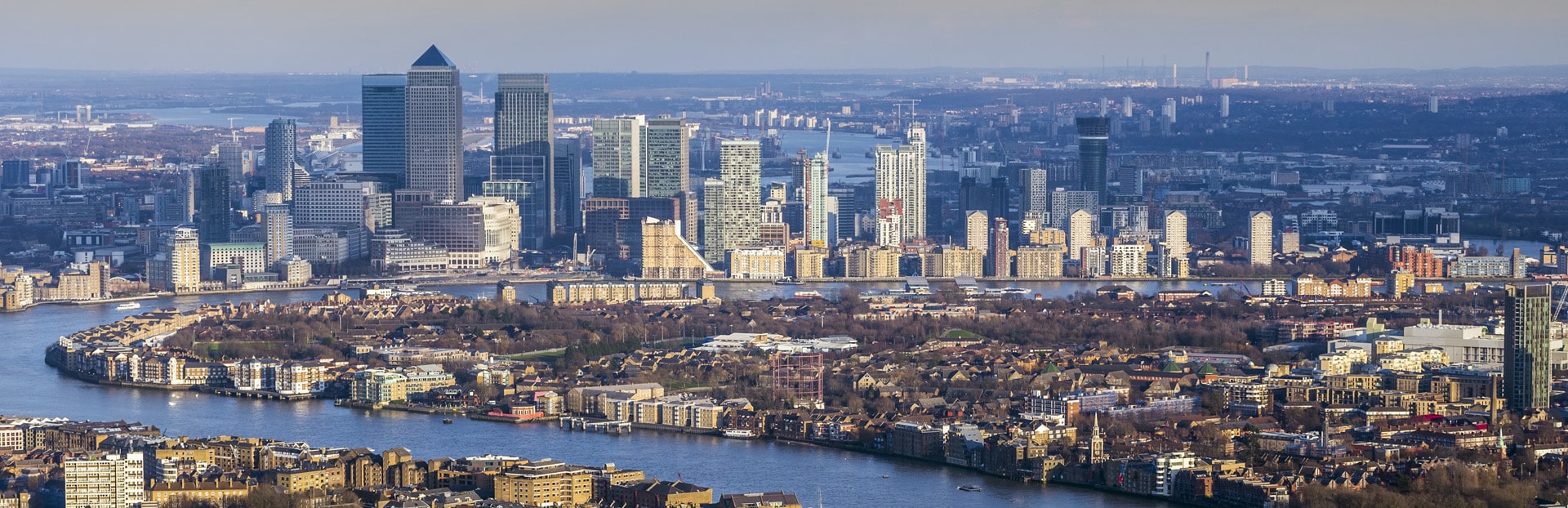
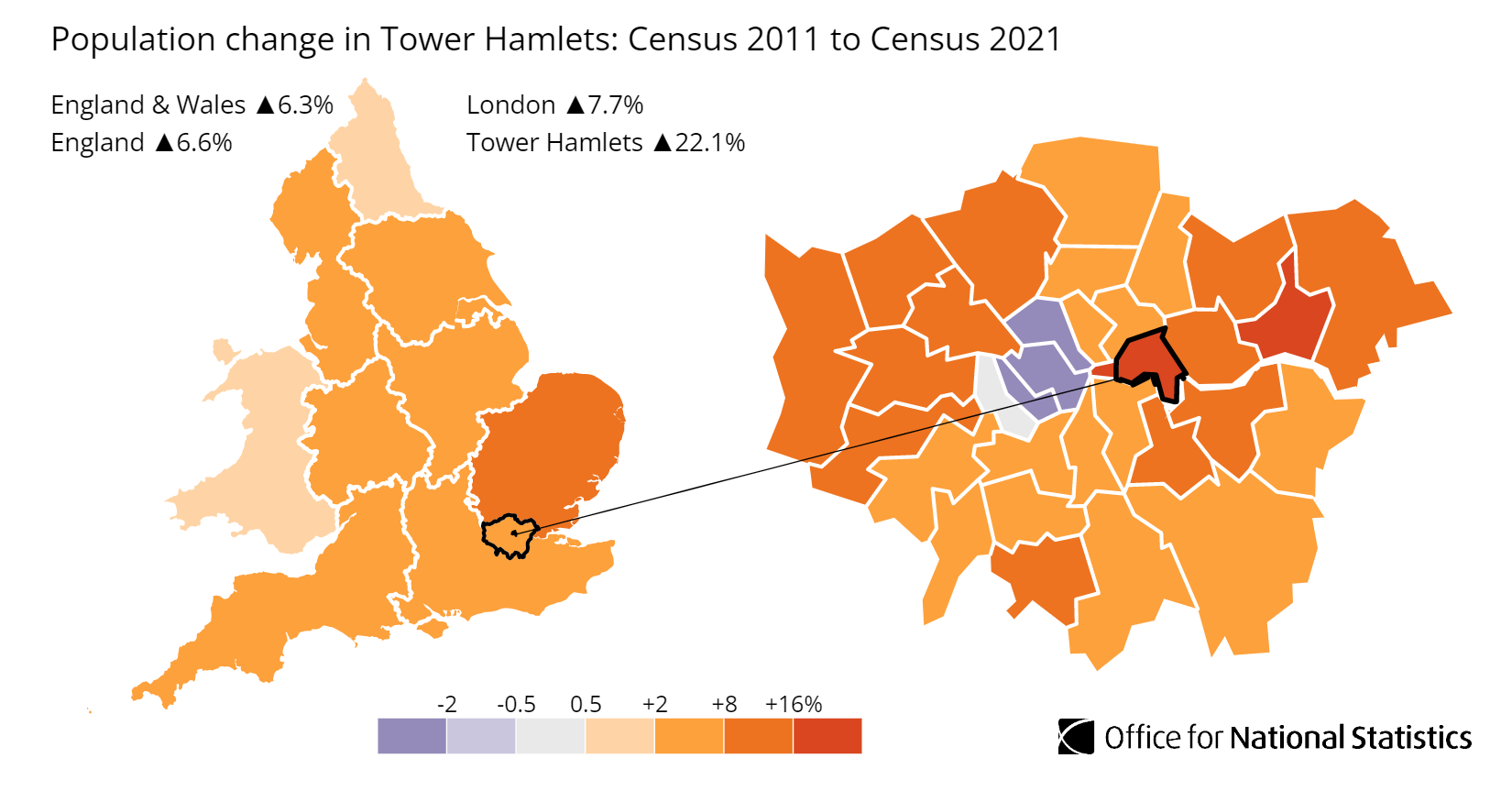
Tower Hamlets is a borough of east London. Average sold prices across Tower Hamlets sit at £457,504 on the HM Land Registry House Price Index, 57.8% above the England average of £289,946 yet just below the wider London figure of £552,655. That puts Tower Hamlets squarely in inner-London pricing without the prime premium of the riverside boroughs further west, and the distance between its cheapest and dearest postcodes does the talking: a £430,996 asking price in Bow's E3 against £595,874 in E1 around Whitechapel and Aldgate, the same borough behaving like two. The local population grew 22.12% between the 2011 and 2021 censuses, from 254,096 to 310,306 residents, the fastest growth of any London borough.
The unusual thing about Tower Hamlets is which way its prices have been moving. The borough hit an all-time high of £572,680 in January 2022 and has fallen back to £457,504 since, around 20.1% under that peak, with the line still pointing down over both five and ten years. Almost all of that drop is the Canary Wharf new-build flats in E14, off 24.7% over five years, while the older terraces of Bow's E3 have held their ground. For a buyer the implication is direct: with capital values in retreat rather than advance, what you earn from the rent and which postcode you pick do most of the work here, not a rising market. Top gross yields reach 6.5% in E3, against 5.2% in the dearer Bethnal Green postcode of E2.
This guide covers the London Borough of Tower Hamlets (ONS code E09000030) across postcodes E1, E2, E3, E14, and E1W. The borough runs east from the City along the north bank of the Thames, through Whitechapel, Bethnal Green and Bow to the Isle of Dogs and Canary Wharf, sharing borders with Hackney to the north and Newham to the east.
Article updated: July 2026
Why Invest in Tower Hamlets?
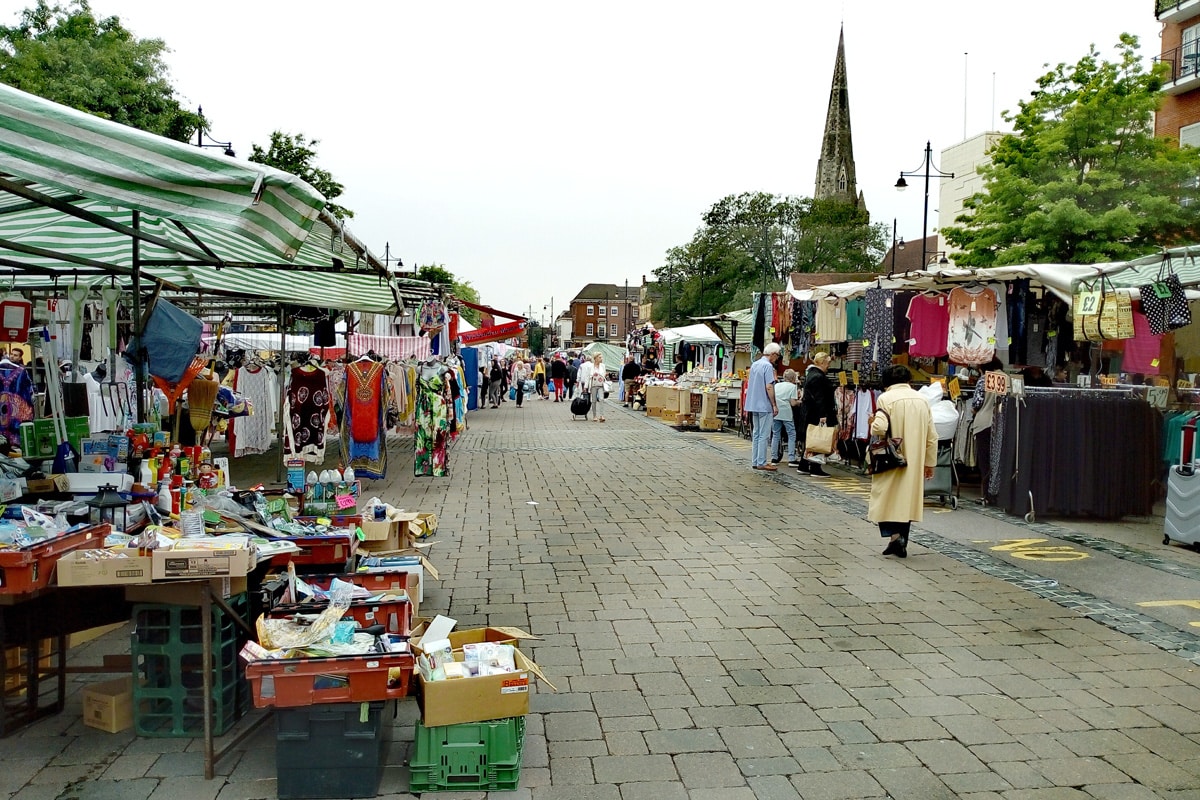
Tower Hamlets added 56,210 residents between the 2011 and 2021 censuses, a 22.12% rise from 254,096 to 310,306, more than three times the 6.3% England and Wales average and the fastest of any London borough. That surge was driven by the towers going up around Canary Wharf and the Isle of Dogs, the densest residential development in the country over the decade. The borough packs a lot into a small area running east from the City: the dense, diverse markets of Whitechapel and Bethnal Green at the western end, the older terraced streets of Bow and Mile End in the middle, and the high-rise financial district of Canary Wharf and Wapping's converted warehouses along the river. That range gives Tower Hamlets its split character, and it runs through every table in this guide.
The local employment rate of 73.6% sits just below both the London figure of 74.9% and the Great Britain figure of 75.6%, while unemployment runs at 7.0%. Those numbers reflect a population that mixes high-earning finance professionals in the Canary Wharf towers with large lower-income and social-rented communities in Bethnal Green, Poplar and Bow. For a landlord, the practical read is that tenant demand here is broad rather than uniform, spanning Canary Wharf and City commuters, students around Queen Mary University in Mile End, and benefit-supported households, with the balance shifting sharply from one postcode to the next.
Median gross weekly earnings for Tower Hamlets residents are £996.60, and the median annual salary is £52,000. That is above the London median of £902.70 a week and well clear of the Great Britain figure of £766.60, lifted by the concentration of finance and professional jobs in the borough. Those above-average wages help explain how the market sustains rents that run from £2,307 a month in Bethnal Green up to £2,830 in E1 around Whitechapel and Aldgate. Queen Mary University of London in Mile End and the major teaching hospitals at Whitechapel add a steady student and key-worker layer to that demand.
Tower Hamlets Economic Summary
- Population: 310,306 (2021 Census). Growth of 22.12% from 2011.
- Median annual salary: £52,000 (local), £46,415 (London), £39,125 (Great Britain)
- Employment rate: 73.6% (local), 74.9% (London), 75.6% (Great Britain)
- Unemployment rate: 7.0% (local)
- Key employment sectors: Financial and professional services, health, education, retail and hospitality, public administration
Source: ONS Census 2021, Nomis Labour Market Profile (ASHE 2025, residence-based earnings)
Regeneration and Investment in Tower Hamlets
Tower Hamlets holds two of London's largest growth programmes at once: the Isle of Dogs and South Poplar Opportunity Area planned for 29,000 homes, and the City Fringe area straddling its western edge, with major private schemes layered on top. The new supply is concentrated in E14 around Canary Wharf and along the river, which is also where the recent price correction has run deepest, so the pipeline lands in exactly the part of the borough an income investor needs to read most carefully.
- Isle of Dogs and South Poplar Opportunity Area (Long-term, 29,000 homes): The Mayor of London has designated the Isle of Dogs and South Poplar corridor an opportunity area planned for 29,000 new homes and 110,000 new jobs by 2041, the single largest concentration of residential and commercial development in the capital. This covers E14, where the bulk of the borough's new flats are being built. The scale of new supply is one reason the E14 market has corrected hardest since 2022, and it will keep adding stock for years. Details at London City Hall.
- Wood Wharf, Canary Wharf (Under construction, up to 3,600 homes): The Canary Wharf Group is delivering Wood Wharf, a new waterside neighbourhood next to the existing estate, with up to 3,600 new homes and around 2 million square feet of office space alongside shops, restaurants and a school. It turns Canary Wharf from a weekday financial district into a residential quarter, adding a large block of new flats directly to the E14 rental market. Updates at Canary Wharf Group.
- London Dock, Wapping (Under construction, 2,038 homes): Berkeley Group's London Dock scheme is delivering 2,038 new homes on a former News International site in Wapping, in the E1W postcode, alongside new public squares, shops and workspace. It is the main source of new flats in the riverside Wapping market, a small, high-value pocket of the borough where converted warehouses already command the highest price per square foot. Updates at Berkeley Group.
Tower Hamlets Property Market Analysis
Average property prices in Tower Hamlets have risen 596.2% since January 1995, from £65,716 to £457,504, but the line on that chart turned down four years ago and has yet to recover. The sections below trace the borough's path through its actual cycles, then break down current postcode-level data for sold prices, price per square foot, asking prices, growth trends, and monthly transaction volumes.
When was the last house price crash in Tower Hamlets?
HM Land Registry records Tower Hamlets sold prices at borough level under ONS code E09000030, with the House Price Index covering January 1995 to the latest April 2026 reading, 31 years of cycles. For a buyer today the telling feature is that the borough's biggest recent move is not the 2008 crash at all but the slide that began in 2022, as a decade of flat-led price gains slowly unwound.
The 1995 to 2008 climb: Tower Hamlets started at £65,716 in January 1995. The Docklands and Canary Wharf build-out carried it past £162,384 by December 2000 and £256,384 by December 2005. The pre-crash market topped out at £352,383 in April 2008, more than five times its 1995 level.
2008 to 2009, the financial crisis: Prices fell from the April 2008 peak of £352,383 to a trough of £263,928 in August 2009, a drop of 25.1% over 16 months, with the worst year-on-year reading at -20.1% in May 2009. The new-build flat market that dominates the borough took the heaviest hit, a deeper fall than the wider London and England declines of around 18%, the first sign of how exposed Tower Hamlets is to flat-led swings.
Recovery, 2009 to 2013: The climb back was steady rather than sharp. Prices worked higher through 2010 and 2011 to £314,624 by February 2011, and only cleared the April 2008 pre-crash peak in October 2013 at £356,246. Getting back to square one took five and a half years, faster than much of the regions but slower than the inner-London boroughs to the west.
2013 to 2016, the Docklands boom: This was the borough's fiercest growth phase. Prices ran hard as buyers and investors poured into the new Canary Wharf and Docklands towers, passing £501,379 by April 2016, roughly double the 2009 trough in seven years.
2016 to 2019, the flat plateau: Momentum drained away. The average drifted from £505,397 in December 2016 to £498,435 by December 2019 as stamp duty changes and Brexit cooled the investor-heavy flat market, even as new towers kept completing.
2020 to 2022, the final high: The stamp duty holiday gave prices one last push through 2021 to an all-time high of £572,680 in January 2022, the top of the borough's 31-year record and the level every figure since has been measured against.
2022 to present, the slide: From that high the market has ground lower rather than crashed. Prices eased to £526,632 by December 2022, fell to £491,127 by December 2023 as mortgage rates bit, and have kept falling to £457,504 by April 2026. Tower Hamlets now sits about 20.1% under its January 2022 peak, down 17.1% over five years and 8.8% over ten, a longer and deeper drop than almost anywhere else in inner London.
Long-term growth summary:
- 5 years (April 2021 to April 2026): -17.1% (£552,155 to £457,504)
- 10 years (April 2016 to April 2026): -8.8% (£501,379 to £457,504)
- 15 years (April 2011 to April 2026): 42.3% growth (£321,563 to £457,504)
- 20 years (April 2006 to April 2026): 78.0% growth (£257,017 to £457,504)
- 30 years (January 1995 to April 2026): 596.2% growth (£65,716 to £457,504)
The shape of those numbers is the key to Tower Hamlets today. The 30-year and 20-year returns are strong, but the five-year and ten-year readings are both negative, which sets the borough apart from inner-London markets still grinding higher. An investor who bought at the January 2022 high is sitting about 20.1% down on the Land Registry average, while one who bought before 2014 holds a large gain. What carries an investment here is the rent and the choice of postcode, because the borough has pulled in two directions at once: Bow's E3 has held while Canary Wharf's E14 has shed a quarter of its value over five years.
- All property types
- Detached
- Semi-detached
- Terraced
- Flats
Source: HM Land Registry House Price Index
| Year | All property types | Detached | Semi-detached | Terraced | Flats |
|---|---|---|---|---|---|
| 1995-01 | £65,716 | £105,058 | £83,083 | £79,397 | £64,401 |
| 1995-02 | £68,409 | £109,178 | £86,978 | £83,059 | £66,933 |
| 1995-03 | £70,188 | £111,783 | £89,153 | £85,094 | £68,705 |
| 1995-04 | £72,706 | £115,271 | £92,267 | £88,093 | £71,188 |
| 1995-05 | £72,926 | £114,901 | £92,193 | £87,967 | £71,507 |
| 1995-06 | £72,705 | £114,021 | £91,567 | £87,230 | £71,414 |
| 1995-07 | £71,015 | £111,800 | £89,677 | £85,514 | £69,672 |
| 1995-08 | £69,676 | £110,778 | £88,347 | £84,290 | £68,254 |
| 1995-09 | £68,254 | £109,173 | £87,011 | £83,150 | £66,710 |
| 1995-10 | £68,132 | £108,184 | £86,513 | £82,210 | £66,789 |
| 1995-11 | £68,514 | £107,096 | £86,091 | £81,740 | £67,415 |
| 1995-12 | £70,239 | £108,716 | £87,680 | £83,115 | £69,295 |
| 1996-01 | £74,154 | £115,186 | £92,451 | £87,801 | £73,144 |
| 1996-02 | £78,016 | £121,447 | £97,662 | £92,412 | £76,940 |
| 1996-03 | £76,443 | £119,730 | £95,712 | £90,625 | £75,367 |
| 1996-04 | £73,249 | £113,584 | £90,862 | £86,410 | £72,364 |
| 1996-05 | £72,013 | £112,809 | £89,031 | £85,473 | £70,995 |
| 1996-06 | £74,027 | £115,855 | £91,353 | £87,845 | £72,990 |
| 1996-07 | £76,209 | £120,807 | £95,288 | £91,194 | £74,888 |
| 1996-08 | £76,688 | £122,217 | £96,198 | £91,954 | £75,297 |
| 1996-09 | £79,361 | £126,462 | £99,841 | £95,275 | £77,882 |
| 1996-10 | £80,560 | £128,706 | £101,322 | £96,652 | £79,077 |
| 1996-11 | £81,693 | £130,041 | £102,471 | £97,825 | £80,248 |
| 1996-12 | £80,930 | £128,812 | £101,424 | £96,982 | £79,480 |
| 1997-01 | £81,714 | £129,869 | £102,438 | £98,256 | £80,152 |
| 1997-02 | £88,303 | £139,937 | £110,926 | £105,745 | £86,650 |
| 1997-03 | £90,897 | £144,414 | £114,302 | £108,970 | £89,119 |
| 1997-04 | £96,328 | £153,693 | £121,673 | £115,432 | £94,441 |
| 1997-05 | £94,313 | £151,410 | £120,007 | £113,841 | £92,309 |
| 1997-06 | £96,761 | £156,932 | £124,151 | £117,596 | £94,550 |
| 1997-07 | £96,328 | £156,695 | £123,602 | £117,575 | £94,041 |
| 1997-08 | £96,487 | £157,407 | £124,008 | £117,970 | £94,160 |
| 1997-09 | £96,798 | £157,206 | £124,046 | £118,083 | £94,515 |
| 1997-10 | £96,660 | £157,093 | £124,111 | £117,797 | £94,396 |
| 1997-11 | £96,807 | £157,918 | £124,377 | £117,921 | £94,546 |
| 1997-12 | £98,298 | £160,014 | £126,375 | £119,409 | £96,056 |
| 1998-01 | £99,007 | £161,359 | £127,195 | £120,527 | £96,707 |
| 1998-02 | £99,547 | £159,646 | £126,833 | £120,399 | £97,366 |
| 1998-03 | £100,755 | £161,505 | £127,848 | £121,609 | £98,580 |
| 1998-04 | £103,731 | £166,951 | £131,541 | £124,943 | £101,530 |
| 1998-05 | £105,471 | £172,148 | £134,256 | £127,869 | £103,098 |
| 1998-06 | £106,670 | £174,898 | £135,676 | £129,452 | £104,251 |
| 1998-07 | £105,912 | £173,761 | £135,035 | £128,936 | £103,446 |
| 1998-08 | £108,212 | £178,673 | £138,206 | £131,848 | £105,671 |
| 1998-09 | £107,673 | £179,696 | £138,334 | £131,952 | £105,020 |
| 1998-10 | £109,051 | £179,772 | £139,285 | £132,711 | £106,515 |
| 1998-11 | £110,851 | £182,555 | £141,108 | £133,671 | £108,466 |
| 1998-12 | £114,364 | £186,664 | £144,459 | £136,625 | £112,113 |
| 1999-01 | £117,967 | £193,569 | £149,156 | £141,074 | £115,620 |
| 1999-02 | £115,386 | £188,265 | £146,163 | £138,668 | £112,984 |
| 1999-03 | £113,064 | £183,527 | £143,335 | £136,067 | £110,677 |
| 1999-04 | £111,240 | £179,727 | £141,026 | £134,420 | £108,819 |
| 1999-05 | £115,935 | £186,300 | £146,332 | £139,821 | £113,458 |
| 1999-06 | £119,909 | £192,513 | £151,590 | £145,418 | £117,234 |
| 1999-07 | £124,595 | £200,976 | £157,690 | £151,674 | £121,734 |
| 1999-08 | £126,760 | £204,790 | £161,025 | £155,489 | £123,680 |
| 1999-09 | £132,591 | £214,905 | £168,225 | £162,424 | £129,400 |
| 1999-10 | £134,844 | £217,892 | £170,311 | £163,653 | £131,819 |
| 1999-11 | £137,673 | £222,173 | £173,555 | £166,342 | £134,690 |
| 1999-12 | £139,028 | £222,374 | £174,304 | £167,120 | £136,151 |
| 2000-01 | £140,730 | £226,429 | £177,401 | £169,943 | £137,696 |
| 2000-02 | £141,399 | £227,340 | £178,265 | £170,631 | £138,355 |
| 2000-03 | £142,782 | £232,428 | £181,650 | £173,537 | £139,516 |
| 2000-04 | £149,384 | £240,393 | £188,148 | £180,963 | £146,049 |
| 2000-05 | £156,016 | £249,481 | £195,538 | £188,641 | £152,580 |
| 2000-06 | £160,503 | £254,208 | £199,601 | £193,061 | £157,088 |
| 2000-07 | £160,435 | £257,564 | £200,872 | £193,412 | £156,960 |
| 2000-08 | £159,928 | £256,052 | £199,351 | £191,536 | £156,605 |
| 2000-09 | £161,232 | £260,086 | £200,701 | £192,386 | £157,955 |
| 2000-10 | £161,371 | £257,300 | £200,141 | £191,208 | £158,242 |
| 2000-11 | £164,993 | £264,086 | £204,161 | £194,767 | £161,873 |
| 2000-12 | £162,384 | £255,799 | £199,401 | £190,223 | £159,489 |
| 2001-01 | £164,827 | £259,970 | £201,523 | £192,903 | £161,914 |
| 2001-02 | £163,852 | £258,336 | £200,248 | £191,993 | £160,944 |
| 2001-03 | £169,921 | £270,550 | £209,202 | £200,147 | £166,782 |
| 2001-04 | £172,506 | £275,451 | £211,459 | £203,036 | £169,344 |
| 2001-05 | £176,679 | £282,777 | £216,693 | £208,288 | £173,396 |
| 2001-06 | £179,200 | £282,389 | £218,452 | £210,391 | £175,994 |
| 2001-07 | £182,127 | £285,551 | £223,335 | £214,578 | £178,766 |
| 2001-08 | £184,081 | £287,347 | £225,320 | £216,620 | £180,721 |
| 2001-09 | £185,722 | £293,612 | £226,643 | £218,298 | £182,366 |
| 2001-10 | £186,909 | £295,314 | £227,541 | £218,569 | £183,677 |
| 2001-11 | £188,734 | £298,015 | £229,806 | £219,702 | £185,599 |
| 2001-12 | £186,102 | £289,406 | £225,492 | £215,273 | £183,201 |
| 2002-01 | £186,693 | £289,123 | £225,014 | £214,743 | £183,948 |
| 2002-02 | £189,818 | £292,299 | £227,703 | £218,269 | £187,044 |
| 2002-03 | £194,622 | £300,290 | £234,449 | £224,279 | £191,707 |
| 2002-04 | £197,317 | £301,186 | £236,431 | £226,496 | £194,488 |
| 2002-05 | £198,834 | £301,574 | £238,527 | £227,936 | £196,023 |
| 2002-06 | £204,662 | £306,383 | £244,318 | £234,205 | £201,833 |
| 2002-07 | £206,889 | £310,645 | £248,688 | £238,625 | £203,775 |
| 2002-08 | £210,008 | £315,755 | £252,000 | £242,108 | £206,864 |
| 2002-09 | £211,298 | £321,762 | £255,387 | £244,798 | £207,962 |
| 2002-10 | £219,065 | £333,480 | £264,680 | £252,463 | £215,780 |
| 2002-11 | £221,671 | £337,355 | £267,878 | £255,054 | £218,401 |
| 2002-12 | £226,238 | £340,701 | £272,459 | £258,911 | £223,093 |
| 2003-01 | £226,556 | £339,709 | £272,365 | £260,003 | £223,316 |
| 2003-02 | £228,607 | £340,122 | £274,971 | £261,787 | £225,415 |
| 2003-03 | £227,082 | £336,293 | £273,257 | £260,232 | £223,886 |
| 2003-04 | £228,574 | £334,519 | £275,468 | £261,044 | £225,475 |
| 2003-05 | £228,665 | £333,027 | £277,507 | £263,272 | £225,276 |
| 2003-06 | £229,163 | £335,164 | £277,041 | £263,516 | £225,816 |
| 2003-07 | £226,798 | £333,407 | £274,435 | £261,493 | £223,391 |
| 2003-08 | £228,371 | £336,301 | £275,509 | £263,030 | £224,981 |
| 2003-09 | £227,395 | £335,274 | £277,271 | £264,376 | £223,679 |
| 2003-10 | £227,014 | £334,572 | £276,203 | £263,832 | £223,321 |
| 2003-11 | £227,983 | £336,013 | £277,072 | £264,177 | £224,377 |
| 2003-12 | £232,440 | £339,280 | £279,887 | £267,662 | £229,001 |
| 2004-01 | £233,161 | £341,069 | £282,127 | £269,089 | £229,625 |
| 2004-02 | £235,260 | £342,207 | £285,021 | £272,066 | £231,608 |
| 2004-03 | £231,446 | £337,835 | £281,557 | £268,309 | £227,742 |
| 2004-04 | £235,260 | £340,140 | £285,454 | £273,710 | £231,401 |
| 2004-05 | £237,977 | £341,696 | £288,026 | £277,508 | £234,012 |
| 2004-06 | £244,397 | £348,240 | £295,639 | £285,244 | £240,305 |
| 2004-07 | £244,020 | £348,447 | £296,457 | £285,935 | £239,812 |
| 2004-08 | £247,161 | £355,337 | £301,128 | £290,411 | £242,808 |
| 2004-09 | £247,008 | £357,775 | £302,603 | £291,692 | £242,495 |
| 2004-10 | £247,746 | £358,046 | £301,914 | £291,029 | £243,384 |
| 2004-11 | £246,427 | £354,984 | £299,439 | £288,805 | £242,164 |
| 2004-12 | £247,980 | £353,851 | £299,030 | £289,184 | £243,855 |
| 2005-01 | £250,824 | £357,015 | £301,556 | £292,266 | £246,681 |
| 2005-02 | £248,186 | £352,082 | £298,914 | £289,586 | £244,041 |
| 2005-03 | £247,131 | £351,980 | £298,447 | £288,992 | £242,930 |
| 2005-04 | £251,950 | £357,797 | £304,941 | £295,056 | £247,618 |
| 2005-05 | £249,782 | £355,318 | £301,310 | £292,164 | £245,532 |
| 2005-06 | £249,576 | £353,050 | £300,343 | £292,510 | £245,272 |
| 2005-07 | £240,730 | £340,583 | £289,688 | £282,754 | £236,513 |
| 2005-08 | £242,912 | £344,683 | £292,199 | £286,027 | £238,580 |
| 2005-09 | £242,198 | £345,531 | £291,898 | £285,992 | £237,787 |
| 2005-10 | £243,981 | £348,401 | £293,476 | £288,166 | £239,533 |
| 2005-11 | £248,512 | £354,138 | £299,413 | £293,872 | £243,941 |
| 2005-12 | £256,384 | £362,428 | £306,625 | £301,813 | £251,833 |
| 2006-01 | £259,211 | £366,789 | £310,447 | £305,700 | £254,547 |
| 2006-02 | £255,656 | £360,334 | £305,396 | £301,289 | £251,077 |
| 2006-03 | £251,002 | £357,261 | £302,979 | £298,067 | £246,247 |
| 2006-04 | £257,017 | £366,712 | £310,210 | £305,215 | £252,146 |
| 2006-05 | £260,893 | £373,237 | £315,070 | £310,078 | £255,922 |
| 2006-06 | £264,657 | £376,308 | £318,226 | £314,010 | £259,675 |
| 2006-07 | £263,997 | £374,997 | £318,061 | £314,759 | £258,881 |
| 2006-08 | £269,271 | £383,152 | £325,483 | £322,904 | £263,870 |
| 2006-09 | £274,664 | £394,396 | £333,285 | £329,886 | £269,093 |
| 2006-10 | £277,913 | £398,172 | £336,326 | £332,726 | £272,383 |
| 2006-11 | £281,320 | £403,314 | £340,843 | £336,402 | £275,758 |
| 2006-12 | £285,825 | £407,769 | £345,866 | £342,116 | £280,147 |
| 2007-01 | £290,342 | £414,825 | £352,221 | £348,369 | £284,490 |
| 2007-02 | £291,472 | £414,563 | £352,495 | £348,527 | £285,713 |
| 2007-03 | £294,287 | £419,273 | £356,944 | £353,159 | £288,350 |
| 2007-04 | £301,023 | £427,853 | £364,813 | £362,456 | £294,845 |
| 2007-05 | £311,269 | £441,288 | £376,408 | £375,086 | £304,859 |
| 2007-06 | £317,125 | £448,137 | £382,556 | £381,915 | £310,621 |
| 2007-07 | £323,951 | £458,757 | £390,593 | £389,451 | £317,369 |
| 2007-08 | £329,771 | £472,400 | £400,070 | £399,071 | £322,815 |
| 2007-09 | £330,249 | £473,810 | £401,479 | £399,931 | £323,251 |
| 2007-10 | £332,518 | £477,682 | £403,152 | £401,542 | £325,582 |
| 2007-11 | £328,072 | £469,302 | £396,665 | £394,489 | £321,389 |
| 2007-12 | £332,792 | £476,534 | £401,178 | £398,898 | £326,134 |
| 2008-01 | £330,037 | £474,173 | £398,154 | £395,663 | £323,425 |
| 2008-02 | £339,006 | £489,313 | £409,685 | £406,356 | £332,213 |
| 2008-03 | £347,056 | £504,569 | £421,155 | £417,111 | £340,000 |
| 2008-04 | £352,383 | £516,090 | £429,319 | £425,082 | £345,076 |
| 2008-05 | £351,537 | £513,432 | £427,733 | £425,187 | £344,167 |
| 2008-06 | £337,728 | £489,725 | £409,799 | £408,710 | £330,645 |
| 2008-07 | £330,901 | £475,785 | £400,380 | £400,352 | £323,986 |
| 2008-08 | £324,404 | £463,992 | £392,893 | £392,935 | £317,592 |
| 2008-09 | £319,748 | £460,862 | £385,806 | £385,884 | £313,148 |
| 2008-10 | £317,148 | £454,784 | £380,379 | £380,535 | £310,796 |
| 2008-11 | £294,563 | £422,230 | £351,402 | £351,814 | £288,805 |
| 2008-12 | £281,013 | £401,258 | £336,895 | £337,201 | £275,388 |
| 2009-01 | £275,970 | £398,470 | £332,019 | £331,186 | £270,425 |
| 2009-02 | £284,328 | £410,967 | £341,736 | £340,884 | £278,639 |
| 2009-03 | £290,583 | £418,539 | £347,139 | £346,379 | £284,941 |
| 2009-04 | £282,032 | £400,594 | £336,031 | £335,909 | £276,582 |
| 2009-05 | £280,797 | £396,470 | £334,765 | £336,270 | £275,250 |
| 2009-06 | £279,740 | £396,443 | £335,740 | £338,000 | £274,007 |
| 2009-07 | £271,410 | £387,817 | £328,917 | £332,411 | £265,541 |
| 2009-08 | £263,928 | £385,056 | £325,212 | £326,899 | £257,958 |
| 2009-09 | £271,942 | £397,439 | £335,379 | £338,302 | £265,695 |
| 2009-10 | £289,801 | £426,100 | £358,709 | £361,877 | £283,051 |
| 2009-11 | £306,398 | £452,641 | £378,385 | £384,130 | £299,168 |
| 2009-12 | £304,924 | £454,688 | £379,552 | £384,577 | £297,568 |
| 2010-01 | £304,977 | £460,773 | £384,382 | £389,817 | £297,278 |
| 2010-02 | £306,989 | £467,591 | £391,302 | £394,855 | £299,073 |
| 2010-03 | £313,882 | £477,519 | £399,512 | £402,861 | £305,870 |
| 2010-04 | £317,206 | £480,042 | £401,455 | £404,141 | £309,317 |
| 2010-05 | £312,681 | £475,624 | £393,548 | £397,348 | £304,981 |
| 2010-06 | £311,135 | £476,230 | £393,858 | £398,203 | £303,273 |
| 2010-07 | £308,377 | £479,594 | £392,435 | £397,791 | £300,365 |
| 2010-08 | £312,037 | £485,031 | £399,262 | £404,178 | £303,810 |
| 2010-09 | £309,656 | £482,957 | £396,555 | £401,590 | £301,457 |
| 2010-10 | £311,788 | £481,390 | £398,046 | £401,808 | £303,707 |
| 2010-11 | £307,598 | £475,149 | £391,837 | £394,246 | £299,772 |
| 2010-12 | £308,267 | £477,011 | £392,556 | £394,016 | £300,496 |
| 2011-01 | £311,115 | £482,368 | £395,074 | £397,844 | £303,264 |
| 2011-02 | £314,624 | £486,059 | £396,849 | £400,950 | £306,804 |
| 2011-03 | £319,745 | £494,096 | £400,965 | £406,652 | £311,872 |
| 2011-04 | £321,563 | £496,079 | £401,408 | £407,697 | £313,746 |
| 2011-05 | £318,504 | £488,902 | £395,881 | £402,457 | £310,873 |
| 2011-06 | £309,720 | £473,732 | £385,263 | £391,212 | £302,310 |
| 2011-07 | £304,446 | £462,239 | £378,163 | £384,200 | £297,194 |
| 2011-08 | £309,614 | £474,283 | £389,691 | £395,495 | £301,862 |
| 2011-09 | £317,074 | £489,816 | £401,913 | £407,605 | £308,931 |
| 2011-10 | £318,995 | £498,466 | £408,210 | £411,844 | £310,651 |
| 2011-11 | £320,643 | £498,912 | £408,338 | £411,043 | £312,480 |
| 2011-12 | £318,010 | £493,344 | £402,574 | £404,987 | £310,120 |
| 2012-01 | £316,100 | £491,105 | £400,933 | £403,896 | £308,157 |
| 2012-02 | £309,192 | £483,807 | £394,016 | £399,471 | £301,097 |
| 2012-03 | £304,499 | £476,245 | £389,544 | £396,039 | £296,326 |
| 2012-04 | £302,374 | £471,571 | £384,528 | £391,992 | £294,357 |
| 2012-05 | £300,543 | £465,781 | £380,090 | £386,517 | £292,801 |
| 2012-06 | £309,999 | £479,817 | £391,580 | £399,953 | £301,927 |
| 2012-07 | £311,173 | £482,453 | £394,286 | £404,581 | £302,850 |
| 2012-08 | £318,743 | £497,234 | £406,662 | £418,176 | £309,945 |
| 2012-09 | £317,437 | £498,420 | £406,242 | £418,062 | £308,558 |
| 2012-10 | £322,807 | £507,224 | £412,645 | £423,367 | £313,901 |
| 2012-11 | £322,711 | £507,121 | £411,669 | £421,860 | £313,905 |
| 2012-12 | £324,637 | £510,662 | £414,208 | £422,329 | £315,918 |
| 2013-01 | £322,706 | £508,585 | £414,524 | £422,076 | £313,873 |
| 2013-02 | £323,403 | £510,411 | £416,893 | £424,844 | £314,418 |
| 2013-03 | £315,233 | £496,907 | £406,818 | £413,925 | £306,481 |
| 2013-04 | £320,374 | £505,544 | £411,654 | £419,123 | £311,588 |
| 2013-05 | £321,753 | £504,946 | £411,355 | £419,160 | £313,054 |
| 2013-06 | £334,018 | £523,680 | £426,966 | £437,380 | £324,839 |
| 2013-07 | £336,393 | £526,268 | £430,144 | £441,772 | £327,063 |
| 2013-08 | £339,601 | £534,467 | £436,059 | £448,367 | £330,017 |
| 2013-09 | £342,350 | £539,919 | £439,975 | £451,338 | £332,731 |
| 2013-10 | £356,246 | £564,805 | £457,948 | £468,338 | £346,323 |
| 2013-11 | £372,948 | £591,389 | £479,507 | £487,839 | £362,722 |
| 2013-12 | £386,044 | £611,118 | £495,543 | £503,767 | £375,542 |
| 2014-01 | £389,954 | £617,604 | £501,636 | £509,522 | £379,298 |
| 2014-02 | £396,060 | £629,565 | £511,006 | £518,283 | £385,181 |
| 2014-03 | £403,735 | £645,660 | £523,813 | £529,468 | £392,557 |
| 2014-04 | £412,951 | £659,991 | £536,766 | £543,221 | £401,437 |
| 2014-05 | £417,336 | £664,810 | £540,704 | £549,164 | £405,696 |
| 2014-06 | £419,435 | £670,898 | £543,857 | £552,758 | £407,694 |
| 2014-07 | £417,663 | £672,054 | £543,007 | £551,883 | £405,897 |
| 2014-08 | £423,896 | £687,646 | £554,404 | £563,251 | £411,795 |
| 2014-09 | £430,188 | £695,186 | £563,658 | £573,522 | £417,816 |
| 2014-10 | £441,146 | £711,200 | £577,522 | £585,972 | £428,563 |
| 2014-11 | £438,786 | £706,674 | £575,243 | £581,576 | £426,328 |
| 2014-12 | £444,045 | £715,514 | £580,918 | £586,271 | £431,549 |
| 2015-01 | £447,028 | £720,566 | £585,300 | £590,400 | £434,438 |
| 2015-02 | £449,433 | £719,858 | £584,877 | £592,024 | £436,871 |
| 2015-03 | £445,219 | £712,610 | £577,108 | £585,074 | £432,878 |
| 2015-04 | £449,002 | £719,499 | £581,503 | £590,880 | £436,505 |
| 2015-05 | £463,623 | £743,803 | £599,661 | £609,546 | £450,755 |
| 2015-06 | £471,684 | £761,877 | £616,901 | £625,142 | £458,265 |
| 2015-07 | £468,385 | £756,270 | £611,991 | £620,850 | £455,057 |
| 2015-08 | £460,865 | £748,464 | £605,473 | £614,320 | £447,528 |
| 2015-09 | £463,000 | £750,650 | £605,877 | £615,539 | £449,706 |
| 2015-10 | £468,623 | £763,103 | £615,007 | £623,635 | £455,122 |
| 2015-11 | £483,790 | £788,084 | £636,545 | £643,034 | £469,897 |
| 2015-12 | £487,530 | £799,446 | £642,219 | £647,632 | £473,544 |
| 2016-01 | £503,590 | £823,788 | £664,153 | £669,055 | £489,139 |
| 2016-02 | £505,402 | £834,129 | £667,324 | £672,455 | £490,827 |
| 2016-03 | £515,287 | £848,374 | £677,137 | £686,104 | £500,405 |
| 2016-04 | £501,379 | £830,571 | £657,387 | £665,505 | £487,021 |
| 2016-05 | £494,442 | £810,434 | £643,246 | £651,965 | £480,571 |
| 2016-06 | £482,696 | £792,060 | £628,288 | £633,962 | £469,307 |
| 2016-07 | £486,813 | £796,016 | £635,452 | £640,875 | £473,218 |
| 2016-08 | £493,197 | £809,740 | £646,674 | £650,251 | £479,354 |
| 2016-09 | £509,034 | £832,744 | £667,734 | £670,788 | £494,772 |
| 2016-10 | £510,843 | £832,916 | £666,770 | £668,245 | £496,846 |
| 2016-11 | £513,597 | £839,443 | £670,529 | £668,629 | £499,723 |
| 2016-12 | £505,397 | £828,277 | £659,679 | £655,316 | £491,906 |
| 2017-01 | £503,104 | £825,439 | £657,181 | £652,333 | £489,673 |
| 2017-02 | £516,139 | £840,356 | £671,003 | £666,380 | £502,500 |
| 2017-03 | £507,990 | £825,085 | £660,585 | £653,841 | £494,664 |
| 2017-04 | £510,664 | £829,990 | £663,575 | £656,051 | £497,325 |
| 2017-05 | £492,277 | £801,261 | £640,638 | £631,236 | £479,472 |
| 2017-06 | £496,555 | £806,367 | £645,684 | £637,767 | £483,592 |
| 2017-07 | £493,069 | £799,207 | £641,746 | £633,898 | £480,169 |
| 2017-08 | £489,222 | £791,384 | £636,605 | £633,742 | £476,201 |
| 2017-09 | £498,363 | £807,659 | £649,924 | £647,187 | £485,021 |
| 2017-10 | £514,680 | £836,745 | £673,777 | £670,777 | £500,784 |
| 2017-11 | £516,800 | £844,617 | £679,023 | £673,106 | £502,859 |
| 2017-12 | £511,132 | £838,464 | £671,194 | £666,067 | £497,326 |
| 2018-01 | £491,512 | £803,108 | £642,848 | £638,293 | £478,344 |
| 2018-02 | £487,625 | £791,145 | £631,589 | £630,675 | £474,681 |
| 2018-03 | £490,011 | £795,130 | £637,113 | £635,312 | £476,955 |
| 2018-04 | £500,468 | £816,202 | £653,029 | £653,244 | £486,963 |
| 2018-05 | £509,884 | £842,360 | £675,193 | £673,455 | £495,804 |
| 2018-06 | £498,827 | £821,651 | £659,612 | £659,497 | £485,031 |
| 2018-07 | £492,845 | £814,166 | £652,929 | £653,859 | £479,127 |
| 2018-08 | £483,913 | £793,636 | £637,170 | £640,683 | £470,503 |
| 2018-09 | £484,700 | £801,002 | £642,915 | £643,723 | £471,182 |
| 2018-10 | £478,619 | £788,733 | £633,392 | £632,225 | £465,401 |
| 2018-11 | £481,653 | £803,025 | £642,763 | £639,671 | £468,211 |
| 2018-12 | £481,651 | £794,991 | £634,901 | £637,243 | £468,317 |
| 2019-01 | £476,574 | £790,021 | £630,254 | £631,584 | £463,335 |
| 2019-02 | £469,428 | £770,190 | £615,863 | £617,779 | £456,566 |
| 2019-03 | £470,929 | £779,153 | £623,458 | £622,168 | £457,894 |
| 2019-04 | £474,919 | £786,292 | £629,682 | £629,654 | £461,646 |
| 2019-05 | £469,685 | £781,534 | £626,356 | £625,982 | £456,365 |
| 2019-06 | £470,396 | £782,096 | £627,172 | £628,583 | £456,964 |
| 2019-07 | £476,509 | £790,552 | £633,179 | £635,748 | £462,963 |
| 2019-08 | £486,386 | £810,113 | £645,766 | £652,599 | £472,355 |
| 2019-09 | £494,350 | £821,496 | £654,301 | £663,229 | £480,097 |
| 2019-10 | £495,470 | £821,642 | £658,859 | £666,657 | £481,071 |
| 2019-11 | £495,060 | £822,800 | £663,122 | £664,780 | £480,737 |
| 2019-12 | £498,435 | £832,007 | £672,388 | £670,609 | £483,932 |
| 2020-01 | £507,479 | £848,867 | £684,588 | £683,200 | £492,688 |
| 2020-02 | £520,113 | £893,482 | £707,272 | £706,272 | £504,721 |
| 2020-03 | £524,684 | £918,190 | £716,417 | £714,837 | £509,064 |
| 2020-04 | £513,497 | £904,139 | £702,295 | £703,352 | £498,050 |
| 2020-05 | £508,032 | £867,676 | £685,479 | £686,473 | £493,156 |
| 2020-06 | £492,995 | £833,202 | £666,846 | £670,261 | £478,391 |
| 2020-07 | £497,277 | £849,060 | £675,955 | £678,584 | £482,436 |
| 2020-08 | £506,248 | £889,352 | £698,292 | £703,232 | £490,610 |
| 2020-09 | £520,304 | £932,277 | £722,470 | £726,823 | £504,059 |
| 2020-10 | £523,820 | £946,299 | £734,088 | £739,057 | £507,159 |
| 2020-11 | £514,838 | £923,812 | £721,814 | £729,533 | £498,338 |
| 2020-12 | £509,975 | £916,166 | £715,570 | £725,475 | £493,518 |
| 2021-01 | £505,973 | £900,978 | £704,659 | £715,971 | £489,805 |
| 2021-02 | £528,825 | £936,638 | £730,636 | £741,146 | £512,246 |
| 2021-03 | £543,813 | £942,813 | £741,522 | £753,628 | £527,154 |
| 2021-04 | £552,155 | £956,560 | £752,341 | £761,999 | £535,394 |
| 2021-05 | £542,385 | £932,130 | £739,183 | £749,200 | £525,888 |
| 2021-06 | £545,958 | £941,843 | £747,820 | £763,515 | £528,898 |
| 2021-07 | £546,908 | £934,262 | £747,714 | £759,802 | £530,068 |
| 2021-08 | £555,759 | £983,814 | £767,319 | £778,768 | £538,315 |
| 2021-09 | £549,612 | £984,193 | £762,380 | £768,994 | £532,408 |
| 2021-10 | £547,642 | £1,014,931 | £768,448 | £777,321 | £529,948 |
| 2021-11 | £553,153 | £1,018,270 | £775,340 | £783,895 | £535,340 |
| 2021-12 | £563,994 | £1,064,878 | £794,480 | £803,731 | £545,617 |
| 2022-01 | £572,680 | £1,089,016 | £809,658 | £821,354 | £553,771 |
| 2022-02 | £555,874 | £1,064,857 | £785,238 | £796,783 | £537,698 |
| 2022-03 | £539,165 | £1,023,282 | £760,304 | £770,506 | £521,705 |
| 2022-04 | £537,410 | £1,014,619 | £755,116 | £769,076 | £519,936 |
| 2022-05 | £531,684 | £1,007,188 | £752,371 | £768,292 | £513,840 |
| 2022-06 | £535,662 | £1,011,961 | £758,250 | £775,679 | £517,564 |
| 2022-07 | £537,767 | £1,024,637 | £766,300 | £781,400 | £519,392 |
| 2022-08 | £548,821 | £1,049,015 | £782,897 | £800,686 | £529,835 |
| 2022-09 | £558,210 | £1,077,321 | £803,608 | £822,016 | £538,333 |
| 2022-10 | £556,909 | £1,072,300 | £801,468 | £822,436 | £536,912 |
| 2022-11 | £541,763 | £1,039,619 | £779,135 | £799,935 | £522,322 |
| 2022-12 | £526,632 | £1,006,584 | £753,526 | £774,779 | £507,943 |
| 2023-01 | £517,302 | £988,339 | £739,676 | £757,361 | £499,210 |
| 2023-02 | £517,844 | £989,672 | £737,637 | £752,694 | £500,088 |
| 2023-03 | £513,539 | £979,763 | £728,830 | £738,224 | £496,441 |
| 2023-04 | £512,899 | £978,460 | £724,741 | £733,718 | £496,036 |
| 2023-05 | £514,893 | £976,390 | £725,032 | £734,339 | £498,108 |
| 2023-06 | £509,545 | £970,505 | £719,553 | £732,730 | £492,578 |
| 2023-07 | £499,525 | £949,136 | £706,545 | £721,923 | £482,686 |
| 2023-08 | £494,337 | £945,780 | £703,383 | £721,222 | £477,266 |
| 2023-09 | £503,331 | £962,879 | £717,530 | £735,569 | £485,877 |
| 2023-10 | £504,381 | £961,472 | £715,255 | £733,202 | £487,127 |
| 2023-11 | £499,082 | £947,858 | £706,460 | £720,466 | £482,303 |
| 2023-12 | £491,127 | £932,776 | £694,983 | £706,463 | £474,759 |
| 2024-01 | £494,465 | £938,790 | £700,042 | £712,321 | £477,924 |
| 2024-02 | £494,312 | £941,291 | £699,866 | £713,090 | £477,722 |
| 2024-03 | £488,046 | £914,914 | £682,328 | £698,794 | £472,062 |
| 2024-04 | £483,323 | £901,383 | £676,774 | £691,326 | £467,544 |
| 2024-05 | £486,788 | £901,128 | £678,454 | £694,212 | £471,056 |
| 2024-06 | £505,927 | £948,179 | £711,212 | £726,550 | £489,188 |
| 2024-07 | £513,869 | £966,175 | £723,798 | £743,868 | £496,431 |
| 2024-08 | £525,302 | £990,341 | £740,940 | £766,130 | £507,053 |
| 2024-09 | £526,028 | £997,259 | £746,482 | £770,962 | £507,468 |
| 2024-10 | £530,162 | £1,009,118 | £753,178 | £775,043 | £511,598 |
| 2024-11 | £529,144 | £1,023,249 | £756,182 | £773,422 | £510,614 |
| 2024-12 | £520,073 | £1,013,527 | £741,745 | £760,112 | £501,868 |
| 2025-01 | £513,199 | £1,011,192 | £733,125 | £751,671 | £495,115 |
| 2025-02 | £515,023 | £1,006,884 | £734,487 | £755,843 | £496,777 |
| 2025-03 | £514,398 | £978,705 | £725,868 | £750,461 | £496,451 |
| 2025-04 | £523,346 | £1,014,580 | £744,842 | £766,817 | £504,879 |
| 2025-05 | £521,704 | £1,020,545 | £746,258 | £766,864 | £503,147 |
| 2025-06 | £527,686 | £1,058,514 | £766,410 | £785,339 | £508,347 |
| 2025-07 | £524,350 | £1,034,418 | £758,047 | £781,389 | £505,107 |
| 2025-08 | £513,228 | £1,014,088 | £747,325 | £770,156 | £494,101 |
| 2025-09 | £503,399 | £1,003,569 | £737,577 | £759,950 | £484,385 |
| 2025-10 | £492,924 | £988,820 | £728,887 | £748,281 | £474,070 |
| 2025-11 | £487,672 | £980,500 | £720,720 | £741,861 | £468,938 |
| 2025-12 | £474,155 | £950,305 | £701,098 | £719,676 | £456,025 |
| 2026-01 | £466,132 | £940,692 | £693,232 | £711,587 | £448,086 |
| 2026-02 | £459,179 | £922,273 | £681,478 | £698,356 | £441,589 |
| 2026-03 | £454,018 | £915,539 | £674,156 | £694,418 | £436,428 |
| 2026-04 | £457,504 | £916,395 | £673,681 | £695,165 | £440,071 |
- All property types
- Detached
- Semi-detached
- Terraced
- Flats
Source: HM Land Registry House Price Index
| Year | All property types | Detached | Semi-detached | Terraced | Flats |
|---|---|---|---|---|---|
| 1996-01 | +12.8% | +9.6% | +11.3% | +10.6% | +13.6% |
| 1996-02 | +14.0% | +11.2% | +12.3% | +11.3% | +15.0% |
| 1996-03 | +8.9% | +7.1% | +7.4% | +6.5% | +9.7% |
| 1996-04 | +0.7% | -1.5% | -1.5% | -1.9% | +1.7% |
| 1996-05 | -1.3% | -1.8% | -3.4% | -2.8% | -0.7% |
| 1996-06 | +1.8% | +1.6% | -0.2% | +0.7% | +2.2% |
| 1996-07 | +7.3% | +8.1% | +6.3% | +6.6% | +7.5% |
| 1996-08 | +10.1% | +10.3% | +8.9% | +9.1% | +10.3% |
| 1996-09 | +16.3% | +15.8% | +14.7% | +14.6% | +16.7% |
| 1996-10 | +18.2% | +19.0% | +17.1% | +17.6% | +18.4% |
| 1996-11 | +19.2% | +21.4% | +19.0% | +19.7% | +19.0% |
| 1996-12 | +15.2% | +18.5% | +15.7% | +16.7% | +14.7% |
| 1997-01 | +10.2% | +12.7% | +10.8% | +11.9% | +9.6% |
| 1997-02 | +13.2% | +15.2% | +13.6% | +14.4% | +12.6% |
| 1997-03 | +18.9% | +20.6% | +19.4% | +20.2% | +18.2% |
| 1997-04 | +31.5% | +35.3% | +33.9% | +33.6% | +30.5% |
| 1997-05 | +31.0% | +34.2% | +34.8% | +33.2% | +30.0% |
| 1997-06 | +30.7% | +35.5% | +35.9% | +33.9% | +29.5% |
| 1997-07 | +26.4% | +29.7% | +29.7% | +28.9% | +25.6% |
| 1997-08 | +25.8% | +28.8% | +28.9% | +28.3% | +25.1% |
| 1997-09 | +22.0% | +24.3% | +24.2% | +23.9% | +21.4% |
| 1997-10 | +20.0% | +22.1% | +22.5% | +21.9% | +19.4% |
| 1997-11 | +18.5% | +21.4% | +21.4% | +20.5% | +17.8% |
| 1997-12 | +21.5% | +24.2% | +24.6% | +23.1% | +20.9% |
| 1998-01 | +21.2% | +24.2% | +24.2% | +22.7% | +20.7% |
| 1998-02 | +12.7% | +14.1% | +14.3% | +13.9% | +12.4% |
| 1998-03 | +10.8% | +11.8% | +11.9% | +11.6% | +10.6% |
| 1998-04 | +7.7% | +8.6% | +8.1% | +8.2% | +7.5% |
| 1998-05 | +11.8% | +13.7% | +11.9% | +12.3% | +11.7% |
| 1998-06 | +10.2% | +11.4% | +9.3% | +10.1% | +10.3% |
| 1998-07 | +9.9% | +10.9% | +9.3% | +9.7% | +10.0% |
| 1998-08 | +12.2% | +13.5% | +11.4% | +11.8% | +12.2% |
| 1998-09 | +11.2% | +14.3% | +11.5% | +11.7% | +11.1% |
| 1998-10 | +12.8% | +14.4% | +12.2% | +12.7% | +12.8% |
| 1998-11 | +14.5% | +15.6% | +13.5% | +13.4% | +14.7% |
| 1998-12 | +16.3% | +16.7% | +14.3% | +14.4% | +16.7% |
| 1999-01 | +19.1% | +20.0% | +17.3% | +17.0% | +19.6% |
| 1999-02 | +15.9% | +17.9% | +15.2% | +15.2% | +16.0% |
| 1999-03 | +12.2% | +13.6% | +12.1% | +11.9% | +12.3% |
| 1999-04 | +7.2% | +7.7% | +7.2% | +7.6% | +7.2% |
| 1999-05 | +9.9% | +8.2% | +9.0% | +9.3% | +10.0% |
| 1999-06 | +12.4% | +10.1% | +11.7% | +12.3% | +12.5% |
| 1999-07 | +17.6% | +15.7% | +16.8% | +17.6% | +17.7% |
| 1999-08 | +17.1% | +14.6% | +16.5% | +17.9% | +17.0% |
| 1999-09 | +23.1% | +19.6% | +21.6% | +23.1% | +23.2% |
| 1999-10 | +23.7% | +21.2% | +22.3% | +23.3% | +23.8% |
| 1999-11 | +24.2% | +21.7% | +23.0% | +24.4% | +24.2% |
| 1999-12 | +21.6% | +19.1% | +20.7% | +22.3% | +21.4% |
| 2000-01 | +19.3% | +17.0% | +18.9% | +20.5% | +19.1% |
| 2000-02 | +22.5% | +20.8% | +22.0% | +23.0% | +22.5% |
| 2000-03 | +26.3% | +26.6% | +26.7% | +27.5% | +26.1% |
| 2000-04 | +34.3% | +33.8% | +33.4% | +34.6% | +34.2% |
| 2000-05 | +34.6% | +33.9% | +33.6% | +34.9% | +34.5% |
| 2000-06 | +33.9% | +32.0% | +31.7% | +32.8% | +34.0% |
| 2000-07 | +28.8% | +28.2% | +27.4% | +27.5% | +28.9% |
| 2000-08 | +26.2% | +25.0% | +23.8% | +23.2% | +26.6% |
| 2000-09 | +21.6% | +21.0% | +19.3% | +18.4% | +22.1% |
| 2000-10 | +19.7% | +18.1% | +17.5% | +16.8% | +20.0% |
| 2000-11 | +19.8% | +18.9% | +17.6% | +17.1% | +20.2% |
| 2000-12 | +16.8% | +15.0% | +14.4% | +13.8% | +17.1% |
| 2001-01 | +17.1% | +14.8% | +13.6% | +13.5% | +17.6% |
| 2001-02 | +15.9% | +13.6% | +12.3% | +12.5% | +16.3% |
| 2001-03 | +19.0% | +16.4% | +15.2% | +15.3% | +19.5% |
| 2001-04 | +15.5% | +14.6% | +12.4% | +12.2% | +16.0% |
| 2001-05 | +13.2% | +13.3% | +10.8% | +10.4% | +13.6% |
| 2001-06 | +11.6% | +11.1% | +9.4% | +9.0% | +12.0% |
| 2001-07 | +13.5% | +10.9% | +11.2% | +10.9% | +13.9% |
| 2001-08 | +15.1% | +12.2% | +13.0% | +13.1% | +15.4% |
| 2001-09 | +15.2% | +12.9% | +12.9% | +13.5% | +15.5% |
| 2001-10 | +15.8% | +14.8% | +13.7% | +14.3% | +16.1% |
| 2001-11 | +14.4% | +12.8% | +12.6% | +12.8% | +14.7% |
| 2001-12 | +14.6% | +13.1% | +13.1% | +13.2% | +14.9% |
| 2002-01 | +13.3% | +11.2% | +11.7% | +11.3% | +13.6% |
| 2002-02 | +15.8% | +13.1% | +13.7% | +13.7% | +16.2% |
| 2002-03 | +14.5% | +11.0% | +12.1% | +12.1% | +14.9% |
| 2002-04 | +14.4% | +9.3% | +11.8% | +11.6% | +14.8% |
| 2002-05 | +12.5% | +6.6% | +10.1% | +9.4% | +13.0% |
| 2002-06 | +14.2% | +8.5% | +11.8% | +11.3% | +14.7% |
| 2002-07 | +13.6% | +8.8% | +11.4% | +11.2% | +14.0% |
| 2002-08 | +14.1% | +9.9% | +11.8% | +11.8% | +14.5% |
| 2002-09 | +13.8% | +9.6% | +12.7% | +12.1% | +14.0% |
| 2002-10 | +17.2% | +12.9% | +16.3% | +15.5% | +17.5% |
| 2002-11 | +17.5% | +13.2% | +16.6% | +16.1% | +17.7% |
| 2002-12 | +21.6% | +17.7% | +20.8% | +20.3% | +21.8% |
| 2003-01 | +21.4% | +17.5% | +21.0% | +21.1% | +21.4% |
| 2003-02 | +20.4% | +16.4% | +20.8% | +19.9% | +20.5% |
| 2003-03 | +16.7% | +12.0% | +16.6% | +16.0% | +16.8% |
| 2003-04 | +15.8% | +11.1% | +16.5% | +15.3% | +15.9% |
| 2003-05 | +15.0% | +10.4% | +16.3% | +15.5% | +14.9% |
| 2003-06 | +12.0% | +9.4% | +13.4% | +12.5% | +11.9% |
| 2003-07 | +9.6% | +7.3% | +10.4% | +9.6% | +9.6% |
| 2003-08 | +8.7% | +6.5% | +9.3% | +8.6% | +8.8% |
| 2003-09 | +7.6% | +4.2% | +8.6% | +8.0% | +7.6% |
| 2003-10 | +3.6% | +0.3% | +4.4% | +4.5% | +3.5% |
| 2003-11 | +2.8% | -0.4% | +3.4% | +3.6% | +2.7% |
| 2003-12 | +2.7% | -0.4% | +2.7% | +3.4% | +2.6% |
| 2004-01 | +2.9% | +0.4% | +3.6% | +3.5% | +2.8% |
| 2004-02 | +2.9% | +0.6% | +3.7% | +3.9% | +2.7% |
| 2004-03 | +1.9% | +0.5% | +3.0% | +3.1% | +1.7% |
| 2004-04 | +2.9% | +1.7% | +3.6% | +4.9% | +2.6% |
| 2004-05 | +4.1% | +2.6% | +3.8% | +5.4% | +3.9% |
| 2004-06 | +6.6% | +3.9% | +6.7% | +8.2% | +6.4% |
| 2004-07 | +7.6% | +4.5% | +8.0% | +9.3% | +7.4% |
| 2004-08 | +8.2% | +5.7% | +9.3% | +10.4% | +7.9% |
| 2004-09 | +8.6% | +6.7% | +9.1% | +10.3% | +8.4% |
| 2004-10 | +9.1% | +7.0% | +9.3% | +10.3% | +9.0% |
| 2004-11 | +8.1% | +5.6% | +8.1% | +9.3% | +7.9% |
| 2004-12 | +6.7% | +4.3% | +6.8% | +8.0% | +6.5% |
| 2005-01 | +7.6% | +4.7% | +6.9% | +8.6% | +7.4% |
| 2005-02 | +5.5% | +2.9% | +4.9% | +6.4% | +5.4% |
| 2005-03 | +6.8% | +4.2% | +6.0% | +7.7% | +6.7% |
| 2005-04 | +7.1% | +5.2% | +6.8% | +7.8% | +7.0% |
| 2005-05 | +5.0% | +4.0% | +4.6% | +5.3% | +4.9% |
| 2005-06 | +2.1% | +1.4% | +1.6% | +2.5% | +2.1% |
| 2005-07 | -1.3% | -2.3% | -2.3% | -1.1% | -1.4% |
| 2005-08 | -1.7% | -3.0% | -3.0% | -1.5% | -1.7% |
| 2005-09 | -1.9% | -3.4% | -3.5% | -2.0% | -1.9% |
| 2005-10 | -1.5% | -2.7% | -2.8% | -1.0% | -1.6% |
| 2005-11 | +0.8% | -0.2% | 0.0% | +1.8% | +0.7% |
| 2005-12 | +3.4% | +2.4% | +2.5% | +4.4% | +3.3% |
| 2006-01 | +3.3% | +2.7% | +2.9% | +4.6% | +3.2% |
| 2006-02 | +3.0% | +2.3% | +2.2% | +4.0% | +2.9% |
| 2006-03 | +1.6% | +1.5% | +1.5% | +3.1% | +1.4% |
| 2006-04 | +2.0% | +2.5% | +1.7% | +3.4% | +1.8% |
| 2006-05 | +4.4% | +5.0% | +4.6% | +6.1% | +4.2% |
| 2006-06 | +6.0% | +6.6% | +6.0% | +7.4% | +5.9% |
| 2006-07 | +9.7% | +10.1% | +9.8% | +11.3% | +9.5% |
| 2006-08 | +10.9% | +11.2% | +11.4% | +12.9% | +10.6% |
| 2006-09 | +13.4% | +14.1% | +14.2% | +15.3% | +13.2% |
| 2006-10 | +13.9% | +14.3% | +14.6% | +15.5% | +13.7% |
| 2006-11 | +13.2% | +13.9% | +13.8% | +14.5% | +13.0% |
| 2006-12 | +11.5% | +12.5% | +12.8% | +13.4% | +11.2% |
| 2007-01 | +12.0% | +13.1% | +13.5% | +14.0% | +11.8% |
| 2007-02 | +14.0% | +15.0% | +15.4% | +15.7% | +13.8% |
| 2007-03 | +17.2% | +17.4% | +17.8% | +18.5% | +17.1% |
| 2007-04 | +17.1% | +16.7% | +17.6% | +18.8% | +16.9% |
| 2007-05 | +19.3% | +18.2% | +19.5% | +21.0% | +19.1% |
| 2007-06 | +19.8% | +19.1% | +20.2% | +21.6% | +19.6% |
| 2007-07 | +22.7% | +22.3% | +22.8% | +23.7% | +22.6% |
| 2007-08 | +22.5% | +23.3% | +22.9% | +23.6% | +22.3% |
| 2007-09 | +20.2% | +20.1% | +20.5% | +21.2% | +20.1% |
| 2007-10 | +19.6% | +20.0% | +19.9% | +20.7% | +19.5% |
| 2007-11 | +16.6% | +16.4% | +16.4% | +17.3% | +16.5% |
| 2007-12 | +16.4% | +16.9% | +16.0% | +16.6% | +16.4% |
| 2008-01 | +13.7% | +14.3% | +13.0% | +13.6% | +13.7% |
| 2008-02 | +16.3% | +18.0% | +16.2% | +16.6% | +16.3% |
| 2008-03 | +17.9% | +20.3% | +18.0% | +18.1% | +17.9% |
| 2008-04 | +17.1% | +20.6% | +17.7% | +17.3% | +17.0% |
| 2008-05 | +12.9% | +16.3% | +13.6% | +13.4% | +12.9% |
| 2008-06 | +6.5% | +9.3% | +7.1% | +7.0% | +6.4% |
| 2008-07 | +2.1% | +3.7% | +2.5% | +2.8% | +2.1% |
| 2008-08 | -1.6% | -1.8% | -1.8% | -1.5% | -1.6% |
| 2008-09 | -3.2% | -2.7% | -3.9% | -3.5% | -3.1% |
| 2008-10 | -4.6% | -4.8% | -5.6% | -5.2% | -4.5% |
| 2008-11 | -10.2% | -10.0% | -11.4% | -10.8% | -10.1% |
| 2008-12 | -15.6% | -15.8% | -16.0% | -15.5% | -15.6% |
| 2009-01 | -16.4% | -16.0% | -16.6% | -16.3% | -16.4% |
| 2009-02 | -16.1% | -16.0% | -16.6% | -16.1% | -16.1% |
| 2009-03 | -16.3% | -17.1% | -17.6% | -17.0% | -16.2% |
| 2009-04 | -20.0% | -22.4% | -21.7% | -21.0% | -19.8% |
| 2009-05 | -20.1% | -22.8% | -21.7% | -20.9% | -20.0% |
| 2009-06 | -17.2% | -19.0% | -18.1% | -17.3% | -17.1% |
| 2009-07 | -18.0% | -18.5% | -17.8% | -17.0% | -18.0% |
| 2009-08 | -18.6% | -17.0% | -17.2% | -16.8% | -18.8% |
| 2009-09 | -15.0% | -13.8% | -13.1% | -12.3% | -15.2% |
| 2009-10 | -8.6% | -6.3% | -5.7% | -4.9% | -8.9% |
| 2009-11 | +4.0% | +7.2% | +7.7% | +9.2% | +3.6% |
| 2009-12 | +8.5% | +13.3% | +12.7% | +14.0% | +8.1% |
| 2010-01 | +10.5% | +15.6% | +15.8% | +17.7% | +9.9% |
| 2010-02 | +8.0% | +13.8% | +14.5% | +15.8% | +7.3% |
| 2010-03 | +8.0% | +14.1% | +15.1% | +16.3% | +7.3% |
| 2010-04 | +12.5% | +19.8% | +19.5% | +20.3% | +11.8% |
| 2010-05 | +11.4% | +20.0% | +17.6% | +18.2% | +10.8% |
| 2010-06 | +11.2% | +20.1% | +17.3% | +17.8% | +10.7% |
| 2010-07 | +13.6% | +23.7% | +19.3% | +19.7% | +13.1% |
| 2010-08 | +18.2% | +26.0% | +22.8% | +23.6% | +17.8% |
| 2010-09 | +13.9% | +21.5% | +18.2% | +18.7% | +13.5% |
| 2010-10 | +7.6% | +13.0% | +11.0% | +11.0% | +7.3% |
| 2010-11 | +0.4% | +5.0% | +3.6% | +2.6% | +0.2% |
| 2010-12 | +1.1% | +4.9% | +3.4% | +2.5% | +1.0% |
| 2011-01 | +2.0% | +4.7% | +2.8% | +2.1% | +2.0% |
| 2011-02 | +2.5% | +3.9% | +1.4% | +1.5% | +2.6% |
| 2011-03 | +1.9% | +3.5% | +0.4% | +0.9% | +2.0% |
| 2011-04 | +1.4% | +3.3% | 0.0% | +0.9% | +1.4% |
| 2011-05 | +1.9% | +2.8% | +0.6% | +1.3% | +1.9% |
| 2011-06 | -0.5% | -0.5% | -2.2% | -1.8% | -0.3% |
| 2011-07 | -1.3% | -3.6% | -3.6% | -3.4% | -1.1% |
| 2011-08 | -0.8% | -2.2% | -2.4% | -2.1% | -0.6% |
| 2011-09 | +2.4% | +1.4% | +1.4% | +1.5% | +2.5% |
| 2011-10 | +2.3% | +3.5% | +2.6% | +2.5% | +2.3% |
| 2011-11 | +4.2% | +5.0% | +4.2% | +4.3% | +4.2% |
| 2011-12 | +3.2% | +3.4% | +2.6% | +2.8% | +3.2% |
| 2012-01 | +1.6% | +1.8% | +1.5% | +1.5% | +1.6% |
| 2012-02 | -1.7% | -0.5% | -0.7% | -0.4% | -1.9% |
| 2012-03 | -4.8% | -3.6% | -2.8% | -2.6% | -5.0% |
| 2012-04 | -6.0% | -4.9% | -4.2% | -3.9% | -6.2% |
| 2012-05 | -5.6% | -4.7% | -4.0% | -4.0% | -5.8% |
| 2012-06 | +0.1% | +1.3% | +1.6% | +2.2% | -0.1% |
| 2012-07 | +2.2% | +4.4% | +4.3% | +5.3% | +1.9% |
| 2012-08 | +2.9% | +4.8% | +4.4% | +5.7% | +2.7% |
| 2012-09 | +0.1% | +1.8% | +1.1% | +2.6% | -0.1% |
| 2012-10 | +1.2% | +1.8% | +1.1% | +2.8% | +1.0% |
| 2012-11 | +0.6% | +1.6% | +0.8% | +2.6% | +0.5% |
| 2012-12 | +2.1% | +3.5% | +2.9% | +4.3% | +1.9% |
| 2013-01 | +2.1% | +3.6% | +3.4% | +4.5% | +1.9% |
| 2013-02 | +4.6% | +5.5% | +5.8% | +6.4% | +4.4% |
| 2013-03 | +3.5% | +4.3% | +4.4% | +4.5% | +3.4% |
| 2013-04 | +6.0% | +7.2% | +7.1% | +6.9% | +5.9% |
| 2013-05 | +7.1% | +8.4% | +8.2% | +8.4% | +6.9% |
| 2013-06 | +7.7% | +9.1% | +9.0% | +9.4% | +7.6% |
| 2013-07 | +8.1% | +9.1% | +9.1% | +9.2% | +8.0% |
| 2013-08 | +6.5% | +7.5% | +7.2% | +7.2% | +6.5% |
| 2013-09 | +7.8% | +8.3% | +8.3% | +8.0% | +7.8% |
| 2013-10 | +10.4% | +11.4% | +11.0% | +10.6% | +10.3% |
| 2013-11 | +15.6% | +16.6% | +16.5% | +15.6% | +15.6% |
| 2013-12 | +18.9% | +19.7% | +19.6% | +19.3% | +18.9% |
| 2014-01 | +20.8% | +21.4% | +21.0% | +20.7% | +20.8% |
| 2014-02 | +22.5% | +23.3% | +22.6% | +22.0% | +22.5% |
| 2014-03 | +28.1% | +29.9% | +28.8% | +27.9% | +28.1% |
| 2014-04 | +28.9% | +30.6% | +30.4% | +29.6% | +28.8% |
| 2014-05 | +29.7% | +31.7% | +31.4% | +31.0% | +29.6% |
| 2014-06 | +25.6% | +28.1% | +27.4% | +26.4% | +25.5% |
| 2014-07 | +24.2% | +27.7% | +26.2% | +24.9% | +24.1% |
| 2014-08 | +24.8% | +28.7% | +27.1% | +25.6% | +24.8% |
| 2014-09 | +25.7% | +28.8% | +28.1% | +27.1% | +25.6% |
| 2014-10 | +23.8% | +25.9% | +26.1% | +25.1% | +23.7% |
| 2014-11 | +17.7% | +19.5% | +20.0% | +19.2% | +17.5% |
| 2014-12 | +15.0% | +17.1% | +17.2% | +16.4% | +14.9% |
| 2015-01 | +14.6% | +16.7% | +16.7% | +15.9% | +14.5% |
| 2015-02 | +13.5% | +14.3% | +14.5% | +14.2% | +13.4% |
| 2015-03 | +10.3% | +10.4% | +10.2% | +10.5% | +10.3% |
| 2015-04 | +8.7% | +9.0% | +8.3% | +8.8% | +8.7% |
| 2015-05 | +11.1% | +11.9% | +10.9% | +11.0% | +11.1% |
| 2015-06 | +12.5% | +13.6% | +13.4% | +13.1% | +12.4% |
| 2015-07 | +12.1% | +12.5% | +12.7% | +12.5% | +12.1% |
| 2015-08 | +8.7% | +8.8% | +9.2% | +9.1% | +8.7% |
| 2015-09 | +7.6% | +8.0% | +7.5% | +7.3% | +7.6% |
| 2015-10 | +6.2% | +7.3% | +6.5% | +6.4% | +6.2% |
| 2015-11 | +10.3% | +11.5% | +10.7% | +10.6% | +10.2% |
| 2015-12 | +9.8% | +11.7% | +10.6% | +10.5% | +9.7% |
| 2016-01 | +12.7% | +14.3% | +13.5% | +13.3% | +12.6% |
| 2016-02 | +12.5% | +15.9% | +14.1% | +13.6% | +12.4% |
| 2016-03 | +15.7% | +19.1% | +17.3% | +17.3% | +15.6% |
| 2016-04 | +11.7% | +15.4% | +13.0% | +12.6% | +11.6% |
| 2016-05 | +6.6% | +9.0% | +7.3% | +7.0% | +6.6% |
| 2016-06 | +2.3% | +4.0% | +1.8% | +1.4% | +2.4% |
| 2016-07 | +3.9% | +5.3% | +3.8% | +3.2% | +4.0% |
| 2016-08 | +7.0% | +8.2% | +6.8% | +5.8% | +7.1% |
| 2016-09 | +9.9% | +10.9% | +10.2% | +9.0% | +10.0% |
| 2016-10 | +9.0% | +9.1% | +8.4% | +7.2% | +9.2% |
| 2016-11 | +6.2% | +6.5% | +5.3% | +4.0% | +6.3% |
| 2016-12 | +3.7% | +3.6% | +2.7% | +1.2% | +3.9% |
| 2017-01 | -0.1% | +0.2% | -1.0% | -2.5% | +0.1% |
| 2017-02 | +2.1% | +0.7% | +0.6% | -0.9% | +2.4% |
| 2017-03 | -1.4% | -2.7% | -2.4% | -4.7% | -1.1% |
| 2017-04 | +1.9% | -0.1% | +0.9% | -1.4% | +2.1% |
| 2017-05 | -0.4% | -1.1% | -0.4% | -3.2% | -0.2% |
| 2017-06 | +2.9% | +1.8% | +2.8% | +0.6% | +3.0% |
| 2017-07 | +1.3% | +0.4% | +1.0% | -1.1% | +1.5% |
| 2017-08 | -0.8% | -2.3% | -1.6% | -2.5% | -0.7% |
| 2017-09 | -2.1% | -3.0% | -2.7% | -3.5% | -2.0% |
| 2017-10 | +0.8% | +0.5% | +1.1% | +0.4% | +0.8% |
| 2017-11 | +0.6% | +0.6% | +1.3% | +0.7% | +0.6% |
| 2017-12 | +1.1% | +1.2% | +1.7% | +1.6% | +1.1% |
| 2018-01 | -2.3% | -2.7% | -2.2% | -2.2% | -2.3% |
| 2018-02 | -5.5% | -5.9% | -5.9% | -5.4% | -5.5% |
| 2018-03 | -3.5% | -3.6% | -3.6% | -2.8% | -3.6% |
| 2018-04 | -2.0% | -1.7% | -1.6% | -0.4% | -2.1% |
| 2018-05 | +3.6% | +5.1% | +5.4% | +6.7% | +3.4% |
| 2018-06 | +0.5% | +1.9% | +2.2% | +3.4% | +0.3% |
| 2018-07 | 0.0% | +1.9% | +1.7% | +3.1% | -0.2% |
| 2018-08 | -1.1% | +0.3% | +0.1% | +1.1% | -1.2% |
| 2018-09 | -2.7% | -0.8% | -1.1% | -0.5% | -2.9% |
| 2018-10 | -7.0% | -5.7% | -6.0% | -5.7% | -7.1% |
| 2018-11 | -6.8% | -4.9% | -5.3% | -5.0% | -6.9% |
| 2018-12 | -5.8% | -5.2% | -5.4% | -4.3% | -5.8% |
| 2019-01 | -3.0% | -1.6% | -2.0% | -1.1% | -3.1% |
| 2019-02 | -3.7% | -2.6% | -2.5% | -2.0% | -3.8% |
| 2019-03 | -3.9% | -2.0% | -2.1% | -2.1% | -4.0% |
| 2019-04 | -5.1% | -3.7% | -3.6% | -3.6% | -5.2% |
| 2019-05 | -7.9% | -7.2% | -7.2% | -7.0% | -8.0% |
| 2019-06 | -5.7% | -4.8% | -4.9% | -4.7% | -5.8% |
| 2019-07 | -3.3% | -2.9% | -3.0% | -2.8% | -3.4% |
| 2019-08 | +0.5% | +2.1% | +1.3% | +1.9% | +0.4% |
| 2019-09 | +2.0% | +2.6% | +1.8% | +3.0% | +1.9% |
| 2019-10 | +3.5% | +4.2% | +4.0% | +5.4% | +3.4% |
| 2019-11 | +2.8% | +2.5% | +3.2% | +3.9% | +2.7% |
| 2019-12 | +3.5% | +4.7% | +5.9% | +5.2% | +3.3% |
| 2020-01 | +6.5% | +7.4% | +8.6% | +8.2% | +6.3% |
| 2020-02 | +10.8% | +16.0% | +14.8% | +14.3% | +10.5% |
| 2020-03 | +11.4% | +17.8% | +14.9% | +14.9% | +11.2% |
| 2020-04 | +8.1% | +15.0% | +11.5% | +11.7% | +7.9% |
| 2020-05 | +8.2% | +11.0% | +9.4% | +9.7% | +8.1% |
| 2020-06 | +4.8% | +6.5% | +6.3% | +6.6% | +4.7% |
| 2020-07 | +4.4% | +7.4% | +6.8% | +6.7% | +4.2% |
| 2020-08 | +4.1% | +9.8% | +8.1% | +7.8% | +3.9% |
| 2020-09 | +5.3% | +13.5% | +10.4% | +9.6% | +5.0% |
| 2020-10 | +5.7% | +15.2% | +11.4% | +10.9% | +5.4% |
| 2020-11 | +4.0% | +12.3% | +8.9% | +9.7% | +3.7% |
| 2020-12 | +2.3% | +10.1% | +6.4% | +8.2% | +2.0% |
| 2021-01 | -0.3% | +6.1% | +2.9% | +4.8% | -0.6% |
| 2021-02 | +1.7% | +4.8% | +3.3% | +4.9% | +1.5% |
| 2021-03 | +3.6% | +2.7% | +3.5% | +5.4% | +3.6% |
| 2021-04 | +7.5% | +5.8% | +7.1% | +8.3% | +7.5% |
| 2021-05 | +6.8% | +7.4% | +7.8% | +9.1% | +6.6% |
| 2021-06 | +10.7% | +13.0% | +12.1% | +13.9% | +10.6% |
| 2021-07 | +10.0% | +10.0% | +10.6% | +12.0% | +9.9% |
| 2021-08 | +9.8% | +10.6% | +9.9% | +10.7% | +9.7% |
| 2021-09 | +5.6% | +5.6% | +5.5% | +5.8% | +5.6% |
| 2021-10 | +4.5% | +7.3% | +4.7% | +5.2% | +4.5% |
| 2021-11 | +7.4% | +10.2% | +7.4% | +7.5% | +7.4% |
| 2021-12 | +10.6% | +16.2% | +11.0% | +10.8% | +10.6% |
| 2022-01 | +13.2% | +20.9% | +14.9% | +14.7% | +13.1% |
| 2022-02 | +5.1% | +13.7% | +7.5% | +7.5% | +5.0% |
| 2022-03 | -0.9% | +8.5% | +2.5% | +2.2% | -1.0% |
| 2022-04 | -2.7% | +6.1% | +0.4% | +0.9% | -2.9% |
| 2022-05 | -2.0% | +8.1% | +1.8% | +2.5% | -2.3% |
| 2022-06 | -1.9% | +7.4% | +1.4% | +1.6% | -2.1% |
| 2022-07 | -1.7% | +9.7% | +2.5% | +2.8% | -2.0% |
| 2022-08 | -1.2% | +6.6% | +2.0% | +2.8% | -1.6% |
| 2022-09 | +1.6% | +9.5% | +5.4% | +6.9% | +1.1% |
| 2022-10 | +1.7% | +5.7% | +4.3% | +5.8% | +1.3% |
| 2022-11 | -2.1% | +2.1% | +0.5% | +2.0% | -2.4% |
| 2022-12 | -6.6% | -5.5% | -5.2% | -3.6% | -6.9% |
| 2023-01 | -9.7% | -9.2% | -8.6% | -7.8% | -9.9% |
| 2023-02 | -6.8% | -7.1% | -6.1% | -5.5% | -7.0% |
| 2023-03 | -4.8% | -4.3% | -4.1% | -4.2% | -4.8% |
| 2023-04 | -4.6% | -3.6% | -4.0% | -4.6% | -4.6% |
| 2023-05 | -3.2% | -3.1% | -3.6% | -4.4% | -3.1% |
| 2023-06 | -4.9% | -4.1% | -5.1% | -5.5% | -4.8% |
| 2023-07 | -7.1% | -7.4% | -7.8% | -7.6% | -7.1% |
| 2023-08 | -9.9% | -9.8% | -10.2% | -9.9% | -9.9% |
| 2023-09 | -9.8% | -10.6% | -10.7% | -10.5% | -9.7% |
| 2023-10 | -9.4% | -10.3% | -10.8% | -10.8% | -9.3% |
| 2023-11 | -7.9% | -8.8% | -9.3% | -9.9% | -7.7% |
| 2023-12 | -6.7% | -7.3% | -7.8% | -8.8% | -6.5% |
| 2024-01 | -4.4% | -5.0% | -5.4% | -5.9% | -4.3% |
| 2024-02 | -4.5% | -4.9% | -5.1% | -5.3% | -4.5% |
| 2024-03 | -5.0% | -6.6% | -6.4% | -5.3% | -4.9% |
| 2024-04 | -5.8% | -7.9% | -6.6% | -5.8% | -5.7% |
| 2024-05 | -5.5% | -7.7% | -6.4% | -5.5% | -5.4% |
| 2024-06 | -0.7% | -2.3% | -1.2% | -0.8% | -0.7% |
| 2024-07 | +2.9% | +1.8% | +2.4% | +3.0% | +2.8% |
| 2024-08 | +6.3% | +4.7% | +5.3% | +6.2% | +6.2% |
| 2024-09 | +4.5% | +3.6% | +4.0% | +4.8% | +4.4% |
| 2024-10 | +5.1% | +5.0% | +5.3% | +5.7% | +5.0% |
| 2024-11 | +6.0% | +8.0% | +7.0% | +7.4% | +5.9% |
| 2024-12 | +5.9% | +8.7% | +6.7% | +7.6% | +5.7% |
| 2025-01 | +3.8% | +7.7% | +4.7% | +5.5% | +3.6% |
| 2025-02 | +4.2% | +7.0% | +4.9% | +6.0% | +4.0% |
| 2025-03 | +5.4% | +7.0% | +6.4% | +7.4% | +5.2% |
| 2025-04 | +8.3% | +12.6% | +10.1% | +10.9% | +8.0% |
| 2025-05 | +7.2% | +13.2% | +10.0% | +10.5% | +6.8% |
| 2025-06 | +4.3% | +11.6% | +7.8% | +8.1% | +3.9% |
| 2025-07 | +2.0% | +7.0% | +4.7% | +5.0% | +1.7% |
| 2025-08 | -2.3% | +2.4% | +0.9% | +0.5% | -2.6% |
| 2025-09 | -4.3% | +0.6% | -1.2% | -1.4% | -4.5% |
| 2025-10 | -7.0% | -2.0% | -3.2% | -3.5% | -7.3% |
| 2025-11 | -7.8% | -4.2% | -4.7% | -4.1% | -8.2% |
| 2025-12 | -8.8% | -6.2% | -5.5% | -5.3% | -9.1% |
| 2026-01 | -9.2% | -7.0% | -5.4% | -5.3% | -9.5% |
| 2026-02 | -10.8% | -8.4% | -7.2% | -7.6% | -11.1% |
| 2026-03 | -11.7% | -6.5% | -7.1% | -7.5% | -12.1% |
| 2026-04 | -12.6% | -9.7% | -9.6% | -9.3% | -12.8% |
Sold House Prices in Tower Hamlets
Flats set the tone for the whole borough, with an average sold price of £440,071, while houses of every type carry a heavy premium over the England figure but make up a small share of the stock. The table below compares each property type's average sold price in Tower Hamlets against the England average from the same Land Registry index. Every type is down on the year, the clearest sign that the correction is broad rather than confined to one corner of the market.
| Property Type | Tower Hamlets Average | England Average | Difference |
|---|---|---|---|
| Detached | £916,395 | £470,492 | +94.8% |
| Semi-detached | £673,681 | £288,185 | +133.8% |
| Terraced | £695,165 | £243,788 | +185.2% |
| Flats | £440,071 | £214,563 | +105.1% |
Flats average £440,071, just over double the England flat figure of £214,563, and they are the property type that defines Tower Hamlets. The borough is overwhelmingly a flat market, from converted warehouses in Wapping to the glass towers of Canary Wharf, and the all-property average of £457,504 sits close to the flat figure rather than to the far higher house prices. Flats are also the type that has fallen hardest, down 12.8% on the year, the engine of the borough-wide correction.
Terraced houses average £695,165, a 185.2% premium over the England terraced figure of £243,788, the largest gap of any type. These are the older period streets of Bow, Mile End and Bethnal Green, the part of the borough that predates the towers, and they remain in tight supply against strong owner-occupier and family demand. Their annual change of -9.3% is the shallowest of the four types, which fits the relative steadiness of the E3 market.
Semi-detached houses average £673,681, a 133.8% premium over the England figure, and are rare across the borough, concentrated in the handful of lower-density pockets away from the river. The 9.6% annual fall tracks the wider market down.
Detached houses average £916,395, almost double the England detached price, but they are the scarcest type of all in a borough built around flats and terraces. A detached house here is an exception rather than a market, and the -9.7% annual reading reflects the same broad pull-back as every other type.
Current Asking Prices in Tower Hamlets
Asking prices across Tower Hamlets run from £430,996 in E3 (Bow, Mile End) to £595,874 in E1 (Whitechapel, Aldgate, Stepney), a £164,878 spread inside a single borough. Asking prices show what sellers currently want, ahead of the sold figures that confirm what buyers actually pay. The table is ranked cheapest first.
| Rank | Area | Asking Price |
|---|---|---|
| 1 | E3 (Bow, Mile End) | £430,996 |
| 2 | E14 (Canary Wharf, Isle of Dogs, Poplar) | £520,813 |
| 3 | E2 (Bethnal Green) | £535,142 |
| 4 | E1 (Whitechapel, Aldgate, Stepney) | £595,874 |
E3 around Bow and Mile End is the cheapest entry at £430,996, the older terraced and ex-council heart of the borough away from the river. E14, the Canary Wharf and Isle of Dogs postcode that most people picture when they think of Tower Hamlets, is next at £520,813, its asking price held down by the wave of new flats coming to market. E1 at £595,874 is the dearest, covering the Whitechapel, Aldgate and Stepney fringe of the City where small central flats command a premium.
Price Per Square Foot in Tower Hamlets
Wapping's E1W is the dearest space in Tower Hamlets at £858 per square foot, while Bow's E3 is the most affordable at £644. Measuring by the square foot strips out how big the homes are and compares what the location itself commands, a cleaner read than headline price when stock sizes vary as much as they do across this borough. The table is ranked dearest first.
| Rank | Area | Price Per Sq Ft |
|---|---|---|
| 1 | E1W (Wapping) | £858 |
| 2 | E2 (Bethnal Green) | £755 |
| 3 | E1 (Whitechapel, Aldgate, Stepney) | £746 |
| 4 | E14 (Canary Wharf, Isle of Dogs, Poplar) | £681 |
| 5 | E3 (Bow, Mile End) | £644 |
E1W in Wapping tops the table at £858 per square foot, the riverside warehouse-conversion market where space is scarce and views command a premium, well ahead of anywhere else in the borough. E2 in Bethnal Green and E1 around Whitechapel follow at £755 and £746, the City-fringe postcodes where small central flats push the rate up. E14 sits lower at £681 despite the Canary Wharf address, because the sheer volume of new and recent flat stock keeps the per-foot rate in check, and E3 in Bow is the most affordable space at £644.
House Price Growth in Tower Hamlets
E3 leads Tower Hamlets' recent growth with a 5.9% three-year return, while E14 sits at the other extreme down 24.7% over five years. The growth table is the clearest expression of the borough's split: the older terraced postcode in Bow has held its value while the Canary Wharf flat market in E14 has corrected hard since its peak.
| Area | 1 Year | 3 Years | 5 Years |
|---|---|---|---|
| E1 (Whitechapel, Aldgate, Stepney) | -5.0% | -9.9% | -0.4% |
| E3 (Bow, Mile End) | 3.6% | 5.9% | -2.3% |
| E2 (Bethnal Green) | -2.9% | -3.5% | -14.9% |
| E14 (Canary Wharf, Isle of Dogs, Poplar) | -12.1% | -12.3% | -24.7% |
E1 around Whitechapel holds up best over five years at just -0.4%, its City-fringe demand cushioning the fall, though it is down 9.9% over three. E3 in Bow tells the more interesting story: it is the only postcode growing across the recent windows, up 3.6% over the past year and 5.9% over three, even if it is still 2.3% down over five. The older terraced and family stock there behaved differently from the rest of the borough, holding firm and recovering while the flats kept falling, the same pattern that runs through these tables.
E14 sits at the bottom, down 24.7% over five years, 12.3% over three and 12.1% over the past year, the deepest fall in the borough by a wide margin, with Bethnal Green's E2 next at -14.9% over five years. The Canary Wharf and Isle of Dogs flat market, heavily exposed to investor and overseas buyers and absorbing thousands of new units, has corrected hardest as that demand thinned and supply built up after the 2022 peak. The headline Canary Wharf address has been the weakest performer, not the strongest.
Monthly Property Sales in Tower Hamlets
Tower Hamlets records around 142 sales a month across its four priced postcodes, with E14 (Canary Wharf) the busiest at 51 and E2 (Bethnal Green) the quietest at 26. Transaction volumes and turnover vary across the borough, which shapes how easily an investor can buy now or sell later.
| Area | Sales Per Month | Turnover | Asking Price |
|---|---|---|---|
| E14 (Canary Wharf, Isle of Dogs, Poplar) | 51 | 3% | £520,813 |
| E3 (Bow, Mile End) | 37 | 6% | £430,996 |
| E1 (Whitechapel, Aldgate, Stepney) | 28 | 3% | £595,874 |
| E2 (Bethnal Green) | 26 | 7% | £535,142 |
E14 is the busiest market at 51 sales a month, the natural result of its enormous and growing flat stock, but turnover is just 3%: those sales are a small share of the many homes advertised for sale there. For a buyer that high volume means plenty of choice and ample comparable evidence on price; for a future seller it competes against a steady stream of new units. E3 in Bow follows at 37 sales a month and 6% turnover.
E2 in Bethnal Green is the quietest at 26 sales a month, yet at 7% it has the highest turnover in the borough: its sales are a larger share of a smaller pool of homes for sale. Thin volume there has an upside and a downside: a buyer has less to choose from, but the postcode is not having to swallow the same stream of new flats as E14. The selling-times section below turns these volumes into how long a sale actually takes.
How Long Properties Take to Sell in Tower Hamlets
E2 and E3 clear in about 507 days, while E1 and E14 carry roughly 33 months of unsold stock and take around 1,014 days to sell at the current rate. Days on market counts how long a home is listed before it sells; months of unsold stock counts how much for-sale supply is waiting at the current rate of sale. A yield figure tells you nothing about the wait to get your money back out, and in Tower Hamlets that wait stretches from about a year and a half to nearly three years. The table is ranked fastest first.
| Area | Avg Days to Sell | Months of Unsold Stock | Market |
|---|---|---|---|
| E2 (Bethnal Green) | 507 | 16.7 | Buyer's market |
| E3 (Bow, Mile End) | 507 | 16.7 | Buyer's market |
| E1 (Whitechapel, Aldgate, Stepney) | 1,014 | 33.3 | Buyer's market |
| E14 (Canary Wharf, Isle of Dogs, Poplar) | 1,014 | 33.3 | Buyer's market |
Every postcode in Tower Hamlets reads as a buyer's market, which tells you where the negotiating leverage sits. E2 and E3 clear fastest at around 507 days and 16.7 months of supply, the older inland markets where stock is tighter and demand steadier. Even these, the quickest in the borough, take well over a year to sell, a marker of how much for-sale supply the market is carrying.
E1 and E14 each hold around 33 months of unsold stock and take roughly 1,014 days to find a buyer, twice the exit time of E2 and E3. For an investor the slow E14 market means real room to negotiate on the way in, but a long and costly wait whenever the time comes to sell, so any entry discount in Canary Wharf has to be weighed against the holding cost on exit. The keenest prices in these slow markets tend to sit off the open portals.
What Type of Property Can You Buy in Tower Hamlets?
Flats dominate every postcode in Tower Hamlets, from 85.4% of stock in E1W (Wapping) down to 76.8% in E3 (Bow), with houses a small minority everywhere. For a buy-to-let investor the stock mix is the fact to start from: Tower Hamlets is a flat market from end to end, with no genuine house market in any postcode. The shares quoted here and in the table are the housing-type breakdown a commercial property-data provider reports for each postcode, which it describes as Census-based. The Census release and the areas behind each figure are not specified in the data we hold, so read the percentages as the provider's reported figures rather than verified proportions of all the homes in the postcode.
| Area | Detached | Semi-detached | Terraced | Flats |
|---|---|---|---|---|
| E1W (Wapping) | 1.3% | 2.3% | 10.9% | 85.4% |
| E1 (Whitechapel, Aldgate, Stepney) | 1.3% | 2.7% | 11.6% | 84.3% |
| E2 (Bethnal Green) | 1.1% | 2.5% | 12.1% | 84.1% |
| E14 (Canary Wharf, Isle of Dogs, Poplar) | 1.3% | 4.4% | 11.5% | 82.4% |
| E3 (Bow, Mile End) | 1.7% | 4.4% | 15.3% | 76.8% |
E1W, E1 and E2 are around 84% to 85% flats, the dense central and riverside postcodes around Wapping, Whitechapel and Bethnal Green where purpose-built blocks and warehouse conversions make up almost all the stock. These are single-let and professional-sharer postcodes, with very little for an investor chasing a house.
E3 in Bow has the highest share of houses, but even there flats still make up 76.8% of the stock, with terraced houses at 15.3% the largest house category anywhere in the borough. A buyer wanting a terraced house in Tower Hamlets is effectively shopping in E3 and competing with owner-occupier families for it. Across the rest of the borough the choice is a flat.
The flats figure covers purpose-built blocks, conversions and flats above commercial units, and a small share of temporary dwellings is excluded, so rows may fall just short of 100%.
Tower Hamlets Rental Market Analysis
Monthly rents in Tower Hamlets range from £2,307 in E2 to £2,830 in E1, with gross rental yields from 5.2% to 6.5% across the four priced postcodes. The borough's sold-price index fell 17.1% from £552,155 in April 2021 to £457,504 in April 2026. The sections below break down rents, yields and tenant affordability postcode by postcode, alongside the wider question of whether buy to let is worth it. Current buy-to-let property listings provide a separate view of available stock across the capital.
Average Rent & Gross Rental Yields in Tower Hamlets
Gross rental yields in Tower Hamlets run from 5.2% in E2 to 6.5% in E3. The cheapest postcode delivers the highest yield, the inverse relationship between price and income that runs through most of inner London, and E3 in Bow pairs the borough's lowest asking price with a solid rent to top the table by a clear margin.
| Area | Average Monthly Rent | Asking Price | Gross Yield |
|---|---|---|---|
| E3 (Bow, Mile End) | £2,344 | £430,996 | 6.5% |
| E1 (Whitechapel, Aldgate, Stepney) | £2,830 | £595,874 | 5.7% |
| E14 (Canary Wharf, Isle of Dogs, Poplar) | £2,412 | £520,813 | 5.6% |
| E2 (Bethnal Green) | £2,307 | £535,142 | 5.2% |
E3 tops the yield table at 6.5%, comfortably the highest in the borough, pairing the lowest asking price of £430,996 with a £2,344 monthly rent in Bow and Mile End. A 30% deposit there is £129,299, the lowest figure in Tower Hamlets. E1 around Whitechapel follows at 5.7%, where the borough's highest rent of £2,830 offsets its highest asking price, and E14 in Canary Wharf is close behind at 5.6%.
E2 in Bethnal Green sits at the bottom of the yield table at 5.2%, where a £535,142 asking price meets the lowest rent in the borough at £2,307. Its high price per square foot, the second dearest space in Tower Hamlets, is not matched by a rent that keeps pace, which compresses the income return. The gap between E3 at 6.5% and E2 at 5.2% is the widest yield spread in the borough, and it tracks the price-per-square-foot order almost exactly.
Is Tower Hamlets Rent High?
Tower Hamlets rents consume between 53.2% and 65.3% of the local median individual salary, well above the 30% affordability benchmark and a clear marker of how the borough's rental market is priced. The common rule of thumb is that rent should take around 30% of gross income. No Tower Hamlets postcode comes close to that on a single median salary, which tells you who actually rents here.
The median gross weekly salary in Tower Hamlets is £996.60, and the median annual salary is £52,000, about £4,333 a month. That sits above the London median of £902.70 a week and well clear of the Great Britain median of £766.60. Data from the Nomis Labour Market Profile (ASHE 2025).
| Rank | Area | Rent as % of Income |
|---|---|---|
| 1 | E1 (Whitechapel, Aldgate, Stepney) | 65.3% |
| 2 | E14 (Canary Wharf, Isle of Dogs, Poplar) | 55.7% |
| 3 | E3 (Bow, Mile End) | 54.1% |
| 4 | E2 (Bethnal Green) | 53.2% |
These figures compare a one-bedroom-or-larger market rent against a single resident's median pay, so they read high by design. In practice Tower Hamlets renters are mostly couples and sharers pooling two or more incomes, which is how a borough with rents above £2,300 a month sustains the demand it does. E2 in Bethnal Green at 53.2% is the most affordable on this measure, where the borough's lowest rent meets the same median salary, while E1 at 65.3% is the most stretched, carrying the highest rent in the borough.
How Big Is Tower Hamlets' Private Rented Sector?
The private rented sector is deepest in E14 and E1W, where it accounts for 44.5% and 43.1% of households, and shallowest in E3 (Bow) at 33.5%. The share of homes already rented privately is a guide to how large and established the local tenant pool is, and across Tower Hamlets it sits alongside an unusually large social-rented sector, a legacy of the borough's extensive council estates. The table below shows household tenure by postcode.
| Area | Owned Outright | Owned with Mortgage | Private Rented | Social Rented |
|---|---|---|---|---|
| E14 (Canary Wharf, Isle of Dogs, Poplar) | 9.4% | 16.6% | 44.5% | 27.2% |
| E1W (Wapping) | 10.5% | 15.5% | 43.1% | 28.9% |
| E1 (Whitechapel, Aldgate, Stepney) | 8.4% | 13.3% | 42.0% | 34.2% |
| E2 (Bethnal Green) | 8.1% | 14.5% | 36.6% | 38.5% |
| E3 (Bow, Mile End) | 7.8% | 18.1% | 33.5% | 37.0% |
E14 and E1W hold the largest private rented sectors at 44.5% and 43.1%, the riverside and Canary Wharf postcodes where renting is the default tenure for the finance professionals who fill the new-build flats. A private rented share above 40% points to a deep, tested lettings market rather than an untried one, and these two postcodes carry the most renters in the borough.
Social renting runs high across the western postcodes, from 34.2% in E1 up to 38.5% in Bethnal Green's E2, a legacy of Tower Hamlets' large council estates and far above the national norm. Owner-occupation is thin everywhere, peaking at just 26.0% combined in E1W. That mix is why tenant demand in Tower Hamlets is broad rather than uniform, shifting from professional renters near the river to a lower-income and benefit-supported base in the inland estates.
Local Housing Allowance Rates in Tower Hamlets
All five Tower Hamlets postcodes fall in the single Inner East London Broad Rental Market Area, so the Local Housing Allowance rates are uniform across the borough, from £160.98 a week for a room to £690.41 for a four-bed. Local Housing Allowance is the most a tenant on housing support can claim towards rent, so they fix what the benefit will meet; market rents can sit above or below them. To check the figure for a specific address, use the government's official Local Housing Allowance calculator.
| Property Size | Inner East London (weekly) |
|---|---|
| Shared accommodation | £160.98 |
| 1 bedroom | £331.39 |
| 2 bedrooms | £402.74 |
| 3 bedrooms | £497.10 |
| 4 bedrooms | £690.41 |
The two-bedroom rate of £402.74 a week works out at about £1,745 a month, well below Tower Hamlets' open-market rents of £2,307 to £2,830. A benefit-backed tenancy at the LHA rate therefore sits a long way under the borough's market rents in every postcode. Given Tower Hamlets' large social-rented and lower-income population, the LHA rate applies to a larger share of the market here than in most inner-London boroughs, particularly across the Bethnal Green, Whitechapel and Bow estates. These rates are the June 2026 figures and are reset each April.
Buy-to-Let Considerations
Are House Prices High in Tower Hamlets? Price-to-Earnings Ratios
Buying in Tower Hamlets takes between 8.3 and 11.5 times the local median salary, with every postcode well above the national benchmark. This is based on the Nomis Labour Market Profile for Tower Hamlets, which puts the median gross annual income for residents at £52,000.
The national benchmark for price-to-earnings is 7.4x (England's average sold price of £289,946 divided by the Great Britain median annual salary of £39,125). No Tower Hamlets postcode comes close to that, which puts the whole borough in expensive territory relative to local incomes, though the borough's high local wages soften the gap compared with most of inner London.
| Rank | Area | Price-to-Earnings Ratio |
|---|---|---|
| 1 | E3 (Bow, Mile End) | 8.3x |
| 2 | E14 (Canary Wharf, Isle of Dogs, Poplar) | 10.0x |
| 3 | E2 (Bethnal Green) | 10.3x |
| 4 | E1 (Whitechapel, Aldgate, Stepney) | 11.5x |
E3 in Bow is the most affordable on this measure at 8.3x, the closest any postcode comes to the national 7.4x, helped by the borough's high local earnings against its lowest asking price. Even so, the cheapest way into Bow still takes more than eight years of the local median salary.
E1 around Whitechapel is the least affordable at 11.5x, with E2 in Bethnal Green close behind at 10.3x. The City-fringe premium on small central flats pushes E1 to the top, while the high deposits across the borough mean even the lower ratios translate into large amounts of capital. Tower Hamlets buyers rarely rely on a single local wage.
Deposit Requirements in Tower Hamlets
A 30% deposit on a buy-to-let in Tower Hamlets ranges from £129,299 in E3 to £178,762 in E1. The £49,463 gap between the cheapest and dearest deposit is itself larger than a full deposit in much of the country. For investors comparing Tower Hamlets with the rest of London, these deposits sit above the outer-London boroughs but below the prime western neighbours and, notably, below most of inner London because the borough's prices have fallen.
Beyond the deposit, the stamp duty calculation and other buy-to-let running costs add materially to the capital required, particularly at Tower Hamlets' price points where the surcharge on additional property runs into five figures on its own.
| Rank | Area | 30% Deposit Required |
|---|---|---|
| 1 | E3 (Bow, Mile End) | £129,299 |
| 2 | E14 (Canary Wharf, Isle of Dogs, Poplar) | £156,244 |
| 3 | E2 (Bethnal Green) | £160,543 |
| 4 | E1 (Whitechapel, Aldgate, Stepney) | £178,762 |
E3 keeps the entry cost down at a £129,299 deposit, pairing the lowest deposit in the borough with the highest yield at 6.5% and the most recent price growth. Bow is the practical starting point for an investor working to a budget.
At the top, E1 needs a £178,762 deposit, around £49,000 more than E3, for a Whitechapel and Aldgate postcode that earns 5.7% through the rent. E14 in Canary Wharf sits in the middle at a £156,244 deposit, but that buys into the postcode with the deepest recent price falls and the longest selling times, so the extra capital over E3 carries more risk on exit.
What the Tower Hamlets Data Tells Buy-to-Let Investors
In Tower Hamlets the cheapest postcode is also the highest-yielding and the only one still growing. E3 (Bow, Mile End) carries the top yield at 6.5% and is the cheapest way in, at a £430,996 asking price for an investment property in Tower Hamlets, and the most affordable against local earnings at 8.3 times income. A 30% deposit there is £129,299, the lowest in the borough, for a home renting at £2,344 a month, and unlike the rest of the borough E3 is up 5.9% over three years rather than down.
Run a line through the borough and it lands on the flats. The Canary Wharf and Isle of Dogs market in E14 has fallen 24.7% over five years, the deepest correction here, as thousands of new units met thinner investor demand after the 2022 peak. Bethnal Green's E2 is down 14.9% over the same span. Bow's E3, built around older terraces rather than towers, is the one that has held. The postcodes that look most like the Tower Hamlets of the marketing brochures have been the weakest performers, and the older inland streets the steadiest.
The flat-dominated stock is the defining feature across the whole borough. Flats make up between 76.8% and 85.4% of homes in every postcode, and the all-property sold average of £457,504 sits close to the flat figure of £440,071 rather than the far higher house prices of £695,165 for a terrace or more for a semi. There is no genuine house market here in the way Dulwich or the leafier outer boroughs offer one, so a Tower Hamlets investment is, almost by definition, a flat.
Against the rest of inner London, Tower Hamlets stands out for prices that have not merely stalled but fallen: down 17.1% over five years and 8.8% over ten, about 20.1% off its January 2022 high. On the data, its rental yields have held up better than its capital values, and the postcode paying the best income is not the one that has fallen the most. Every postcode is a buyer's market, and with E1 and E14 sitting on roughly 33 months of unsold stock the leverage is with the purchaser, so the sharpest prices tend to surface in below market value and off-market channels before they reach the open portals.
How Tower Hamlets Compares
Tower Hamlets' mean asking price of £520,706 places it between its cheaper eastern neighbour Newham and its dearer northern neighbours Hackney and Islington, while its top yield of 6.5% is the second-highest of the four. The comparison below sets Tower Hamlets alongside three bordering boroughs, each with a different balance of price and income return. Mean asking price and mean monthly rent are simple averages across all postcodes with data, and top gross yield is the single highest postcode yield in each borough.
| Location | Mean Asking Price | Mean Monthly Rent | Mean Gross Yield | Top Yield (postcode) |
|---|---|---|---|---|
| Newham | £437,735 | £2,189 | 6.0% | 6.8% (IG11) |
| Tower Hamlets | £520,706 | £2,473 | 5.7% | 6.5% (E3) |
| Hackney | £653,333 | £2,617 | 4.8% | 5.7% (E1) |
| Islington | £699,752 | £2,753 | 4.7% | 5.3% (EC1, N19) |
Newham to the east is the cheapest of the group at a £437,735 average and carries the highest top yield at 6.8%, the lower-priced route to a strong headline income return from the same eastern slice of London. Tower Hamlets sits one step up on price at £520,706 with a 6.5% top yield, a small premium for the borough's more central position and Canary Wharf employment base.
Hackney to the north runs dearer at £653,333 and yields less at 5.7%, the trade-off of its stronger owner-occupier demand, while Islington is the most expensive at £699,752 and the lowest-yielding at 5.3%, the established inner-north pattern of higher prices for less income. For investors prioritising yield from a smaller deposit, Newham makes the case; for those wanting Tower Hamlets' Canary Wharf demand and the discount its recent correction has opened up, the borough's mid-table position buys it. For a data-driven comparison across the whole country, see our best places to invest in buy-to-let guide.
Frequently Asked Questions
What are buy-to-let prices, yields and growth in Tower Hamlets?
Private-rented shares exceed 40% in the Canary Wharf and riverside postcodes, while median resident earnings are £52,000 a year. Published gross yields reach 6.5% in E3, the highest in the borough. The borough index is about 20.1% below its January 2022 high, down 17.1% over five years and 8.8% over ten.
E3 (Bow) combines the borough's lowest mean asking price with its highest gross yield and the only recent postcode growth in this comparison. E14 (Canary Wharf) is down 24.7% over five years, while E1 and E14 tie for the longest measured selling time at about 1,014 days, or 33.3 months of unsold stock. The differences show why the postcode figures need to be read separately from the borough average.
What are the best areas in Tower Hamlets for property investment?
The borough splits between the older inland streets and the riverside towers, and the goal points to the postcode. For yield, E3 (Bow) leads at 6.5% with the lowest asking price at £430,996 and the cheapest deposit at £129,299, and it is also the only postcode up over three years, at 5.9%. For tenant depth, E14 (Canary Wharf) and E1W (Wapping) carry the largest private rented sectors at 44.5% and 43.1%, though E14's prices have fallen hardest.
E1 around Whitechapel offers the highest rent in the borough at £2,830 a month and a 5.7% yield on the City fringe. So income runs to Bow, the deepest renter pools sit along the river, and the Canary Wharf flats offer the largest recent discount for a buyer willing to take on a falling, slow-selling market.
What are average house prices in Tower Hamlets?
The average sold price across Tower Hamlets is £457,504 on the Land Registry index, about 57.8% above the England average of £289,946 as of April 2026. Asking prices by postcode run from £430,996 in E3 (Bow) up to £595,874 in E1 (Whitechapel), with a borough-wide mean of £520,706. By type, the index puts flats at £440,071, terraced houses at £695,165, semi-detached at £673,681 and detached at £916,395, though houses make up under a quarter of the stock everywhere.
Through a buy-to-let lens, E3 is the cheapest entry and the highest-yielding at 6.5%, while E1 is the dearest and E2 the lowest-yielding at 5.2%.
What type of property is most common in Tower Hamlets?
Flats, in every postcode. They run from 76.8% of the stock in E3 (Bow) up to 85.4% in E1W (Wapping), and stay above 82% in the central and riverside postcodes. Terraced houses, the largest house category, peak at 15.3% in E3 and fall away elsewhere, while detached and semi-detached homes are rare across the whole borough. For a buy-to-let investor, Tower Hamlets is a flat market from end to end, with the only meaningful house stock in Bow.
Why have Tower Hamlets house prices fallen recently?
Tower Hamlets reached an all-time high of £572,680 in January 2022 and has since fallen to £457,504 by April 2026, around 20.1% below that peak. The fall is led by the new-build flats: E14 around Canary Wharf is down 24.7% over five years and E2 in Bethnal Green down 14.9%, both heavily exposed to investor and overseas demand that thinned after interest rates rose, while thousands of new units kept coming to market. Bow's older terraced E3 ran the other way, up 5.9% over three years.
Step back and the picture lengthens. The borough is down 8.8% over ten years but up 596.2% over thirty, so the recent fall comes after a decade of little net movement at the top of a long climb, sharpened by the wave of flat completions Tower Hamlets has taken on since 2020.
Is there demand for student and shared accommodation in Tower Hamlets?
Student and sharer demand is one of the borough's steadier rental currents. Queen Mary University of London sits in Mile End in the E3 postcode, the major teaching hospitals at Whitechapel anchor a large key-worker population in E1, and the City and Canary Wharf are a few minutes away, which keeps a constant flow of students, graduates and young professionals moving through the market. That demand sits behind the deep private rented sectors across the borough.
On the shared-house side, the high rents and flat-heavy stock make house shares and HMOs a common route to a workable yield, particularly in the dearer central postcodes. For how the numbers work on a shared house, see our guide to HMO property, and for the purpose-built end of the market, our guide to student property investment.
How does Tower Hamlets compare to Newham for buy-to-let?
Newham is the cheaper route to a similar headline yield. Newham's mean asking price is £437,735 against Tower Hamlets' £520,706, and its top yield is 6.8% against Tower Hamlets' 6.5%, on a slightly lower average rent of £2,189 versus £2,473. Both are east London boroughs with deep rental demand, large social-rented sectors and a flat-dominated housing stock.
Tower Hamlets adds the Canary Wharf employment base and the more central position, along with the larger recent price correction, which has opened a discount its asking prices now reflect. The choice tends to come down to whether Newham's lower asking prices or the Tower Hamlets location and tenant base fits the budget and the plan.
What are the Local Housing Allowance rates in Tower Hamlets?
All five Tower Hamlets postcodes fall in the Inner East London Broad Rental Market Area, so the rate is the same across the borough. The June 2026 figures run from £160.98 a week for a shared room to £690.41 for a four-bed, with a one-bed at £331.39 and a two-bed at £402.74. Those figures are the most a tenant on housing support can claim, so they cap the state's contribution, not the rent a landlord can charge, and they sit well below Tower Hamlets' open-market rents in every postcode.
How do I buy an investment property in Tower Hamlets?
Start by deciding whether you are buying for income or for a discounted entry, because the two point to different postcodes. For yield, E3 (Bow) is the cheapest entry at £430,996 and the highest-yielding at 6.5%, with the only recent price growth in the borough. For a buyer willing to take on a falling market, E14 (Canary Wharf) offers the largest discount off its 2022 peak, though it yields less and takes longest to sell. Budget for a 30% deposit, which runs from £129,299 in E3 to £178,762 in E1.
Because every postcode is a buyer's market, with E1 and E14 carrying around 33 months of unsold stock, there is often real room to negotiate. Plenty of experienced investors buy below asking through off market properties and BMV property. To see what is available now, browse investment properties or buy-to-let opportunities.
Ready to buy property?
Browse investment properties with prices and gross yields shown for each opportunity.
See the latest deals