
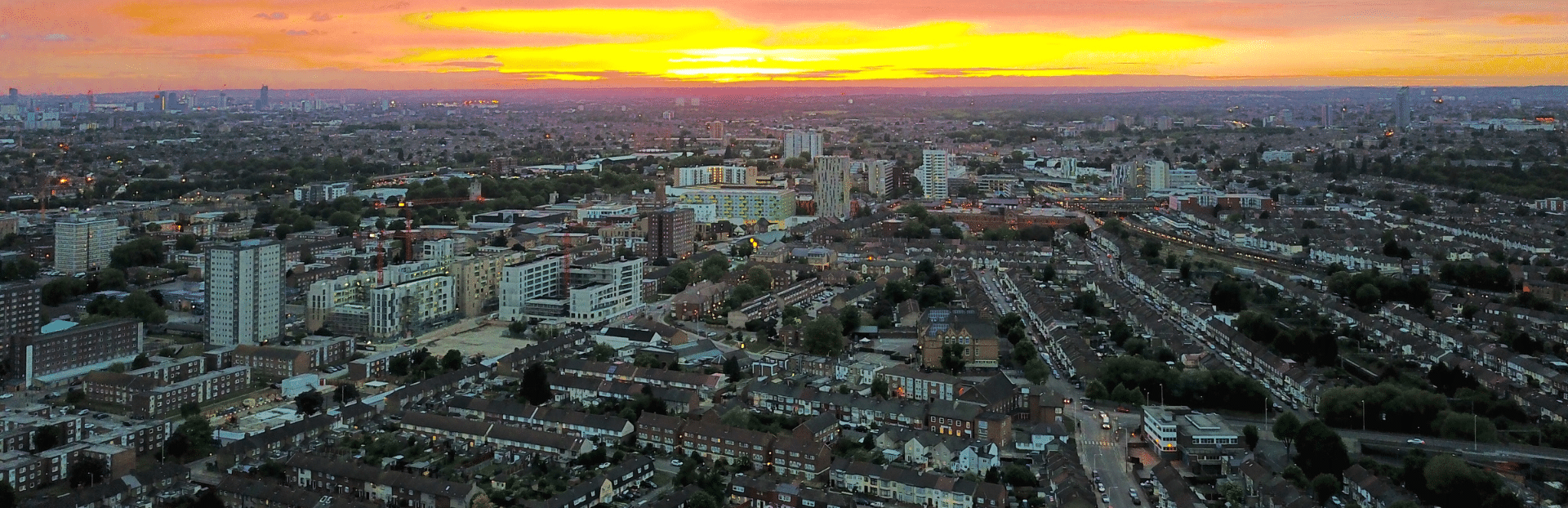
Barking and Dagenham is a borough of east London. Average sold prices in Barking and Dagenham sit at £360,679 on the HM Land Registry House Price Index, 33.5% below the London regional average of £542,065 yet 24.4% above England's £289,946. That puts this eight-postcode east London borough among the cheapest ways into the capital, with yields that read more like the high-yielding north than inner London. The borough recorded population growth of 17.7% between the 2011 and 2021 censuses, from 185,911 to 218,869 residents, one of the fastest rates in the country.
What sets Barking and Dagenham apart is the gap between price and yield. Six of its eight postcodes return gross yields of 5% or more, led by IG11 at 6.8% on the borough's lowest asking price of £309,058. Behind that sits one of the largest regeneration pipelines in London: the council's development company is targeting 50,000 new homes, and a single brownfield site on the Thames will add up to around 20,000 of them. For investors, the trade-off shows up clearly in the data, with the highest-yielding postcode also carrying the weakest recent capital growth.
This guide covers the London Borough of Barking and Dagenham (ONS code E09000002) across postcodes IG11, RM6, RM7, RM8, RM9, RM10, RM12 and RM13. RM12 (Elm Park, Hornchurch) and RM13 (Rainham) straddle the boundary with neighbouring Havering, so figures for those two postcodes cover the full postcode district and can include homes that sit just over the line. The borough is part of east London, bordered by Redbridge to the north, Havering to the east, and Newham to the west.
Article updated: July 2026
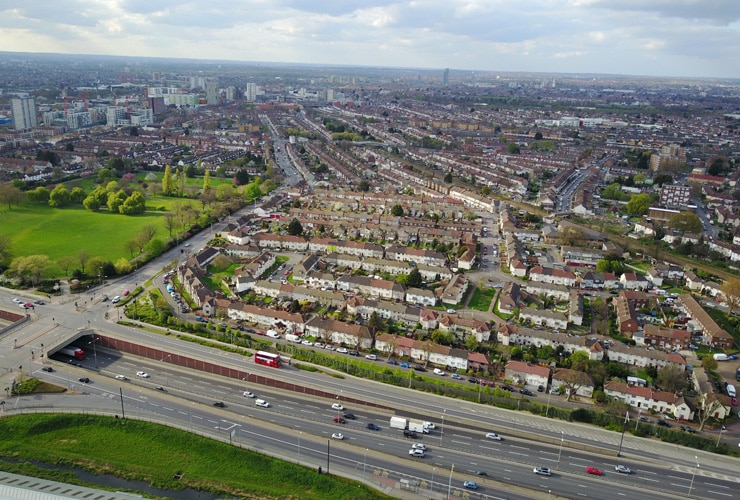
Why Invest in Barking & Dagenham?
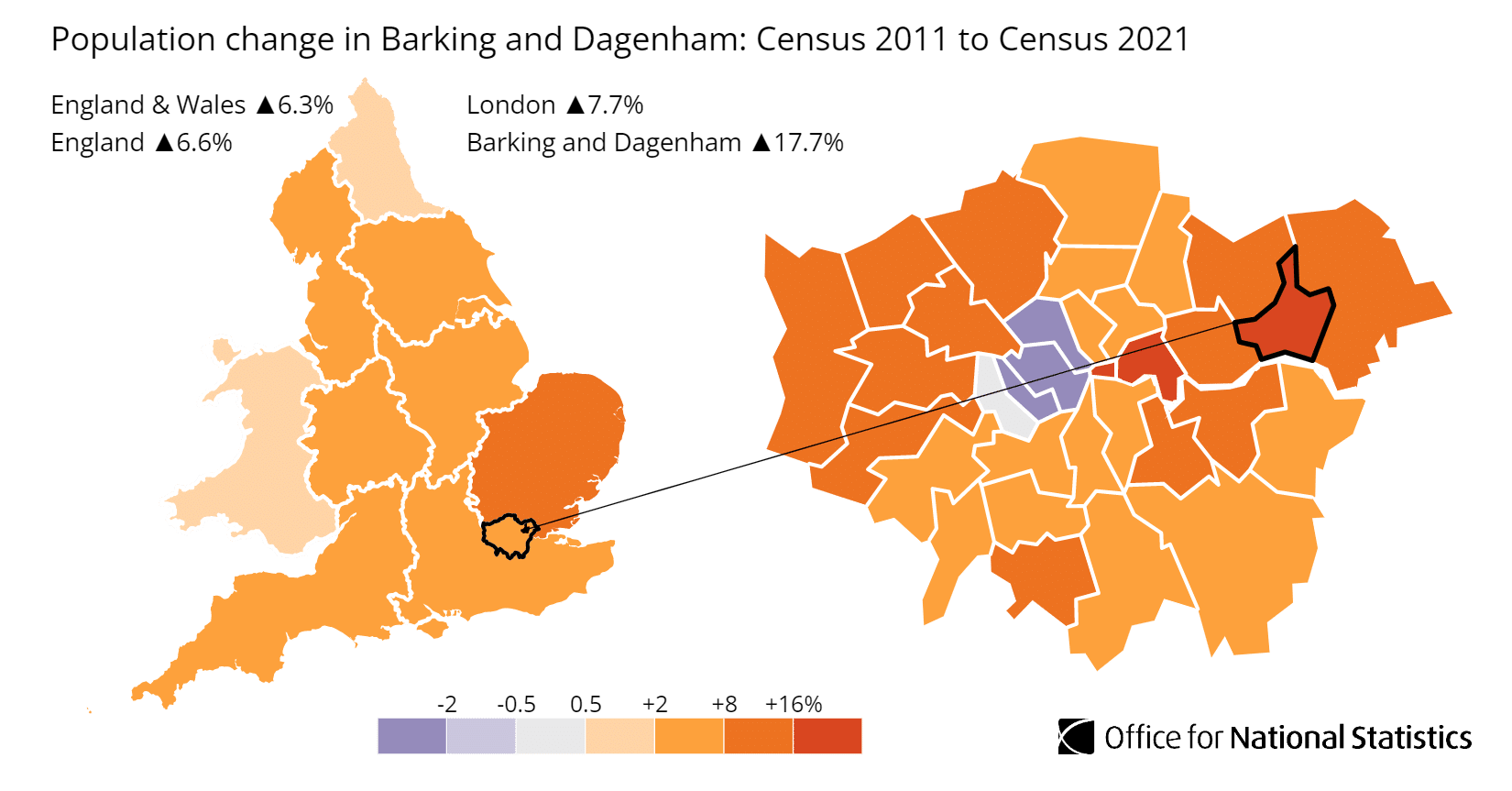
Barking and Dagenham's population grew 17.7% between the 2011 and 2021 censuses, from 185,911 to 218,869 residents. That is well ahead of the England and Wales average of 6.3% and reflects a borough absorbing London's eastward spread. It is a young, growing population sitting on the cheapest land in the capital, which is the demographic backdrop to everything the rental data shows later in this guide.
Transport is the reason the borough works for renters. Barking station is the hub, served by the District line, the Hammersmith & City line, the London Overground Suffragette line, and c2c National Rail trains into Fenchurch Street. The Suffragette line was extended to a new station at Barking Riverside in July 2022, opening up the riverside development on the Thames. For a borough at the eastern edge of London, that is four separate ways into the centre from one interchange.
Median gross annual earnings here are £39,213, which is below both the London regional median of £46,940 and the Great Britain median of £39,863. The local employment rate is 67.6% and unemployment is 8.7%. The borough does not have a university. Further education runs through Barking & Dagenham College. Hospital care comes from the Barking, Havering and Redbridge University Hospitals NHS Trust, through Queen's Hospital in Romford and King George Hospital in Goodmayes. Lower local wages against London-level rents are the tension that shows up in the affordability tables, and it is worth holding onto when reading the yield figures.
Barking & Dagenham Economic Summary
- Population: 218,869 (2021 Census). Growth of 17.7% from 2011.
- Median annual salary: £39,213 (local), £46,940 (London), £39,863 (Great Britain)
- Employment rate: 67.6% (local)
- Unemployment rate: 8.7% (local)
- Key employment sectors: Public administration, health and social care, logistics, film and TV production
Source: ONS Census 2021, Nomis Labour Market Profile (ASHE 2025, Employment Oct 2024-Sep 2025)
Regeneration and Investment in Barking & Dagenham
The council's development company, Be First, is targeting 50,000 new homes and 20,000 new jobs across 400 hectares of the borough by 2037. That is one of the largest regeneration programmes anywhere in London, and most of it is concentrated along the Thames estuary corridor in the south of the borough.
- Barking Riverside (Under construction, up to around 20,000 homes): A 443-acre brownfield development on the former Barking Power Station site, which closed in 1981. It is a partnership between the Greater London Authority and the housing association L&Q. Original consent was for 10,800 homes; a 2026 revision roughly doubled that to a planned ceiling of around 20,000. The site got its own London Overground station, on the Suffragette line, in July 2022, which unlocked building beyond the early phases. Updates at Barking Riverside.
- Beam Park (Under construction, 3,900+ homes): A mixed-tenure development on a former factory site between Dagenham and Rainham, straddling the Havering boundary, with first residents arriving in December 2020. A new c2c railway station at Beam Park is central to the scheme: in March 2026 the Department for Transport authorised passenger services there, subject to final funding, after several years of delay. A local planning condition holds later phases until the station is built. Updates at Beam Park London.
- Eastbrook Studios (Completed July 2025, 567,000 sq ft): London's largest film and television production facility, built across 21.5 acres in Dagenham with 12 purpose-built sound stages. It turned a long-disused site into a working employment cluster in the south of the borough, adding to the film and TV jobs base that now sits among the borough's growth sectors.
Source: Office for National Statistics - Population for Barking and Dagenham
Barking & Dagenham Property Market Analysis
Average property prices in Barking and Dagenham have risen 595.4% since January 1995, from £51,870 to £360,679. The sections below break down that journey cycle by cycle, then drill into current postcode-level data for sold prices, price per square foot, asking prices, growth trends, and monthly transaction volumes.
When Was the Last House Price Crash in Barking & Dagenham?
Barking and Dagenham's last house price crash came in the 2008 to 2009 financial crisis, when the average fell 24.4% in 14 months from its March 2008 peak. As a London borough, its sold prices are recorded by HM Land Registry at borough level, in a House Price Index that runs from January 1995 to March 2026.
The 1995 to 2008 boom: Barking and Dagenham started at £51,870 in January 1995. By December 2000 the average had reached £84,009. As one of the cheapest entry points anywhere in London, the borough rode the early-2000s credit boom hard, climbing to £167,184 by December 2005 and £197,834 by December 2007. The market peaked at £201,739 in March 2008.
2008 to 2009, the financial crisis: Prices fell from the March 2008 peak of £201,739 to a trough of £152,579 in May 2009. The worst year-on-year reading was -23.3% in May 2009. That fall was steeper than both the England decline of around 18% and the wider London market, which reflected the borough's heavy exposure to stretched lending at the cheaper end. When credit tightened, the buyers who had pushed prices up at the bottom of the ladder were the first to disappear.
The 2010 to 2013 stagnation: Prices bounced off the May 2009 trough but then drifted. By December 2010 the average stood at £171,135, and it was still only £188,213 by December 2013. The borough spent three years recovering ground rather than making new gains, slower than the central London areas where overseas money arrived first.
Recovery, 2014 to 2016: The London-wide upswing reached the borough properly in 2014. Prices first passed the March 2008 pre-crash peak in May 2014 at £202,112, about six years on from the top. From there the climb was rapid, reaching £293,599 by December 2016 as regeneration money started to flow into the riverside.
The 2017 to 2019 pre-pandemic plateau: Growth flattened. Prices reached £313,309 by September 2019, then drifted sideways as the wider London slowdown bit hardest in the outer boroughs. This was the period where five years of fast catch-up gave way to a pause.
2020 to 2022, the pandemic surge: After a brief dip to £298,615 in May 2020, the stamp duty holiday and the race for space sent prices up again. By December 2022 the average had reached £355,046, with annual growth running at 10.1%.
The 2023 rate shock: Higher mortgage rates cooled the market. Prices eased to £343,985 by December 2023, a -3.1% annual reading, before steadying through 2024 to £355,200 by December.
2025 to present: The borough set a fresh all-time high of £363,916 in February 2026, edging past the pandemic peak. The latest reading of £360,679 in March 2026 sits just below that, with annual growth of -0.8%, a slight easing rather than a turn. The current price is 78.8% above the pre-crash peak of £201,739.
Long-term growth summary:
- 5 years (March 2021 to March 2026): 15.1% growth (£313,310 to £360,679)
- 10 years (March 2016 to March 2026): 31.8% growth (£273,644 to £360,679)
- 15 years (March 2011 to March 2026): 117.1% growth (£166,175 to £360,679)
- 20 years (March 2006 to March 2026): 116.6% growth (£166,529 to £360,679)
- 30 years (January 1995 to March 2026): 595.4% growth (£51,870 to £360,679)
The 15-year and 20-year figures are almost identical, 117.1% against 116.6%. That is the crash showing up in the numbers: a buyer in 2006 and a buyer in 2011 hold properties worth about the same today, because the years between 2006 and 2009 added nothing once the fall is counted. The crash did not destroy the long-term return, it compressed the timeline. From the May 2009 trough to March 2026, prices rose 136.4% in not quite 17 years.
- All property types
- Detached
- Semi-detached
- Terraced
- Flats
Source: HM Land Registry House Price Index
| Year | All property types | Detached | Semi-detached | Terraced | Flats |
|---|---|---|---|---|---|
| 1995-01 | £51,870 | £97,104 | £64,825 | £53,769 | £42,297 |
| 1995-02 | £52,513 | £96,445 | £65,599 | £54,489 | £42,367 |
| 1995-03 | £52,701 | £96,518 | £65,827 | £54,683 | £42,597 |
| 1995-04 | £54,618 | £99,171 | £68,208 | £56,694 | £43,981 |
| 1995-05 | £54,524 | £99,597 | £68,195 | £56,543 | £44,325 |
| 1995-06 | £55,200 | £100,874 | £69,150 | £57,213 | £45,032 |
| 1995-07 | £53,569 | £98,129 | £67,093 | £55,530 | £43,572 |
| 1995-08 | £53,691 | £98,590 | £67,188 | £55,697 | £43,171 |
| 1995-09 | £52,909 | £97,552 | £66,166 | £54,918 | £42,103 |
| 1995-10 | £52,953 | £98,128 | £66,516 | £54,875 | £42,513 |
| 1995-11 | £52,269 | £96,788 | £65,790 | £54,115 | £42,382 |
| 1995-12 | £52,368 | £96,668 | £66,018 | £54,180 | £42,794 |
| 1996-01 | £52,248 | £95,905 | £65,689 | £54,096 | £42,705 |
| 1996-02 | £52,877 | £97,142 | £66,613 | £54,727 | £43,044 |
| 1996-03 | £53,357 | £97,506 | £67,302 | £55,207 | £43,343 |
| 1996-04 | £53,169 | £96,607 | £66,999 | £55,026 | £43,261 |
| 1996-05 | £53,181 | £95,863 | £66,715 | £55,122 | £42,889 |
| 1996-06 | £52,179 | £94,138 | £65,270 | £54,113 | £42,325 |
| 1996-07 | £52,035 | £94,384 | £65,216 | £53,943 | £42,022 |
| 1996-08 | £52,532 | £95,424 | £65,879 | £54,431 | £42,838 |
| 1996-09 | £53,342 | £97,902 | £66,908 | £55,274 | £43,251 |
| 1996-10 | £54,000 | £99,548 | £67,786 | £55,946 | £43,722 |
| 1996-11 | £53,674 | £98,712 | £67,374 | £55,620 | £43,224 |
| 1996-12 | £55,358 | £101,117 | £69,559 | £57,356 | £44,470 |
| 1997-01 | £55,980 | £101,886 | £70,176 | £58,053 | £44,611 |
| 1997-02 | £57,000 | £104,883 | £71,544 | £59,072 | £45,454 |
| 1997-03 | £56,541 | £104,578 | £70,876 | £58,644 | £44,656 |
| 1997-04 | £56,824 | £105,422 | £71,363 | £58,909 | £44,861 |
| 1997-05 | £56,471 | £104,477 | £70,980 | £58,530 | £44,605 |
| 1997-06 | £56,831 | £105,320 | £71,478 | £58,881 | £44,967 |
| 1997-07 | £57,213 | £105,817 | £71,869 | £59,332 | £45,004 |
| 1997-08 | £58,085 | £107,810 | £72,948 | £60,257 | £45,516 |
| 1997-09 | £57,879 | £106,933 | £72,679 | £60,044 | £45,392 |
| 1997-10 | £58,798 | £109,013 | £73,943 | £60,965 | £46,160 |
| 1997-11 | £59,183 | £109,848 | £74,542 | £61,427 | £45,749 |
| 1997-12 | £59,646 | £111,057 | £75,276 | £61,905 | £45,838 |
| 1998-01 | £59,167 | £110,124 | £74,553 | £61,455 | £45,294 |
| 1998-02 | £58,962 | £109,549 | £74,071 | £61,113 | £46,016 |
| 1998-03 | £59,526 | £110,636 | £74,647 | £61,651 | £46,717 |
| 1998-04 | £60,849 | £112,880 | £76,433 | £63,007 | £47,736 |
| 1998-05 | £62,042 | £114,936 | £77,925 | £64,380 | £48,117 |
| 1998-06 | £62,275 | £115,509 | £78,127 | £64,646 | £48,260 |
| 1998-07 | £62,100 | £115,524 | £77,865 | £64,428 | £48,283 |
| 1998-08 | £62,537 | £116,972 | £78,407 | £64,777 | £49,021 |
| 1998-09 | £63,202 | £118,068 | £79,398 | £65,552 | £49,094 |
| 1998-10 | £63,737 | £119,202 | £80,071 | £66,068 | £49,654 |
| 1998-11 | £63,978 | £119,942 | £80,685 | £66,300 | £49,677 |
| 1998-12 | £65,261 | £122,957 | £82,272 | £67,458 | £51,359 |
| 1999-01 | £66,334 | £124,791 | £83,615 | £68,510 | £52,457 |
| 1999-02 | £65,958 | £123,713 | £82,969 | £68,126 | £52,286 |
| 1999-03 | £65,302 | £122,016 | £82,102 | £67,481 | £51,674 |
| 1999-04 | £65,356 | £120,932 | £81,967 | £67,691 | £51,220 |
| 1999-05 | £66,310 | £122,071 | £82,985 | £68,706 | £51,988 |
| 1999-06 | £66,511 | £122,109 | £83,091 | £68,960 | £52,051 |
| 1999-07 | £66,734 | £123,245 | £83,335 | £69,189 | £52,226 |
| 1999-08 | £67,212 | £123,804 | £83,857 | £69,773 | £52,280 |
| 1999-09 | £67,847 | £125,156 | £84,627 | £70,433 | £52,777 |
| 1999-10 | £68,221 | £126,050 | £85,339 | £70,739 | £53,263 |
| 1999-11 | £69,225 | £127,853 | £86,723 | £71,766 | £54,030 |
| 1999-12 | £70,734 | £130,336 | £88,437 | £73,297 | £55,473 |
| 2000-01 | £73,064 | £134,682 | £91,419 | £75,724 | £57,203 |
| 2000-02 | £74,662 | £138,388 | £93,333 | £77,390 | £58,475 |
| 2000-03 | £75,680 | £140,324 | £94,880 | £78,529 | £58,771 |
| 2000-04 | £75,862 | £139,938 | £94,841 | £78,698 | £59,080 |
| 2000-05 | £77,224 | £141,604 | £96,533 | £80,012 | £60,418 |
| 2000-06 | £79,088 | £144,470 | £98,769 | £81,782 | £62,330 |
| 2000-07 | £81,071 | £149,252 | £101,611 | £83,773 | £63,869 |
| 2000-08 | £82,389 | £152,092 | £103,502 | £84,945 | £65,281 |
| 2000-09 | £84,044 | £156,420 | £105,638 | £86,595 | £66,672 |
| 2000-10 | £84,806 | £157,975 | £106,711 | £87,309 | £67,404 |
| 2000-11 | £84,687 | £158,497 | £106,524 | £87,186 | £67,298 |
| 2000-12 | £84,009 | £156,954 | £105,747 | £86,420 | £66,914 |
| 2001-01 | £84,643 | £157,929 | £106,072 | £87,120 | £67,480 |
| 2001-02 | £85,591 | £159,656 | £107,192 | £88,158 | £68,099 |
| 2001-03 | £86,406 | £161,201 | £108,270 | £89,142 | £68,369 |
| 2001-04 | £86,310 | £161,341 | £108,044 | £89,030 | £68,354 |
| 2001-05 | £87,501 | £162,832 | £109,249 | £90,244 | £69,430 |
| 2001-06 | £89,155 | £165,208 | £110,911 | £91,721 | £71,394 |
| 2001-07 | £91,685 | £169,276 | £114,012 | £94,229 | £73,659 |
| 2001-08 | £92,988 | £171,796 | £115,395 | £95,497 | £74,940 |
| 2001-09 | £95,197 | £176,621 | £117,998 | £97,791 | £76,691 |
| 2001-10 | £96,198 | £179,238 | £119,514 | £98,739 | £77,587 |
| 2001-11 | £98,596 | £184,164 | £122,903 | £101,082 | £79,655 |
| 2001-12 | £99,413 | £184,936 | £123,906 | £101,585 | £81,116 |
| 2002-01 | £101,470 | £188,456 | £126,274 | £103,470 | £83,365 |
| 2002-02 | £103,028 | £190,914 | £127,765 | £104,983 | £84,968 |
| 2002-03 | £104,472 | £193,360 | £129,671 | £106,559 | £85,875 |
| 2002-04 | £106,786 | £196,741 | £132,170 | £108,788 | £88,226 |
| 2002-05 | £108,714 | £199,441 | £134,726 | £110,686 | £89,935 |
| 2002-06 | £111,648 | £203,984 | £137,635 | £113,620 | £92,739 |
| 2002-07 | £115,111 | £210,164 | £141,773 | £117,193 | £95,544 |
| 2002-08 | £118,776 | £216,583 | £146,037 | £120,906 | £98,712 |
| 2002-09 | £121,636 | £222,961 | £150,062 | £123,887 | £100,739 |
| 2002-10 | £126,374 | £232,858 | £156,607 | £128,739 | £104,355 |
| 2002-11 | £130,872 | £243,421 | £162,326 | £133,174 | £108,333 |
| 2002-12 | £135,388 | £251,536 | £168,277 | £137,540 | £112,510 |
| 2003-01 | £138,513 | £255,966 | £171,241 | £140,806 | £115,213 |
| 2003-02 | £142,055 | £260,586 | £175,749 | £144,262 | £118,493 |
| 2003-03 | £146,178 | £267,798 | £180,203 | £148,499 | £122,032 |
| 2003-04 | £146,163 | £267,434 | £180,588 | £148,142 | £122,708 |
| 2003-05 | £146,785 | £267,960 | £181,060 | £148,906 | £123,018 |
| 2003-06 | £145,922 | £265,392 | £179,890 | £147,926 | £122,599 |
| 2003-07 | £146,195 | £264,736 | £180,249 | £148,418 | £122,324 |
| 2003-08 | £146,780 | £265,103 | £180,905 | £149,092 | £122,654 |
| 2003-09 | £145,665 | £263,261 | £179,798 | £148,210 | £121,028 |
| 2003-10 | £149,189 | £269,987 | £183,892 | £151,883 | £123,827 |
| 2003-11 | £150,418 | £273,043 | £185,694 | £153,170 | £124,654 |
| 2003-12 | £153,882 | £277,850 | £189,518 | £156,616 | £127,894 |
| 2004-01 | £154,308 | £278,903 | £190,212 | £156,980 | £128,351 |
| 2004-02 | £156,952 | £282,297 | £193,145 | £159,737 | £130,508 |
| 2004-03 | £157,881 | £284,270 | £194,018 | £160,656 | £131,364 |
| 2004-04 | £158,315 | £281,902 | £194,044 | £161,300 | £131,422 |
| 2004-05 | £158,672 | £279,275 | £193,627 | £161,681 | £131,941 |
| 2004-06 | £161,334 | £280,985 | £196,547 | £164,304 | £134,489 |
| 2004-07 | £163,674 | £284,310 | £199,809 | £166,852 | £135,955 |
| 2004-08 | £165,106 | £287,355 | £202,005 | £168,498 | £136,586 |
| 2004-09 | £167,369 | £292,211 | £205,400 | £171,198 | £137,355 |
| 2004-10 | £169,014 | £294,433 | £206,807 | £172,872 | £138,895 |
| 2004-11 | £169,785 | £293,808 | £207,228 | £173,693 | £139,617 |
| 2004-12 | £168,714 | £288,750 | £205,018 | £172,579 | £139,057 |
| 2005-01 | £169,078 | £287,102 | £204,703 | £172,792 | £139,955 |
| 2005-02 | £166,857 | £281,113 | £202,118 | £170,422 | £138,334 |
| 2005-03 | £166,449 | £279,405 | £201,920 | £170,172 | £137,492 |
| 2005-04 | £167,317 | £279,278 | £203,588 | £171,311 | £137,407 |
| 2005-05 | £168,580 | £281,624 | £204,822 | £172,667 | £138,376 |
| 2005-06 | £170,400 | £282,282 | £206,473 | £174,611 | £139,898 |
| 2005-07 | £166,964 | £275,888 | £202,064 | £171,081 | £137,193 |
| 2005-08 | £168,581 | £278,448 | £203,898 | £172,867 | £138,232 |
| 2005-09 | £167,667 | £277,399 | £202,907 | £172,083 | £137,050 |
| 2005-10 | £168,764 | £279,054 | £203,812 | £173,292 | £137,875 |
| 2005-11 | £167,239 | £275,155 | £202,026 | £171,877 | £136,260 |
| 2005-12 | £167,184 | £273,606 | £201,430 | £171,617 | £136,932 |
| 2006-01 | £166,874 | £273,227 | £200,838 | £171,310 | £136,718 |
| 2006-02 | £167,577 | £274,630 | £201,136 | £171,855 | £137,931 |
| 2006-03 | £166,529 | £275,185 | £200,207 | £171,001 | £136,327 |
| 2006-04 | £168,790 | £279,361 | £203,067 | £173,328 | £138,119 |
| 2006-05 | £170,686 | £282,572 | £205,527 | £175,367 | £139,368 |
| 2006-06 | £173,733 | £285,766 | £209,118 | £178,499 | £141,902 |
| 2006-07 | £174,958 | £286,275 | £210,320 | £179,928 | £142,529 |
| 2006-08 | £175,958 | £286,185 | £211,296 | £181,321 | £142,440 |
| 2006-09 | £175,006 | £285,728 | £210,307 | £180,297 | £141,728 |
| 2006-10 | £174,842 | £285,981 | £210,204 | £180,067 | £141,730 |
| 2006-11 | £176,391 | £289,209 | £212,454 | £181,600 | £143,042 |
| 2006-12 | £179,153 | £293,112 | £215,542 | £184,447 | £145,345 |
| 2007-01 | £181,509 | £296,068 | £218,366 | £186,997 | £146,938 |
| 2007-02 | £181,996 | £296,393 | £218,732 | £187,223 | £148,020 |
| 2007-03 | £184,011 | £299,280 | £221,255 | £189,575 | £148,933 |
| 2007-04 | £184,870 | £299,910 | £221,914 | £190,643 | £149,307 |
| 2007-05 | £186,907 | £301,520 | £223,745 | £192,925 | £150,693 |
| 2007-06 | £188,601 | £303,469 | £225,470 | £194,613 | £152,267 |
| 2007-07 | £191,122 | £307,774 | £228,704 | £197,197 | £154,290 |
| 2007-08 | £192,569 | £311,569 | £230,991 | £199,128 | £154,349 |
| 2007-09 | £195,536 | £316,647 | £234,876 | £202,241 | £156,553 |
| 2007-10 | £196,927 | £319,376 | £235,913 | £203,602 | £157,975 |
| 2007-11 | £199,010 | £324,163 | £238,673 | £205,467 | £160,214 |
| 2007-12 | £197,834 | £322,727 | £236,989 | £204,053 | £159,769 |
| 2008-01 | £199,660 | £326,508 | £239,543 | £205,853 | £161,345 |
| 2008-02 | £199,109 | £326,039 | £238,867 | £205,276 | £160,851 |
| 2008-03 | £201,739 | £331,778 | £242,487 | £208,486 | £161,604 |
| 2008-04 | £198,321 | £326,689 | £238,472 | £205,275 | £158,027 |
| 2008-05 | £198,980 | £325,635 | £239,042 | £206,079 | £158,355 |
| 2008-06 | £196,054 | £318,932 | £235,245 | £202,930 | £156,431 |
| 2008-07 | £196,403 | £316,807 | £235,816 | £203,258 | £156,803 |
| 2008-08 | £194,381 | £313,529 | £233,315 | £201,218 | £155,078 |
| 2008-09 | £189,816 | £307,715 | £227,778 | £196,356 | £151,763 |
| 2008-10 | £182,890 | £297,964 | £219,358 | £189,195 | £146,221 |
| 2008-11 | £179,261 | £292,014 | £215,474 | £185,585 | £142,829 |
| 2008-12 | £174,462 | £283,223 | £209,933 | £180,875 | £138,320 |
| 2009-01 | £171,457 | £280,283 | £206,899 | £177,621 | £136,077 |
| 2009-02 | £166,400 | £271,332 | £201,041 | £172,088 | £132,692 |
| 2009-03 | £161,191 | £261,855 | £194,600 | £166,302 | £129,445 |
| 2009-04 | £156,460 | £250,298 | £189,003 | £161,452 | £125,621 |
| 2009-05 | £152,579 | £243,385 | £183,947 | £157,519 | £122,466 |
| 2009-06 | £154,388 | £245,815 | £186,152 | £159,638 | £123,456 |
| 2009-07 | £158,409 | £252,311 | £190,974 | £164,177 | £125,981 |
| 2009-08 | £160,637 | £255,564 | £193,628 | £166,790 | £127,208 |
| 2009-09 | £160,179 | £254,790 | £193,603 | £166,798 | £125,847 |
| 2009-10 | £161,050 | £257,598 | £195,225 | £168,006 | £125,846 |
| 2009-11 | £161,665 | £261,165 | £196,364 | £169,240 | £125,144 |
| 2009-12 | £165,382 | £267,107 | £201,058 | £173,195 | £127,869 |
| 2010-01 | £167,455 | £270,567 | £203,738 | £175,956 | £128,412 |
| 2010-02 | £167,576 | £271,021 | £204,592 | £176,142 | £128,230 |
| 2010-03 | £167,379 | £273,683 | £204,424 | £175,700 | £128,460 |
| 2010-04 | £167,302 | £274,654 | £204,470 | £175,153 | £129,149 |
| 2010-05 | £169,508 | £279,215 | £207,074 | £177,167 | £131,378 |
| 2010-06 | £171,816 | £281,878 | £210,235 | £180,291 | £131,832 |
| 2010-07 | £173,371 | £284,890 | £212,414 | £182,165 | £132,514 |
| 2010-08 | £174,970 | £287,749 | £215,050 | £184,244 | £132,847 |
| 2010-09 | £175,008 | £288,774 | £215,130 | £184,149 | £133,075 |
| 2010-10 | £175,055 | £290,572 | £215,221 | £183,925 | £133,533 |
| 2010-11 | £173,977 | £290,537 | £213,984 | £182,470 | £133,208 |
| 2010-12 | £171,135 | £287,299 | £211,060 | £179,201 | £131,354 |
| 2011-01 | £168,397 | £282,485 | £207,382 | £176,396 | £129,225 |
| 2011-02 | £167,022 | £279,471 | £205,180 | £174,737 | £128,756 |
| 2011-03 | £166,175 | £280,101 | £203,861 | £173,795 | £128,245 |
| 2011-04 | £166,937 | £281,813 | £204,820 | £174,304 | £129,368 |
| 2011-05 | £167,248 | £281,751 | £204,886 | £174,536 | £129,905 |
| 2011-06 | £166,837 | £277,961 | £204,376 | £174,116 | £129,660 |
| 2011-07 | £165,389 | £274,176 | £202,328 | £172,695 | £128,486 |
| 2011-08 | £168,043 | £279,011 | £206,335 | £175,874 | £129,509 |
| 2011-09 | £171,525 | £286,418 | £210,870 | £179,753 | £131,616 |
| 2011-10 | £172,171 | £289,771 | £212,588 | £180,522 | £131,583 |
| 2011-11 | £169,451 | £285,985 | £209,203 | £177,527 | £129,764 |
| 2011-12 | £167,174 | £283,127 | £206,837 | £174,947 | £128,226 |
| 2012-01 | £168,477 | £285,420 | £208,753 | £176,421 | £128,922 |
| 2012-02 | £168,177 | £284,432 | £208,549 | £176,731 | £127,434 |
| 2012-03 | £169,030 | £283,516 | £209,294 | £177,965 | £127,584 |
| 2012-04 | £169,332 | £284,225 | £209,357 | £178,383 | £127,703 |
| 2012-05 | £171,153 | £287,612 | £211,586 | £180,053 | £129,565 |
| 2012-06 | £172,743 | £290,362 | £213,180 | £181,938 | £130,463 |
| 2012-07 | £172,700 | £287,886 | £212,842 | £182,248 | £129,876 |
| 2012-08 | £170,821 | £284,085 | £210,686 | £180,670 | £127,640 |
| 2012-09 | £169,921 | £282,321 | £209,547 | £179,776 | £126,871 |
| 2012-10 | £169,945 | £283,610 | £209,663 | £179,750 | £126,932 |
| 2012-11 | £171,159 | £286,339 | £210,875 | £180,951 | £128,068 |
| 2012-12 | £172,500 | £290,926 | £213,070 | £182,382 | £128,823 |
| 2013-01 | £172,609 | £290,715 | £213,954 | £182,430 | £128,813 |
| 2013-02 | £174,194 | £293,578 | £216,271 | £184,077 | £129,970 |
| 2013-03 | £174,146 | £293,463 | £216,371 | £183,926 | £130,047 |
| 2013-04 | £174,715 | £295,014 | £216,611 | £184,596 | £130,460 |
| 2013-05 | £175,237 | £295,282 | £217,158 | £184,982 | £131,137 |
| 2013-06 | £177,474 | £296,581 | £219,835 | £187,599 | £132,472 |
| 2013-07 | £179,481 | £298,909 | £222,009 | £189,837 | £133,875 |
| 2013-08 | £178,572 | £297,224 | £221,044 | £189,079 | £132,850 |
| 2013-09 | £179,642 | £300,633 | £222,298 | £190,121 | £133,779 |
| 2013-10 | £181,759 | £305,688 | £225,449 | £192,332 | £135,261 |
| 2013-11 | £186,990 | £316,279 | £232,148 | £197,729 | £139,296 |
| 2013-12 | £188,213 | £318,305 | £233,879 | £198,879 | £140,381 |
| 2014-01 | £190,047 | £322,164 | £236,256 | £200,501 | £142,209 |
| 2014-02 | £190,607 | £323,524 | £237,304 | £201,000 | £142,682 |
| 2014-03 | £195,180 | £331,919 | £243,434 | £205,718 | £146,161 |
| 2014-04 | £198,469 | £335,853 | £247,450 | £209,444 | £148,235 |
| 2014-05 | £202,112 | £340,700 | £251,473 | £213,363 | £150,957 |
| 2014-06 | £203,571 | £343,036 | £253,515 | £215,211 | £151,489 |
| 2014-07 | £207,576 | £349,871 | £258,728 | £219,613 | £154,143 |
| 2014-08 | £210,699 | £355,702 | £263,181 | £223,249 | £155,787 |
| 2014-09 | £216,289 | £364,789 | £269,758 | £229,122 | £160,089 |
| 2014-10 | £219,877 | £372,659 | £274,739 | £232,685 | £163,009 |
| 2014-11 | £222,681 | £378,687 | £278,441 | £235,427 | £165,401 |
| 2014-12 | £224,381 | £382,465 | £280,808 | £237,026 | £166,930 |
| 2015-01 | £226,217 | £385,114 | £282,956 | £238,859 | £168,512 |
| 2015-02 | £229,145 | £388,853 | £286,267 | £241,474 | £171,526 |
| 2015-03 | £228,629 | £388,258 | £285,704 | £240,843 | £171,254 |
| 2015-04 | £228,382 | £389,017 | £285,384 | £240,669 | £170,928 |
| 2015-05 | £228,021 | £389,141 | £285,443 | £240,512 | £170,225 |
| 2015-06 | £233,914 | £399,438 | £293,544 | £247,256 | £173,719 |
| 2015-07 | £242,285 | £412,092 | £304,052 | £256,232 | £179,775 |
| 2015-08 | £248,486 | £422,722 | £311,698 | £263,220 | £183,775 |
| 2015-09 | £250,279 | £427,120 | £313,632 | £264,970 | £185,356 |
| 2015-10 | £250,340 | £429,496 | £314,260 | £265,134 | £185,124 |
| 2015-11 | £253,853 | £436,387 | £319,100 | £268,733 | £187,805 |
| 2015-12 | £260,216 | £448,608 | £327,859 | £275,403 | £192,450 |
| 2016-01 | £265,985 | £458,498 | £335,959 | £281,303 | £196,862 |
| 2016-02 | £270,203 | £465,591 | £341,578 | £285,571 | £200,211 |
| 2016-03 | £273,644 | £468,698 | £344,693 | £289,055 | £203,250 |
| 2016-04 | £274,194 | £472,475 | £345,423 | £289,839 | £203,320 |
| 2016-05 | £275,568 | £474,674 | £346,046 | £291,113 | £204,808 |
| 2016-06 | £276,840 | £479,326 | £348,351 | £292,410 | £205,657 |
| 2016-07 | £281,902 | £484,905 | £353,850 | £297,631 | £209,801 |
| 2016-08 | £287,290 | £494,782 | £361,007 | £303,243 | £213,840 |
| 2016-09 | £291,576 | £502,780 | £366,992 | £307,811 | £216,848 |
| 2016-10 | £294,204 | £508,910 | £370,702 | £310,088 | £219,431 |
| 2016-11 | £293,837 | £511,014 | £370,993 | £309,417 | £219,399 |
| 2016-12 | £293,599 | £511,984 | £370,374 | £308,470 | £220,283 |
| 2017-01 | £290,330 | £507,918 | £365,821 | £304,874 | £218,124 |
| 2017-02 | £288,537 | £504,871 | £362,365 | £302,282 | £218,080 |
| 2017-03 | £285,983 | £501,992 | £359,036 | £299,197 | £216,756 |
| 2017-04 | £288,403 | £506,702 | £361,816 | £301,308 | £219,266 |
| 2017-05 | £294,006 | £515,658 | £369,678 | £307,038 | £223,543 |
| 2017-06 | £297,657 | £518,338 | £373,217 | £310,952 | £226,442 |
| 2017-07 | £299,874 | £519,574 | £375,970 | £313,244 | £228,205 |
| 2017-08 | £299,091 | £515,102 | £374,142 | £313,295 | £226,534 |
| 2017-09 | £300,689 | £518,619 | £376,650 | £315,149 | £227,353 |
| 2017-10 | £301,584 | £521,442 | £378,790 | £316,398 | £227,334 |
| 2017-11 | £302,002 | £524,013 | £380,573 | £316,777 | £227,443 |
| 2017-12 | £301,096 | £522,504 | £380,019 | £316,211 | £226,066 |
| 2018-01 | £299,691 | £520,208 | £378,066 | £314,598 | £225,251 |
| 2018-02 | £300,954 | £526,193 | £379,419 | £315,739 | £226,479 |
| 2018-03 | £299,871 | £526,240 | £377,411 | £314,588 | £225,752 |
| 2018-04 | £299,316 | £526,552 | £376,647 | £314,809 | £223,979 |
| 2018-05 | £298,346 | £523,467 | £375,616 | £314,421 | £222,146 |
| 2018-06 | £302,454 | £530,731 | £382,153 | £318,709 | £224,930 |
| 2018-07 | £303,191 | £531,406 | £383,173 | £319,432 | £225,552 |
| 2018-08 | £304,172 | £531,773 | £384,358 | £320,541 | £226,186 |
| 2018-09 | £304,703 | £532,332 | £384,828 | £321,260 | £226,365 |
| 2018-10 | £308,294 | £539,072 | £389,426 | £324,996 | £229,096 |
| 2018-11 | £310,925 | £546,697 | £393,555 | £328,015 | £230,409 |
| 2018-12 | £309,237 | £545,200 | £391,910 | £326,244 | £229,004 |
| 2019-01 | £305,481 | £540,193 | £388,288 | £322,309 | £225,877 |
| 2019-02 | £302,045 | £533,897 | £383,699 | £317,949 | £224,359 |
| 2019-03 | £302,278 | £534,264 | £384,779 | £318,690 | £223,655 |
| 2019-04 | £303,716 | £537,159 | £386,465 | £320,558 | £224,316 |
| 2019-05 | £303,432 | £536,250 | £387,003 | £321,473 | £222,474 |
| 2019-06 | £302,059 | £533,083 | £385,373 | £320,577 | £220,782 |
| 2019-07 | £305,527 | £535,677 | £388,952 | £324,059 | £223,729 |
| 2019-08 | £307,811 | £537,413 | £391,384 | £327,124 | £224,738 |
| 2019-09 | £313,309 | £545,839 | £396,858 | £332,520 | £229,563 |
| 2019-10 | £311,627 | £544,450 | £396,314 | £331,027 | £227,687 |
| 2019-11 | £313,020 | £552,024 | £400,145 | £332,457 | £228,375 |
| 2019-12 | £308,127 | £546,286 | £396,326 | £328,597 | £222,777 |
| 2020-01 | £311,552 | £551,934 | £400,261 | £332,233 | £225,359 |
| 2020-02 | £311,555 | £550,355 | £399,025 | £331,786 | £225,860 |
| 2020-03 | £308,549 | £543,220 | £394,109 | £327,374 | £225,276 |
| 2020-04 | £299,747 | £527,207 | £382,921 | £318,636 | £217,819 |
| 2020-05 | £298,615 | £525,509 | £382,397 | £316,670 | £218,072 |
| 2020-06 | £307,345 | £541,228 | £393,846 | £326,400 | £223,574 |
| 2020-07 | £311,582 | £548,714 | £398,800 | £330,886 | £226,795 |
| 2020-08 | £312,479 | £549,171 | £399,671 | £333,124 | £225,349 |
| 2020-09 | £309,235 | £542,886 | £395,636 | £330,040 | £222,360 |
| 2020-10 | £311,275 | £548,336 | £398,806 | £332,713 | £222,841 |
| 2020-11 | £312,061 | £549,865 | £398,849 | £333,773 | £223,269 |
| 2020-12 | £316,866 | £559,343 | £404,188 | £339,430 | £226,032 |
| 2021-01 | £318,877 | £559,685 | £405,790 | £340,923 | £228,844 |
| 2021-02 | £318,730 | £555,767 | £404,323 | £339,749 | £230,842 |
| 2021-03 | £313,310 | £539,129 | £395,769 | £332,737 | £229,550 |
| 2021-04 | £313,086 | £537,702 | £394,721 | £332,191 | £230,164 |
| 2021-05 | £313,020 | £538,139 | £394,799 | £332,381 | £229,608 |
| 2021-06 | £318,847 | £545,248 | £401,434 | £339,744 | £232,078 |
| 2021-07 | £312,394 | £538,884 | £394,663 | £332,257 | £228,023 |
| 2021-08 | £315,716 | £550,067 | £401,322 | £335,873 | £229,536 |
| 2021-09 | £316,978 | £558,091 | £405,207 | £336,748 | £230,531 |
| 2021-10 | £325,457 | £580,225 | £417,454 | £346,694 | £234,568 |
| 2021-11 | £323,183 | £576,612 | £414,321 | £344,366 | £232,826 |
| 2021-12 | £322,533 | £582,299 | £414,886 | £344,001 | £231,337 |
| 2022-01 | £329,845 | £589,876 | £424,692 | £352,570 | £235,202 |
| 2022-02 | £335,989 | £599,763 | £432,551 | £359,284 | £239,612 |
| 2022-03 | £336,821 | £601,946 | £434,470 | £360,115 | £240,072 |
| 2022-04 | £333,590 | £595,752 | £429,442 | £356,967 | £237,397 |
| 2022-05 | £333,783 | £596,290 | £430,581 | £357,775 | £235,914 |
| 2022-06 | £341,627 | £608,178 | £439,626 | £366,538 | £241,079 |
| 2022-07 | £345,410 | £613,165 | £444,899 | £370,853 | £243,098 |
| 2022-08 | £348,217 | £616,609 | £447,910 | £374,482 | £243,977 |
| 2022-09 | £348,132 | £616,348 | £448,555 | £374,938 | £242,501 |
| 2022-10 | £351,148 | £623,549 | £452,195 | £378,672 | £243,616 |
| 2022-11 | £352,996 | £627,961 | £454,474 | £380,888 | £244,437 |
| 2022-12 | £355,046 | £633,270 | £457,040 | £382,996 | £246,068 |
| 2023-01 | £352,455 | £629,440 | £455,109 | £379,527 | £245,238 |
| 2023-02 | £348,623 | £623,693 | £450,314 | £374,277 | £244,657 |
| 2023-03 | £344,642 | £619,585 | £446,605 | £368,723 | £243,684 |
| 2023-04 | £346,673 | £625,127 | £449,344 | £370,654 | £245,458 |
| 2023-05 | £347,444 | £624,170 | £450,265 | £371,446 | £246,128 |
| 2023-06 | £348,447 | £622,941 | £450,385 | £373,403 | £245,760 |
| 2023-07 | £347,658 | £618,156 | £448,940 | £373,080 | £244,520 |
| 2023-08 | £348,326 | £620,097 | £450,087 | £374,848 | £243,125 |
| 2023-09 | £345,057 | £613,286 | £445,869 | £371,657 | £240,314 |
| 2023-10 | £344,222 | £611,909 | £444,528 | £370,149 | £240,829 |
| 2023-11 | £345,932 | £616,570 | £447,552 | £371,412 | £242,704 |
| 2023-12 | £343,985 | £613,926 | £445,503 | £369,278 | £241,253 |
| 2024-01 | £337,600 | £601,653 | £436,743 | £363,007 | £235,964 |
| 2024-02 | £337,057 | £599,127 | £436,235 | £362,360 | £235,772 |
| 2024-03 | £341,999 | £607,056 | £442,063 | £367,094 | £240,524 |
| 2024-04 | £343,686 | £608,870 | £444,548 | £368,660 | £242,104 |
| 2024-05 | £342,340 | £603,458 | £441,291 | £367,142 | £241,781 |
| 2024-06 | £336,012 | £590,773 | £432,563 | £360,807 | £236,639 |
| 2024-07 | £334,773 | £587,215 | £430,777 | £360,015 | £234,829 |
| 2024-08 | £331,942 | £581,670 | £426,966 | £357,800 | £231,332 |
| 2024-09 | £336,208 | £590,485 | £433,690 | £362,638 | £233,480 |
| 2024-10 | £343,525 | £604,203 | £442,658 | £370,320 | £239,073 |
| 2024-11 | £349,704 | £618,376 | £452,245 | £376,751 | £243,291 |
| 2024-12 | £355,200 | £631,385 | £459,528 | £382,694 | £246,974 |
| 2025-01 | £355,052 | £631,950 | £460,407 | £383,022 | £245,647 |
| 2025-02 | £359,512 | £637,579 | £465,230 | £388,386 | £248,023 |
| 2025-03 | £363,758 | £633,263 | £467,601 | £393,284 | £251,179 |
| 2025-04 | £362,885 | £632,971 | £468,118 | £392,297 | £250,272 |
| 2025-05 | £361,690 | £632,409 | £467,950 | £390,578 | £249,752 |
| 2025-06 | £357,164 | £630,623 | £465,254 | £386,816 | £244,249 |
| 2025-07 | £360,204 | £633,627 | £468,462 | £390,859 | £245,438 |
| 2025-08 | £356,131 | £624,994 | £463,778 | £388,043 | £240,255 |
| 2025-09 | £358,276 | £629,035 | £467,289 | £390,766 | £241,005 |
| 2025-10 | £360,996 | £636,208 | £471,789 | £393,950 | £242,300 |
| 2025-11 | £361,119 | £636,148 | £471,071 | £393,926 | £242,792 |
| 2025-12 | £357,433 | £631,835 | £466,743 | £389,389 | £240,916 |
| 2026-01 | £357,385 | £631,426 | £466,610 | £390,101 | £239,834 |
| 2026-02 | £363,916 | £646,748 | £476,622 | £396,888 | £244,382 |
| 2026-03 | £360,679 | £641,314 | £473,062 | £394,533 | £240,409 |
- All property types
- Detached
- Semi-detached
- Terraced
- Flats
Source: HM Land Registry House Price Index
| Year | All property types | Detached | Semi-detached | Terraced | Flats |
|---|---|---|---|---|---|
| 1996-01 | +0.7% | -1.2% | +1.3% | +0.6% | +1.0% |
| 1996-02 | +0.7% | +0.7% | +1.5% | +0.4% | +1.6% |
| 1996-03 | +1.2% | +1.0% | +2.2% | +1.0% | +1.8% |
| 1996-04 | -2.7% | -2.6% | -1.8% | -2.9% | -1.6% |
| 1996-05 | -2.5% | -3.7% | -2.2% | -2.5% | -3.2% |
| 1996-06 | -5.5% | -6.7% | -5.6% | -5.4% | -6.0% |
| 1996-07 | -2.9% | -3.8% | -2.8% | -2.9% | -3.6% |
| 1996-08 | -2.2% | -3.2% | -1.9% | -2.3% | -0.8% |
| 1996-09 | +0.8% | +0.4% | +1.1% | +0.6% | +2.7% |
| 1996-10 | +2.0% | +1.4% | +1.9% | +2.0% | +2.8% |
| 1996-11 | +2.7% | +2.0% | +2.4% | +2.8% | +2.0% |
| 1996-12 | +5.7% | +4.6% | +5.4% | +5.9% | +3.9% |
| 1997-01 | +7.1% | +6.2% | +6.8% | +7.3% | +4.5% |
| 1997-02 | +7.8% | +8.0% | +7.4% | +7.9% | +5.6% |
| 1997-03 | +6.0% | +7.3% | +5.3% | +6.2% | +3.0% |
| 1997-04 | +6.9% | +9.1% | +6.5% | +7.1% | +3.7% |
| 1997-05 | +6.2% | +9.0% | +6.4% | +6.2% | +4.0% |
| 1997-06 | +8.9% | +11.9% | +9.5% | +8.8% | +6.2% |
| 1997-07 | +10.0% | +12.1% | +10.2% | +10.0% | +7.1% |
| 1997-08 | +10.6% | +13.0% | +10.7% | +10.7% | +6.3% |
| 1997-09 | +8.5% | +9.2% | +8.6% | +8.6% | +5.0% |
| 1997-10 | +8.9% | +9.5% | +9.1% | +9.0% | +5.6% |
| 1997-11 | +10.3% | +11.3% | +10.6% | +10.4% | +5.8% |
| 1997-12 | +7.7% | +9.8% | +8.2% | +7.9% | +3.1% |
| 1998-01 | +5.7% | +8.1% | +6.2% | +5.9% | +1.5% |
| 1998-02 | +3.4% | +4.4% | +3.5% | +3.5% | +1.2% |
| 1998-03 | +5.3% | +5.8% | +5.3% | +5.1% | +4.6% |
| 1998-04 | +7.1% | +7.1% | +7.1% | +7.0% | +6.4% |
| 1998-05 | +9.9% | +10.0% | +9.8% | +10.0% | +7.9% |
| 1998-06 | +9.6% | +9.7% | +9.3% | +9.8% | +7.3% |
| 1998-07 | +8.5% | +9.2% | +8.3% | +8.6% | +7.3% |
| 1998-08 | +7.7% | +8.5% | +7.5% | +7.5% | +7.7% |
| 1998-09 | +9.2% | +10.4% | +9.2% | +9.2% | +8.2% |
| 1998-10 | +8.4% | +9.3% | +8.3% | +8.4% | +7.6% |
| 1998-11 | +8.1% | +9.2% | +8.2% | +7.9% | +8.6% |
| 1998-12 | +9.4% | +10.7% | +9.3% | +9.0% | +12.0% |
| 1999-01 | +12.1% | +13.3% | +12.2% | +11.5% | +15.8% |
| 1999-02 | +11.9% | +12.9% | +12.0% | +11.5% | +13.6% |
| 1999-03 | +9.7% | +10.3% | +10.0% | +9.5% | +10.6% |
| 1999-04 | +7.4% | +7.1% | +7.2% | +7.4% | +7.3% |
| 1999-05 | +6.9% | +6.2% | +6.5% | +6.7% | +8.0% |
| 1999-06 | +6.8% | +5.7% | +6.4% | +6.7% | +7.9% |
| 1999-07 | +7.5% | +6.7% | +7.0% | +7.4% | +8.2% |
| 1999-08 | +7.5% | +5.8% | +7.0% | +7.7% | +6.6% |
| 1999-09 | +7.3% | +6.0% | +6.6% | +7.4% | +7.5% |
| 1999-10 | +7.0% | +5.7% | +6.6% | +7.1% | +7.3% |
| 1999-11 | +8.2% | +6.6% | +7.5% | +8.2% | +8.8% |
| 1999-12 | +8.4% | +6.0% | +7.5% | +8.7% | +8.0% |
| 2000-01 | +10.1% | +7.9% | +9.3% | +10.5% | +9.0% |
| 2000-02 | +13.2% | +11.9% | +12.5% | +13.6% | +11.8% |
| 2000-03 | +15.9% | +15.0% | +15.6% | +16.4% | +13.7% |
| 2000-04 | +16.1% | +15.7% | +15.7% | +16.3% | +15.3% |
| 2000-05 | +16.5% | +16.0% | +16.3% | +16.5% | +16.2% |
| 2000-06 | +18.9% | +18.3% | +18.9% | +18.6% | +19.7% |
| 2000-07 | +21.5% | +21.1% | +21.9% | +21.1% | +22.3% |
| 2000-08 | +22.6% | +22.8% | +23.4% | +21.7% | +24.9% |
| 2000-09 | +23.9% | +25.0% | +24.8% | +22.9% | +26.3% |
| 2000-10 | +24.3% | +25.3% | +25.0% | +23.4% | +26.6% |
| 2000-11 | +22.3% | +24.0% | +22.8% | +21.5% | +24.6% |
| 2000-12 | +18.8% | +20.4% | +19.6% | +17.9% | +20.6% |
| 2001-01 | +15.8% | +17.3% | +16.0% | +15.0% | +18.0% |
| 2001-02 | +14.6% | +15.4% | +14.8% | +13.9% | +16.5% |
| 2001-03 | +14.2% | +14.9% | +14.1% | +13.5% | +16.3% |
| 2001-04 | +13.8% | +15.3% | +13.9% | +13.1% | +15.7% |
| 2001-05 | +13.3% | +15.0% | +13.2% | +12.8% | +14.9% |
| 2001-06 | +12.7% | +14.4% | +12.3% | +12.2% | +14.5% |
| 2001-07 | +13.1% | +13.4% | +12.2% | +12.5% | +15.3% |
| 2001-08 | +12.9% | +13.0% | +11.5% | +12.4% | +14.8% |
| 2001-09 | +13.3% | +12.9% | +11.7% | +12.9% | +15.0% |
| 2001-10 | +13.4% | +13.5% | +12.0% | +13.1% | +15.1% |
| 2001-11 | +16.4% | +16.2% | +15.4% | +15.9% | +18.4% |
| 2001-12 | +18.3% | +17.8% | +17.2% | +17.5% | +21.2% |
| 2002-01 | +19.9% | +19.3% | +19.0% | +18.8% | +23.5% |
| 2002-02 | +20.4% | +19.6% | +19.2% | +19.1% | +24.8% |
| 2002-03 | +20.9% | +19.9% | +19.8% | +19.5% | +25.6% |
| 2002-04 | +23.7% | +21.9% | +22.3% | +22.2% | +29.1% |
| 2002-05 | +24.2% | +22.5% | +23.3% | +22.7% | +29.5% |
| 2002-06 | +25.2% | +23.5% | +24.1% | +23.9% | +29.9% |
| 2002-07 | +25.6% | +24.2% | +24.3% | +24.4% | +29.7% |
| 2002-08 | +27.7% | +26.1% | +26.6% | +26.6% | +31.7% |
| 2002-09 | +27.8% | +26.2% | +27.2% | +26.7% | +31.4% |
| 2002-10 | +31.4% | +29.9% | +31.0% | +30.4% | +34.5% |
| 2002-11 | +32.7% | +32.2% | +32.1% | +31.7% | +36.0% |
| 2002-12 | +36.2% | +36.0% | +35.8% | +35.4% | +38.7% |
| 2003-01 | +36.5% | +35.8% | +35.6% | +36.1% | +38.2% |
| 2003-02 | +37.9% | +36.5% | +37.6% | +37.4% | +39.5% |
| 2003-03 | +39.9% | +38.5% | +39.0% | +39.4% | +42.1% |
| 2003-04 | +36.9% | +35.9% | +36.6% | +36.2% | +39.1% |
| 2003-05 | +35.0% | +34.4% | +34.4% | +34.5% | +36.8% |
| 2003-06 | +30.7% | +30.1% | +30.7% | +30.2% | +32.2% |
| 2003-07 | +27.0% | +26.0% | +27.1% | +26.6% | +28.0% |
| 2003-08 | +23.6% | +22.4% | +23.9% | +23.3% | +24.3% |
| 2003-09 | +19.8% | +18.1% | +19.8% | +19.6% | +20.1% |
| 2003-10 | +18.1% | +15.9% | +17.4% | +18.0% | +18.7% |
| 2003-11 | +14.9% | +12.2% | +14.4% | +15.0% | +15.1% |
| 2003-12 | +13.7% | +10.5% | +12.6% | +13.9% | +13.7% |
| 2004-01 | +11.4% | +9.0% | +11.1% | +11.5% | +11.4% |
| 2004-02 | +10.5% | +8.3% | +9.9% | +10.7% | +10.1% |
| 2004-03 | +8.0% | +6.2% | +7.7% | +8.2% | +7.6% |
| 2004-04 | +8.3% | +5.4% | +7.5% | +8.9% | +7.1% |
| 2004-05 | +8.1% | +4.2% | +6.9% | +8.6% | +7.3% |
| 2004-06 | +10.6% | +5.9% | +9.3% | +11.1% | +9.7% |
| 2004-07 | +12.0% | +7.4% | +10.9% | +12.4% | +11.1% |
| 2004-08 | +12.5% | +8.4% | +11.7% | +13.0% | +11.4% |
| 2004-09 | +14.9% | +11.0% | +14.2% | +15.5% | +13.5% |
| 2004-10 | +13.3% | +9.1% | +12.5% | +13.8% | +12.2% |
| 2004-11 | +12.9% | +7.6% | +11.6% | +13.4% | +12.0% |
| 2004-12 | +9.6% | +3.9% | +8.2% | +10.2% | +8.7% |
| 2005-01 | +9.6% | +2.9% | +7.6% | +10.1% | +9.0% |
| 2005-02 | +6.3% | -0.4% | +4.6% | +6.7% | +6.0% |
| 2005-03 | +5.4% | -1.7% | +4.1% | +5.9% | +4.7% |
| 2005-04 | +5.7% | -0.9% | +4.9% | +6.2% | +4.6% |
| 2005-05 | +6.2% | +0.8% | +5.8% | +6.8% | +4.9% |
| 2005-06 | +5.6% | +0.5% | +5.1% | +6.3% | +4.0% |
| 2005-07 | +2.0% | -3.0% | +1.1% | +2.5% | +0.9% |
| 2005-08 | +2.1% | -3.1% | +0.9% | +2.6% | +1.2% |
| 2005-09 | +0.2% | -5.1% | -1.2% | +0.5% | -0.2% |
| 2005-10 | -0.1% | -5.2% | -1.4% | +0.2% | -0.7% |
| 2005-11 | -1.5% | -6.3% | -2.5% | -1.0% | -2.4% |
| 2005-12 | -0.9% | -5.2% | -1.7% | -0.6% | -1.5% |
| 2006-01 | -1.3% | -4.8% | -1.9% | -0.9% | -2.3% |
| 2006-02 | +0.4% | -2.3% | -0.5% | +0.8% | -0.3% |
| 2006-03 | 0.0% | -1.5% | -0.8% | +0.5% | -0.8% |
| 2006-04 | +0.9% | 0.0% | -0.3% | +1.2% | +0.5% |
| 2006-05 | +1.2% | +0.3% | +0.3% | +1.6% | +0.7% |
| 2006-06 | +2.0% | +1.2% | +1.3% | +2.2% | +1.4% |
| 2006-07 | +4.8% | +3.8% | +4.1% | +5.2% | +3.9% |
| 2006-08 | +4.4% | +2.8% | +3.6% | +4.9% | +3.0% |
| 2006-09 | +4.4% | +3.0% | +3.6% | +4.8% | +3.4% |
| 2006-10 | +3.6% | +2.5% | +3.1% | +3.9% | +2.8% |
| 2006-11 | +5.5% | +5.1% | +5.2% | +5.7% | +5.0% |
| 2006-12 | +7.2% | +7.1% | +7.0% | +7.5% | +6.1% |
| 2007-01 | +8.8% | +8.4% | +8.7% | +9.2% | +7.5% |
| 2007-02 | +8.6% | +7.9% | +8.7% | +8.9% | +7.3% |
| 2007-03 | +10.5% | +8.8% | +10.5% | +10.9% | +9.2% |
| 2007-04 | +9.5% | +7.4% | +9.3% | +10.0% | +8.1% |
| 2007-05 | +9.5% | +6.7% | +8.9% | +10.0% | +8.1% |
| 2007-06 | +8.6% | +6.2% | +7.8% | +9.0% | +7.3% |
| 2007-07 | +9.2% | +7.5% | +8.7% | +9.6% | +8.3% |
| 2007-08 | +9.4% | +8.9% | +9.3% | +9.8% | +8.4% |
| 2007-09 | +11.7% | +10.8% | +11.7% | +12.2% | +10.5% |
| 2007-10 | +12.6% | +11.7% | +12.2% | +13.1% | +11.5% |
| 2007-11 | +12.8% | +12.1% | +12.3% | +13.1% | +12.0% |
| 2007-12 | +10.4% | +10.1% | +10.0% | +10.6% | +9.9% |
| 2008-01 | +10.0% | +10.3% | +9.7% | +10.1% | +9.8% |
| 2008-02 | +9.4% | +10.0% | +9.2% | +9.6% | +8.7% |
| 2008-03 | +9.6% | +10.9% | +9.6% | +10.0% | +8.5% |
| 2008-04 | +7.3% | +8.9% | +7.5% | +7.7% | +5.8% |
| 2008-05 | +6.5% | +8.0% | +6.8% | +6.8% | +5.1% |
| 2008-06 | +4.0% | +5.1% | +4.3% | +4.3% | +2.7% |
| 2008-07 | +2.8% | +2.9% | +3.1% | +3.1% | +1.6% |
| 2008-08 | +0.9% | +0.6% | +1.0% | +1.0% | +0.5% |
| 2008-09 | -2.9% | -2.8% | -3.0% | -2.9% | -3.1% |
| 2008-10 | -7.1% | -6.7% | -7.0% | -7.1% | -7.4% |
| 2008-11 | -9.9% | -9.9% | -9.7% | -9.7% | -10.9% |
| 2008-12 | -11.8% | -12.2% | -11.4% | -11.4% | -13.4% |
| 2009-01 | -14.1% | -14.2% | -13.6% | -13.7% | -15.7% |
| 2009-02 | -16.4% | -16.8% | -15.8% | -16.2% | -17.5% |
| 2009-03 | -20.1% | -21.1% | -19.7% | -20.2% | -19.9% |
| 2009-04 | -21.1% | -23.4% | -20.7% | -21.3% | -20.5% |
| 2009-05 | -23.3% | -25.3% | -23.0% | -23.6% | -22.7% |
| 2009-06 | -21.3% | -22.9% | -20.9% | -21.3% | -21.1% |
| 2009-07 | -19.3% | -20.4% | -19.0% | -19.2% | -19.7% |
| 2009-08 | -17.4% | -18.5% | -17.0% | -17.1% | -18.0% |
| 2009-09 | -15.6% | -17.2% | -15.0% | -15.1% | -17.1% |
| 2009-10 | -11.9% | -13.5% | -11.0% | -11.2% | -13.9% |
| 2009-11 | -9.8% | -10.6% | -8.9% | -8.8% | -12.4% |
| 2009-12 | -5.2% | -5.7% | -4.2% | -4.2% | -7.6% |
| 2010-01 | -2.3% | -3.5% | -1.5% | -0.9% | -5.6% |
| 2010-02 | +0.7% | -0.1% | +1.8% | +2.4% | -3.4% |
| 2010-03 | +3.8% | +4.5% | +5.0% | +5.7% | -0.8% |
| 2010-04 | +6.9% | +9.7% | +8.2% | +8.5% | +2.8% |
| 2010-05 | +11.1% | +14.7% | +12.6% | +12.5% | +7.3% |
| 2010-06 | +11.3% | +14.7% | +12.9% | +12.9% | +6.8% |
| 2010-07 | +9.4% | +12.9% | +11.2% | +11.0% | +5.2% |
| 2010-08 | +8.9% | +12.6% | +11.1% | +10.5% | +4.4% |
| 2010-09 | +9.3% | +13.3% | +11.1% | +10.4% | +5.7% |
| 2010-10 | +8.7% | +12.8% | +10.2% | +9.5% | +6.1% |
| 2010-11 | +7.6% | +11.2% | +9.0% | +7.8% | +6.4% |
| 2010-12 | +3.5% | +7.6% | +5.0% | +3.5% | +2.7% |
| 2011-01 | +0.6% | +4.4% | +1.8% | +0.2% | +0.6% |
| 2011-02 | -0.3% | +3.1% | +0.3% | -0.8% | +0.4% |
| 2011-03 | -0.7% | +2.3% | -0.3% | -1.1% | -0.2% |
| 2011-04 | -0.2% | +2.6% | +0.2% | -0.5% | +0.2% |
| 2011-05 | -1.3% | +0.9% | -1.1% | -1.5% | -1.1% |
| 2011-06 | -2.9% | -1.4% | -2.8% | -3.4% | -1.6% |
| 2011-07 | -4.6% | -3.8% | -4.7% | -5.2% | -3.0% |
| 2011-08 | -4.0% | -3.0% | -4.1% | -4.5% | -2.5% |
| 2011-09 | -2.0% | -0.8% | -2.0% | -2.4% | -1.1% |
| 2011-10 | -1.6% | -0.3% | -1.2% | -1.9% | -1.5% |
| 2011-11 | -2.6% | -1.6% | -2.2% | -2.7% | -2.6% |
| 2011-12 | -2.3% | -1.5% | -2.0% | -2.4% | -2.4% |
| 2012-01 | 0.0% | +1.0% | +0.7% | 0.0% | -0.2% |
| 2012-02 | +0.7% | +1.8% | +1.6% | +1.1% | -1.0% |
| 2012-03 | +1.7% | +1.2% | +2.7% | +2.4% | -0.5% |
| 2012-04 | +1.4% | +0.9% | +2.2% | +2.3% | -1.3% |
| 2012-05 | +2.3% | +2.1% | +3.3% | +3.2% | -0.3% |
| 2012-06 | +3.5% | +4.5% | +4.3% | +4.5% | +0.6% |
| 2012-07 | +4.4% | +5.0% | +5.2% | +5.5% | +1.1% |
| 2012-08 | +1.7% | +1.8% | +2.1% | +2.7% | -1.4% |
| 2012-09 | -0.9% | -1.4% | -0.6% | 0.0% | -3.6% |
| 2012-10 | -1.3% | -2.1% | -1.4% | -0.4% | -3.5% |
| 2012-11 | +1.0% | +0.1% | +0.8% | +1.9% | -1.3% |
| 2012-12 | +3.2% | +2.8% | +3.0% | +4.2% | +0.5% |
| 2013-01 | +2.5% | +1.9% | +2.5% | +3.4% | -0.1% |
| 2013-02 | +3.6% | +3.2% | +3.7% | +4.2% | +2.0% |
| 2013-03 | +3.0% | +3.5% | +3.4% | +3.3% | +1.9% |
| 2013-04 | +3.2% | +3.8% | +3.5% | +3.5% | +2.2% |
| 2013-05 | +2.4% | +2.7% | +2.6% | +2.7% | +1.2% |
| 2013-06 | +2.7% | +2.1% | +3.1% | +3.1% | +1.5% |
| 2013-07 | +3.9% | +3.8% | +4.3% | +4.2% | +3.1% |
| 2013-08 | +4.5% | +4.6% | +4.9% | +4.7% | +4.1% |
| 2013-09 | +5.7% | +6.5% | +6.1% | +5.8% | +5.4% |
| 2013-10 | +7.0% | +7.8% | +7.5% | +7.0% | +6.6% |
| 2013-11 | +9.2% | +10.5% | +10.1% | +9.3% | +8.8% |
| 2013-12 | +9.1% | +9.4% | +9.8% | +9.0% | +9.0% |
| 2014-01 | +10.1% | +10.8% | +10.4% | +9.9% | +10.4% |
| 2014-02 | +9.4% | +10.2% | +9.7% | +9.2% | +9.8% |
| 2014-03 | +12.1% | +13.1% | +12.5% | +11.8% | +12.4% |
| 2014-04 | +13.6% | +13.8% | +14.2% | +13.5% | +13.6% |
| 2014-05 | +15.3% | +15.4% | +15.8% | +15.3% | +15.1% |
| 2014-06 | +14.7% | +15.7% | +15.3% | +14.7% | +14.4% |
| 2014-07 | +15.7% | +17.0% | +16.5% | +15.7% | +15.1% |
| 2014-08 | +18.0% | +19.7% | +19.1% | +18.1% | +17.3% |
| 2014-09 | +20.4% | +21.3% | +21.3% | +20.5% | +19.7% |
| 2014-10 | +21.0% | +21.9% | +21.9% | +21.0% | +20.5% |
| 2014-11 | +19.1% | +19.7% | +19.9% | +19.1% | +18.7% |
| 2014-12 | +19.2% | +20.2% | +20.1% | +19.2% | +18.9% |
| 2015-01 | +19.0% | +19.5% | +19.8% | +19.1% | +18.5% |
| 2015-02 | +20.2% | +20.2% | +20.6% | +20.1% | +20.2% |
| 2015-03 | +17.1% | +17.0% | +17.4% | +17.1% | +17.2% |
| 2015-04 | +15.1% | +15.8% | +15.3% | +14.9% | +15.3% |
| 2015-05 | +12.8% | +14.2% | +13.5% | +12.7% | +12.8% |
| 2015-06 | +14.9% | +16.4% | +15.8% | +14.9% | +14.7% |
| 2015-07 | +16.7% | +17.8% | +17.5% | +16.7% | +16.6% |
| 2015-08 | +17.9% | +18.8% | +18.4% | +17.9% | +18.0% |
| 2015-09 | +15.7% | +17.1% | +16.3% | +15.6% | +15.8% |
| 2015-10 | +13.9% | +15.3% | +14.4% | +13.9% | +13.6% |
| 2015-11 | +14.0% | +15.2% | +14.6% | +14.1% | +13.5% |
| 2015-12 | +16.0% | +17.3% | +16.8% | +16.2% | +15.3% |
| 2016-01 | +17.6% | +19.1% | +18.7% | +17.8% | +16.8% |
| 2016-02 | +17.9% | +19.7% | +19.3% | +18.3% | +16.7% |
| 2016-03 | +19.7% | +20.7% | +20.6% | +20.0% | +18.7% |
| 2016-04 | +20.1% | +21.5% | +21.0% | +20.4% | +19.0% |
| 2016-05 | +20.9% | +22.0% | +21.2% | +21.0% | +20.3% |
| 2016-06 | +18.4% | +20.0% | +18.7% | +18.3% | +18.4% |
| 2016-07 | +16.4% | +17.7% | +16.4% | +16.2% | +16.7% |
| 2016-08 | +15.6% | +17.0% | +15.8% | +15.2% | +16.4% |
| 2016-09 | +16.5% | +17.7% | +17.0% | +16.2% | +17.0% |
| 2016-10 | +17.5% | +18.5% | +18.0% | +17.0% | +18.5% |
| 2016-11 | +15.8% | +17.1% | +16.3% | +15.1% | +16.8% |
| 2016-12 | +12.8% | +14.1% | +13.0% | +12.0% | +14.5% |
| 2017-01 | +9.2% | +10.8% | +8.9% | +8.4% | +10.8% |
| 2017-02 | +6.8% | +8.4% | +6.1% | +5.9% | +8.9% |
| 2017-03 | +4.5% | +7.1% | +4.2% | +3.5% | +6.6% |
| 2017-04 | +5.2% | +7.2% | +4.7% | +4.0% | +7.8% |
| 2017-05 | +6.7% | +8.6% | +6.8% | +5.5% | +9.1% |
| 2017-06 | +7.5% | +8.1% | +7.1% | +6.3% | +10.1% |
| 2017-07 | +6.4% | +7.1% | +6.3% | +5.2% | +8.8% |
| 2017-08 | +4.1% | +4.1% | +3.6% | +3.3% | +5.9% |
| 2017-09 | +3.1% | +3.2% | +2.6% | +2.4% | +4.8% |
| 2017-10 | +2.5% | +2.5% | +2.2% | +2.0% | +3.6% |
| 2017-11 | +2.8% | +2.5% | +2.6% | +2.4% | +3.7% |
| 2017-12 | +2.6% | +2.1% | +2.6% | +2.5% | +2.6% |
| 2018-01 | +3.2% | +2.4% | +3.3% | +3.2% | +3.3% |
| 2018-02 | +4.3% | +4.2% | +4.7% | +4.5% | +3.9% |
| 2018-03 | +4.9% | +4.8% | +5.1% | +5.1% | +4.1% |
| 2018-04 | +3.8% | +3.9% | +4.1% | +4.5% | +2.1% |
| 2018-05 | +1.5% | +1.5% | +1.6% | +2.4% | -0.6% |
| 2018-06 | +1.6% | +2.4% | +2.4% | +2.5% | -0.7% |
| 2018-07 | +1.1% | +2.3% | +1.9% | +2.0% | -1.2% |
| 2018-08 | +1.7% | +3.2% | +2.7% | +2.3% | -0.2% |
| 2018-09 | +1.3% | +2.6% | +2.2% | +1.9% | -0.4% |
| 2018-10 | +2.2% | +3.4% | +2.8% | +2.7% | +0.8% |
| 2018-11 | +3.0% | +4.3% | +3.4% | +3.5% | +1.3% |
| 2018-12 | +2.7% | +4.3% | +3.1% | +3.2% | +1.3% |
| 2019-01 | +1.9% | +3.8% | +2.7% | +2.5% | +0.3% |
| 2019-02 | +0.4% | +1.5% | +1.1% | +0.7% | -0.9% |
| 2019-03 | +0.8% | +1.5% | +2.0% | +1.3% | -0.9% |
| 2019-04 | +1.5% | +2.0% | +2.6% | +1.8% | +0.2% |
| 2019-05 | +1.7% | +2.4% | +3.0% | +2.2% | +0.1% |
| 2019-06 | -0.1% | +0.4% | +0.8% | +0.6% | -1.8% |
| 2019-07 | +0.8% | +0.8% | +1.5% | +1.4% | -0.8% |
| 2019-08 | +1.2% | +1.1% | +1.8% | +2.1% | -0.6% |
| 2019-09 | +2.8% | +2.5% | +3.1% | +3.5% | +1.4% |
| 2019-10 | +1.1% | +1.0% | +1.8% | +1.9% | -0.6% |
| 2019-11 | +0.7% | +1.0% | +1.7% | +1.4% | -0.9% |
| 2019-12 | -0.4% | +0.2% | +1.1% | +0.7% | -2.7% |
| 2020-01 | +2.0% | +2.2% | +3.1% | +3.1% | -0.2% |
| 2020-02 | +3.1% | +3.1% | +4.0% | +4.4% | +0.7% |
| 2020-03 | +2.1% | +1.7% | +2.4% | +2.7% | +0.7% |
| 2020-04 | -1.3% | -1.9% | -0.9% | -0.6% | -2.9% |
| 2020-05 | -1.6% | -2.0% | -1.2% | -1.5% | -2.0% |
| 2020-06 | +1.7% | +1.5% | +2.2% | +1.8% | +1.3% |
| 2020-07 | +2.0% | +2.4% | +2.5% | +2.1% | +1.4% |
| 2020-08 | +1.5% | +2.2% | +2.1% | +1.8% | +0.3% |
| 2020-09 | -1.3% | -0.5% | -0.3% | -0.7% | -3.1% |
| 2020-10 | -0.1% | +0.7% | +0.6% | +0.5% | -2.1% |
| 2020-11 | -0.3% | -0.4% | -0.3% | +0.4% | -2.2% |
| 2020-12 | +2.8% | +2.4% | +2.0% | +3.3% | +1.5% |
| 2021-01 | +2.4% | +1.4% | +1.4% | +2.6% | +1.5% |
| 2021-02 | +2.3% | +1.0% | +1.3% | +2.4% | +2.2% |
| 2021-03 | +1.5% | -0.8% | +0.4% | +1.6% | +1.9% |
| 2021-04 | +4.4% | +2.0% | +3.1% | +4.3% | +5.7% |
| 2021-05 | +4.8% | +2.4% | +3.2% | +5.0% | +5.3% |
| 2021-06 | +3.7% | +0.7% | +1.9% | +4.1% | +3.8% |
| 2021-07 | +0.3% | -1.8% | -1.0% | +0.4% | +0.5% |
| 2021-08 | +1.0% | +0.2% | +0.4% | +0.8% | +1.9% |
| 2021-09 | +2.5% | +2.8% | +2.4% | +2.0% | +3.7% |
| 2021-10 | +4.6% | +5.8% | +4.7% | +4.2% | +5.3% |
| 2021-11 | +3.6% | +4.9% | +3.9% | +3.2% | +4.3% |
| 2021-12 | +1.8% | +4.1% | +2.6% | +1.3% | +2.3% |
| 2022-01 | +3.4% | +5.4% | +4.7% | +3.4% | +2.8% |
| 2022-02 | +5.4% | +7.9% | +7.0% | +5.7% | +3.8% |
| 2022-03 | +7.5% | +11.7% | +9.8% | +8.2% | +4.6% |
| 2022-04 | +6.5% | +10.8% | +8.8% | +7.5% | +3.1% |
| 2022-05 | +6.6% | +10.8% | +9.1% | +7.6% | +2.7% |
| 2022-06 | +7.1% | +11.5% | +9.5% | +7.9% | +3.9% |
| 2022-07 | +10.6% | +13.8% | +12.7% | +11.6% | +6.6% |
| 2022-08 | +10.3% | +12.1% | +11.6% | +11.5% | +6.3% |
| 2022-09 | +9.8% | +10.4% | +10.7% | +11.3% | +5.2% |
| 2022-10 | +7.9% | +7.5% | +8.3% | +9.2% | +3.9% |
| 2022-11 | +9.2% | +8.9% | +9.7% | +10.6% | +5.0% |
| 2022-12 | +10.1% | +8.8% | +10.2% | +11.3% | +6.4% |
| 2023-01 | +6.9% | +6.7% | +7.2% | +7.6% | +4.3% |
| 2023-02 | +3.8% | +4.0% | +4.1% | +4.2% | +2.1% |
| 2023-03 | +2.3% | +2.9% | +2.8% | +2.4% | +1.5% |
| 2023-04 | +3.9% | +4.9% | +4.6% | +3.8% | +3.4% |
| 2023-05 | +4.1% | +4.7% | +4.6% | +3.8% | +4.3% |
| 2023-06 | +2.0% | +2.4% | +2.4% | +1.9% | +1.9% |
| 2023-07 | +0.7% | +0.8% | +0.9% | +0.6% | +0.6% |
| 2023-08 | 0.0% | +0.6% | +0.5% | +0.1% | -0.3% |
| 2023-09 | -0.9% | -0.5% | -0.6% | -0.9% | -0.9% |
| 2023-10 | -2.0% | -1.9% | -1.7% | -2.3% | -1.1% |
| 2023-11 | -2.0% | -1.8% | -1.5% | -2.5% | -0.7% |
| 2023-12 | -3.1% | -3.1% | -2.5% | -3.6% | -2.0% |
| 2024-01 | -4.2% | -4.4% | -4.0% | -4.4% | -3.8% |
| 2024-02 | -3.3% | -3.9% | -3.1% | -3.2% | -3.6% |
| 2024-03 | -0.8% | -2.0% | -1.0% | -0.4% | -1.3% |
| 2024-04 | -0.9% | -2.6% | -1.1% | -0.5% | -1.4% |
| 2024-05 | -1.5% | -3.3% | -2.0% | -1.2% | -1.8% |
| 2024-06 | -3.6% | -5.2% | -4.0% | -3.4% | -3.7% |
| 2024-07 | -3.7% | -5.0% | -4.0% | -3.5% | -4.0% |
| 2024-08 | -4.7% | -6.2% | -5.1% | -4.5% | -4.9% |
| 2024-09 | -2.6% | -3.7% | -2.7% | -2.4% | -2.8% |
| 2024-10 | -0.2% | -1.3% | -0.4% | 0.0% | -0.7% |
| 2024-11 | +1.1% | +0.3% | +1.0% | +1.4% | +0.2% |
| 2024-12 | +3.3% | +2.8% | +3.1% | +3.6% | +2.4% |
| 2025-01 | +5.2% | +5.0% | +5.4% | +5.5% | +4.1% |
| 2025-02 | +6.7% | +6.4% | +6.6% | +7.2% | +5.2% |
| 2025-03 | +6.4% | +4.3% | +5.8% | +7.1% | +4.4% |
| 2025-04 | +5.6% | +4.0% | +5.3% | +6.4% | +3.4% |
| 2025-05 | +5.7% | +4.8% | +6.0% | +6.4% | +3.3% |
| 2025-06 | +6.3% | +6.7% | +7.6% | +7.2% | +3.2% |
| 2025-07 | +7.6% | +7.9% | +8.7% | +8.6% | +4.5% |
| 2025-08 | +7.3% | +7.4% | +8.6% | +8.5% | +3.9% |
| 2025-09 | +6.6% | +6.5% | +7.7% | +7.8% | +3.2% |
| 2025-10 | +5.1% | +5.3% | +6.6% | +6.4% | +1.3% |
| 2025-11 | +3.3% | +2.9% | +4.2% | +4.6% | -0.2% |
| 2025-12 | +0.6% | +0.1% | +1.6% | +1.7% | -2.5% |
| 2026-01 | +0.7% | -0.1% | +1.3% | +1.8% | -2.4% |
| 2026-02 | +1.2% | +1.4% | +2.4% | +2.2% | -1.5% |
| 2026-03 | -0.8% | +1.3% | +1.2% | +0.3% | -4.3% |
Sold House Prices in Barking & Dagenham
The average sold price across all property types in Barking and Dagenham is £360,679, which is 24.4% above the England average of £289,946. That premium is not evenly spread. Flats are only 12.0% above the England figure, while semi-detached houses are 64.2% above. The gap tells you where London pricing bites: the borough's flat stock competes on something close to national terms, while its houses carry the full weight of being inside the capital.
| Property Type | Barking and Dagenham Average | England Average | Difference |
|---|---|---|---|
| Detached houses | £641,314 | £470,492 | +36.3% |
| Semi-detached houses | £473,062 | £288,185 | +64.2% |
| Terraced houses | £394,533 | £243,788 | +61.8% |
| Flats and maisonettes | £240,409 | £214,563 | +12.0% |
| All property types | £360,679 | £289,946 | +24.4% |
Detached houses at £641,314 carry a 36.3% premium over England's £470,492, the borough's trophy tier. The stock concentrates in RM12 (Elm Park, Hornchurch) and RM13 (Rainham) on the Havering boundary, where more suburban housing trades to family buyers rather than landlords. Annual growth of 1.3% marks steady demand at the top of the market.
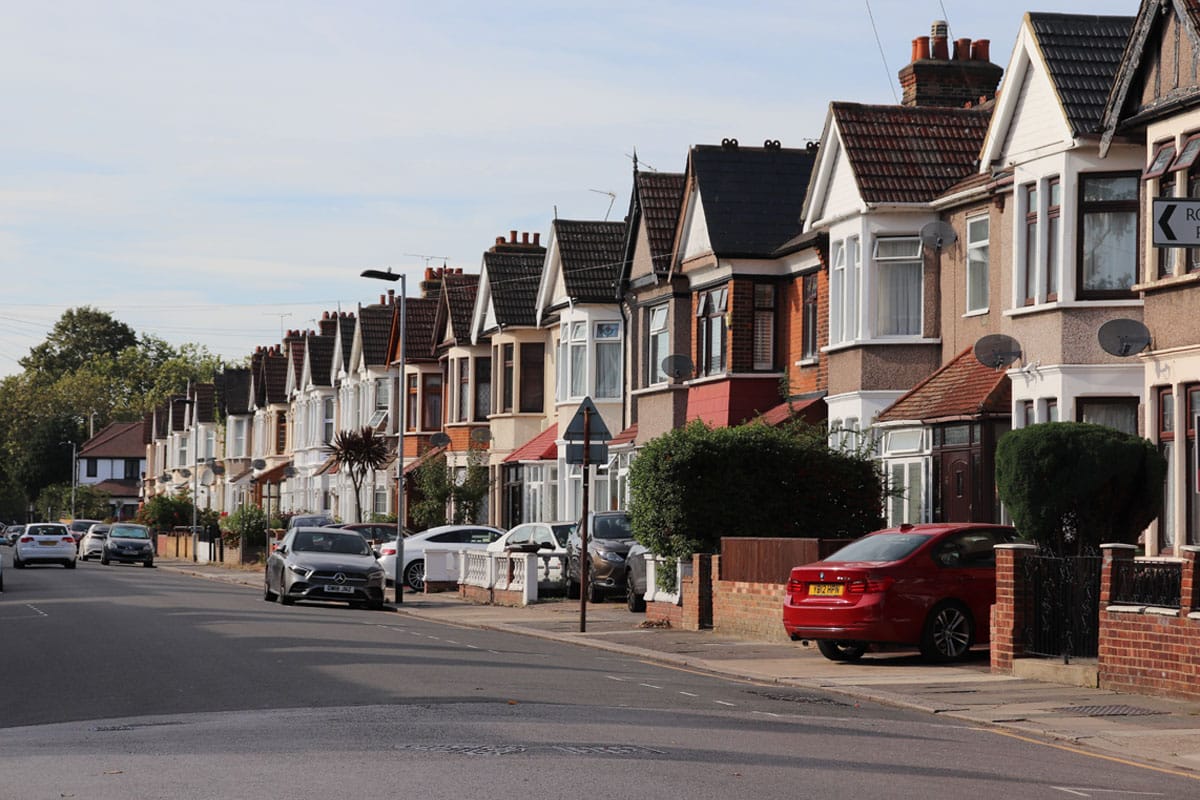
Semi-detached houses at £473,062 sit 64.2% above England's £288,185, the widest gap of any type in the borough. This is the heart of Barking and Dagenham's housing: interwar semis from the Becontree estate, originally built by the London County Council, draw both owner-occupiers and landlords. Annual growth of 1.2% shows the family-home market holding firm.
Terraced houses at £394,533 are 61.8% above England's £243,788. The terraced stock runs through the older Barking streets and the Becontree estate, the kind of single-let property that clears a lender's rental stress test. Annual growth of 0.3% is close to flat, the slowest of the borough's house types.
Flats and maisonettes at £240,409 carry the smallest premium at just 12.0% over England's £214,563, making the borough's flat stock some of the most competitively priced in London against the national benchmark. For an investor targeting the rental market, that is the way in. The annual reading of -4.3% is the only property type going backwards over the year, reflecting the wave of new-build apartments at Barking Riverside and in the town centre.
Price Per Square Foot in Barking & Dagenham
Just £58 per square foot separates the borough's cheapest postcode from its most expensive, with IG11 at £432 and RM12 at £490. Price per square foot strips out the effect of property size and gives a cleaner read on location value. The range is unusually tight for a London borough, which means the underlying land and build values are broadly uniform across all eight postcodes.
| Rank | Area | Price Per Sq Ft |
|---|---|---|
| 1 | IG11 (Barking, Creekmouth) | £432 |
| 2 | RM13 (Rainham) | £450 |
| 3 | RM10 (Dagenham East, Becontree) | £452 |
| 4 | RM7 (Rush Green, Mawneys) | £454 |
| 5 | RM6 (Chadwell Heath, Marks Gate) | £459 |
| 6 | RM9 (Dagenham Heathway) | £460 |
| 7 | RM8 (Dagenham, Becontree Heath) | £461 |
| 8 | RM12 (Elm Park, Hornchurch) | £490 |
IG11 at £432 per square foot is the cheapest postcode for bricks-and-mortar value, covering Barking town centre, the new-build flats around Creekmouth, and the riverside development. Based on 492 transactions analysed, it sits £29 below RM8 at the top of the house-heavy end. RM12 at £490 leads the table, on 629 transactions, reflecting the larger family stock around Elm Park and Hornchurch where the postcode reaches into Havering.
For Sale Asking Prices in Barking & Dagenham
IG11 at £309,058 and RM12 at £489,315 sit £180,257 apart, a 58% gap across a single borough. That spread is wider than the sold-price picture and maps the borough from the riverside flats at the cheap end to the family houses on the Havering edge at the top. The mean asking price across all eight postcodes is £402,635.
| Rank | Area | Asking Price |
|---|---|---|
| 1 | IG11 (Barking, Creekmouth) | £309,058 |
| 2 | RM10 (Dagenham East, Becontree) | £367,168 |
| 3 | RM9 (Dagenham Heathway) | £384,180 |
| 4 | RM8 (Dagenham, Becontree Heath) | £384,551 |
| 5 | RM7 (Rush Green, Mawneys) | £413,151 |
| 6 | RM13 (Rainham) | £435,248 |
| 7 | RM6 (Chadwell Heath, Marks Gate) | £438,409 |
| 8 | RM12 (Elm Park, Hornchurch) | £489,315 |
IG11 at £309,058 is the only postcode where the asking price falls below the borough-wide Land Registry sold average of £360,679. That gap of around £51,000 reflects the heavier concentration of flats and new-build apartments around Barking town centre and Creekmouth, which pulls the average listing down. For an investor with a fixed budget, IG11 buys the most rentable square footage for the money and the lowest barrier to entry in the borough. Buyers looking to come in below the open market often work through off-market properties or BMV property.
RM12 at £489,315 stands apart at the top. This postcode straddles the Havering boundary and takes in Elm Park and parts of Hornchurch, so its higher asking price reflects a different, more suburban housing market than the rest of the borough. The yield data below shows what that premium does to the income return.
House Price Growth in Barking & Dagenham
Five-year growth across the borough's postcodes runs from 0.7% in IG11 to 19.8% in RM8 and RM9, a spread of 19 percentage points within one borough. Every postcode is positive over five years, but the pattern is telling: IG11 has the lowest asking price and the highest yield, yet the weakest capital growth at every time horizon. RM8 and RM9, both in the Dagenham heartland, lead on the five-year number.
| Area | 1 Year | 3 Years | 5 Years |
|---|---|---|---|
| RM8 (Dagenham, Becontree Heath) | 5.2% | 3.8% | 19.8% |
| RM9 (Dagenham Heathway) | 3.5% | -2.2% | 19.8% |
| RM7 (Rush Green, Mawneys) | 0.8% | 3.8% | 19.3% |
| RM13 (Rainham) | 2.7% | 7.4% | 15.7% |
| RM10 (Dagenham East, Becontree) | 0.4% | 0.4% | 15.1% |
| RM12 (Elm Park, Hornchurch) | 3.3% | 4.9% | 14.2% |
| RM6 (Chadwell Heath, Marks Gate) | 4.6% | 1.3% | 11.6% |
| IG11 (Barking, Creekmouth) | -5.8% | -1.9% | 0.7% |
IG11's -5.8% one-year reading is the weakest in the borough, and its 0.7% over five years means the area has effectively stood still on price while the rest of the borough climbed double digits. The likely reason is supply. Barking Riverside and the town centre have added a large volume of new-build flats to IG11. New-build flats are typically listed below the existing average, so as more of them come up for sale, IG11's average asking price has barely moved. A low price against the rent is also what gives IG11 the borough's top yield.
RM8 and RM9 both posted 19.8% over five years. RM9's three-year figure is negative at -2.2%, so most of that gain landed in the first two years of the window rather than recently. RM13 (Rainham) has the most even profile of the group, positive at one, three and five years (2.7%, 7.4%, 15.7%), with no negative reading anywhere in the table.
Monthly Property Sales in Barking & Dagenham
Monthly sales across the borough range from 15 to 33 transactions per postcode, and turnover, each month's sales as a share of the homes advertised for sale, runs from 6% to 17%. RM12 leads on raw volume at 33 sales a month, while RM8 leads on turnover at 17%, meaning its monthly sales clear a larger share of the homes on the market than anywhere else in the borough.
| Area | Sales Per Month | Turnover | Asking Price |
|---|---|---|---|
| RM12 (Elm Park, Hornchurch) | 33 | 16% | £489,315 |
| RM7 (Rush Green, Mawneys) | 23 | 14% | £413,151 |
| RM13 (Rainham) | 23 | 12% | £435,248 |
| IG11 (Barking, Creekmouth) | 21 | 6% | £309,058 |
| RM8 (Dagenham, Becontree Heath) | 21 | 17% | £384,551 |
| RM10 (Dagenham East, Becontree) | 19 | 13% | £367,168 |
| RM6 (Chadwell Heath, Marks Gate) | 15 | 12% | £438,409 |
| RM9 (Dagenham Heathway) | 15 | 16% | £384,180 |
RM8's 17% turnover is the highest in the borough, on 21 sales a month. A higher turnover means each month's sales take a bigger bite out of the homes advertised for sale, so a property listed there tends not to sit unsold for long. IG11 is the opposite case: 21 sales a month but just 6% turnover, the lowest in the borough, because those sales are a small share of a much larger pool of homes for sale. The riverside and town centre developments keep adding new-build flats to that pool as they complete.
How Long Properties Take to Sell in Barking & Dagenham
Selling speed splits the borough sharply: RM8 (Becontree Heath) clears fastest at about 169 days, while IG11 (Barking, Creekmouth) is by far the slowest at roughly 507 days. Days on market is the typical number of days a home is up for sale before it sells; the months of unsold stock shows how much for-sale supply is sitting there at the current rate of sales.
| Area | Avg Days to Sell | Months of Unsold Stock | Market |
|---|---|---|---|
| RM8 (Dagenham, Becontree Heath) | 169 | 5.6 | Seller's market |
| RM12 (Elm Park, Hornchurch) | 190 | 6.3 | Balanced market |
| RM9 (Dagenham Heathway) | 203 | 6.7 | Balanced market |
| RM7 (Rush Green, Mawneys) | 217 | 7.1 | Balanced market |
| RM10 (Dagenham East, Becontree) | 234 | 7.7 | Balanced market |
| RM13 (Rainham) | 234 | 7.7 | Balanced market |
| RM6 (Chadwell Heath, Marks Gate) | 254 | 8.3 | Balanced market |
| IG11 (Barking, Creekmouth) | 507 | 16.7 | Buyer's market |
Exit liquidity is the figure most yield tables leave out, and in Barking and Dagenham it cuts hard against the headline. IG11 carries the borough's top yield, but at roughly 507 days to sell and nearly 17 months of unsold stock it is also the hardest postcode to exit. The same new-build supply that holds its prices down leaves a lot of similar flats competing for the same buyers when you come to sell. RM8 at the other end clears in about 169 days, so a postcode that yields 6.0% also offers a far quicker way out. Yield and exit speed pull in opposite directions across this borough, and the gap is wide enough to matter.
What Type of Property Can You Buy in Barking & Dagenham?
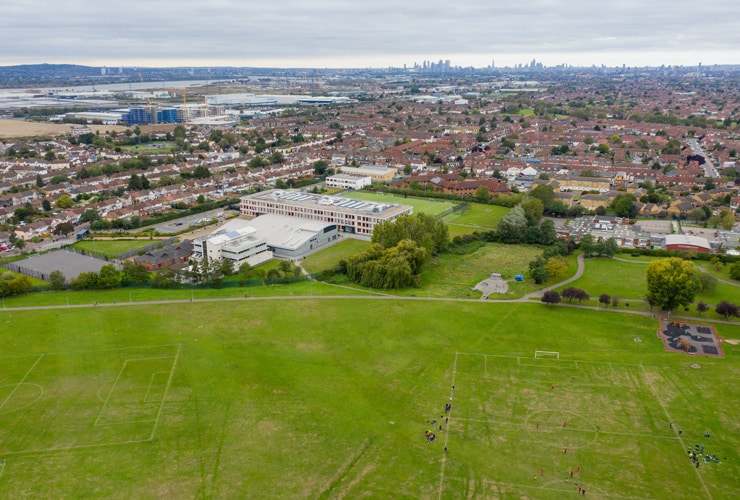
The borough splits in two: terraced houses dominate the Dagenham postcodes, reaching 51.5% of stock in RM9, while flats lead in IG11 at 42.0%. The mix of housing stock shapes which strategies fit each postcode. The shares quoted here and in the table are the housing-type breakdown a commercial property-data provider reports for each postcode, which it describes as Census-based. The Census release and the areas behind each figure are not specified in the data we hold, so read the percentages as the provider's reported figures rather than verified proportions of all the homes in the postcode.
| Area | Detached | Semi-detached | Terraced | Flats |
|---|---|---|---|---|
| IG11 (Barking, Creekmouth) | 4.5% | 16.7% | 36.5% | 42.0% |
| RM6 (Chadwell Heath, Marks Gate) | 9.8% | 28.9% | 22.5% | 38.8% |
| RM7 (Rush Green, Mawneys) | 6.7% | 31.1% | 28.6% | 33.6% |
| RM8 (Dagenham, Becontree Heath) | 5.6% | 23.9% | 47.2% | 23.2% |
| RM9 (Dagenham Heathway) | 7.1% | 27.2% | 51.5% | 14.2% |
| RM10 (Dagenham East, Becontree) | 5.8% | 30.4% | 39.3% | 24.5% |
| RM12 (Elm Park, Hornchurch) | 7.5% | 52.1% | 26.9% | 13.5% |
| RM13 (Rainham) | 11.1% | 37.4% | 33.1% | 16.5% |
IG11 holds the largest share of flats at 42.0% and almost no detached stock at 4.5%. That apartment-heavy mix is the smaller-unit stock that typically forms the buy-to-let market, and it lines up with IG11 carrying the lowest asking price and the highest yield in the borough. The flow of new-build flats from the riverside keeps adding to that share.
RM9 sits at the other end, with terraced houses making up 51.5% of stock and just 14.2% flats, the Becontree interwar estate showing through in the numbers. RM12 is the most semi-detached postcode at 52.1%, with the fewest flats at 13.5%, which matches its higher prices and its position reaching into the more suburban Havering edge. The cheaper, more rentable stock concentrates in IG11 and the inner Dagenham postcodes; the further out you go, the more the mix tilts towards owner-occupier family houses.
Flats combine purpose-built and converted units. A small share of mobile and temporary dwellings is not shown, so rows may not total 100%.
Barking & Dagenham Rental Market Analysis
Monthly rents in Barking and Dagenham run from £1,645 in RM12 to £1,928 in RM10, with gross rental yields from 4.0% to 6.8% across all eight postcodes. For investors asking whether buy-to-let is worth it in the borough, the sections below break down rents, yields, and tenant affordability postcode by postcode. If you are looking at starting a property business in east London, four of the eight postcodes combine asking prices under £400,000 with yields of 5% or more. Browse current buy-to-let property for sale across the region.
Average Rent & Gross Rental Yields in Barking & Dagenham
Gross rental yields in Barking and Dagenham range from 4.0% in RM12 to 6.8% in IG11. Six of the eight postcodes return yields of 5% or more, which is unusual for a London borough. IG11 reaches its 6.8% on the borough's lowest asking price of £309,058 and a £1,748 monthly rent, while RM12 sits at the bottom because its higher price is not matched by a higher rent.
| Area | Average Monthly Rent | Asking Price | Gross Yield |
|---|---|---|---|
| IG11 (Barking, Creekmouth) | £1,748 | £309,058 | 6.8% |
| RM10 (Dagenham East, Becontree) | £1,928 | £367,168 | 6.3% |
| RM8 (Dagenham, Becontree Heath) | £1,918 | £384,551 | 6.0% |
| RM9 (Dagenham Heathway) | £1,915 | £384,180 | 6.0% |
| RM6 (Chadwell Heath, Marks Gate) | £1,927 | £438,409 | 5.3% |
| RM7 (Rush Green, Mawneys) | £1,736 | £413,151 | 5.0% |
| RM13 (Rainham) | £1,776 | £435,248 | 4.9% |
| RM12 (Elm Park, Hornchurch) | £1,645 | £489,315 | 4.0% |
RM10 charges the borough's highest monthly rent at £1,928 and pairs it with a 6.3% yield on a sub-£370,000 asking price, one of the more balanced profiles in the dataset. RM8 and RM9 both return 6.0% on similar mid-£380,000 prices, with RM8 backed by the borough's highest sales turnover and RM9 by a slightly faster rental market. The four Dagenham postcodes cluster their rents tightly between £1,915 and £1,928, so the yield differences between them come down to price rather than rent.
RM12 at 4.0% is the clear outlier. Its asking price of £489,315 is the highest in the borough while its £1,645 rent is the lowest, so the income return is squeezed from both ends. The postcode straddles the Havering boundary, where the property mix runs to larger family homes that push prices up without lifting rents in step. Investors can read more about how to calculate rental yield for individual properties.
Is Barking & Dagenham Rent High?
Monthly rents in Barking and Dagenham consume between 50.3% and 59.0% of the local median gross monthly salary. The widely cited threshold for rent affordability is 30% of gross income, and every postcode here sits well above it. That is the cost of London rents landing on below-London wages, and it is the single most important piece of context for the yield figures above.
The median gross weekly salary in Barking and Dagenham is £754.10, which equates to £3,268 per month or £39,213 per year. This is below both the London regional median of £902.70 per week and the Great Britain median of £766.60 per week. Data from the Nomis Labour Market Profile (ASHE 2025).
| Rank | Area | Rent as % of Income |
|---|---|---|
| 1 | RM10 (Dagenham East, Becontree) | 59.0% |
| 2 | RM6 (Chadwell Heath, Marks Gate) | 59.0% |
| 3 | RM8 (Dagenham, Becontree Heath) | 58.7% |
| 4 | RM9 (Dagenham Heathway) | 58.6% |
| 5 | RM13 (Rainham) | 54.3% |
| 6 | IG11 (Barking, Creekmouth) | 53.5% |
| 7 | RM7 (Rush Green, Mawneys) | 53.1% |
| 8 | RM12 (Elm Park, Hornchurch) | 50.3% |
RM10 and RM6 top the table at 59.0%, where the borough's higher rents meet the same local salary base. RM12 at 50.3% is the most affordable, but that is a function of its lower rent rather than higher local pay, and it is still well above the 30% mark. In every postcode, the average rent takes more than half of the borough's median monthly salary. That sets a whole home's rent against one person's pay, so it doesn't show what renting households earn.
How Big Is Barking & Dagenham's Private Rented Sector?
The private rented sector is largest in RM6 at 35.2% of households and smallest in RM12 at 11.7%, with social renting heaviest across the inner Dagenham postcodes. The share of homes already rented privately is a guide to the size of the established tenant pool and the local lettings market. The table below shows household tenure by postcode from 2021 Census records.
| Area | Owned Outright | Owned with Mortgage | Private Rented | Social Rented |
|---|---|---|---|---|
| RM6 (Chadwell Heath, Marks Gate) | 20.3% | 30.5% | 35.2% | 13.6% |
| IG11 (Barking, Creekmouth) | 12.4% | 30.1% | 25.3% | 30.4% |
| RM10 (Dagenham East, Becontree) | 17.9% | 28.6% | 23.7% | 28.4% |
| RM8 (Dagenham, Becontree Heath) | 14.1% | 29.2% | 22.8% | 32.0% |
| RM7 (Rush Green, Mawneys) | 25.1% | 32.6% | 22.6% | 17.8% |
| RM9 (Dagenham Heathway) | 16.0% | 25.6% | 20.8% | 36.7% |
| RM13 (Rainham) | 33.0% | 32.4% | 20.6% | 12.1% |
| RM12 (Elm Park, Hornchurch) | 42.9% | 36.8% | 11.7% | 8.0% |
RM6 has the deepest private rented sector at 35.2%, with IG11 next at 25.3%, so the established tenant pool is largest at the Chadwell Heath end and around Barking town centre. A bigger rented sector points to an active local lettings market and a wider pool of existing tenants. The inner Dagenham postcodes carry the borough's heaviest social renting, with RM9 at 36.7% and RM8 at 32.0%, which leaves a smaller private rented share even where rental demand is otherwise strong.
RM12 is the outlier in the other direction: nearly 80% owner-occupied, just 11.7% private rented, and social renting at 8.0%, the lowest in the borough. That tenure profile matches its higher prices, its semi-detached-heavy stock, and its lowest yield in the borough. On the rental market itself, RM8 currently has the most homes advertised to let and the shortest time to let at around 12 days, while IG11 reads as more balanced between landlords and tenants. The other Dagenham postcodes also let quickly, which is the demand side that sits behind the borough's 5%-plus yields.
Local Housing Allowance Rates in Barking & Dagenham
All eight postcodes fall within the Outer North East London Broad Rental Market Area, where Local Housing Allowance runs from £126.54 a week for a shared room to £414.25 a week for a four-bedroom home. Local Housing Allowance sets the maximum housing support a tenant on benefits can receive, so any rent above that level is met from the tenant's own income. The rates below apply across the whole borough. To check the current rate for a specific address, you can use the government's official Local Housing Allowance calculator.
| Property Size | Weekly LHA Rate | Monthly Equivalent |
|---|---|---|
| Shared accommodation | £126.54 | £548 |
| 1 bedroom | £230.14 | £997 |
| 2 bedrooms | £287.67 | £1,247 |
| 3 bedrooms | £345.21 | £1,496 |
| 4 bedrooms | £414.25 | £1,795 |
The two-bedroom LHA rate of £287.67 a week works out at about £1,247 a month, against open-market rents of £1,645 to £1,928 across the borough's postcodes. A benefit-backed tenancy at the LHA rate therefore sits below the open-market figure, with the gap widest in the higher-rent Dagenham postcodes and narrowest where rents are lowest. The rates are identical in every Barking and Dagenham postcode because they are set across the whole Outer North East London market area, and they update each April.
Buy-to-Let Considerations
Are House Prices High in Barking & Dagenham? Price-to-Earnings Ratios
Purchasing a property in Barking and Dagenham requires between 7.9 and 12.5 times the median annual salary. This is based on the Nomis Labour Market Profile for Barking & Dagenham showing the median gross annual income for residents is £39,213.
The national benchmark for price-to-earnings is 7.3x (England's average sold price of £289,946 divided by the Great Britain median annual salary of £39,863). IG11 at 7.9x is the closest of the borough's eight postcodes to that benchmark, while the rest sit further above it, which is what living inside London costs even at its cheapest end.
| Rank | Area | Price-to-Earnings Ratio |
|---|---|---|
| 1 | IG11 (Barking, Creekmouth) | 7.9x |
| 2 | RM10 (Dagenham East, Becontree) | 9.4x |
| 3 | RM9 (Dagenham Heathway) | 9.8x |
| 4 | RM8 (Dagenham, Becontree Heath) | 9.8x |
| 5 | RM7 (Rush Green, Mawneys) | 10.5x |
| 6 | RM13 (Rainham) | 11.1x |
| 7 | RM6 (Chadwell Heath, Marks Gate) | 11.2x |
| 8 | RM12 (Elm Park, Hornchurch) | 12.5x |
IG11 at 7.9x is the most affordable entry point in the borough relative to local earnings, and the only postcode close to the national 7.3x benchmark. The jump from IG11 to RM10 at 9.4x is a gap of roughly a year and a half of local salary. RM12 at 12.5x sits at the top end, where the Havering-edge family stock pushes prices to more than twelve times the local median wage. Our stamp duty calculator works out the SDLT due on each of these prices.
Deposit Requirements in Barking & Dagenham
A 30% deposit on a buy-to-let property in Barking and Dagenham ranges from £92,717 in IG11 to £146,794 in RM12. The gap between the cheapest and most expensive deposit is £54,077. For investors comparing the borough with the rest of London, even the top deposit here sits below the entry point in most inner boroughs, and the cheapest is among the lowest the capital offers.
Beyond the deposit, the SDLT calculator and other buy to let costs affect the total capital required.
| Rank | Area | 30% Deposit Required |
|---|---|---|
| 1 | IG11 (Barking, Creekmouth) | £92,717 |
| 2 | RM10 (Dagenham East, Becontree) | £110,150 |
| 3 | RM9 (Dagenham Heathway) | £115,254 |
| 4 | RM8 (Dagenham, Becontree Heath) | £115,365 |
| 5 | RM7 (Rush Green, Mawneys) | £123,945 |
| 6 | RM13 (Rainham) | £130,574 |
| 7 | RM6 (Chadwell Heath, Marks Gate) | £131,523 |
| 8 | RM12 (Elm Park, Hornchurch) | £146,794 |
IG11 is the cheapest way into the borough at a £92,717 deposit, and it buys the highest yield at the same time. Stepping up to RM10 costs roughly £17,000 more and brings the borough's highest rent on a 6.3% yield. The three inner Dagenham postcodes (RM10, RM9, RM8) cluster within about £5,000 of each other on deposit. RM8 and RM9 have different growth records, though. RM8 is positive at one, three and five years, while RM9 has a negative three-year reading despite matching RM8 over five. Near-identical deposit, different recent trajectories. Investors weighing routes with lower upfront capital can read about buy to let with no deposit strategies.
What the Barking & Dagenham Data Tells Buy-to-Let Investors
In Barking and Dagenham the cheapest way in is also the highest-yielding postcode, but it comes with the weakest growth and the slowest exit. IG11 has the top yield at 6.8%, the lowest asking price for buying an investment property at £309,058, and the most affordable prices against local earnings at 7.9 times income. A 30% deposit there is £92,717, the lowest in the borough, for a home renting at £1,748 a month. The trade-off is in the same dataset: IG11's five-year growth is 0.7%, the lowest of any postcode, both its one-year and three-year readings are negative, and it takes around 507 days to sell, the longest in the borough. New-build flat supply from Barking Riverside is the thread running through all three.
RM8 and RM9 turn the relationship around. Both return 6.0% yields with 19.8% five-year growth, on mid-£380,000 prices and deposits within a few hundred pounds of each other. RM8 adds the borough's highest sales turnover at 17% and clears fastest at around 169 days, so it pairs a strong yield with the easiest exit. RM10 sits alongside them with the borough's highest rent (£1,928) on a 6.3% yield and a sub-£370,000 price.
At the top of the price range, RM12 and RM13 read differently. RM12 carries the borough's lowest yield at 4.0%, dragged down by a £489,315 price that its £1,645 rent does not match. Both postcodes straddle the Havering boundary, where the housing is more suburban. RM13 has the most even growth record in the borough, positive at one, three and five years. Buyers who want to come in below asking often look through off-market property channels.
Barking and Dagenham operates a selective licence for privately rented properties, so landlords should check the current scheme on the council's property licensing pages before letting, which adds an administrative cost.
How Barking & Dagenham Compares
Barking and Dagenham's mean asking price of £402,635 is the lowest of five east London locations compared here, while its top yield of 6.8% is the joint highest. The comparison below places the borough alongside four nearby locations, each with a different investor profile. The mean asking price and mean monthly rent are simple averages across all postcodes with data. Top gross yield is the single highest postcode yield in each location.
| Location | Mean Asking Price | Mean Monthly Rent | Mean Gross Yield | Top Yield (postcode) |
|---|---|---|---|---|
| Barking & Dagenham | £402,635 | £1,824 | 5.4% | 6.8% (IG11) |
| Newham | £437,735 | £2,189 | 6.0% | 6.8% (IG11) |
| Greenwich | £464,537 | £2,045 | 5.3% | 6.3% (SE28) |
| Havering | £519,544 | £1,727 | 4.0% | 6.1% (RM3) |
| Redbridge | £538,319 | £1,947 | 4.3% | 5.5% (E12, IG1) |
Barking and Dagenham is the cheapest location in this comparison at £402,635 mean asking price, and its 6.8% top yield matches Newham's at the head of the table. Newham reaches the same top yield but on a higher mean price of £437,735 and with substantially higher rents (£2,189 average), reflecting its proximity to Stratford and Canary Wharf. Greenwich at £464,537 sits higher again on price with a 6.3% top yield. Havering is the neighbouring borough to the east, and it shares three postcodes (RM7, RM12, RM13) with the Barking and Dagenham dataset. Its mean asking price is roughly £117,000 higher, but its mean rent is lower than Barking and Dagenham's. Its top yield is also a notch lower, at 6.1%. Redbridge to the north is the most expensive at £538,319 and reaches 5.5% at the top end. For a data-driven comparison across all London locations, see our areas of London with the highest rental yields guide, or the wider best buy-to-let areas guide for the UK. The same Land Registry series behind this page powers everything at Property Investments UK, from Barking out to 160-plus other areas.
Frequently Asked Questions
Is Barking and Dagenham a good place to live for buy-to-let tenants?
It works for renters mainly because of the transport, and that is what keeps the tenant demand steady. Barking station alone runs the District line, the Hammersmith & City line, the London Overground Suffragette line and c2c trains into Fenchurch Street. That gives four ways into central London from one interchange, at the eastern edge of the capital.
The honest caveat is affordability. Local wages here are below the London average, around £754 a week, while rents run at London levels. Across the borough, a single earner on the local median salary would need more than half of their monthly pay to cover the average rent.
What are the best areas in Barking and Dagenham for property investment?
IG11 (Barking, Creekmouth) has the borough's top yield at 6.8% and its cheapest asking price at £309,058. It also has the weakest growth and the most months of unsold stock. RM8 and RM9 in the Dagenham heartland both pair a 6.0% yield with 19.8% five-year growth, and RM8 has the fewest months of unsold stock.
At the top end, RM12 (Elm Park, Hornchurch) is the most expensive at £489,315 and the lowest-yielding at 4.0%, while RM13 (Rainham) has the most even growth record across one, three and five years. So if income matters most, IG11 leads on yield and price; if you want yield and growth that have both shown up, the inner Dagenham postcodes are where the data points.
How does Barking and Dagenham compare to Newham for buy-to-let?
They reach the same top yield, but Barking and Dagenham is cheaper to get into. Both top out at 6.8%, while the mean asking price is £402,635 here against Newham's £437,735, a gap of around £35,000. Newham's rents are higher, averaging £2,189 a month against Barking and Dagenham's £1,824, which reflects its proximity to Stratford and Canary Wharf.
The cheapest entry point in Barking and Dagenham is a £92,717 deposit on IG11. For the equivalent figure in Newham, the per-postcode data in our Newham guide is the place to look. Historically, Newham has carried the higher rents and Barking and Dagenham the lower entry cost, so which one fits comes down to whether you are buying for rent level or for the lowest way in.
What is happening with Barking Riverside?
Barking Riverside is the borough's biggest scheme, built on the former Barking Power Station site along the Thames, a brownfield plot where the station closed back in 1981. The site runs to 443 acres and is a partnership between the Greater London Authority and the housing association L&Q. The original planning consent was for 10,800 homes, and a 2026 revision raised that to a planned ceiling of around 20,000, roughly double. The site has had its own London Overground station, on the Suffragette line, since July 2022.
The development sits within IG11, the postcode that currently records the borough's top yield at 6.8% and an asking price of £309,058. As more of the scheme completes, the balance of stock in IG11 keeps shifting towards new-build flats, which is the factor behind that postcode rising just 0.7% over five years and its long selling times.
What are the risks of buying property in Barking and Dagenham?
The clearest one is in IG11. It is the highest-yielding postcode, but its capital growth has gone backwards, down 5.8% over a year and 1.9% over three. It is also slow to sell, at around 507 days, on the borough's lowest turnover of 6%. New-build flat supply is adding to the for-sale pile, so an exit there can take time. Across the borough, the local median salary of £39,213 sits below the Great Britain median, and the employment rate of 67.6% is below the national figure.
Rent-to-income ratios run from 50.3% to 59.0%, so tenants are stretched, which is worth weighing for arrears and void risk. The borough also operates a landlord licensing scheme for private rentals, which adds a licensing cost. And because RM12 and RM13 straddle the Havering boundary, the figures for those two postcodes include homes that sit just over the line.
Are there new builds in Dagenham?
Yes. Beam Park, between Dagenham and Rainham, is delivering more than 3,900 homes, with first residents already in since December 2020. A new c2c railway station at Beam Park is central to the scheme. In March 2026 the Department for Transport authorised passenger services there, subject to final funding. A local planning condition holds the later phases until the station is built.
Further south, Eastbrook Studios completed in July 2025, London's largest film and TV production facility at 567,000 square feet across 21.5 acres and 12 sound stages. Combined with Barking Riverside in IG11, the volume of new-build completions is one reason the riverside postcodes show flat capital growth, since new-build flats typically list below the average for existing stock.
What are average house prices in Barking and Dagenham?
The average sold price across the borough is £360,679 on the Land Registry index, about 24.4% above the England average of £289,946 but 33.5% below the London average as of March 2026. Asking prices by postcode run from £309,058 in IG11 (Barking, Creekmouth) up to £489,315 in RM12 (Elm Park, Hornchurch), with a borough-wide mean of £402,635. By type, detached homes average £641,314, semi-detached £473,062, terraced £394,533 and flats £240,409.
Through a buy-to-let lens, IG11 is the cheapest entry and the highest-yielding at 6.8%, while RM12 is the dearest and lowest-yielding at 4.0%.
What are the Local Housing Allowance rates in Barking and Dagenham?
All eight postcodes fall in the Outer North East London Broad Rental Market Area, so they share one set of rates. As of June 2026, Local Housing Allowance runs at £126.54 a week for a shared room, £230.14 for a one-bed, £287.67 for two beds, £345.21 for three and £414.25 for four. That figure is the most a tenant on housing support can claim towards rent, so it is one read on the paying power of the benefit-supported end of the market. You can check the current rate for any address with the official Local Housing Allowance calculator.
What type of property is most common in Barking and Dagenham?
Terraced houses are the most common type in the Dagenham postcodes, peaking at 51.5% of stock in RM9, the legacy of the interwar Becontree estate. Flats lead in IG11 around Barking town centre at 42.0%, with almost no detached housing, and the flat share keeps rising as the riverside flats complete.
The smaller homes that usually suit buy-to-let, terraces and flats, are most concentrated in IG11 and the inner Dagenham postcodes. RM12 at the Havering edge is the most semi-detached at 52.1%, with the fewest flats, which is the owner-occupier family end of the borough.
How do I buy an investment property in Barking and Dagenham?
Start by deciding whether you are buying for income or for a mix of income and growth, because that points you at a different postcode. IG11 (Barking, Creekmouth) is the cheapest entry at £309,058 and the highest-yielding at 6.8%, though its growth has been flat and its exit slow. RM8 and RM9 pair a 6.0% yield with 19.8% five-year growth. Budget for a 30% deposit, which runs from £92,717 in IG11 to £146,794 in RM12.
Beyond what is listed openly, plenty of experienced investors buy below asking through off market properties and BMV properties. To see what is available now, browse investment properties or buy-to-let homes for sale.
Ready to buy property?
Browse investment properties with prices and gross yields shown for each opportunity.
See the latest deals