
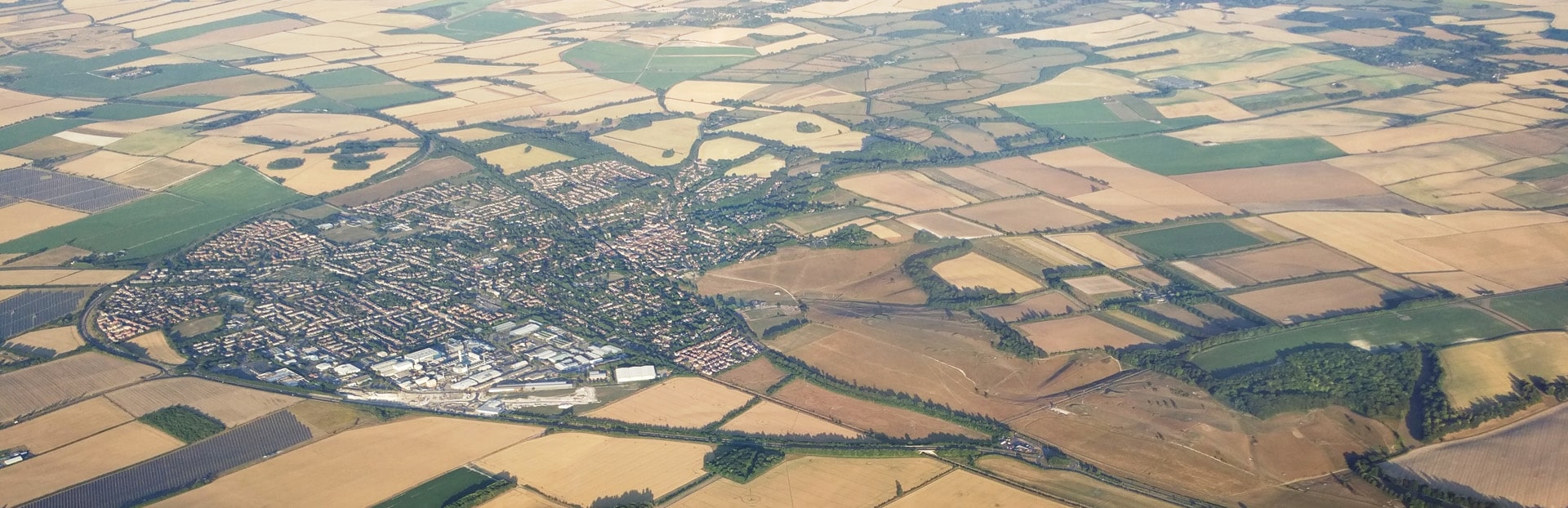
Luton is a town in Bedfordshire, in the East of England. Average sold prices in Luton sit at £278,032 on the HM Land Registry House Price Index, 17.5% below the East of England regional average of £337,182 and 4.1% under England's £289,946. That gap is the whole Luton case in one line: a Bedfordshire town with fast trains into London, priced well under the region it sits in. The local authority's population grew 10.86% between the 2011 and 2021 censuses, from 203,201 to 225,262 residents, one of the faster growth rates in the East of England.
What sets Luton apart from most discount markets is where the discount falls. The town runs below England on the all-property average, but its semi-detached houses sell 11.7% above the England figure and its terraces 6.5% above. The cheaper headline is carried by flats, which sit 27.3% under England. For an investor that matters: the family-house stock that does most letting in Luton holds its value, while the entry points sit in the apartment and lower-priced terrace market. Across the six postcodes, LU1 is the cheapest way in at a £278,463 asking price and LU3 the highest-yielding at 5.1%.
This guide covers the unitary authority of Luton (ONS code E06000032) across postcodes LU1, LU2, LU3, LU4, and LU5, plus AL5, which reaches north into Harpenden and behaves like a separate market. Luton sits in the East of England, 30 miles north of central London with trains to St Pancras in around 25 minutes. The wider Bedfordshire buy-to-let area also takes in Bedford and Dunstable to the west.
Article updated: July 2026
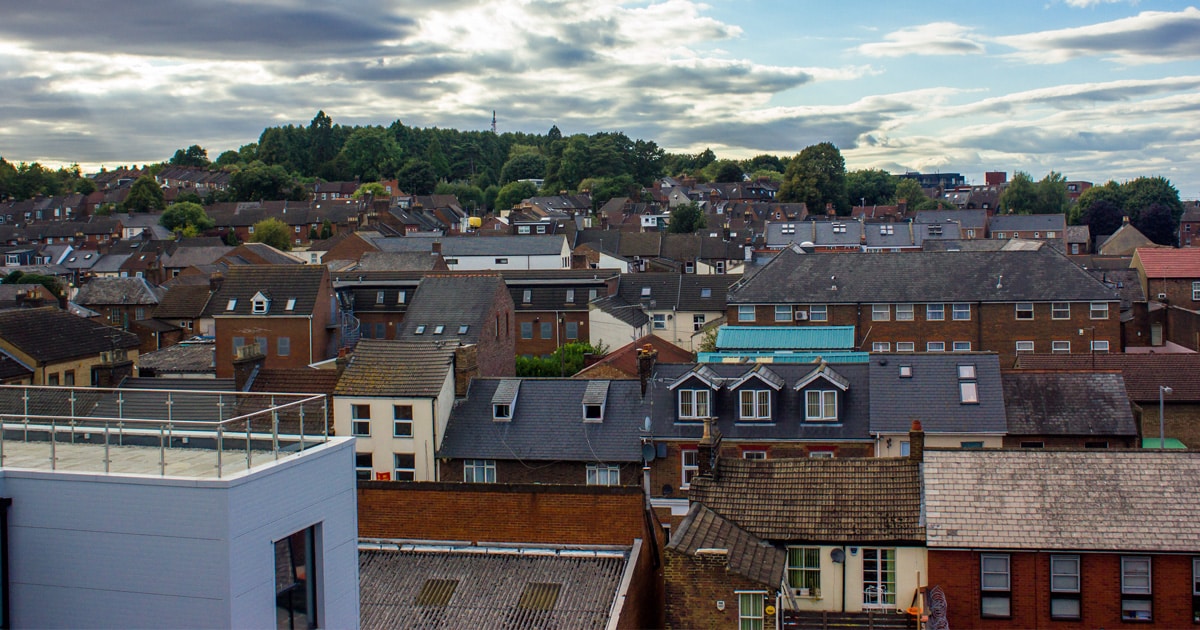
Why Invest in Luton?
Luton's population grew 10.86% between the 2011 and 2021 censuses, from 203,201 to 225,262 residents, running well ahead of the 6.3% England and Wales average. That is a town adding people faster than the country, driven by its position on the Midland Main Line and the jobs clustered around its airport. Luton's pull is practical rather than picturesque: cheaper housing than almost anywhere else within commuting distance of central London, and a journey into St Pancras that can take as little as 25 minutes.
The economy leans on three anchors. London Luton Airport handled 16.7 million passengers in 2024 and is a major direct employer for the town. The University of Bedfordshire runs its main campus in central Luton, adding a student population that feeds the lower end of the rental market. And the town's location on the M1 and the main rail line keeps logistics, distribution and commuter employment steady. The result is a tenant base that is broad rather than dependent on any single sector.
Where Luton differs from its richer Hertfordshire and Bedfordshire neighbours is income. The median gross weekly salary in Luton is £709.00, which is 11.9% below the East of England figure of £804.90 and 7.5% under the Great Britain median of £766.60. The employment rate of 69.4% also trails the national 75.6%. Lower wages cap how far open-market rents can stretch, which is part of why Luton's yields hold up: rents are anchored to local affordability while purchase prices are held down by the same wage ceiling, so the income return stays competitive.
Luton Economic Summary
- Population (Luton): 225,262 (2021 Census). Growth of 10.86% from 2011.
- Median annual salary: £34,732 (local), £39,125 (Great Britain)
- Median weekly salary: £709.00 (local), £804.90 (East of England), £766.60 (Great Britain)
- Employment rate: 69.4% (local), 75.6% (Great Britain)
- Unemployment rate: 6.2% (local)
- Key employment sectors: Transport and storage, wholesale and retail, health and social work, education, administrative services
Source: ONS Census 2021, Nomis Labour Market Profile (ASHE 2025, Employment Oct 2024-Sep 2025)
Regeneration and Investment in Luton
The largest single project reshaping central Luton is the 25,000-seat Power Court stadium for Luton Town Football Club, approved by the council in January 2025 with construction under way since summer 2025. The town's regeneration is concentrated in and around the centre, tied to the airport, the rail link and the football club's move from its long-standing Kenilworth Road ground.
- Power Court Stadium (Under construction, 25,000 capacity): Luton Borough Council approved plans in January 2025 for a 25,000-seat stadium on the Power Court site in central Luton, with contractor Limak International appointed and construction starting in summer 2025. The scheme is targeted to host its first competitive fixture for the 2028-29 season and forms the centrepiece of the council's wider town-centre regeneration. Updates at Luton Town Football Club.
- London Luton Airport expansion (Consented): The airport handled 16.7 million passengers in 2024, and a planned second terminal would lift capacity towards 32 million passengers a year by 2039. The airport is one of the town's largest direct employers, and expansion supports the logistics, hospitality and commuter employment that underpins local rental demand. Updates at London Luton Airport.
- Luton DART (Completed, 2023): The Luton DART automated people-mover opened in 2023, connecting Luton Airport Parkway railway station to the airport terminal in under four minutes. It tightened the link between the Midland Main Line and the airport, improving the town's pull for commuter-and-airport tenants who want both the London trains and the airport jobs on their doorstep. Updates at Luton Council.
Source: Office for National Statistics - Population for Luton

Luton Property Market Analysis
Average property prices in Luton have risen 522.4% since January 1995, from £44,668 to £278,032. The sections below trace that path cycle by cycle, then drill into current postcode-level data for sold prices, price per square foot, asking prices, growth trends, and monthly transaction volumes.
When was the last house price crash in Luton?
Luton is its own unitary authority, so every sold price from HM Land Registry is recorded at town level rather than borrowed from a wider county figure. The index runs from January 1995 to March 2026, covering 31 years of market cycles, and Luton's swings have been sharper than the national average in both directions, the mark of an outer-commuter town that amplifies London's moves.
The 1995 to 2007 boom: Luton started at £44,668 in January 1995. By December 2000 it had reached £76,953, and the early-2000s surge carried it to £145,834 by December 2005. The market peaked at £170,676 in October 2007, nearly four times its 1995 level in just over a decade.
2008 to 2009, the financial crisis: Prices fell from the October 2007 peak of £170,676 to a trough of £131,457 in May 2009, a decline of 23.0% over nineteen months. The worst year-on-year reading was -20.9% in May 2009. That was a steeper fall than England's national correction of around 18%, and it reflects Luton's exposure: a lower-wage town with a high share of stretched borrowers takes the brunt of a credit squeeze harder than the wealthier markets around it.
The 2010 to 2013 stagnation: Prices bounced off the trough but then drifted. The average sat at £148,198 in December 2010 and was still only £150,083 by December 2012, three years of treading water with London not yet pulling the commuter belt back up.
Recovery, 2014 to 2016: The London ripple reached Luton. Prices passed the October 2007 pre-crash peak of £170,676 in October 2014, at £171,989, a recovery that took seven years. From there the climb was rapid, reaching £229,403 by December 2016 as buyers priced out of north London moved up the line.
2017 to 2019, the commuter-belt cooling: Luton ran ahead of itself and then paused. Prices reached £245,865 in December 2017, then slipped to £244,733 by December 2018 and £235,575 by December 2019, as stamp duty changes and Brexit-era caution took the heat out of the outer London commuter markets.
2020 to 2022, the pandemic surge: The stamp duty holiday and the race for space restarted growth. Prices rose from £244,344 in December 2020 to £269,521 by December 2021, and reached an all-time high of £290,448 in October 2022.
2023 to present: Higher mortgage rates cooled the market from its 2022 peak. Prices eased to £274,654 by December 2023, recovered to £280,027 by December 2024 and £287,401 by December 2025, before the latest reading of £278,032 in March 2026. The current price is 4.3% below the October 2022 all-time high and 62.9% above the October 2007 pre-crash peak.
Long-term growth summary:
- 5 years (March 2021 to March 2026): 13.2% growth (£245,561 to £278,032)
- 10 years (March 2016 to March 2026): 29.6% growth (£214,536 to £278,032)
- 15 years (March 2011 to March 2026): 95.7% growth (£142,104 to £278,032)
- 20 years (March 2006 to March 2026): 91.4% growth (£145,235 to £278,032)
- 30 years (January 1995 to March 2026): 522.4% growth (£44,668 to £278,032)
Luton's 23.0% crash was deeper than the national average, and its recovery to the pre-crash peak took seven years. But the 30-year return of 522.4% is among the stronger figures in the region, the reward for a market that falls hard but climbs hard once London demand turns back towards it. An investor who bought at the exact peak in October 2007 would now be sitting on a 62.9% gain on the Land Registry average.
- All property types
- Detached
- Semi-detached
- Terraced
- Flats
Source: HM Land Registry House Price Index
| Year | All property types | Detached | Semi-detached | Terraced | Flats |
|---|---|---|---|---|---|
| 1995-01 | £44,668 | £76,439 | £49,135 | £39,491 | £32,146 |
| 1995-02 | £44,107 | £74,674 | £48,658 | £39,009 | £31,717 |
| 1995-03 | £43,827 | £73,987 | £48,360 | £38,816 | £31,439 |
| 1995-04 | £43,551 | £73,169 | £48,079 | £38,594 | £31,275 |
| 1995-05 | £43,542 | £72,973 | £48,074 | £38,566 | £31,385 |
| 1995-06 | £43,701 | £73,235 | £48,274 | £38,614 | £31,685 |
| 1995-07 | £43,746 | £73,509 | £48,340 | £38,652 | £31,606 |
| 1995-08 | £43,716 | £74,125 | £48,273 | £38,640 | £31,343 |
| 1995-09 | £43,933 | £74,673 | £48,501 | £38,886 | £31,312 |
| 1995-10 | £43,665 | £74,251 | £48,326 | £38,514 | £31,179 |
| 1995-11 | £43,724 | £74,263 | £48,474 | £38,475 | £31,309 |
| 1995-12 | £43,332 | £73,450 | £48,146 | £38,070 | £30,998 |
| 1996-01 | £42,893 | £72,949 | £47,635 | £37,739 | £30,501 |
| 1996-02 | £43,192 | £73,436 | £48,011 | £38,015 | £30,599 |
| 1996-03 | £41,908 | £71,589 | £46,671 | £36,854 | £29,459 |
| 1996-04 | £41,706 | £70,976 | £46,406 | £36,737 | £29,334 |
| 1996-05 | £41,452 | £70,445 | £46,028 | £36,642 | £29,024 |
| 1996-06 | £42,731 | £72,489 | £47,295 | £37,803 | £30,197 |
| 1996-07 | £43,200 | £73,564 | £47,835 | £38,188 | £30,460 |
| 1996-08 | £43,216 | £74,030 | £47,847 | £38,144 | £30,474 |
| 1996-09 | £43,354 | £74,708 | £47,983 | £38,293 | £30,357 |
| 1996-10 | £43,754 | £75,541 | £48,475 | £38,613 | £30,577 |
| 1996-11 | £43,484 | £74,902 | £48,189 | £38,378 | £30,417 |
| 1996-12 | £43,241 | £74,195 | £48,011 | £38,153 | £30,202 |
| 1997-01 | £43,025 | £73,855 | £47,751 | £38,011 | £29,945 |
| 1997-02 | £43,795 | £75,439 | £48,659 | £38,625 | £30,436 |
| 1997-03 | £44,449 | £76,685 | £49,318 | £39,228 | £30,909 |
| 1997-04 | £45,647 | £78,412 | £50,661 | £40,288 | £31,836 |
| 1997-05 | £46,784 | £80,086 | £51,951 | £41,362 | £32,509 |
| 1997-06 | £48,042 | £82,440 | £53,425 | £42,464 | £33,184 |
| 1997-07 | £48,422 | £83,390 | £53,879 | £42,830 | £33,203 |
| 1997-08 | £48,472 | £83,866 | £53,948 | £42,852 | £33,120 |
| 1997-09 | £48,587 | £84,088 | £54,089 | £42,945 | £33,187 |
| 1997-10 | £49,246 | £85,400 | £54,869 | £43,467 | £33,625 |
| 1997-11 | £49,662 | £86,173 | £55,409 | £43,801 | £33,820 |
| 1997-12 | £50,058 | £86,887 | £55,967 | £44,095 | £33,983 |
| 1998-01 | £49,874 | £86,820 | £55,687 | £43,969 | £33,829 |
| 1998-02 | £49,862 | £86,601 | £55,602 | £43,944 | £34,024 |
| 1998-03 | £50,085 | £86,976 | £55,773 | £44,159 | £34,246 |
| 1998-04 | £50,365 | £87,119 | £56,176 | £44,390 | £34,393 |
| 1998-05 | £50,905 | £88,027 | £56,769 | £44,954 | £34,584 |
| 1998-06 | £51,372 | £88,930 | £57,240 | £45,389 | £34,925 |
| 1998-07 | £52,386 | £90,924 | £58,340 | £46,279 | £35,620 |
| 1998-08 | £53,196 | £92,791 | £59,197 | £46,948 | £36,229 |
| 1998-09 | £53,524 | £93,694 | £59,584 | £47,229 | £36,331 |
| 1998-10 | £53,143 | £93,198 | £59,179 | £46,826 | £36,126 |
| 1998-11 | £52,876 | £92,872 | £59,060 | £46,431 | £35,905 |
| 1998-12 | £53,722 | £93,932 | £60,092 | £47,087 | £36,621 |
| 1999-01 | £54,897 | £95,807 | £61,433 | £48,093 | £37,480 |
| 1999-02 | £56,459 | £98,190 | £63,093 | £49,523 | £38,689 |
| 1999-03 | £56,443 | £98,316 | £63,020 | £49,518 | £38,724 |
| 1999-04 | £56,805 | £98,536 | £63,353 | £49,991 | £38,879 |
| 1999-05 | £56,493 | £97,736 | £62,971 | £49,815 | £38,583 |
| 1999-06 | £57,153 | £98,778 | £63,655 | £50,500 | £38,928 |
| 1999-07 | £57,916 | £100,552 | £64,467 | £51,180 | £39,359 |
| 1999-08 | £58,908 | £102,623 | £65,519 | £52,110 | £39,901 |
| 1999-09 | £60,377 | £105,609 | £67,067 | £53,372 | £41,009 |
| 1999-10 | £61,427 | £107,628 | £68,342 | £54,120 | £41,873 |
| 1999-11 | £62,564 | £109,590 | £69,668 | £55,024 | £42,762 |
| 1999-12 | £63,653 | £110,942 | £70,891 | £55,987 | £43,658 |
| 2000-01 | £64,902 | £113,369 | £72,334 | £57,069 | £44,374 |
| 2000-02 | £65,317 | £114,316 | £72,793 | £57,417 | £44,587 |
| 2000-03 | £66,632 | £116,969 | £74,409 | £58,543 | £45,123 |
| 2000-04 | £67,493 | £117,907 | £75,238 | £59,364 | £45,907 |
| 2000-05 | £70,226 | £122,437 | £78,307 | £61,756 | £47,814 |
| 2000-06 | £72,067 | £125,386 | £80,327 | £63,289 | £49,339 |
| 2000-07 | £73,586 | £128,915 | £82,179 | £64,504 | £50,174 |
| 2000-08 | £74,259 | £130,630 | £83,002 | £64,884 | £50,802 |
| 2000-09 | £74,036 | £131,310 | £82,719 | £64,568 | £50,685 |
| 2000-10 | £75,026 | £133,062 | £83,978 | £65,282 | £51,427 |
| 2000-11 | £75,397 | £133,980 | £84,422 | £65,561 | £51,662 |
| 2000-12 | £76,953 | £136,094 | £86,283 | £66,860 | £52,811 |
| 2001-01 | £77,059 | £135,993 | £86,197 | £67,072 | £53,018 |
| 2001-02 | £77,645 | £136,444 | £86,838 | £67,702 | £53,346 |
| 2001-03 | £76,958 | £135,354 | £86,103 | £67,184 | £52,638 |
| 2001-04 | £78,327 | £137,699 | £87,580 | £68,482 | £53,492 |
| 2001-05 | £80,092 | £140,456 | £89,433 | £70,066 | £54,904 |
| 2001-06 | £81,405 | £142,269 | £90,706 | £71,209 | £56,253 |
| 2001-07 | £82,496 | £144,192 | £91,899 | £72,041 | £57,265 |
| 2001-08 | £82,517 | £144,824 | £91,816 | £72,020 | £57,377 |
| 2001-09 | £84,067 | £148,240 | £93,422 | £73,368 | £58,483 |
| 2001-10 | £84,696 | £149,213 | £94,204 | £73,830 | £58,981 |
| 2001-11 | £86,284 | £151,835 | £96,145 | £75,087 | £60,082 |
| 2001-12 | £87,489 | £153,079 | £97,586 | £75,977 | £61,286 |
| 2002-01 | £88,004 | £153,972 | £98,084 | £76,306 | £61,998 |
| 2002-02 | £88,445 | £154,458 | £98,394 | £76,784 | £62,504 |
| 2002-03 | £88,875 | £155,061 | £98,909 | £77,243 | £62,615 |
| 2002-04 | £90,864 | £157,706 | £100,957 | £79,074 | £64,313 |
| 2002-05 | £92,236 | £159,443 | £102,563 | £80,179 | £65,489 |
| 2002-06 | £95,928 | £165,614 | £106,326 | £83,481 | £68,570 |
| 2002-07 | £98,733 | £170,828 | £109,354 | £85,937 | £70,587 |
| 2002-08 | £102,866 | £178,107 | £113,816 | £89,552 | £73,667 |
| 2002-09 | £106,061 | £184,231 | £117,619 | £92,179 | £75,640 |
| 2002-10 | £109,925 | £190,884 | £122,279 | £95,354 | £78,131 |
| 2002-11 | £113,675 | £197,938 | £126,432 | £98,529 | £80,835 |
| 2002-12 | £115,827 | £200,743 | £128,951 | £100,283 | £82,615 |
| 2003-01 | £118,027 | £204,369 | £130,965 | £102,409 | £84,543 |
| 2003-02 | £118,933 | £204,767 | £132,109 | £103,136 | £85,380 |
| 2003-03 | £121,447 | £209,238 | £134,635 | £105,491 | £87,263 |
| 2003-04 | £122,950 | £210,816 | £136,559 | £106,652 | £88,452 |
| 2003-05 | £125,597 | £215,163 | £139,454 | £109,056 | £90,276 |
| 2003-06 | £126,768 | £215,963 | £140,736 | £110,028 | £91,563 |
| 2003-07 | £128,233 | £217,630 | £142,324 | £111,474 | £92,573 |
| 2003-08 | £129,176 | £218,360 | £143,273 | £112,404 | £93,443 |
| 2003-09 | £128,967 | £218,061 | £143,092 | £112,451 | £92,745 |
| 2003-10 | £128,541 | £217,070 | £142,487 | £112,184 | £92,535 |
| 2003-11 | £128,621 | £216,901 | £142,663 | £112,325 | £92,390 |
| 2003-12 | £129,691 | £216,632 | £143,691 | £113,433 | £93,668 |
| 2004-01 | £130,476 | £217,722 | £144,495 | £114,179 | £94,296 |
| 2004-02 | £132,054 | £219,193 | £146,072 | £115,817 | £95,522 |
| 2004-03 | £133,411 | £221,778 | £147,320 | £117,184 | £96,471 |
| 2004-04 | £136,211 | £223,806 | £150,238 | £120,081 | £98,597 |
| 2004-05 | £137,141 | £223,156 | £150,828 | £121,317 | £99,765 |
| 2004-06 | £138,649 | £223,565 | £152,373 | £122,747 | £101,371 |
| 2004-07 | £140,265 | £225,792 | £154,283 | £124,244 | £102,289 |
| 2004-08 | £142,853 | £230,295 | £157,247 | £126,494 | £103,969 |
| 2004-09 | £144,689 | £234,008 | £159,422 | £128,275 | £104,570 |
| 2004-10 | £145,567 | £235,563 | £160,148 | £129,078 | £105,539 |
| 2004-11 | £143,777 | £232,306 | £158,045 | £127,511 | £104,524 |
| 2004-12 | £143,453 | £230,416 | £157,344 | £127,371 | £104,945 |
| 2005-01 | £143,630 | £230,464 | £157,173 | £127,687 | £105,474 |
| 2005-02 | £144,576 | £231,349 | £158,224 | £128,548 | £106,274 |
| 2005-03 | £145,492 | £232,955 | £159,388 | £129,449 | £106,520 |
| 2005-04 | £144,353 | £229,763 | £158,409 | £128,735 | £105,105 |
| 2005-05 | £145,392 | £231,469 | £159,271 | £129,890 | £105,917 |
| 2005-06 | £144,863 | £229,112 | £158,378 | £129,795 | £105,767 |
| 2005-07 | £146,540 | £231,818 | £160,084 | £131,247 | £107,256 |
| 2005-08 | £147,266 | £232,983 | £160,825 | £132,070 | £107,587 |
| 2005-09 | £148,228 | £235,291 | £161,967 | £132,975 | £107,894 |
| 2005-10 | £147,040 | £233,414 | £160,488 | £132,144 | £106,938 |
| 2005-11 | £146,003 | £231,286 | £159,465 | £131,385 | £105,850 |
| 2005-12 | £145,834 | £229,898 | £158,973 | £131,269 | £106,414 |
| 2006-01 | £145,552 | £229,325 | £158,529 | £131,136 | £106,257 |
| 2006-02 | £145,706 | £228,739 | £158,467 | £131,368 | £106,790 |
| 2006-03 | £145,235 | £228,828 | £158,220 | £131,044 | £105,693 |
| 2006-04 | £147,257 | £231,206 | £160,511 | £132,943 | £107,142 |
| 2006-05 | £148,807 | £233,538 | £162,272 | £134,308 | £108,243 |
| 2006-06 | £149,205 | £232,990 | £162,663 | £134,795 | £108,727 |
| 2006-07 | £150,529 | £235,091 | £163,976 | £136,201 | £109,563 |
| 2006-08 | £151,612 | £237,152 | £165,083 | £137,534 | £109,832 |
| 2006-09 | £154,299 | £242,200 | £167,949 | £139,839 | £111,832 |
| 2006-10 | £155,616 | £244,575 | £169,412 | £140,960 | £112,769 |
| 2006-11 | £156,493 | £246,025 | £170,554 | £141,676 | £113,222 |
| 2006-12 | £156,763 | £245,378 | £170,810 | £142,193 | £113,365 |
| 2007-01 | £156,878 | £245,507 | £170,966 | £142,407 | £113,255 |
| 2007-02 | £158,362 | £247,321 | £172,333 | £143,484 | £114,988 |
| 2007-03 | £159,445 | £249,527 | £173,444 | £144,600 | £115,509 |
| 2007-04 | £162,259 | £253,216 | £176,335 | £147,426 | £117,606 |
| 2007-05 | £163,821 | £254,824 | £177,896 | £149,316 | £118,581 |
| 2007-06 | £164,883 | £256,109 | £178,909 | £150,348 | £119,514 |
| 2007-07 | £164,687 | £256,166 | £178,706 | £150,176 | £119,287 |
| 2007-08 | £166,608 | £260,463 | £180,924 | £152,156 | £120,055 |
| 2007-09 | £170,015 | £266,498 | £184,817 | £155,274 | £122,151 |
| 2007-10 | £170,676 | £268,226 | £185,284 | £155,774 | £122,882 |
| 2007-11 | £169,925 | £267,593 | £184,724 | £154,823 | £122,214 |
| 2007-12 | £169,631 | £267,154 | £184,219 | £154,363 | £122,397 |
| 2008-01 | £170,244 | £268,505 | £184,960 | £154,764 | £122,836 |
| 2008-02 | £169,232 | £266,832 | £183,602 | £153,735 | £122,496 |
| 2008-03 | £167,964 | £265,425 | £182,596 | £152,773 | £120,752 |
| 2008-04 | £166,303 | £263,236 | £180,872 | £151,613 | £118,932 |
| 2008-05 | £166,149 | £262,320 | £180,813 | £151,644 | £118,631 |
| 2008-06 | £165,222 | £260,059 | £179,620 | £150,834 | £118,350 |
| 2008-07 | £165,723 | £260,099 | £180,370 | £151,070 | £118,869 |
| 2008-08 | £163,090 | £256,308 | £177,362 | £148,695 | £117,061 |
| 2008-09 | £159,738 | £253,365 | £173,554 | £145,411 | £114,610 |
| 2008-10 | £152,915 | £243,369 | £166,037 | £139,163 | £109,707 |
| 2008-11 | £148,396 | £236,782 | £161,535 | £134,827 | £106,062 |
| 2008-12 | £141,607 | £224,772 | £154,340 | £128,856 | £100,985 |
| 2009-01 | £139,389 | £222,211 | £152,039 | £126,647 | £99,262 |
| 2009-02 | £138,478 | £221,039 | £150,979 | £125,747 | £98,685 |
| 2009-03 | £134,631 | £215,328 | £146,846 | £122,066 | £96,077 |
| 2009-04 | £132,878 | £211,370 | £145,194 | £120,531 | £94,511 |
| 2009-05 | £131,457 | £208,253 | £143,682 | £119,443 | £93,375 |
| 2009-06 | £136,255 | £215,627 | £148,985 | £123,983 | £96,365 |
| 2009-07 | £138,265 | £218,882 | £151,175 | £126,067 | £97,272 |
| 2009-08 | £139,250 | £221,124 | £152,174 | £127,170 | £97,467 |
| 2009-09 | £142,375 | £226,452 | £155,728 | £130,094 | £98,965 |
| 2009-10 | £144,120 | £229,412 | £157,840 | £131,587 | £99,737 |
| 2009-11 | £147,598 | £235,420 | £161,708 | £134,961 | £101,395 |
| 2009-12 | £148,107 | £234,919 | £162,337 | £135,594 | £101,813 |
| 2010-01 | £148,723 | £237,210 | £162,924 | £136,429 | £101,398 |
| 2010-02 | £147,269 | £235,120 | £161,704 | £134,812 | £99,880 |
| 2010-03 | £147,747 | £237,817 | £162,248 | £134,875 | £99,836 |
| 2010-04 | £148,951 | £238,703 | £163,751 | £135,737 | £101,055 |
| 2010-05 | £150,426 | £241,022 | £165,273 | £137,086 | £102,253 |
| 2010-06 | £151,525 | £242,213 | £166,580 | £138,486 | £102,365 |
| 2010-07 | £151,616 | £243,365 | £166,707 | £138,695 | £101,816 |
| 2010-08 | £151,161 | £243,449 | £166,476 | £138,186 | £100,853 |
| 2010-09 | £150,161 | £243,238 | £165,409 | £137,061 | £99,961 |
| 2010-10 | £148,975 | £241,642 | £164,154 | £135,788 | £99,262 |
| 2010-11 | £149,098 | £242,397 | £164,268 | £135,725 | £99,471 |
| 2010-12 | £148,198 | £240,544 | £163,474 | £134,738 | £98,897 |
| 2011-01 | £146,572 | £238,472 | £161,629 | £133,204 | £97,803 |
| 2011-02 | £144,110 | £234,833 | £158,776 | £131,012 | £96,232 |
| 2011-03 | £142,104 | £232,876 | £156,484 | £129,107 | £94,709 |
| 2011-04 | £142,019 | £232,425 | £156,436 | £129,148 | £94,498 |
| 2011-05 | £143,583 | £234,267 | £158,116 | £130,577 | £95,932 |
| 2011-06 | £146,725 | £237,848 | £161,631 | £133,473 | £98,548 |
| 2011-07 | £149,061 | £241,091 | £164,145 | £135,508 | £100,635 |
| 2011-08 | £149,211 | £241,659 | £164,518 | £135,707 | £100,073 |
| 2011-09 | £146,728 | £238,700 | £161,786 | £133,531 | £97,772 |
| 2011-10 | £145,434 | £237,518 | £160,670 | £132,152 | £96,242 |
| 2011-11 | £146,800 | £239,825 | £162,215 | £133,143 | £97,479 |
| 2011-12 | £149,446 | £243,621 | £165,332 | £135,306 | £99,497 |
| 2012-01 | £150,770 | £245,216 | £166,817 | £136,561 | £100,492 |
| 2012-02 | £149,998 | £243,732 | £165,915 | £136,156 | £99,632 |
| 2012-03 | £149,544 | £241,629 | £165,287 | £136,050 | £99,443 |
| 2012-04 | £147,703 | £238,804 | £163,162 | £134,473 | £98,151 |
| 2012-05 | £147,466 | £238,005 | £162,914 | £134,239 | £98,146 |
| 2012-06 | £147,948 | £239,054 | £163,299 | £134,935 | £98,165 |
| 2012-07 | £150,876 | £243,447 | £166,386 | £137,840 | £100,063 |
| 2012-08 | £149,616 | £241,466 | £165,055 | £136,947 | £98,629 |
| 2012-09 | £149,509 | £242,426 | £164,946 | £136,724 | £98,376 |
| 2012-10 | £148,748 | £241,048 | £164,298 | £135,959 | £97,699 |
| 2012-11 | £150,770 | £244,429 | £166,577 | £137,828 | £98,877 |
| 2012-12 | £150,083 | £243,191 | £166,042 | £137,138 | £98,172 |
| 2013-01 | £150,958 | £244,927 | £167,287 | £137,747 | £98,480 |
| 2013-02 | £150,953 | £245,174 | £167,231 | £137,672 | £98,651 |
| 2013-03 | £149,995 | £244,382 | £166,277 | £136,719 | £97,696 |
| 2013-04 | £150,528 | £245,324 | £166,719 | £137,378 | £97,982 |
| 2013-05 | £150,663 | £245,138 | £167,017 | £137,457 | £98,036 |
| 2013-06 | £152,053 | £246,217 | £168,530 | £138,988 | £99,053 |
| 2013-07 | £151,054 | £244,185 | £167,247 | £138,309 | £98,507 |
| 2013-08 | £153,032 | £247,461 | £169,331 | £140,169 | £99,883 |
| 2013-09 | £154,498 | £250,945 | £170,977 | £141,333 | £100,615 |
| 2013-10 | £154,978 | £252,838 | £171,757 | £141,427 | £100,560 |
| 2013-11 | £154,028 | £251,809 | £170,987 | £140,435 | £99,364 |
| 2013-12 | £155,263 | £252,913 | £172,540 | £141,484 | £100,363 |
| 2014-01 | £156,375 | £254,320 | £173,646 | £142,530 | £101,466 |
| 2014-02 | £157,654 | £256,484 | £174,901 | £143,653 | £102,700 |
| 2014-03 | £157,835 | £256,943 | £175,055 | £143,723 | £102,930 |
| 2014-04 | £160,518 | £260,642 | £178,009 | £146,343 | £104,611 |
| 2014-05 | £162,815 | £263,454 | £180,568 | £148,669 | £105,973 |
| 2014-06 | £164,870 | £266,722 | £182,883 | £150,765 | £106,921 |
| 2014-07 | £166,316 | £269,233 | £184,530 | £152,179 | £107,598 |
| 2014-08 | £169,950 | £275,819 | £188,625 | £155,501 | £109,666 |
| 2014-09 | £170,627 | £277,151 | £189,178 | £156,099 | £110,371 |
| 2014-10 | £171,989 | £279,753 | £190,846 | £157,078 | £111,334 |
| 2014-11 | £170,621 | £278,049 | £189,464 | £155,647 | £110,390 |
| 2014-12 | £174,279 | £284,441 | £193,596 | £158,775 | £112,867 |
| 2015-01 | £172,481 | £281,481 | £191,565 | £157,092 | £111,834 |
| 2015-02 | £173,368 | £282,464 | £192,273 | £157,797 | £113,079 |
| 2015-03 | £173,228 | £282,785 | £192,350 | £157,346 | £112,983 |
| 2015-04 | £179,189 | £292,966 | £198,918 | £162,838 | £116,695 |
| 2015-05 | £182,454 | £298,379 | £202,853 | £165,676 | £118,601 |
| 2015-06 | £185,529 | £302,993 | £206,345 | £168,929 | £119,971 |
| 2015-07 | £189,341 | £308,602 | £210,781 | £172,387 | £122,389 |
| 2015-08 | £192,959 | £314,950 | £214,744 | £175,885 | £124,383 |
| 2015-09 | £196,349 | £321,781 | £218,413 | £178,733 | £126,676 |
| 2015-10 | £198,480 | £326,475 | £220,923 | £180,640 | £127,586 |
| 2015-11 | £201,987 | £332,600 | £225,013 | £183,689 | £129,719 |
| 2015-12 | £204,663 | £336,821 | £228,218 | £186,136 | £131,197 |
| 2016-01 | £209,304 | £343,959 | £233,646 | £190,146 | £134,309 |
| 2016-02 | £211,203 | £346,905 | £235,745 | £191,698 | £135,848 |
| 2016-03 | £214,536 | £352,389 | £239,141 | £194,427 | £138,811 |
| 2016-04 | £214,339 | £352,005 | £238,868 | £194,540 | £138,353 |
| 2016-05 | £217,971 | £356,574 | £242,541 | £198,268 | £140,935 |
| 2016-06 | £220,703 | £360,565 | £245,603 | £201,003 | £142,448 |
| 2016-07 | £224,651 | £366,676 | £249,563 | £204,572 | £145,653 |
| 2016-08 | £228,115 | £373,357 | £253,517 | £207,469 | £147,845 |
| 2016-09 | £229,773 | £376,357 | £255,663 | £208,829 | £148,681 |
| 2016-10 | £229,606 | £377,407 | £255,829 | £208,157 | £148,518 |
| 2016-11 | £229,512 | £379,048 | £256,013 | £207,527 | £148,378 |
| 2016-12 | £229,403 | £379,423 | £255,594 | £207,150 | £148,921 |
| 2017-01 | £230,659 | £381,660 | £256,758 | £208,241 | £150,040 |
| 2017-02 | £231,393 | £381,601 | £256,990 | £208,940 | £151,474 |
| 2017-03 | £233,710 | £385,057 | £259,679 | £210,717 | £153,354 |
| 2017-04 | £236,220 | £388,110 | £262,233 | £212,867 | £155,687 |
| 2017-05 | £239,822 | £392,651 | £266,623 | £215,770 | £158,384 |
| 2017-06 | £242,175 | £394,567 | £268,953 | £218,152 | £160,376 |
| 2017-07 | £244,736 | £398,010 | £271,818 | £220,512 | £162,143 |
| 2017-08 | £244,970 | £398,560 | £271,926 | £221,398 | £161,514 |
| 2017-09 | £248,615 | £405,832 | £275,999 | £224,670 | £163,601 |
| 2017-10 | £249,020 | £407,810 | £276,987 | £224,897 | £163,105 |
| 2017-11 | £249,275 | £409,499 | £277,876 | £224,876 | £162,598 |
| 2017-12 | £245,865 | £403,580 | £274,663 | £221,949 | £159,543 |
| 2018-01 | £247,257 | £405,812 | £276,306 | £223,155 | £160,422 |
| 2018-02 | £247,499 | £406,036 | £276,325 | £223,251 | £161,046 |
| 2018-03 | £246,798 | £405,763 | £275,644 | £222,730 | £160,285 |
| 2018-04 | £244,797 | £402,523 | £273,797 | £221,568 | £158,018 |
| 2018-05 | £242,120 | £398,465 | £271,372 | £219,543 | £155,320 |
| 2018-06 | £242,403 | £398,722 | £272,267 | £219,671 | £155,113 |
| 2018-07 | £242,932 | £400,020 | £272,665 | £219,972 | £155,722 |
| 2018-08 | £245,849 | £404,591 | £275,763 | £222,689 | £157,728 |
| 2018-09 | £246,557 | £406,232 | £276,346 | £223,399 | £158,231 |
| 2018-10 | £245,156 | £404,059 | £274,934 | £221,989 | £157,289 |
| 2018-11 | £243,458 | £403,109 | £273,665 | £220,431 | £155,298 |
| 2018-12 | £244,733 | £404,938 | £275,282 | £221,376 | £156,184 |
| 2019-01 | £244,732 | £406,094 | £275,569 | £221,233 | £155,838 |
| 2019-02 | £244,779 | £405,861 | £275,118 | £220,736 | £156,931 |
| 2019-03 | £240,363 | £399,606 | £270,536 | £217,037 | £153,316 |
| 2019-04 | £239,865 | £397,346 | £269,633 | £216,758 | £153,505 |
| 2019-05 | £237,421 | £392,775 | £267,506 | £215,452 | £150,626 |
| 2019-06 | £236,872 | £391,267 | £266,824 | £215,036 | £150,401 |
| 2019-07 | £236,770 | £390,559 | £266,416 | £215,011 | £150,694 |
| 2019-08 | £236,324 | £389,684 | £265,556 | £214,634 | £150,766 |
| 2019-09 | £237,776 | £391,715 | £266,478 | £216,206 | £152,245 |
| 2019-10 | £238,408 | £393,625 | £268,510 | £217,013 | £150,938 |
| 2019-11 | £236,905 | £392,420 | £268,001 | £215,758 | £148,469 |
| 2019-12 | £235,575 | £391,470 | £267,781 | £215,005 | £145,699 |
| 2020-01 | £233,604 | £388,722 | £265,538 | £213,300 | £144,281 |
| 2020-02 | £235,546 | £392,179 | £267,456 | £215,002 | £145,812 |
| 2020-03 | £236,715 | £393,926 | £268,432 | £215,625 | £147,304 |
| 2020-04 | £237,236 | £395,384 | £268,982 | £216,554 | £147,169 |
| 2020-05 | £236,290 | £393,102 | £267,806 | £215,280 | £147,158 |
| 2020-06 | £235,549 | £392,261 | £267,595 | £215,061 | £145,653 |
| 2020-07 | £232,470 | £386,585 | £264,205 | £212,179 | £143,810 |
| 2020-08 | £232,404 | £387,696 | £264,734 | £212,680 | £142,516 |
| 2020-09 | £232,676 | £389,202 | £264,917 | £212,965 | £142,581 |
| 2020-10 | £238,024 | £400,297 | £271,257 | £218,218 | £144,943 |
| 2020-11 | £240,977 | £406,065 | £274,361 | £221,385 | £146,454 |
| 2020-12 | £244,344 | £412,029 | £278,073 | £224,967 | £148,151 |
| 2021-01 | £244,563 | £409,113 | £278,004 | £225,039 | £149,274 |
| 2021-02 | £245,131 | £405,877 | £277,777 | £225,466 | £151,546 |
| 2021-03 | £245,561 | £402,198 | £277,331 | £225,737 | £154,051 |
| 2021-04 | £244,582 | £400,147 | £275,561 | £224,945 | £154,413 |
| 2021-05 | £246,097 | £403,527 | £277,339 | £226,405 | £154,918 |
| 2021-06 | £249,808 | £409,238 | £281,234 | £230,782 | £156,624 |
| 2021-07 | £252,809 | £414,374 | £285,147 | £233,099 | £158,207 |
| 2021-08 | £256,533 | £421,703 | £290,294 | £236,324 | £159,079 |
| 2021-09 | £257,375 | £424,162 | £292,053 | £236,536 | £158,781 |
| 2021-10 | £260,412 | £433,432 | £296,160 | £239,207 | £158,647 |
| 2021-11 | £265,176 | £442,296 | £301,587 | £243,417 | £161,471 |
| 2021-12 | £269,521 | £452,380 | £307,131 | £247,186 | £162,717 |
| 2022-01 | £272,936 | £456,029 | £311,282 | £250,907 | £164,292 |
| 2022-02 | £272,642 | £455,054 | £311,012 | £250,865 | £164,093 |
| 2022-03 | £272,229 | £454,363 | £311,046 | £250,096 | £163,580 |
| 2022-04 | £273,128 | £455,568 | £311,845 | £251,304 | £164,099 |
| 2022-05 | £274,332 | £457,107 | £313,564 | £252,631 | £164,005 |
| 2022-06 | £276,825 | £459,996 | £316,154 | £255,729 | £165,336 |
| 2022-07 | £277,888 | £460,617 | £317,707 | £256,957 | £165,466 |
| 2022-08 | £283,712 | £469,747 | £324,187 | £263,029 | £168,436 |
| 2022-09 | £287,587 | £476,422 | £328,777 | £266,573 | £170,364 |
| 2022-10 | £290,448 | £482,588 | £331,918 | £269,080 | £171,851 |
| 2022-11 | £287,588 | £478,862 | £328,760 | £266,108 | £169,952 |
| 2022-12 | £284,445 | £473,526 | £325,199 | £263,216 | £168,060 |
| 2023-01 | £286,036 | £476,589 | £327,450 | £264,214 | £168,707 |
| 2023-02 | £284,471 | £475,154 | £325,399 | £262,155 | £168,358 |
| 2023-03 | £283,632 | £475,829 | £324,727 | £260,046 | £168,170 |
| 2023-04 | £279,661 | £469,996 | £320,223 | £256,054 | £165,959 |
| 2023-05 | £276,134 | £462,803 | £316,176 | £252,796 | £164,217 |
| 2023-06 | £274,108 | £457,877 | £313,604 | £251,862 | £162,652 |
| 2023-07 | £271,900 | £452,236 | £311,177 | £250,307 | £161,164 |
| 2023-08 | £278,846 | £463,747 | £319,431 | £257,425 | £164,102 |
| 2023-09 | £280,355 | £466,295 | £321,055 | £259,057 | £164,843 |
| 2023-10 | £281,213 | £466,931 | £321,521 | £259,821 | £166,205 |
| 2023-11 | £278,174 | £462,425 | £318,175 | £256,234 | £164,993 |
| 2023-12 | £274,654 | £456,506 | £314,446 | £252,623 | £162,971 |
| 2024-01 | £274,708 | £457,719 | £314,702 | £252,908 | £162,225 |
| 2024-02 | £273,325 | £454,043 | £313,245 | £252,228 | £160,921 |
| 2024-03 | £276,066 | £457,581 | £316,278 | £254,758 | £163,008 |
| 2024-04 | £277,755 | £458,654 | £318,165 | £256,505 | £164,353 |
| 2024-05 | £273,498 | £450,321 | £312,920 | £252,511 | £162,835 |
| 2024-06 | £275,649 | £452,946 | £314,998 | £255,202 | £164,145 |
| 2024-07 | £271,317 | £445,668 | £310,067 | £251,660 | £161,048 |
| 2024-08 | £273,752 | £450,216 | £312,794 | £254,564 | £161,678 |
| 2024-09 | £272,626 | £449,885 | £311,897 | £253,180 | £160,379 |
| 2024-10 | £276,680 | £457,958 | £316,065 | £256,727 | £163,315 |
| 2024-11 | £280,300 | £464,666 | £320,620 | £259,529 | £165,256 |
| 2024-12 | £280,027 | £465,158 | £320,297 | £259,217 | £164,909 |
| 2025-01 | £276,931 | £460,643 | £317,403 | £256,205 | £162,117 |
| 2025-02 | £278,297 | £463,592 | £318,670 | £257,898 | £162,666 |
| 2025-03 | £284,066 | £468,481 | £324,328 | £264,415 | £167,528 |
| 2025-04 | £289,343 | £479,613 | £330,771 | £268,723 | £169,982 |
| 2025-05 | £284,544 | £473,208 | £325,799 | £263,695 | £166,603 |
| 2025-06 | £281,833 | £472,426 | £324,059 | £260,705 | £162,489 |
| 2025-07 | £283,428 | £472,364 | £325,755 | £263,204 | £163,345 |
| 2025-08 | £285,878 | £474,715 | £329,057 | £266,378 | £163,706 |
| 2025-09 | £285,581 | £474,991 | £329,033 | £266,297 | £162,684 |
| 2025-10 | £285,303 | £474,702 | £329,177 | £265,966 | £161,940 |
| 2025-11 | £288,633 | £480,600 | £332,838 | £269,224 | £163,800 |
| 2025-12 | £287,401 | £477,870 | £331,479 | £268,006 | £163,297 |
| 2026-01 | £283,251 | £470,182 | £326,915 | £264,576 | £160,439 |
| 2026-02 | £278,929 | £463,263 | £322,371 | £260,156 | £157,789 |
| 2026-03 | £278,032 | £462,054 | £321,949 | £259,652 | £155,924 |
- All property types
- Detached
- Semi-detached
- Terraced
- Flats
Source: HM Land Registry House Price Index
| Year | All property types | Detached | Semi-detached | Terraced | Flats |
|---|---|---|---|---|---|
| 1996-01 | -4.0% | -4.6% | -3.1% | -4.4% | -5.1% |
| 1996-02 | -2.1% | -1.7% | -1.3% | -2.5% | -3.5% |
| 1996-03 | -4.4% | -3.2% | -3.5% | -5.1% | -6.3% |
| 1996-04 | -4.2% | -3.0% | -3.5% | -4.8% | -6.2% |
| 1996-05 | -4.8% | -3.5% | -4.3% | -5.0% | -7.5% |
| 1996-06 | -2.2% | -1.0% | -2.0% | -2.1% | -4.7% |
| 1996-07 | -1.2% | +0.1% | -1.0% | -1.2% | -3.6% |
| 1996-08 | -1.1% | -0.1% | -0.9% | -1.3% | -2.8% |
| 1996-09 | -1.3% | 0.0% | -1.1% | -1.5% | -3.1% |
| 1996-10 | +0.2% | +1.7% | +0.3% | +0.3% | -1.9% |
| 1996-11 | -0.6% | +0.9% | -0.6% | -0.3% | -2.8% |
| 1996-12 | -0.2% | +1.0% | -0.3% | +0.2% | -2.6% |
| 1997-01 | +0.3% | +1.2% | +0.2% | +0.7% | -1.8% |
| 1997-02 | +1.4% | +2.7% | +1.3% | +1.6% | -0.5% |
| 1997-03 | +6.1% | +7.1% | +5.7% | +6.4% | +4.9% |
| 1997-04 | +9.4% | +10.5% | +9.2% | +9.7% | +8.5% |
| 1997-05 | +12.9% | +13.7% | +12.9% | +12.9% | +12.0% |
| 1997-06 | +12.4% | +13.7% | +13.0% | +12.3% | +9.9% |
| 1997-07 | +12.1% | +13.4% | +12.6% | +12.2% | +9.0% |
| 1997-08 | +12.2% | +13.3% | +12.8% | +12.3% | +8.7% |
| 1997-09 | +12.1% | +12.6% | +12.7% | +12.1% | +9.3% |
| 1997-10 | +12.6% | +13.1% | +13.2% | +12.6% | +10.0% |
| 1997-11 | +14.2% | +15.0% | +15.0% | +14.1% | +11.2% |
| 1997-12 | +15.8% | +17.1% | +16.6% | +15.6% | +12.5% |
| 1998-01 | +15.9% | +17.6% | +16.6% | +15.7% | +13.0% |
| 1998-02 | +13.9% | +14.8% | +14.3% | +13.8% | +11.8% |
| 1998-03 | +12.7% | +13.4% | +13.1% | +12.6% | +10.8% |
| 1998-04 | +10.3% | +11.1% | +10.9% | +10.2% | +8.0% |
| 1998-05 | +8.8% | +9.9% | +9.3% | +8.7% | +6.4% |
| 1998-06 | +6.9% | +7.9% | +7.1% | +6.9% | +5.2% |
| 1998-07 | +8.2% | +9.0% | +8.3% | +8.1% | +7.3% |
| 1998-08 | +9.7% | +10.6% | +9.7% | +9.6% | +9.4% |
| 1998-09 | +10.2% | +11.4% | +10.2% | +10.0% | +9.5% |
| 1998-10 | +7.9% | +9.1% | +7.9% | +7.7% | +7.4% |
| 1998-11 | +6.5% | +7.8% | +6.6% | +6.0% | +6.2% |
| 1998-12 | +7.3% | +8.1% | +7.4% | +6.8% | +7.8% |
| 1999-01 | +10.1% | +10.4% | +10.3% | +9.4% | +10.8% |
| 1999-02 | +13.2% | +13.4% | +13.5% | +12.7% | +13.7% |
| 1999-03 | +12.7% | +13.0% | +13.0% | +12.1% | +13.1% |
| 1999-04 | +12.8% | +13.1% | +12.8% | +12.6% | +13.0% |
| 1999-05 | +11.0% | +11.0% | +10.9% | +10.8% | +11.6% |
| 1999-06 | +11.3% | +11.1% | +11.2% | +11.3% | +11.5% |
| 1999-07 | +10.6% | +10.6% | +10.5% | +10.6% | +10.5% |
| 1999-08 | +10.7% | +10.6% | +10.7% | +11.0% | +10.1% |
| 1999-09 | +12.8% | +12.7% | +12.6% | +13.0% | +12.9% |
| 1999-10 | +15.6% | +15.5% | +15.5% | +15.6% | +15.9% |
| 1999-11 | +18.3% | +18.0% | +18.0% | +18.5% | +19.1% |
| 1999-12 | +18.5% | +18.1% | +18.0% | +18.9% | +19.2% |
| 2000-01 | +18.2% | +18.3% | +17.7% | +18.7% | +18.4% |
| 2000-02 | +15.7% | +16.4% | +15.4% | +15.9% | +15.2% |
| 2000-03 | +18.1% | +19.0% | +18.1% | +18.2% | +16.5% |
| 2000-04 | +18.8% | +19.7% | +18.8% | +18.8% | +18.1% |
| 2000-05 | +24.3% | +25.3% | +24.4% | +24.0% | +23.9% |
| 2000-06 | +26.1% | +26.9% | +26.2% | +25.3% | +26.7% |
| 2000-07 | +27.1% | +28.2% | +27.5% | +26.0% | +27.5% |
| 2000-08 | +26.1% | +27.3% | +26.7% | +24.5% | +27.3% |
| 2000-09 | +22.6% | +24.3% | +23.3% | +21.0% | +23.6% |
| 2000-10 | +22.1% | +23.6% | +22.9% | +20.6% | +22.8% |
| 2000-11 | +20.5% | +22.3% | +21.2% | +19.1% | +20.8% |
| 2000-12 | +20.9% | +22.7% | +21.7% | +19.4% | +21.0% |
| 2001-01 | +18.7% | +20.0% | +19.2% | +17.5% | +19.5% |
| 2001-02 | +18.9% | +19.4% | +19.3% | +17.9% | +19.6% |
| 2001-03 | +15.5% | +15.7% | +15.7% | +14.8% | +16.7% |
| 2001-04 | +16.1% | +16.8% | +16.4% | +15.4% | +16.5% |
| 2001-05 | +14.0% | +14.7% | +14.2% | +13.5% | +14.8% |
| 2001-06 | +13.0% | +13.5% | +12.9% | +12.5% | +14.0% |
| 2001-07 | +12.1% | +11.9% | +11.8% | +11.7% | +14.1% |
| 2001-08 | +11.1% | +10.9% | +10.6% | +11.0% | +12.9% |
| 2001-09 | +13.5% | +12.9% | +12.9% | +13.6% | +15.4% |
| 2001-10 | +12.9% | +12.1% | +12.2% | +13.1% | +14.7% |
| 2001-11 | +14.4% | +13.3% | +13.9% | +14.5% | +16.3% |
| 2001-12 | +13.7% | +12.5% | +13.1% | +13.6% | +16.0% |
| 2002-01 | +14.2% | +13.2% | +13.8% | +13.8% | +16.9% |
| 2002-02 | +13.9% | +13.2% | +13.3% | +13.4% | +17.2% |
| 2002-03 | +15.5% | +14.6% | +14.9% | +15.0% | +19.0% |
| 2002-04 | +16.0% | +14.5% | +15.3% | +15.5% | +20.2% |
| 2002-05 | +15.2% | +13.5% | +14.7% | +14.4% | +19.3% |
| 2002-06 | +17.8% | +16.4% | +17.2% | +17.2% | +21.9% |
| 2002-07 | +19.7% | +18.5% | +19.0% | +19.3% | +23.3% |
| 2002-08 | +24.7% | +23.0% | +24.0% | +24.3% | +28.4% |
| 2002-09 | +26.2% | +24.3% | +25.9% | +25.6% | +29.3% |
| 2002-10 | +29.8% | +27.9% | +29.8% | +29.2% | +32.5% |
| 2002-11 | +31.7% | +30.4% | +31.5% | +31.2% | +34.5% |
| 2002-12 | +32.4% | +31.1% | +32.1% | +32.0% | +34.8% |
| 2003-01 | +34.1% | +32.7% | +33.5% | +34.2% | +36.4% |
| 2003-02 | +34.5% | +32.6% | +34.3% | +34.3% | +36.6% |
| 2003-03 | +36.6% | +34.9% | +36.1% | +36.6% | +39.4% |
| 2003-04 | +35.3% | +33.7% | +35.3% | +34.9% | +37.5% |
| 2003-05 | +36.2% | +34.9% | +36.0% | +36.0% | +37.8% |
| 2003-06 | +32.1% | +30.4% | +32.4% | +31.8% | +33.5% |
| 2003-07 | +29.9% | +27.4% | +30.2% | +29.7% | +31.1% |
| 2003-08 | +25.6% | +22.6% | +25.9% | +25.5% | +26.8% |
| 2003-09 | +21.6% | +18.4% | +21.7% | +22.0% | +22.6% |
| 2003-10 | +16.9% | +13.7% | +16.5% | +17.7% | +18.4% |
| 2003-11 | +13.1% | +9.6% | +12.8% | +14.0% | +14.3% |
| 2003-12 | +12.0% | +7.9% | +11.4% | +13.1% | +13.4% |
| 2004-01 | +10.5% | +6.5% | +10.3% | +11.5% | +11.5% |
| 2004-02 | +11.0% | +7.0% | +10.6% | +12.3% | +11.9% |
| 2004-03 | +9.9% | +6.0% | +9.4% | +11.1% | +10.6% |
| 2004-04 | +10.8% | +6.2% | +10.0% | +12.6% | +11.5% |
| 2004-05 | +9.2% | +3.7% | +8.2% | +11.2% | +10.5% |
| 2004-06 | +9.4% | +3.5% | +8.3% | +11.6% | +10.7% |
| 2004-07 | +9.4% | +3.8% | +8.4% | +11.5% | +10.5% |
| 2004-08 | +10.6% | +5.5% | +9.8% | +12.5% | +11.3% |
| 2004-09 | +12.2% | +7.3% | +11.4% | +14.1% | +12.7% |
| 2004-10 | +13.2% | +8.5% | +12.4% | +15.1% | +14.1% |
| 2004-11 | +11.8% | +7.1% | +10.8% | +13.5% | +13.1% |
| 2004-12 | +10.6% | +6.4% | +9.5% | +12.3% | +12.0% |
| 2005-01 | +10.1% | +5.9% | +8.8% | +11.8% | +11.9% |
| 2005-02 | +9.5% | +5.5% | +8.3% | +11.0% | +11.3% |
| 2005-03 | +9.1% | +5.0% | +8.2% | +10.5% | +10.4% |
| 2005-04 | +6.0% | +2.7% | +5.4% | +7.2% | +6.6% |
| 2005-05 | +6.0% | +3.7% | +5.6% | +7.1% | +6.2% |
| 2005-06 | +4.5% | +2.5% | +3.9% | +5.7% | +4.3% |
| 2005-07 | +4.5% | +2.7% | +3.8% | +5.6% | +4.9% |
| 2005-08 | +3.1% | +1.2% | +2.3% | +4.4% | +3.5% |
| 2005-09 | +2.4% | +0.5% | +1.6% | +3.7% | +3.2% |
| 2005-10 | +1.0% | -0.9% | +0.2% | +2.4% | +1.3% |
| 2005-11 | +1.5% | -0.4% | +0.9% | +3.0% | +1.3% |
| 2005-12 | +1.7% | -0.2% | +1.0% | +3.1% | +1.4% |
| 2006-01 | +1.3% | -0.5% | +0.9% | +2.7% | +0.7% |
| 2006-02 | +0.8% | -1.1% | +0.2% | +2.2% | +0.5% |
| 2006-03 | -0.2% | -1.8% | -0.7% | +1.2% | -0.8% |
| 2006-04 | +2.0% | +0.6% | +1.3% | +3.3% | +1.9% |
| 2006-05 | +2.3% | +0.9% | +1.9% | +3.4% | +2.2% |
| 2006-06 | +3.0% | +1.7% | +2.7% | +3.9% | +2.8% |
| 2006-07 | +2.7% | +1.4% | +2.4% | +3.8% | +2.2% |
| 2006-08 | +3.0% | +1.8% | +2.6% | +4.1% | +2.1% |
| 2006-09 | +4.1% | +2.9% | +3.7% | +5.2% | +3.7% |
| 2006-10 | +5.8% | +4.8% | +5.6% | +6.7% | +5.5% |
| 2006-11 | +7.2% | +6.4% | +7.0% | +7.8% | +7.0% |
| 2006-12 | +7.5% | +6.7% | +7.4% | +8.3% | +6.5% |
| 2007-01 | +7.8% | +7.1% | +7.8% | +8.6% | +6.6% |
| 2007-02 | +8.7% | +8.1% | +8.7% | +9.2% | +7.7% |
| 2007-03 | +9.8% | +9.0% | +9.6% | +10.3% | +9.3% |
| 2007-04 | +10.2% | +9.5% | +9.9% | +10.9% | +9.8% |
| 2007-05 | +10.1% | +9.1% | +9.6% | +11.2% | +9.6% |
| 2007-06 | +10.5% | +9.9% | +10.0% | +11.5% | +9.9% |
| 2007-07 | +9.4% | +9.0% | +9.0% | +10.3% | +8.9% |
| 2007-08 | +9.9% | +9.8% | +9.6% | +10.6% | +9.3% |
| 2007-09 | +10.2% | +10.0% | +10.0% | +11.0% | +9.2% |
| 2007-10 | +9.7% | +9.7% | +9.4% | +10.5% | +9.0% |
| 2007-11 | +8.6% | +8.8% | +8.3% | +9.3% | +7.9% |
| 2007-12 | +8.2% | +8.9% | +7.9% | +8.6% | +8.0% |
| 2008-01 | +8.5% | +9.4% | +8.2% | +8.7% | +8.5% |
| 2008-02 | +6.9% | +7.9% | +6.5% | +7.1% | +6.5% |
| 2008-03 | +5.3% | +6.4% | +5.3% | +5.7% | +4.5% |
| 2008-04 | +2.5% | +4.0% | +2.6% | +2.8% | +1.1% |
| 2008-05 | +1.4% | +2.9% | +1.6% | +1.6% | 0.0% |
| 2008-06 | +0.2% | +1.5% | +0.4% | +0.3% | -1.0% |
| 2008-07 | +0.6% | +1.5% | +0.9% | +0.6% | -0.4% |
| 2008-08 | -2.1% | -1.6% | -2.0% | -2.3% | -2.5% |
| 2008-09 | -6.0% | -4.9% | -6.1% | -6.4% | -6.2% |
| 2008-10 | -10.4% | -9.3% | -10.4% | -10.7% | -10.7% |
| 2008-11 | -12.7% | -11.5% | -12.6% | -12.9% | -13.2% |
| 2008-12 | -16.5% | -15.9% | -16.2% | -16.5% | -17.5% |
| 2009-01 | -18.1% | -17.2% | -17.8% | -18.2% | -19.2% |
| 2009-02 | -18.2% | -17.2% | -17.8% | -18.2% | -19.4% |
| 2009-03 | -19.8% | -18.9% | -19.6% | -20.1% | -20.4% |
| 2009-04 | -20.1% | -19.7% | -19.7% | -20.5% | -20.5% |
| 2009-05 | -20.9% | -20.6% | -20.5% | -21.2% | -21.3% |
| 2009-06 | -17.5% | -17.1% | -17.1% | -17.8% | -18.6% |
| 2009-07 | -16.6% | -15.8% | -16.2% | -16.6% | -18.2% |
| 2009-08 | -14.6% | -13.7% | -14.2% | -14.5% | -16.7% |
| 2009-09 | -10.9% | -10.6% | -10.3% | -10.5% | -13.7% |
| 2009-10 | -5.8% | -5.7% | -4.9% | -5.4% | -9.1% |
| 2009-11 | -0.5% | -0.6% | +0.1% | +0.1% | -4.4% |
| 2009-12 | +4.6% | +4.5% | +5.2% | +5.2% | +0.8% |
| 2010-01 | +6.7% | +6.7% | +7.2% | +7.7% | +2.2% |
| 2010-02 | +6.3% | +6.4% | +7.1% | +7.2% | +1.2% |
| 2010-03 | +9.7% | +10.4% | +10.5% | +10.5% | +3.9% |
| 2010-04 | +12.1% | +12.9% | +12.8% | +12.6% | +6.9% |
| 2010-05 | +14.4% | +15.7% | +15.0% | +14.8% | +9.5% |
| 2010-06 | +11.2% | +12.3% | +11.8% | +11.7% | +6.2% |
| 2010-07 | +9.7% | +11.2% | +10.3% | +10.0% | +4.7% |
| 2010-08 | +8.6% | +10.1% | +9.4% | +8.7% | +3.5% |
| 2010-09 | +5.5% | +7.4% | +6.2% | +5.4% | +1.0% |
| 2010-10 | +3.4% | +5.3% | +4.0% | +3.2% | -0.5% |
| 2010-11 | +1.0% | +3.0% | +1.6% | +0.6% | -1.9% |
| 2010-12 | +0.1% | +2.4% | +0.7% | -0.6% | -2.9% |
| 2011-01 | -1.4% | +0.5% | -0.8% | -2.4% | -3.5% |
| 2011-02 | -2.1% | -0.1% | -1.8% | -2.8% | -3.7% |
| 2011-03 | -3.8% | -2.1% | -3.6% | -4.3% | -5.1% |
| 2011-04 | -4.7% | -2.6% | -4.5% | -4.9% | -6.5% |
| 2011-05 | -4.5% | -2.8% | -4.3% | -4.7% | -6.2% |
| 2011-06 | -3.2% | -1.8% | -3.0% | -3.6% | -3.7% |
| 2011-07 | -1.7% | -0.9% | -1.5% | -2.3% | -1.2% |
| 2011-08 | -1.3% | -0.7% | -1.2% | -1.8% | -0.8% |
| 2011-09 | -2.3% | -1.9% | -2.2% | -2.6% | -2.2% |
| 2011-10 | -2.4% | -1.7% | -2.1% | -2.7% | -3.0% |
| 2011-11 | -1.5% | -1.1% | -1.2% | -1.9% | -2.0% |
| 2011-12 | +0.8% | +1.3% | +1.1% | +0.4% | +0.6% |
| 2012-01 | +2.9% | +2.8% | +3.2% | +2.5% | +2.7% |
| 2012-02 | +4.1% | +3.8% | +4.5% | +3.9% | +3.5% |
| 2012-03 | +5.2% | +3.8% | +5.6% | +5.4% | +5.0% |
| 2012-04 | +4.0% | +2.7% | +4.3% | +4.1% | +3.9% |
| 2012-05 | +2.7% | +1.6% | +3.0% | +2.8% | +2.3% |
| 2012-06 | +0.8% | +0.5% | +1.0% | +1.1% | -0.4% |
| 2012-07 | +1.2% | +1.0% | +1.4% | +1.7% | -0.6% |
| 2012-08 | +0.3% | -0.1% | +0.3% | +0.9% | -1.4% |
| 2012-09 | +1.9% | +1.6% | +2.0% | +2.4% | +0.6% |
| 2012-10 | +2.3% | +1.5% | +2.3% | +2.9% | +1.5% |
| 2012-11 | +2.7% | +1.9% | +2.7% | +3.5% | +1.4% |
| 2012-12 | +0.4% | -0.2% | +0.4% | +1.4% | -1.3% |
| 2013-01 | +0.1% | -0.1% | +0.3% | +0.9% | -2.0% |
| 2013-02 | +0.6% | +0.6% | +0.8% | +1.1% | -1.0% |
| 2013-03 | +0.3% | +1.1% | +0.6% | +0.5% | -1.8% |
| 2013-04 | +1.9% | +2.7% | +2.2% | +2.2% | -0.2% |
| 2013-05 | +2.2% | +3.0% | +2.5% | +2.4% | -0.1% |
| 2013-06 | +2.8% | +3.0% | +3.2% | +3.0% | +0.9% |
| 2013-07 | +0.1% | +0.3% | +0.5% | +0.3% | -1.6% |
| 2013-08 | +2.3% | +2.5% | +2.6% | +2.4% | +1.3% |
| 2013-09 | +3.3% | +3.5% | +3.7% | +3.4% | +2.3% |
| 2013-10 | +4.2% | +4.9% | +4.5% | +4.0% | +2.9% |
| 2013-11 | +2.2% | +3.0% | +2.6% | +1.9% | +0.5% |
| 2013-12 | +3.5% | +4.0% | +3.9% | +3.2% | +2.2% |
| 2014-01 | +3.6% | +3.8% | +3.8% | +3.5% | +3.0% |
| 2014-02 | +4.4% | +4.6% | +4.6% | +4.3% | +4.1% |
| 2014-03 | +5.2% | +5.1% | +5.3% | +5.1% | +5.4% |
| 2014-04 | +6.6% | +6.2% | +6.8% | +6.5% | +6.8% |
| 2014-05 | +8.1% | +7.5% | +8.1% | +8.2% | +8.1% |
| 2014-06 | +8.4% | +8.3% | +8.5% | +8.5% | +7.9% |
| 2014-07 | +10.1% | +10.3% | +10.3% | +10.0% | +9.2% |
| 2014-08 | +11.1% | +11.5% | +11.4% | +10.9% | +9.8% |
| 2014-09 | +10.4% | +10.4% | +10.6% | +10.4% | +9.7% |
| 2014-10 | +11.0% | +10.6% | +11.1% | +11.1% | +10.7% |
| 2014-11 | +10.8% | +10.4% | +10.8% | +10.8% | +11.1% |
| 2014-12 | +12.2% | +12.5% | +12.2% | +12.2% | +12.5% |
| 2015-01 | +10.3% | +10.7% | +10.3% | +10.2% | +10.2% |
| 2015-02 | +10.0% | +10.1% | +9.9% | +9.8% | +10.1% |
| 2015-03 | +9.8% | +10.1% | +9.9% | +9.5% | +9.8% |
| 2015-04 | +11.6% | +12.4% | +11.7% | +11.3% | +11.6% |
| 2015-05 | +12.1% | +13.3% | +12.3% | +11.4% | +11.9% |
| 2015-06 | +12.5% | +13.6% | +12.8% | +12.0% | +12.2% |
| 2015-07 | +13.8% | +14.6% | +14.2% | +13.3% | +13.7% |
| 2015-08 | +13.5% | +14.2% | +13.8% | +13.1% | +13.4% |
| 2015-09 | +15.1% | +16.1% | +15.5% | +14.5% | +14.8% |
| 2015-10 | +15.4% | +16.7% | +15.8% | +15.0% | +14.6% |
| 2015-11 | +18.4% | +19.6% | +18.8% | +18.0% | +17.5% |
| 2015-12 | +17.4% | +18.4% | +17.9% | +17.2% | +16.2% |
| 2016-01 | +21.3% | +22.2% | +22.0% | +21.0% | +20.1% |
| 2016-02 | +21.8% | +22.8% | +22.6% | +21.5% | +20.1% |
| 2016-03 | +23.8% | +24.6% | +24.3% | +23.6% | +22.9% |
| 2016-04 | +19.6% | +20.2% | +20.1% | +19.5% | +18.6% |
| 2016-05 | +19.5% | +19.5% | +19.6% | +19.7% | +18.8% |
| 2016-06 | +19.0% | +19.0% | +19.0% | +19.0% | +18.7% |
| 2016-07 | +18.6% | +18.8% | +18.4% | +18.7% | +19.0% |
| 2016-08 | +18.2% | +18.5% | +18.1% | +18.0% | +18.9% |
| 2016-09 | +17.0% | +17.0% | +17.1% | +16.8% | +17.4% |
| 2016-10 | +15.7% | +15.6% | +15.8% | +15.2% | +16.4% |
| 2016-11 | +13.6% | +14.0% | +13.8% | +13.0% | +14.4% |
| 2016-12 | +12.1% | +12.6% | +12.0% | +11.3% | +13.5% |
| 2017-01 | +10.2% | +11.0% | +9.9% | +9.5% | +11.7% |
| 2017-02 | +9.6% | +10.0% | +9.0% | +9.0% | +11.5% |
| 2017-03 | +8.9% | +9.3% | +8.6% | +8.4% | +10.5% |
| 2017-04 | +10.2% | +10.3% | +9.8% | +9.4% | +12.5% |
| 2017-05 | +10.0% | +10.1% | +9.9% | +8.8% | +12.4% |
| 2017-06 | +9.7% | +9.4% | +9.5% | +8.5% | +12.6% |
| 2017-07 | +8.9% | +8.5% | +8.9% | +7.8% | +11.3% |
| 2017-08 | +7.4% | +6.8% | +7.3% | +6.7% | +9.2% |
| 2017-09 | +8.2% | +7.8% | +8.0% | +7.6% | +10.0% |
| 2017-10 | +8.5% | +8.1% | +8.3% | +8.0% | +9.8% |
| 2017-11 | +8.6% | +8.0% | +8.5% | +8.4% | +9.6% |
| 2017-12 | +7.2% | +6.4% | +7.5% | +7.1% | +7.1% |
| 2018-01 | +7.2% | +6.3% | +7.6% | +7.2% | +6.9% |
| 2018-02 | +7.0% | +6.4% | +7.5% | +6.8% | +6.3% |
| 2018-03 | +5.6% | +5.4% | +6.1% | +5.7% | +4.5% |
| 2018-04 | +3.6% | +3.7% | +4.4% | +4.1% | +1.5% |
| 2018-05 | +1.0% | +1.5% | +1.8% | +1.7% | -1.9% |
| 2018-06 | +0.1% | +1.1% | +1.2% | +0.7% | -3.3% |
| 2018-07 | -0.7% | +0.5% | +0.3% | -0.2% | -4.0% |
| 2018-08 | +0.4% | +1.5% | +1.4% | +0.6% | -2.3% |
| 2018-09 | -0.8% | +0.1% | +0.1% | -0.6% | -3.3% |
| 2018-10 | -1.6% | -0.9% | -0.7% | -1.3% | -3.6% |
| 2018-11 | -2.3% | -1.6% | -1.5% | -2.0% | -4.5% |
| 2018-12 | -0.5% | +0.3% | +0.2% | -0.3% | -2.1% |
| 2019-01 | -1.0% | +0.1% | -0.3% | -0.9% | -2.9% |
| 2019-02 | -1.1% | 0.0% | -0.4% | -1.1% | -2.6% |
| 2019-03 | -2.6% | -1.5% | -1.9% | -2.6% | -4.3% |
| 2019-04 | -2.0% | -1.3% | -1.5% | -2.2% | -2.9% |
| 2019-05 | -1.9% | -1.4% | -1.4% | -1.9% | -3.0% |
| 2019-06 | -2.3% | -1.9% | -2.0% | -2.1% | -3.0% |
| 2019-07 | -2.5% | -2.4% | -2.3% | -2.3% | -3.2% |
| 2019-08 | -3.9% | -3.7% | -3.7% | -3.6% | -4.4% |
| 2019-09 | -3.6% | -3.6% | -3.6% | -3.2% | -3.8% |
| 2019-10 | -2.8% | -2.6% | -2.3% | -2.2% | -4.0% |
| 2019-11 | -2.7% | -2.7% | -2.1% | -2.1% | -4.4% |
| 2019-12 | -3.7% | -3.3% | -2.7% | -2.9% | -6.7% |
| 2020-01 | -4.5% | -4.3% | -3.6% | -3.6% | -7.4% |
| 2020-02 | -3.8% | -3.4% | -2.8% | -2.6% | -7.1% |
| 2020-03 | -1.5% | -1.4% | -0.8% | -0.7% | -3.9% |
| 2020-04 | -1.1% | -0.5% | -0.2% | -0.1% | -4.1% |
| 2020-05 | -0.5% | +0.1% | +0.1% | -0.1% | -2.3% |
| 2020-06 | -0.6% | +0.3% | +0.3% | 0.0% | -3.2% |
| 2020-07 | -1.8% | -1.0% | -0.8% | -1.3% | -4.6% |
| 2020-08 | -1.7% | -0.5% | -0.3% | -0.9% | -5.5% |
| 2020-09 | -2.1% | -0.6% | -0.6% | -1.5% | -6.3% |
| 2020-10 | -0.2% | +1.7% | +1.0% | +0.6% | -4.0% |
| 2020-11 | +1.7% | +3.5% | +2.4% | +2.6% | -1.4% |
| 2020-12 | +3.7% | +5.3% | +3.8% | +4.6% | +1.7% |
| 2021-01 | +4.7% | +5.2% | +4.7% | +5.5% | +3.5% |
| 2021-02 | +4.1% | +3.5% | +3.9% | +4.9% | +3.9% |
| 2021-03 | +3.7% | +2.1% | +3.3% | +4.7% | +4.6% |
| 2021-04 | +3.1% | +1.2% | +2.4% | +3.9% | +4.9% |
| 2021-05 | +4.2% | +2.7% | +3.6% | +5.2% | +5.3% |
| 2021-06 | +6.1% | +4.3% | +5.1% | +7.3% | +7.5% |
| 2021-07 | +8.7% | +7.2% | +7.9% | +9.9% | +10.0% |
| 2021-08 | +10.4% | +8.8% | +9.7% | +11.1% | +11.6% |
| 2021-09 | +10.6% | +9.0% | +10.2% | +11.1% | +11.4% |
| 2021-10 | +9.4% | +8.3% | +9.2% | +9.6% | +9.5% |
| 2021-11 | +10.0% | +8.9% | +9.9% | +10.0% | +10.3% |
| 2021-12 | +10.3% | +9.8% | +10.4% | +9.9% | +9.8% |
| 2022-01 | +11.6% | +11.5% | +12.0% | +11.5% | +10.1% |
| 2022-02 | +11.2% | +12.1% | +12.0% | +11.3% | +8.3% |
| 2022-03 | +10.9% | +13.0% | +12.2% | +10.8% | +6.2% |
| 2022-04 | +11.7% | +13.9% | +13.2% | +11.7% | +6.3% |
| 2022-05 | +11.5% | +13.3% | +13.1% | +11.6% | +5.9% |
| 2022-06 | +10.8% | +12.4% | +12.4% | +10.8% | +5.6% |
| 2022-07 | +9.9% | +11.2% | +11.4% | +10.2% | +4.6% |
| 2022-08 | +10.6% | +11.4% | +11.7% | +11.3% | +5.9% |
| 2022-09 | +11.7% | +12.3% | +12.6% | +12.7% | +7.3% |
| 2022-10 | +11.5% | +11.3% | +12.1% | +12.5% | +8.3% |
| 2022-11 | +8.5% | +8.3% | +9.0% | +9.3% | +5.3% |
| 2022-12 | +5.5% | +4.7% | +5.9% | +6.5% | +3.3% |
| 2023-01 | +4.8% | +4.5% | +5.2% | +5.3% | +2.7% |
| 2023-02 | +4.3% | +4.4% | +4.6% | +4.5% | +2.6% |
| 2023-03 | +4.2% | +4.7% | +4.4% | +4.0% | +2.8% |
| 2023-04 | +2.4% | +3.2% | +2.7% | +1.9% | +1.1% |
| 2023-05 | +0.7% | +1.2% | +0.8% | +0.1% | +0.1% |
| 2023-06 | -1.0% | -0.5% | -0.8% | -1.5% | -1.6% |
| 2023-07 | -2.2% | -1.8% | -2.1% | -2.6% | -2.6% |
| 2023-08 | -1.7% | -1.3% | -1.5% | -2.1% | -2.6% |
| 2023-09 | -2.5% | -2.1% | -2.3% | -2.8% | -3.2% |
| 2023-10 | -3.2% | -3.2% | -3.1% | -3.4% | -3.3% |
| 2023-11 | -3.3% | -3.4% | -3.2% | -3.7% | -2.9% |
| 2023-12 | -3.4% | -3.6% | -3.3% | -4.0% | -3.0% |
| 2024-01 | -4.0% | -4.0% | -3.9% | -4.3% | -3.8% |
| 2024-02 | -3.9% | -4.4% | -3.7% | -3.8% | -4.4% |
| 2024-03 | -2.7% | -3.8% | -2.6% | -2.0% | -3.1% |
| 2024-04 | -0.7% | -2.4% | -0.6% | +0.2% | -1.0% |
| 2024-05 | -1.0% | -2.7% | -1.0% | -0.1% | -0.8% |
| 2024-06 | +0.6% | -1.1% | +0.4% | +1.3% | +0.9% |
| 2024-07 | -0.2% | -1.5% | -0.4% | +0.5% | -0.1% |
| 2024-08 | -1.8% | -2.9% | -2.1% | -1.1% | -1.5% |
| 2024-09 | -2.8% | -3.5% | -2.9% | -2.3% | -2.7% |
| 2024-10 | -1.6% | -1.9% | -1.7% | -1.2% | -1.7% |
| 2024-11 | +0.8% | +0.5% | +0.8% | +1.3% | +0.2% |
| 2024-12 | +2.0% | +1.9% | +1.9% | +2.6% | +1.2% |
| 2025-01 | +0.8% | +0.6% | +0.9% | +1.3% | -0.1% |
| 2025-02 | +1.8% | +2.1% | +1.7% | +2.2% | +1.1% |
| 2025-03 | +2.9% | +2.4% | +2.5% | +3.8% | +2.8% |
| 2025-04 | +4.2% | +4.6% | +4.0% | +4.8% | +3.4% |
| 2025-05 | +4.0% | +5.1% | +4.1% | +4.4% | +2.3% |
| 2025-06 | +2.2% | +4.3% | +2.9% | +2.2% | -1.0% |
| 2025-07 | +4.5% | +6.0% | +5.1% | +4.6% | +1.4% |
| 2025-08 | +4.4% | +5.4% | +5.2% | +4.6% | +1.3% |
| 2025-09 | +4.8% | +5.6% | +5.5% | +5.2% | +1.4% |
| 2025-10 | +3.1% | +3.7% | +4.1% | +3.6% | -0.8% |
| 2025-11 | +3.0% | +3.4% | +3.8% | +3.7% | -0.9% |
| 2025-12 | +2.6% | +2.7% | +3.5% | +3.4% | -1.0% |
| 2026-01 | +2.3% | +2.1% | +3.0% | +3.3% | -1.0% |
| 2026-02 | +0.2% | -0.1% | +1.2% | +0.9% | -3.0% |
| 2026-03 | -2.1% | -1.4% | -0.7% | -1.8% | -6.9% |
Sold House Prices in Luton
The average sold price across all property types in Luton is £278,032, which is 4.1% below the England average of £289,946 as of March 2026. What makes Luton unusual is that the discount is not spread evenly, and for the house types that matter to a landlord it disappears entirely. Semi-detached and terraced houses both sell above the England figure here, while the headline discount is carried by flats.
| Property Type | Luton Average | England Average | Difference |
|---|---|---|---|
| Detached houses | £462,054 | £470,492 | -1.8% |
| Semi-detached houses | £321,949 | £288,185 | +11.7% |
| Terraced houses | £259,652 | £243,788 | +6.5% |
| Flats and maisonettes | £155,924 | £214,563 | -27.3% |
| All property types | £278,032 | £289,946 | -4.1% |
Detached houses at £462,054 sit 1.8% below England's £470,492, almost level with the national figure. Luton's detached stock is thin and concentrated on the leafier northern and eastern edges towards Stopsley and Wigmore, where larger homes draw from the same commuter pool as the Hertfordshire villages further south. Annual change of -1.4% points to a steady rather than rising top of the market.
Semi-detached houses at £321,949 stand 11.7% above England's £288,185, the clearest sign of Luton's commuter premium. The interwar and post-war semis that fill LU3, LU4 and LU2 are the town's core family-letting stock, and London-priced buyers competing for them keep values above the national average. Annual change of -0.7% shows that premium holding firm through a soft year.
Terraced houses at £259,652 are 6.5% above England's £243,788. The Victorian terraces around High Town and the centre, and the post-war terraces spread across LU3 and LU4, give Luton a deep supply of the smaller, lower-cost houses that suit single-family lets and sharers. Annual change of -1.8% keeps them broadly stable.
Flats and maisonettes at £155,924 carry the deepest discount at 27.3% below England's £214,563, and they are where Luton's headline affordability really lives. The town has a sizeable converted-flat and ex-council apartment market in and around the centre, without the premium new-build city-centre blocks that lift flat values elsewhere. Annual change of -6.9% confirms the softest segment of the local market.
Price Per Square Foot in Luton
Across Luton's five town postcodes, price per square foot runs in a tight band from £328 in LU1 to £379 in LU2, with the AL5 Harpenden postcode standing well clear at £656. Measuring by the square foot strips out how big the homes are and gives a cleaner read on what each location actually commands. The narrow LU spread shows a town where location premiums are modest; AL5 is the exception, reaching into the far more expensive Harpenden market.
| Rank | Area | Price Per Sq Ft |
|---|---|---|
| 1 | LU1 (Town Centre, South Luton) | £328 |
| 2 | LU3 (Bramingham, Sundon Park) | £358 |
| 3 | LU4 (Leagrave, Limbury) | £359 |
| 4 | LU5 (Houghton Regis, Dunstable) | £369 |
| 5 | LU2 (Stopsley, Wigmore) | £379 |
| 6 | AL5 (Harpenden) | £656 |
LU1 at £328 per square foot is the cheapest space in Luton, covering the town centre and South Luton where the flat and terrace stock is densest. Based on 555 transactions analysed, LU1 sits 13% below LU2's rate, so the lowest asking price in the town is matched by the lowest cost for the floor area you actually buy.
AL5 at £656 per square foot is more than 70% above any LU postcode, because it is not really a Luton number. AL5 reaches north into Harpenden, a separate and far more expensive Hertfordshire market, and the 539 transactions analysed reflect that village stock rather than the town. An investor scanning these figures should read AL5 as a Harpenden postcode that happens to share Luton's outcode list, not as the top of the Luton market.
For Sale Asking Prices in Luton
Within Luton proper, asking prices run from £278,463 in LU1 to £382,076 in LU5, a £103,613 spread, while AL5 sits far above the rest at £774,678. That asking-price ladder broadly tracks the sold-price hierarchy. Across all six postcodes the mean asking price is £404,481, a figure pulled upward by the Harpenden-facing AL5.
| Rank | Area | Asking Price |
|---|---|---|
| 1 | LU1 (Town Centre, South Luton) | £278,463 |
| 2 | LU4 (Leagrave, Limbury) | £325,086 |
| 3 | LU2 (Stopsley, Wigmore) | £330,762 |
| 4 | LU3 (Bramingham, Sundon Park) | £335,820 |
| 5 | LU5 (Houghton Regis, Dunstable) | £382,076 |
| 6 | AL5 (Harpenden) | £774,678 |
LU1 at £278,463 is the lowest asking price in Luton and the only town postcode within touching distance of the Land Registry average of £278,032. The town centre and South Luton hold the deepest pool of flats and terraces, so this is where a fixed budget buys the most rentable stock for the money. The step up to LU4 is around £47,000, and from there the four core LU postcodes cluster within £57,000 of each other.
LU5 at £382,076 tops the genuine Luton table, reaching west into Houghton Regis and the edge of Dunstable, where newer estate housing lifts the average. AL5's £774,678 is in a different league because it is a different place: a Harpenden-facing postcode whose prices reflect that affluent Hertfordshire commuter market rather than Luton itself. For a Luton buy-to-let budget, the five LU postcodes are the realistic field.
House Price Growth in Luton
LU3 is the only Luton postcode to post positive growth across all three timeframes: 3.9% over one year, 1.4% over three years, and 20.3% over five. Every postcode delivered a positive five-year return, but the recent picture splits sharply. LU3 and LU4 are still climbing, while LU2 and LU5 have given back ground over the past one and three years.
| Area | 1 Year | 3 Years | 5 Years |
|---|---|---|---|
| LU3 (Bramingham, Sundon Park) | 3.9% | 1.4% | 20.3% |
| LU4 (Leagrave, Limbury) | -1.1% | -0.5% | 19.5% |
| LU5 (Houghton Regis, Dunstable) | -6.6% | -4.7% | 14.4% |
| AL5 (Harpenden) | 0.6% | -0.9% | 11.8% |
| LU2 (Stopsley, Wigmore) | -3.5% | -3.0% | 11.6% |
| LU1 (Town Centre, South Luton) | -2.5% | 2.0% | 1.3% |
LU3 at 20.3% five-year growth leads the town and is the only postcode positive in every window. Bramingham and Sundon Park sit on the northern edge with newer estate housing and good road links, the kind of family stock that held up best through the recent slowdown. That consistency is also why LU3 carries the town's top yield.
LU4 at 19.5% over five years runs LU3 close, with Leagrave and Limbury benefiting from the Thameslink station at Leagrave, but its recent readings are mildly negative at -1.1% over one year. LU1 is the outlier in the other direction: a 2.0% three-year return but only 1.3% over five, as the centre's flat-heavy stock lagged the family-house postcodes through the post-2020 surge.
Monthly Property Sales in Luton
Luton's busiest postcode, LU2, turns over 50 sales a month against LU4's 27, with around 215 transactions a month across the town. Even the quietest LU postcode sees steady trade, and turnover rates run in a narrow 10% to 12% band, pointing to a liquid market where stock changes hands at a consistent clip.
| Area | Sales Per Month | Turnover | Asking Price |
|---|---|---|---|
| LU2 (Stopsley, Wigmore) | 50 | 12% | £330,762 |
| LU5 (Houghton Regis, Dunstable) | 42 | 12% | £382,076 |
| LU3 (Bramingham, Sundon Park) | 38 | 11% | £335,820 |
| LU1 (Town Centre, South Luton) | 34 | 10% | £278,463 |
| LU4 (Leagrave, Limbury) | 27 | 12% | £325,086 |
| AL5 (Harpenden) | 24 | 10% | £774,678 |
LU2 records the most transactions at 50 a month, the largest of the LU postcodes by stock and the most active market in the town. For a landlord, a high transaction count means a reliable flow of stock coming up for sale and a buyer pool that is always active when it comes time to sell.
Turnover sits between 10% and 12% across every LU postcode, so monthly sales are a similar share of what is advertised in every part of Luton. LU1 has the lowest turnover at 10%, the town-centre flat market, while the family-house postcodes all sit at 11% to 12%.
How Long Properties Take to Sell in Luton
Across Luton the time to sell clusters between 254 and 304 days, with LU2 the quickest at about 254 days and LU1 the slowest at roughly 304. Days on market is the typical time a home is listed before it sells, and the months of unsold stock shows how much for-sale supply is sitting there at the current rate of sales. On both measures Luton reads as a balanced market rather than a fast-moving one.
| Area | Avg Days to Sell | Months of Unsold Stock | Market |
|---|---|---|---|
| LU2 (Stopsley, Wigmore) | 254 | 8.3 | Balanced market |
| LU3 (Bramingham, Sundon Park) | 254 | 8.3 | Balanced market |
| LU4 (Leagrave, Limbury) | 254 | 8.3 | Balanced market |
| LU5 (Houghton Regis, Dunstable) | 277 | 9.1 | Balanced market |
| AL5 (Harpenden) | 277 | 9.1 | Balanced market |
| LU1 (Town Centre, South Luton) | 304 | 10.0 | Balanced market |
The headline yield tells you nothing about how long your capital is tied up when you come to sell, and in Luton that exit clock runs longest in LU1. The town centre's 10.0 months of unsold stock against LU2's 8.3 is a real difference in holding cost: the flat-heavy centre takes around a month and a half longer to clear than the family-house postcodes to the north. The faster-moving stock sits where the family houses are, not where the cheapest flats are.
What Type of Property Can You Buy in Luton?
Semi-detached houses are the largest single category in most Luton postcodes, peaking at 45.9% of stock in LU2, while flats and terraces concentrate in LU3 and the town centre. The mix of housing in each postcode shapes which strategy fits where. The shares quoted here and in the table are the housing-type breakdown a commercial property-data provider reports for each postcode, which it describes as Census-based. The Census release and the areas behind each figure are not specified in the data we hold, so read the percentages as the provider's reported figures rather than verified proportions of all the homes in the postcode.
| Area | Detached | Semi-detached | Terraced | Flats |
|---|---|---|---|---|
| LU1 (Town Centre, South Luton) | 26.9% | 42.5% | 16.4% | 9.3% |
| LU2 (Stopsley, Wigmore) | 26.8% | 45.9% | 17.4% | 9.8% |
| LU3 (Bramingham, Sundon Park) | 21.6% | 39.2% | 21.9% | 17.3% |
| LU4 (Leagrave, Limbury) | 25.0% | 41.4% | 20.8% | 12.7% |
| LU5 (Houghton Regis, Dunstable) | 41.0% | 29.9% | 20.8% | 7.9% |
| AL5 (Harpenden) | 52.3% | 25.2% | 12.1% | 10.2% |
LU3 holds the largest share of flats at 17.3% and one of the higher terraced shares at 21.9%. That is the smaller-unit stock that usually drives buy-to-let, and it lines up with LU3 carrying the town's top yield at 5.1%. The mix of newer estate flats and terraces in Bramingham and Sundon Park suits single lets and smaller family tenancies.
LU5 is the most detached-weighted of the genuine Luton postcodes at 41.0%, reaching west into Houghton Regis and Dunstable, with the smallest flat share at 7.9%. That heavier house mix matches LU5's higher asking prices and pulls its profile towards owner-occupier family homes rather than the smaller units that lift rental income. LU1 and LU2 sit in between, with semi-detached houses the dominant category in both. AL5 is the most detached again at 52.3%, in keeping with its Harpenden village stock.
The flats figure covers both purpose-built blocks and conversions, and a small share of non-standard dwellings is left out, so rows may not total 100%.
Luton Rental Market Analysis
Monthly rents across Luton's five town postcodes run from £1,085 in LU1 to £1,498 in LU5, with gross yields from 4.7% to 5.1%. For investors asking is buy to let worth it in Luton, the sections below break down rents, yields, and tenant affordability postcode by postcode. If you are weighing how to build a property portfolio in the commuter belt, Luton's mix of low asking prices and London-anchored tenant demand gives it a higher income floor than most towns at its price level. Browse current buy-to-let investments for sale across the region.
Average Rent & Gross Rental Yields in Luton
Gross rental yields in Luton range from 4.7% to 5.1%, with LU3 on top and the town centre, LU2 and LU5 sharing the 4.7% floor. The yield spread is unusually tight for a town this size, because rents and prices move together across the postcodes. LU3 leads not by charging the highest rent but by pairing a solid £1,431 monthly rent with a mid-table asking price.
| Area | Average Monthly Rent | Asking Price | Gross Yield |
|---|---|---|---|
| LU3 (Bramingham, Sundon Park) | £1,431 | £335,820 | 5.1% |
| LU4 (Leagrave, Limbury) | £1,336 | £325,086 | 4.9% |
| LU1 (Town Centre, South Luton) | £1,085 | £278,463 | 4.7% |
| LU2 (Stopsley, Wigmore) | £1,290 | £330,762 | 4.7% |
| LU5 (Houghton Regis, Dunstable) | £1,498 | £382,076 | 4.7% |
| AL5 (Harpenden) | £2,100 | £774,678 | 3.3% |
LU3 at 5.1% is the top-yielding postcode in Luton. A £1,431 monthly rent on a £335,820 asking price, set against the strongest five-year growth in the town, is the closest Luton gets to income and growth lining up in the same place. A 30% deposit there is £100,746.
LU1 at 4.7% delivers the same headline yield as the dearer LU2 and LU5 but from a much lower base. Its £1,085 rent is the lowest in the town, but so is its £278,463 asking price, so the income return holds. For an investor focused on the smallest capital outlay rather than the highest rent, LU1 is the entry point that still keeps the yield competitive.
Is Luton Rent High?
Monthly rents in Luton's town postcodes take between 37.5% and 51.8% of the local median gross salary, with every one above the widely used 30% affordability threshold and the Harpenden-facing AL5 higher still at 72.6%. That is a direct consequence of Luton's lower wages: rents are pinned to what a region with London on its doorstep will pay, while local incomes sit below the national average, so the ratio runs high even though the rents themselves are modest in absolute terms.
The median gross weekly salary in Luton is £709.00, and the median annual salary is £34,732, about £2,894 a month. This is below the East of England median of £804.90 per week and the Great Britain median of £766.60 per week. Data from the Nomis Labour Market Profile (ASHE 2025).
| Rank | Area | Rent as % of Income |
|---|---|---|
| 1 | AL5 (Harpenden) | 72.6% |
| 2 | LU5 (Houghton Regis, Dunstable) | 51.8% |
| 3 | LU3 (Bramingham, Sundon Park) | 49.5% |
| 4 | LU4 (Leagrave, Limbury) | 46.2% |
| 5 | LU2 (Stopsley, Wigmore) | 44.6% |
| 6 | LU1 (Town Centre, South Luton) | 37.5% |
LU1 at 37.5% is the most affordable postcode for tenants on the local median wage, and it is the closest Luton comes to the 30% comfort line. A £1,085 rent against a £2,894 monthly salary still stretches a single-earner household, which is part of why so much of Luton's rental demand comes from sharers, dual-income households and tenants pooling incomes to cover the rent.
LU5 at 51.8% is the least affordable of the genuine Luton postcodes on paper, but the figure leans on the local median that does not reflect higher-earning commuters working in London. Many Luton tenants earn on a London scale while paying Luton rents, so the headline ratio overstates the squeeze for that part of the market, even as it flags genuine pressure for tenants working locally. AL5's 72.6% is again a Harpenden number set against the wrong wage base, not a reading on Luton rents.
How Big Is Luton's Private Rented Sector?
The private rented sector is deepest in LU1, where it accounts for 31.4% of households, and thinnest in the more owner-occupied edges, with LU5 at 14.4% and the Harpenden-facing AL5 at 13.5%. The share of homes already rented privately is a guide to how large and how established the local tenant pool is. The table below shows household tenure by postcode.
| Area | Owned Outright | Owned with Mortgage | Private Rented | Social Rented |
|---|---|---|---|---|
| LU1 (Town Centre, South Luton) | 30.9% | 24.4% | 31.4% | 12.7% |
| LU4 (Leagrave, Limbury) | 31.5% | 34.0% | 20.2% | 13.6% |
| LU2 (Stopsley, Wigmore) | 31.8% | 33.5% | 18.8% | 14.7% |
| LU3 (Bramingham, Sundon Park) | 32.9% | 30.7% | 18.0% | 17.5% |
| LU5 (Houghton Regis, Dunstable) | 33.9% | 39.6% | 14.4% | 10.9% |
| AL5 (Harpenden) | 39.5% | 43.0% | 13.5% | 3.9% |
LU1 has by far the largest private rented sector in Luton, with almost a third of households renting privately, well ahead of the next postcode. A deep rented share like that signals an established, tested lettings market with a constant supply of tenants, and it sits naturally with the town centre's mix of flats, terraces and University of Bedfordshire students. LU1 pairs that depth with the town's lowest asking price.
LU5 has the smallest rented sector of the Luton postcodes at 14.4%, the profile of the more suburban Houghton Regis and Dunstable edge, and AL5 is lower still at 13.5% with the highest outright-plus-mortgage ownership, in keeping with affluent Harpenden. The family-house postcodes in between, LU2, LU3 and LU4, run private-rented shares of 18% to 20%, a steady rather than dominant tenant base. LU1 and LU2 carry enough rental listings to read demand with confidence, and both currently sit firmly in landlord-favouring territory, with homes letting in around 65 to 74 days.
Local Housing Allowance Rates in Luton
All five Luton postcodes fall within the Luton Broad Rental Market Area, where Local Housing Allowance runs from £100.38 a week for a shared room to £310.68 a week for a four-bedroom home. Local Housing Allowance is the maximum housing support a tenant on benefits can claim, so it is one reference point when reading the benefit-supported end of local demand. The rates below apply across the whole of Luton. To check the current rate for a specific address, you can use the government's official Local Housing Allowance calculator.
| Property Size | Weekly LHA Rate | Monthly Equivalent |
|---|---|---|
| Shared accommodation | £100.38 | £435 |
| 1 bedroom | £161.10 | £698 |
| 2 bedrooms | £201.37 | £873 |
| 3 bedrooms | £253.15 | £1,097 |
| 4 bedrooms | £310.68 | £1,346 |
The two-bedroom LHA rate of £201.37 a week comes to about £873 a month, which sits below Luton's £1,085 to £1,498 open-market rents but is high enough to make benefit-backed lets viable in the lower-priced stock. That stock is concentrated in LU1, where flat and terrace prices are lowest, so a landlord letting to the benefits market will find the numbers work best in the town centre and South Luton. The rate is the same in every Luton postcode because it is set across the single Luton market area, unlike towns that straddle two or three.
Buy-to-Let Considerations
Are House Prices High in Luton? Price-to-Earnings Ratios
Buying in Luton's town postcodes takes between 8.0 and 11.0 times the local median salary, with the Harpenden-facing AL5 a long way out at 22.3 times. This is based on the Nomis Labour Market Profile for Luton, which puts the median gross annual income for Luton residents at £34,732.
The national benchmark for price-to-earnings is 7.4x (England's average sold price of £289,946 divided by the Great Britain median annual salary of £39,125). None of Luton's postcodes sits below that benchmark, which is the affordability cost of Luton's low local wages: prices are held down by the same wage ceiling that holds incomes down, but they still outrun what the median local earner can stretch to, so most buyers lean on dual incomes or London salaries.
| Rank | Area | Price-to-Earnings Ratio |
|---|---|---|
| 1 | LU1 (Town Centre, South Luton) | 8.0x |
| 2 | LU4 (Leagrave, Limbury) | 9.4x |
| 3 | LU2 (Stopsley, Wigmore) | 9.5x |
| 4 | LU3 (Bramingham, Sundon Park) | 9.7x |
| 5 | LU5 (Houghton Regis, Dunstable) | 11.0x |
| 6 | AL5 (Harpenden) | 22.3x |
LU1 at 8.0x is the most affordable entry in Luton against local earnings, just above the national benchmark of 7.4x. For a town inside the London commuter belt that is a competitive ratio, and it explains why the town-centre stock turns over to first-time landlords and owner-occupiers alike rather than sitting empty.
AL5 at 22.3x sits in a different universe, because it measures Harpenden prices against the Luton median wage. Nobody buying in AL5 is doing so on a Luton salary, so the ratio is really a flag that this postcode belongs to the Hertfordshire commuter market rather than a comment on Luton affordability. Among the genuine Luton postcodes, the 8.0x to 11.0x band is the realistic range.
Deposit Requirements in Luton
A 30% deposit on a Luton buy-to-let runs from £83,539 in LU1 to £114,623 in LU5, with AL5 far higher at £232,403. The gap between the cheapest and dearest genuine Luton deposit is £31,084, a tight range that reflects how closely the five LU postcodes cluster on price. For investors comparing Luton with the wider commuter belt, these deposits sit well below Hertfordshire towns like St Albans or Watford while keeping the same London-train access.
Beyond the deposit, the stamp duty calculation and other running costs of buy-to-let shape the total capital required.
| Rank | Area | 30% Deposit Required |
|---|---|---|
| 1 | LU1 (Town Centre, South Luton) | £83,539 |
| 2 | LU4 (Leagrave, Limbury) | £97,526 |
| 3 | LU2 (Stopsley, Wigmore) | £99,229 |
| 4 | LU3 (Bramingham, Sundon Park) | £100,746 |
| 5 | LU5 (Houghton Regis, Dunstable) | £114,623 |
| 6 | AL5 (Harpenden) | £232,403 |
LU1 is the cheapest way into Luton at an £83,539 deposit, for the town's lowest asking price and a 4.7% yield. Stepping up to LU4 costs roughly £14,000 more and moves the money into Leagrave and Limbury, where the Thameslink station and a stronger five-year growth record of 19.5% change the profile from pure entry-level income to income-plus-growth.
The jump worth weighing is from LU4 to LU3, around £3,000 more on the deposit. That small step buys the town's top yield at 5.1% and its only postcode positive across one, three and five years. For an investor choosing between the family-house postcodes, LU3 is where the extra few thousand on the deposit does the most work.

What the Luton Data Tells Buy-to-Let Investors
In Luton the value is in being the affordable door into an expensive region rather than in any single standout postcode. The town sells 17.5% below its East of England region, yet its semi-detached and terraced houses both beat the England average on price, so the family-house stock that drives lettings holds its value while the entry points sit in the flat and lower-terrace market. LU1 is the cheapest way in at a £278,463 asking price for an investment property in Luton, on an £83,539 deposit, renting at £1,085 a month for a 4.7% yield.
LU3 is the one postcode where income and growth meet: the top yield at 5.1%, the strongest five-year growth at 20.3%, and the only postcode positive across one, three and five years. LU4 sits close behind on growth at 19.5% with a 4.9% yield, anchored by the Leagrave Thameslink station. The deposit gap between LU1 and LU3 is barely £17,000, so the choice is less about budget than about whether you want the lowest asking price or the best blend of yield and growth.
The figure to read past is AL5. Its £774,678 asking price and 22.3x price-to-earnings ratio belong to the Harpenden market, not Luton, and folding it into a town average overstates the cost of getting in. Investors who want to come in below even Luton's modest asking prices tend to work the off-market property in Luton route, where stock moves before it reaches the portals.
Luton has no selective licensing scheme for private landlords across the borough, though larger shared houses still need an HMO licence, which you can check on Luton Council's property licensing pages. The town has fast London trains, a growing population, and a tenant base spread across the airport, the university and local commuters. Wages and affordability sit below its neighbours, but asking prices are lower and yields firmer.
How Luton Compares
Luton's mean asking price of £404,481 is the lowest of five commuter-belt locations compared here, and its top yield of 5.1% sits second only to Milton Keynes at 7.0%. The comparison below places Luton alongside four nearby towns that share its London-commuter appeal but vary in price. The mean asking price and mean monthly rent are simple averages across all postcodes with data. Top gross yield is the single highest postcode yield in each location.
| Location | Mean Asking Price | Mean Monthly Rent | Mean Gross Yield | Top Yield (postcode) |
|---|---|---|---|---|
| Milton Keynes | £392,949 | £1,393 | 4.3% | 7.0% (MK9) |
| Luton | £404,481 | £1,457 | 4.3% | 5.1% (LU3) |
| Watford | £450,831 | £1,675 | 4.5% | 5.5% (WD18) |
| Stevenage | £459,009 | £1,459 | 3.8% | 4.8% (SG1) |
| Hemel Hempstead | £538,635 | £1,579 | 3.5% | 4.4% (HP2) |
Luton is the cheapest location in this group at £404,481 mean asking price, a figure inflated by the Harpenden-facing AL5 postcode; strip that out and the genuine Luton entry sits lower still. Its 5.1% top yield is comfortably ahead of Stevenage at 4.8% and Hemel Hempstead at 4.4%, the two pricier Hertfordshire towns at the bottom of the table.
For investors chasing the highest income, Milton Keynes at 7.0% leads the group on yield from a similar price base, a reminder that the new-town housing stock further up the line works harder for rent. Watford at 5.5% pairs a higher yield with a higher price and tighter London proximity. Luton's case is the lowest entry cost of the five with a yield that still clears 5%. For a data-driven comparison across every UK location, see our highest-yielding areas guide.
Frequently Asked Questions
Is Luton a good place to live for buy-to-let tenants?
It works well for the kind of tenant Luton actually attracts, which is someone who wants London access without London rents. Trains reach St Pancras in around 25 minutes, the airport is a big local employer, and the University of Bedfordshire keeps a steady student population in the centre. Rents are modest in cash terms but take a high share of the local median wage, so much of the demand comes from sharers, dual-income households and tenants who earn on a London scale while paying Luton rents.
For a landlord that breadth of demand is the appeal. A tenant base spread across airport workers, commuters and students is less exposed to any single employer than a one-industry town.
What are the best areas in Luton for property investment?
It comes down to whether you want the lowest entry or the best all-round numbers. LU1 (Town Centre and South Luton) is the cheapest way in at a £278,463 asking price and the deepest rental market, with almost a third of homes already rented privately, so it leans towards low-cost income. LU3 (Bramingham and Sundon Park) carries the top yield at 5.1% and the strongest five-year growth at 20.3%, the only postcode up across one, three and five years.
LU4 (Leagrave and Limbury) runs LU3 close on growth at 19.5% and has its own Thameslink station. If the smallest outlay matters most, LU1 leads; if you want yield and growth in the same postcode, LU3 is the one, and the deposit gap between them is only around £17,000.
How does Luton compare to Milton Keynes for buy-to-let?
They are close on price but not on income. Milton Keynes has a similar mean asking price to Luton, around £392,949 against £404,481, but its top yield reaches 7.0% where Luton's tops out at 5.1%. The new-town housing stock in Milton Keynes, with more modern terraces and apartments built for renting, simply works harder for rent.
Luton's counter is London proximity. The 25-minute train to St Pancras is faster and more frequent than the commute from Milton Keynes, so Luton trades some yield for tighter access to the capital and the commuter demand that comes with it. Which matters more depends on whether you are buying for cash flow or for the London-commuter tenant pool.
Is there demand for student accommodation in Luton?
Yes, centred on the University of Bedfordshire's main campus in central Luton, which sits in LU1. The cheaper town-centre stock and the lowest rents in the town make LU1 the natural place for shared student lets, and it already carries the deepest private rented sector at 31.4% of households. Student tenancies bring summer voids and more hands-on management than a standard let, so they are not a hands-off option, but the demand is real and concentrated.
On the HMO side, a sample of current LU1 room adverts puts a double with a shared bathroom at around £135 a week, with most between £104 and £173 across 51 adverts, while an ensuite double runs nearer £162. For the purpose-built end of the market, see our guide to purpose-built student accommodation, and for how the numbers work on a shared house, our HMO investment guide.
What are the Local Housing Allowance rates in Luton?
All Luton postcodes share one set of rates because the town is a single Broad Rental Market Area. As of June 2026, Local Housing Allowance runs at £100.38 a week for a shared room, £161.10 for a one-bed, £201.37 for two beds, £253.15 for three and £310.68 for four. That figure is the most a tenant on housing support can claim towards rent, so any rent above that level is met from the tenant's own income, and the benefit-friendly stock is concentrated in LU1 where prices and rents are lowest.
What are average house prices in Luton?
The average sold price across Luton is £278,032 on the Land Registry index, about 4.1% below the England average of £289,946 as of March 2026, and 17.5% below the wider East of England. Asking prices in the town run from £278,463 in LU1 (Town Centre, South Luton) up to £382,076 in LU5 (Houghton Regis, Dunstable), with the AL5 Harpenden postcode far higher at £774,678. By type, detached homes average £462,054, semi-detached £321,949, terraced £259,652 and flats £155,924.
Through a buy-to-let lens, LU1 is the cheapest way in while LU3 carries the top yield at 5.1%. The quirk worth knowing is that Luton's semi-detached and terraced houses sell above the England average even though the town's overall figure sits below it.
What type of property is most common in Luton?
Semi-detached houses, in most of the town. They are the largest single category in LU1, LU2, LU3 and LU4, peaking at 45.9% of stock in LU2. LU5, out towards Houghton Regis and Dunstable, is the exception, where detached houses lead at 41.0%. The smaller stock that usually suits buy-to-let, terraces and flats, is most concentrated in LU3, where flats reach 17.3% and terraces 21.9%, which is part of why LU3 carries the town's top yield.
How do I buy an investment property in Luton?
Start by deciding whether you are buying for the lowest entry or the best yield, because in Luton that points you at different postcodes. LU1 (Town Centre, South Luton) is the cheapest entry at £278,463 with the deepest rental market. LU3 (Bramingham, Sundon Park) carries the top yield at 5.1% and the strongest growth. Budget for a 30% deposit, which runs from £83,539 in LU1 up to £114,623 in LU5 across the genuine Luton postcodes.
Beyond what is listed openly, experienced investors often buy below asking through off market property and below market value channels. To see what is available now, browse investment properties or buy-to-let homes for sale.
Ready to buy property?
Browse investment properties with prices and gross yields shown for each opportunity.
See the latest deals