
Latest Articles
Property investment tips, insights, interviews, strategies, area research and industry news.
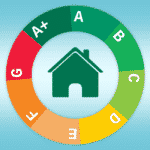
The EPC ‘C’ target for landlords is an evolving deadline. This guide covers everything landlords need to know, including the year 2030 target, specific requirements, estimated costs of improvements, potential benefits for both landlords and tenants and how to find out if your property maybe exempt.

Discover how to choose the right property sourcing company for your investment goals. Learn about the benefits of sourced property, potential pitfalls, and key considerations when partnering with property finders. Get insights on evaluating deals, understanding legal aspects, and maximizing your ROI in the UK property market.

Want to make money finding great property deals? Become a property sourcer! This guide shows you how to get started, stay on the right side of the regulations, and build your skills. Learn from real stories of what works (and what doesn’t) in this exciting property career and how to start your own property business.

I’ve been investing in property since 2005 and over time have refined the methods I use to source properties for myself and my clients.

Most people (except perhaps freeholders who own leaseholds) tend to agree that the leasehold system is unfair to leaseholders. They argue that leasehold is a feudal system of property ownership that has no place in a modern economy. Here, we will look at the facts.

HMOs can be fantastic investments with rental yields that are far over-and-above what can be achieved with a more standard buy-to-let. But, as with all things, there are downsides as well. Here, we will look at what the HMO market looks like in 2024.

Some commentators have been forecasting that another housing market crash is likely to happen in the UK. We don’t have a crystal ball be we can look backwards. In this article we will look back at the housing market crash of 2008/09 and at what we might learn from it.

Under landlord and tenant law there are different types of tenancy agreement, including the most widely-used assured shorthold tenancy or AST. However, landlords and tenants may sometimes come across non-assured tenancy agreements too. Here’s what what you need to know about them.

Sometimes you might see a property with a price that states OIEO alongside. You might decide to sell your property with an OIEO asking price. But what does OIEO or Offers in Excess Of mean and, more importantly, what are the implications of it?

Since it was founded in 2008, Airbnb has transformed the business of letting and renting accommodation on a short-term basis or for holidays. But what does the future look like for Airbnb? What can hosts in the UK expect from Airbnb over the next few years?

Selective licensing schemes require landlords to have a type of property license if they own a buy-to-let property in certain areas. The are not universally needed in the UK and it comes down to local authorities to decide on designated areas. Here’s what you need to know.

One of the most important aspects of successful property investment is raising property finance for your buy-to-let or investment property. Here we’ll look at the different ways of raising property finance that are open to landlords and investors, from mortgages to P2P.

A Section 6 Notice, governed by the Landlord and Tenant Act of 1987, is a critical legal instrument. Also referred to as an acceptance notice or more fully a tenant’s acceptance notice, it is the method by which leaseholders can formally accept a landlord’s offer to sell them freehold rights.

In the context of property law, understanding one’s rights and obligations is paramount. This is particularly true for landlords and tenants navigating the intricacies of leasehold properties. One such critical aspect is the Section 5 Notice, a provision under the Landlord and Tenant Act 1987.

The Section 13 Notice is a legal document that landlords can use to increase the rent of their properties. This notice is part of specific housing legislation (Housing Act 1988) and is designed to protect tenants from sudden and unreasonable rent increases.

Legislation is a critical tool in addressing societal issues, and homelessness is no exception. The United Kingdom made significant strides in this area with the enactment of the Homelessness Act 2002. This Act outlines the responsibilities and duties of local housing authorities in preventing homelessness.

The Homelessness Reduction Act is a law which aims to reduce homelessness by providing help to those who are homeless or at risk of becoming homeless. Here we will explain what the Act means and look at its success and failures since it was made law.

In the complex landscape of UK property law, the Section 40 Notice stands as a critical tool for landlords and tenants navigating business premises leases. This legal instrument, rooted in the Landlord and Tenant Act 1954, serves as a formal request for information.

The Landlord and Tenant Covenants Act 1995 is a critical piece of legislation that governs the relationship between landlords and tenants in the United Kingdom. This Act, enacted to rectify perceived injustices in the landlord and tenant law, has influenced the obligations of both parties.

The Landlord and Tenant Act 1985, specifically Section 3 Notice, is a critical component of UK property law that every landlord and tenant should understand. This notice, which is required when property ownership changes, ensures transparency and fairness in the landlord-tenant relationship.

Navigating the complexities of landlord-tenant laws can be a daunting task for both parties involved. One such critical aspect is the Section 48 Notice, a legal requirement under the Landlord and Tenant Act 1987. This notice plays a pivotal role in safeguarding the rights of tenants.

The setting up of a national landlord register is a subject which is in the property news at the moment. In this article, we will look at what we know so far about the creation of a national landlord register. One thing seems for certain though, a register for landlords in England is coming.
The Decent Homes Standard is a legal standard which regulates housing provided by the social housing sector. However, it is currently being proposed that this standard will be applied to the private rented sector or PRS at some point in the near future.

Asbestos cement, a once-popular building material, lurks in many homes across the UK, a silent reminder of a time when its durability and resistance were prized above all else. Yet today, we know that the asbestos in this cement can pose serious health risks if disturbed.

Investing in property has made very good sense in recent years. It has been relatively easy and the value of your property investment has increased year after year after year. Just recently, property investment hasn’t looked like such an easy option. However, the numbers still add up.

The hipped roof has long been a fixture in the United Kingdom’s architectural landscape, gracing the skyline with its elegant slopes and practical design. From humble cottages to grand manor houses, hipped roofs have proven worth as a versatile and durable roofing solution.

The recent hot property market has meant that most houses have sold easily, often within days of being put on the market. Now that the market is cooler, however, it is likely to become more difficult to sell your house. So, for this kind of market, here is what you need to know.

The Medway towns are one of the cheapest parts of the south east in which to invest in property, yet are within just 40 minutes or so from central London. Here’s a property investor’s guide to the Medway towns in Kent in the South East of England.

Welwyn Garden City was originally established as a garden city in the 1920s. It was planned by Sir Ebenezer Howard. Ebenezer Howard was a town planner who wanted to create the perfect town – one which combined the benefits of both urban and rural life.

On the surface of it, it is a simple concept: that a house ‘sold with vacant possession’ is a house that is empty and ready for the next owner to move in, unhindered. The key thing, however, is that the new owner should be able to enjoy undisturbed enjoyment of the property.

In a tenement, each floor is occupied by two or sometimes more separate properties. They are self-contained with their own entrance and is occupied by one person or a single family. However a distinguishing factor of a tenement is that all the properties share common stairways and an entrance.

Community land trusts are usually set up by people and organisations who live and work in (or have an interest in) a defined local area such as a village, town or suburb. They are membership organisations that are owned by their members and run democratically.

Glass buildings are sometimes considered where there is a requirement to link a listed building with a new or non-listed building. Glass links may be used to satisfy planning requirements which restrict what can be done to listed buildings. However that’s just one use-case.

One type of rent that is sometimes found in property is a peppercorn rent, which is a notional amount to secure a contract. Here is what peppercorn rent is, how much peppercorn rent actually is, and why more people are likely to be paying peppercorn rent in the future.

A compulsory purchase order is a legal order which can be used to acquire land and property from its owner whether they wish to sell it or not. A compulsory purchase order is known as a CPO for short. They can be used for projects such as new roads or new railways.

Land banking – where a property developer buys a plot of land now with the intention of developing it at some future time rather than immediately – is an issue that can have a serious impact on the housing market, driving up prices and preventing new houses from being developed.

Whether you are an investor looking to invest in UK property or a property developer on the hunt for the means to finance a project, property bonds could be exactly what you are looking for. But tread carefully and always seek expert advice before moving forward.

Due to rising house prices and new construction technologies, there is currently a lot of interest in modular homes. Here we will look at what exactly are modular homes and at what the advantages and disadvantages of this type of design, are.

The Community Infrastructure Levy is a charge payable by those planning many kinds of building work. It is technically known as a planning charge, but in practice it is a kind of tax on new development. The money received from the Levy is used to pay for local infrastructure such as roads, transport and new schools.

When buying or selling a house it is usual to have a solicitor or conveyancer handle the conveyancing process for you. However it is possible to do your conveyancing yourself. Here we will look at what you need to know about doing DIY conveyancing.

External wall insulation is just one of many ways you might consider improving the insulation of your property. In this article we will look at whether external wall insulation is likely to be a good investment or not.

Newham is a typical East London district. But it has undergone a massive amount of change and regeneration in recent years. One thing about Newham hasn’t changed though: It’s still a very good value part of London for property buyers and investors.

The first thing to know about Waltham Forest is that it’s (mostly) not a forest! But Waltham Forest is known for offering more space – and better value – than inner London, alongside great access into the capital.

Redbridge lays claim to being London’s leafiest suburb thanks to its abundance of parks. Redbridge also has excellent access into central London, with the new Elizabeth Line services taking less than 20 minutes. Redbridge still offers below average property prices too.

If you are running (or setting up) a buy-to-let limited company tax rules differ from those if you are owning buy-to-let properties in your own name. Here’s a guide to understanding tax for buy-to-let limited companies.

Greenfield sites may offer more flexibility to build what you want to build and more design flexibility, subject to obtaining planning permission. They are in some ways a blank canvas for your property development plans.

A planning performance agreement is an agreement that is made between an applicant who applies for planning permission and the local planning authority. It sets down a framework for how the planning application will be handled and what timescales will apply.

The JCT is an organisation which produces contract documentation for building and construction projects. These include standard forms for both main and sub-contracts, homeowner contracts plus agreements, collateral warranties and associated guidance documents.

Wandsworth has some hidden gems that offer good value for buy-to-let investors. Plus some huge regeneration projects that promise to make the Wandsworth property market even more up and coming in the future.

The first step to successfully investing in property is to know where you are investing. So where is Havering, we hear you ask? Havering is a borough on the eastern side of London. The largest town in Havering is Romford.